

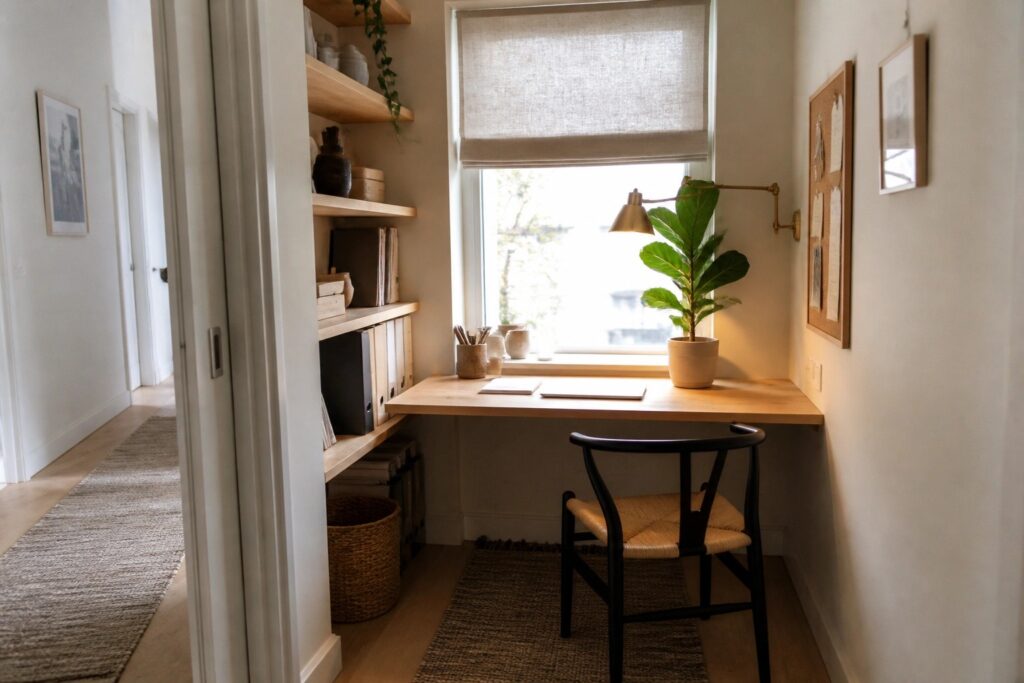
I have found that the best small offices balance storage and open space so the room does not start to feel like a storage closet after a few weeks of use.
A desk that fits the scale of the room matters more than I expected when I first set mine up because it affects how easily I can reach everything without standing.
Lighting makes the biggest difference in how the space feels at the end of the day.
In my experience adding a few personal items helps the room feel less like a temporary workspace and more like a place I actually want to sit down in.
Some of these ideas seem practical enough to adapt based on the size and light conditions in my own home office.
Built-In Desk With Side Shelving
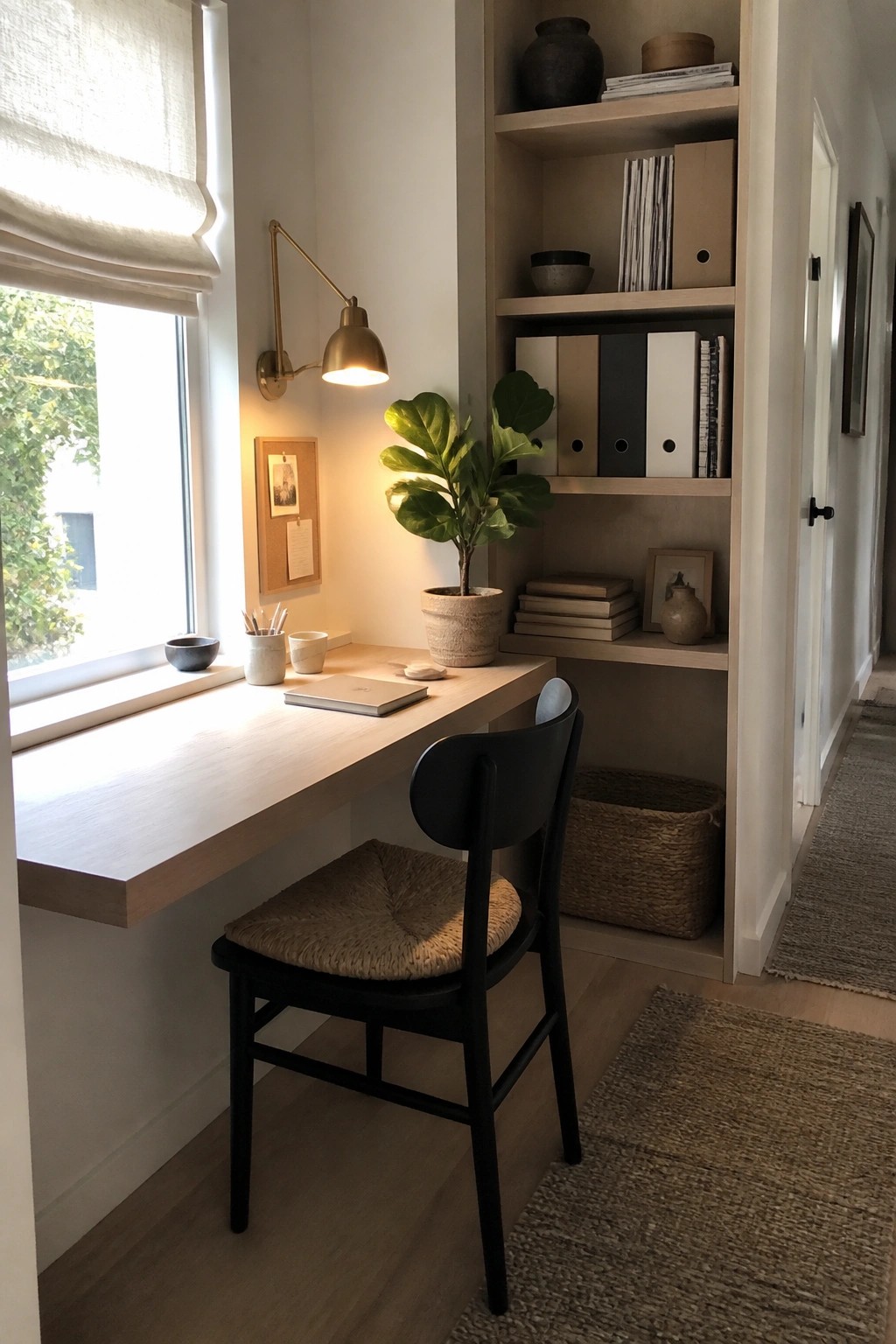
A built-in desk paired with tall side shelving gives a small office plenty of workspace and storage without eating into the room. The desk fits neatly under the window while the shelves hold binders, books, and a few plants right where they are needed.
This setup suits narrow rooms or leftover corners in older homes. Keep the shelves fairly open so they do not block light, and choose a desk depth that still leaves room to pull a chair in and out comfortably.
Choose a Slim Wooden Desk with a Woven Stool

A slim wooden desk paired with a low woven stool keeps a small office from feeling crowded. The natural wood brings warmth while the open stool design leaves more visual space underneath and around the work area. This combination works especially well when you need the room to feel calm and usable every day rather than packed with furniture.
Place the desk near a window so daylight reaches the surface, then keep the rest of the setup simple with just a lamp and a few small organizers. It suits older homes or apartments where rooms run small and you want comfort without bulk. Avoid heavy chairs or wide desks that quickly make the space feel tight.
Tuck A Desk Into A Sloped Ceiling Nook

Small homes often leave awkward corners under sloped ceilings that feel hard to use. Placing a simple desk there turns the space into a quiet spot for daily work without taking over the rest of the room.
A light-colored desk and a low chair keep the area from feeling closed in. Add a few plants and keep the surface mostly clear so the nook stays practical and easy to sit in for a few hours at a time.
Low Desk Setup In Small Offices
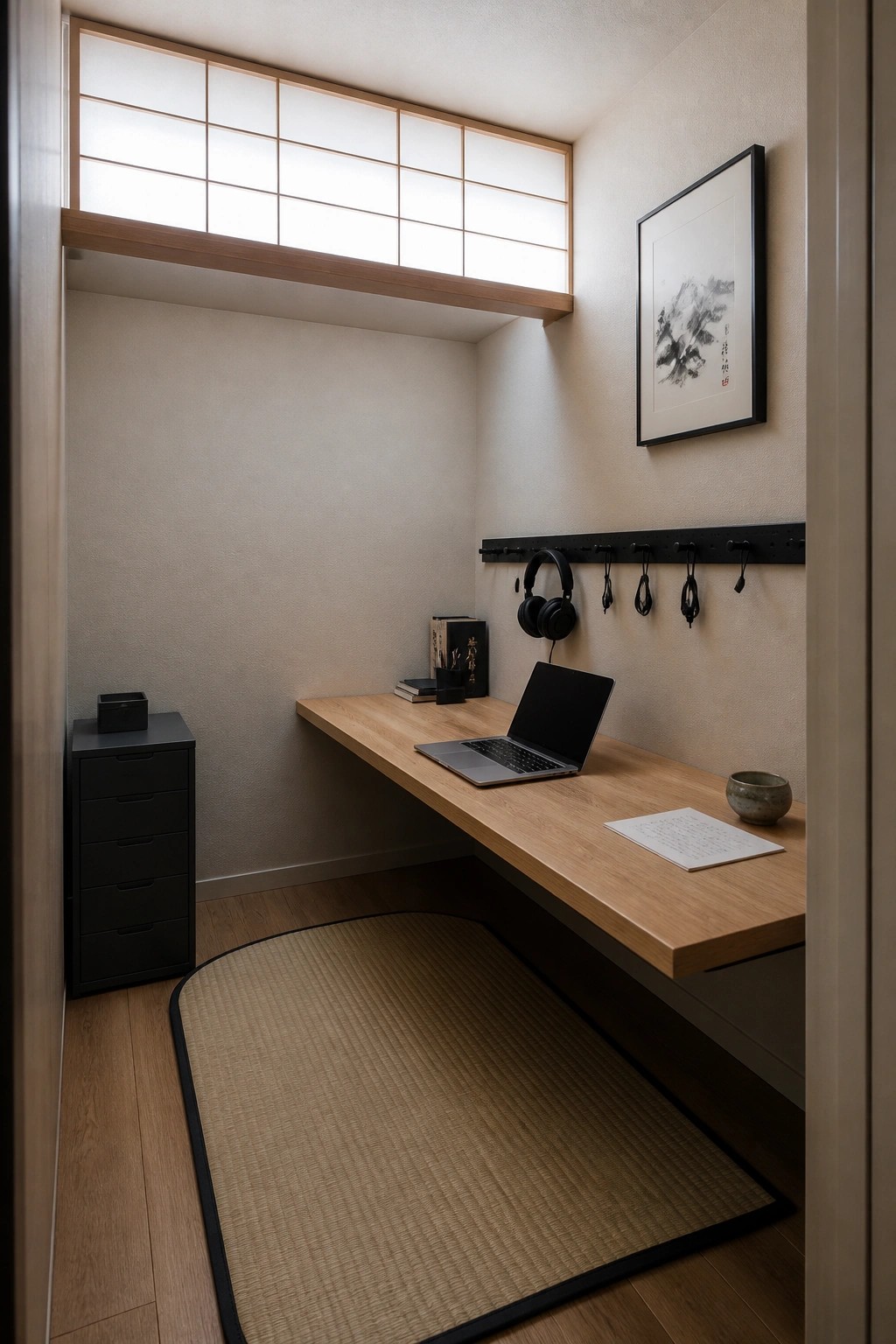
A low desk keeps a tiny office from feeling cramped because it sits close to the floor and leaves more open space above. The simple wood surface works well with a tatami mat underneath, which adds a soft, grounded feel without taking up extra room.
This layout suits very small rooms or alcoves where a standard desk would crowd the space. Keep storage low and minimal so the area stays calm and easy to use every day.
Choose a Desk With Drawers on Both Sides
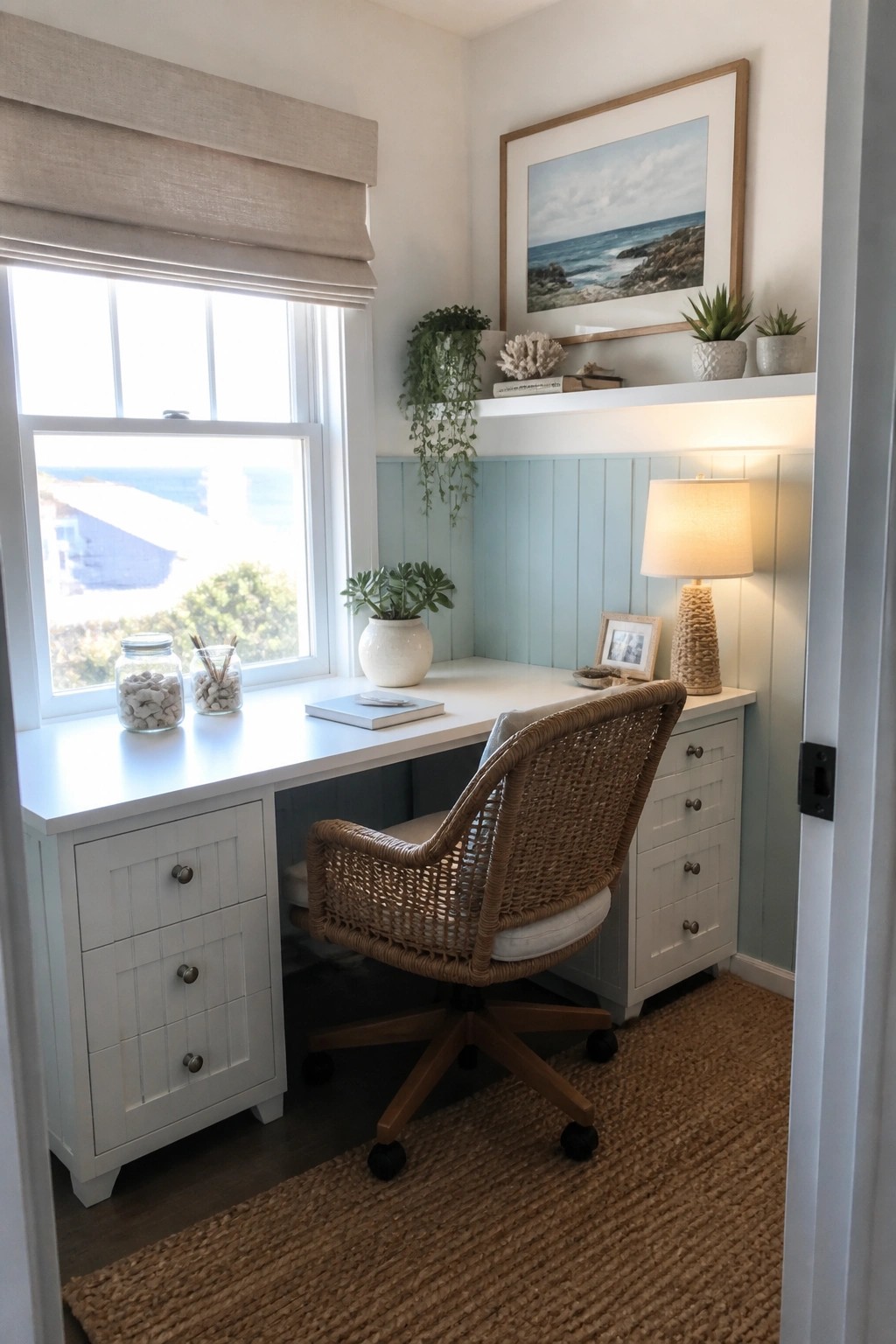
A desk with drawers on both sides gives you real storage without needing extra cabinets or shelves taking up floor space. In a small office this layout keeps everything within reach while leaving the center open for your chair and legs. It works especially well when the room has to double as something else during the day.
This style suits tight corners or window nooks where wall space is limited. Just measure the width you have available and look for a desk that still leaves room to pull the chair out easily. Avoid overloading the drawers so the space stays practical for daily use.
A Desk With Built-In Drawers Keeps Things Organized
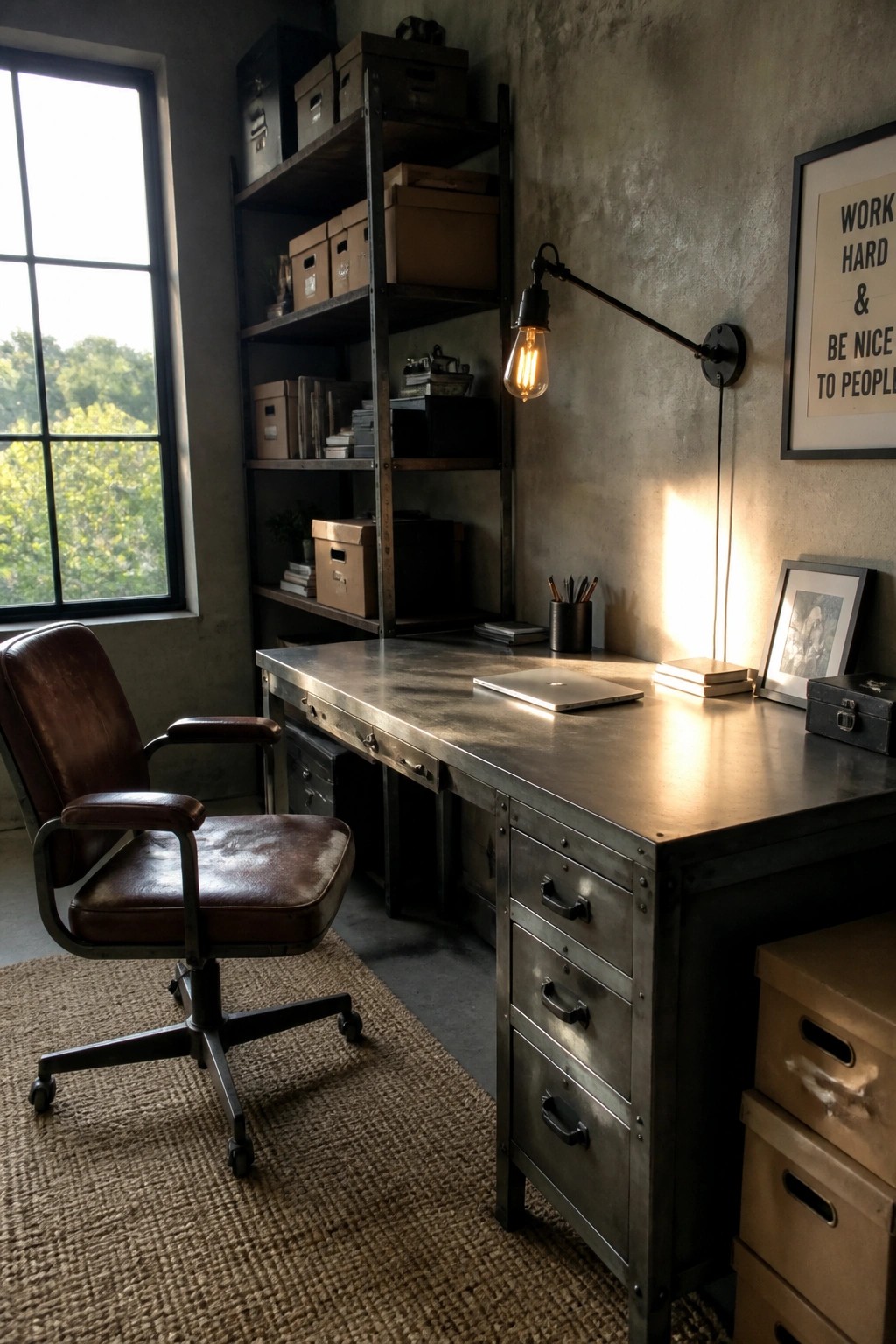
A desk that already has plenty of drawers cuts down on the need for extra cabinets in a small office. You can store papers, supplies, and equipment without adding more furniture that would crowd the room.
This works well in homes where the workspace has to share space with other uses. A solid metal frame holds up to daily wear and keeps the surface clear for actual work.
Make A Small Office More Comfortable With A Daybed
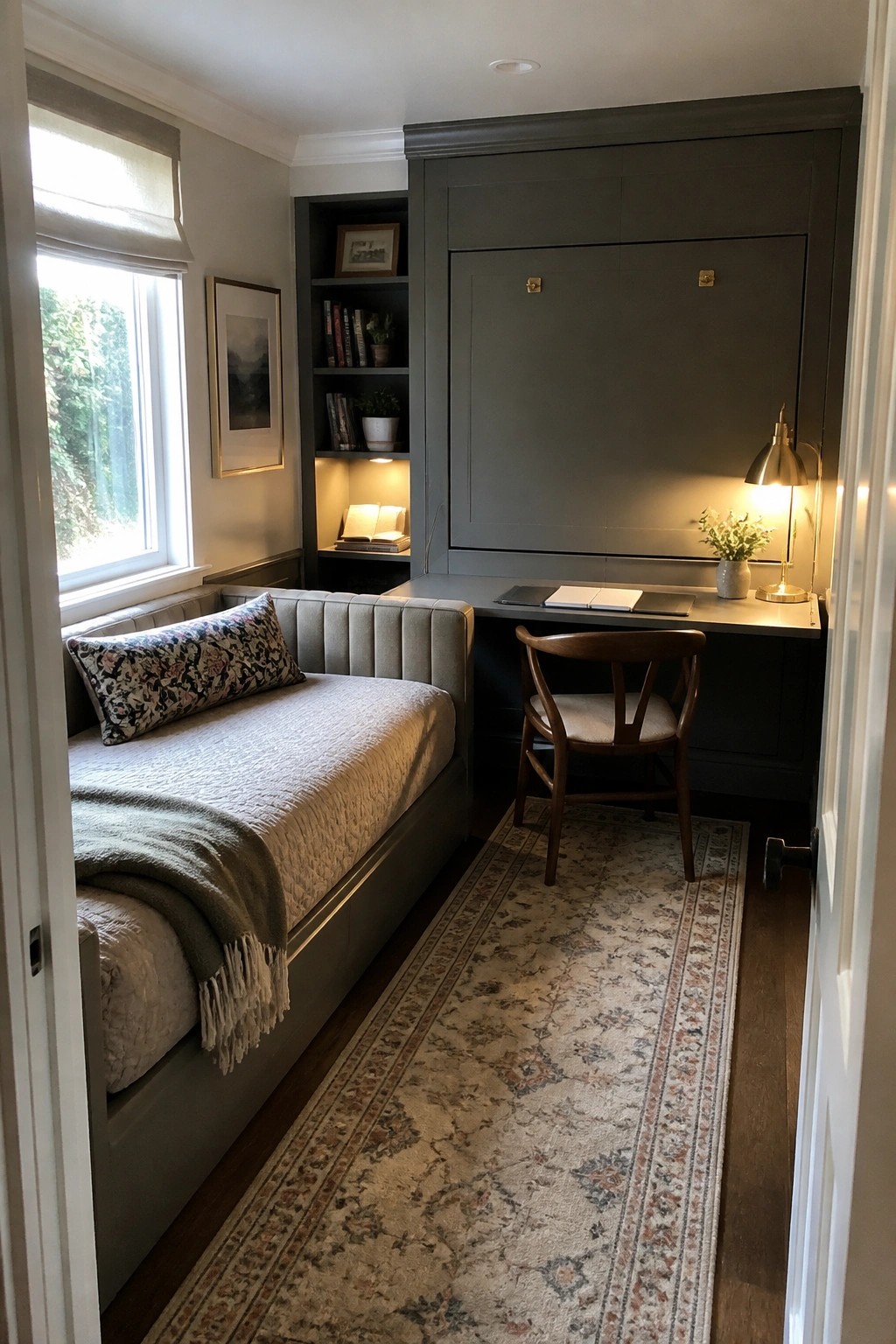
A daybed gives you a place to step away from the desk without leaving the room. In a tight space it adds comfort for reading or taking calls, and it keeps the room from feeling like just another workspace all day long.
This setup works best in spare rooms or narrow alcoves where you need the area to serve more than one purpose. Keep the daybed low and simple so it does not crowd the desk, and use built-in storage above to hold papers and supplies out of sight.
Built-In Cubbies Keep Small Desk Areas Organized
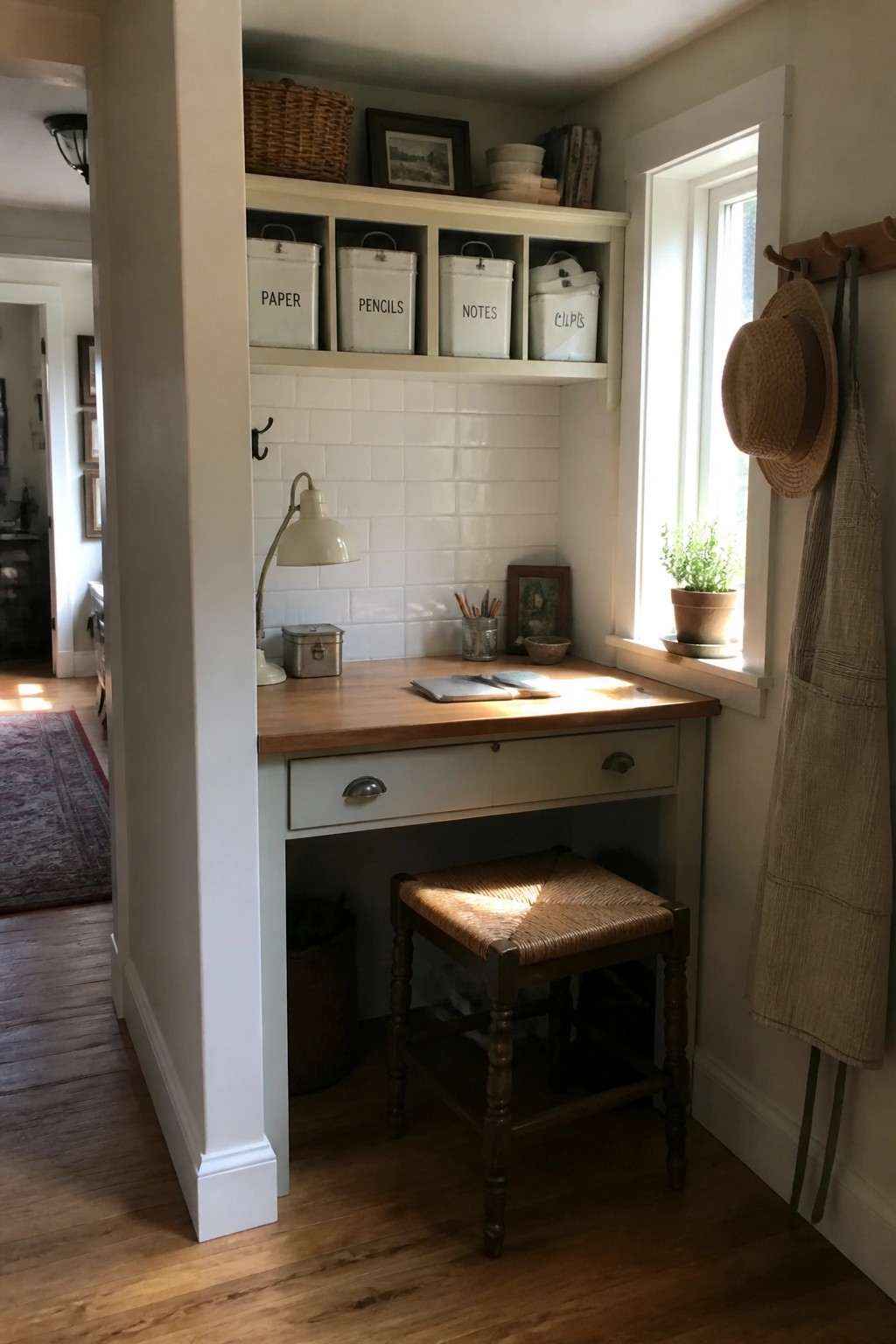
Built-in cubbies above a desk give you a place for papers and supplies without adding extra furniture that takes up floor space. This kind of storage works well when the goal is to keep the work surface clear while still having what you need close at hand.
It suits small homes or rooms that already have an awkward corner or alcove. Label the bins so things stay easy to find, and the desk can stay open for writing or a laptop without feeling crowded.
Built-In Shelves Add Storage to a Small Home Office

One simple way to improve a small home office is to run built-in shelves above the desk. This keeps books and supplies close at hand while leaving the floor clear for a chair and basic movement.
It suits older homes or any room where the desk has to fit into a corner. The shelves can hold work materials without adding extra furniture that would make the space feel tighter.
Built-Ins Keep Small Offices Organized
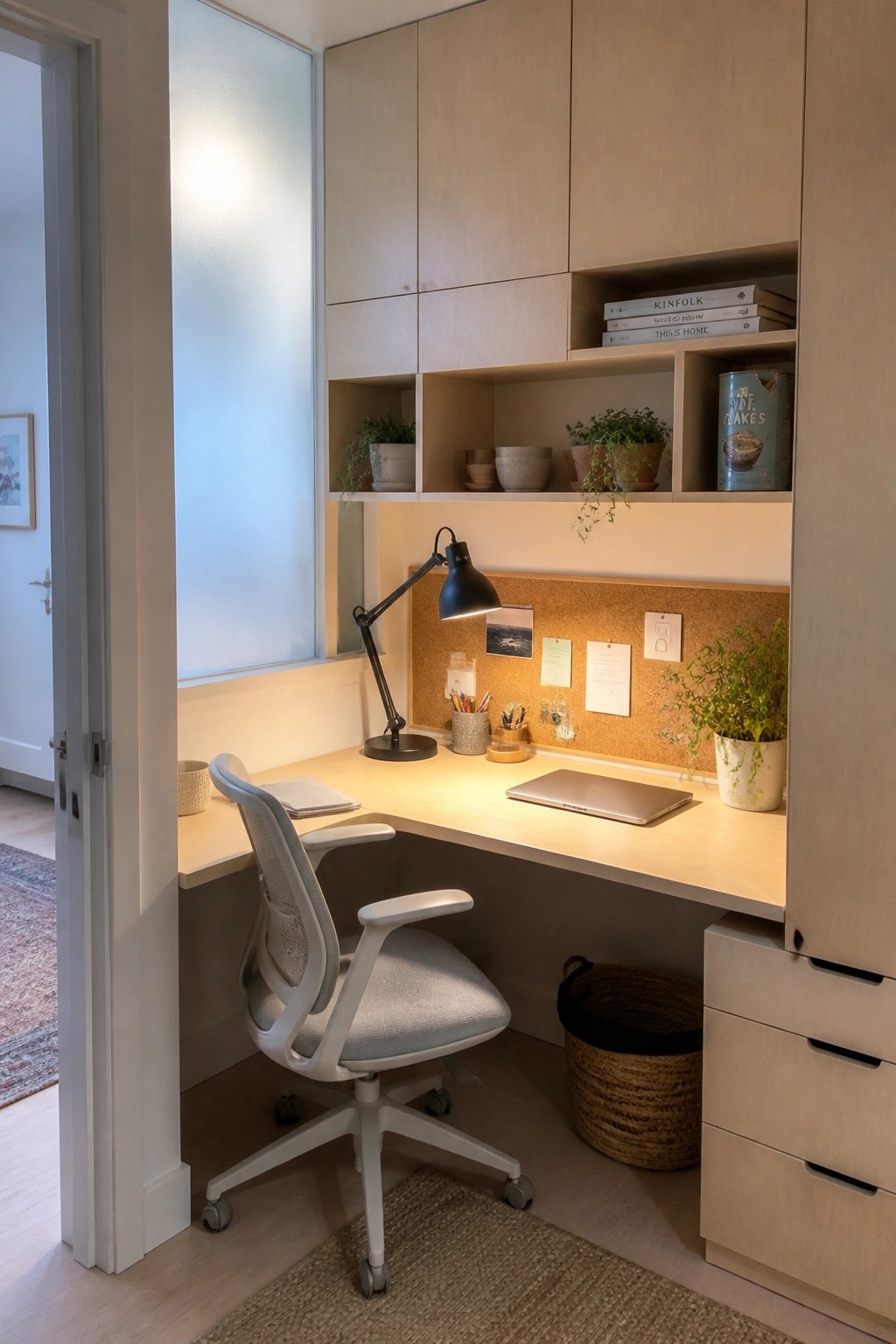
Built-in cabinetry above and around a desk can turn a tight corner into a workable office without adding extra furniture. The storage stays off the floor, so the chair has room to move and the space does not feel crowded.
This approach works best in apartments or small homes where every inch counts. Place the desk against the wall, add upper cabinets for files and supplies, and leave the lower area open so the room stays comfortable for daily use.
Fit A Slim Desk Into A Tight Corner
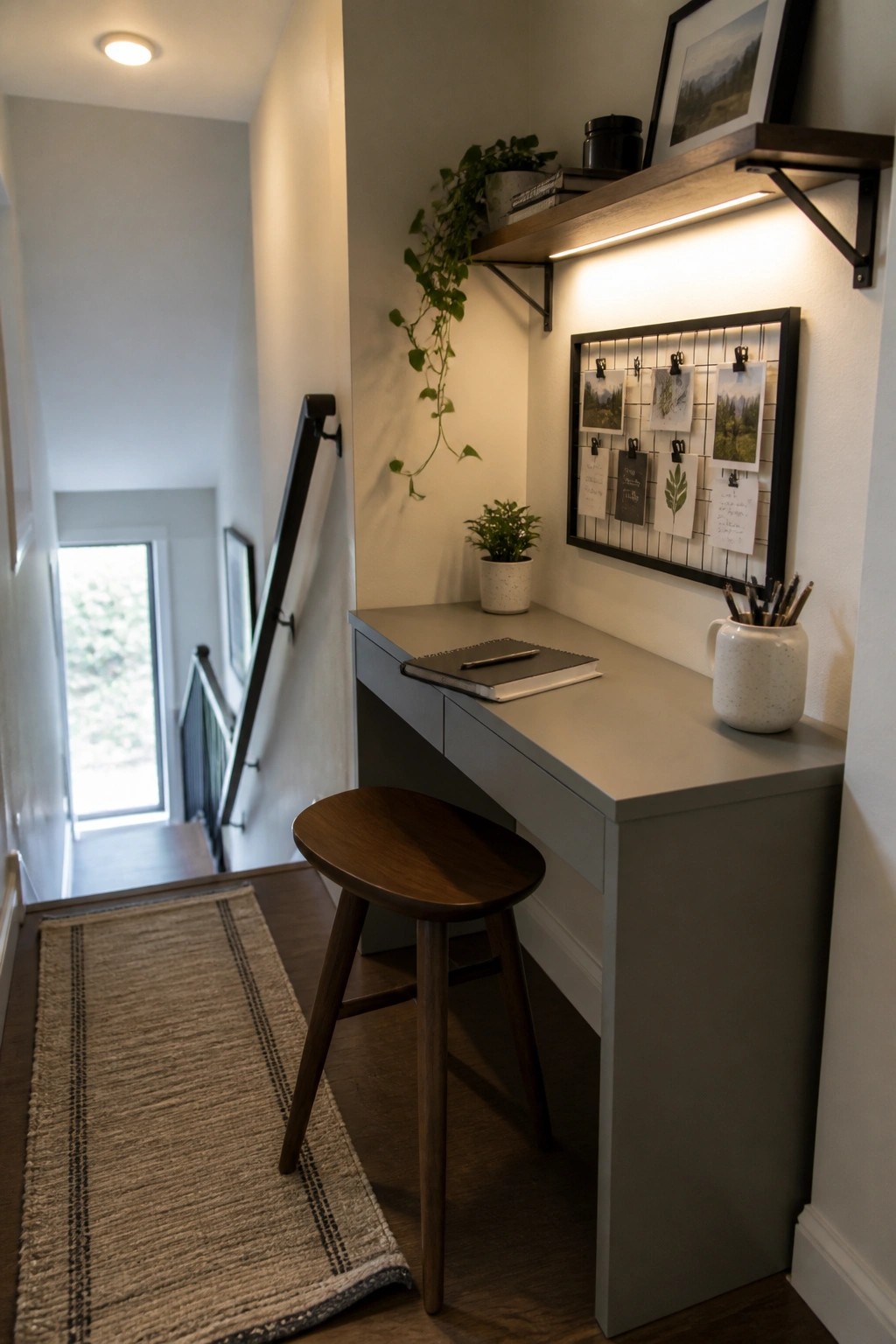
Many homes have narrow leftover spaces that never seem to serve a purpose. A slim desk pushed against the wall with a simple shelf above it turns that spot into a workable office without crowding the room.
This works best in hallways, under stairs, or along blank walls where a full room is not an option. Keep the top mostly clear and use the shelf for a few supplies so the area stays practical for daily use.
Roll Top Desks Keep Small Offices Neat
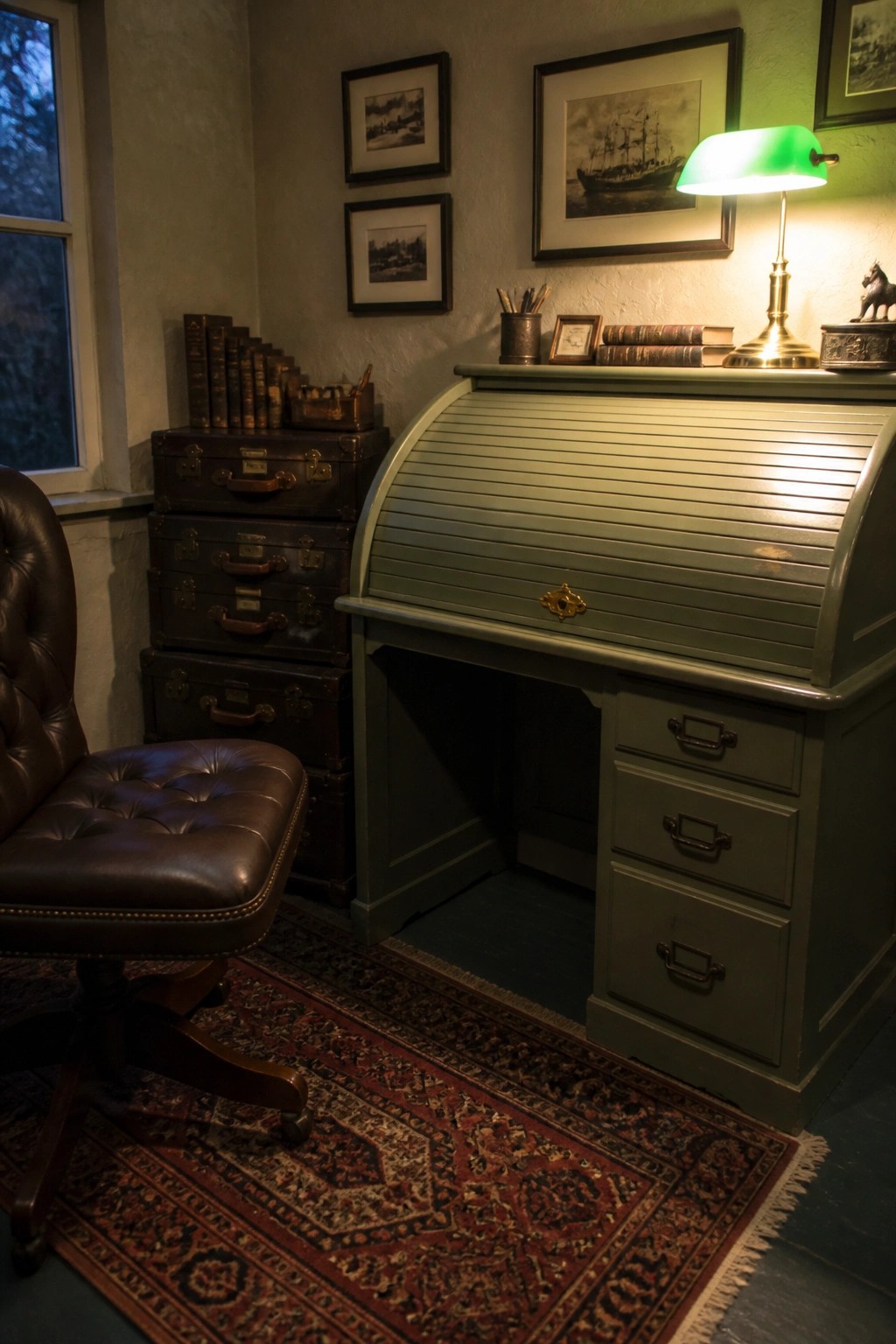
A roll top desk gives you a simple way to close off your work when the day is done. In a small room this matters because it stops papers and supplies from taking over the space even when you are not using it.
It works well in homes where the office shares space with other rooms. Look for one with a few drawers below and pair it with basic storage like stacked trunks if you need more room for files and supplies.
Built-In Desks That Fit Small Rooms

Built-in desks work well in small spaces because they use the wall and corner without adding bulky furniture that crowds the floor. The shelves above and next to the desk keep books and supplies within reach while leaving the work surface open.
This kind of setup suits older homes or any room where you need both storage and a place to focus. Add a simple chair and a couple of baskets underneath for things you want to keep out of sight.
Pegboard Storage In A Small Home Office
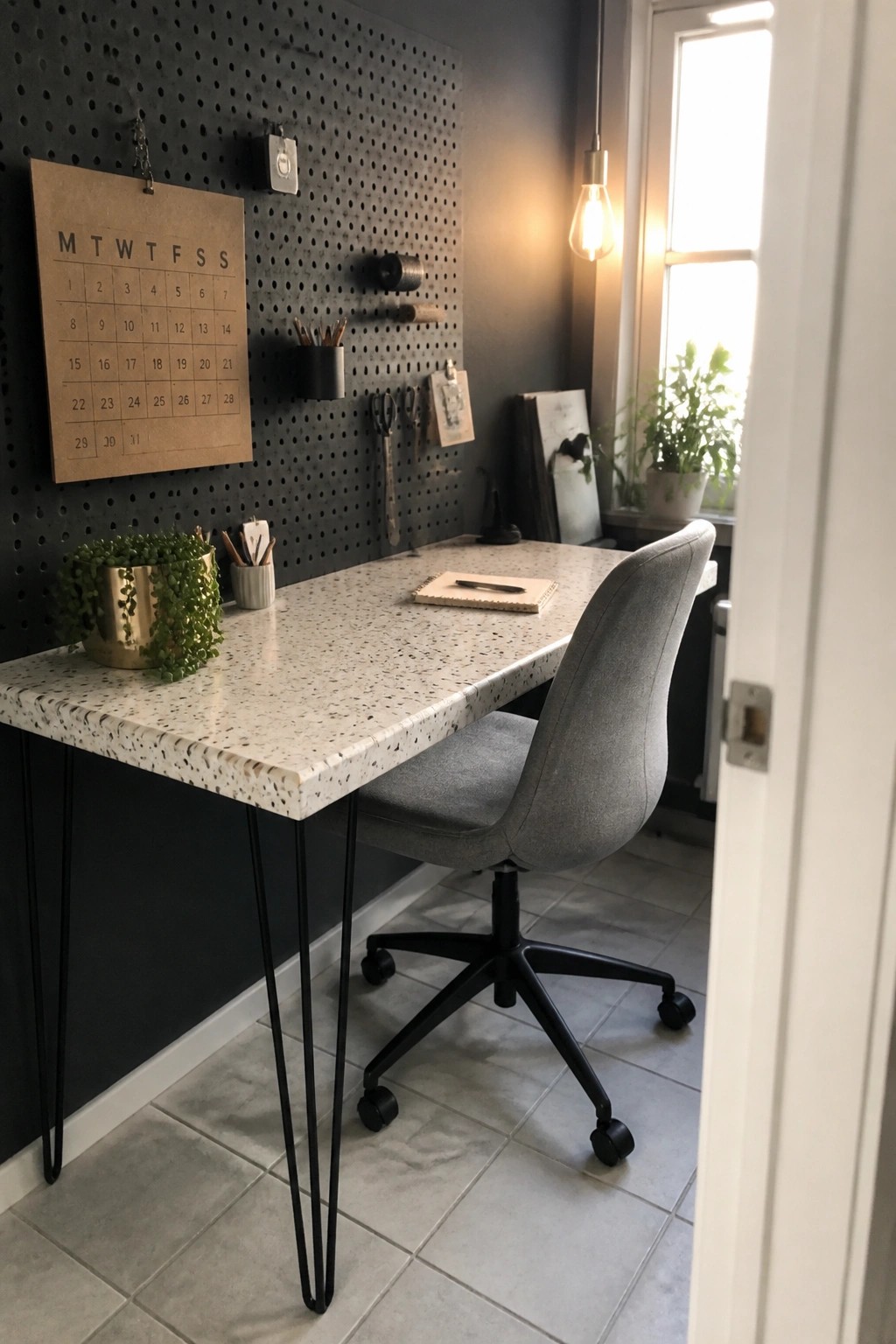
A pegboard wall gives you a simple way to keep tools and supplies off the desk while still within reach. In a small office this matters because it stops the work surface from filling up with things that are easier to hang than to stack.
Hang the board behind the desk or along one side and add a few hooks or small cups for pens and scissors. It works especially well in rooms that lack built-in shelves and gives you room to rearrange things as your needs change.
Fit a Desk Into a Small Alcove
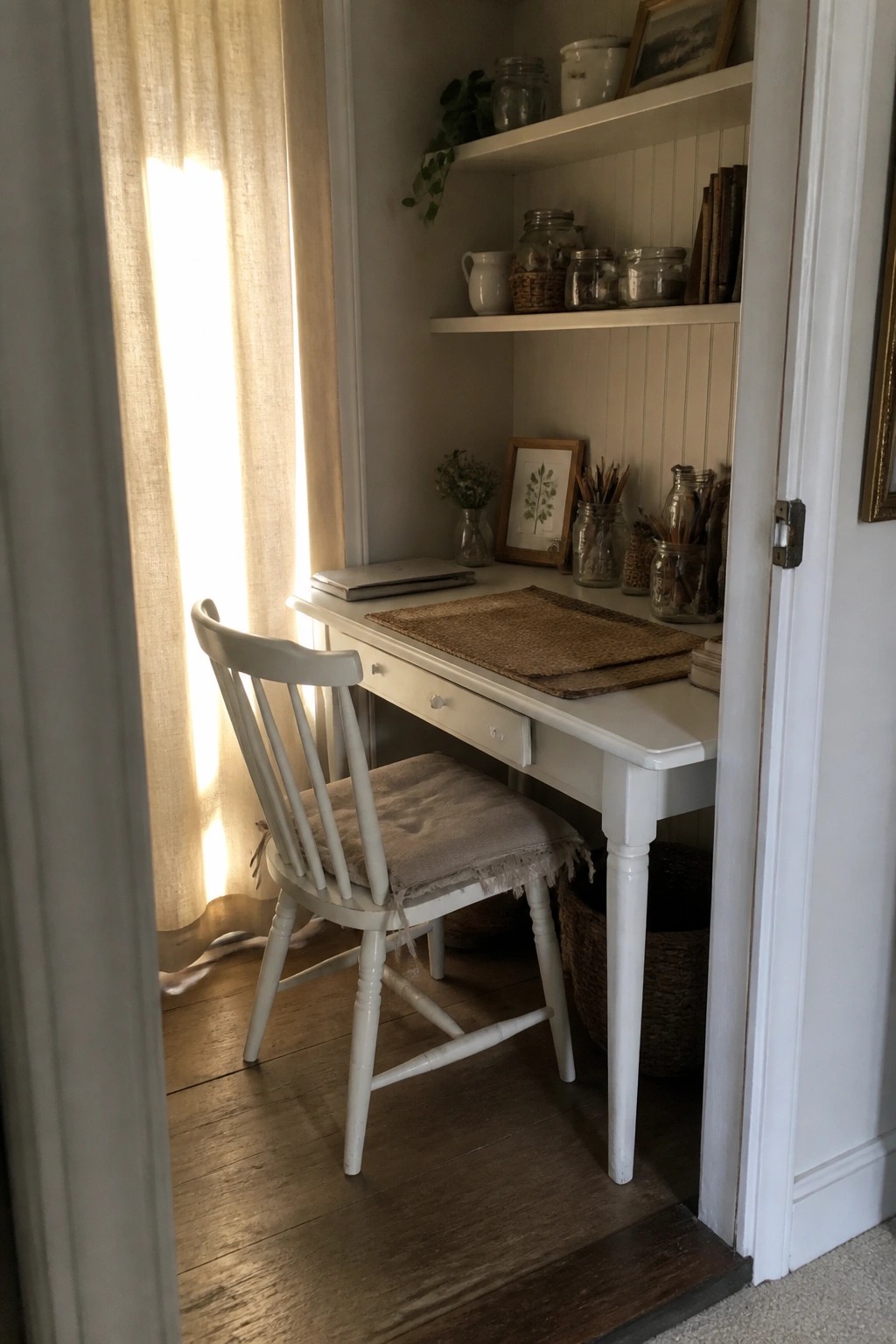
Placing a desk inside a recessed space or closet area keeps the work spot contained while still giving it plenty of light from a nearby window. The open shelves above hold everyday supplies without needing extra furniture or floor space.
This setup works especially well in smaller homes or rooms that double as something else during the day. Keep the desk narrow and the chair simple so the area stays usable even when the work is done.
Mount a Shelf with Lighting Above the Desk
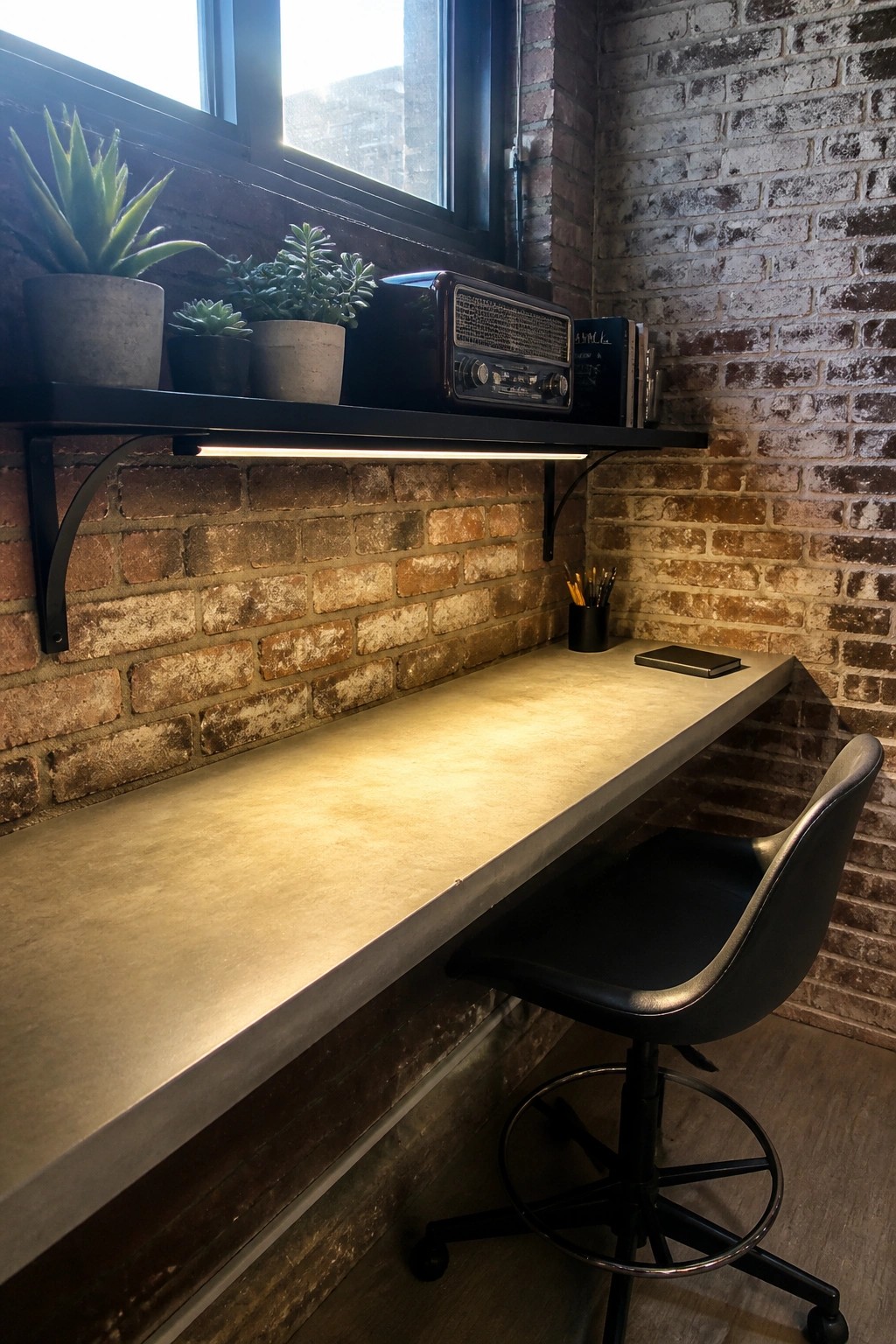
A floating shelf with lights underneath gives a small desk area steady, soft illumination without adding another lamp to the surface. The light spreads evenly across the work area and helps the space feel warmer overall, especially when the wall behind has some texture.
This works best in compact rooms or corners where floor space is limited. Keep the shelf simple and the light strip warm in tone so the desk stays practical for daily use rather than feeling like a bright task station.
Built-In Bookshelves With a Ladder

Built-in shelves that run floor to ceiling give a small office a lot more storage without crowding the floor. The ladder makes the top rows practical to use instead of just decorative.
This approach suits rooms with decent ceiling height and limited wall space. Keep the shelves for books and papers you actually need, and make sure the ladder is stable enough for regular use.
A Dark Accent Wall Behind Your Desk
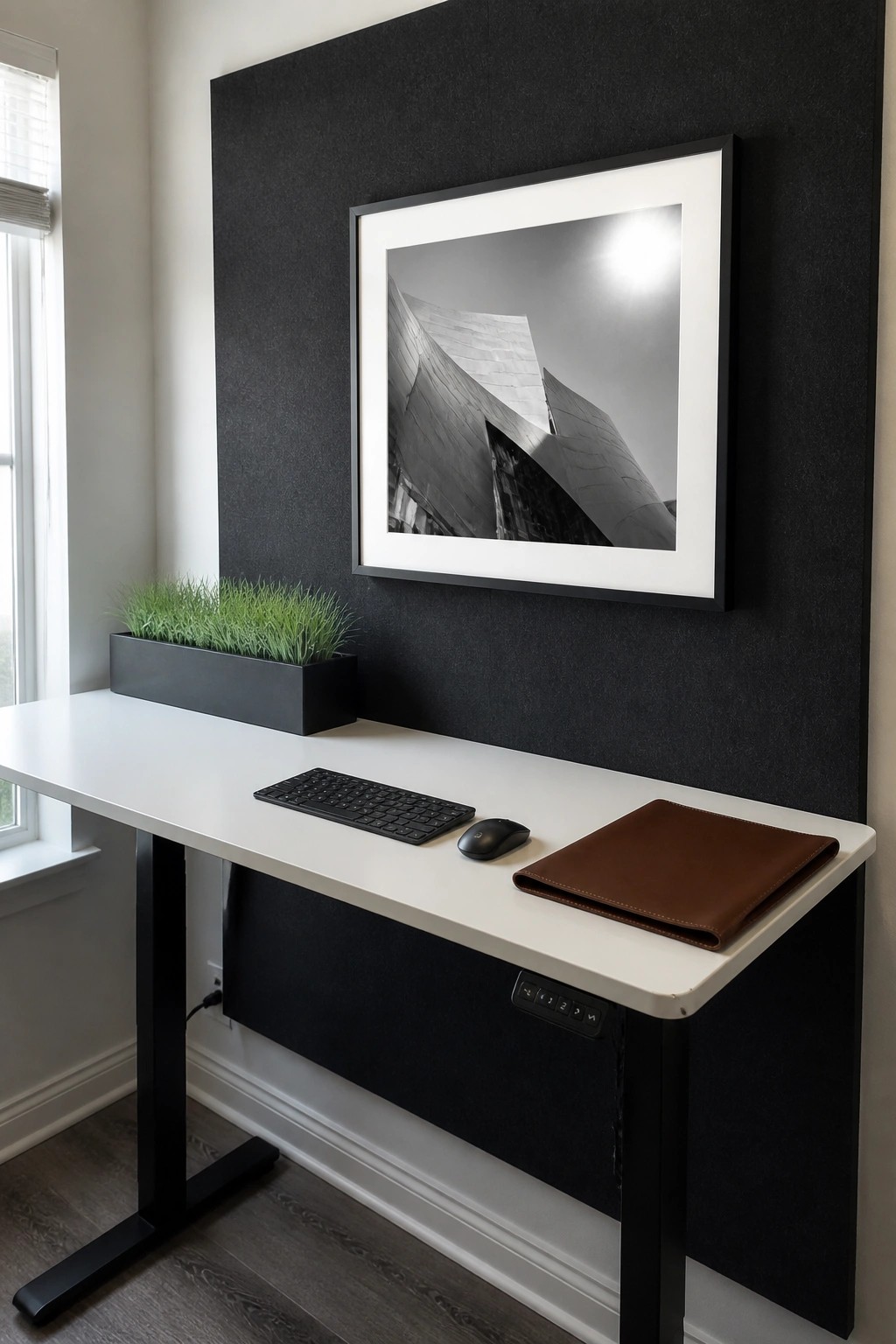
A dark wall can make a small desk area feel more defined without adding extra furniture. It creates a clear boundary for the workspace and helps the rest of the room stay calm and open. Many people find this setup easier to focus in because the eye stays on the desk instead of wandering.
This works well in compact rooms where you want the office to feel separate but not closed off. Pair the dark wall with a light desk and only a few items so the space stays simple. Keep cables tucked away and avoid filling the surface if you want it to feel comfortable for daily use.
Pegboard Storage Keeps A Small Desk Organized
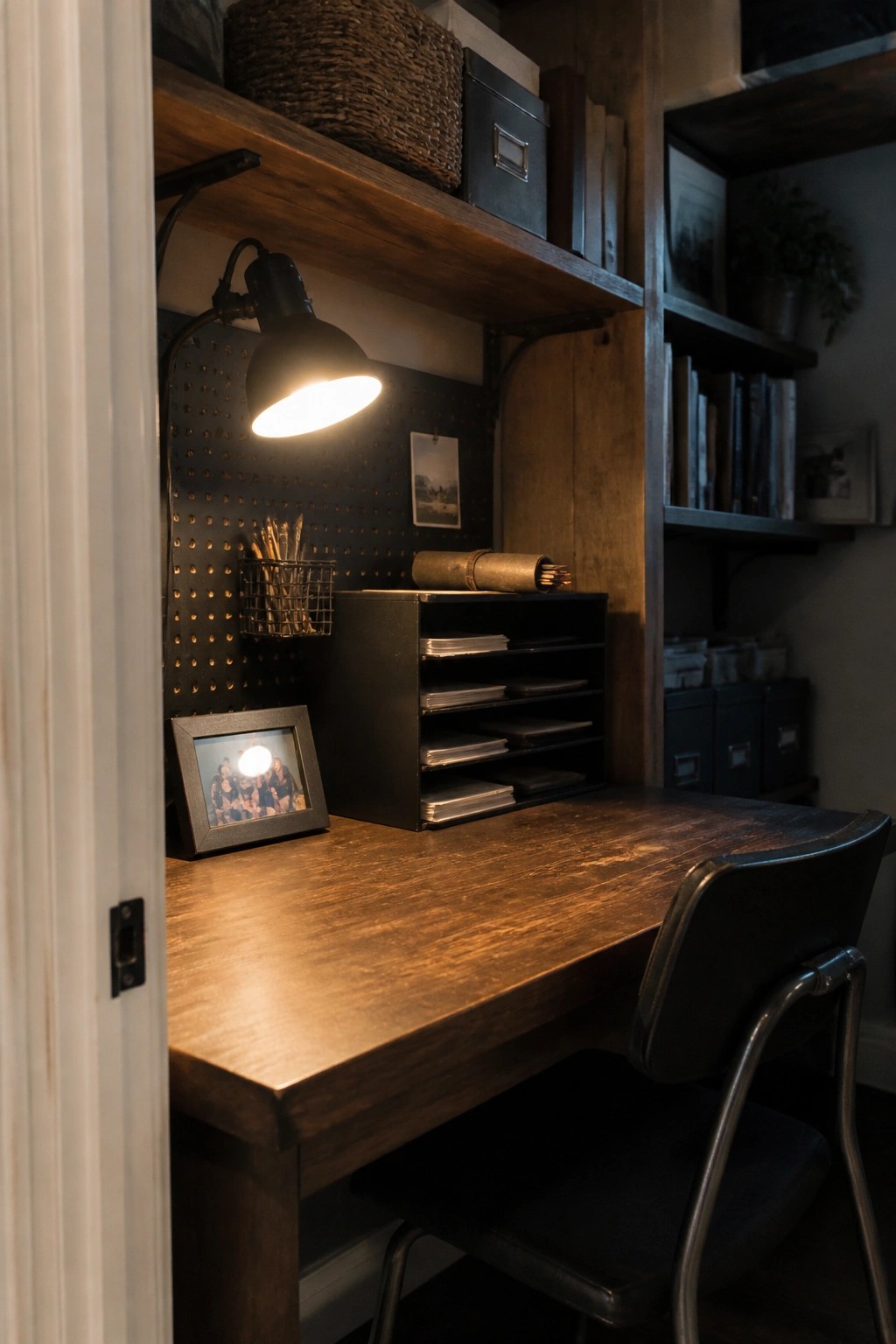
A pegboard wall right behind the desk gives you a place to hang small supplies without crowding the work surface. It turns an empty wall into useful storage and makes everyday items easy to see and reach.
This approach suits small rooms or corner setups where floor space is limited. Mount the pegboard at a comfortable height, add a few baskets or hooks, and adjust it as your needs change over time.
Plush Seating Brings Comfort to Compact Workspaces
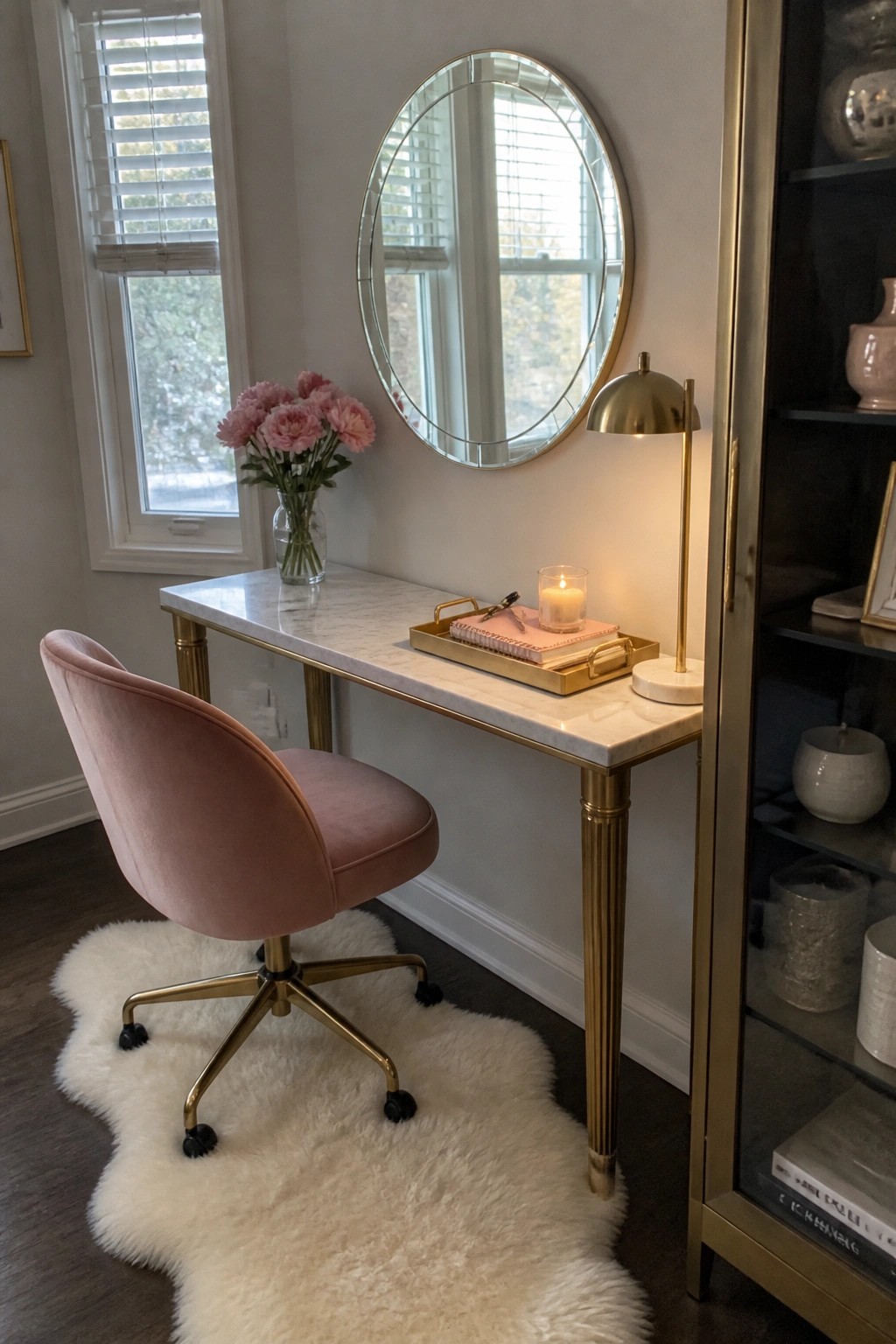
A comfortable chair makes a small workspace feel more inviting to use every day. The soft velvet seat and low pile rug underfoot turn a simple desk into a spot that supports longer hours without feeling stiff or cold.
This setup works best in bedrooms, guest rooms, or tight corners where you want the office area to blend with the rest of the home. Keep the chair in a gentle color and add a small rug to anchor it so the space stays cozy instead of feeling like an afterthought.
Position Your Desk Near a Window
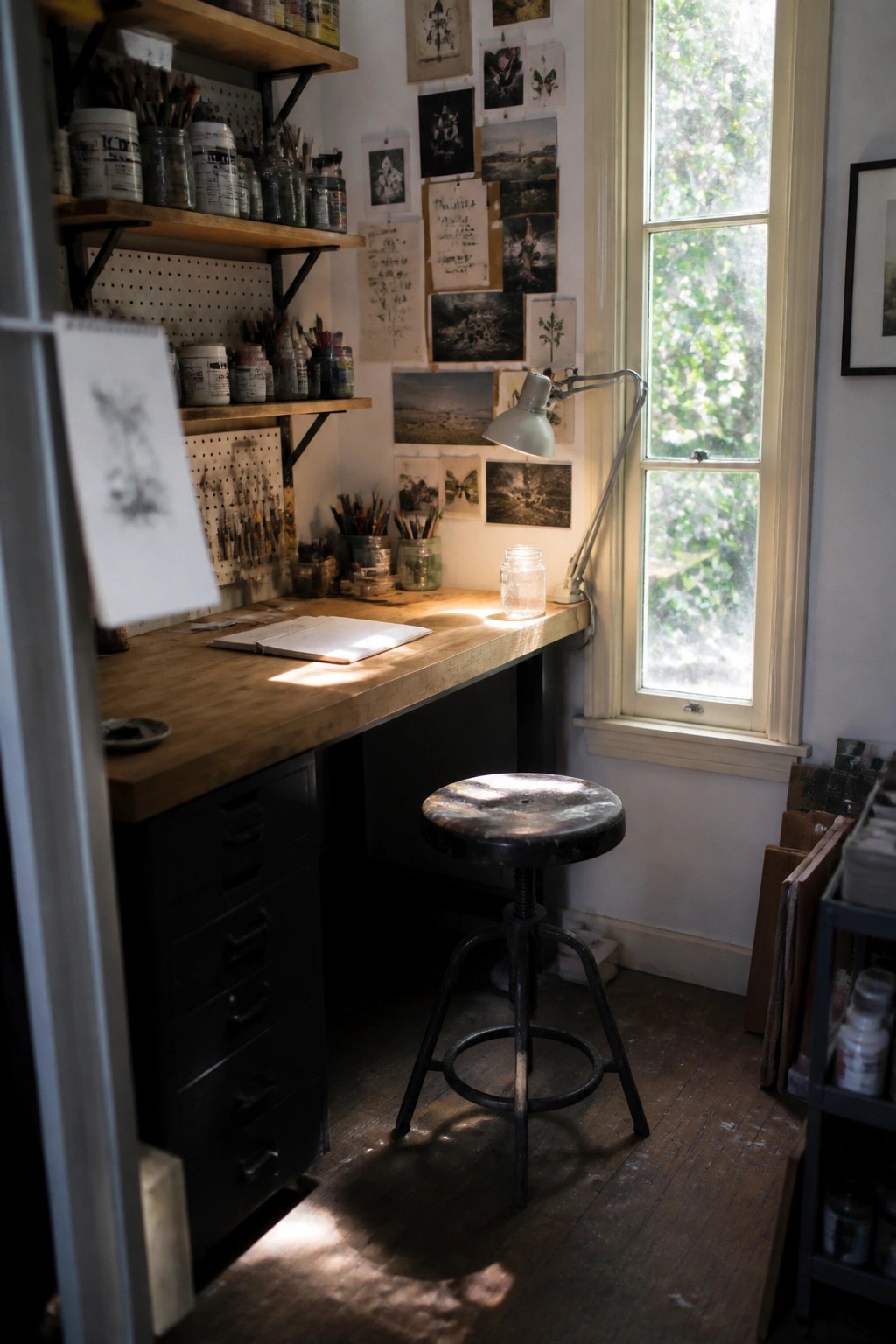
A desk placed close to a window can change how a small office feels during the day. Natural light reaches the work surface directly, which helps reduce the need for overhead lights and makes the room feel less closed in.
This setup works best in older homes or compact rooms where space is tight. Keep the sill and nearby wall clear so the light stays useful, and use simple storage on the sides instead of blocking the view.
Crossed Legs Help a Desk Fit Small Workspaces
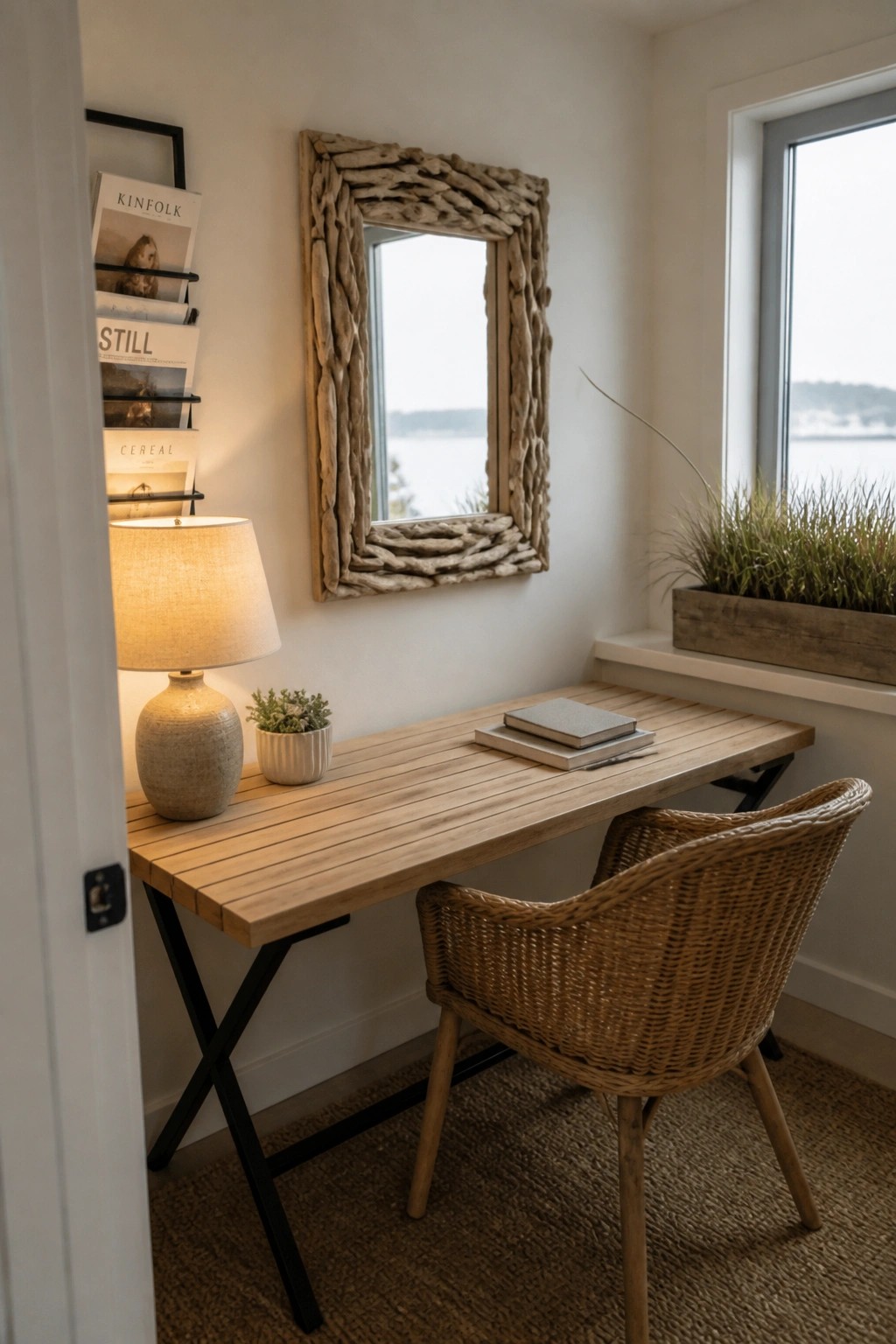
A desk with crossed legs leaves more open space underneath, which keeps a small office from feeling crowded. The simple black frame supports a wood top without adding bulk, so the room still feels usable even when the desk sits right against the wall.
This approach works well in apartments or older homes where every inch counts. Keep the chair light in both color and shape so the whole setup stays easy to move around and comfortable for daily work.
Built-Ins Turn A Narrow Room Into A Working Office

A built-in desk and shelf unit can make a small space feel purposeful without crowding it. The dark finish blends into the walls, while the lower cabinets hide clutter and the open shelves keep books and supplies within reach. Under-shelf lighting adds a soft glow that helps the area feel warmer in the evening.
This setup works best in rooms that are long and thin, where a freestanding desk would leave wasted space on either side. It suits homes that need one focused work spot rather than a full study. Keep the chair simple and add a rug to soften the wood floor so the room stays comfortable for longer hours.
Frequently Asked Questions
Q: Where do I stash papers and supplies when the desk already fills most of the room?
A: Slide a slim rolling cart beside the desk so you can pull it out for quick access and tuck it away again. Wall-mounted pockets or a narrow ledge above the desk keep daily items visible without eating floor space. This setup leaves your main surface clear for actual work.
Q: How do I stop my back from aching after hours in such a tight spot?
A: Pick a chair that tucks fully under the desk when you stand so your legs get room to stretch. Set a timer to stand and shift position every hour even if you only pace to the door. A small footrest under the desk helps keep your posture steady without adding bulk.
Q: My corner gets almost no natural light. What actually helps it feel less gloomy?
A: Hang a slim mirror opposite the nearest window to bounce whatever light exists across the desk. Add one warm bulb in a clip-on lamp aimed at the wall rather than straight down on your work. The soft bounce makes the whole area feel bigger and more welcoming by the end of the day.
