


When I first tried to fit a desk into my living room the biggest surprise was how much the placement affected the way the whole room felt at the end of the day.
A corner that works for calls during the week can still leave room for guests on the weekend if the scale is right.
The details add up quickly.
I have started paying closer attention to cable management and lighting because those are the things that either make the space usable every day or turn it into a constant reminder of work.
Some of the ideas worth trying are the ones that keep the living room looking like a living room even when the laptop is open.
Built-In Desks That Blend Into Living Rooms
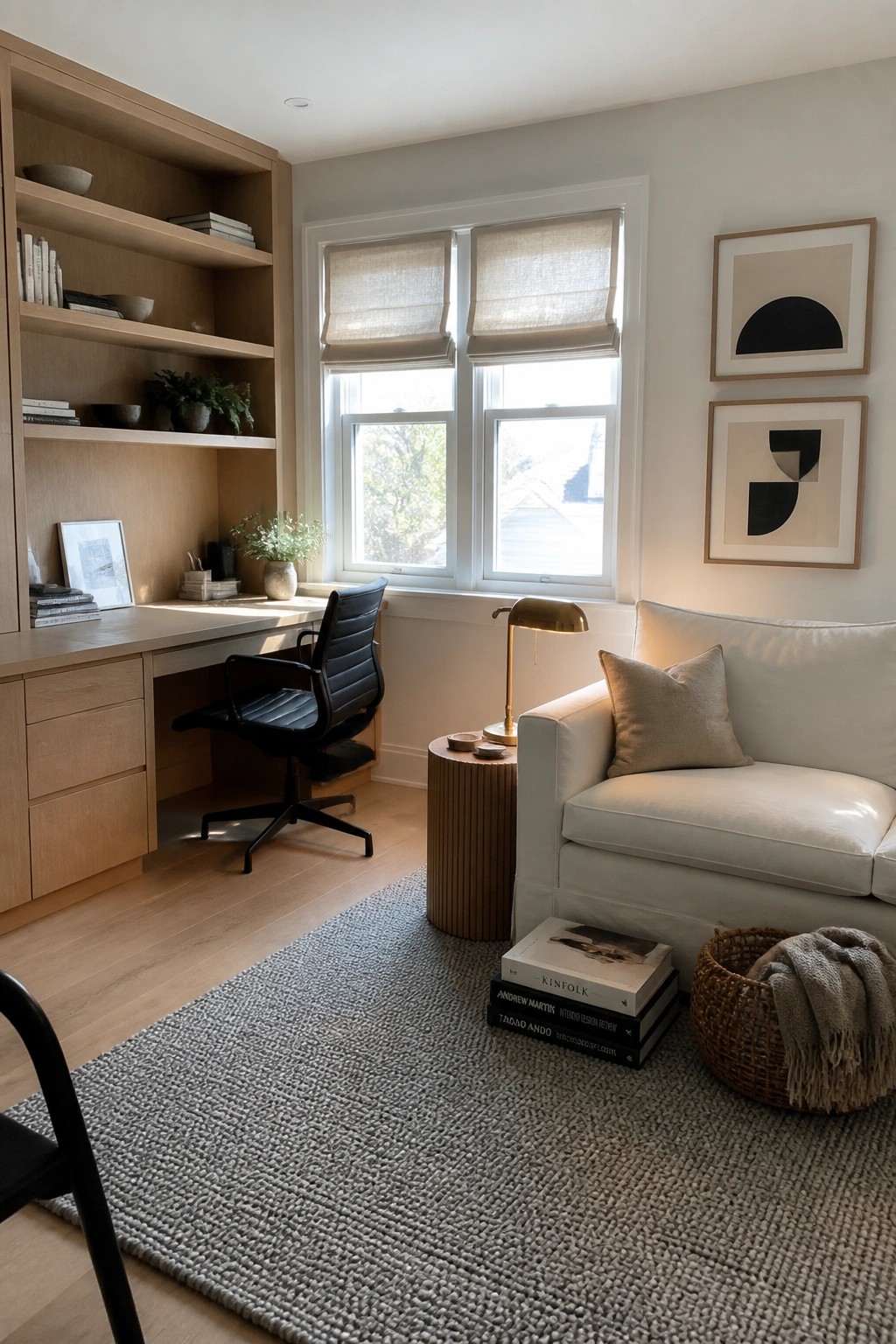
A built-in desk with open shelves above it gives you a real workspace without turning the living room into an office. The wood matches the floor and trim, so the desk feels like part of the room rather than an add-on.
This works well in homes that need one room to handle both relaxing and working. Keep the desk chair simple and place the seating area right next to it so the space stays balanced and easy to use every day.
Define The Office Area With A Large Round Rug

A round rug gives the desk and chair their own spot without closing off the rest of the room. The curved shape softens the lines of the furniture and keeps the work area from feeling like it was just dropped in.
This setup works best in living rooms that double as offices. Keep the rug big enough to fit the desk, chair, and a bit of open floor, then place any lounge seating right along the edge so the two uses share the space without competing.
Use A Console Table As Your Desk

One easy way to add a work spot to a living room is to place a long console table along an open wall. It keeps the desk area narrow and low profile so the room still feels like a place to relax.
This works best in spaces that already have good natural light and room for a simple chair. Choose a table that matches the rest of your furniture so the work area does not stand out too much.
Adding A Desk To Your Living Room

Many people find it easier to work from home when the desk sits right in the living room instead of tucked away in a separate space. A simple wooden desk with a comfortable chair keeps the room feeling like home while still giving you a clear place to get things done.
This approach works well in smaller homes or open layouts where a full office would feel too separate. Keep the desk along a wall with some storage nearby so papers and supplies stay organized without taking over the rest of the room.
Position A Desk By The Window

Many people set up a desk right beside a large window so the workspace feels connected to the rest of the room rather than tucked away. Natural light makes long hours easier and keeps the area from feeling like a separate office.
This setup works best in homes where space is shared between work and living. Keep storage low and simple on nearby shelves so papers and supplies stay close without crowding the main seating area.
Built-Ins That Turn Part Of A Living Room Into A Workspace
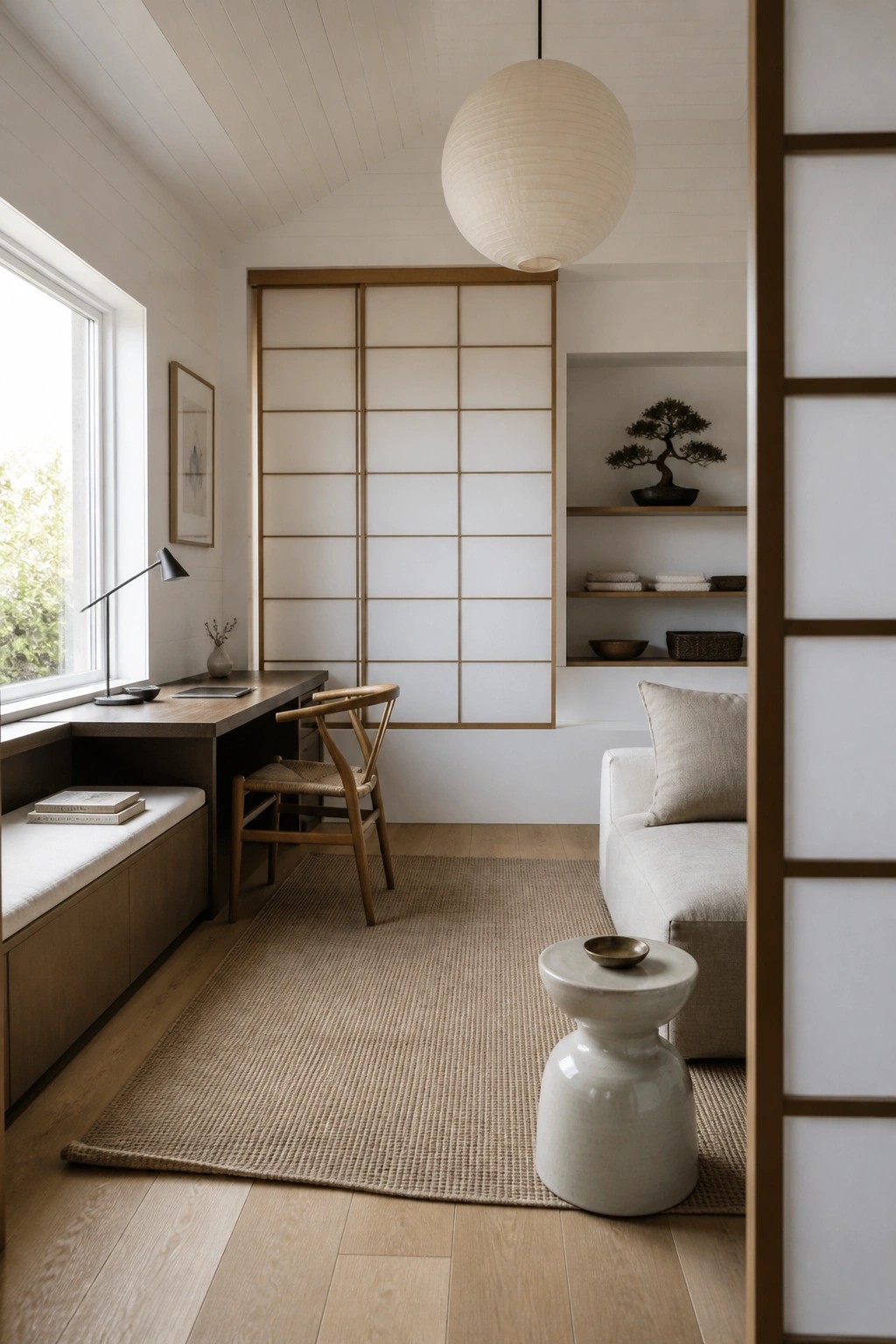
A built-in desk with surrounding cabinetry lets you add a real work spot without making the room feel like two separate zones. The key is keeping the desk at the same height and finish as the storage so it reads as part of the architecture rather than an added piece of furniture.
This setup works best in smaller homes or open-plan spaces where a full separate office is not possible. Keep the palette light and the storage closed so the area stays calm when you are not working.
Add a Desk to the Living Room

A desk in the living room gives you a spot to work without needing a whole separate office. It keeps daily tasks close to the main seating area so the room stays useful all day.
This setup works best when the desk matches the scale of the sofa and chairs. Position it along one side so it does not block the flow between the seating and the rest of the room.
Set A Desk By The Window In Your Living Room

Many people find that placing a desk near a window makes work feel more natural during the day. The light helps with focus and keeps the space from feeling closed in, especially when the desk shares the room with regular living room furniture.
This setup works best in homes where a separate office is not an option. Keep the desk small, pick a chair that matches the rest of the room, and use a rug to mark the work area without breaking up the flow.
Add a Desk to Your Living Room Built-Ins

Many people want a place to work at home without giving up the comfort of their main living space. Placing a desk right in front of built-in shelves keeps the room looking like a living room while giving you a clear spot for a laptop and papers.
This setup works best in homes that already have tall cabinetry or bookshelves along one wall. Keep the desk surface clear except for a lamp and a few daily items so the work area stays part of the room rather than taking it over.
Make the Desk Part of the Living Room

A big desk can sit right in the middle of a living room without turning the space into an office. The key is scale and placement. When the desk matches the size of the other furniture and sits on the same rugs, it reads as another piece of the room rather than a separate work zone.
This setup works best in homes where a dedicated office room is not available. Keep the desk surface clear except for daily items, and let the surrounding chairs and shelves handle the living side of the room. The result feels practical without looking like two rooms crammed together.
Add a Desk to Your Living Room for Everyday Work
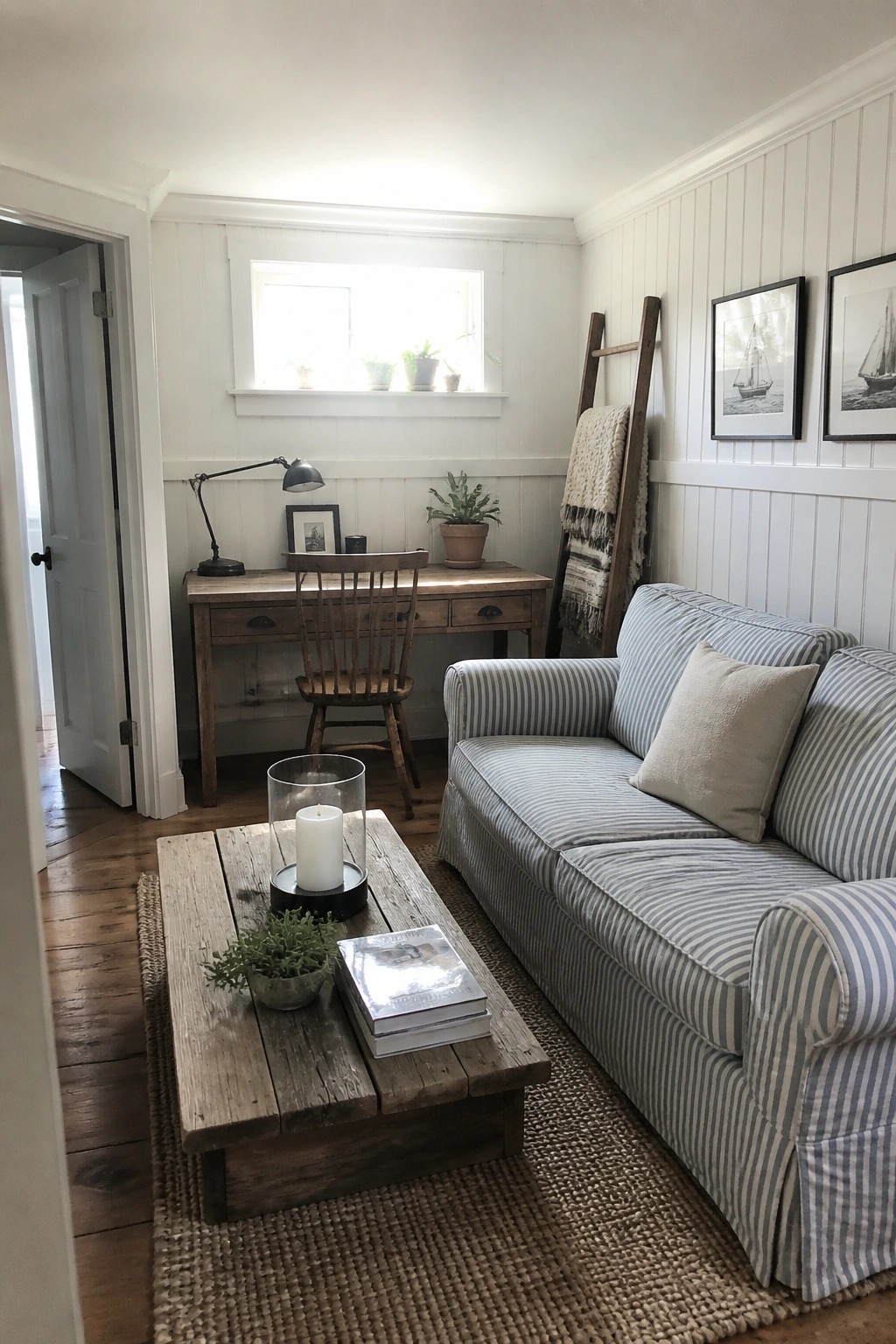
Placing a desk against the wall turns part of a living room into a usable workspace without needing a separate room. It keeps the desk out of the main traffic flow yet close enough for quick tasks during the day. The setup works especially well when the desk sits under a window for natural light and stays simple in scale.
This approach suits smaller homes or open layouts where a full office would feel too separate. Keep the desk surface clear except for a lamp and a few basics, and choose a chair that can tuck in neatly when not in use. The sofa and other living pieces stay the focus of the room while the desk handles work quietly in the background.
Dark Tones for a Living Room Office

A dark color scheme can help an office setup feel like it belongs in the living room instead of looking like an add-on. The deep walls and matching furniture keep the desk from taking over the space, and the overall mood stays calm even with work tools out in the open.
This approach works well in rooms that already have good natural light, since the dark surfaces absorb some of the glare. Stick to a few key pieces like a simple desk and one comfortable chair nearby, then use built-in shelves to hold books and supplies without adding extra furniture that would crowd the area.
Built-In Shelving That Creates Desk Space

A desk tucked into open shelving keeps the work area from taking over the room. The shelves above and around the desk hold books and everyday items, so the space still reads as part of the living area instead of a separate office.
This setup works well in smaller homes or open layouts where a full desk would feel out of place. Keep the desk surface narrow and match the finish to nearby wood tones so the whole unit blends together.
Set Up a Desk Along a Window Wall

Placing a desk right by a large window keeps the workspace bright and connected to the outdoors. The natural light helps the room feel open instead of cramped, and the view gives your eyes a break during long work hours.
This layout works especially well in living rooms that double as offices. Use a wood desk with a simple shape so it blends with the rest of the furniture, and pick a chair that tucks in neatly when you are done for the day.
Blend A Desk Into The Living Room

Many homes need a place to work without losing the comfort of the main living space. Adding a desk along one wall keeps the room usable for both tasks and downtime.
This works best when the desk shares the same wood tone as other pieces in the room and sits near the seating area. It avoids the feeling of a separate office while still giving a clear spot for a laptop and papers.
Tuck A Desk Against The Wall

Placing the desk right against the wall helps a living room stay open even when it has to work as an office. The setup feels less like a separate workstation and more like part of the regular furniture arrangement.
This works best in rooms that need to stay flexible for both work and relaxing. Keep the desk narrow, add a slim shelf above it for a lamp and a few books, and choose a simple chair that can slide out of the way when the room is used for guests.
Place a Desk in the Living Room

Many homes now keep the desk out in the main living area instead of hiding it in a separate room. This lets the space handle both work and downtime without feeling chopped up.
The setup works best in smaller homes or open layouts where adding walls is not practical. Use a sturdy desk that can handle daily use and keep the seating nearby so the room still feels like a place to relax after hours.
Build Workspace Into A Window Seat Bench

Many living rooms already have a window seat, and turning part of it into a workspace keeps the room feeling open. A small desk placed right in front of the bench gives you a spot to work without adding another piece of furniture that takes up floor space.
This idea works best in homes that need the living room to stay relaxed and usable after work hours. The storage under the seat helps hide papers and supplies, and the windows provide steady light so the area does not feel like a separate office corner.
Dark Walls Define The Work Area
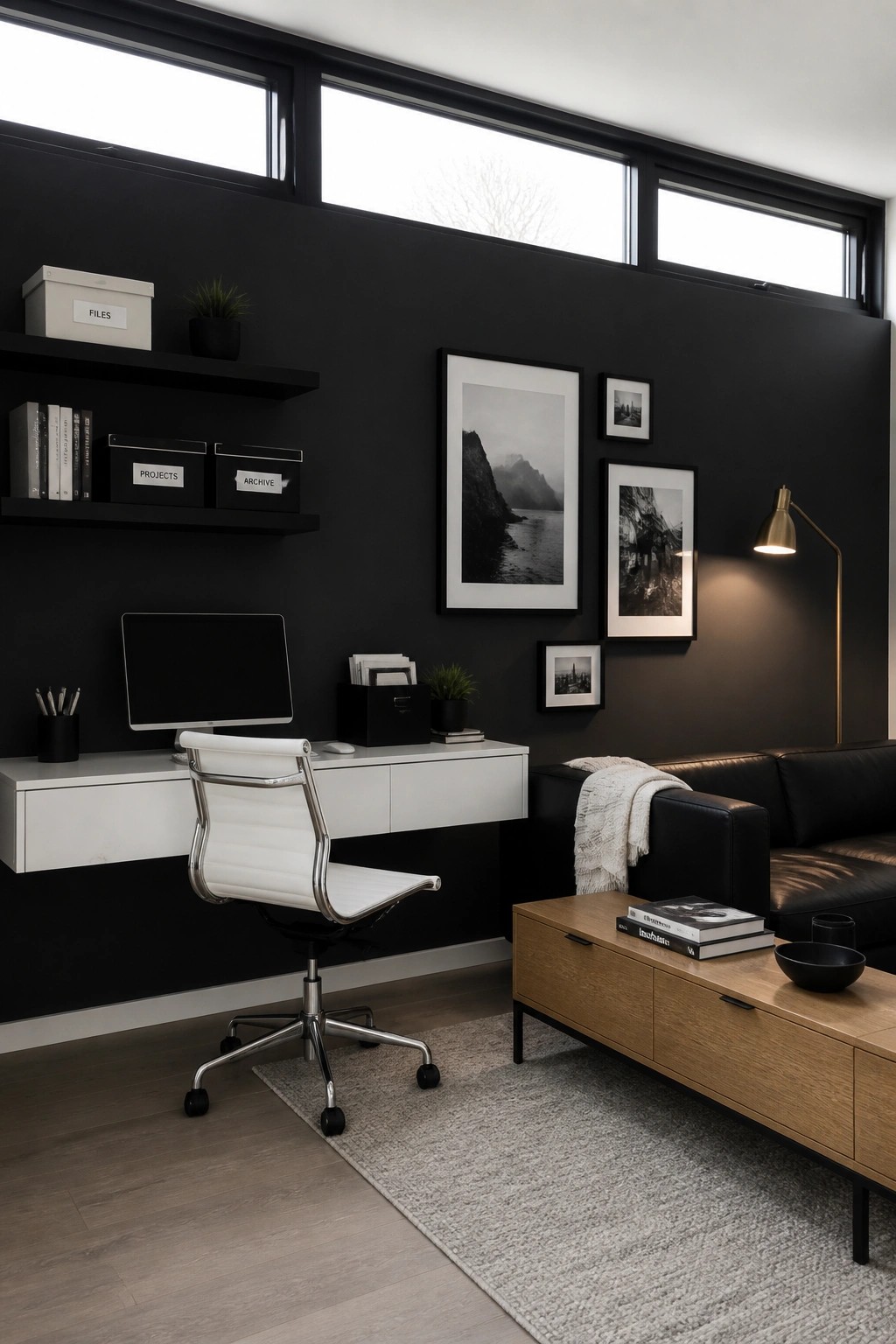
Dark walls can help turn part of a living room into a dedicated workspace without making the room feel chopped up. The deep color creates a quiet backdrop that keeps the desk area feeling purposeful while the rest of the room stays open for sitting and relaxing.
This approach works best in rooms that already get decent light, since the dark paint can make things feel smaller if there is not enough brightness coming in. Keep the desk and chair light in tone so they stand out cleanly against the walls and the space stays balanced.
Built-In Shelving Around a Desk
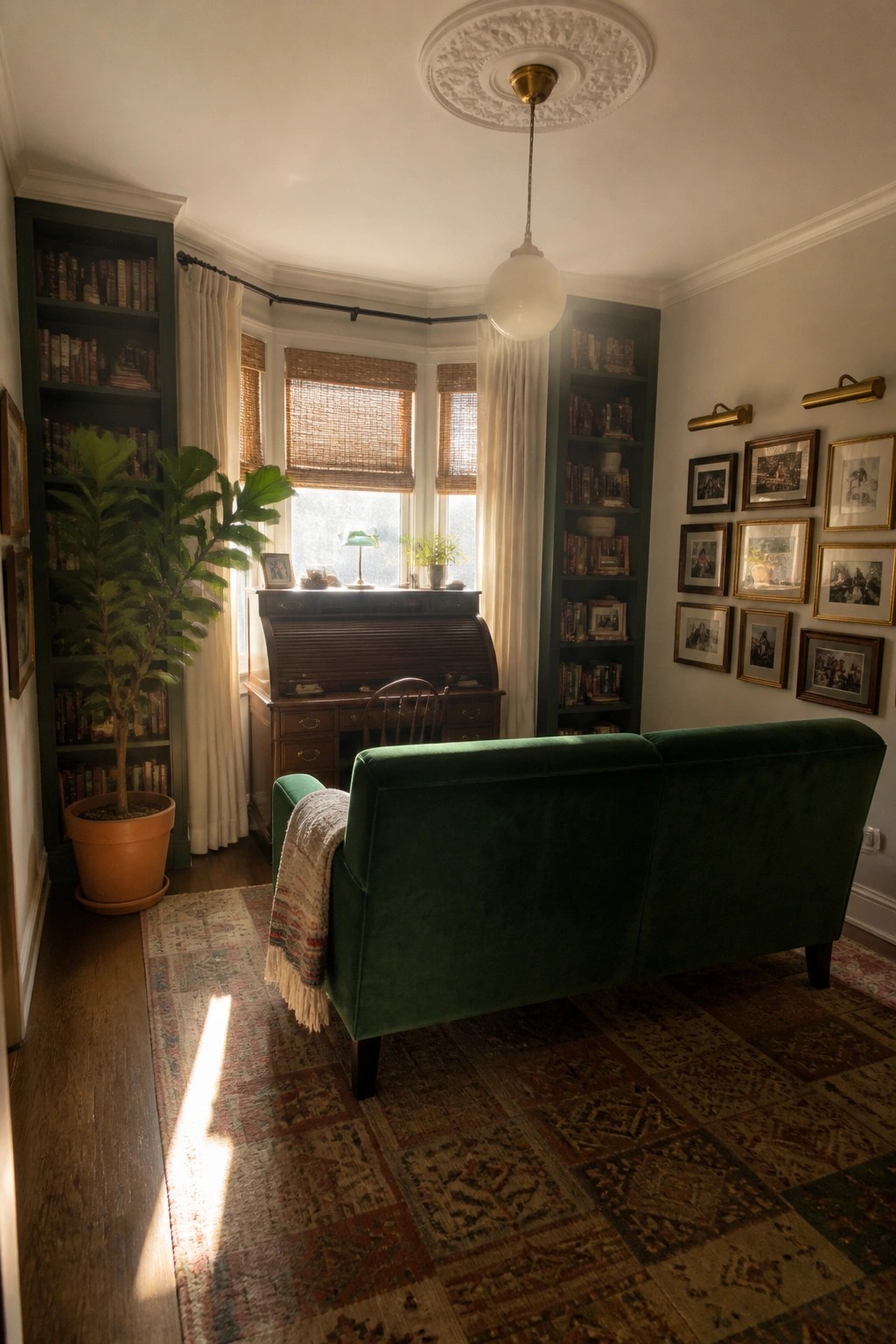
Built-in shelves on either side of a desk can turn a corner of the living room into a working spot without making the whole room feel like an office. The shelves give the desk a settled place in the room and add storage that feels natural with the rest of the furniture.
This setup works best in rooms that already have some architectural detail like a bay window or a wide wall. Keep the seating area in front of the desk so the space stays usable for both work and everyday living. Dark shelves can help the desk blend in rather than stand out as a separate zone.
Frequently Asked Questions
Q: How do I keep my living room from feeling like a full office when guests drop by?
A: Roll a slim desk on wheels into a corner and cover it with a throw when you finish work. Store your laptop and papers in a basket that matches your other decor. This lets the room switch back to normal fast.
Q: What if my back hurts from sitting on the couch all day?
A: Add a firm cushion behind you and prop your feet on a low stool. Shift positions every hour and stand for calls when you can. Your regular sofa works fine with these tweaks.
Q: How do I handle the mess of papers and chargers on my desk?
A: Grab a couple of simple trays or boxes that sit on the surface. Sort mail into one and tuck cords into the other at night. But keep only the items you use daily out in the open.
