

Turning a spare room into an office always starts with figuring out the flow of the space, because a desk that blocks the window or a chair that leaves no room to move around quickly becomes frustrating.
I learned this the hard way in my own house when I realized the storage I added first was not the kind I actually reached for during a busy workday.
Storage placement changes everything.
Ideas that separate work zones from relaxation spots within the same room tend to hold up better once the novelty of a new setup wears off.
Testing a few of these focused arrangements helped me see which ones would adapt well to the way I actually use my office on most days.
Built-In Shelving Keeps An Office Organized

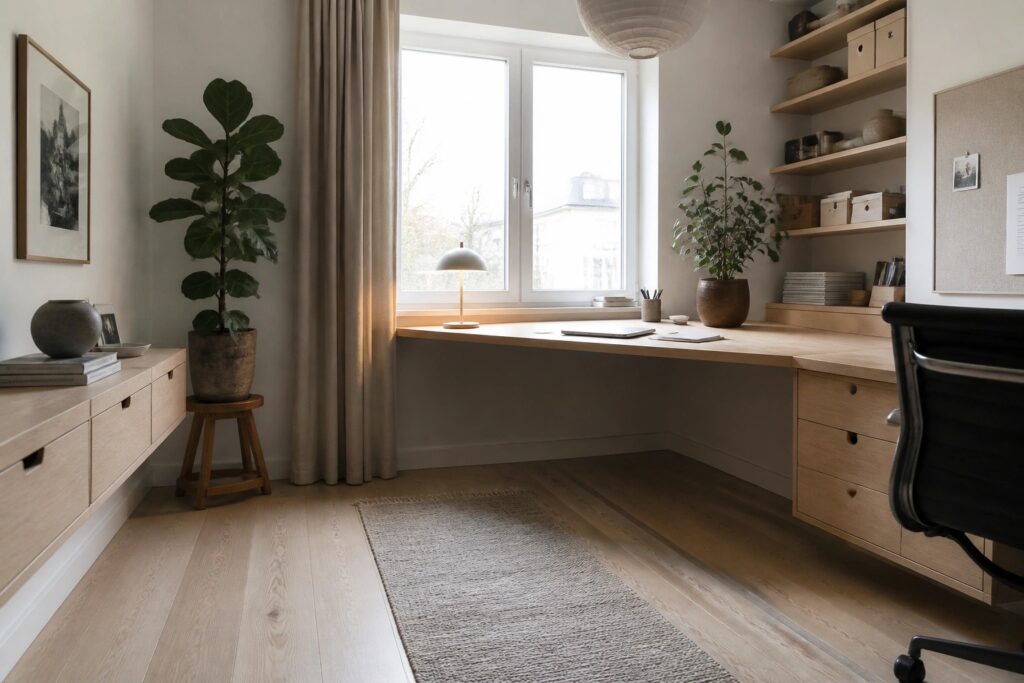
Built-in shelving along one wall gives a spare room office a steady place for papers, books, and supplies without crowding the floor. The open shelves hold boxes and a few decorative items while the lower cabinets hide what you do not need every day, which helps the room stay calm and focused.
This works best in rooms that are not very wide. Run a long desk in front of the shelving or under a window so you can reach what you need without getting up. Keep the top shelves for things you use less often and the lower ones for daily files.
Run a Desk Along One Wall in a Narrow Spare Room
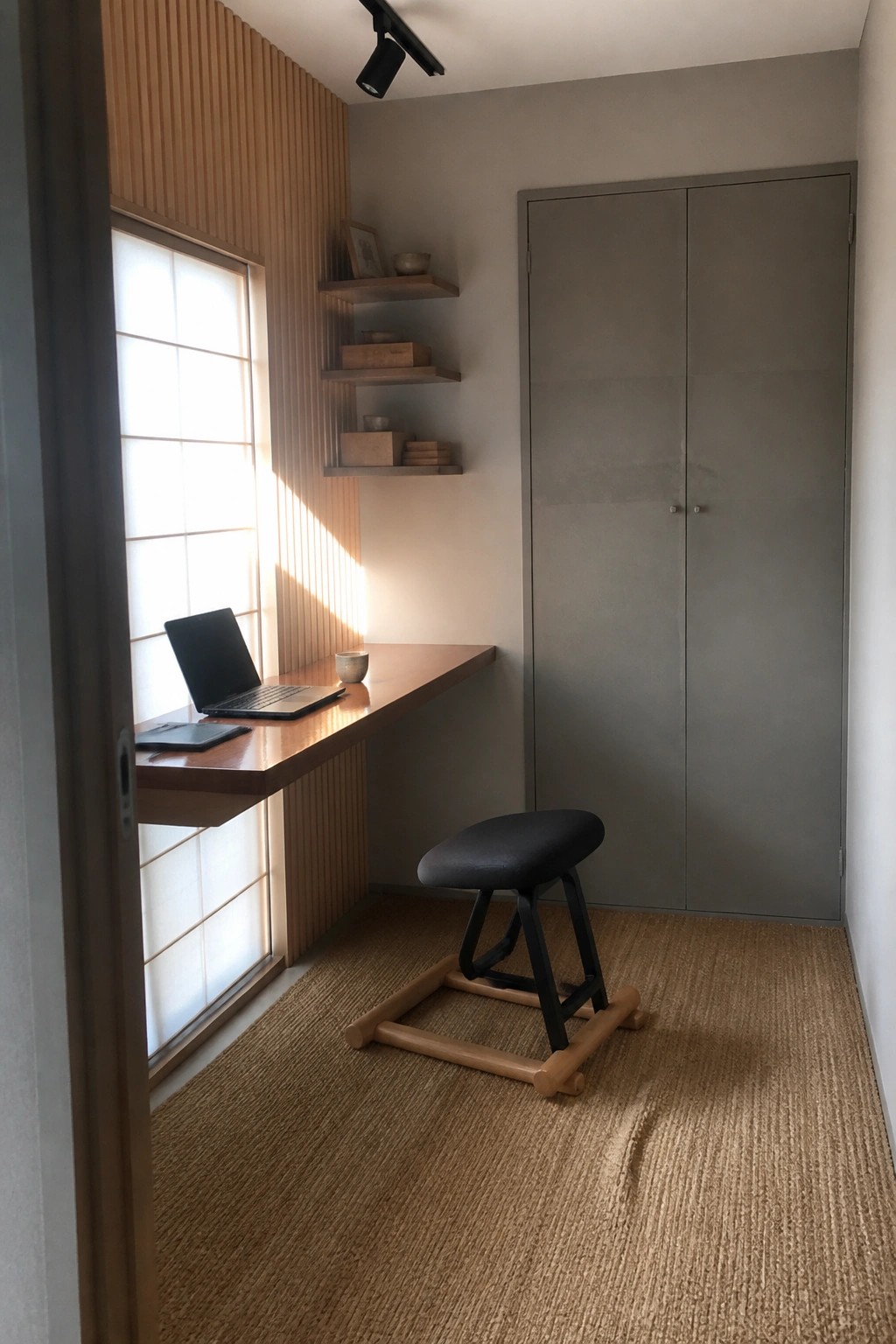
A desk that sits flat against one wall leaves the rest of the room open and easy to move through. This works well in spare rooms that are long and tight, where a centered desk would quickly make the space feel crowded.
Floating shelves above the desk hold a few supplies within reach, while a tall cabinet on the facing wall takes care of everything else. The setup keeps the floor clear and the work area simple, which helps with focus during the day.
Built-In Shelves Above a Daybed

One way to keep a spare room office from feeling cluttered is to run built-in shelves above a daybed. The shelves hold books, baskets, and supplies in one place, while the daybed gives you extra seating without adding another piece of furniture. This arrangement leaves the main desk area clear and makes the room feel more settled.
It suits a guest room that also needs to work as an office, especially when space is limited. Keep the shelves organized with matching bins and stack books by height so nothing looks messy. The daybed can stay simple with a few pillows, and the whole setup stays practical without taking over the room.
Open Shelving Keeps Supplies Within Reach

One simple way to support focus in a spare room office is to add tall open shelving along one wall. It holds files, boxes, and everyday items in plain view so you can grab what you need without digging through drawers.
This setup works best in rooms that double as guest space or hobby areas because it stays useful without taking up floor space. Keep the shelves from getting overcrowded by rotating items you use less often into closed bins on the top levels.
Place the Desk Right by the Windows
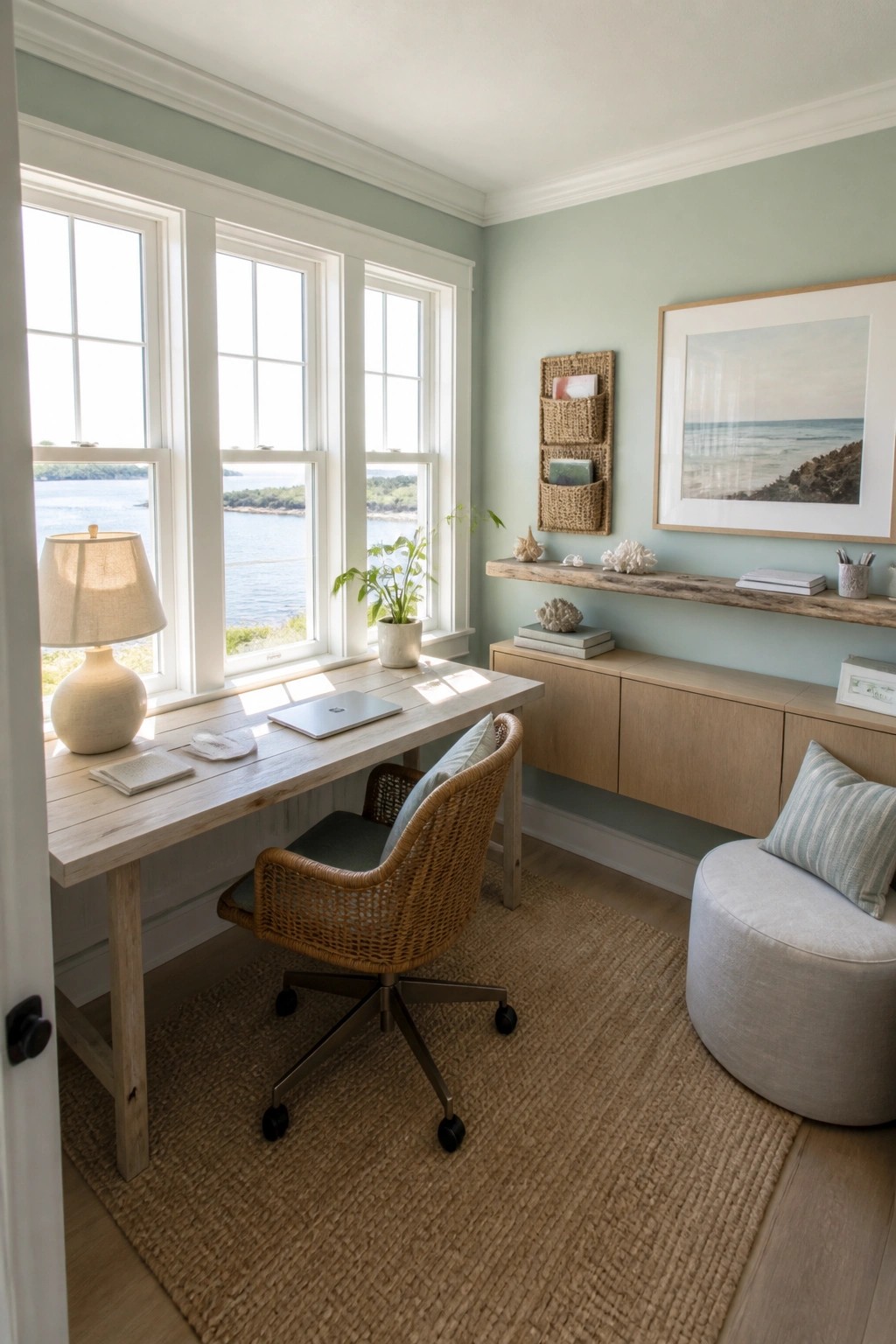
Putting the desk directly under a set of windows brings in steady natural light that helps with focus during long work hours. The view outside also gives the eyes a place to rest without needing to leave the room. This setup works especially well in spare rooms that already have good window placement.
Keep any storage low and along the opposite wall so the desk area stays clear and the light is not blocked. It suits smaller homes where the office needs to feel open rather than closed in. Avoid piling too many items on the sill itself.
Built-In Shelving That Supports Daily Work

Built-in shelving around a desk gives a spare room office a clear sense of order. Everything stays in one place, papers and books remain visible, and the workspace feels complete without extra furniture crowding the room. The dark finish on the wood helps the unit blend into the walls so the focus stays on the work surface rather than on storage pieces.
This setup works best in smaller spare rooms where floor space is limited. It suits homes that already have trim or millwork details, and it pairs well with a simple chair and minimal desk accessories. Avoid filling every shelf if you want the room to stay calm.
Storage Built Right Into The Desk Area
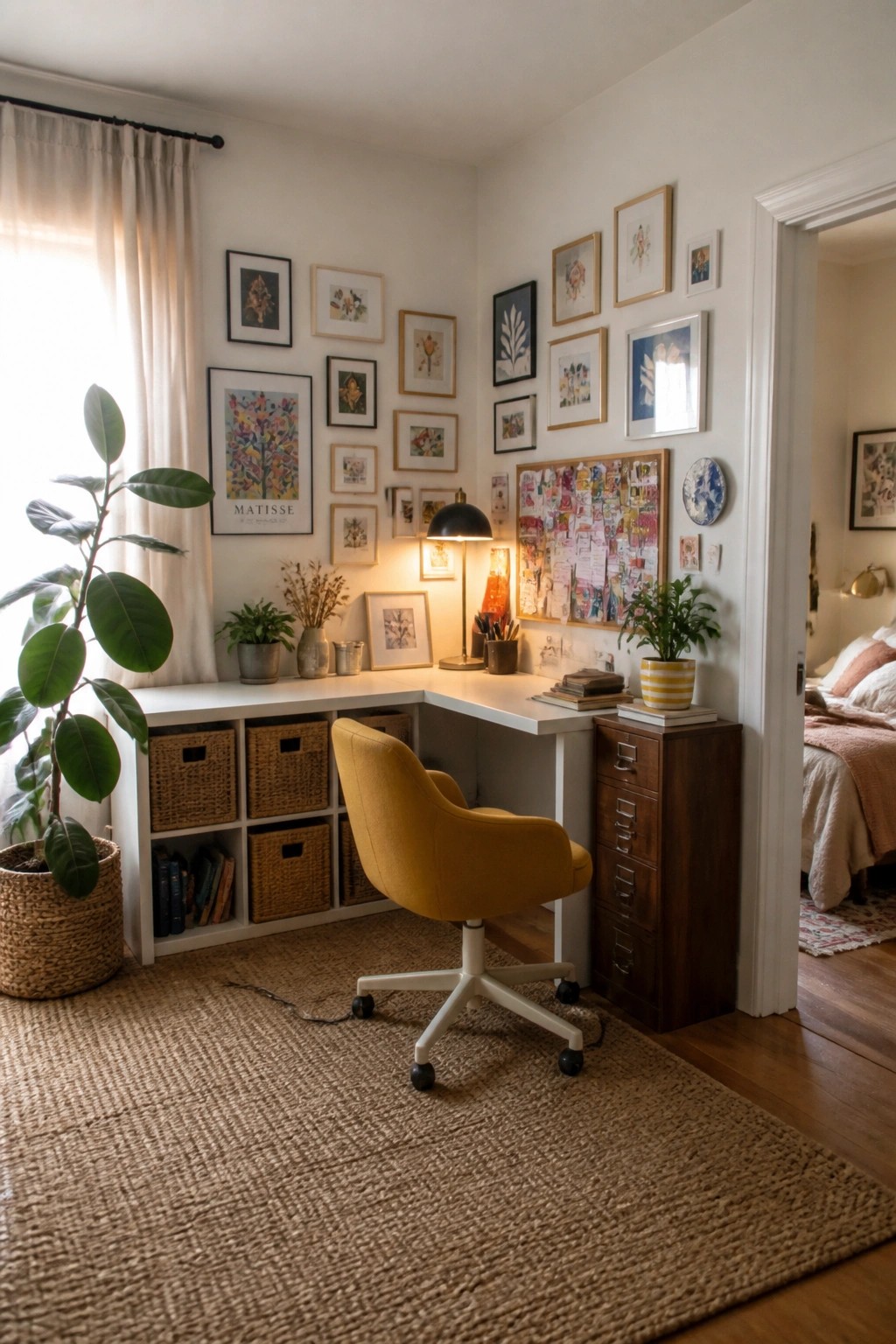
Many spare rooms work better when the desk includes storage right underneath instead of adding separate pieces later. Baskets and low cubbies keep supplies close without spreading clutter across the floor or the work surface.
This setup suits smaller rooms that need to stay calm and focused. Place baskets for things used daily and save the filing cabinet for papers that need to stay out of view.
Built-In Storage Keeps A Spare Office Organized

Built-ins like a long desk with deep drawers below and open shelves above make it easier to stay focused. Everything has a place, so the work surface stays clear and supplies stay within reach without extra furniture taking up floor space.
This approach works best in smaller spare rooms where you need both a desk and storage but do not want the space to feel crowded. Keep the shelves for items used often and use the drawers for files and supplies that can stay out of sight.
Place Shelving Right Beside the Desk
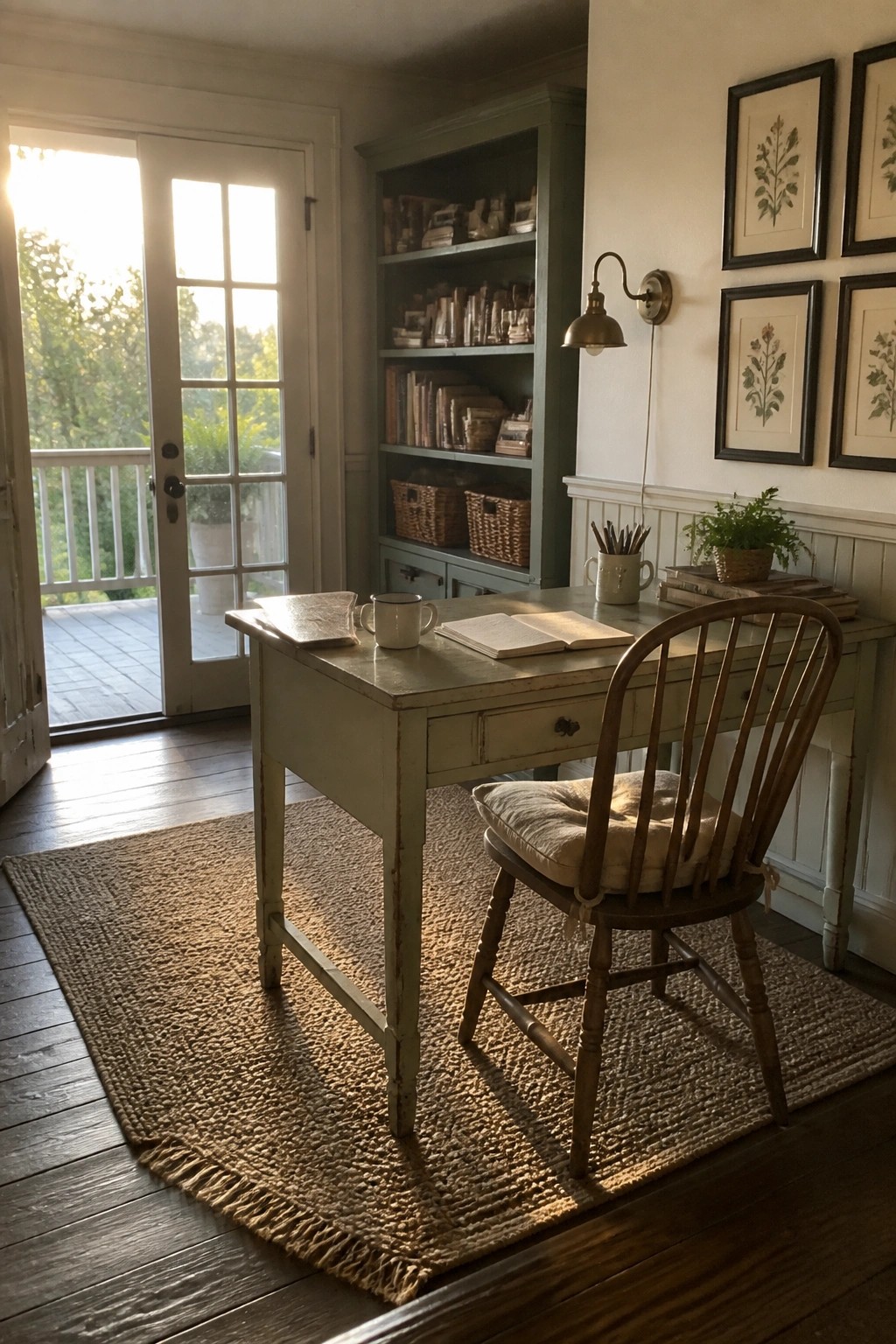
Keeping storage close to the desk makes it easier to stay organized without breaking focus. Open shelves let you grab what you need quickly and put it back just as fast, so papers and books do not pile up on the work surface.
This setup suits spare rooms that double as offices. Use a simple desk with a tall unit next to it, and keep only daily items within reach while storing the rest higher up.
Built-In Cabinets Help Keep A Spare Room Office Organized

Many spare rooms feel more useful once they have solid storage built right into the walls. Tall cabinets that run floor to ceiling give you room for files, supplies, and equipment while leaving the floor clear for a simple desk and chair.
This approach works best in smaller homes where you want the office to stay calm and uncluttered. It lets you tuck everything away at the end of the day so the space feels less like a workspace and more like part of the rest of the house.
Define The Workspace With A Large Area Rug
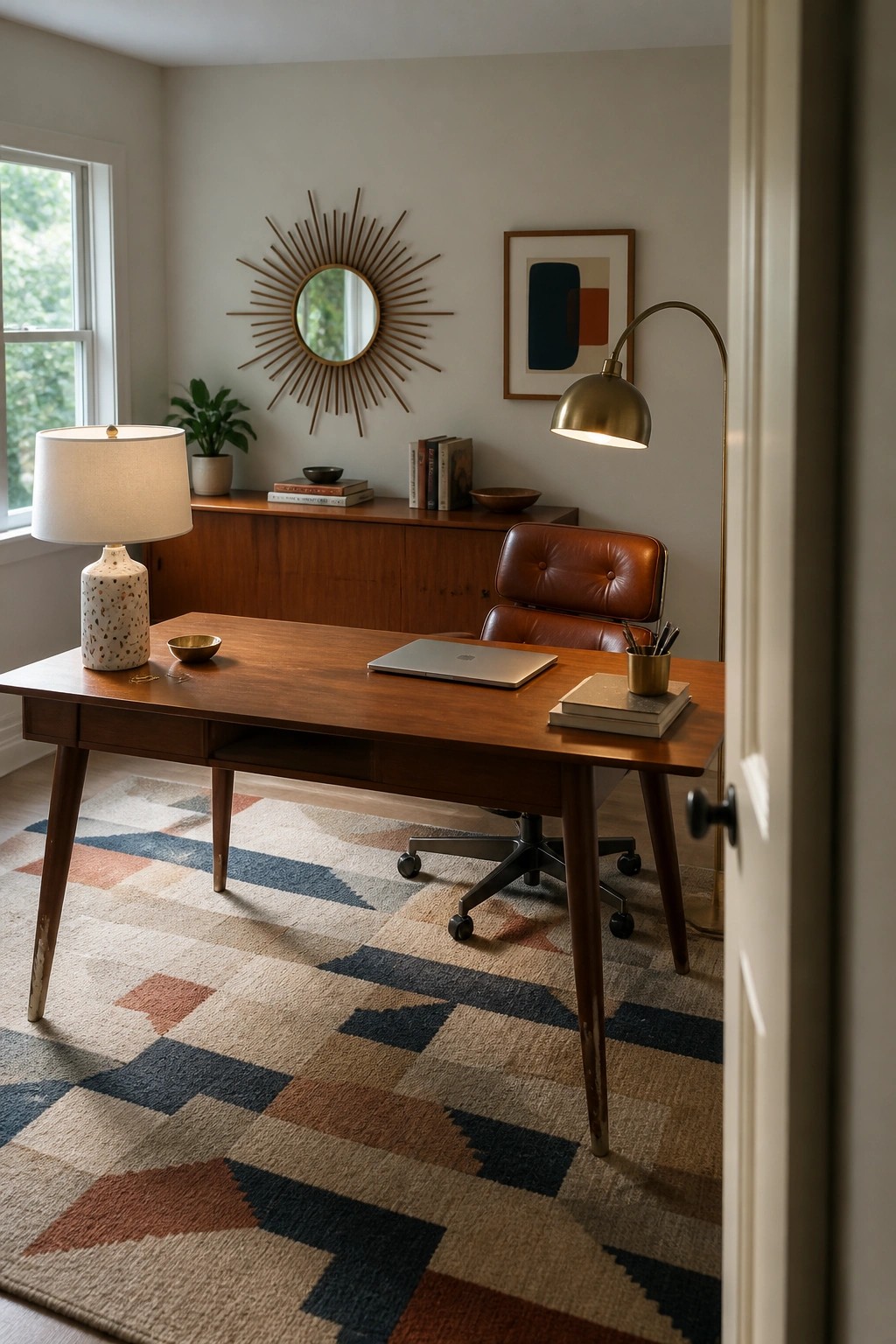
A large rug under the desk creates a clear work zone that helps the room feel more organized. It adds warmth and a bit of pattern without needing extra furniture or built-ins.
This setup works best in a spare room with wood floors. Keep the rug big enough so the chair stays on it during normal movement, and choose a low-pile style if you want easy rolling.
Position the Desk Near a Window
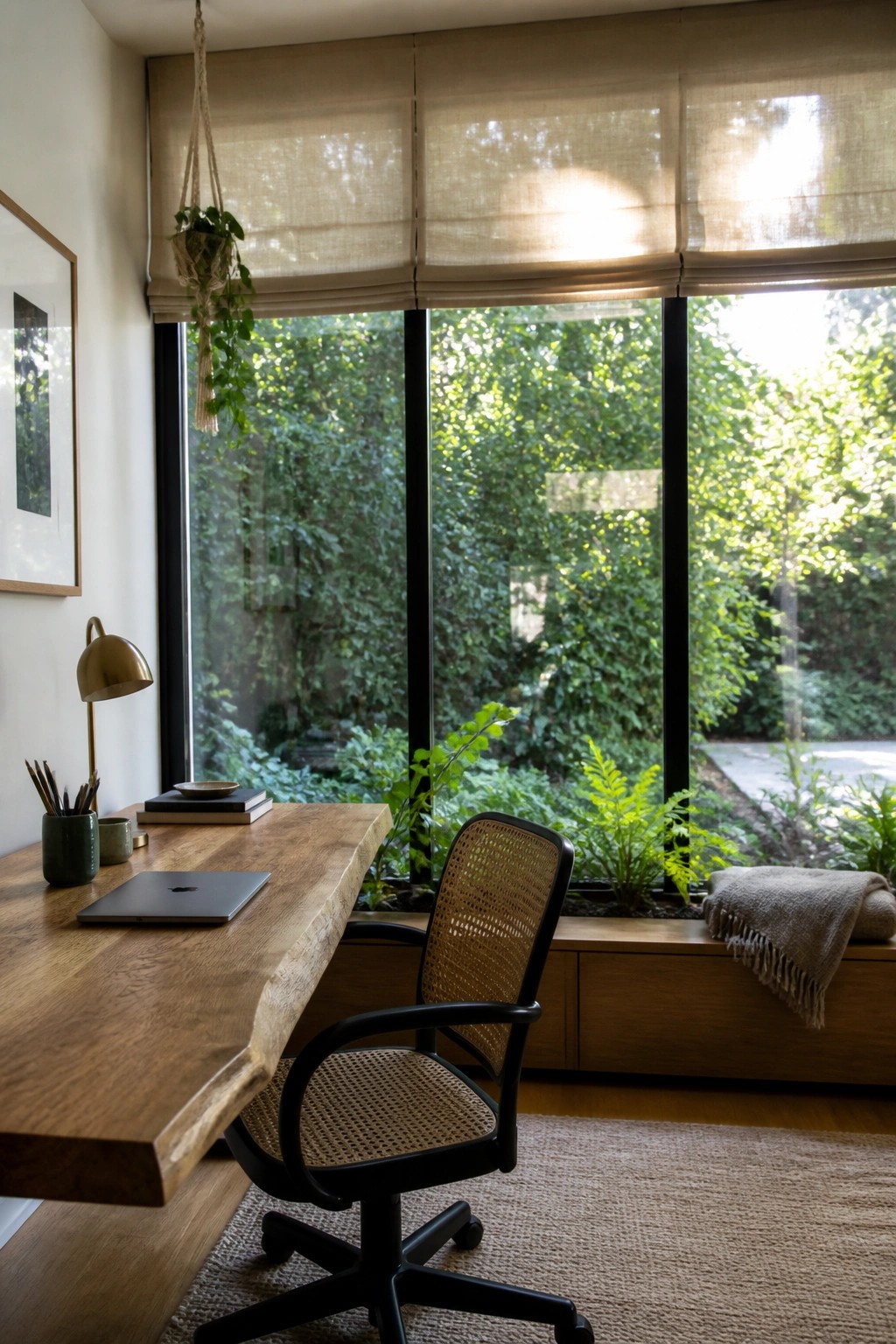
Placing the desk right in front of a large window gives the workspace a steady source of natural light and a view that helps the mind stay settled during long hours. Many spare rooms already have this kind of window, and using it as the main focal point keeps the setup simple without extra effort.
This approach works best when the room is used mainly for focused tasks rather than frequent meetings. Keep the windowsill clear and choose a chair that sits at a comfortable height so the view stays useful instead of distracting.
Built-In Desk With Storage Keeps An Attic Office Organized
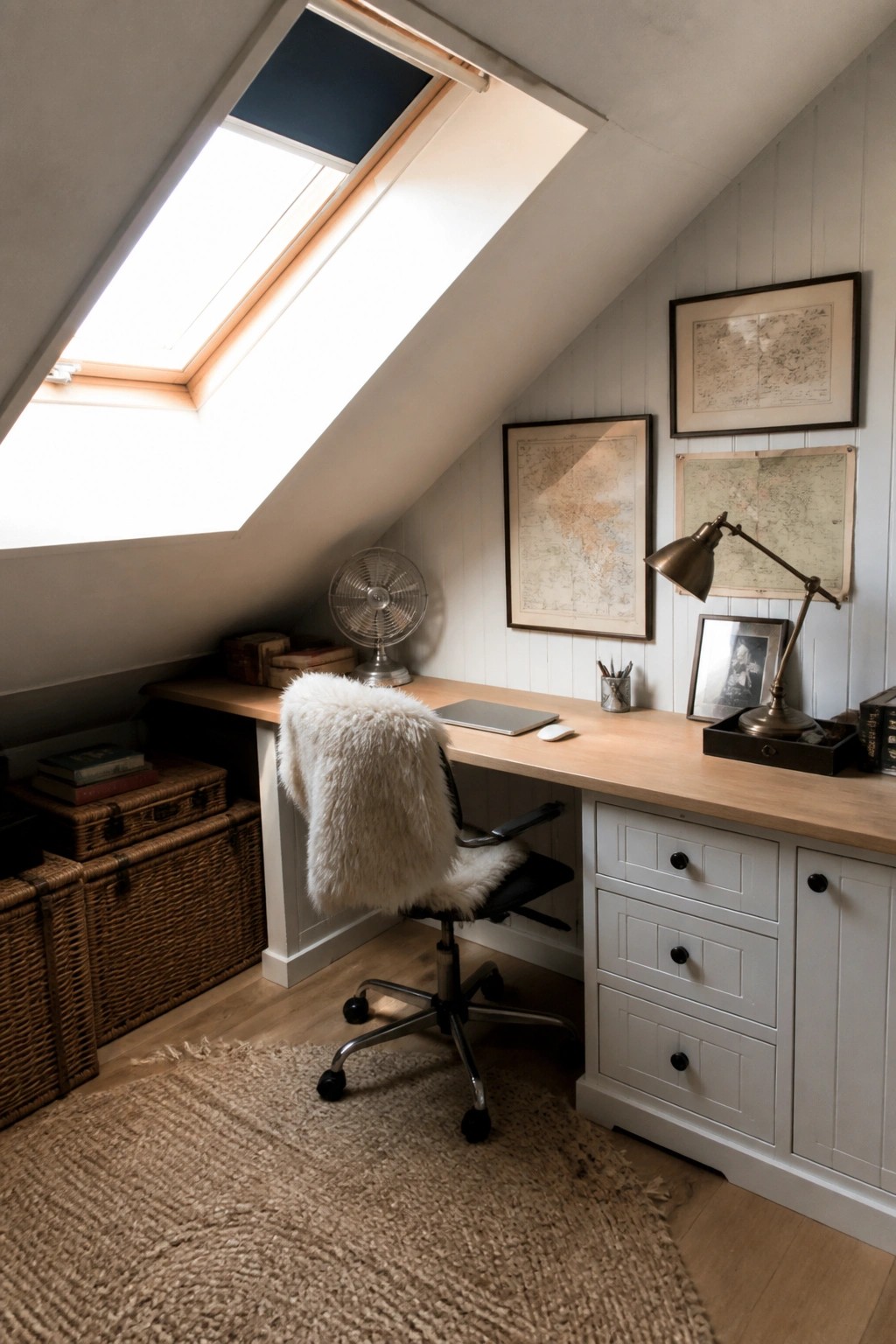
A built-in desk that follows the slope of the ceiling turns an awkward attic into a steady place to work. The long surface gives room for a laptop and a few essentials while the cabinets and open space underneath hold files and supplies without adding extra furniture.
This approach works well in smaller homes where the attic is the only spare room available. Keep the storage simple with baskets or drawers so the surface stays clear and the focus stays on the work rather than on clutter.
Try A Mural Wall In Your Spare Room Office

A mural gives the room a clear focal point without adding clutter. The large botanical pattern brings in color and a bit of energy that can help the space feel more inviting for daily work.
This approach works best in smaller rooms where you want one strong element rather than many small ones. Keep the furniture and storage simple so the wall sets the tone without competing for attention.
Built-In Shelving Keeps A Small Office Organized

Built-in shelves work well in a spare room office because they add storage without taking up floor space. You can tuck boxes, books, and supplies into the recessed area so the desk stays clear for actual work.
This setup suits smaller rooms or homes that need the space to feel open rather than crowded. Keep the shelves simple with matching bins and avoid filling every spot so the room stays calm enough to focus.
Floating Corner Desks Free Up Floor Space
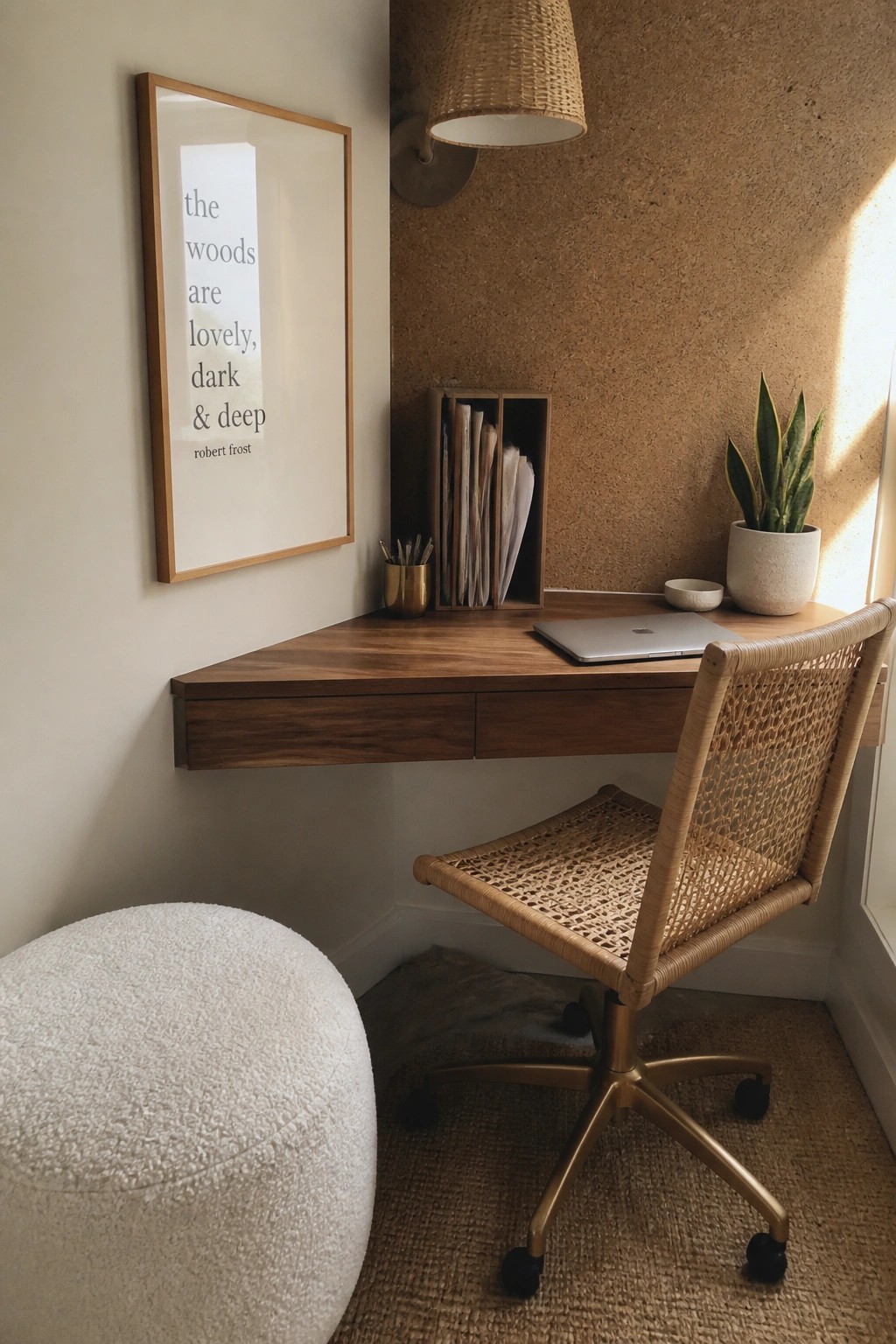
A floating desk mounted into the corner gives you a dedicated work surface without eating into the room. It leaves the floor open underneath so the space stays open and easier to move around in, which helps keep the focus on the work itself rather than the clutter.
This kind of desk works best in spare rooms that need to stay flexible for other uses. Add a couple of drawers or a small file holder on top and the surface stays clear without extra furniture taking up room.
Built-In Desks For Rooms That Need To Serve Two Roles

Many spare rooms end up handling both guests and work, so a desk that fits inside existing cabinetry keeps the space from feeling split in two. The setup stays compact while giving you a clear spot for a laptop and papers without spreading clutter across the rest of the room.
This approach works best in smaller homes or when the room still needs to look like a bedroom most of the time. Keep the shelving above the desk for files and supplies so daily items stay organized and within reach.
A Drop-Front Desk Keeps Supplies Sorted
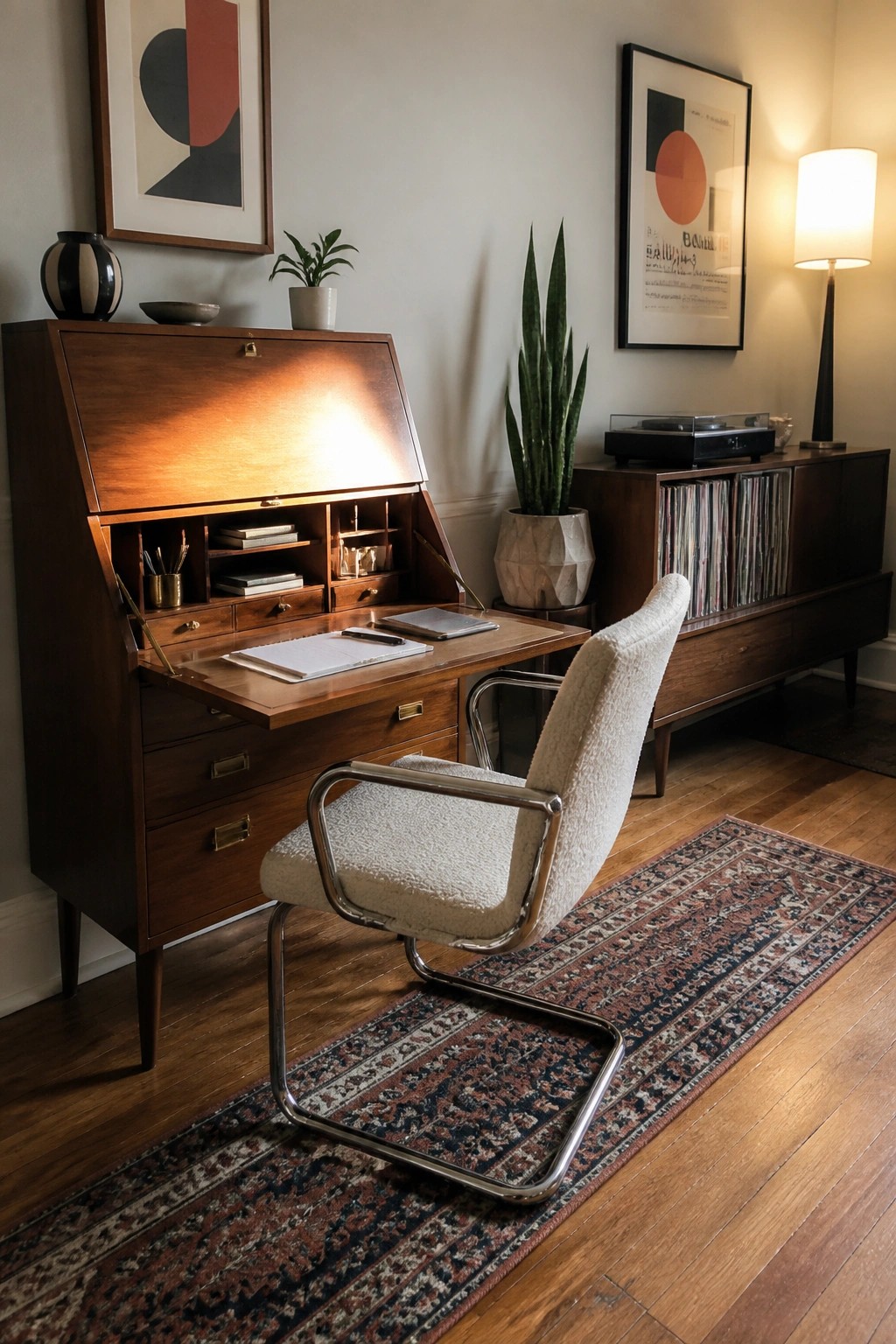
A drop-front desk works well in a spare room office because the open surface gives you room to spread out while the built-in shelves and drawers hold everything else in one place. This setup cuts down on clutter and makes it easier to stay focused during the workday.
It suits smaller homes where the office needs to feel calm at the end of the day. Look for one with enough interior compartments for papers and supplies so the room stays neat when the front is closed.
Frequently Asked Questions
Q: How do I stop papers from piling up on my desk every day? A: Sort mail and notes into two trays as soon as they land on the surface. One tray holds what needs action this week and the other holds items to file later. Clear both trays at the end of Friday so the desk starts fresh each Monday.
Q: Where can I hide the printer without losing easy access? A: Slide it onto a pull-out shelf inside a low cabinet. Keep the door open only while printing and close it again when done. This keeps the main work area open and cuts down on visual noise.
Q: What if I need to use the room for guests on weekends? A: Pick a desk that folds flat against the wall and store the chair in a closet. Add a daybed or futon that doubles as seating during the week. The setup shifts in under ten minutes when company arrives.
