

When I tried turning a narrow spare room into a workspace, the first thing that became clear was how every piece had to earn its spot or the whole area started to feel smaller by the end of the day.
Storage that hides clutter without eating floor space tends to matter more than most people expect once they actually sit down to work there.
Small layout tweaks often change everything.
I have noticed that ideas built around daily movement and reach end up feeling more useful than ones that only look neat in photos.
Testing one adjustment at a time has helped me see which changes actually hold up once real work begins.
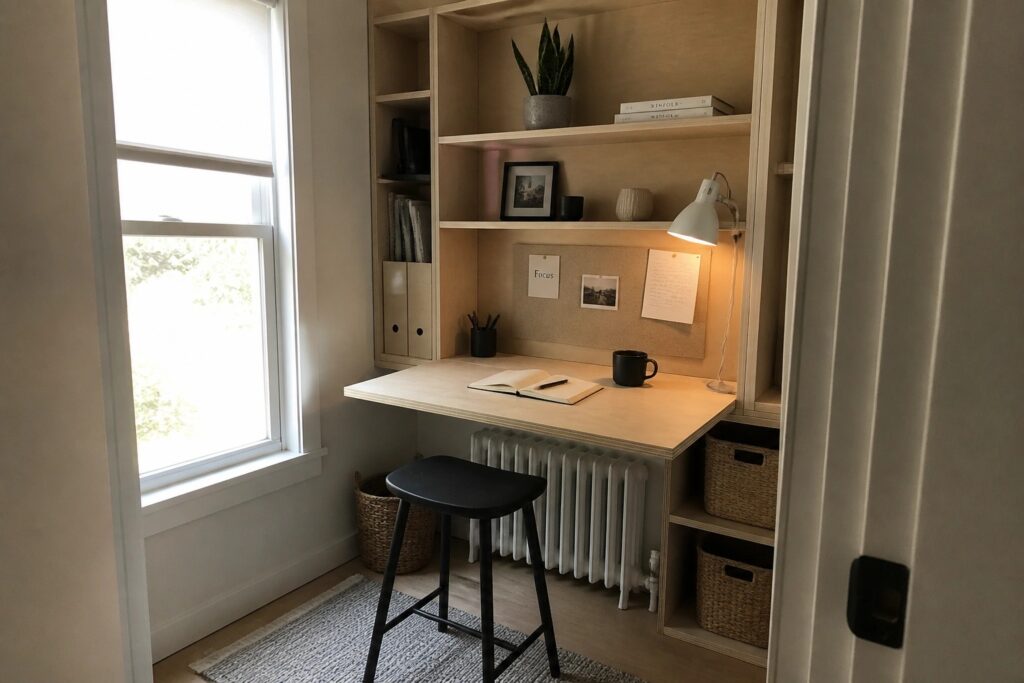
Built-In Desks Make Good Use Of Alcoves

Small rooms often leave you with leftover wall space that feels wasted. A built-in desk tucked into an alcove turns that spot into a real workspace without adding bulky furniture that crowds the floor.
This works well in apartments or homes where rooms serve more than one purpose. Keep the shelves above open for books and supplies, and choose a stool that slides underneath when not in use so the area stays clear.
Fit a Desk Under a Window
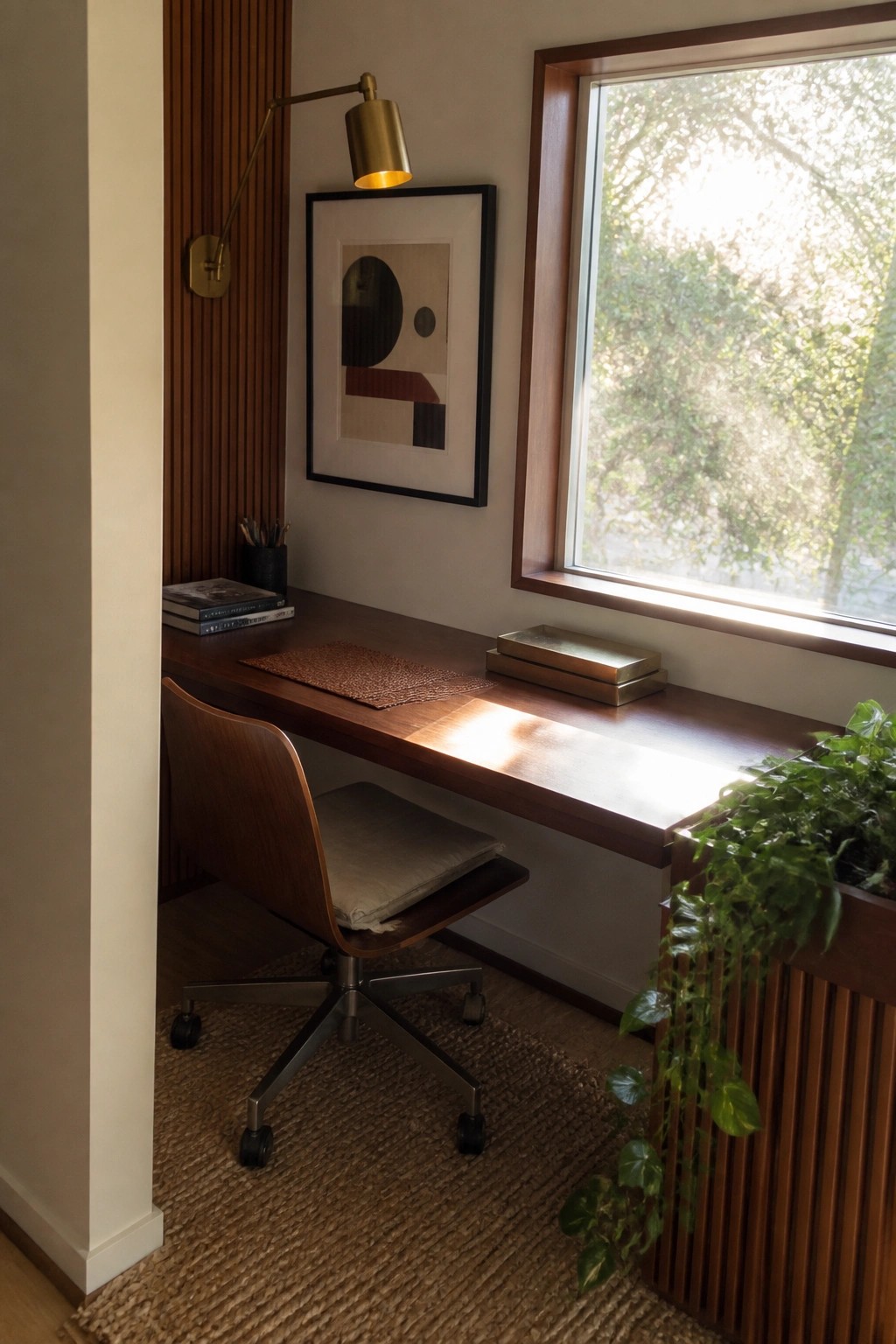
Many small rooms feel more useful once the desk sits right under the window. The light lands directly on the work surface and the view keeps the spot from feeling too closed in.
This setup works best in bedrooms or living areas where you need a workspace but lack a full room. Keep the desk narrow and add a wall lamp so the surface stays clear for daily use.
Mount a Wall Desk on the Balcony
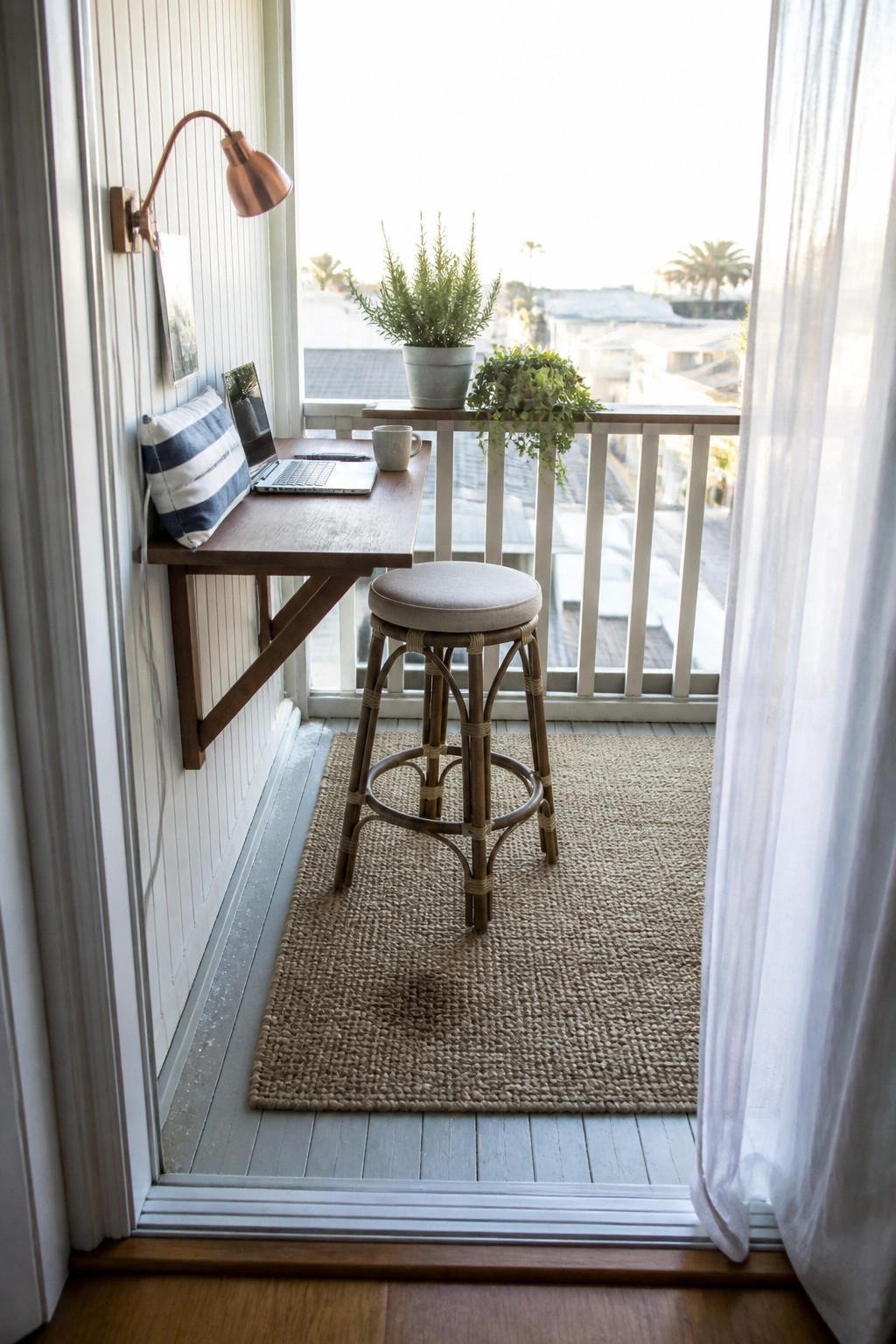
A wall mounted desk makes good use of a narrow balcony that might otherwise sit empty. It keeps the floor clear so the space still feels open and lets you step outside without losing room for a chair or stool.
This works best in apartments or homes where indoor space is tight. Pick a desk that folds up when not in use and add a simple stool that can be tucked away to keep the area from feeling crowded.
Create Extra Workspace With a Pull-Out Shelf
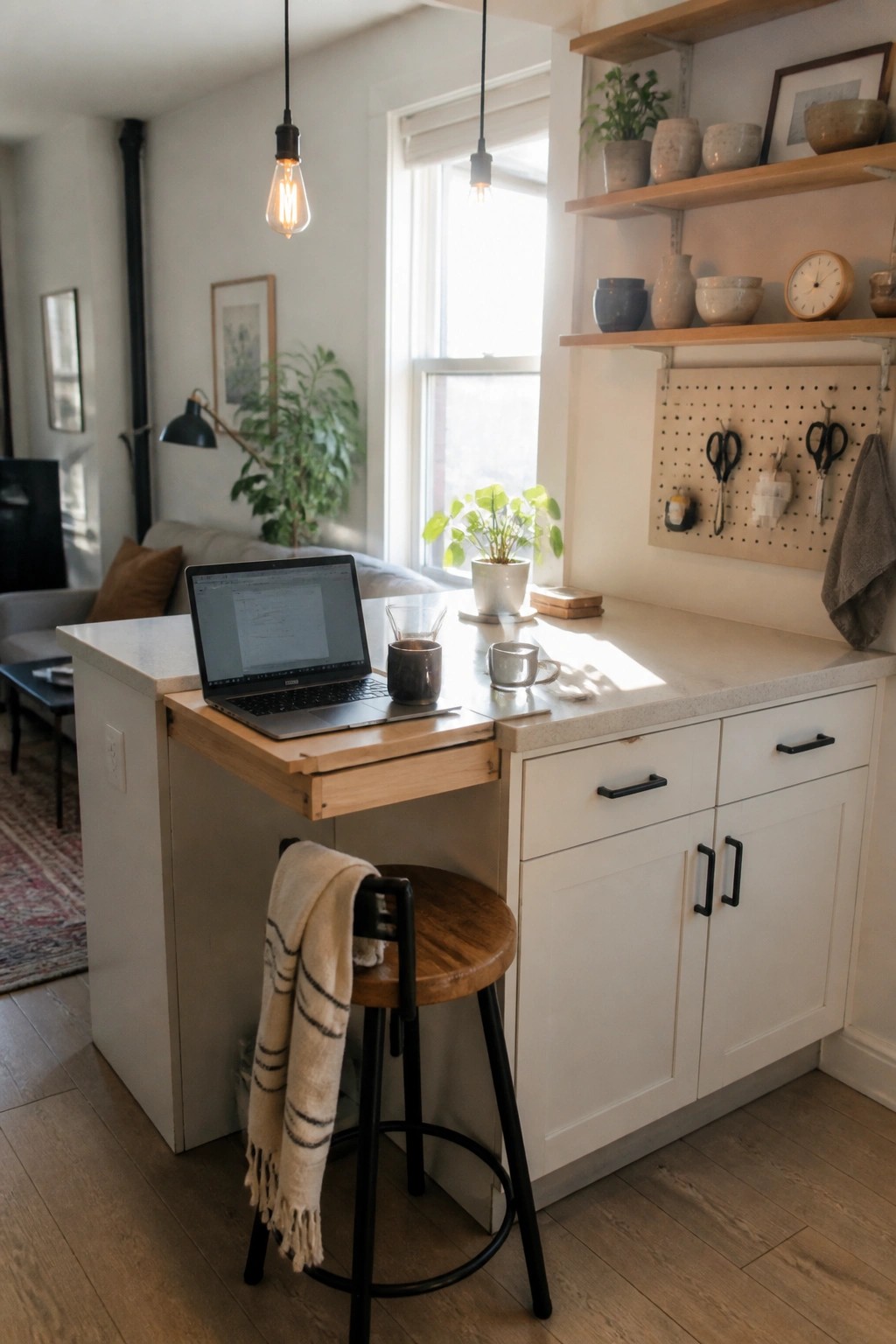
A pull-out shelf attached to the side of a cabinet or island gives you a usable desk surface in spaces that otherwise have none. It keeps the laptop and a few daily items at the right height without taking up floor space when the work is done.
This setup works best in open kitchens or living areas where a full desk would crowd the room. Choose a stool that slides underneath and keep the surface clear so the area can switch back to regular use quickly.
Mount the Desk to Free Floor Space
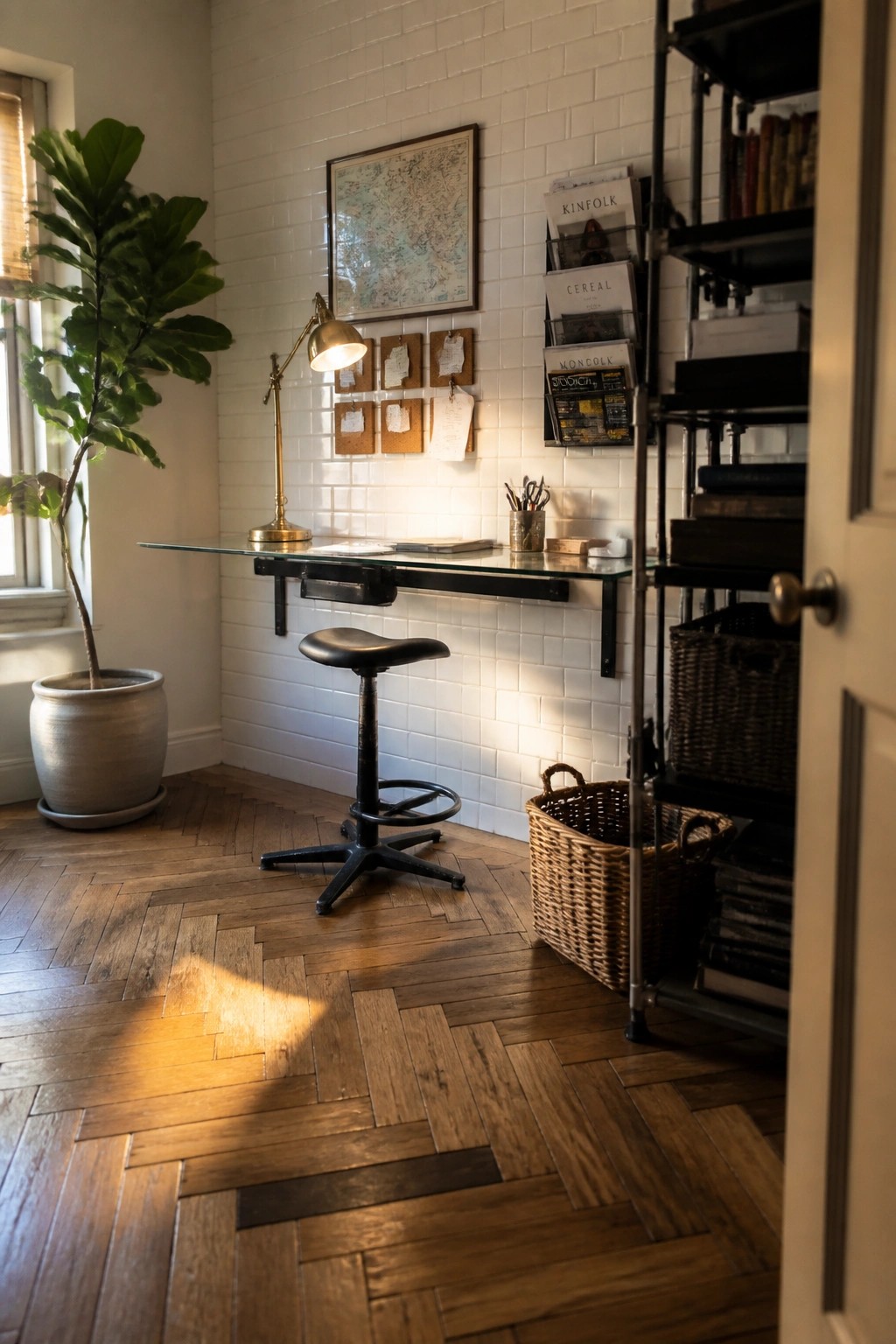
Mounting the desk straight to the wall helps a small office stay open and usable. It removes the bulk of legs and supports underneath, so the floor stays clear and the room feels less crowded even when the space is tight.
This setup works best in apartments or rooms that double as something else during the day. Pair it with simple wall racks or boards to hold papers and supplies, and keep the desktop itself for just the work at hand.
Built-Ins Fit A Desk Into A Small Space
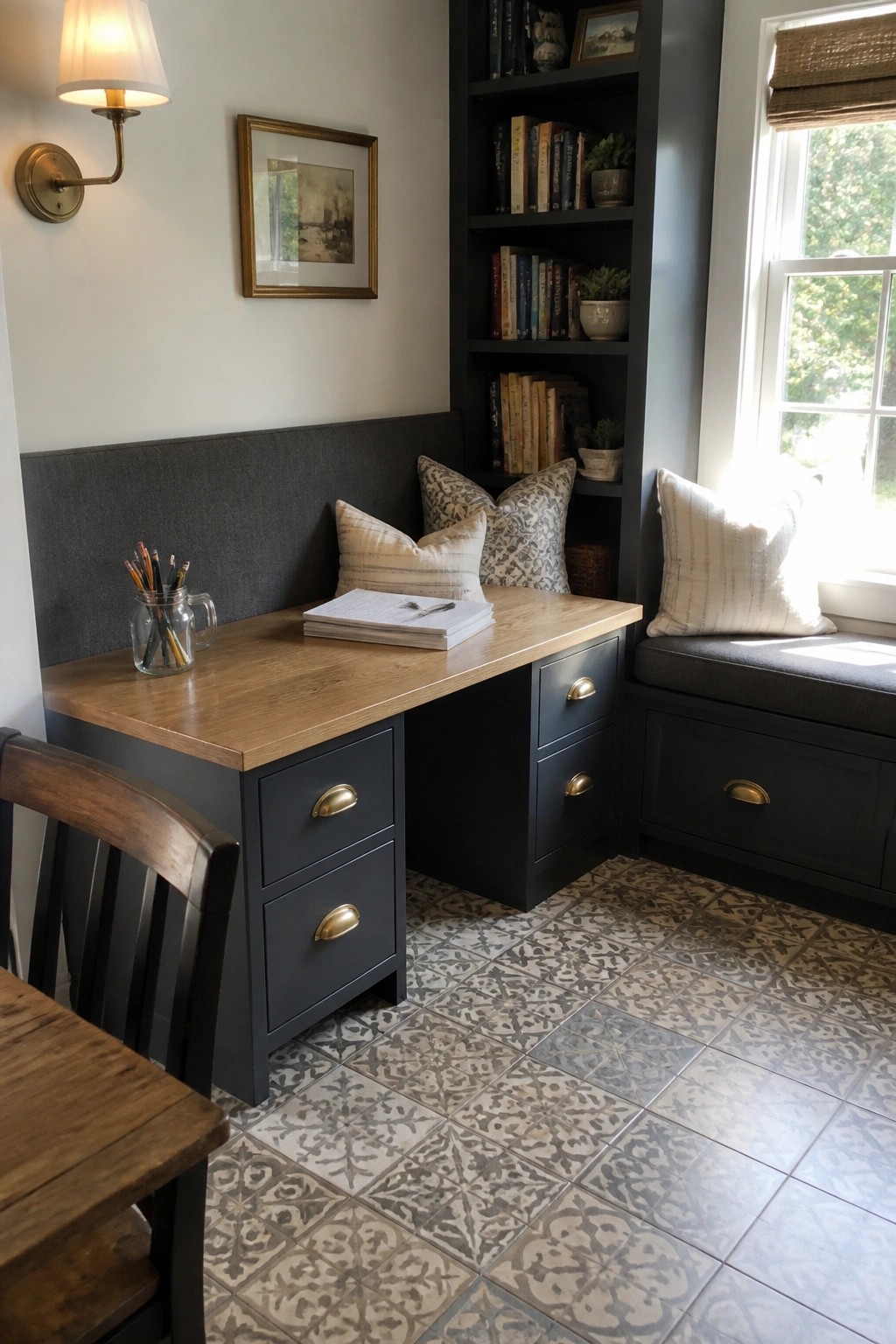
Built-ins work well when you need a workspace but do not have a whole room to spare. A desk surface with drawers below and shelves above keeps the area organized and uses the wall height instead of floor space.
This approach suits older homes with alcoves or any smaller room that needs to serve more than one purpose. Keep the cabinet color close to the wall so the whole thing feels like part of the room rather than added furniture.
Built-Ins Add Practical Storage to Small Work Areas
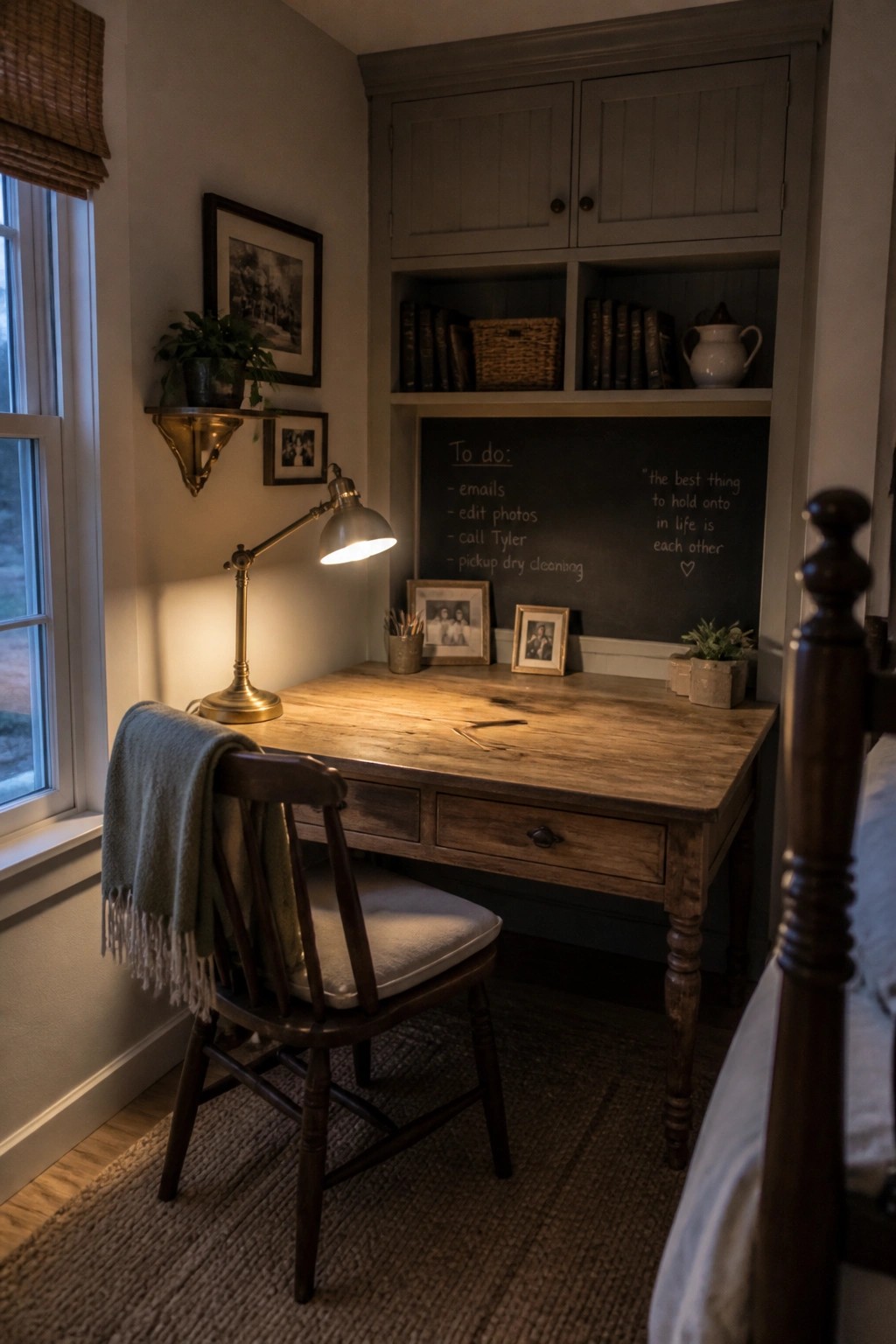
Built-in cabinetry above a desk helps a compact office stay organized without crowding the floor. The upper doors hide less-used items while open shelves keep daily supplies and a few books close at hand.
This kind of setup suits older homes or small bedrooms where a full office just will not fit. It works best when the desk sits right under the cabinets so the whole wall becomes one working unit.
Built-In Shelves Over A Desk
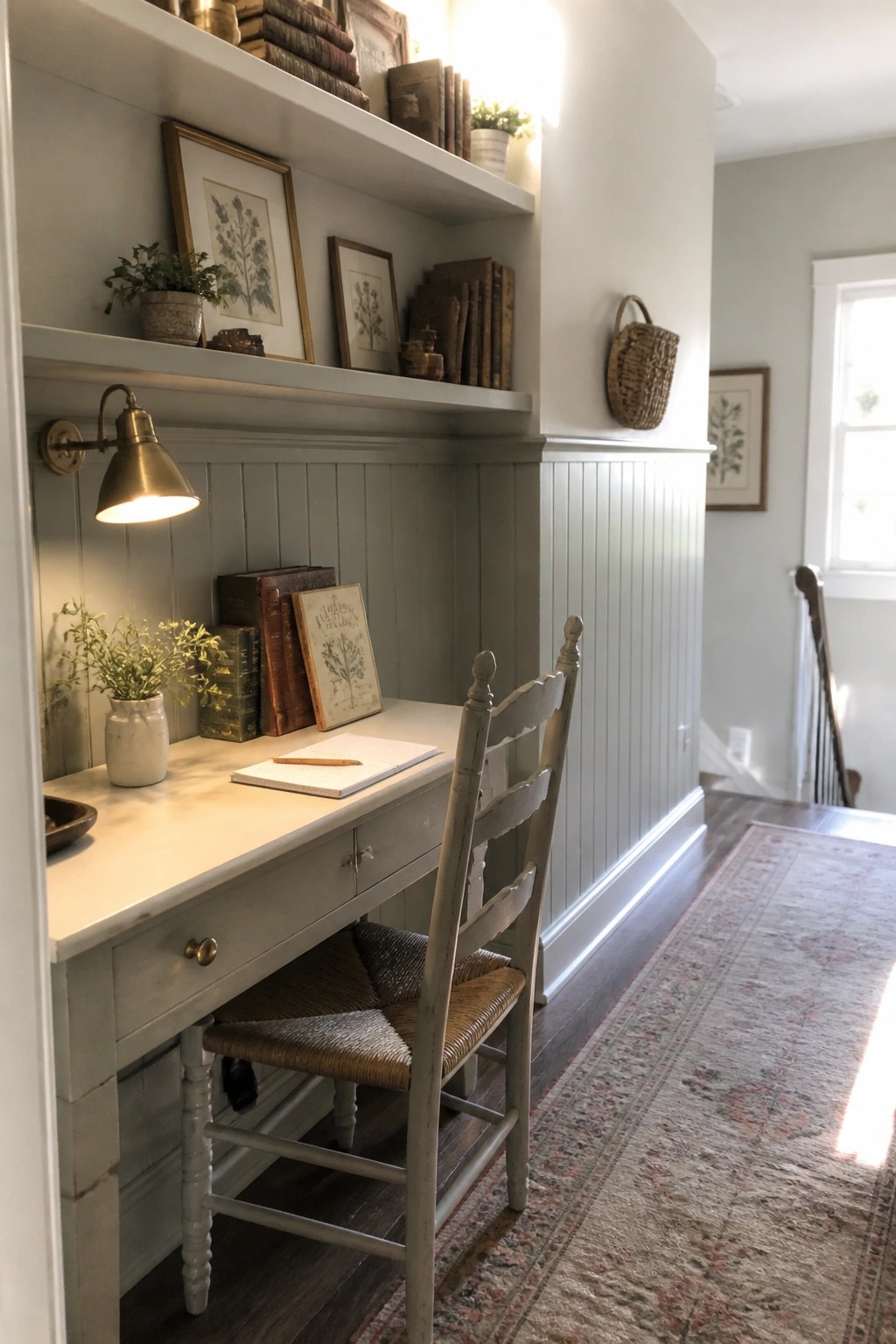
Many small workspaces gain a lot from simple overhead shelves. They add storage for books and supplies without taking up any floor space, which keeps the area feeling open even in a narrow spot.
This setup works best in hallways or unused corners where a full desk and cabinet would feel too much. Keep the shelves shallow and line them with only what you reach for often so the desk stays practical for daily use.
Built-In Cabinets Add Storage To Small Office Corners
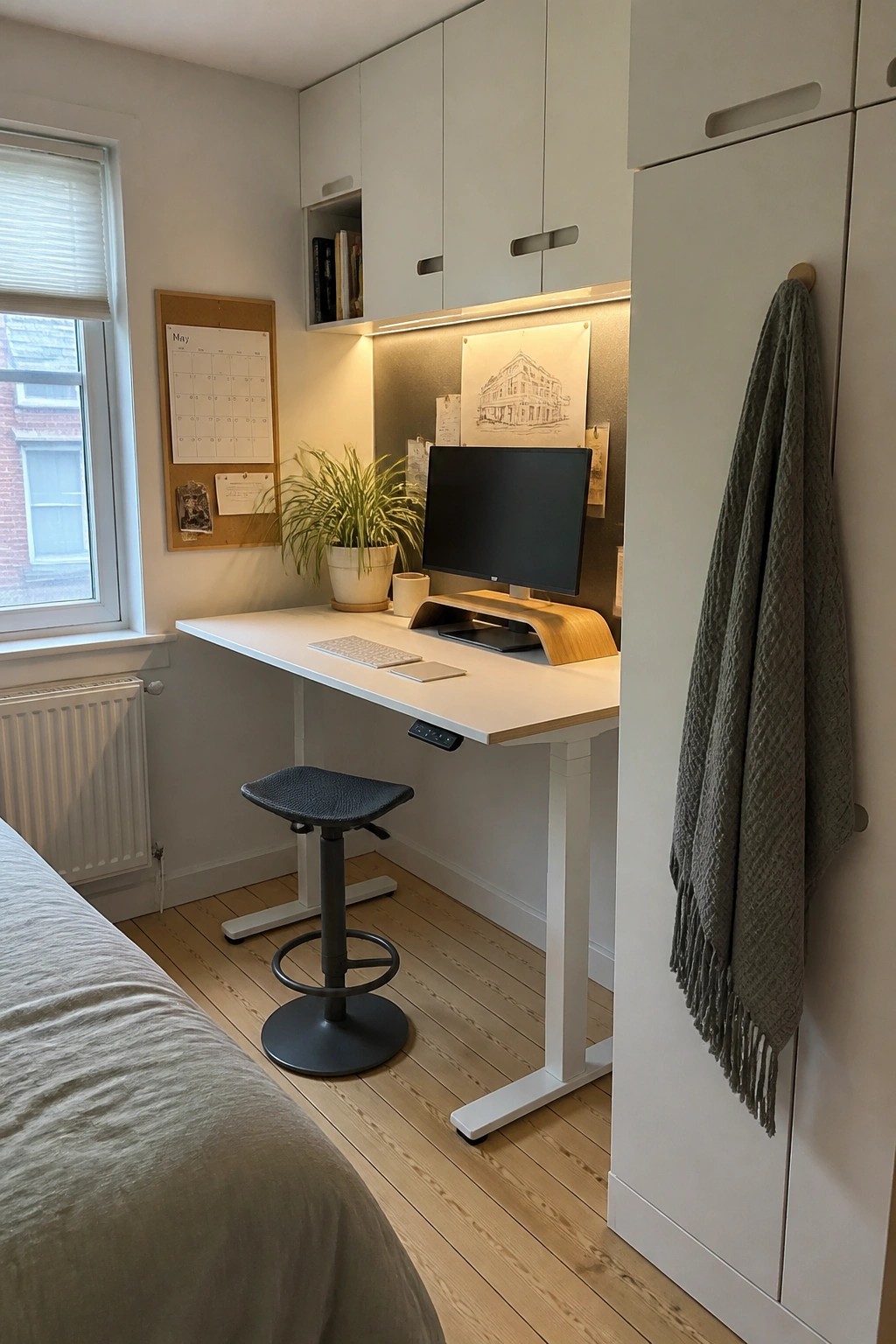
Many compact workspaces run out of places to put things, but running cabinets right above the desk puts everyday items within reach without eating into floor space. The setup keeps papers, books, and supplies tucked away while the desk itself stays clear for actual work.
This approach suits bedrooms, studio apartments, or any room that doubles as an office. Keep the cabinets shallow and the desk height adjustable so the whole area can shift between sitting and standing without feeling cramped.
Add Storage Right Beside The Desk
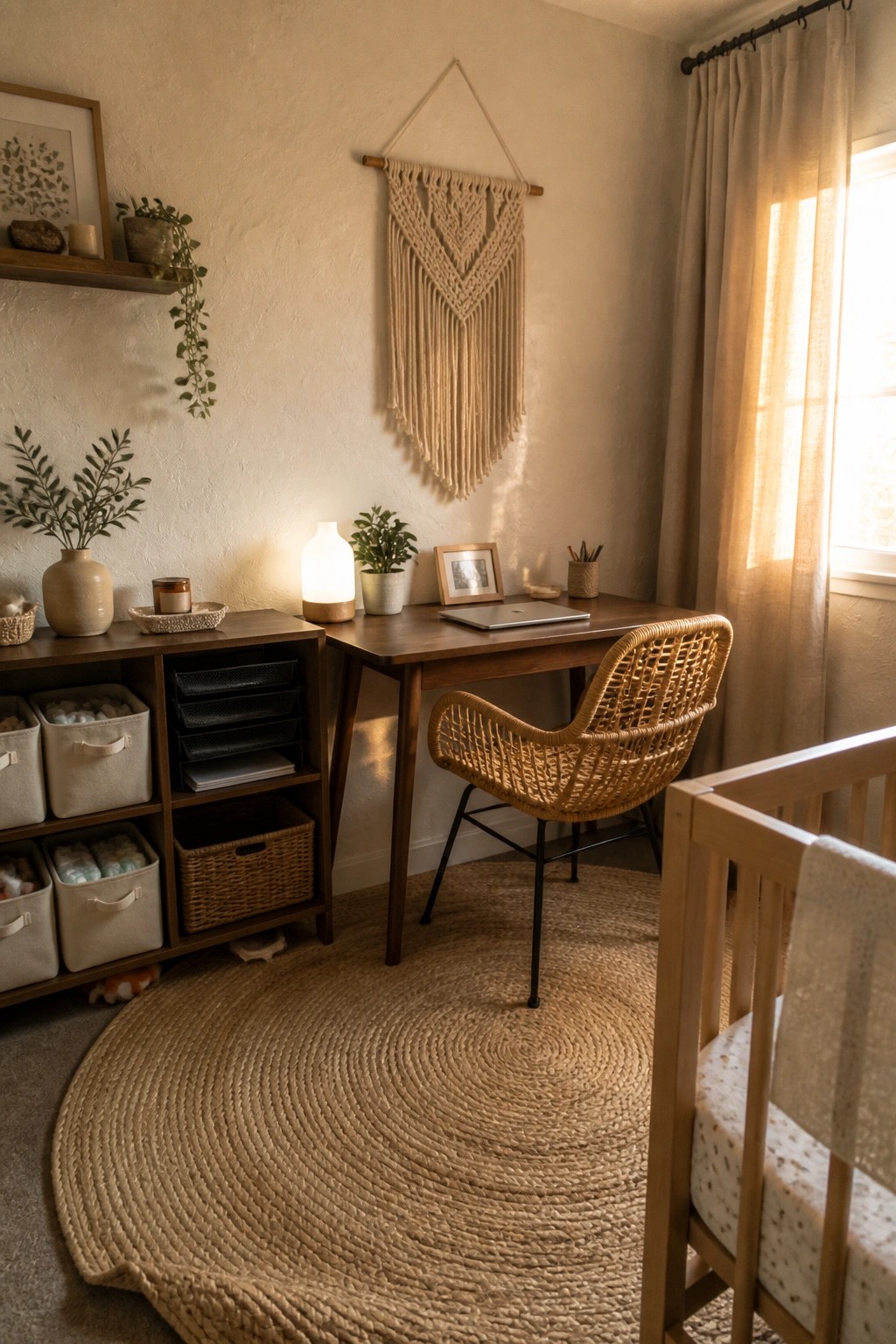
Placing a low storage unit next to a small desk gives you extra surface space and quick access to supplies without needing a larger desk. The unit can hold bins, files, and everyday items while the desk stays clear for actual work.
This works well in tight rooms or shared spaces where every inch counts. Choose a piece with a mix of open cubbies and closed storage so you can grab what you need without digging through everything.
Built-Ins Add Storage Without Crowding A Small Desk
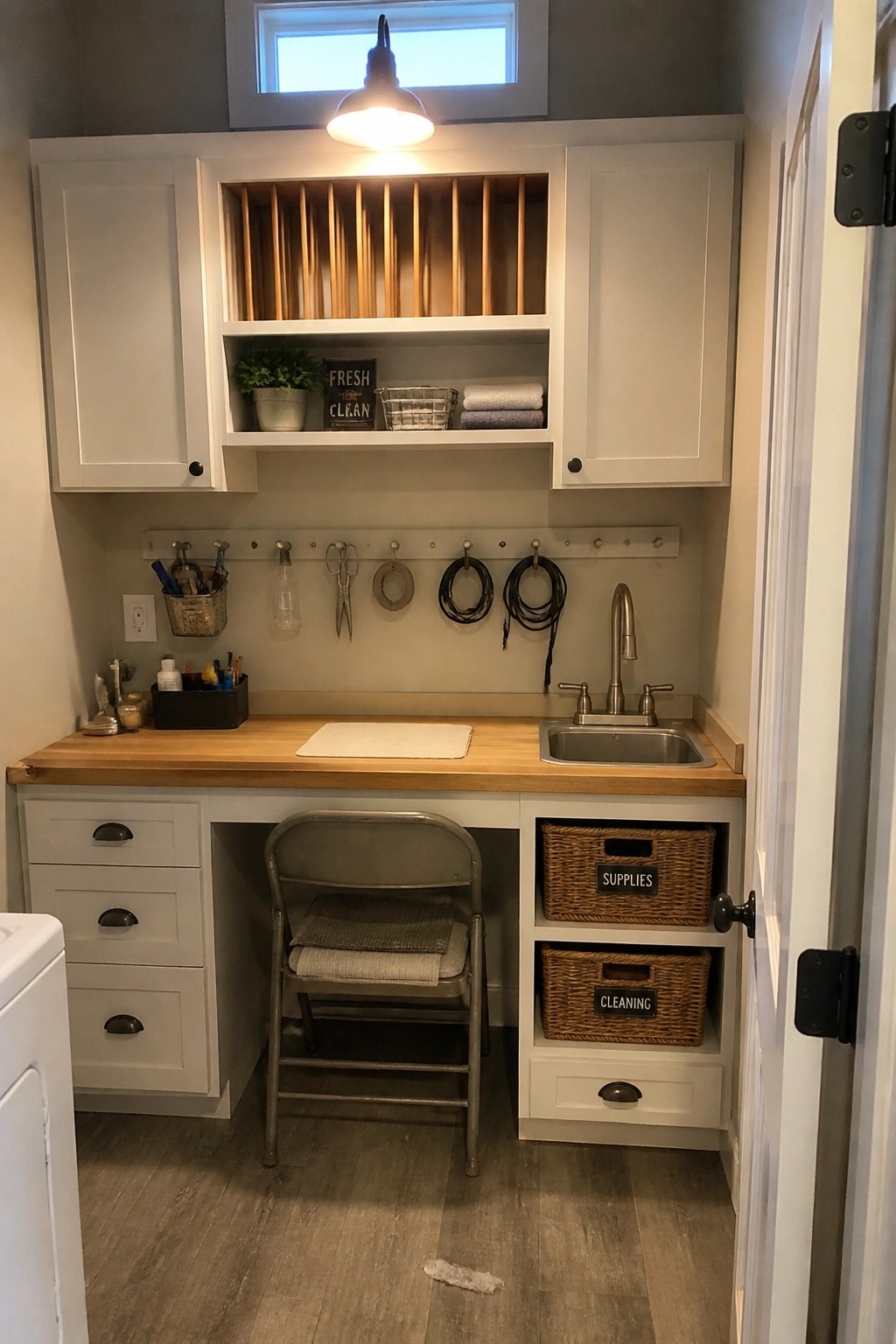
A narrow workspace can still hold a lot when you run cabinets and open cubbies right above the desk. The upper storage keeps everyday items off the work surface while the lower baskets slide in to hold supplies that do not need to be out all the time. This setup leaves just enough room for a chair to tuck in when the desk is not in use.
The same idea works well in a laundry room, a small craft area, or any spot where floor space is tight. Keep the wall hooks low enough to reach and choose baskets that fit the cubby openings so nothing sticks out.
A Console Table Makes a Good Hallway Desk
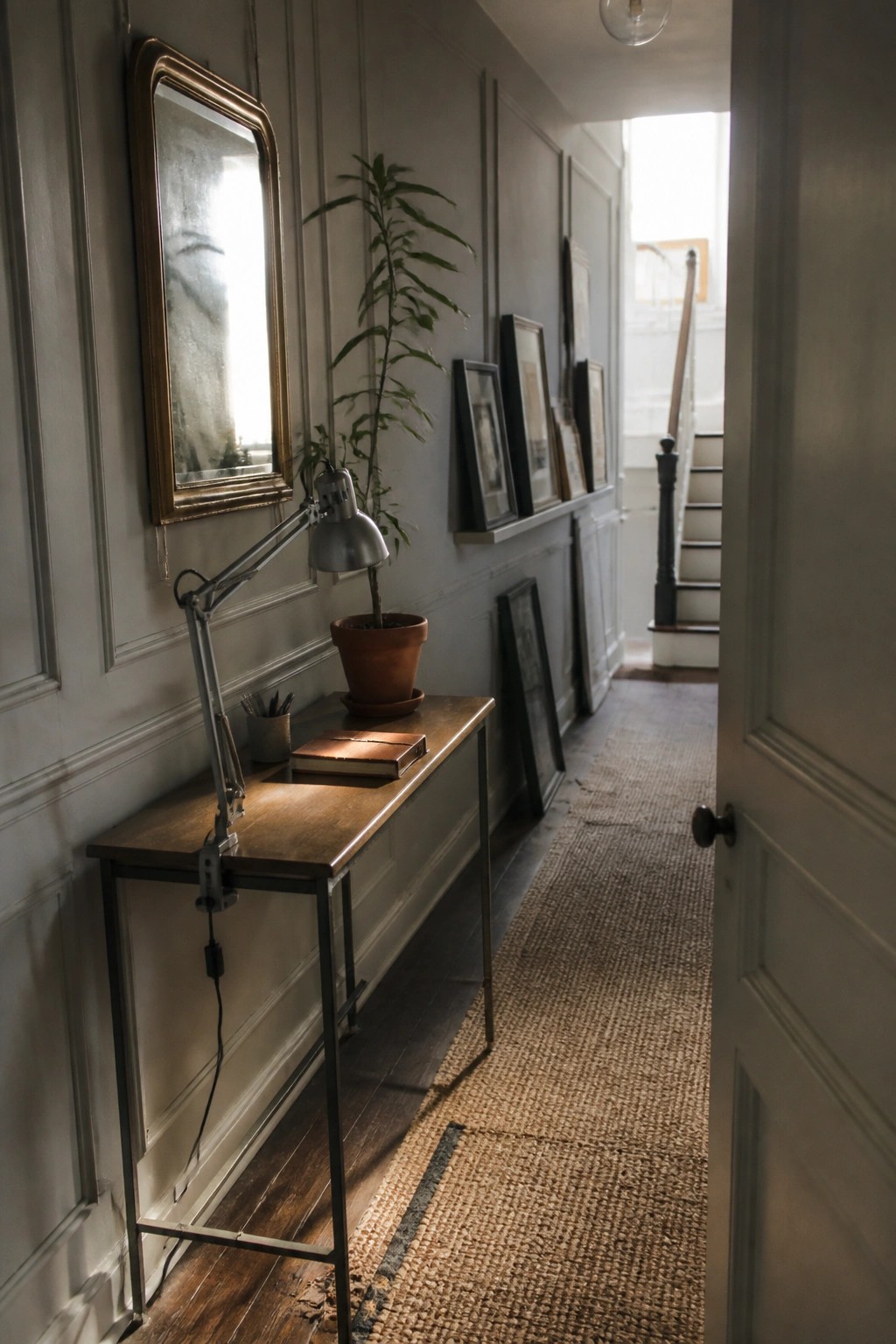
A narrow console can turn an unused hallway into a workable spot when you need a small office but do not have a spare room. The slim profile keeps the walkway clear while giving you enough surface for a lamp, a notebook, and a few supplies.
This setup works best in homes with long corridors or wide entries where a full desk would feel cramped. Keep the surface clear of clutter and choose a table with a lower shelf if you need extra storage underneath.
Fit a Desk Into a Bay Window
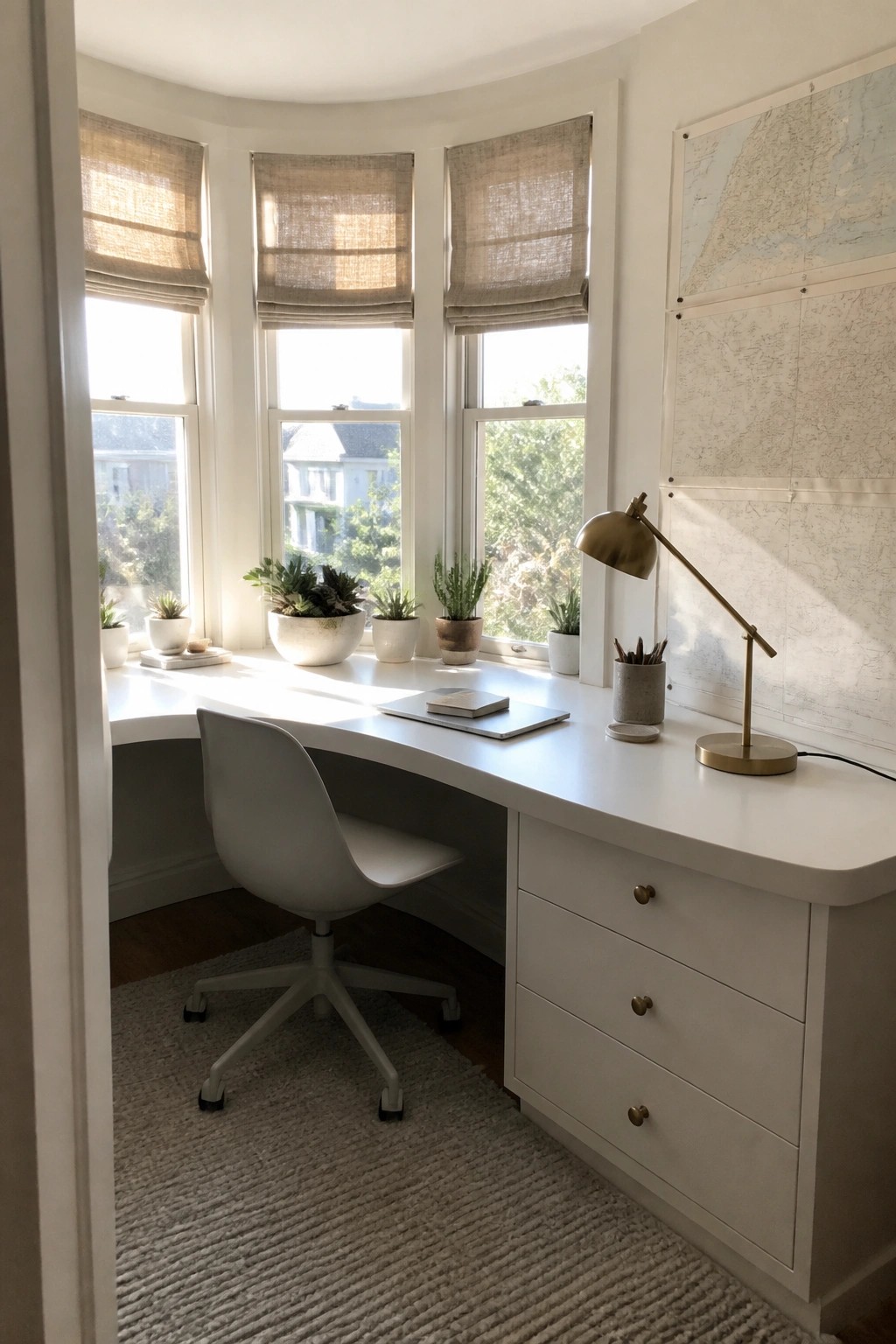
A bay window gives you a ready-made spot for a small workspace, especially when the desk follows the curve of the wall. This layout keeps the rest of the room open and pulls in natural light all day without needing extra lamps most of the time.
It suits older homes or rooms that already have a window nook. Add drawers below for storage and keep the top clear so the area stays practical for daily work.
Tuck a Compact Desk Into a Bedroom Corner
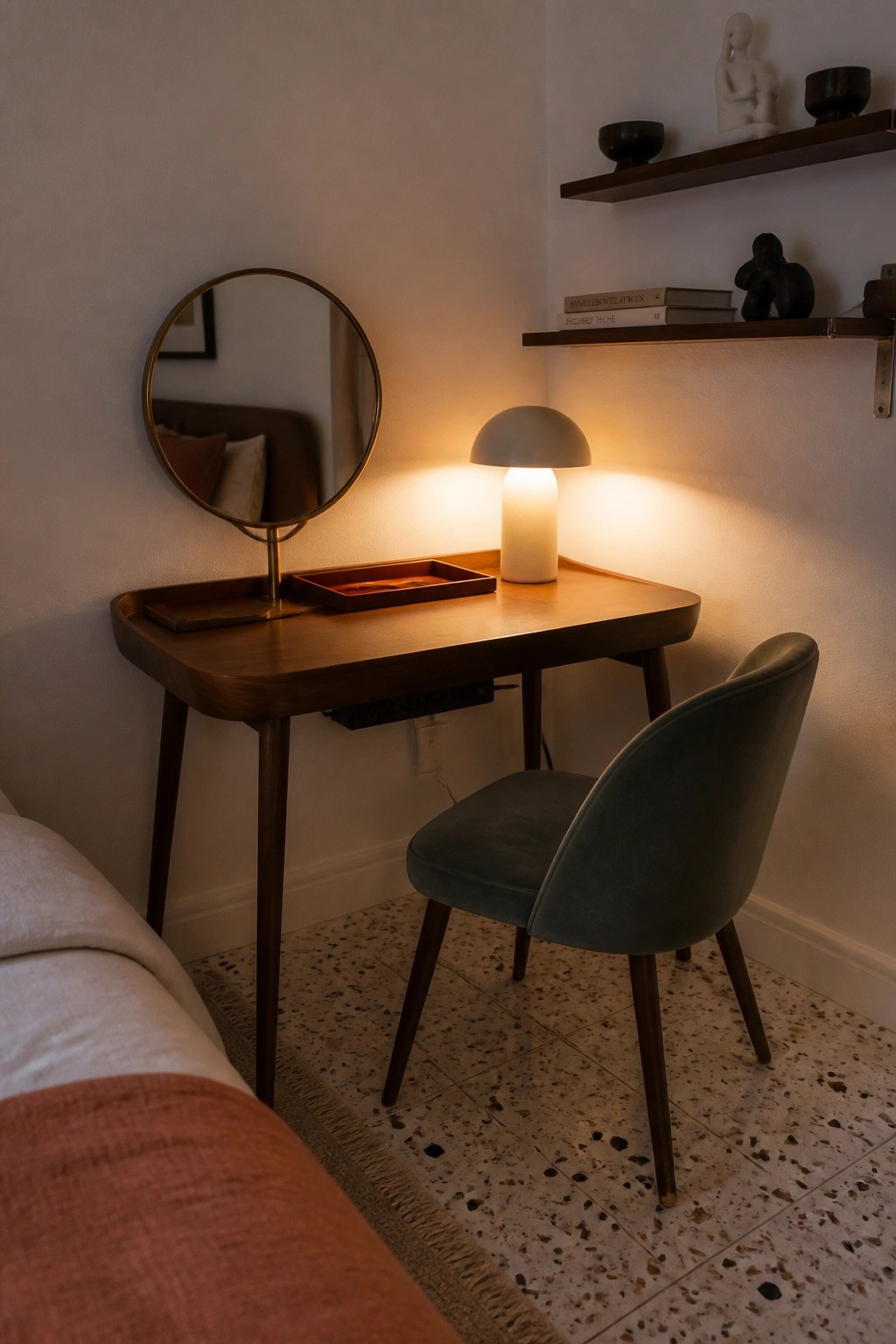
A small desk with slim legs can turn an empty bedroom corner into a usable workspace without eating up much floor space. This setup works because the narrow top and open base keep the room feeling open instead of crowded, even when the bed sits right beside it.
It suits homes where one room has to handle both sleeping and working. Keep the surface clear except for a lamp and a tray or two, and choose a chair that tucks fully under the desk when not in use.
Fold Down Desks For Small Work Areas
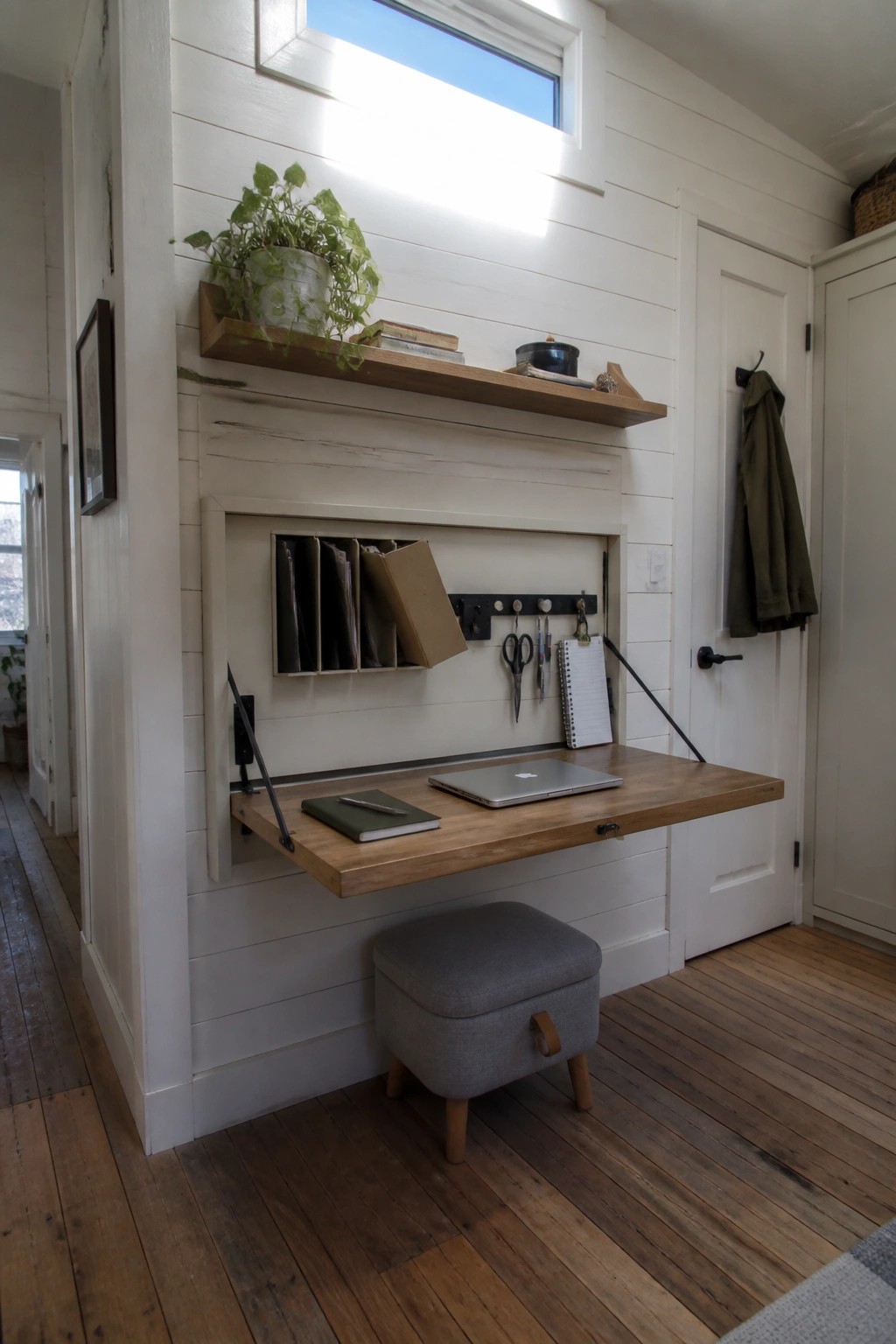
A fold down desk mounted to the wall gives you a real workspace without claiming floor space all the time. It drops down when you need it and tucks back up when you do not, which keeps the room feeling open.
This setup works best in hallways, spare corners, or small bedrooms where a regular desk would crowd things. Look for one with built in slots and hooks so papers and tools stay put when the desk is closed.
Add A Floating Shelf Above The Desk
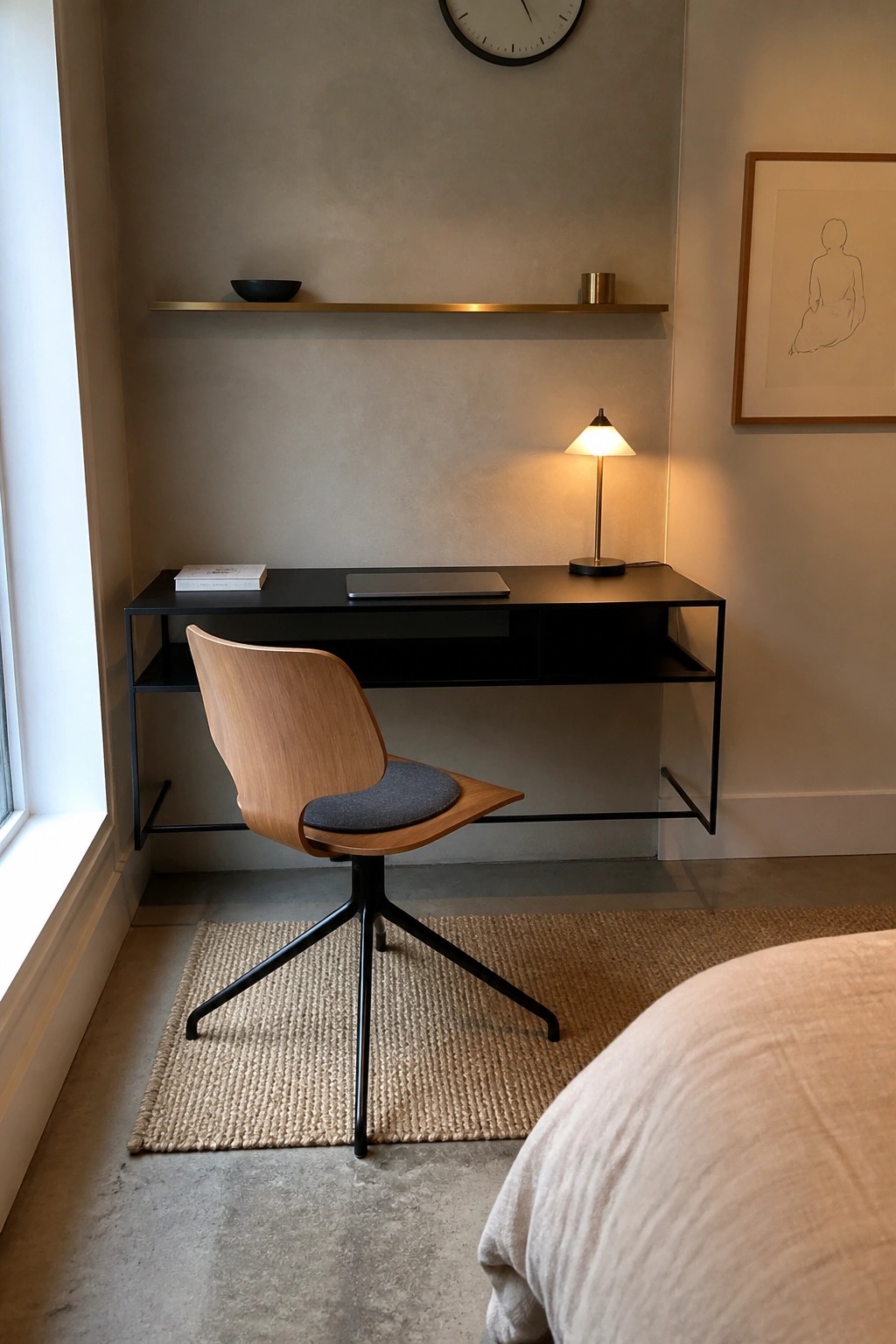
A floating shelf above the desk gives you storage without eating into the floor space or making the area feel crowded. It works especially well in tight corners or shared rooms where every inch counts and you still need room for daily items.
Place it at a height that clears your chair and any task lighting. Keep only a few things up there so the shelf stays useful instead of turning into another layer of clutter.
Metal Lockers Add Useful Storage
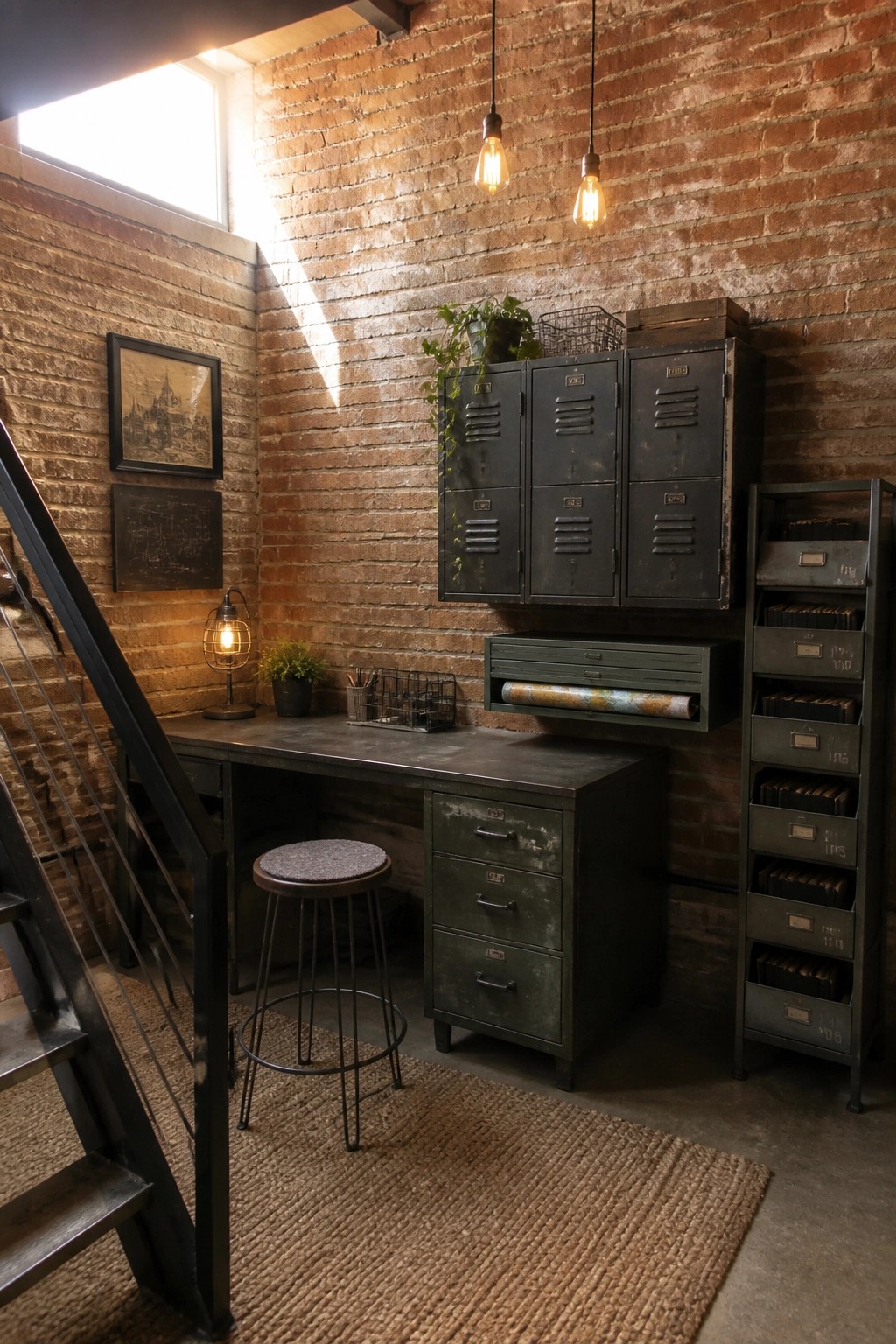
Metal lockers give small offices a simple way to store a lot without crowding the floor. They stack high against the wall so the desk stays open for daily work and the room still feels open.
They work best in spaces that already lean industrial or need tough, closed storage for papers and supplies. Mount a set above the desk or beside it so everything stays within reach but out of sight.
Turn a Closet into a Compact Desk Nook
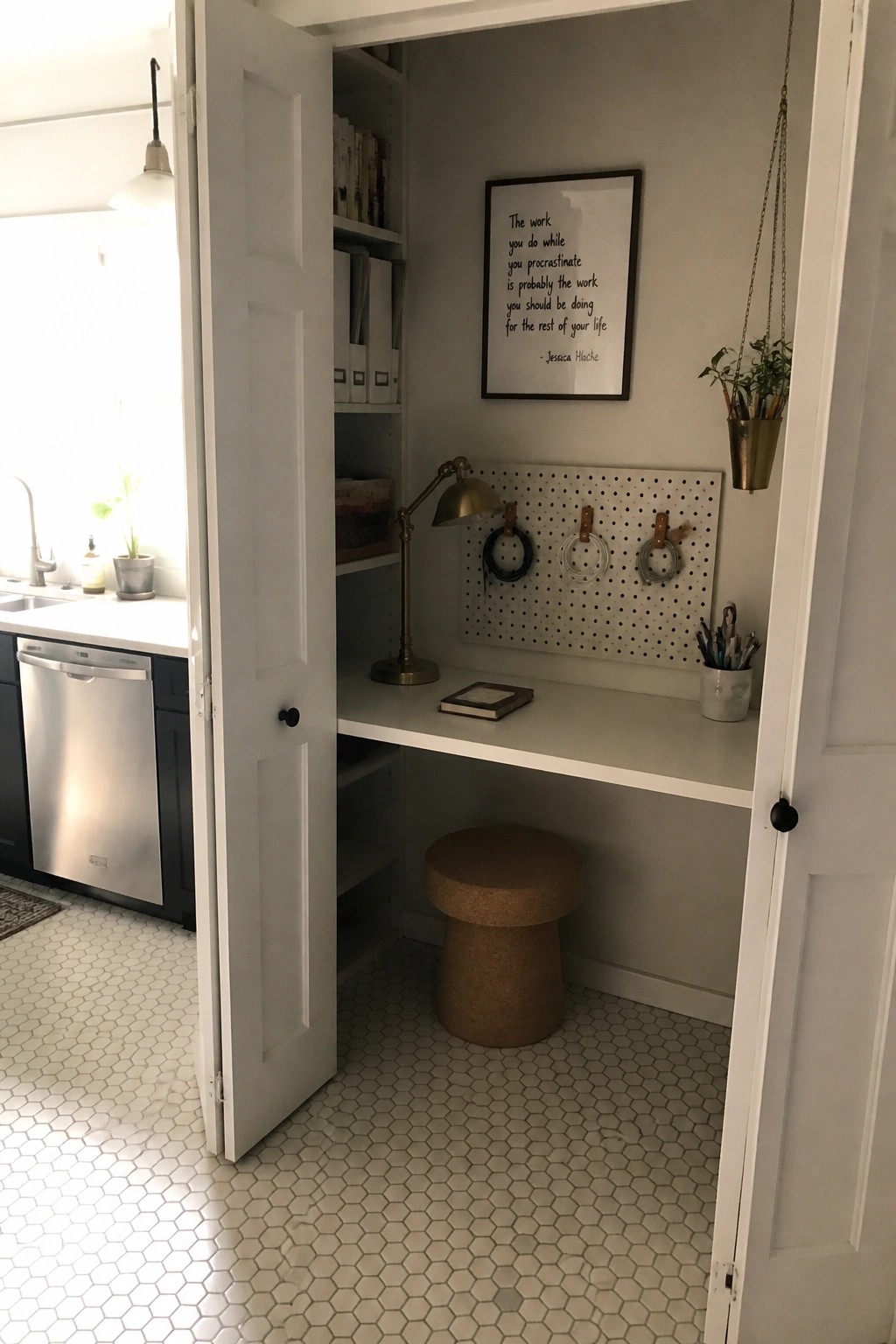
Many homes have a spare closet that mostly sits empty. Fitting a simple desk inside turns that dead space into a place to work without taking over another room. The setup stays contained, and you can close the doors when the day is done.
This works best in apartments or small houses where every corner counts. Add a pegboard on the back wall for tools and papers, and keep the top shelves for books or files. It stays practical as long as you measure the depth first so the chair or stool fits without blocking the doors.
Frequently Asked Questions
Q: How do I squeeze in extra storage when the desk already takes most of the room? A: Mount narrow shelves right above the desk surface. They hold files and supplies without stealing floor space. Keep only daily items on the desk itself and rotate the rest out of sight.
Q: What if the same corner has to work for video calls and regular tasks? A: Set up a rolling cart with your laptop and a simple backdrop on one side. Wheel it into place when needed and tuck it against the wall afterward. This keeps the main surface clear for writing or paperwork.
Q: Can I fix dim lighting without new outlets or big fixtures? A: Clip a small lamp onto the side of a shelf or monitor arm. Angle it to hit your keyboard and papers directly. Swap the bulb for one with a brighter but softer tone so the area feels open.
