


I often notice that rooms meant for both work and overnight stays start to feel off when the desk takes over the natural flow of movement. In practice it helps to place the bed against a wall that leaves the rest of the space open for a chair and storage that serves both purposes. I have tried setups where the office elements fold away completely and those tend to make guests feel more at home than ones with visible paperwork everywhere. Layout choices make the biggest difference here. Some ideas stand out because they show how small changes in furniture choice can turn a shared space into something that actually works for both activities.
Built-In Daybeds For Office Guest Rooms

A built-in daybed along one wall lets an office double as a guest room without crowding the space. The bed stays out of the way during work hours yet gives visitors a real place to sleep at night.
This idea works best in smaller rooms where floor space is tight. Keep the bedding neutral and add a few drawers or shelves nearby so the room still reads as an office when no one is staying over.
A Sofa Bed Keeps the Office Ready for Guests

A sofa bed gives an office the flexibility to host overnight visitors without losing its main purpose. The desk stays put for daily work while the sofa opens into a bed when needed. This approach avoids the need for a separate guest room in smaller homes.
Place the sofa along a main wall so it does not block movement around the desk. It works especially well in rooms with good natural light and solid storage nearby to keep both work items and guest bedding organized.
A Window Seat That Doubles As A Guest Bed

A window seat gives an office a second purpose without crowding the room. The built-in bench provides a real sleeping spot for overnight visitors while the desk stays clear for daily work. It keeps the space feeling open instead of turning it into a full guest room that sits empty most of the time.
This idea works well in homes that need flexible rooms rather than dedicated guest space. Use a thick cushion and a few pillows so it feels like a bed at night, and add drawers or a lift-up lid underneath for storing extra bedding. Just make sure the seat depth is comfortable for sleeping and not too shallow.
Use A Low Desk For Flexible Overnight Use

A low desk placed along the wall leaves the main floor area open. This makes it simple to roll out a futon when guests arrive without moving heavy pieces around.
The setup works best in smaller rooms or homes that favor simple flooring like tatami. Keep the chair light so it can be tucked away easily during the day.
Sofa Beds Turn Offices Into Guest Rooms

A sofa bed lets one room handle both work and overnight guests without much trouble. The key is keeping the layout simple so the space still feels open when the bed is made up as seating.
This approach suits smaller homes or apartments where an extra bedroom is not an option. Place the desk along one wall and the sofa bed across from it so the room can shift quickly from workday use to guest ready.
A Daybed Next To The Desk Handles Both Work And Guests

Many small homes need one room to cover two jobs at once. Setting a desk along the same wall as a daybed keeps the workspace intact while giving you a real bed for visitors without adding extra furniture.
This layout suits rooms that already feel tight on space. Keep the daybed low and simple so it does not crowd the desk area, and choose bedding that can be swapped out quickly when the room switches back to daily use.
Add A Lounge Chair Beside The Desk

One simple way to turn an office into a guest-ready space is to add a comfortable chair near the desk. It gives visitors a place to sit without turning the whole room into a bedroom setup. The chair also makes the workspace feel less rigid during regular work hours.
Place the chair in a corner with a throw blanket or small pillow so it reads as a spot for relaxing or reading. This works best in smaller homes where one room needs to handle both daily tasks and occasional overnight stays. Keep the rest of the furniture light so the room does not feel cramped.
Make Room for Guests With a Window Seat

A window seat works well in an office guest room combo because it adds a place to sit during the day and turns into a bed at night without taking up extra floor space. The built-in bench under the windows keeps the room feeling open while still giving overnight visitors a comfortable spot to sleep.
This setup fits best in smaller homes or rooms that need to serve two purposes at once. Keep the bedding simple so the seat looks like part of the office during the day, and use the drawers underneath for storing extra linens or guest items.
Murphy Beds Turn Offices Into Guest Rooms

A Murphy bed built into the office wall gives the room a clear daytime purpose while still handling overnight guests. The sofa stays in place for seating or lounging, and the bed folds down only when needed, so the desk and work area never get disrupted.
This works best in homes where space is limited and one room has to do double duty. Keep the surrounding shelves stocked with books and supplies so the office character stays intact even when the bed is in use.
Include A Sofa That Doubles As A Guest Bed
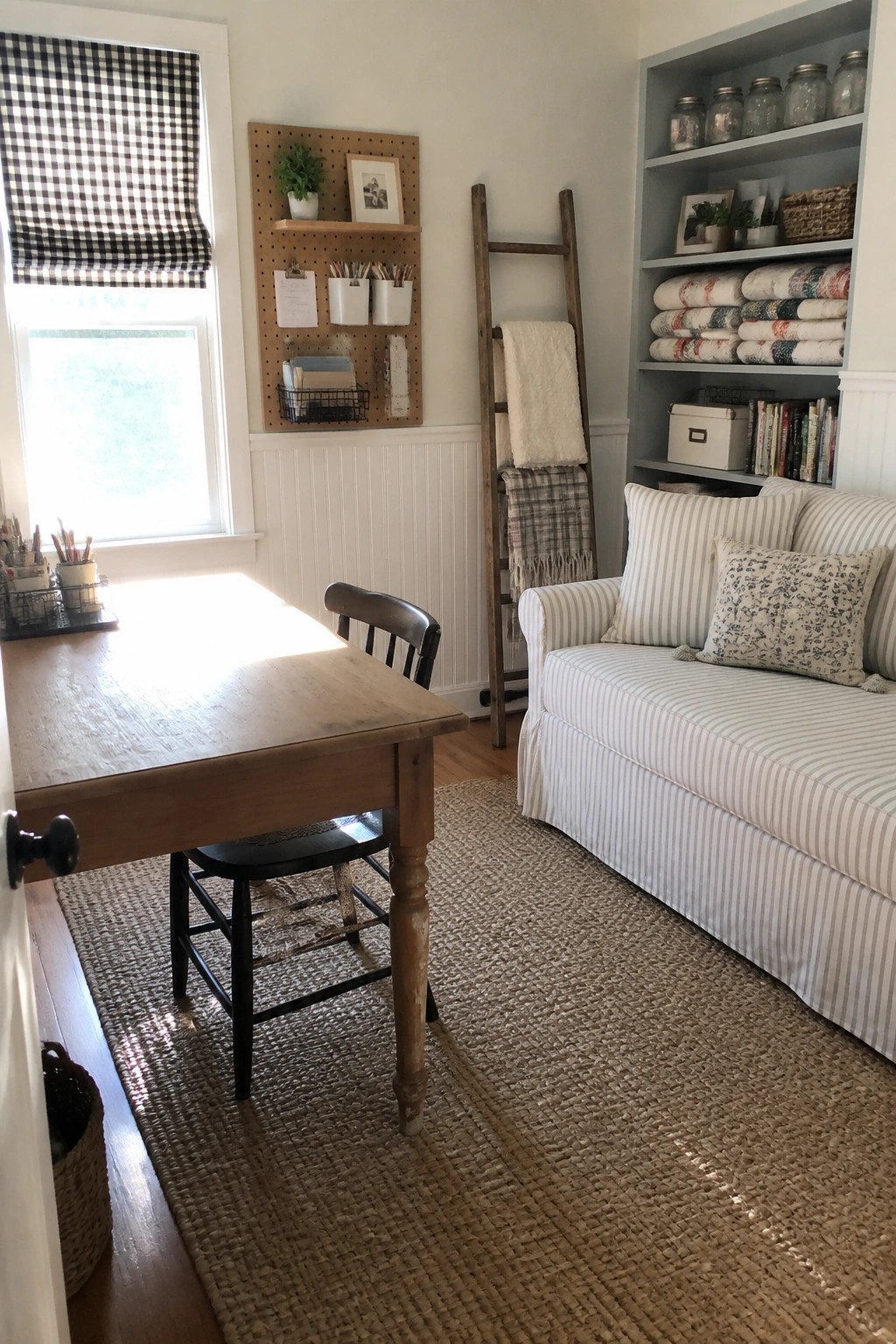
One simple way to turn an office into a usable guest room is to add a sofa that can sleep someone overnight. The room still works as a workspace during the day, but the sofa gives you a real place for visitors without needing a separate bed.
This approach suits smaller homes or rooms that already have a desk and chair taking up floor space. Keep the sofa along one wall so it does not block movement, and choose one with a neutral cover that blends with the rest of the room.
Loft Beds Open Floor Space For A Desk Below

A loft bed raises the sleeping area so the floor underneath stays clear for a desk and chair. This keeps a small room from feeling crowded when it needs to handle both work and overnight guests.
It works well in apartments or homes where every square foot counts. Just measure the ceiling height first to make sure there is enough room to sit comfortably at the desk.
Adding a Desk to a Guest Room

A desk and bookshelves can turn a guest room into a space that works for visitors and daily use. The key is keeping the layout balanced so the bed stays the main feature while the work area sits off to the side.
This setup suits homes where guests stay for several days or where someone needs a quiet spot to work without taking over another room. Use a smaller desk if the room is tight and keep the shelves for books rather than clutter so the space still feels restful at night.
Use A Daybed To Keep The Room Flexible

A daybed gives you a comfortable sleeping spot without turning the whole room into a bedroom. It leaves plenty of floor space open for a desk and work area, which makes the room feel more useful during the day.
This setup works well in smaller homes or guest rooms that need to pull double duty. Keep the daybed along one wall and place the desk opposite so both functions have their own zone without crowding each other.
Built-Ins Make Room For Both Work And Overnight Guests

Many people like this setup because it keeps the room useful every day while still offering a place for guests to sleep. The built-in desk and shelves handle all the office needs, and the daybed adds a simple sleeping spot without taking over the floor.
This works best in smaller homes or apartments where every room has to do more than one job. Keep the storage open and light so the space stays calm, and make sure the daybed has a decent mattress if visitors stay more than a night or two.
Position the Desk Right Next to the Guest Bed

Many small rooms need to handle both daily work and the occasional overnight guest. Placing a simple desk right beside the bed lets the space serve both purposes without needing extra square footage or awkward rearrangements each time someone stays.
This setup works best in narrow spare rooms where floor space stays tight. Keep the desk shallow, add a few open shelves underneath for blankets or files, and stick to the same wood tones on both the bed frame and desk so the room still feels calm and put together.
Daybed And Rolling Desk Handle Both Work And Guests

A daybed paired with a rolling desk gives a room two clear jobs without making it feel crowded. The bed provides seating during the day and a place for guests to sleep at night, while the desk can be moved out of the way when extra floor space is needed.
This layout suits smaller homes or extra rooms that see light use. Keep the daybed along one wall and choose a desk on wheels so it shifts easily for different tasks. The door to a nearby bath makes the setup more practical for overnight visitors.
Add a Daybed to Handle Overnight Guests

A daybed lets an office double as a guest room without much extra effort. It gives you a comfortable seat or reading spot during the day and turns into a bed when visitors stay over. Many people like this setup because it keeps the room useful all the time instead of sitting empty most of the year.
Place the daybed along a wall near the window so it gets good light and feels less like an afterthought. Keep the desk and chair as the main work zone and add a few plants to soften the look. This works best in homes that have only one extra room to spare.
Use Floating Shelves Above the Desk

A small room works better when the desk stays clear and the storage moves up. Floating shelves give you room for towels, boxes, and everyday items without adding another piece of furniture that would crowd the floor. The setup leaves space for the bed and keeps the whole area from feeling cramped.
This works well in a guest room that also needs to serve as an occasional office. Place the shelves at a comfortable height so they are easy to reach but do not block the light from a window or desk lamp. Stick to a few bins or neatly folded items so the shelves stay useful instead of turning into open clutter.
Built-Ins Keep An Office Ready For Guests

Many homes need an office that can handle visitors without a full room swap. Built-in cabinets and shelves give solid storage for work items while leaving the main floor area open for a sofa bed.
This approach suits smaller homes or extra bedrooms that serve two roles. The cabinetry keeps clutter out of sight once the sofa opens, so the space still feels organized rather than crowded.
A Daybed Makes Any Office Work As A Guest Room

A daybed gives you a simple way to keep an office useful during the day and still have a bed ready for guests at night. It fits along a wall without taking over the room, so the desk and shelves can stay in place.
Try it in a spare room that already has good natural light and built-in storage. Keep the bedding light and add a few firm pillows so the daybed doubles as seating when you need the space for work.
Use a Desk and Sofa Bed in One Space

A desk and sofa bed can turn a single room into both a workspace and a place for guests to stay. The wooden table works well for daily tasks while the sofa offers seating that converts when needed. Open shelves keep supplies and linens organized without taking up floor space.
This setup works best in homes where an extra bedroom is not available. Place the desk against one wall and the sofa along another to keep the room from feeling crowded. Avoid filling every corner so the space stays usable for both work and rest.
Frequently Asked Questions
Q: How do I keep my work papers from cluttering up the space when guests are here? A: Sort everything into a single drawer or box at the end of each day. Guests appreciate a clean surface more than seeing your projects spread out. A quick sweep makes the room feel ready for them.
Q: What if the room feels too much like an office for overnight visitors? A: Add soft lighting and a few personal touches like a lamp by the bed. These small changes shift the mood without moving furniture around.
Q: Do I need special furniture to make this combo work? A: A desk with wheels lets you roll it aside when the bed needs more room. Focus on pieces that serve both purposes instead of buying extras.
