

I have found that standing desks often work best when the surrounding furniture is placed to support both sitting and standing without forcing constant rearrangements.
The height of nearby shelves and the reach to a window for natural light tend to shape how comfortable the space feels over a full workday.
Small details like where the power strip lands can quietly decide whether the room stays tidy or turns into a daily frustration.
Most setups fail when they ignore the actual flow from the door into the workspace.
Trying one or two of these adjustments at home has shown me how much easier it becomes to switch between tasks without losing momentum.
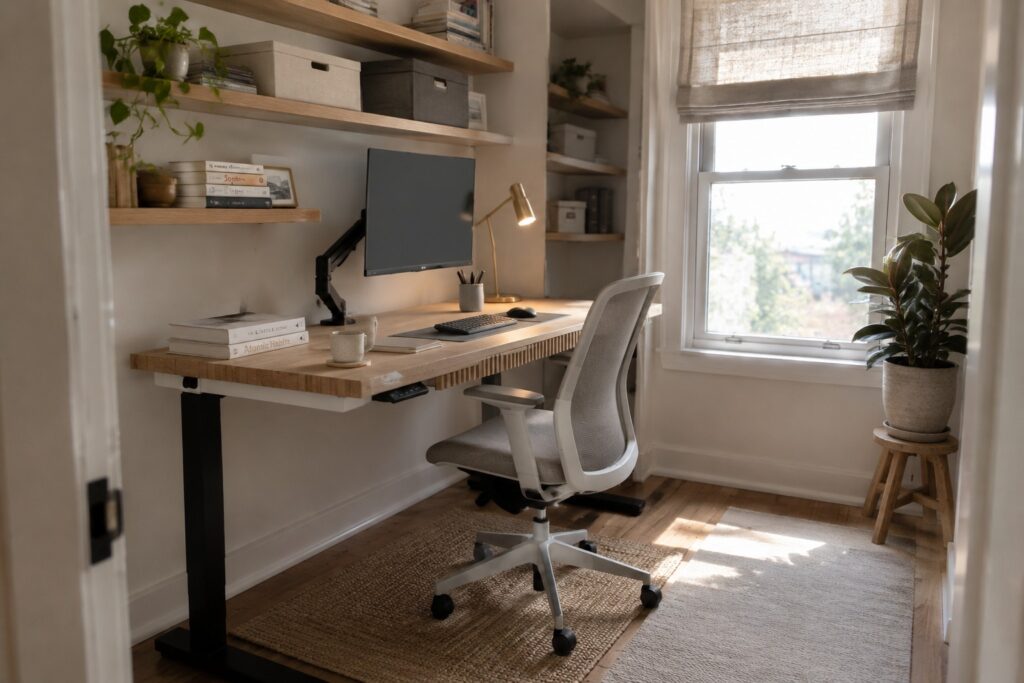
Open Shelving Over a Standing Desk

Open shelves above a standing desk give you storage without blocking the desk from moving up and down. The setup keeps the floor clear so the desk stays practical, and the wood tones plus a few plants help the space feel warmer instead of purely functional.
This works best in smaller rooms or homes that already have enough built-in storage elsewhere. Keep the shelves fairly light so they do not feel heavy over the desk, and leave a little empty space between items so the area stays easy to look at.
Standing Desks With Wood Tops
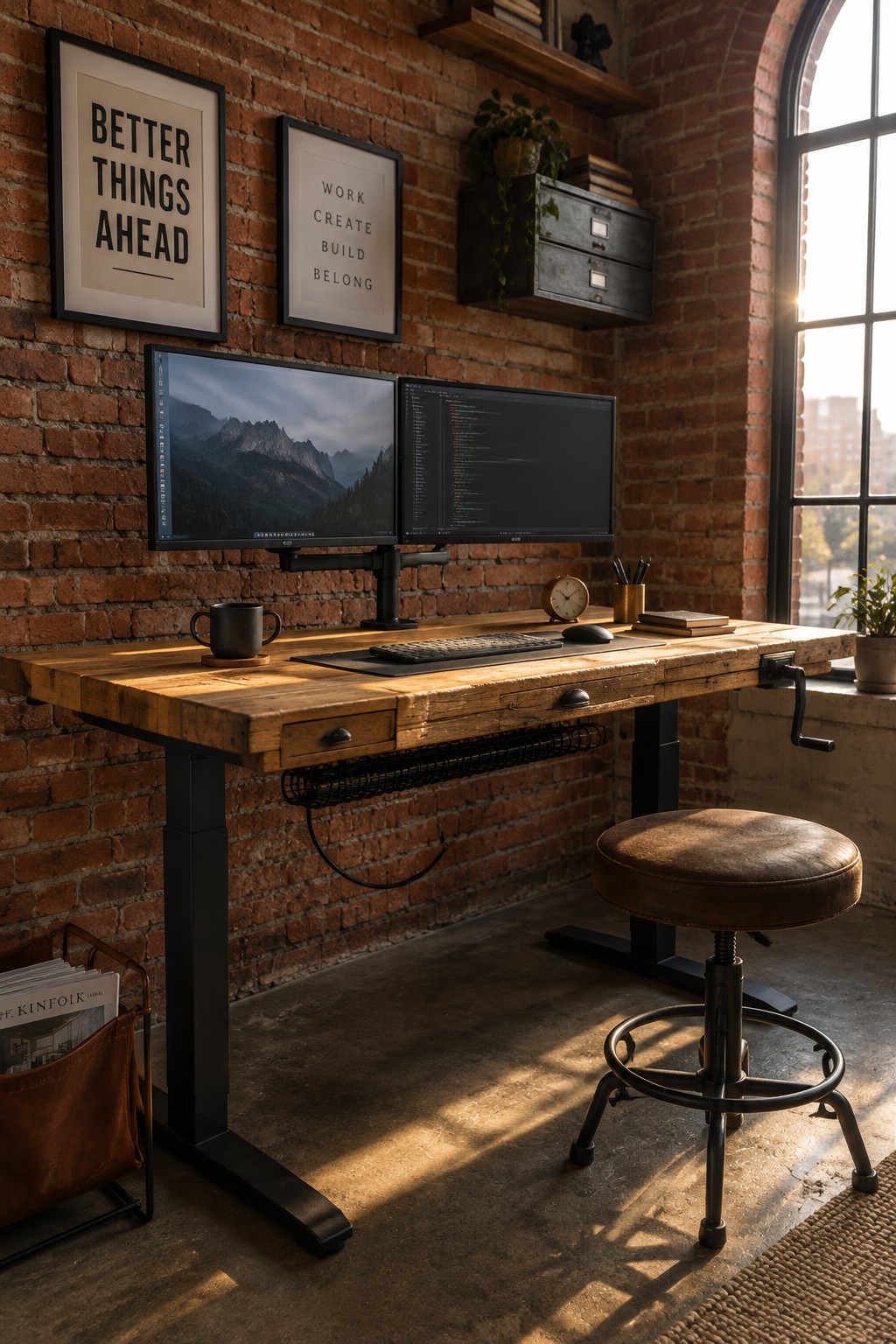
A standing desk with a solid wood top brings warmth to a workspace that might otherwise feel too stark or utilitarian. The natural grain softens the look of the metal base and keeps the room feeling grounded even when everything else is geared toward function.
This approach works well in smaller offices or rooms with existing brick or darker walls. Choose a desk with a simple crank or electric lift so the height changes stay easy, and keep the top mostly clear so the wood stays visible.
Standing Desk With Built-In Bench Seating

A standing desk works especially well when it sits beside a built-in bench. You get room to stand and work, then an easy spot to sit without pulling up a separate chair. The bench also softens the look of the desk and makes the whole area feel more like part of the room instead of just a workspace.
This setup suits smaller homes or rooms with decent natural light. Keep storage simple with baskets underneath the desk and add a few cushions on the bench so the seat stays comfortable for longer stretches.
Warm Wood Desks For Standing Work

A standing desk often feels more at home when the main surface is solid wood rather than metal or laminate. The natural grain and warm tone make the setup look like regular furniture instead of office equipment, so the room stays relaxed even when the desk is in use for long hours.
This works best in smaller homes where the office shares space with living areas. Keep the desk simple, add a low stool for sitting breaks, and let the wood carry the color. A monitor riser is usually all you need to bring the screen to standing height without changing the desk itself.
Pegboard Walls Keep Office Supplies Within Reach
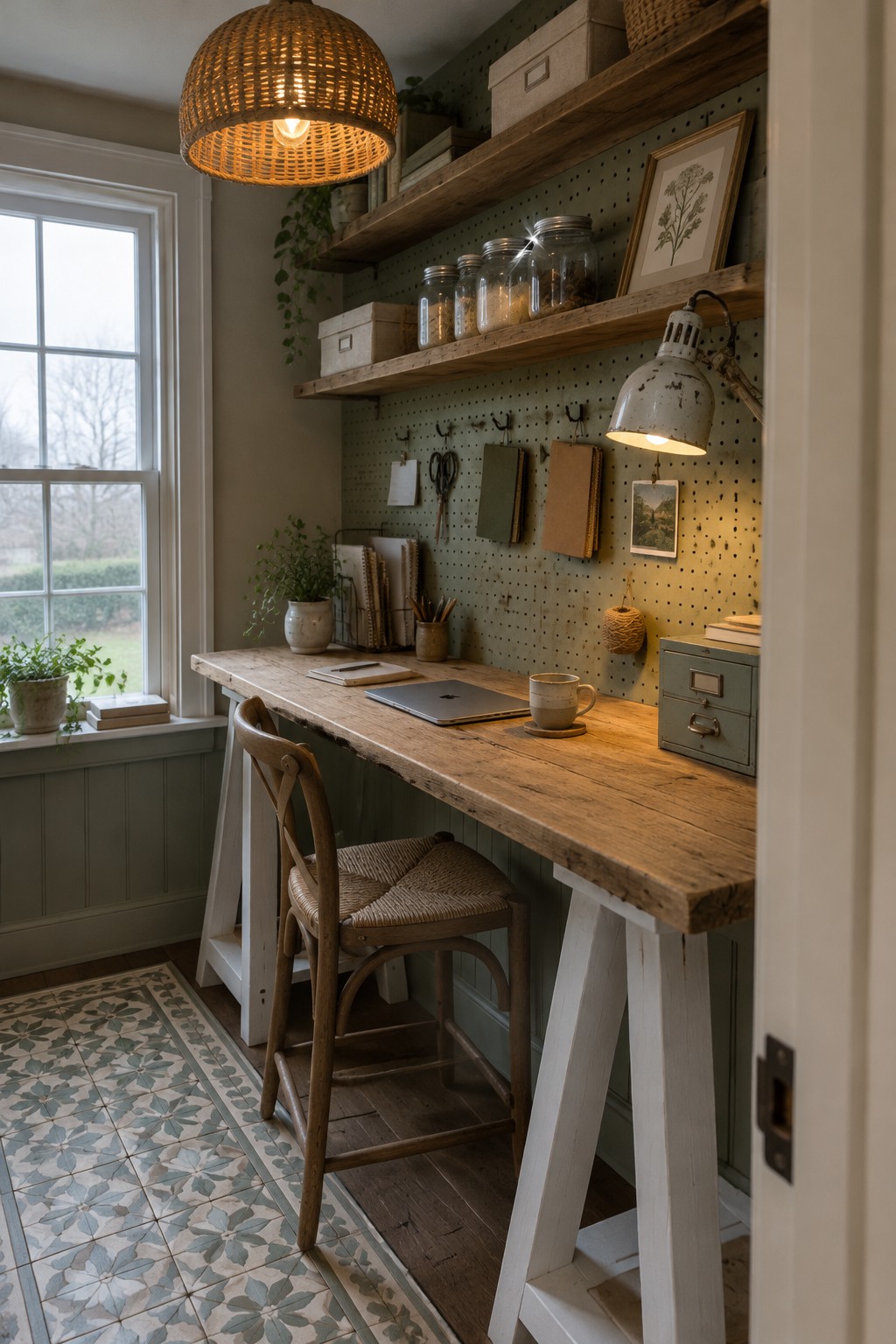
A pegboard wall behind the desk gives you a simple way to store the things you reach for every day. Hooks and small holders keep scissors, notebooks, and pens off the work surface while still close at hand.
This approach works well in any home office that needs flexible storage without built-in cabinets. Mount the board at eye level, add a few hooks and small baskets, and rearrange items as your routine changes.
Standing Desks in Japanese Style Rooms

A standing desk fits well in a room that already uses natural wood and soft light. The light tone of the desk blends with the shoji frames and tatami mat, so the workspace feels like part of the room instead of something added later.
This works best in smaller homes or spaces where you want calm over bold design. Keep extra items low and simple, and place the desk where morning light hits the floor so the whole area stays bright without needing much else.
Standing Desks Made with Natural Wood

A standing desk with a thick wood top and simple wooden supports can make the whole office feel more grounded. The material choice adds warmth without extra effort, especially when the desk sits among plants and textured pieces that already lean natural.
This setup works best in homes that already favor wood tones and layered textiles over clean modern lines. It suits smaller creative spaces where you want the desk to blend in rather than stand out as a separate piece of equipment.
Concrete Surfaces for Standing Desks

A concrete desk top gives a standing desk real presence in a home office. It feels solid under your hands and holds up well to daily use without showing wear. The neutral gray tone keeps things calm while the material adds a bit of weight to the overall look.
This choice works best in smaller or modern spaces where you want the desk to feel like part of the architecture rather than just furniture. Pair it with simple storage nearby and skip heavy decoration so the surface stays the main feature.
Reclaimed Wood Desks With Adjustable Stools
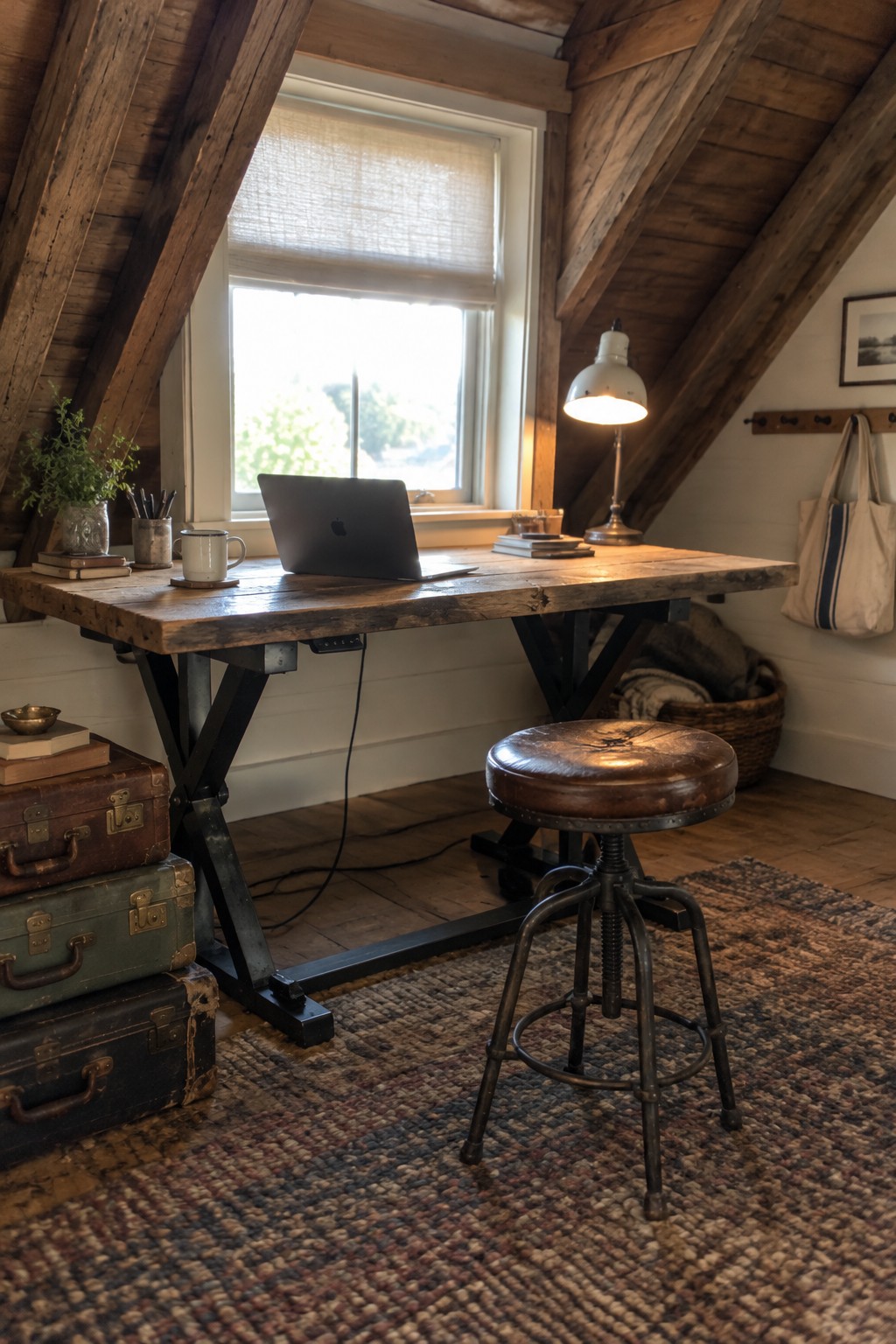
A thick reclaimed wood top on a simple metal base works well in small attic offices because it adds warmth without taking up much visual space. The adjustable stool lets you switch between sitting and standing easily, which fits the way many people actually use their desks during a long day.
This setup suits homes with sloped ceilings or limited floor area, where a bulky new desk would feel out of place. Keep the rest of the room simple so the wood and the stool stay the main focus. Watch the height of the desk surface if you plan to stand for long stretches.
Standing Desk Placement By A Window

Placing a standing desk right by a large window gives the workspace a lighter, more open feel without much extra effort. The natural light helps the room stay bright during the day, and the view outside makes long hours at the desk feel less closed in.
This setup works well in homes with decent natural light or rooms that face a yard or water. Keep the desk surface fairly clear and add one or two plants nearby if the space allows it. Just make sure the window treatment can control glare when the sun is strong.
Turning Alcoves Into Standing Desk Offices
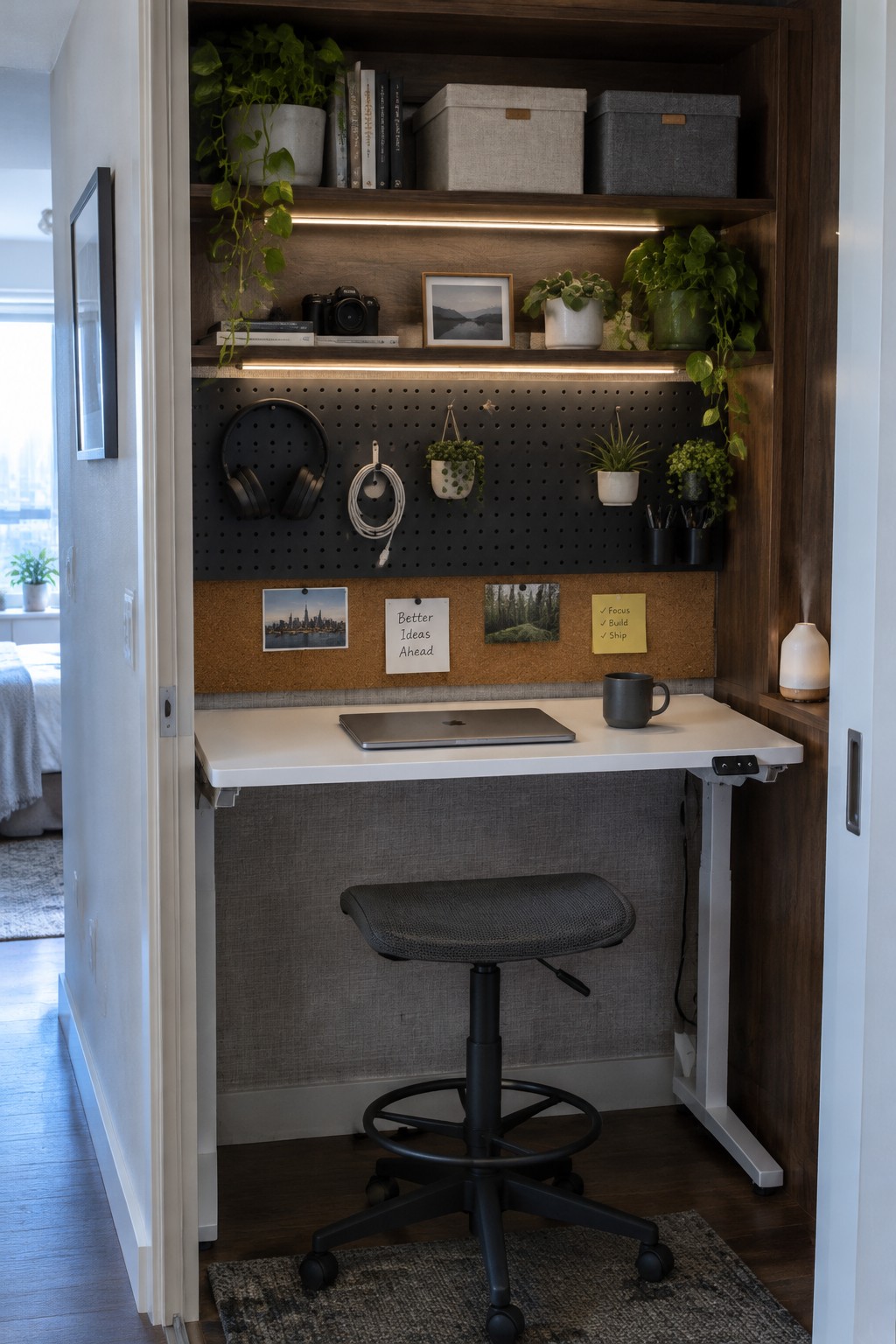
Fitting a standing desk into a small alcove or closet space gives you a dedicated work area without taking over a larger room. The setup keeps the desk contained while using the walls for storage and organization above and around it.
This works best in apartments or smaller homes where every bit of space counts. A pegboard and corkboard above the desk hold daily items within reach, and upper shelves keep extra supplies out of the way.
Desk Set Into Built-In Shelving
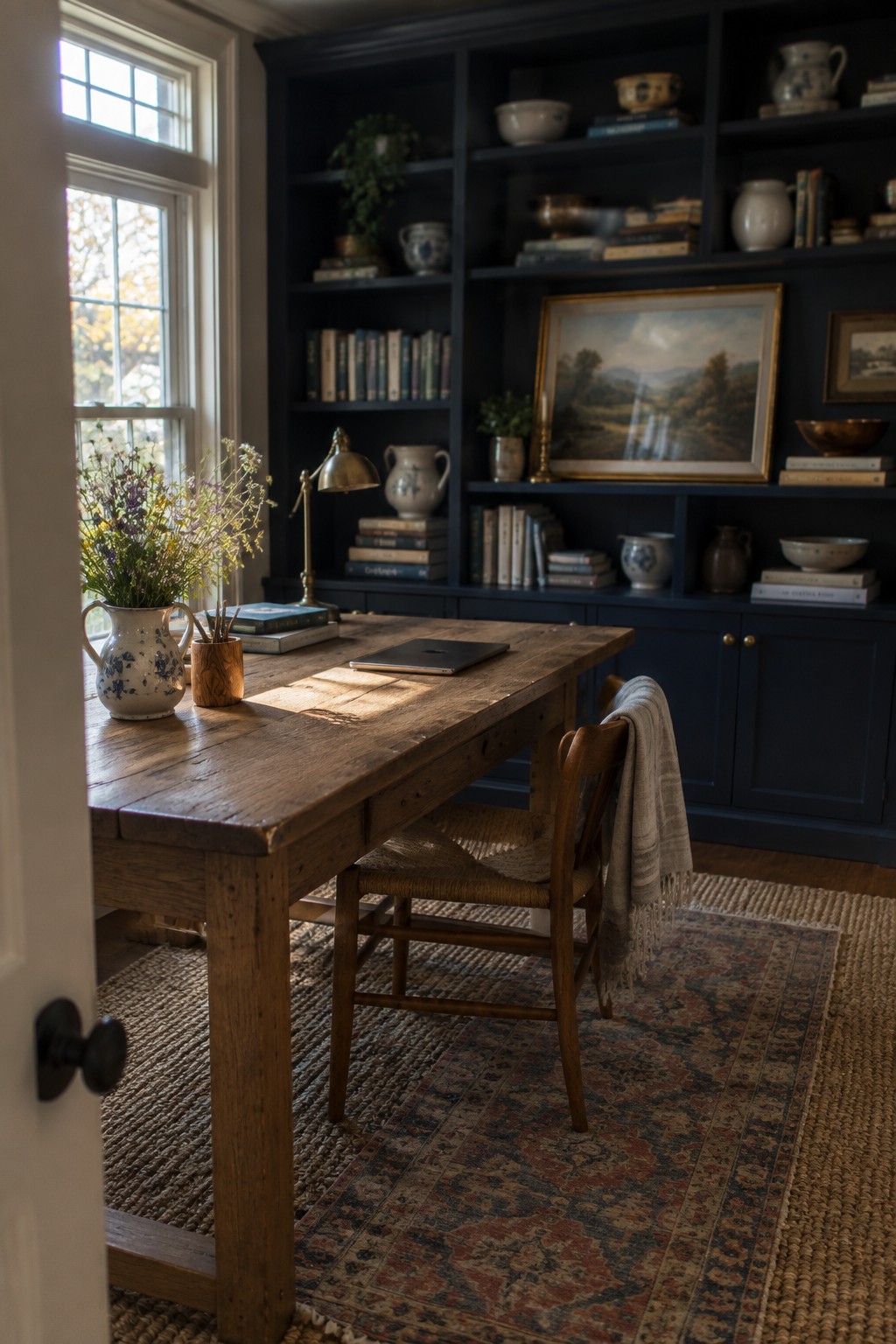
Placing a desk directly into a wall of built-in shelves gives the whole workspace a settled, useful feel. Everything stays within reach, and the shelves make the room look finished instead of like furniture was just pushed against a blank wall.
This works best in a room that already has some depth, so the cabinetry does not crowd the floor space. Keep the paint on the built-ins darker than the desk so the wood stands out, and leave a few open spots on the shelves to stop the wall from feeling too heavy.
Adding A Leather Desk Pad To A Standing Desk

A leather desk pad gives a standing desk a softer, more finished look without much effort. It protects the surface from daily wear while adding a bit of warmth that plain laminate or wood often lacks. Many people find the slight cushion makes long hours feel less harsh on the arms too.
This works best in rooms that already lean traditional or layered. Keep the pad in a warm brown or tan so it blends with wood tones and soft seating nearby. Just make sure it sits flat and leaves enough room for a keyboard and mouse when the desk is raised.
Pair Your Standing Desk with a Low Stool
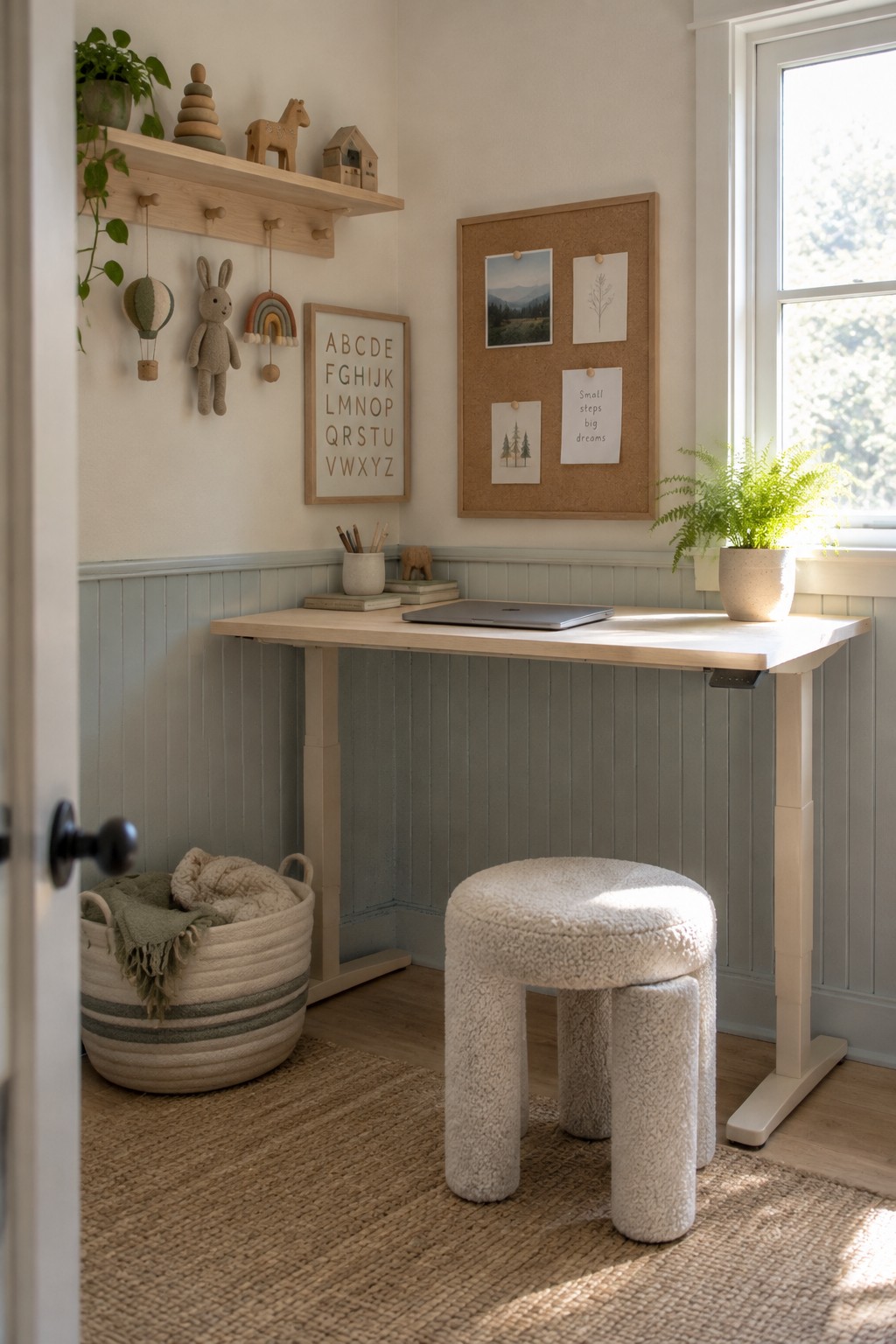
A standing desk can feel more approachable when you skip the usual office chair and use a low stool instead. The stool gives you a quick place to rest without turning the whole setup into a traditional desk and chair arrangement. It keeps the space feeling lighter and easier to move around.
This works especially well in smaller rooms or shared family spaces where you want the desk to blend in rather than stand out as office furniture. The soft shape and texture of the stool add a bit of comfort without taking up much floor space. Just make sure the height works with your desk so you can actually use it during the day.
Standing Desks Work Well By Windows

A standing desk set right by a window changes how the whole space feels during the day. The light keeps the area bright without needing extra lamps, and having plants nearby adds a bit of life that makes long work sessions easier to handle.
This setup suits smaller rooms or apartments where you want the desk to feel open rather than boxed in. Just watch how the sun moves across the desk surface so glare does not hit your screen, and keep a few trailing plants within reach for that extra bit of calm.
Pegboard Storage With A Standing Desk

A standing desk feels more useful when you add a pegboard on the wall right behind it. Tools and supplies stay visible and easy to grab without taking up desk space, which keeps the work surface clear for whatever project you have going. This setup works especially well in spaces that serve both as an office and a spot for hands-on tasks.
Mount the pegboard at a height that works whether you are sitting or standing, and group items by how often you reach for them. It suits homes with a garage or spare room turned into a workspace, where you want things organized but still close at hand. Just leave some empty space on the board so it does not start to feel crowded.
Dark Walls With a Warm Wood Standing Desk
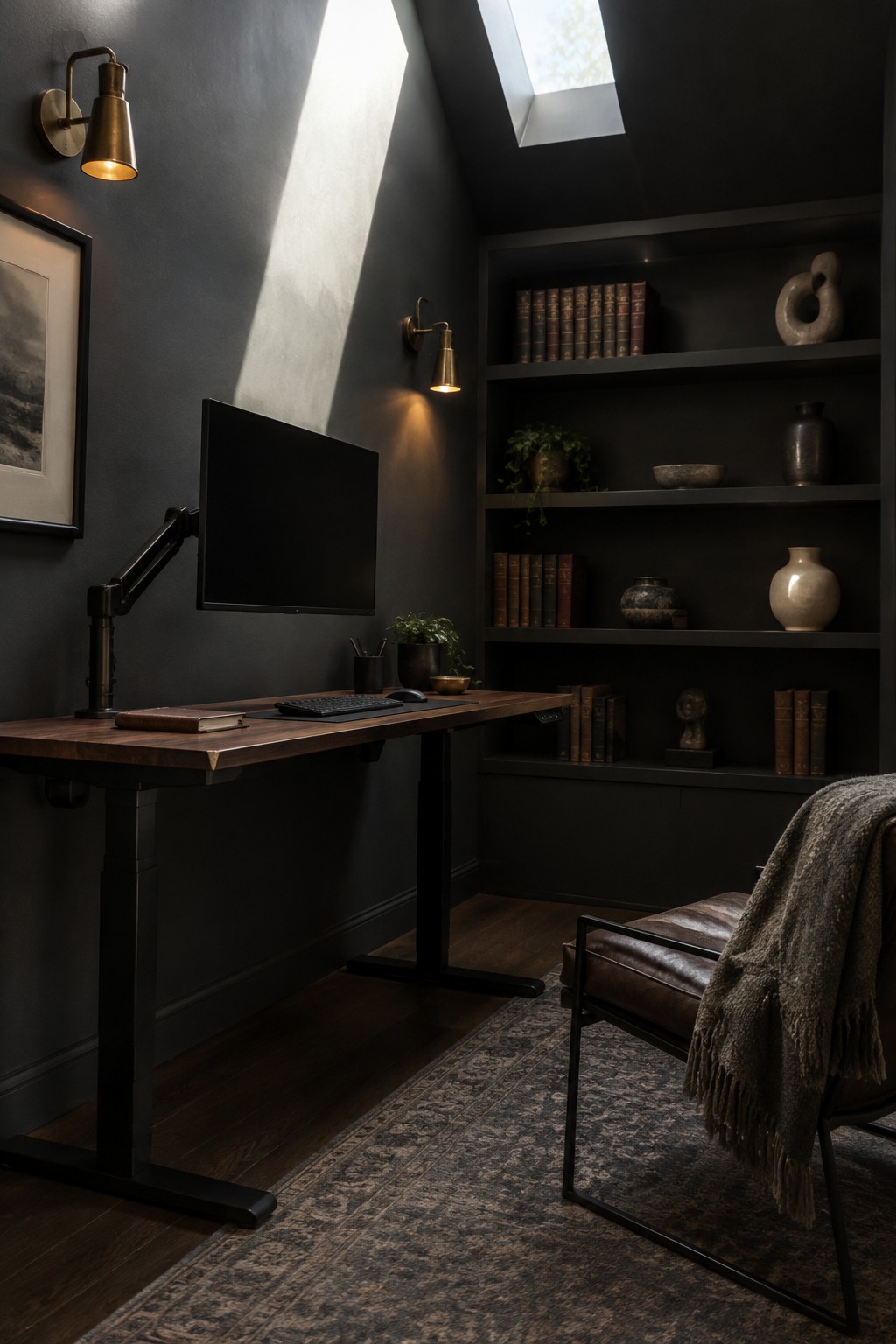
Dark walls can make a small office feel more contained and quiet, which pairs well with a standing desk. The warm wood top adds enough contrast to keep the space from feeling heavy or closed in, and it gives the whole setup a grounded look that still reads as cozy.
This approach works best in rooms that already have some built-in storage or shelving, since the darker background helps tie the desk into the rest of the furniture. It suits people who want a focused workspace without going full minimalist, though it helps to keep the wood tone consistent so the desk does not stand out too sharply against the walls.
Add Greenery Around Your Standing Desk

A standing desk can feel a bit bare on its own, but adding plenty of plants changes that fast. The mix of leaves and pots softens the look and makes the area feel more like a place you actually want to spend time in during the day.
This approach works best near a window where the plants get light. Try a few on shelves right above the desk and one or two hanging nearby so the greenery stays close without taking up floor space. Just watch how much water you use if the desk surface is not sealed.
Standing Desks That Work in Small Rooms
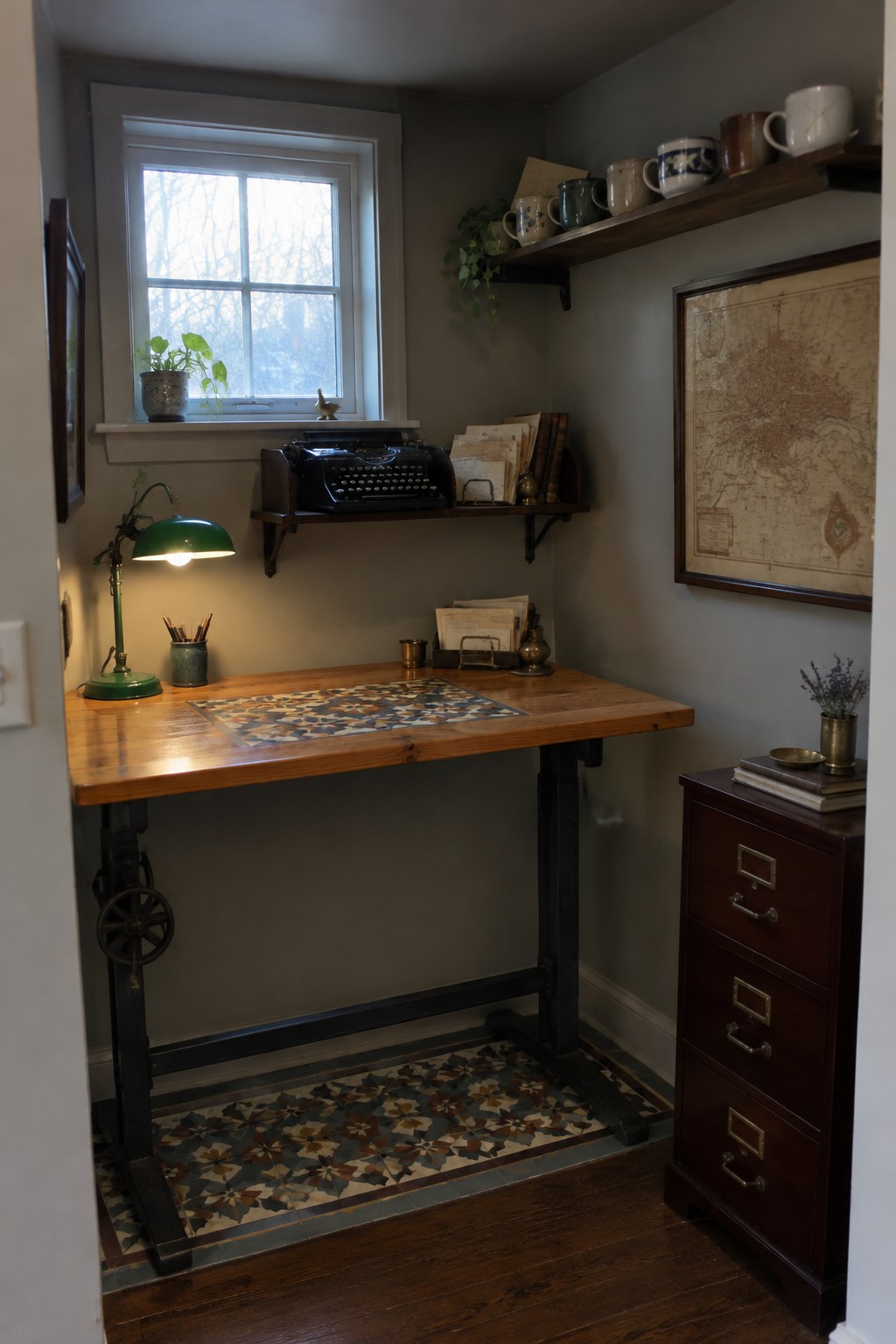
An adjustable desk gives you the option to stand or sit without taking up extra floor space. The manual crank makes it simple to change heights as needed, which works well when the whole office has to fit into one corner of a room.
This setup suits older homes or small bedrooms where a fixed desk would feel too bulky. Keep the base clear so the mechanism stays easy to use, and place it near a window if you want natural light during the day.
Standing Desks Separated By A Planter Box

Placing two standing desks with a long planter running between them gives each person their own workspace while keeping the room open and connected. The greenery softens the look of the desks and brings in a bit of life without taking up floor space.
This setup works best in a room that already has a window seat or built-in bench, since the lower seating keeps the overall feel balanced and cozy. It suits smaller homes or shared offices where you want flexibility without adding walls or heavy dividers.
Frequently Asked Questions
Q: How do I keep my feet from aching during longer standing sessions at home?
A: Stand on a cushioned mat that fits your space and lets you shift weight easily. Alternate with short sitting breaks every thirty minutes or so. This keeps the setup comfortable without needing extra gear.
Q: What works for lighting when my desk sits near a window?
A: Position a floor lamp behind the desk to fill in shadows during the day. Angle it so it avoids direct glare on your screen. Warm bulbs make the whole area feel softer and more inviting.
Q: How do I add storage without losing the open look of these setups?
A: Use a slim rolling cart tucked beside the desk for papers and supplies. Keep only daily items on the surface itself. This leaves room to move freely when you stand up.
Q: Can a standing desk work if my office doubles as a guest room?
A: Choose a compact model that folds or slides against the wall when not in use. Add a throw blanket over the chair to make it blend with the bed. Test the height once so switching modes stays quick and simple.
