

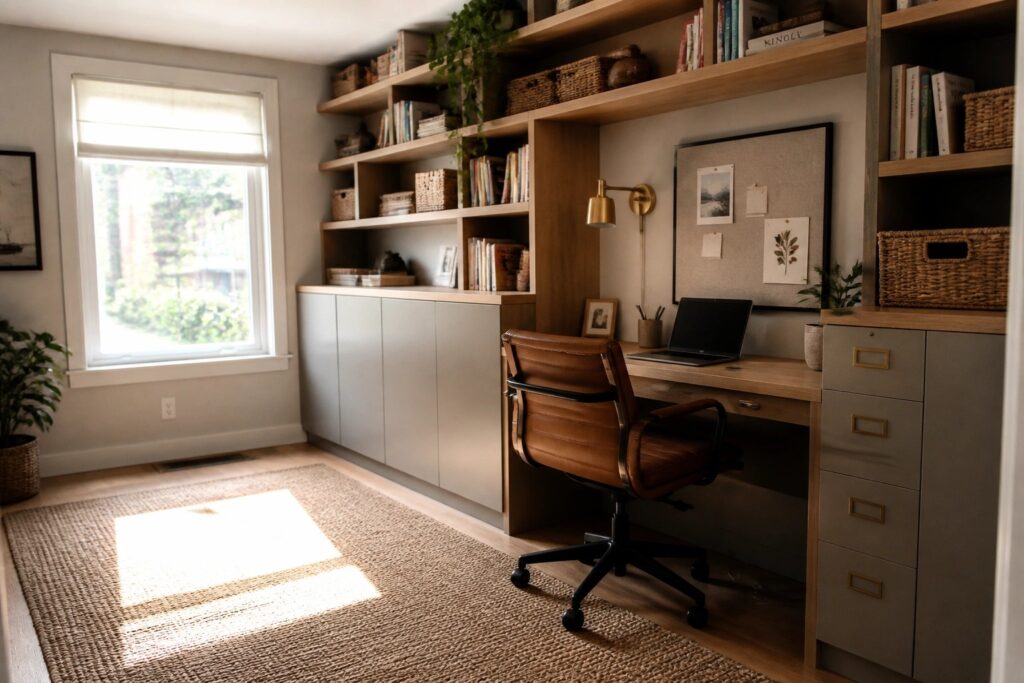
When I first tried working from a spare room, I noticed how quickly papers and supplies took over the desk and made the whole space feel smaller than it was.
Storage that actually matches the way the room gets used each day tends to keep things functional without forcing constant tidying.
Clutter builds fast.
Shelving and cabinets placed along the walls can open up floor space and help the office feel more settled once the layout starts to match real habits.
I often try one or two wall adjustments first to see how they change the daily flow before making larger changes.
Built-Ins That Mix Open Shelves and Closed Cabinets

One wall of built-ins can give a home office plenty of storage without crowding the floor. Open shelves hold books and small items while lower cabinets hide the rest, and the desk surface sits right in the middle so the whole setup feels like one piece.
This works well in rooms that already have a long blank wall, especially if you want both display space and hidden storage in the same area. Keep the cabinet color close to the wall so the unit blends in, and leave a few shelves a little empty so the space does not feel packed.
Tall Open Shelving Maximizes Wall Storage
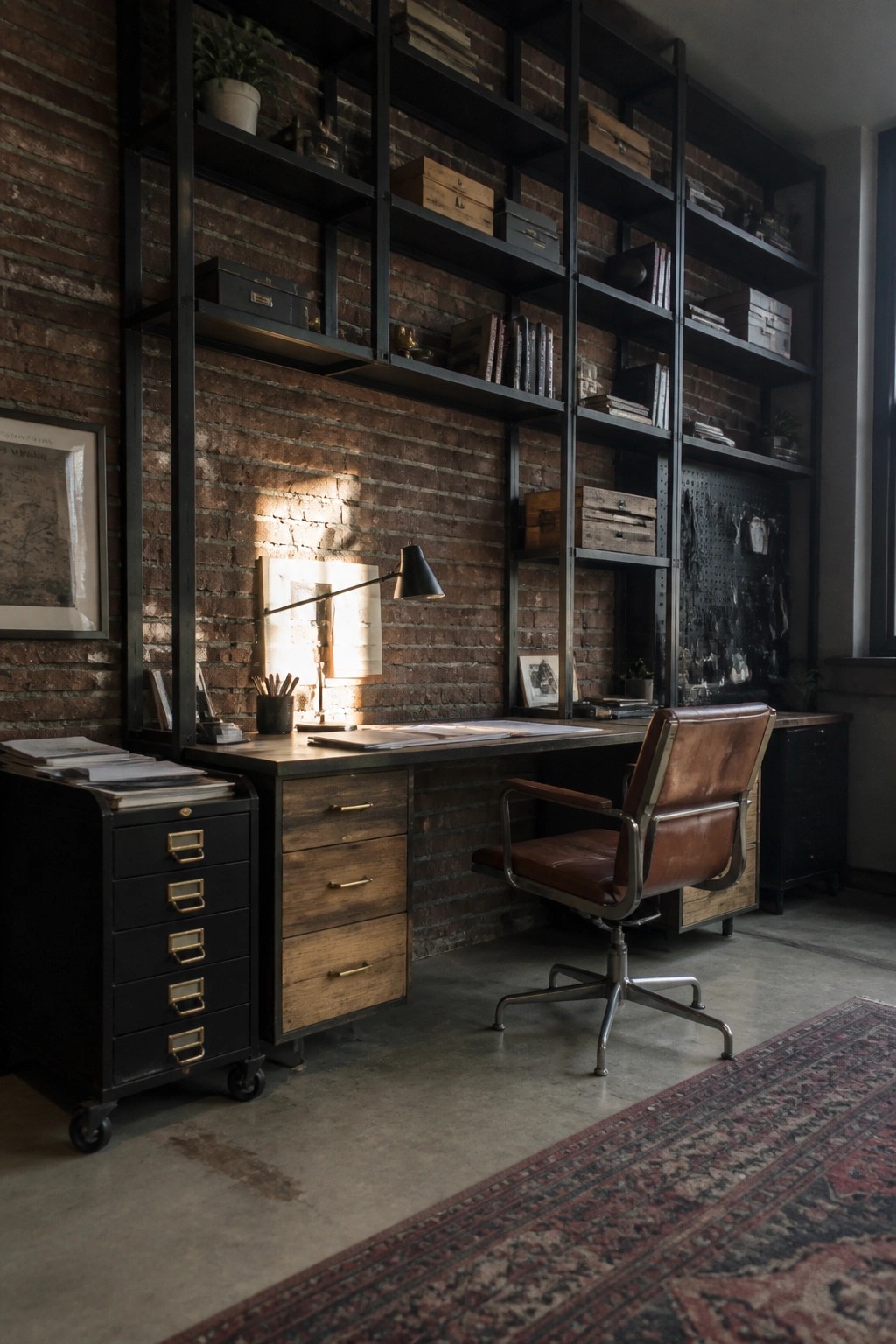
One simple way to add real storage in a home office is to run tall open shelving across most of one wall. It holds books, boxes, and supplies high up so the floor stays clear, and the setup still feels open rather than closed in.
This approach works best in rooms with high ceilings or exposed brick where the shelves can sit right against the wall without looking heavy. Use a mix of closed boxes and open spots so the shelves stay useful but not messy, and keep a desk or work surface right in front for easy access.
Shelves Above the Desk Free Up Floor Space

Many small offices run out of storage fast because people only think about floor cabinets and standalone shelves. Putting open shelves right above the desk uses the wall that would otherwise sit empty and keeps everyday items within easy reach.
This works best in rooms that already have a built-in desk or can add one along a long wall. Keep the shelves at a height you can reach from your chair, use baskets for smaller items, and add a tall cabinet nearby for anything you want hidden.
Floating Shelves Free Up Floor Space In Small Offices

Many home offices end up cramped when storage takes over the floor, so moving things up onto the walls can change how the room feels. A row of floating shelves above a built-in desk and drawer unit holds files, boxes, and supplies without eating into walking space.
This kind of setup works best in smaller rooms or spaces that need to serve more than one purpose. Make sure the shelves are anchored well if you plan to fill them with heavier items.
Built-In Storage Turns an Alcove Into a Practical Office

Many homes have small recessed spaces that feel wasted until they are turned into a compact office. Adding shelves, cabinets, and a simple work surface inside the alcove keeps supplies close at hand while the rest of the room stays open.
This setup works best in older homes or rooms with odd corners. Place everyday items on open shelves and tuck less-used things behind cabinet doors. A few wall hooks below the shelves handle headphones or cords without adding clutter.
Built-In Shelves and Cabinets Around a Desk

Built-in shelving and cabinets that run along the wall above a desk give you storage without crowding the floor. The setup keeps supplies close at hand while the desk surface stays clear for actual work. Many people like this because it turns one wall into a full storage wall that still feels part of the room rather than added on later.
This approach works well in smaller rooms or spaces that need to serve more than one purpose. It suits homes where you want the office area to blend with the rest of the house instead of looking like a separate workspace. Just measure the wall carefully and leave enough room for the chair to pull out comfortably.
Float Shelves Above a Wall Desk
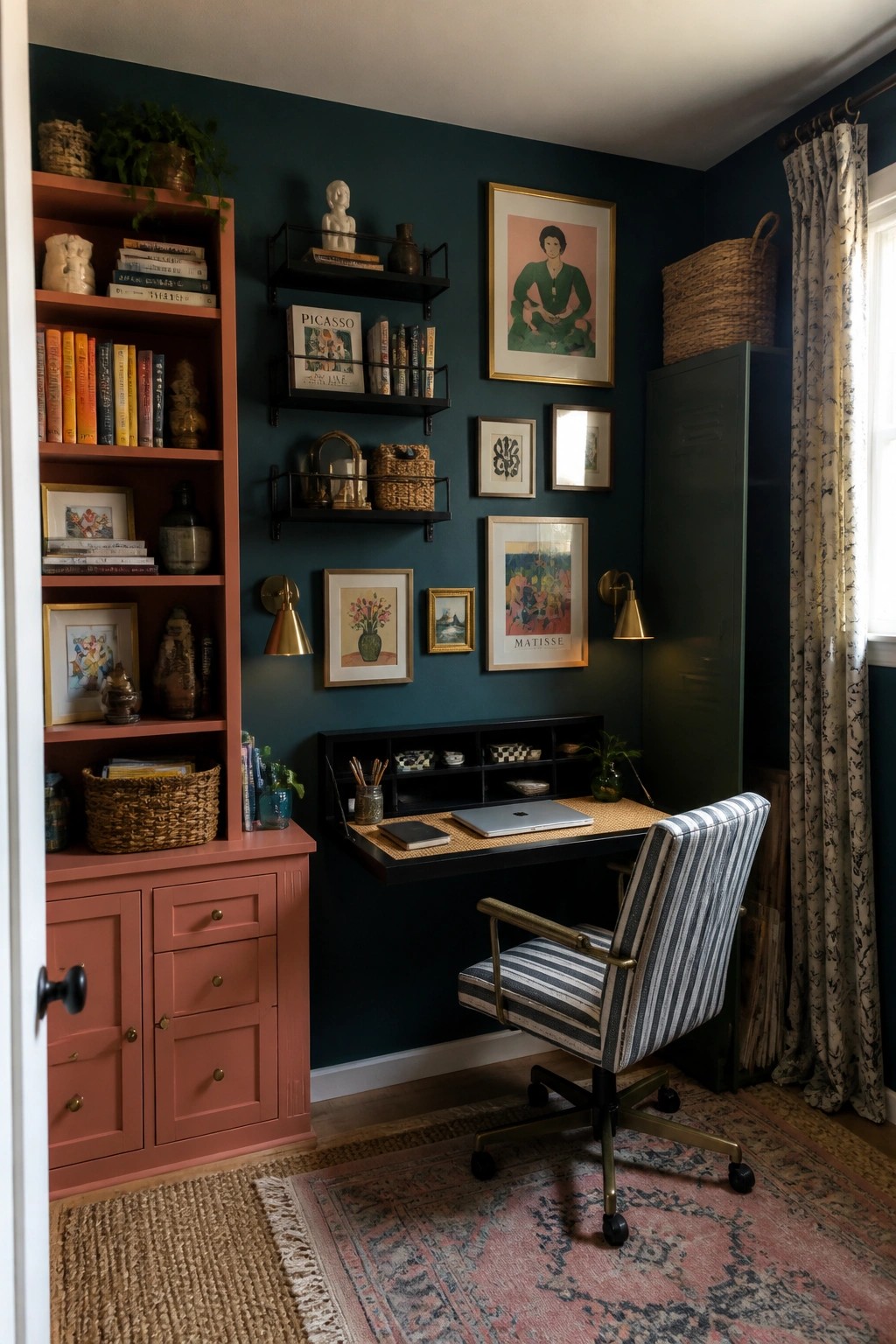
Many small offices run out of floor space fast. Floating shelves let you keep books, supplies, and decor within reach without adding bulky furniture that crowds the room.
This works best in tight corners or narrow rooms where a full bookcase would block movement. Mount the shelves at varying heights so everyday items stay easy to grab, and leave the desk surface clear for actual work.
Built-In Shelving That Includes A Desk

Many homes lack a full room for an office, so people turn to the wall instead. A tall unit like this one packs closed cabinets, open shelves, and a fold-down desk into one structure. It keeps files, books, and supplies in reach without spreading clutter across the floor. The mix of white fronts and wood tones helps it blend with the rest of the room rather than stand out as office furniture.
This setup works best in bedrooms, hallways, or living areas where space is shared. Keep the desk surface clear by storing daily items on the shelves right above it and tucking less-used things behind doors. Measure the wall first so the unit fits without blocking windows or doors, and check that the desk height lands at a comfortable level for your chair.
Built-In Shelving Over A Desk

Built-in shelves that fit into a wall alcove above a desk give you extra storage without eating into floor space. The setup keeps books, supplies, and small items organized and easy to reach while the desk stays clear for work.
This approach works well in smaller rooms or awkward corners where you need both a workspace and room to store things. Baskets help contain loose items so the shelves stay tidy and the whole area feels calmer.
Built-In Wall Cabinets Add Storage Without Crowding the Floor

Many home offices run short on floor space, so using the wall above the desk for storage is a simple way to keep things organized. Cabinets and shelves mounted in that area can hold papers, supplies, and smaller items while leaving the desk surface clear for work.
This approach works best in rooms where you already have a desk against a long wall. Mix a few open shelves for items you reach often with closed cabinets for everything else. Keep the depth shallow enough that it does not interfere with the desk or chair movement.
Built-In Shelving That Adds A Desk

Built-ins work well when you need storage and a workspace in the same spot without crowding the floor. The dark wood unit here runs the full height of the wall and includes open shelves, closed cabinets, and a desk surface that folds down when needed.
This setup suits narrow rooms or small homes where a separate office is not possible. Keep the desk height comfortable for daily use and leave enough clearance below for a chair to slide in and out.
Full-Height Built-Ins With A Rolling Ladder

Built-in shelves and cabinets that run all the way to the ceiling give you far more storage than standard bookcases. In a home office this approach keeps everything in one place and leaves the floor clear for a desk and chair.
This works best in rooms with higher ceilings where the top shelves would otherwise go unused. A rolling ladder makes the upper levels practical without needing extra furniture. Dark paint on the woodwork helps the cabinets blend into the walls so the room still feels open.
Built-In Wall Storage That Keeps A Desk Clear

One simple way to add storage in a home office is to run cabinets and small open cubbies right into the wall above the desk. This keeps papers and supplies off the work surface while still leaving everything within reach. The vertical wood detail helps the whole unit blend in without feeling heavy.
It suits smaller rooms where floor space matters most. Place closed storage higher up for items used less often and keep a few open spots lower for notebooks or mail. The same idea works in any spare corner turned into a workspace.
Built-Ins That Follow the Roofline

One useful way to add storage in a home office is to run built-in shelves and cabinets along the wall so they fit the shape of the ceiling. This keeps the space from feeling cramped and gives you plenty of room for both open storage and closed drawers.
It works best in attic offices or rooms with angled walls where standard furniture would leave gaps. Baskets on the upper shelves can hold supplies you reach for often, while the lower cabinets keep the rest out of sight.
Pegboard Walls Add Flexible Office Storage

A pegboard wall works well in a home office because it turns empty vertical space into adjustable storage without needing extra furniture. You can move hooks and clips around as your needs change, which keeps the area from feeling cluttered or fixed in one layout.
This approach works best in smaller rooms or corner setups where a full wall of cabinets would feel too heavy. Pair it with one tall cabinet for items you want out of sight, and keep the pegboard for papers and supplies you reach for often.
Built-Ins Add Storage Without Taking Up Floor Space

Built-in shelving and cabinets around a desk give you storage that actually fits the room instead of crowding it. This works especially well when floor space is limited and you still need room for files, supplies, and equipment.
Mix open shelves for baskets with lower cabinets to keep the surface clear. It suits smaller offices or homes that want more storage without adding extra furniture pieces.
Built-In Shelves and Cabinets Around a Desk

One practical way to gain storage in a small office is to run shelves and cabinets right around the desk itself. This approach uses the full height of the wall without taking up extra floor space, and it keeps papers, books, and supplies close at hand.
It suits bedrooms that double as work areas or any room where floor space is limited. Open shelves hold books and plants while the lower cabinets and drawers hide the rest, so the desk stays clear for daily use.
Built-In Wall Units That Free Up Desk Space

A wall of built-ins combines open shelves, closed cabinets, and narrow vertical storage to hold everything from books to pens without crowding the work surface. The setup keeps the desk itself mostly empty, which makes the room feel larger and easier to keep tidy day to day.
This approach works well in smaller rooms or apartments where floor space is limited. Mount similar units along one wall, add a few clear bins on the shelves for loose items, and keep a strip of wall organizers within reach for daily supplies.
Wall Storage That Keeps Supplies Organized

Many home offices end up cluttered because there is never quite enough room for tools, papers, and supplies. Using the wall with a pegboard section and a tall flat file cabinet next to it gives you a place for almost everything without crowding the floor.
This approach works best in smaller rooms where you want to keep the desk surface clear. It suits people who need frequent access to different materials and prefer to see what they have rather than digging through boxes.
Built-In Desk Units With Floating Shelves

A built-in desk with cabinets below and shelves above gives you storage without crowding the floor. It keeps supplies, files, and decor in one place while the desk surface stays clear for work.
This setup works best in smaller rooms or narrow spaces where every inch counts. Keep the shelves at a comfortable height and stick to matching materials so the whole unit feels like part of the wall.
Frequently Asked Questions
Q: How high should I place my shelves so everything stays easy to reach? A: Mount the lowest shelf at about eye level or just below. This lets you grab daily items without stretching or bending down. Stack lighter stuff higher if you need extra room.
Q: What works best if I want to hide some clutter but still show off a few nice items? A: Put cabinets on the bottom to hold files and supplies you use less often. Leave one or two open shelves above for books or plants. This setup keeps the space looking open without showing everything.
Q: How can I keep open shelves from collecting dust in my office? A: Wipe them down every couple of weeks with a dry cloth. Keep fewer items on each shelf so air moves around better. That cuts down on how often you need to clean.
