

I have found that a home office only settles into something useful once the desk faces away from the main foot traffic and the light hits from the side rather than straight on.
The choice of chair and the height of the surface matter more than most people expect because both decide how long I can actually stay seated without shifting every few minutes.
Some rooms look fine on a sketch but feel off the moment I try to use them.
Over the years I have started checking how the floor feels underfoot and whether there is enough space to stand and stretch before I bring in any new pieces.
Small adjustments like that often change whether the room supports steady work or just ends up collecting papers.
Warm Up Your Workspace With Exposed Brick

An exposed brick wall behind a desk gives the whole office a grounded, lived-in feel without much extra effort. The natural texture catches light in a way that softens the room and keeps it from feeling too sterile or office-like.
This works best in older homes or any space where you can leave the brick bare. Keep the rest of the palette simple so the wall stays the main feature, and add just a few pieces like a wooden desk and one comfortable chair to balance the look.
Add a Window Seat for a Simple Workspace

A window seat turns an underused corner into a place where you can sit and focus without needing a full desk setup. The built-in bench provides seating right where the light is best, and the drawers below keep papers and supplies tucked away so the surface stays clear.
This works especially well in smaller rooms or homes with bay windows already in place. Keep the cushion neutral and add just a couple of pillows so the spot feels comfortable for long stretches without looking cluttered.
Pegboard Walls Keep Office Supplies Within Reach

A pegboard wall gives you a simple way to store and display the things you use every day. It keeps the desk clear while still making pens, papers, and small tools easy to grab when you need them.
Hang one above a desk or along a side wall in any small room or attic space. Add hooks and clips as your needs change, and it will stay useful without feeling crowded.
Layer Natural Textures Around the Desk

A simple wood desk can feel much more inviting when you add a few natural textures nearby. The jute rug underfoot and the woven wall organizer both help soften the look and make the space feel warmer without adding much visual noise.
This works especially well in rooms with harder surfaces like brick or painted walls. Keep the main furniture plain and let the textures handle the cozy part. It suits smaller offices or older homes where you want the workspace to blend in rather than stand out.
Built-In Shelves Around the Desk

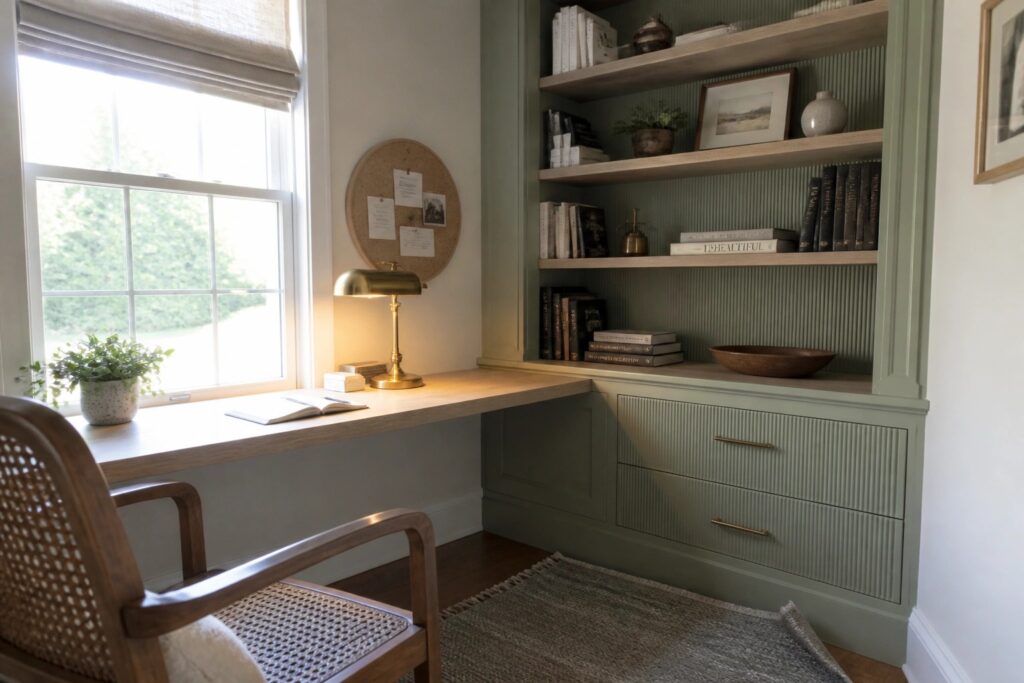
Built-in shelves above a desk give you storage and display space without crowding the room with extra pieces. The shelves keep books, plants, and small items close at hand while the desk surface stays clear for work.
This approach works best in rooms that double as both office and living space. Paint the built-ins the same color as the walls so they feel like part of the room rather than added on.
Natural Wood Furniture Keeps an Office Feeling Warm
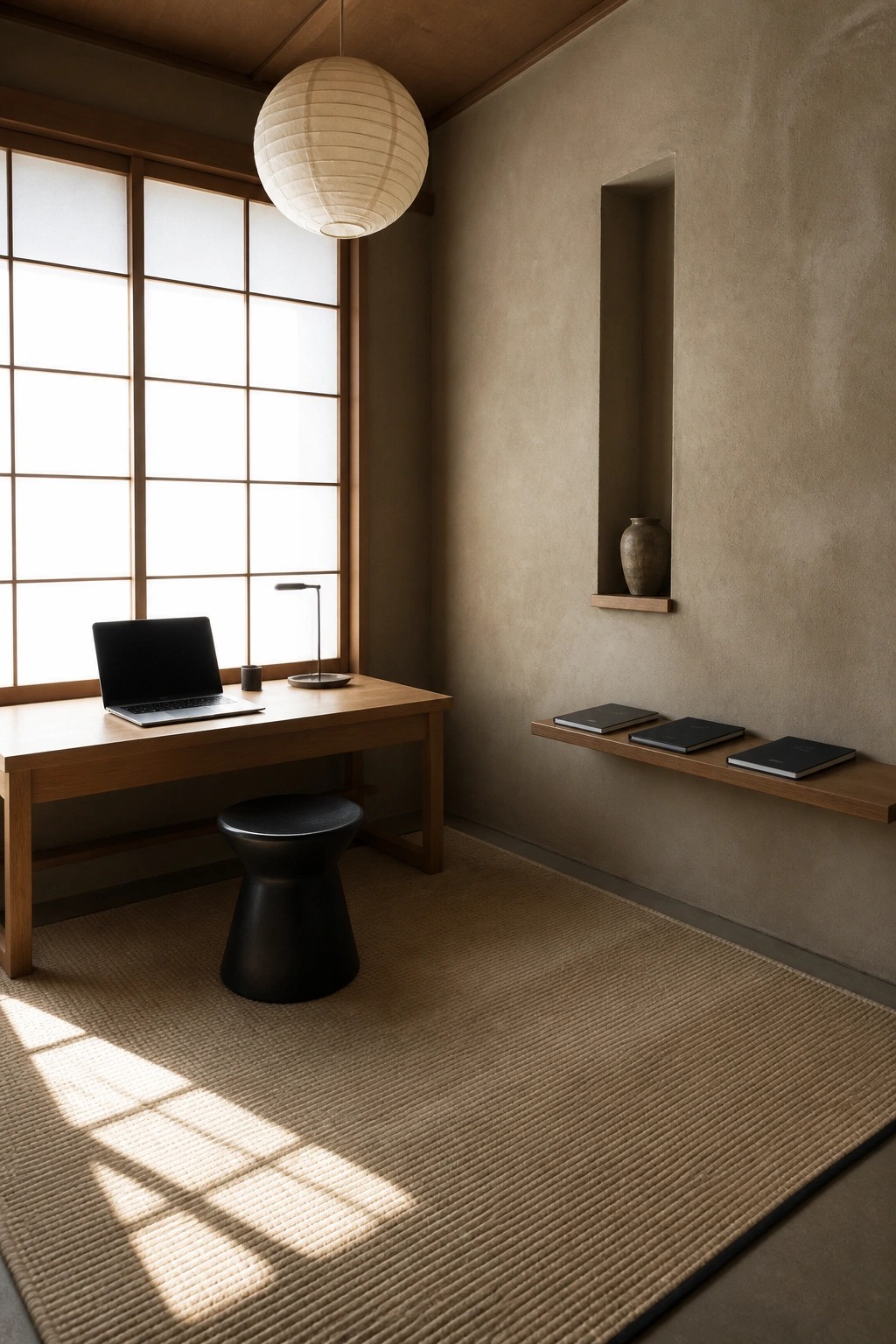
Natural wood brings a steady warmth to a workspace that helps it feel less like a work zone and more like a place you actually want to sit. The simple desk and floating shelf use the same tone, which keeps the room from looking scattered while still giving it enough texture to feel comfortable.
This setup works best in smaller rooms or homes that already lean toward simple finishes. Keep the number of pieces low, let the wood show its grain, and add one soft layer like a woven rug so the space stays focused without turning cold.
Hang a Gallery Wall Behind the Desk

A gallery wall above the desk gives the office a personal touch without taking up any floor space. The mix of frames and artwork creates visual interest that makes the room feel lived in and a little more inspiring during long work hours.
This approach works best in smaller rooms where you want character but still need the surface clear for actual work. Start with a few favorite pieces and add to it over time rather than trying to fill the whole wall at once.
Built-Ins Frame the Desk for Better Focus
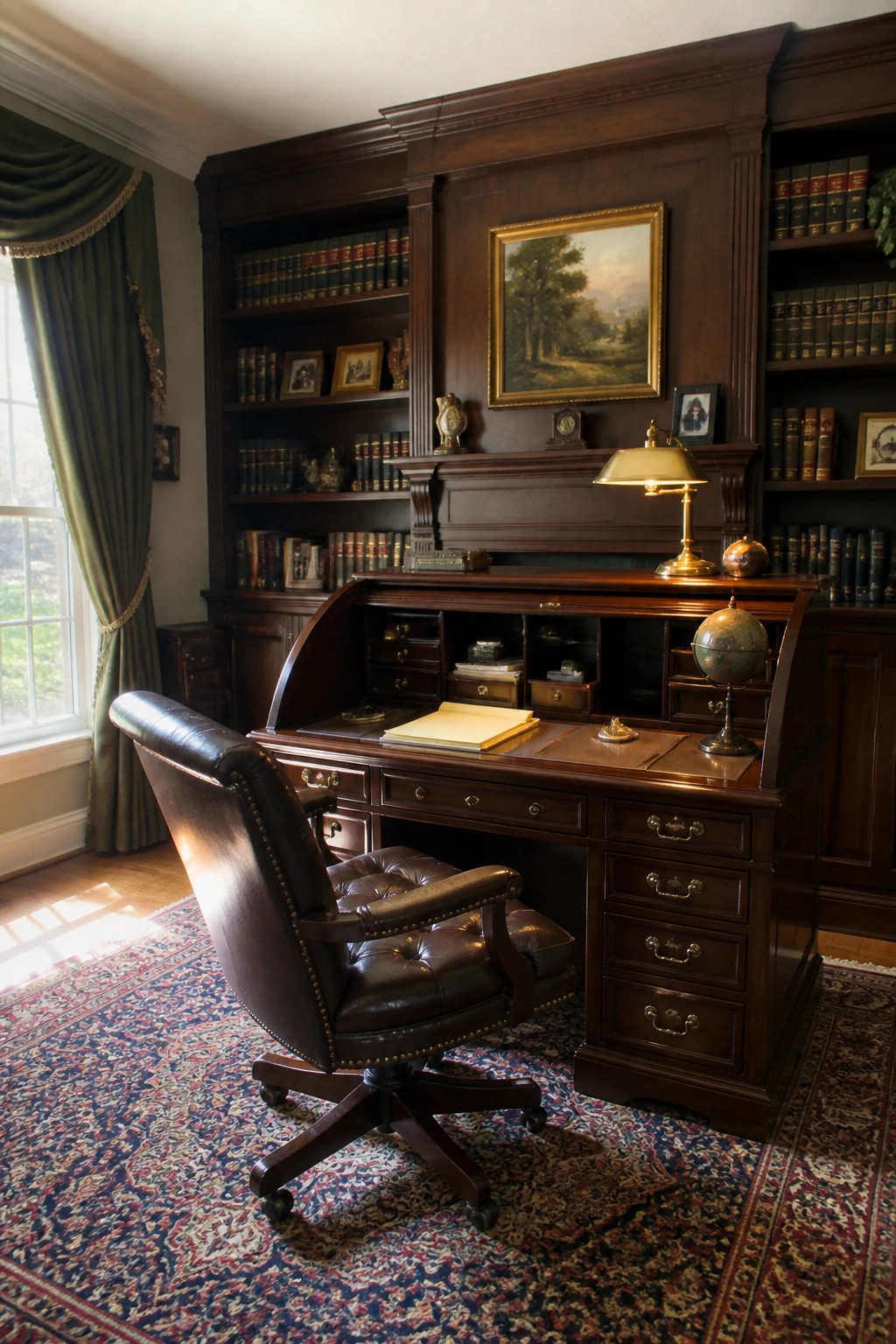
Built-in shelves on both sides of the desk turn the workspace into a small room of its own. The wood matches the desk and adds warmth while keeping everything within reach, which cuts down on distractions when you need to concentrate.
This setup works best in a room that already has some wall space for cabinetry. It suits people who keep a lot of books or files and want the office to feel enclosed without closing it off completely. Make sure the shelves are not too deep or they can start to crowd the chair.
Position the Desk to Face Outdoor Views

Placing the desk right in front of large windows makes the whole room feel brighter and more open. The view outside gives your eyes a place to rest during long work sessions, which helps keep focus without feeling boxed in.
This setup works especially well in rooms that already have good natural light and some greenery nearby. Keep the desk simple and substantial so it does not compete with the view, and add just a few natural textures like wood or woven pieces to tie the space together.
Built-In Desks Under Stairs
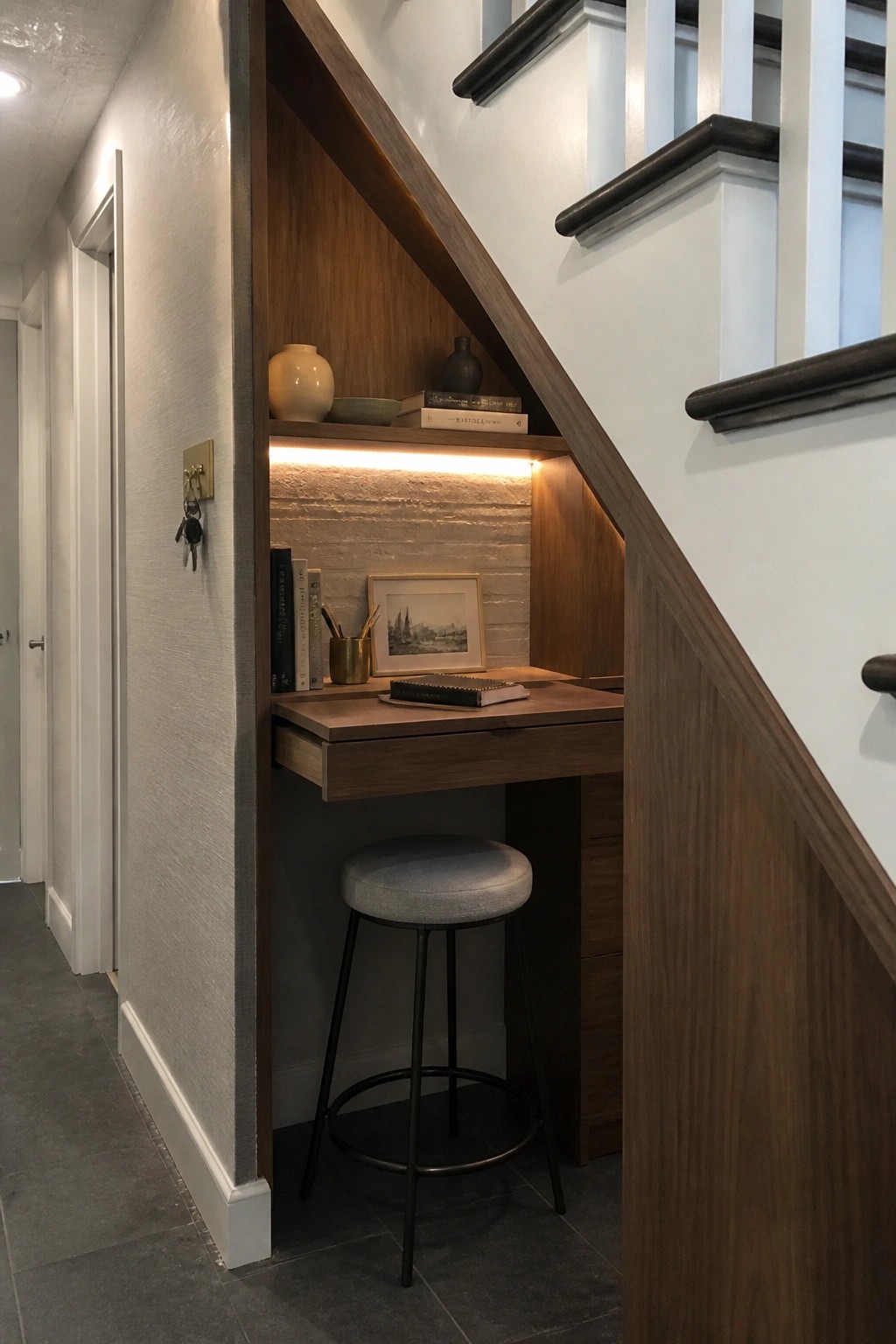
Many homes end up with empty space under the stairs that never gets used. Fitting a small desk into that area creates a compact workspace that feels tucked away and quiet.
This works best in homes where square footage is limited or where you want a work spot that stays separate from main living areas. Keep the finish simple so it blends with the surrounding woodwork and choose a stool that slides fully underneath when the desk is not in use.
Tuck Your Desk Into Built In Cabinetry

One simple way to keep a home office feeling calm is to set the desk inside a run of cabinetry. The surrounding storage hides clutter and gives the workspace a settled look instead of letting it take over the room. In a smaller home this also keeps the floor clear so the rest of the space can still be used for other things.
This setup works best in a bedroom or living area where you want the desk to feel like part of the room rather than a separate zone. Keep the desk surface light and add just a few closed cabinets above and beside it. That way papers and supplies stay out of sight when the workday ends.
Add a Pegboard for Easy Storage

A pegboard keeps everyday office items visible and within reach while leaving the desk surface clear. This helps the room stay calm and makes it easier to focus without digging through drawers.
It works especially well in smaller rooms or spaces that double as something else. Mount it at a comfortable height, add a few shelves, and rearrange the hooks as your needs change.
Add Warmth With A Patterned Area Rug

A patterned rug under the desk and chair brings color and softness to an office that might otherwise feel too hard and plain. Wood floors and furniture can look cold on their own, so the rug helps the space feel finished and comfortable for long hours of work.
Place a rug that is large enough to fit both the desk and the main chair so the whole seating area sits on it. This works well in smaller rooms where you want one clear work zone without adding more walls or dividers.
Frosted Glass Walls For A Focused Office
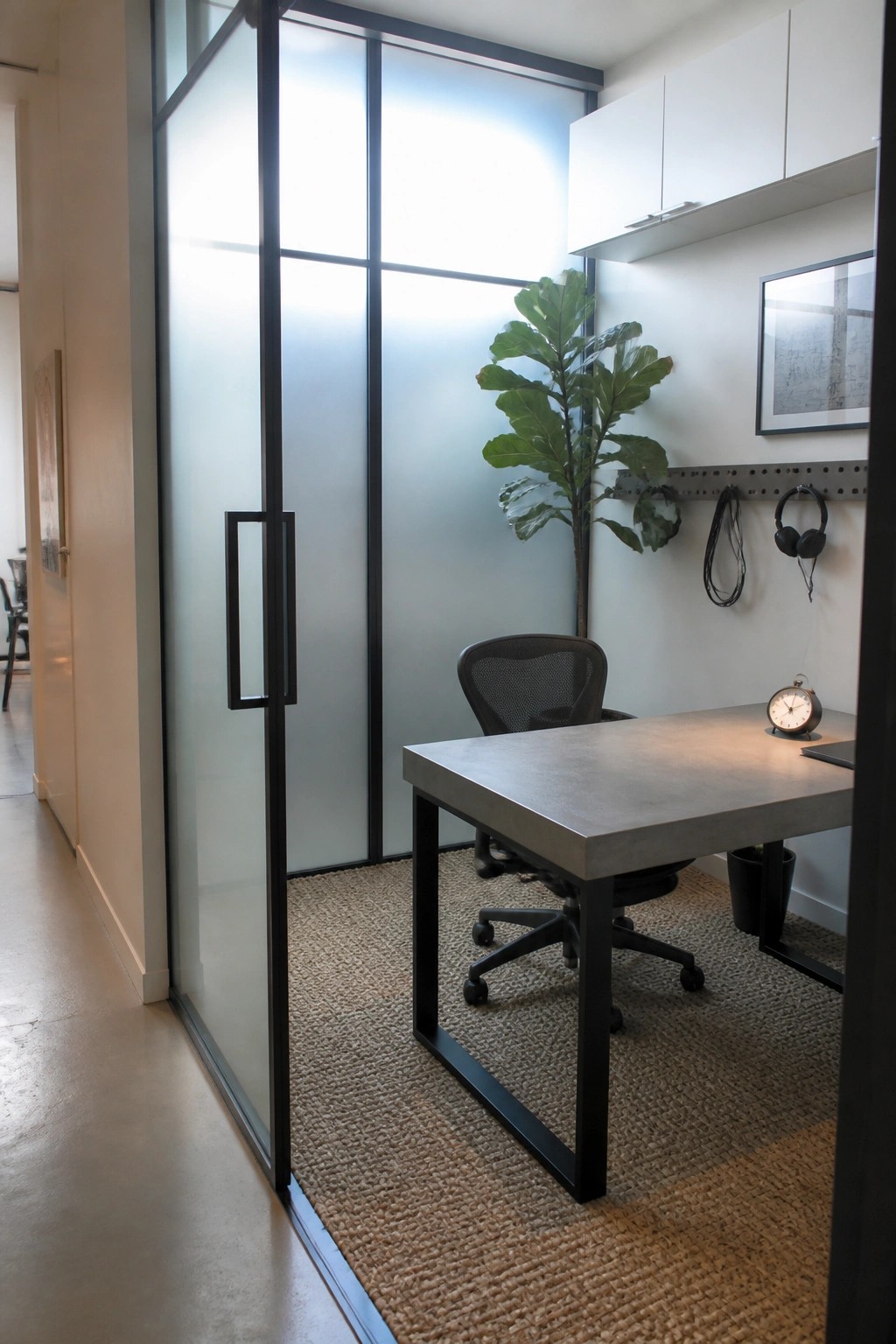
Frosted glass is a simple way to carve out a workspace that feels separate without cutting off all the light. It gives you enough privacy to stay concentrated while still keeping the room from feeling boxed in.
This approach works best in homes with open layouts or limited square footage. Pair it with a solid desk and a few basic storage pieces so the space stays calm and easy to keep tidy.
Built-In Shelves Around the Desk

Built-in shelves that wrap right around the desk keep books and papers close at hand without adding extra pieces that crowd the floor. This layout works well when you want the room to feel enclosed and calm rather than open and scattered.
It suits older homes or any space with traditional trim and pairs best with a solid wood desk and a comfortable chair. Keep the lower shelves for daily items and leave the window area clear so light still reaches the work surface.
Low Tables With Floor Seating

A low table on tatami mats creates a simple workspace that feels calm and contained. Sitting closer to the floor tends to reduce distractions and helps keep the surface clear of extra items.
This setup suits smaller rooms or anyone who wants a focused spot without a full desk. Use a firm cushion for support and limit what goes on the table to just a notebook or two.
Long Desk With an Inspiration Board

A long desk gives you one continuous surface that handles papers, laptops, and reference materials without crowding the room. It works especially well when you need to keep several projects visible at once instead of switching between separate tables.
Mount a large board directly above the desk so notes and images stay in sight while you work. This setup suits older homes or converted spaces where a single wall can hold both storage and daily tools.
Built-In Shelving for a Focused Workspace

Built-in shelving and cabinetry can turn a basic desk setup into something that feels more settled and useful. The wood tones keep the room warm while giving you room to store books, baskets, and small items without adding extra furniture.
This works best in smaller rooms where you want storage close at hand but still need the desk area to stay clear. Match the wood to your desk if possible and keep the shelves from getting too full so the space stays calm.
Frequently Asked Questions
Q: My office has zero natural light. How do I still get that warm glow? A: Swap in a couple of lamps with soft bulbs and place them at different heights around the desk. Throw a textured throw over your chair to bounce the light and add instant comfort.
Q: I only have a small corner in my apartment. Can it still feel like a real workspace? A: Mark the spot with a small rug under your chair. Keep just one personal item like a mug or photo on the desk so the area stays focused but welcoming.
Q: What if I want to work long hours without the space feeling too sleepy? A: Choose a chair with decent back support and add a bright cushion to keep your posture alert. Step away for a quick stretch every hour to hold your energy steady.
