


When I set up a workspace in a smaller room the desk choice often decides whether the area feels open or closed in.
Many times the designs that look simple on paper end up adding more visual weight than expected once they are actually in place.
Scale matters more than style alone.
I have tested a few setups myself and noticed that certain compact shapes free up floor space without making the room look empty.
It helps to look at how each option sits against walls or windows before committing to one.
Built-In Desks In Alcoves

Small rooms often leave awkward corners unused, and fitting a desk into one of those spots can give you a real workspace without eating up floor area. The key is keeping the desk shallow and floating it off the floor so the room still feels open.
This setup works best in bedrooms or narrow apartments where a freestanding desk would block movement. Add a single shelf above for a few books and a plant, then choose a simple chair that can tuck in fully when not in use.
Corner Desk With Vertical Wall Storage

A corner desk works well when space is tight because it uses two walls instead of taking up floor area. Placing the desk under a window brings in natural light while the wall above holds a corkboard and lamp, keeping everything within reach without adding extra furniture.
This setup suits smaller homes or apartments where a full office room is not possible. Keep the surface clear and use the wall for notes and lighting so the area stays open and practical rather than cramped.
Roll Top Desks Provide Built In Storage

A roll top desk packs storage into a small footprint by combining a work surface with cubbies, drawers, and trays all in one piece. The closing top also hides papers and supplies when the desk is not in use.
This style suits narrow hallways or small rooms where a flat desk would crowd the space. It works especially well in older homes that already have wood trim and classic details.
Wall-Mounted Desks That Save Floor Space

A wall-mounted desk that drops down when you need it gives you a real workspace without losing floor room. It stays flat against the wall the rest of the time, which helps small rooms feel less crowded.
This approach works especially well in bedrooms or narrow corners. Keep the chair simple so it tucks away easily, and use the space above for a shallow shelf if you need a few books or supplies within reach.
A Slim Console Desk For Narrow Spots

A console desk works well when space is tight because the narrow top keeps the walkway clear while still giving you a usable surface. Many people like this style in hallways or under stairs since it turns an awkward spot into a simple work area without blocking traffic.
Place it against a wall with just enough room for a chair to slide in, and use the drawer and side slot for papers or books. It suits smaller homes or apartments where a standard desk would crowd the room.
Built-In Window Desks With Matching Cabinetry

A built-in desk placed right into a window alcove can make a small office feel much more finished. The cabinetry on both sides holds everything you need without adding separate pieces that take up floor space.
This setup works well in older homes or rooms with deep window bays. Keep the cabinet color close to the wall so the desk reads as part of the architecture rather than a separate addition.
Leaning Desk With Upper Shelves

A leaning desk gives you a full workspace without eating up floor space. The frame rests against the wall and the shelves sit right above the surface, so everything stays in one narrow strip instead of spreading out.
This style works best in apartments or rooms that already have other furniture. Keep the lower area open so the chair can slide in and out easily, and use the upper shelves for books or supplies you reach for often.
Mirrored Vanity Desks Brighten Small Work Areas

A mirrored desk helps a small office feel less closed in because the reflective surfaces catch and spread light across the room. The marble top adds a clean finish that keeps the piece from looking like basic storage.
This approach works best in bedrooms or narrow corners where a standard desk would crowd the space. An ottoman tucks neatly underneath to free up floor area during the day.
Nook Desks That Turn Unused Corners Into Workspaces

A narrow desk tucked into a small nook can turn an unused corner into a real workspace. The key is keeping the desk shallow and adding storage above it so the floor stays clear and the area does not feel crowded.
This setup works well in homes with limited square footage or in rooms that double as guest spaces. Mount the desk at a comfortable height, use a simple stool that slides underneath, and keep the surface mostly clear so the spot stays usable every day.
Floating Shelves As Slim Desks

A floating shelf can double as a desk when space is tight. It mounts directly to the wall so nothing sits on the floor, which helps the room feel less crowded and more open.
This setup works best along a hallway wall or in a small corner that would not fit a standard desk. Use a low stool that slides underneath and keep the surface narrow so it does not block the walkway.
Wall Desk Designs With Integrated Shelving
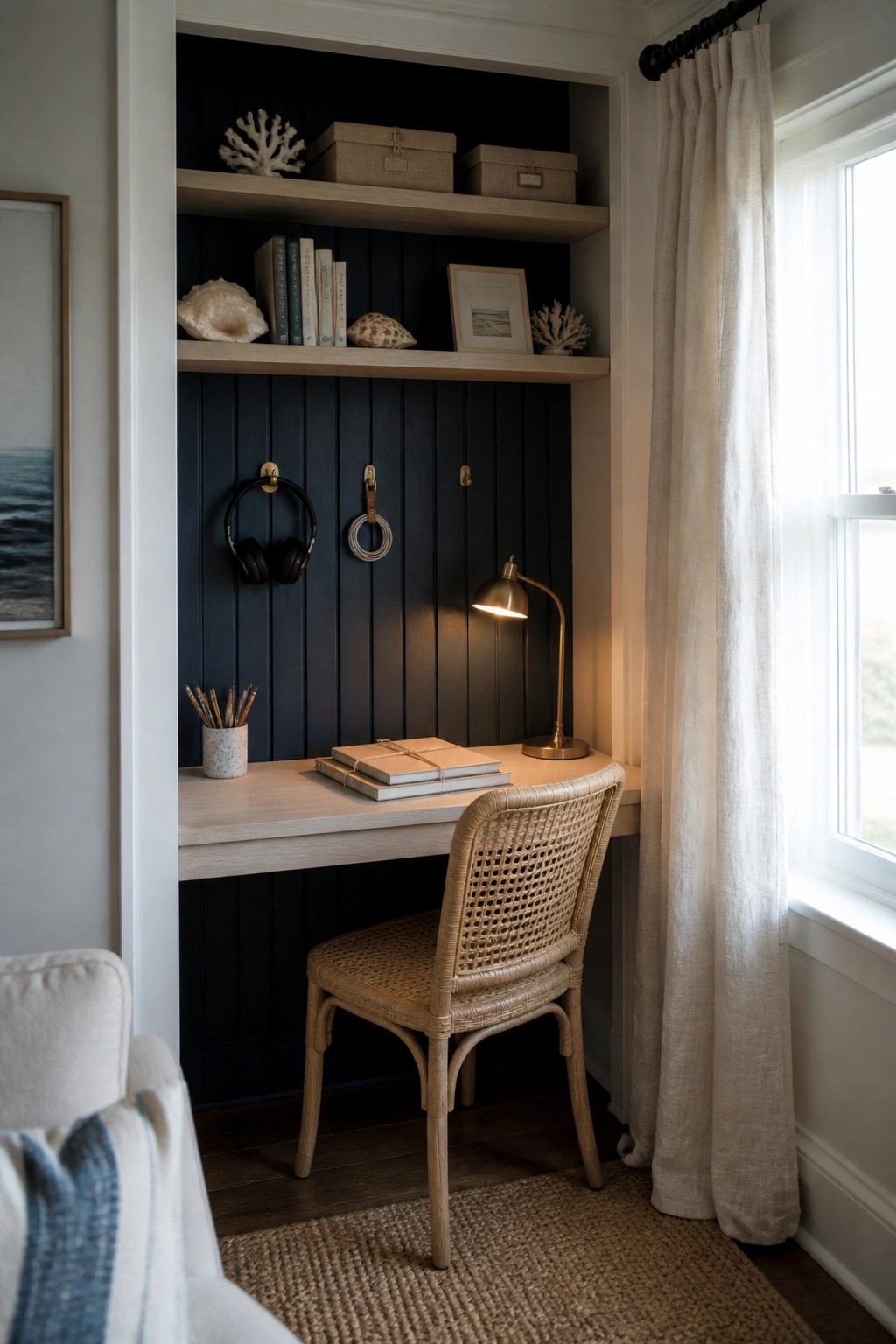
A built-in desk fits neatly into a recessed wall space and keeps the rest of the room open. The shelves above give storage without adding extra furniture, which helps a small office feel less crowded.
This setup suits bedrooms or living areas where you need a workspace but do not want a full desk dominating the floor. Dark paint on the back wall makes the niche feel intentional rather than leftover space.
Built-In Desks That Hide Inside Cabinets

A desk tucked inside cabinetry works well when you need a workspace but do not want it to take over the room. The doors close over everything at the end of the day, so the area stays looking like regular storage rather than an office.
This setup suits small homes or rooms that serve more than one purpose. It works best when you keep the inside simple, with just enough room for a chair to slide under and a few shelves above for supplies.
Secretary Cabinets That Conceal Compact Workstations

Many small offices struggle with keeping the desk from taking over the room. A cabinet that opens to reveal a desk solves this by hiding the work surface when it is not needed. The doors close over everything, so the space feels like a regular piece of furniture instead of an office.
This setup works well in living rooms, guest rooms, or any area where a full desk would feel out of place. Look for versions with a drop-down surface and built-in cubbies so papers and supplies stay organized inside. Just make sure the cabinet depth fits your chair when the desk is open.
Pegboard Storage Above A Small Desk

A pegboard right above the desk turns unused wall space into useful storage. It holds baskets and small tools so the desktop stays clear even when the room is tight.
This approach works best in corners or alcoves where cabinets would crowd the space. Swap the hooks and bins as your needs shift and the setup stays practical without looking cluttered.
Industrial Pipe-Leg Desks For Tight Hallways

A wall mounted desk with pipe legs can turn a leftover hallway or tight corner into a workable office spot. The design keeps the floor open so the room still feels usable instead of blocked by a full piece of furniture.
This approach suits homes that lack a dedicated room for an office. Pair the desk with simple overhead shelving for books and supplies, and keep the surface clear except for a lamp and a couple of frames.
Low Floor Desks For Small Rooms

A low desk set directly on the floor takes up less visual space than a standard table and chair. It pairs with simple cushions that can be stacked or stored when the desk is not in use, which helps keep the room open.
This approach suits homes where one room needs to serve more than one purpose. It works best when the desk height matches how you actually sit and work, so test the position before settling on it.
Architectural Storage Niches Beside Compact Desks

A built-in niche tucked beside the desk gives you extra room for things you want close at hand but do not need on the work surface itself. It keeps the desk clear while still making the spot feel useful and put together instead of empty.
This works best in smaller rooms where every inch counts. Try it in a corner or along a short wall, and keep the rest of the storage light with a couple of floating shelves above. Avoid filling the niche too full or it stops doing its job of opening up the space.
Slim Desk With Open Storage Below

A narrow desk works well in small rooms because it leaves floor space open while still giving you a place to work. The open area underneath lets you tuck away an ottoman or stool, so the seating does not take up extra room when not in use. This setup keeps the desk from feeling like it is crowding the space.
It suits bedrooms, small home offices, or kids rooms where every inch counts. Keep the surface clear and use the shelf for books or supplies so the whole area stays tidy without extra furniture.
Minimal Floating Desks For Apartment Corners
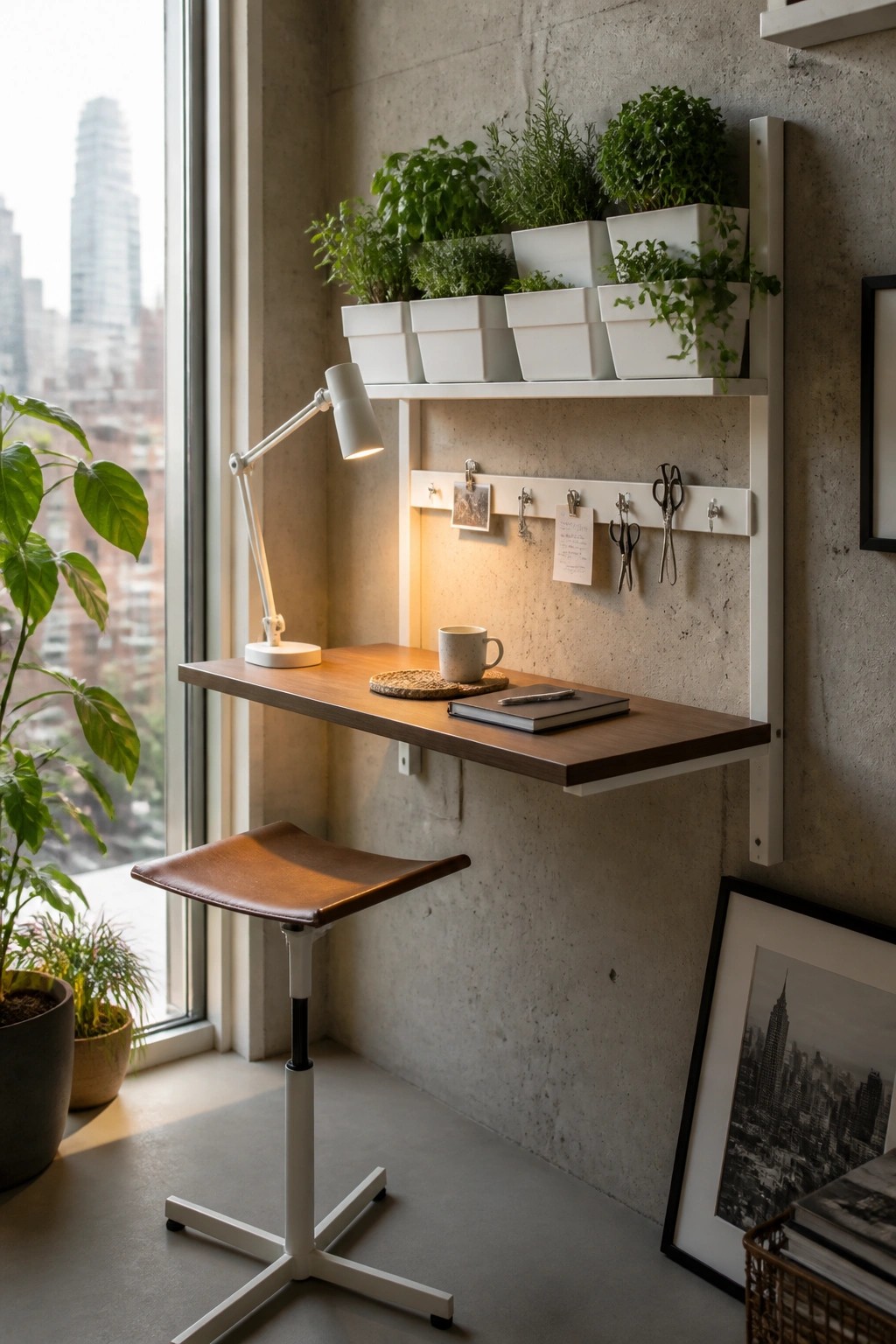
A wall mounted desk works well when you need a workspace but do not have room for a full piece of furniture. It stays out of the way and leaves the floor clear, which makes even a small corner feel less crowded.
This setup works best in apartments or rooms where every inch counts. You can add a narrow shelf above for plants or supplies, and the whole thing takes up almost no depth when not in use. Just make sure the wall can handle the weight and that you still have room to pull up a stool or chair.
Frequently Asked Questions
Q: My hallway office barely fits a chair. Which desk style keeps things from feeling jammed? A: Measure the full path you need to walk around the chair before buying. A wall-mounted drop leaf gives you surface space only when open and tucks flat otherwise. Skip anything with wide legs that eat floor room.
Q: Will a slim desk hold my monitor without tipping? A: Pick frames made from solid wood or thick steel tubing. These stay steady once the monitor sits toward the back edge. Add a small anti-tip strap if the desk sits on carpet.
Q: How do I store papers without a bulky cabinet next to the desk? A: Use a desk that already has one or two shallow drawers built in. A single vertical file holder on the floor beside the chair works for anything else.
Q: Can one of these desks work in my living room without looking like office furniture? A: Choose a design with clean lines and a wood tone that matches your other tables. Keep the surface clear except for one lamp so it reads as a side table most of the time.
