


A home office can look tidy in a photo but still feel awkward if the desk blocks a walkway or leaves nowhere to set down a notebook.
I find that a standing desk works best when the room has enough clear space to shift between sitting, standing, and moving around without fuss.
Minimalist setups can help keep the focus on work, though too little storage often lets clutter creep back onto the desk.
Small choices, such as where to place a lamp or how to manage cables, can make the whole room feel more settled.
I’d start with the layouts that seem easiest to adapt to the space you already have, then adjust the details to suit your workday.
Keep the Standing Desk Area Simple

A standing desk is easier to use when the work surface stays open. This setup keeps the monitor raised and the keyboard area clear, so switching between sitting and standing does not require much rearranging.
Choose a desk with adjustable height and leave room underneath for a footrest or a small filing cabinet. A few storage pieces can help, but keep the essentials close and avoid crowding the surface.
Make a Standing Desk Work in a Small Office

A standing desk can make a home office more flexible without taking up much extra room. A simple desktop set at standing height keeps the setup open, while a compact stool gives you a place to sit for a break.
This approach suits a spare room or a narrow work nook. Leave enough space to shift between standing and sitting, and choose a stool that tucks neatly under the desk when it is not in use.
Use a Rolling Desk To Keep A Small Office Flexible

A desk on wheels can make a small work area easier to use. You can move it closer to a window during the day, then roll it aside when you need more floor space. A standing-height desk also lets you change position without adding a separate workstation.
This setup works well in a bedroom or open living area where a permanent office would feel too bulky. Lock the casters before working, and check that the desk is steady enough for your laptop and other essentials.
Keep a Standing Desk Simple

A standing desk can be the main feature of a home office without making the room feel busy. A plain wood top and a clean monitor setup keep the work area useful and easy to settle into.
Choose a desk that can adjust to both sitting and standing, and leave enough clear space around it to change positions comfortably. In a small office, a slim setup like this can make the most of the room without crowding it.
Let Natural Light Shape the Desk Layout

A standing desk near a window can make a home office feel more pleasant to work in, without needing much extra decor. Keep the desktop fairly clear so there’s room to switch between sitting and standing, and so the daylight stays useful rather than distracting.
This setup suits a small office or a quiet corner of a larger room. Check that the monitor doesn’t catch too much glare, and leave enough space behind the desk for the chair to move when you lower the work surface.
Use an L-Shaped Desk to Create Separate Work Zones

An L-shaped standing desk gives you room to switch between tasks without crowding one work surface. One side can hold a laptop for focused work, while the longer side leaves space for writing or spreading out papers.
This setup works well in a home office where the desk can sit along two walls. Keep the middle section clear so you can move easily between work areas, and check that the desk still leaves enough room for a chair or stool.
Tuck a Standing Desk Into Built-In Storage

A desk set into a cabinet nook can make a standing workstation feel like part of the room instead of a separate office. The surrounding cupboards keep supplies out of sight, while a height-adjustable desk lets the space work for sitting or standing.
This setup suits a spare room or a quiet corner where floor space is limited. Plan the cabinet opening around the desk’s full height range, and leave enough room for a chair and comfortable movement.
Use a Folding Screen to Separate the Office

A folding screen can give a bedroom desk a little visual separation without making the work area feel permanent. It helps define the office corner, and you can move it aside when you want the room to feel more open.
This works especially well in a small home where one room has to serve more than one purpose. Choose a screen that folds easily, and leave enough space to pull out the chair and use the desk comfortably.
Use a Compact Standing Desk in a Narrow Nook

A slim standing desk can make use of a small alcove without taking over the room. The simple desktop leaves enough space for the essentials, while the wall-mounted lamp keeps the work surface clear.
This setup suits a spare corner or narrow home office. Choose a desk that fits the nook, and check that its height adjustment has room to move without hitting the wall or shelf.
Choose a Desk by the Window

A standing desk does not have to take over a room. Placing it beside a window makes the work area feel connected to the rest of the home, while the adjustable desk keeps sitting and standing options in one compact footprint.
This setup suits a spare room or a quiet corner with good natural light. Leave enough space behind the chair to move comfortably, and keep the desktop fairly clear so it can switch easily between work modes.
Make a Standing Desk Part of a Shared Living Space
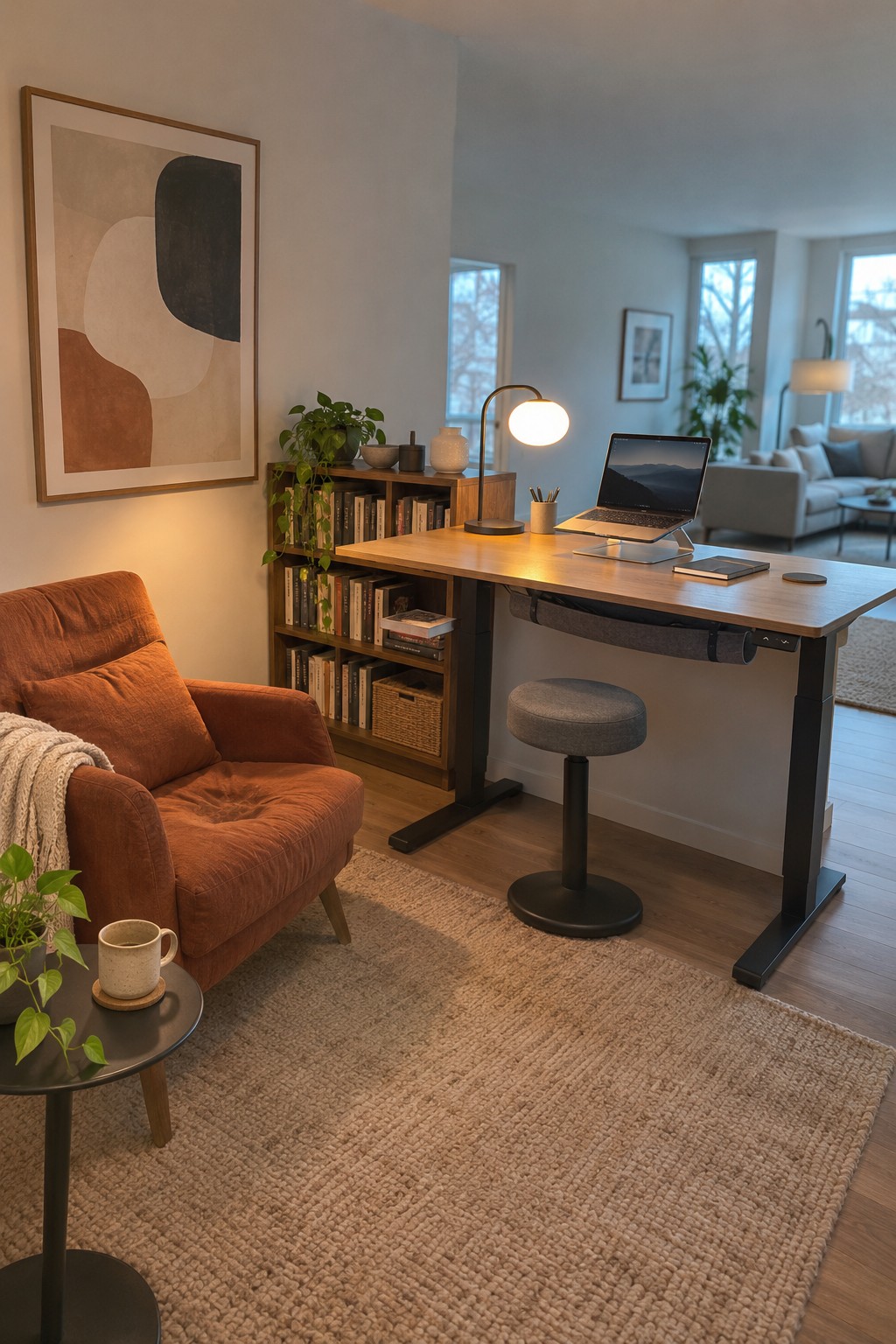
A standing desk can fit comfortably into a living area when its design stays simple and its footprint is easy to work around. Here, a wood desktop and slim black legs give the work area a clear place without making it feel like a separate office.
This approach works well in open-plan homes where a dedicated office is not practical. Keep the desk close to a bookcase or wall, and choose a size that leaves a clear path through the room.
Choose an Ergonomic Seat for a Standing Desk
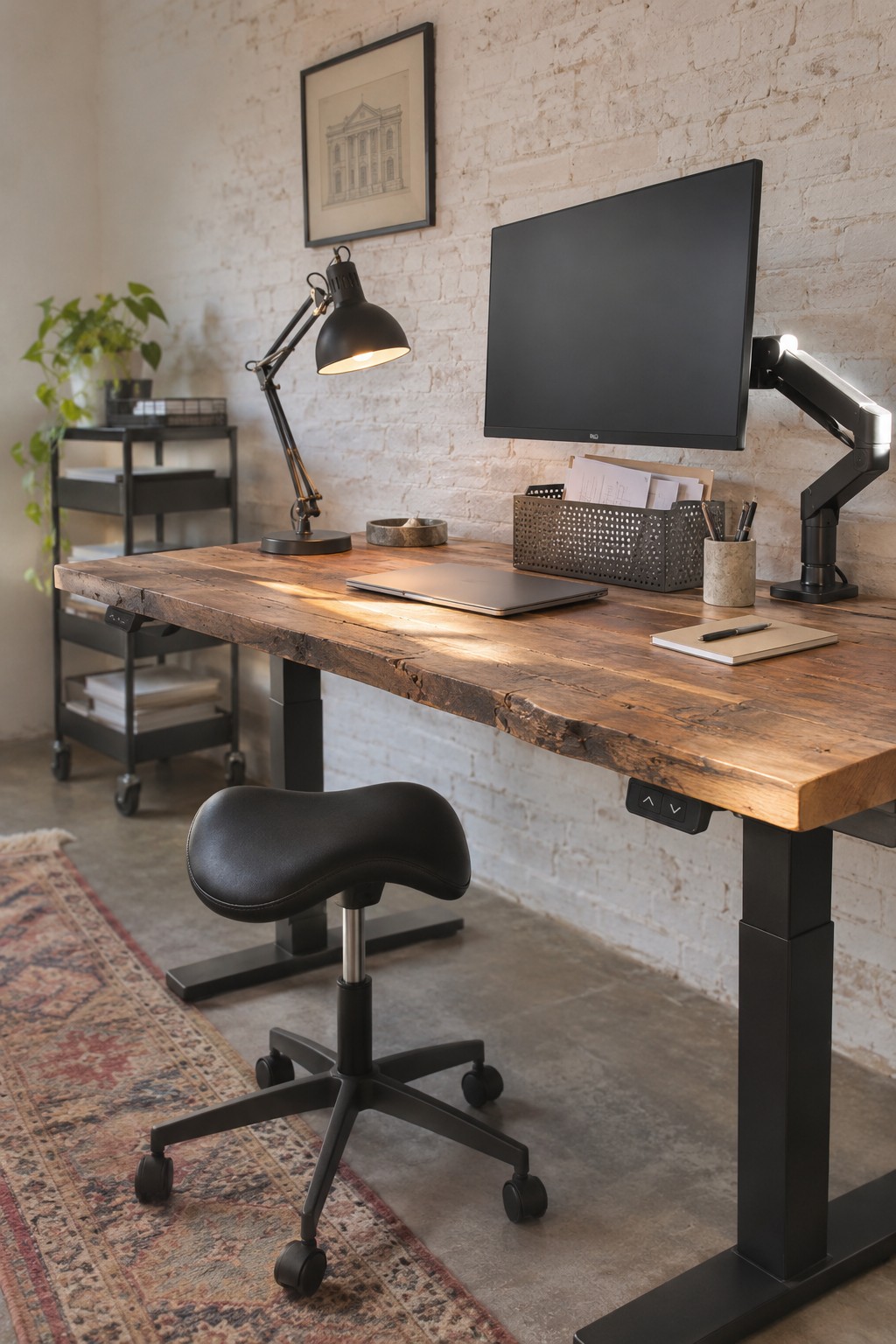
A standing desk does not mean you have to stand all day. An adjustable stool gives you a place to rest while keeping the workstation easy to switch between sitting and standing.
Look for a stable base and a seat height that suits your desk, so you can change positions without fuss. A compact stool can be useful in a small office, where a larger chair may take up too much room.
Use a Standing Desk for a Calm, Flexible Office

A height-adjustable desk makes it easy to switch between sitting and standing without changing the basic office layout. Keeping the desktop fairly clear helps the space stay useful for focused work, rather than letting the equipment take over.
This approach suits a spare room or a quiet corner with enough room for the desk to move freely. A monitor arm can leave more open space on the desktop, and a chair can be pulled in when it is time to sit.
Let Plants Define a Window-Side Desk

A desk beside a large window can make a home office feel more pleasant to use, and a standing desk keeps the setup practical for changing positions through the day. Plants along the edge help mark out the work area without taking up much desk space.
This layout suits a bright spare room or a quiet corner near a window. Keep the desktop mostly clear, and place larger pots where they won’t get in the way of raising or lowering the desk.
Use a Sit-Stand Desk for a Flexible Workspace

A height-adjustable desk lets one work area serve both seated and standing tasks. The simple desktop keeps the setup practical, while the controls make it easy to change positions during the day.
This kind of desk works well in a home office where space is limited and you want one main work surface. Leave enough clear floor space for the desk to move, and choose a chair or stool that can tuck away when you stand.
Use Cabinet Storage to Keep a Standing Desk Clear

A long standing desk can do double duty as a work surface and closed storage. Here, green cabinets sit beneath the wood top, keeping supplies out of sight while leaving the center open for a chair and adjustable desk legs. It’s a practical way to make a home office feel less cluttered without adding a separate storage unit.
This setup works well along a wall in a spare room or a shared living area. Leave enough open space for the desk to rise and for your chair to tuck in, and check that cabinet doors won’t hit the desk frame.
Use a Standing Desk in a Hallway Nook

A hallway nook can make a useful home office without taking over a full room. A slim standing desk keeps the setup compact, while a stool gives you a place to sit for a break.
Leave enough clearance for people to pass comfortably, and keep the work surface tidy so the area still feels like part of the home. A desk with adjustable height is especially handy here, since you can switch between sitting and standing without needing a larger footprint.
Set Up Separate Work Surfaces for Different Tasks

A standing desk does not have to handle every kind of work. Keeping a computer station separate from a larger work surface gives you room to switch between screen time and hands-on projects without constantly clearing the desk.
This setup suits a home office where drawing, crafting, or sorting papers takes up space. A second desk is most useful when there’s enough room to move between the two surfaces comfortably.
Keep a Standing Desk Comfortable for Sitting Too

A standing desk can still work well for seated tasks when you choose a seat that adjusts to the desk height. A compact stool leaves room to shift between sitting and standing without adding a bulky office chair.
Look for a stable base and a height that lets you rest your arms comfortably at the work surface. A cushioned stool suits a home office where you want occasional support, but it should not replace regular standing breaks.
Frequently Asked Questions
Q: How much space do I need for a standing desk in a small home office?
A: Start with the desk footprint and leave enough room to pull your chair back and move comfortably. A compact desk against a wall or in an unused corner can work well, especially if you keep nearby storage vertical.
Q: Do I need an expensive desk to switch between sitting and standing?
A: Not necessarily. A sturdy desk riser can raise your monitor and keyboard without replacing your current desk. Just check that it feels stable at standing height.
Q: How can I keep a standing desk setup from looking cluttered?
A: Keep only your everyday essentials on the desktop, then tuck cables out of sight with clips or a simple cable tray. A small tray can corral loose items without taking up much room.
Q: Should I stand all day at my desk?
A: No. Switch between sitting and standing when you feel ready, and adjust your screen and keyboard so your shoulders stay relaxed in both positions.
