


When I set up my first home workspace the materials really shaped how long I could stay focused without feeling boxed in.
Glass panels paired with wood can open things up but they need careful thought around lighting and daily movement.
I keep coming back to warm neutral finishes because they hide wear and still look calm after months of use.
Layouts that actually function matter more than any single finish.
Trying these combinations in a small corner first has helped me see what holds up before making bigger changes.
Built-In Shelving For Home Office Storage

Built-in shelves along one wall give a home office plenty of room for books and supplies without adding extra furniture that crowds the space. The wood ties the desk and shelves together, which helps the room feel calm and put together rather than busy.
This setup works best in rooms that already have decent natural light, since the shelves can otherwise make the space feel heavy. Keep the desk clear of too many small items so the wood tones stay the main feature.
Built-In Desks With Overhead Shelving
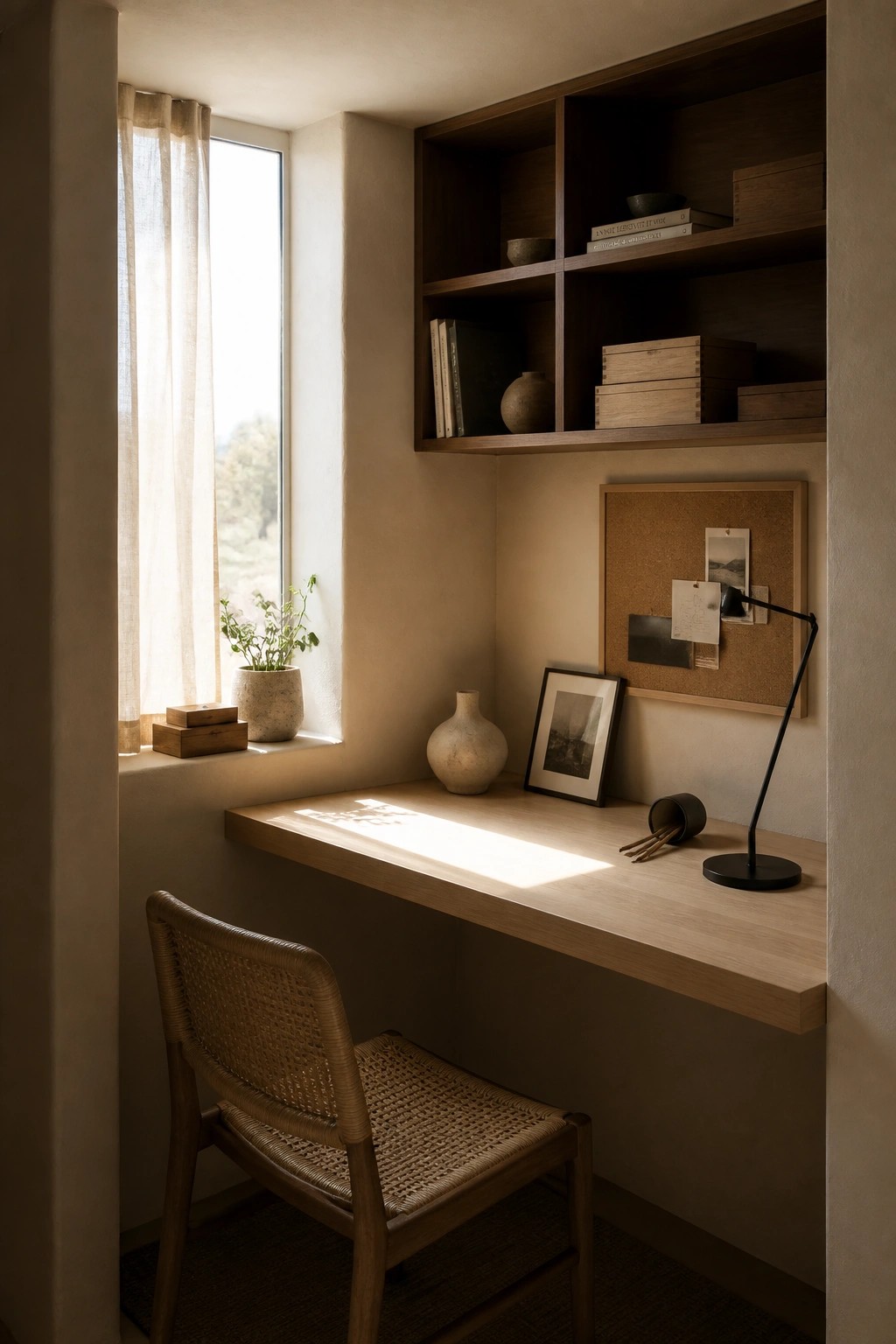
A built-in desk with shelves above it makes good use of a small corner. The wood ties the workspace together and gives you storage without adding extra furniture that can crowd the room.
This setup works best in homes that already lean toward simple materials and warm tones. Keep the rest of the space light so the desk area feels open rather than boxed in.
A Center Planter Built Into the Table

Some offices are adding a long planter right down the middle of the conference table. It keeps the surface usable for laptops and papers while the plants add a steady line of green through the room. The wood table and warm leather chairs already give the space a calm feel, and the planter fits right into that without extra clutter.
This works best in rooms with plenty of natural light and simple neutral finishes. It suits modern workspaces that want a bit of life without turning into a full plant corner. Just choose easy plants that can handle indoor conditions and keep the trough narrow enough that it does not get in the way during meetings.
A Large Wood Desk in a Neutral Office

A big wooden desk can pull an office together when the rest of the room stays simple. The live edge and natural grain add character without extra decoration, and the warm tone works well against light walls and soft flooring.
This setup fits best in a home office that gets steady daylight. Keep the shelves and seating in matching wood tones so nothing feels out of place, and leave enough open floor around the desk for easy movement.
Glass Enclosures For Office Meeting Rooms

Glass walls let you carve out a private meeting spot without cutting off the rest of the office. The enclosure keeps noise contained while still letting light pass through, so the space feels connected rather than boxed in.
This setup works best in open-plan offices where teams need occasional privacy without building full rooms. Pair the glass with wood paneling and simple neutral furniture to keep the area from feeling cold or corporate.
Built-In Shelving That Follows the Roofline

Built-ins make a big difference in rooms with angled ceilings. They turn the low areas along the walls into useful storage instead of wasted space, which keeps the office feeling open even when the room is small.
This works best in attic offices or bonus rooms where standard furniture would leave awkward gaps. Keep the finishes light and simple so the wood tones stay warm without making the space feel heavy.
Built-In Wood Storage for a Compact Office

Built-in shelving and a matching desk make good use of a narrow space by turning the entire wall into one continuous work area. The wood adds warmth and gives plenty of room for books and supplies without needing extra furniture that would crowd the floor.
This setup works best in smaller homes or spare rooms where you want a dedicated office but still need the space to feel open. It helps if the wood tone ties in with other finishes nearby so the whole room stays cohesive.
Wood Credenzas in Modern Offices

A long wood credenza works well in an office because it gives you plenty of hidden storage without making the room feel crowded. The warm tone of the wood pairs easily with neutral walls and simple furniture, which keeps the space calm and focused.
Place one along a side wall where you can stack papers, hide supplies, and still have room on top for a lamp or a few plants. It suits smaller home offices that need to stay tidy but do not want a heavy desk unit taking over the floor.
Pegboard Walls For Flexible Office Storage
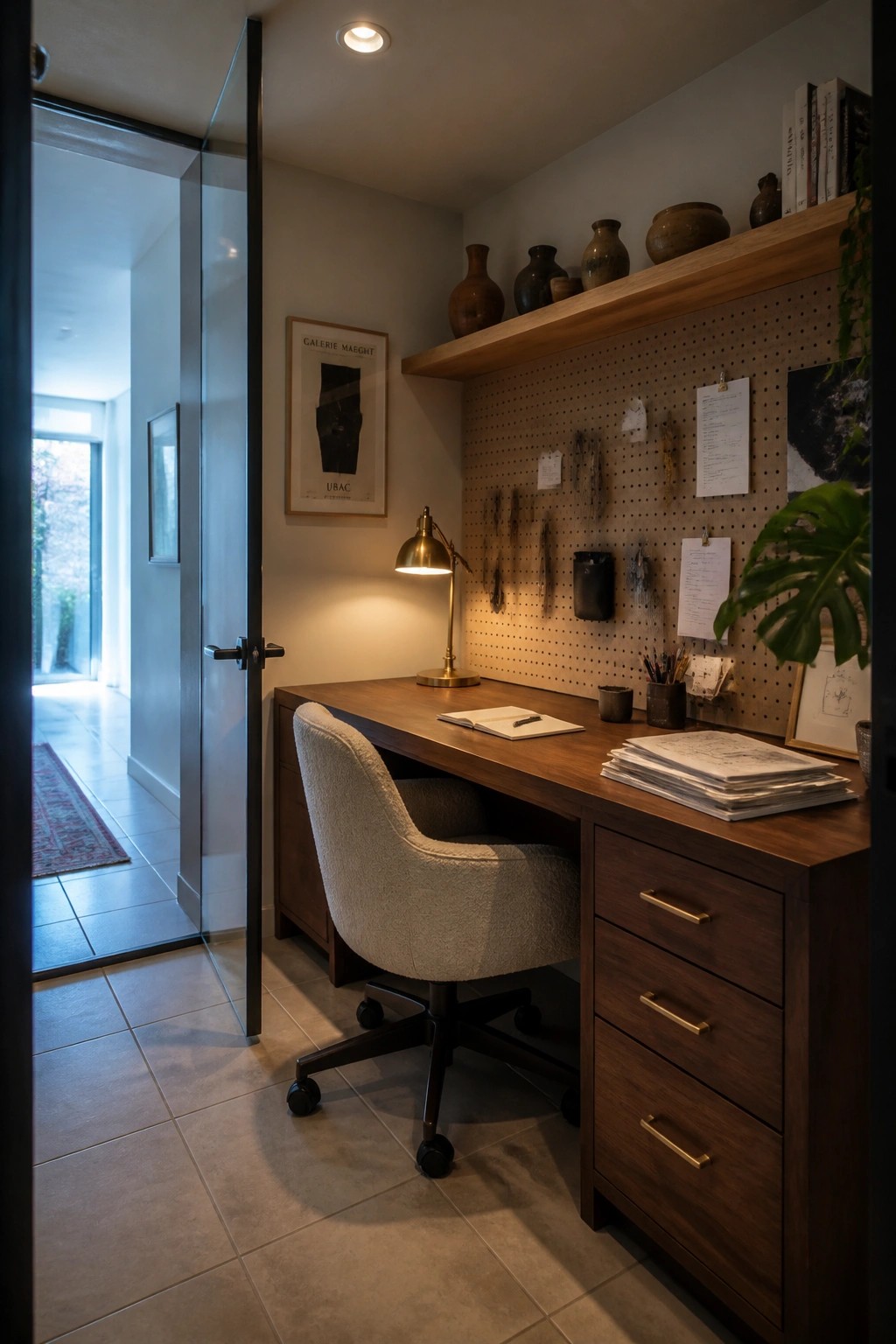
A pegboard wall gives a home office useful storage without adding bulky cabinets. It keeps papers, tools, and small items visible and within reach while the wood desk and warm neutral tones keep the room feeling calm.
This approach works best in smaller offices or rooms that need to stay adaptable. Use it where you want quick access to supplies but still need the space to feel open and uncluttered.
Running a Desk Along the Window

A long desk set right under the windows makes good use of natural light and turns the view into part of the workspace. The warm wood tone keeps the surface from feeling cold even on bright days.
This layout suits rooms with decent wall length and steady daylight. Keep the seating low and simple, and add nearby shelves so the whole area stays practical without crowding the desk.
Wood And Neutral Finishes For A Balanced Office

Wood works well in a home office because it adds warmth without making the space feel busy. The light oak desk and matching storage keep the room grounded while the neutral walls and floor hold everything together in a simple way.
This setup suits homes that want a quiet workspace that still feels connected to the rest of the house. Use similar wood tones on larger pieces and limit extra color so the materials stay the main focus.
A Long Desk With Open Shelving Below

A desk that runs long and includes open storage underneath gives you plenty of room to spread out while keeping everyday items close at hand. The wood tone helps the whole setup feel like part of the living area instead of a separate office zone.
This works best in homes where the workspace needs to stay open to other rooms. Place it along a wall with good light and keep the lower shelves for things you reach for often. Just watch that the open areas do not fill up with clutter over time.
Floating Desks With Built In Storage
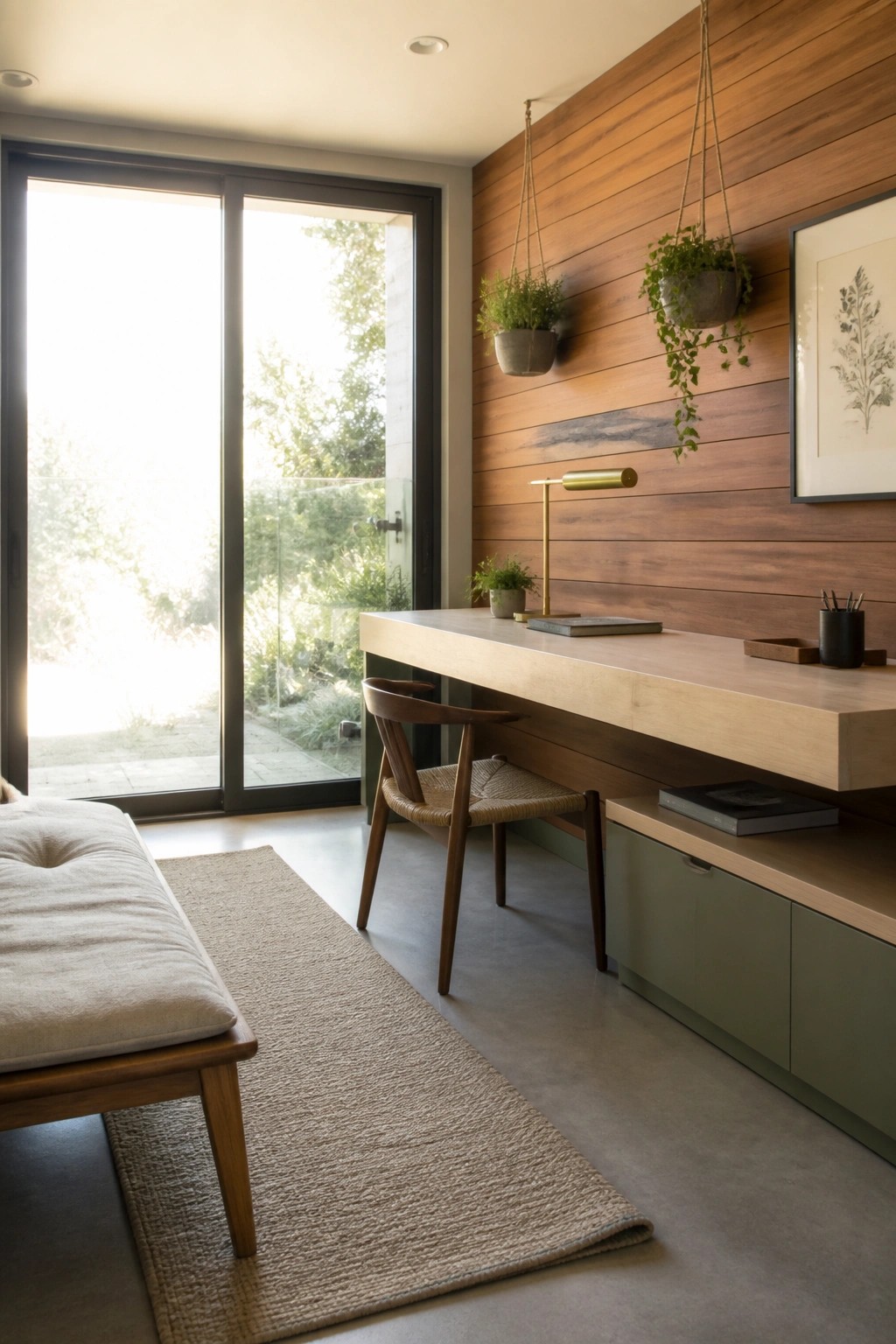
A long floating desk gives you plenty of work surface without crowding the floor. The cabinets tucked underneath keep things organized and out of sight, which helps the whole room feel open instead of cluttered.
This setup works well in homes where the office shares space with living areas. Use light wood tones and simple storage so the desk blends in rather than taking over the room.
Mixing Concrete With Warm Wood In An Office

Many offices with concrete walls end up feeling a bit stark once the basic furniture is in. Adding wood and leather pieces changes that quickly without losing the modern edge. The natural tones of the wood and the softer texture of leather make the space feel more comfortable to sit in for long hours.
This approach works especially well in home offices where you want a clean look but also need the room to feel inviting. A round wood table helps keep the layout open, and something like a leather ottoman adds a place to rest without cluttering the floor. Just keep the wood tones warm rather than cool so they contrast nicely with the gray.
Built-In Storage For A Calm Office

A long, low cabinet along the wall gives you plenty of hidden storage while keeping the office feeling open and quiet. The light wood finish helps it blend into the space instead of standing out as extra furniture.
This setup works best in home offices that need to stay tidy without looking too formal. It suits rooms where you want the desk to be the main focus and everything else to stay in the background.
Built-In Shelving for a Home Office

Built-in shelving works well in a home office because it turns blank wall space into organized storage without adding extra furniture. The shelves keep books and small items in one place while the warm lighting inside makes the whole area feel softer and easier to use during long hours.
This approach suits rooms with enough wall space and a steady desk setup. It works best when the wood tones match the desk and other finishes so the room stays calm rather than busy. Avoid filling every shelf too full if you want the space to still feel open.
Wood Tables In Light Filled Offices

A big wood table gives an office a grounded feel that works well with lots of glass around it. The natural grain adds warmth without fighting the clean lines of the windows or the neutral walls. This choice works best in home offices that get strong daylight. It suits spaces where the room needs to handle both focused work and casual planning without looking too stark.
Warm Wood in Glass Offices

Large glass windows can make an office feel bright but sometimes a bit stark. Adding wood furniture like a solid desk or a cabinet helps balance that with warmth and a grounded feel.
This approach works best in home offices with plenty of natural light and neutral walls. Keep the wood tones simple and let them contrast softly with the glass and lighter finishes around them.
Wall Desks In Small Bedrooms
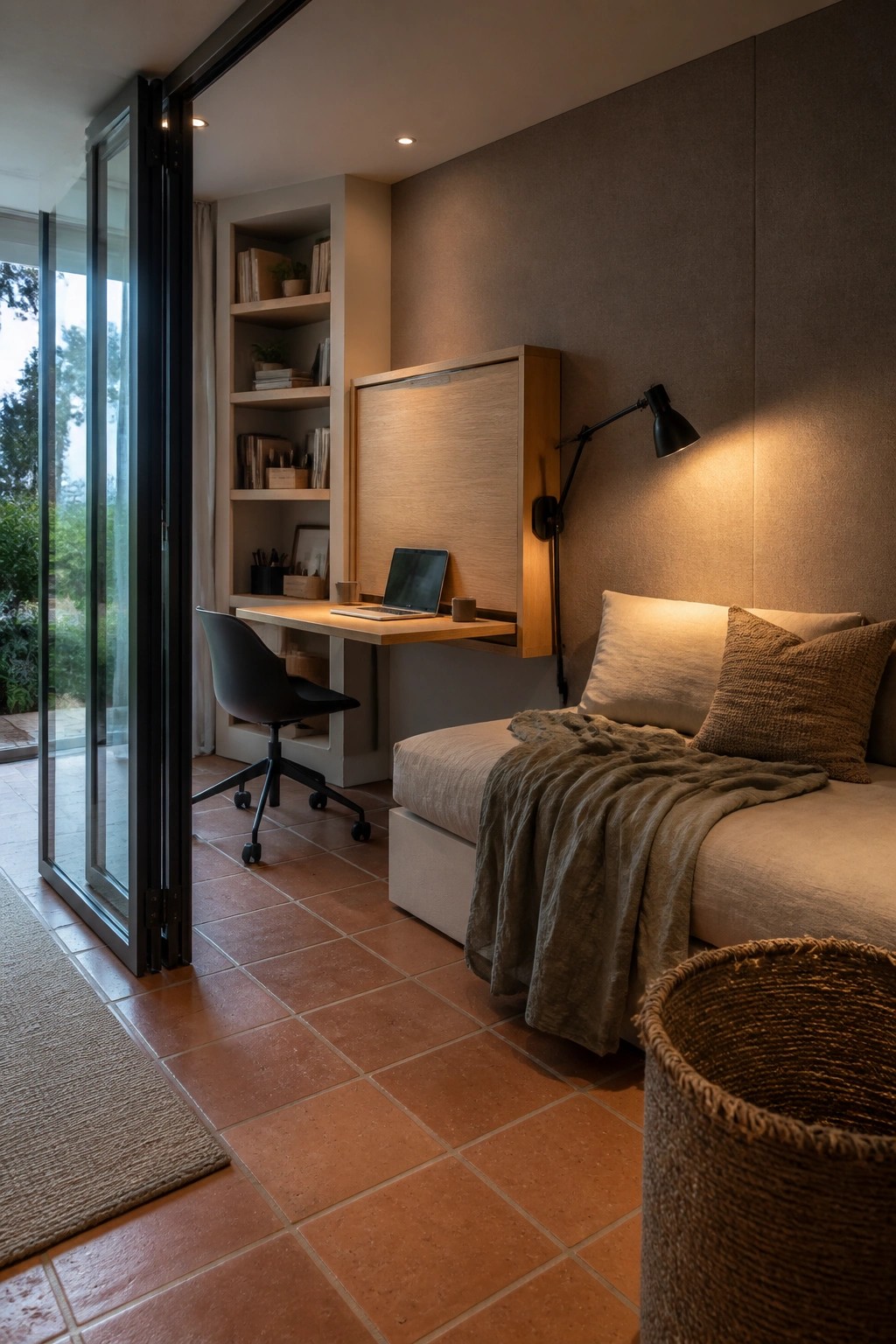
A wall desk keeps a workspace from eating up floor space in a bedroom. It tucks neatly against the wall and leaves room for the bed and other pieces without the room feeling cramped or split in two.
This setup works well in smaller homes or guest rooms that need to handle work and sleep in the same area. Stick to wood tones and soft neutrals so the desk reads as part of the room rather than an added office.
Adding Built-In Storage To A Home Office

Built-in cabinetry on either side of the desk gives the room a finished look while keeping everything in one place. The tall units hold books, plants, and smaller items without needing extra furniture that would crowd the floor.
This setup works well in smaller homes where the office has to share space with other rooms. Keep the wood tones warm and the shelves at different heights so the wall feels useful instead of heavy.
Frequently Asked Questions
Q: My current office has dark furniture. Can I still use these glass and wood ideas?
A: Lighten up with a few wood pieces in warm tones. Add glass accents like a tabletop to reflect light around the room. The contrast can actually make the space feel fresh.
Q: Does glass need constant wiping in an office?
A: Fingerprints show less on textured glass. Focus on vertical surfaces that get touched less often. Wood handles daily use better than you might think.
Q: How much wood is too much with glass?
A: Balance two wood elements against clear glass walls. That keeps things from feeling heavy.
Q: What is the easiest way to try warm neutrals?
A: Swap out your desk chair for one in a soft beige fabric. Layer in a wood monitor stand next. These small swaps shift the whole feel without big changes.
