

When I set up my own workspace at home, I noticed right away that the room only feels right once the desk faces a window instead of a wall.
Light and airflow matter more than I expected because long workdays change how the space needs to breathe.
Some popular ideas fall flat in practice if they do not account for actual storage needs or cable clutter.
I tend to try one change at a time so I can tell what really improves the daily routine.
A few tweaks to seating and surface height have made the biggest difference for me over time.
Built-In Shelving For A Tidy Workspace

Many people like a desk setup where the shelving is built right into the wall above it. This keeps books, papers, and supplies within easy reach while leaving the desk surface clear for actual work.
It suits smaller rooms or any space where you want storage without adding more standalone pieces. Place a corkboard or similar spot nearby so notes and references stay visible without piling up on the desk.
Exposed Brick With a Live-Edge Desk

Many home offices feel cold or too plain when everything is new and uniform. An exposed brick wall next to a thick wooden desk adds texture and warmth that makes the room feel more settled and easier to spend time in.
This works especially well in older buildings or any space where you already have brick showing. Keep the rest of the furniture simple so the wood and brick stay the main focus. Avoid overcrowding the wall with too many shelves if you want the texture to read clearly.
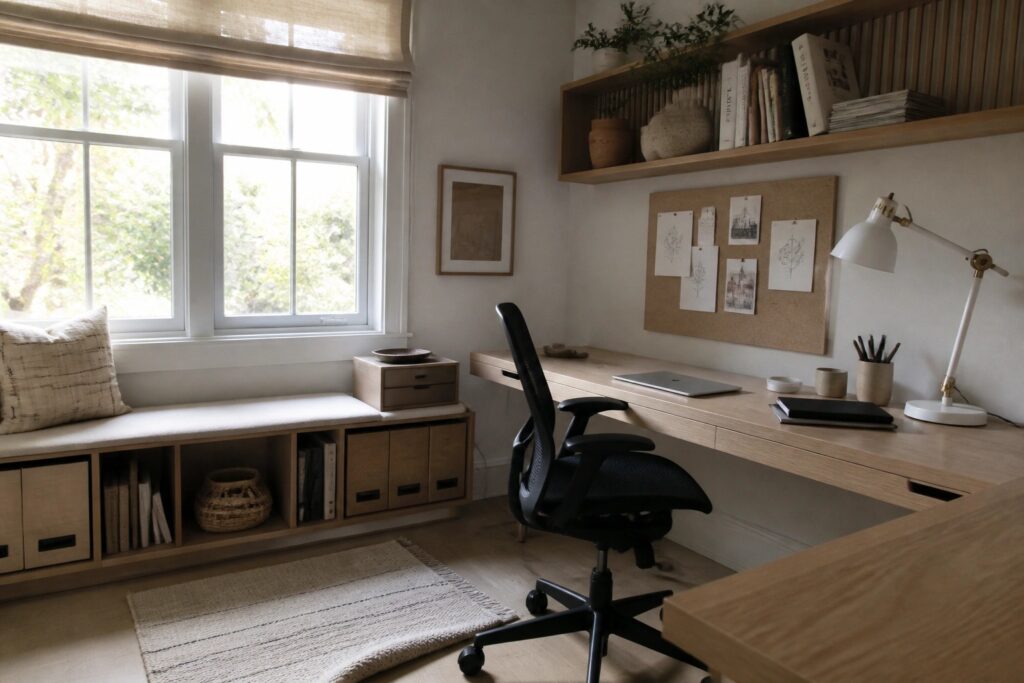
Built-In Shelving With A Window Seat

Built-ins like these turn a small corner into a useful office without crowding the floor. The shelves hold books and bins while the window seat adds a place to sit or stack extra items, so the desk stays clear for work.
This setup works well in older homes or any room where space is tight. Keep the colors light and use baskets to hide clutter so the area feels open rather than busy.
Floating Desks For A Cleaner Workspace

A floating desk works well when you want the room to feel open instead of crowded. It sits off the floor so the space underneath stays clear, which makes the whole office look lighter and easier to move around in.
This setup suits smaller rooms or any office where you already have other furniture on the floor. Keep the desk surface fairly clear and use the drawers for daily items so the look stays simple.
Create a Two-Person Desk Setup
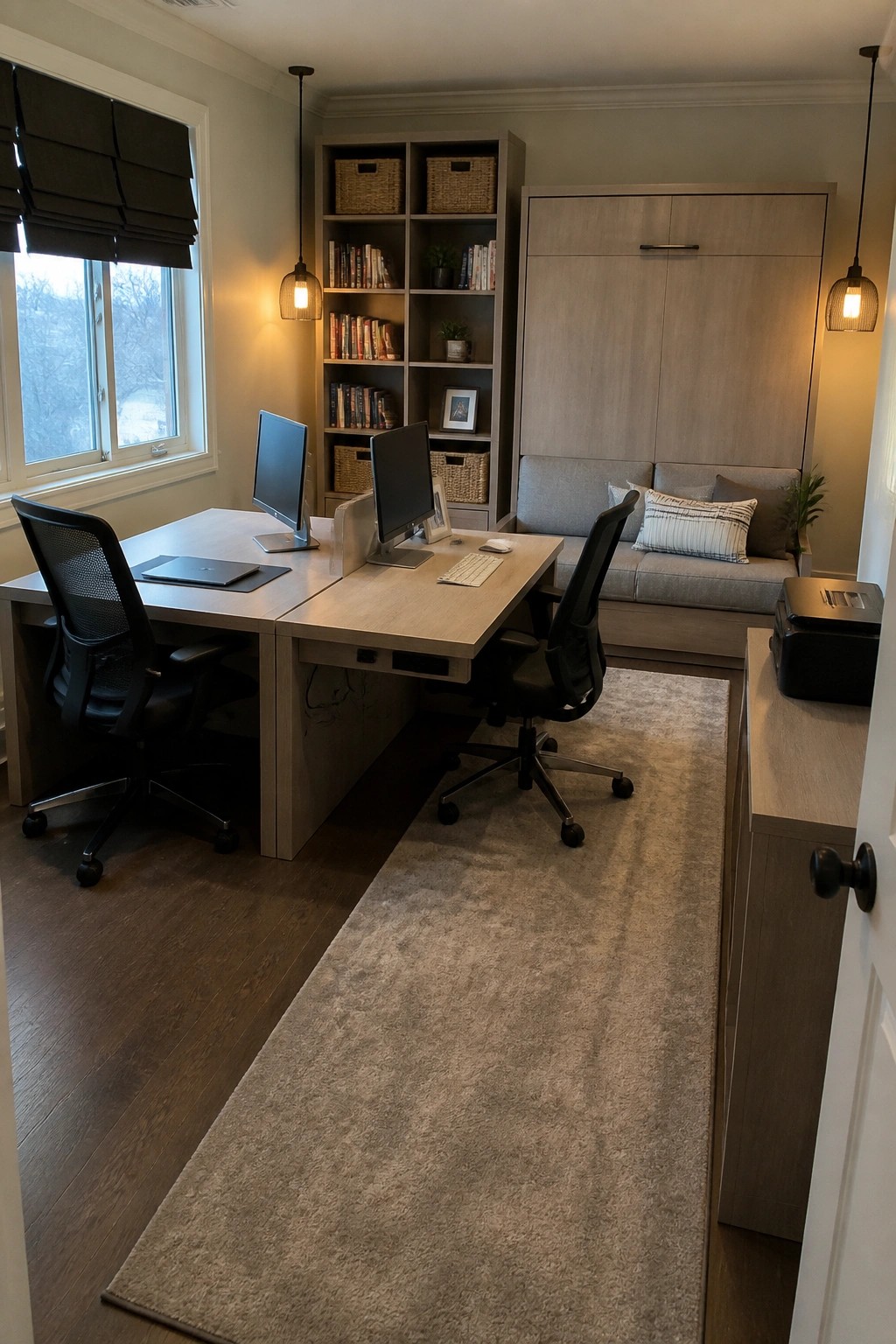
Many homes now need space for two people to work at once. A pair of desks placed side by side lets each person have their own monitor and chair without splitting the room into separate zones.
This layout works best in a medium room with built-in shelves for storage. Keep the desks clear of extra furniture so both chairs can move freely, and use a large rug to mark the work area on the floor.
Place the Desk by a Window
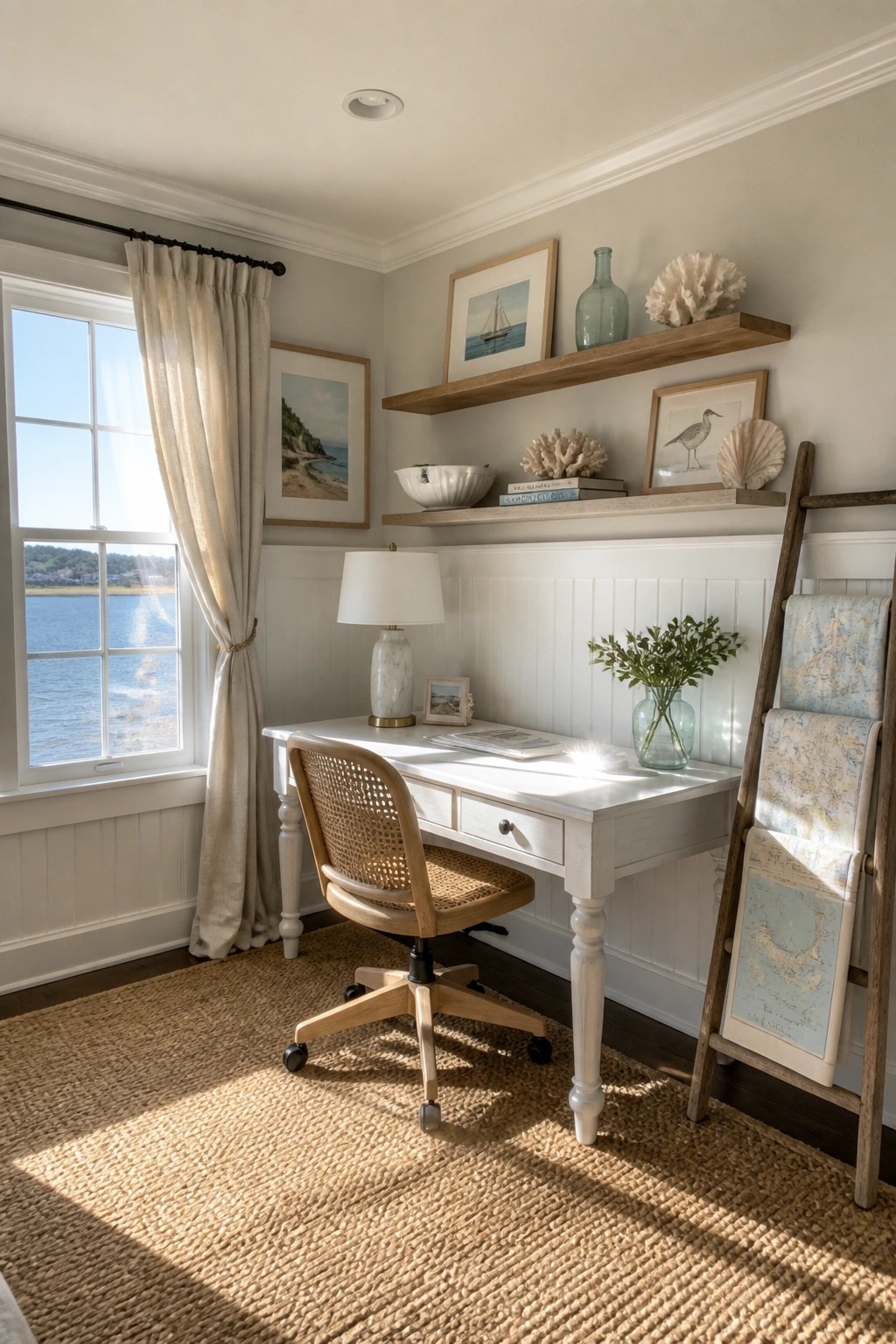
Placing a desk right by a window brings in steady natural light and keeps the space from feeling closed off. The view outside gives your eyes a place to rest during long work sessions, which can help the room feel calmer overall.
This setup works best in smaller offices or rooms that get good daylight. Keep the furniture light and the colors soft so the light bounces around instead of getting lost. Avoid heavy curtains if you want that open feeling to last through the day.
Height-Adjustable Desks for Long Workdays

A height-adjustable desk gives you the option to switch between sitting and standing without leaving your workspace. This setup works well in a home office where you spend many hours at the computer, since it helps reduce stiffness and keeps you moving a little during the day. The clean wood surface and simple controls shown here keep the focus on function rather than extra features.
Place the desk near a window for natural light and pair it with an ergonomic chair that supports your back at both heights. This combination suits most remote workers who need a practical upgrade without a full room overhaul. Make sure you have enough clearance above the desk if you plan to raise it often.
Built-In Shelves That Hold A Whole Collection

Built-in bookshelves give a home office real storage without eating up floor space. When they run floor to ceiling around the desk they turn the whole wall into a working library, so books, files, and supplies stay close at hand instead of stacked on every surface.
This setup works best in rooms that already have some wall length to spare. Keep the shelves the same wood tone as the desk so the space feels pulled together, and leave a few lower shelves open for larger items you reach often.
Add a Pegboard for Simple Storage

A pegboard gives you a place to hang the things you reach for every day without piling them on the desk. It keeps the surface clear while turning tools and supplies into part of the room instead of clutter.
This works best in smaller offices or for people who like to see their materials at a glance. Mount it on a side wall, use basic hooks, and group similar items together so the setup stays useful over time.
Built-In Cabinetry For A Neat Workspace

Built-in cabinetry helps keep a home office organized without adding extra furniture that takes up floor space. It turns unused wall areas into useful storage for files, supplies, and equipment while keeping the room looking clean and open.
This approach works especially well in rooms with limited square footage or in homes where the office shares space with other functions. Choose a finish that matches the rest of the room so the cabinetry blends in rather than stands out.
Go for a Solid Wood Workbench Desk

A thick wood workbench desk brings real durability to a home office and gives you a wide surface that handles papers, tools, and projects without crowding. The heavy top feels steady under your arms and holds up better than thinner furniture when you use the space every day.
This style suits rooms that already have some industrial or rustic character. Keep the rest of the setup simple with basic seating and a wall grid for notes so the desk stays the main working area.
Dark Built-Ins for a Serious Home Office

A dark color scheme with full built-in cabinetry turns a home office into a space that feels set apart from the rest of the house. The walls and shelves absorb light and create a quiet, enclosed feel that helps with focus during long work hours.
This setup works best in a room that can be closed off or used only for work. Keep the desk and seating simple so the built-ins remain the main feature, and add only a few task lights rather than trying to brighten the whole room.
Hang Plants To Freshen Up Your Home Office

Hanging plants work well in a home office because they add softness without crowding the floor or desk surface. They help the space feel less boxy and more connected to something living, which makes long workdays a bit easier on the eyes.
This idea suits rooms with decent natural light, especially near windows where the plants can actually thrive. Stick with sturdy hangers and low-maintenance varieties so the setup stays simple rather than turning into another chore.
Built-In Desks With Floating Shelves

A built-in desk along one wall gives you a solid work surface without crowding the room with separate furniture. The floating shelves above add storage and display space while the lighting underneath keeps the whole area bright and usable even after dark.
This setup works best in rooms that already have a long wall free of doors or windows. It suits people who want a dedicated spot for screens and paperwork but still need the floor clear for movement.
Open Shelves Keep Supplies Within Reach

Open shelves above a desk give you storage that stays visible and easy to use every day. This approach works well in smaller offices because it frees up floor space while keeping papers, boxes, and everyday items close at hand.
Place the shelves at a comfortable height so you can reach them without standing. Stick to a few matching containers to hold smaller items, and leave a little empty space so the wall does not feel crowded.
Position the Desk Under a Skylight

Many home offices in older houses or attic spaces struggle with dim corners. Placing the desk directly under a skylight solves that by pulling in steady daylight that stays even when the rest of the room feels shaded.
This works best in rooms with sloped ceilings where wall windows are limited. Keep the desk surface fairly clear and use simple wood tones so the light bounces around without creating glare on screens.
Built-In Desks For Small Rooms

A built-in desk with storage above it works well when floor space is limited. The cabinet keeps supplies out of sight while the desk itself stays clear for daily work. In this setup the overhead unit also hides the desk when it is not in use, so the room can serve another purpose without looking like an office.
This approach suits bedrooms or guest rooms that double as workspaces. Place the desk in a corner or alcove, add simple under-cabinet lighting, and keep the chair compact so it can tuck away. The main thing to watch is making sure the cabinet doors do not swing into the main traffic path.
Concrete Desks With Plants Below

A concrete desk gives the workspace a solid, grounded feel that holds up well to daily use. Placing plants on a lower stand keeps the work surface clear while still adding some living greenery right where you sit.
This setup works best in bright rooms where the plants get enough light. It suits smaller home offices that need to stay simple but still feel connected to the outdoors.
Acoustic Panels for a Quieter Workspace

Many remote workers deal with outside noise or echo in small rooms. Adding textured acoustic panels to the walls helps absorb sound and makes it easier to stay focused during calls or long stretches of work.
This approach works especially well in compact offices or rooms with hard surfaces. Keep the rest of the space simple with wood furniture and a soft rug so the panels do not feel too heavy.
Deep Wall Color With Built-In Shelving

A deep teal wall color makes the office feel enclosed and calm. Pairing it with built-in shelves gives plenty of room for books and supplies without needing extra furniture.
This works well in smaller rooms where you want storage and character. It suits homes that already have some architectural detail and anyone trying to keep a workspace from feeling too plain or temporary.
Use an Adjustable Desk With Monitor Arms

An adjustable desk makes it easy to switch between sitting and standing without much effort. The monitor arm keeps screens at eye level in either position, which helps reduce neck strain during long work hours.
This setup works well in smaller rooms where space is limited. It suits people who want a simple way to stay more active at work without buying extra furniture or making big changes to the room.
Built-In Shelves And A Tall Mirror

Built-in shelves give a home office steady storage without crowding the floor. Pairing them with a tall mirror helps spread light through the room and stops the space from feeling boxed in.
This works best in smaller rooms or tight corners where every bit of light matters. Keep the shelves fairly open with books and a few plain items so the mirror can do its job reflecting the rest of the room.
Dark Walls to Showcase Photography

A dark painted wall can turn a simple collection of photos into something that feels more intentional. In a home office it creates a calm backdrop that lets black and white prints stand out without competing with brighter colors or busy patterns.
This approach works best in smaller rooms or creative workspaces where you want the focus on the images rather than the furniture. Keep the rest of the room lighter so the wall does not feel heavy, and choose frames that match the mood of the prints.
Frequently Asked Questions
Q: How can I make my office corner feel separate from the rest of the room without building walls?
A: Use a tall plant or a folding screen to mark the boundary. Arrange your desk to face away from the main area. This simple shift helps you focus better during work hours.
Q: What storage options keep things tidy yet still look stylish?
A: Try open shelving with matching bins or boxes. Place them at eye level so they double as decor. Rotate items you use daily to the front for easy access.
Q: My budget is tight this month. Which idea from the list gives the biggest visual impact for little money?
A: Paint one wall a fresh color that energizes you. Add matching accessories like a new lamp shade or rug. These changes refresh the whole space quickly.
Q: How do I test if a chair will stay comfortable over eight hour days?
A: Sit in it for at least thirty minutes before buying if possible. Check that your feet rest flat and arms reach the desk without strain. Adjust the height and back support to fit your posture.
