


When I step into an executive office, I pay close attention to how the surfaces hold up under real lighting conditions throughout the day.
The right combination of wood, metal, and stone can create a sense of calm that supports long hours at the desk.
Layout matters most.
I find myself thinking about how certain premium finishes might feel after months of constant use rather than just on the first visit.
Adapting even one or two of these details into a home office setup can change how productive the space feels without needing a full renovation.
Marble Desks For Home Offices

A large marble desk can anchor a home office in a way that feels both solid and refined. It gives the room a clear work zone without needing walls or dividers, and the natural veining keeps the surface from looking too stark.
This setup works best in rooms that need to handle both focused tasks and occasional downtime. Keep the rest of the furnishings simple so the desk stays the main element, and make sure the floor can handle the weight before committing to the size.
Built-In Bookshelves For A Classic Office

Built-in bookshelves paired with full wall paneling give a home office a finished and permanent look that feels more like a real workspace than a corner of another room. The dark wood keeps everything grounded and helps the space read as professional even when the rest of the house is lighter or more casual.
This setup works best in larger rooms where the shelves can run wall to wall without crowding the desk area. It suits homes that need the office to double as a library or occasional meeting spot, but it can feel heavy in smaller spaces unless you leave some wall open for light.
Use a Large Area Rug to Anchor the Desk

A large area rug helps define the main workspace in a big room with hard floors. It brings the desk and chair into one clear zone while adding a bit of warmth and quiet underfoot.
This approach suits modern offices that lean minimalist. Keep the rug in a neutral tone so it supports the desk without competing, and make sure it is sized to fit the full chair base when pulled out.
Dark Wood Paneling in Home Offices

Dark wood paneling gives an office a solid, enclosed feeling that helps separate it from the rest of the house. The vertical lines add height without making the room feel busy, and the deep tone creates a quiet backdrop that works well for long hours of work.
This approach suits homes where the office needs to feel more serious than the rest of the space. Keep the paneling clean and use a few framed pieces on it so the wall stays interesting but does not close in too much.
Stone Desks for a Strong Office Presence

A large stone desk gives an office real weight and presence. It feels solid in a way lighter materials often miss, and the natural pattern keeps the surface from looking flat even when the rest of the room stays simple.
This choice works best in larger rooms where the desk can stand clear of the walls. Keep the rest of the furniture lighter and softer so the stone does not overpower everything. It suits modern homes that already use clean lines and a few strong materials.
Built-In Cabinetry for a Cleaner Office Setup

Built-in cabinetry and shelving can make a home office feel much more organized without a lot of extra effort. The closed cabinets hide everyday clutter while the open shelves give room for a few items that keep the space from feeling too plain.
This works best in rooms with decent natural light and simple wall colors. It suits homes where the office needs to feel like part of the living space rather than a separate work zone.
Anchor The Office With A Large Wood Desk

A large wooden desk often works best when it feels like the main event in the room. The oval shape and tapered legs keep it from looking too heavy, while the rich grain adds warmth that pairs well with leather seating and other wood pieces nearby.
This approach suits home offices that need to feel serious but still livable. Keep the surrounding furniture simple and let the desk take up the right amount of floor space so the room stays balanced.
Choose a Large Desk as the Centerpiece

A big desk changes how an office feels right away. It gives the room a clear purpose and makes the space look ready for serious work instead of just a spot to check email.
This setup works best in a room that has enough floor space for the desk to sit on its own rug with walking room on every side. It suits homes where the office needs to double as a meeting spot or a place to spread out papers without feeling cramped.
Positioning A Desk In Front Of A Fireplace

Many home offices feel more finished when the desk sits directly in front of a fireplace. The fire adds a steady focal point that makes the room feel warmer and more substantial without extra decoration.
This works best in larger rooms where the desk can sit a few feet out from the hearth. Keep the mantel simple so the desk remains the main working surface.
Natural Wood Desks For A Grounded Workspace

A low wooden desk can make an office feel more settled and focused. The wide surface sits right on the floor level with a simple mat underneath, which keeps the room from feeling too formal or heavy.
This approach works best in smaller home offices or rooms that already have wood tones and soft natural light. Keep accessories minimal so the desk stays the main piece rather than competing with extra furniture.
Curved Desks Open Up A Formal Office
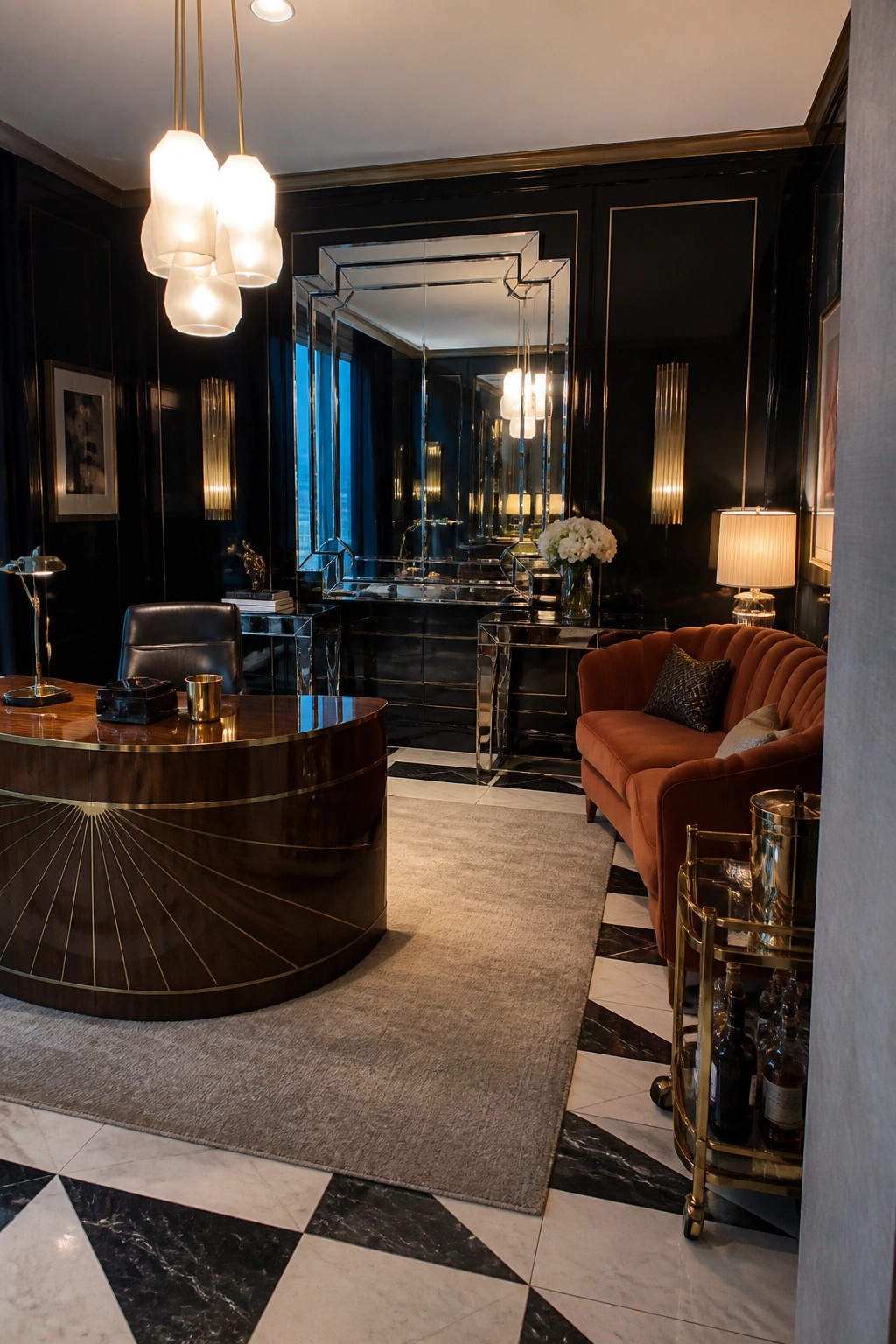
A curved desk changes how an office feels right away. Instead of blocking the space with sharp corners, the rounded shape lets people move around it more easily and makes the room feel less rigid.
This works well in home offices that double as meeting spots. Pair the desk with a small seating area nearby and keep the rest of the room in dark tones so the wood stands out without needing extra decoration.
Add A Lounge Area To Your Home Office

Many home offices stay strictly functional with just a desk and chair, but adding a sofa or seating area changes how the room feels during long days. It gives you a place to shift positions, review notes, or take a short break without leaving the space.
This layout works best in larger rooms where the desk can sit toward the center or back wall while the seating stays closer to the windows. Stick with light finishes and simple fabrics so the two zones still feel connected rather than crowded.
Curved Desks For Better Monitor Access

A curved desk lets you bring multiple screens into one smooth line without crowding the space. The shape follows the wall and gives you room to move between tasks while keeping everything within arm’s reach.
This layout works best in offices where one person watches several data feeds at the same time. Make sure the curve leaves enough legroom underneath so the chair can roll freely from one end to the other.
Built-In Bookshelves For Office Storage

Built-in bookshelves give an office a finished look while adding plenty of room for books, files, and a few personal items. They keep the space from feeling bare and help it feel more like a real workspace instead of just another room with a desk.
This setup works best in larger offices or converted studies where you want storage that does not crowd the floor. It suits homes that already have some traditional trim or molding, since the built-ins can match that style without looking added on later.
Dark Wood Finishes For A Serious Office

A large dark wood desk sets a clear tone in an office. It gives the room weight and makes the space feel like it is meant for real work rather than casual use. Pairing the desk with matching cabinetry keeps everything consistent and helps the room feel pulled together.
This look works best in a room that can handle deep tones without feeling closed in. Use warm lighting and a few lighter accents on the desk surface so the wood does not overpower the space.
Terracotta Flooring In A Home Office

Terracotta tiles give a home office a warm base that feels solid underfoot. The color works with wood desks and woven chairs without making the room feel heavy.
It suits older homes or any space that gets plenty of daylight. Keep the pattern simple on most of the floor and use rugs where you need a softer spot to stand or roll a chair.
Dark Desk Against Light Built-Ins

A dark, solid desk stands out nicely when set against lighter wood cabinetry and shelving. The contrast keeps the space from feeling too heavy while still giving the desk real presence as the main work area. Many people like this approach because it adds structure without needing lots of extra pieces.
This setup works best in rooms with decent size, where the desk can sit away from the wall a bit. It suits offices that need to feel both professional and calm, especially when the surrounding built-ins stay simple and the lighting stays soft and even.
Long Conference Tables Anchor Executive Offices

A long central table gives a CEO office a clear purpose and makes group meetings feel organized. The solid wood top with a stone accent strip adds weight without needing extra decoration, while the matching chairs keep the whole setup balanced and easy to move around.
This layout suits larger offices where teams gather regularly. It works especially well when the room needs to handle both formal presentations and smaller working sessions without rearranging furniture.
A Substantial Wood Desk for an Executive Office

A large wooden desk gives an office real presence without feeling overly formal. The natural grain and solid build create a grounded spot to work, and it holds up well to daily use in a way lighter materials rarely do.
This approach works best in rooms with some texture on the walls or simple furnishings around it. Keep other pieces in neutral tones so the desk stays the main feature, and it suits home offices or smaller professional spaces that need to feel both productive and calm.
Set Up a Lounge Area Within the Office

Many offices feel more usable when there is a spot to sit away from the main desk. Rounded chairs grouped around a small table create a place for quick chats or a short break without needing to leave the room.
This layout suits larger home offices that can spare the floor space. Keep the seating low and simple so it does not compete with the desk, and let a narrow rug mark the area without dividing the room too sharply.
Frequently Asked Questions
Q: How do I keep a big leather desk from feeling stuffy when I sit there eight hours a day? A: Pick a desk with a matte finish instead of high gloss so the leather does not reflect every light. Add a simple wool rug under your chair to soften the floor and give your feet something warmer. That one change keeps the whole setup feeling premium but still comfortable for long stretches.
Q: Can I swap out marble for something cheaper on the credenza and still make it look intentional? A: Yes. Choose a quartz or concrete surface in the same cool tone as the marble accents elsewhere. The contrast actually highlights the real stone pieces you kept and avoids a matchy look.
Q: What lighting should I add if the room already has dark wood paneling? A: Use a couple of tall floor lamps with warm bulbs aimed at the ceiling. The indirect light bounces off the wood without creating harsh spots and keeps the space from feeling closed in.
Q: Do I need to hide all the cables if I want that clean luxury look? A: Run them through a simple channel along the back of the desk or under the floor edge. It takes ten minutes and keeps the surfaces looking sharp without any visible clutter.
