


When setting up an office at home, the first thing I check is how the furniture arrangement affects movement from the door to the desk.
Natural light placement often makes the difference between a room that energizes you and one that drains focus by midafternoon.
Layout choices matter.
After trying a few different configurations myself, I realized storage needs to stay within reach without crowding the main work area.
Some modern ideas adapt better when you scale them down to fit the actual size of the space rather than forcing every trend.
Floating Desks With Wall Shelves
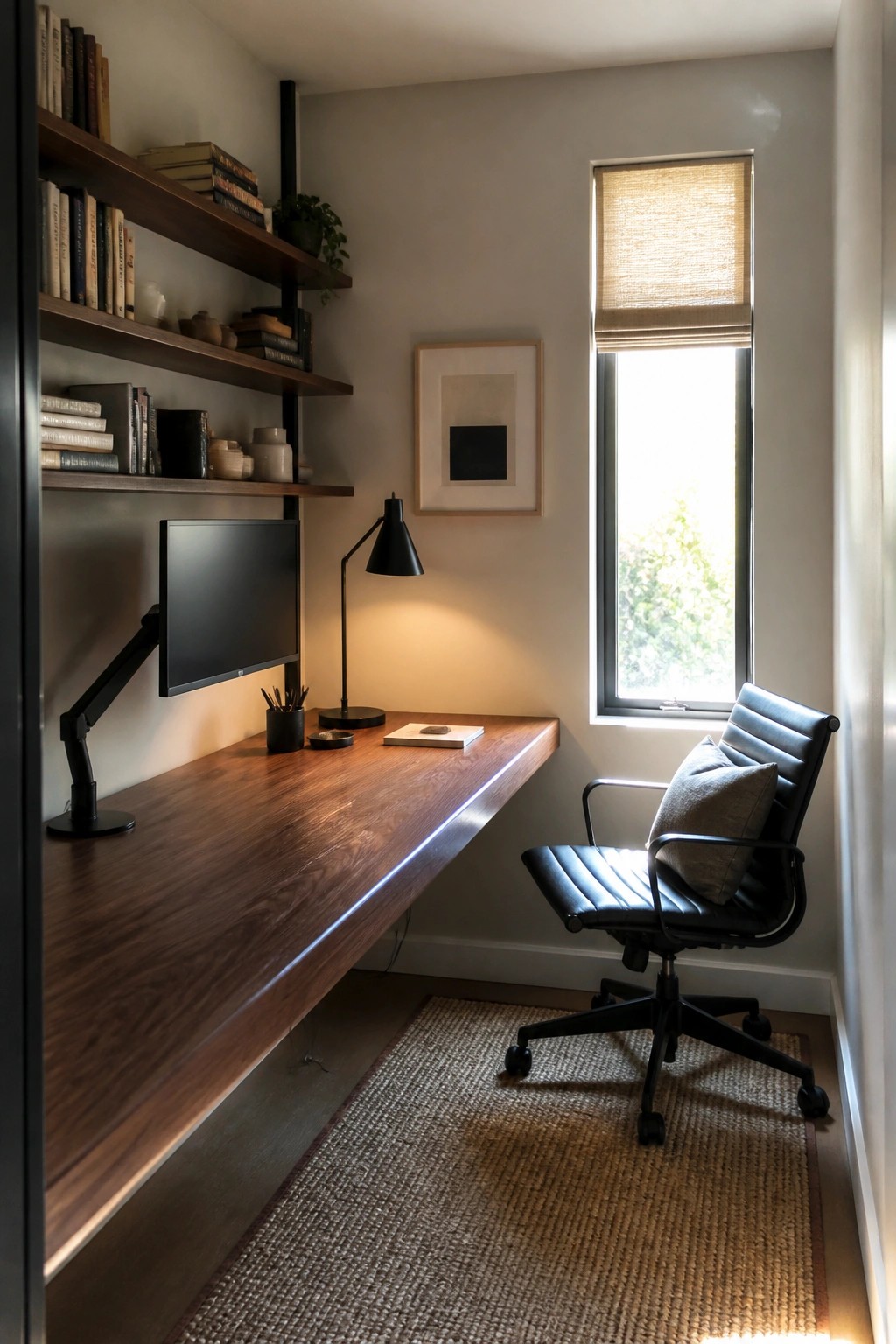
A floating desk keeps the floor clear and gives the room a lighter feel. Adding shelves right above it turns the wall into useful storage so you do not need a separate bookcase or cabinet taking up space.
This works best in smaller offices or rooms that double as workspaces. Mount the desk at a comfortable height, keep the shelves from getting too crowded, and leave the surface mostly open for daily tasks.
Built-In Storage For Home Offices

Built-in cabinetry along one wall gives a home office a place for everything without adding extra furniture that crowds the room. The desk stays clear because drawers and shelves hold supplies, while a pegboard section lets you pin notes or small items right where you need them.
This kind of setup works best in rooms that double as guest spaces or sit near living areas. Keep the wood tone light so the wall does not close the room in, and leave enough floor space for a simple chair to roll in and out easily.
A Concrete Desk Gives an Office Real Presence

A heavy desk with a solid top can change how a workspace feels. It reads as permanent and serious, which helps with focus during long work hours. The material choice also pairs easily with brick or other industrial surfaces that many modern homes already have.
This approach works best in lofts or rooms with open floor plans where the desk can sit against a textured wall. Keep the rest of the furniture simple so the desk stays the main feature. A bench in front of it adds flexible seating without crowding the space.
Built-In Shelving Keeps a Home Office Organized
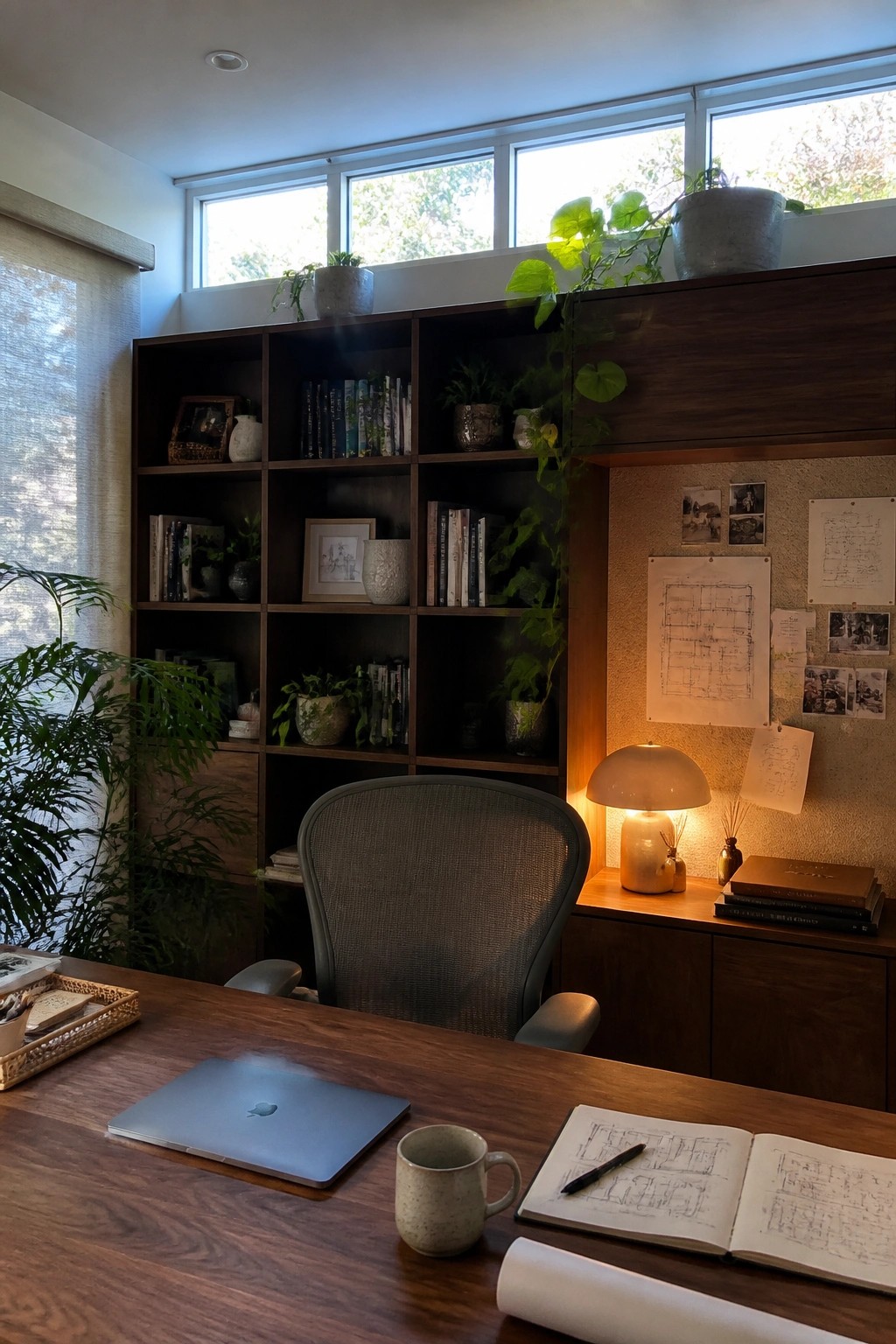
Built-in shelving works well in a home office because it adds storage and display space without crowding the floor. The shelves can hold books, files, and plants while keeping the desk area clear for daily work.
This setup suits rooms with tall walls or long stretches of space that need structure. It works best when the shelving matches the room scale so it feels useful rather than overwhelming.
Dark Color Schemes For A Focused Office

A deep dark wall color can make an office feel more contained and serious. It reduces visual distractions and gives the space a grounded quality that helps many people stay on task for longer stretches.
This approach works best in rooms that do not get strong natural light or in homes where the office needs to feel separate from the rest of the living areas. Keep furnishings minimal and stick to one wood tone so the dark walls remain the main element rather than competing with too many other finishes.
Built-In Shelving Keeps Supplies Handy

Built-in shelving right above a desk gives you storage without eating up floor space. It keeps files, bins, and everyday items close at hand while the work surface stays clear for actual work. Many people like this setup because it turns an empty wall into something useful instead of leaving it blank.
This approach works well in smaller offices or shared spaces where you need to store a lot but still want the room to feel open. Place the most used items on lower shelves and keep the higher ones for things you reach less often. Just watch that the shelves do not hang too low or they can start to feel like they crowd the desk.
Fitting A Desk Into A Sloped Nook

Small angled spaces often get overlooked, but they can work well for a simple desk setup. A fitted wooden desk with drawers fits neatly under the slope while still leaving room to move the chair in and out. The skylight above brings in steady light without taking up wall space.
This approach suits homes with tight upstairs landings or leftover corners that never seem big enough for anything else. Keep the desk surface clear and use the wall above for a pinboard so papers stay visible but contained.
Built-In Bookshelves Help Create A Professional Home Office

Built-in shelving along one wall gives an office a finished look while keeping everything in reach. The dark wood unit blends storage and display without taking up extra floor space, which keeps the room feeling open even when it holds a lot of books and small items.
This approach works best in rooms that double as both workspace and occasional guest area. It suits homes where you want the office to feel like a natural extension of the rest of the house rather than a separate zone. Just leave some open shelf space so the wall does not look overcrowded.
Built-In Window Seating Keeps An Office Tidy

Placing storage right under the windows lets you keep an office clear of extra furniture while still having room to sit or stack things. The bench and cabinets below turn what could be wasted wall space into something useful, especially when natural light is already coming in strong.
This works best in smaller rooms where the desk needs to stay the main focus. It suits homes that want the office to feel calm rather than crowded, though it helps to keep the bench mostly clear so it stays practical for seating.
Add a Standing Desk for Better Focus

Many home offices feel more usable once you switch to a height adjustable desk. It lets you move between sitting and standing without much effort, which helps with posture and keeps energy levels steadier during long work sessions.
This approach works best in smaller or shared spaces where you need one piece of furniture to do more than one job. Place it near a window for light if possible, and keep the top surface clear so the desk itself stays practical rather than cluttered.
Built-In Bookshelves for a Dedicated Workspace
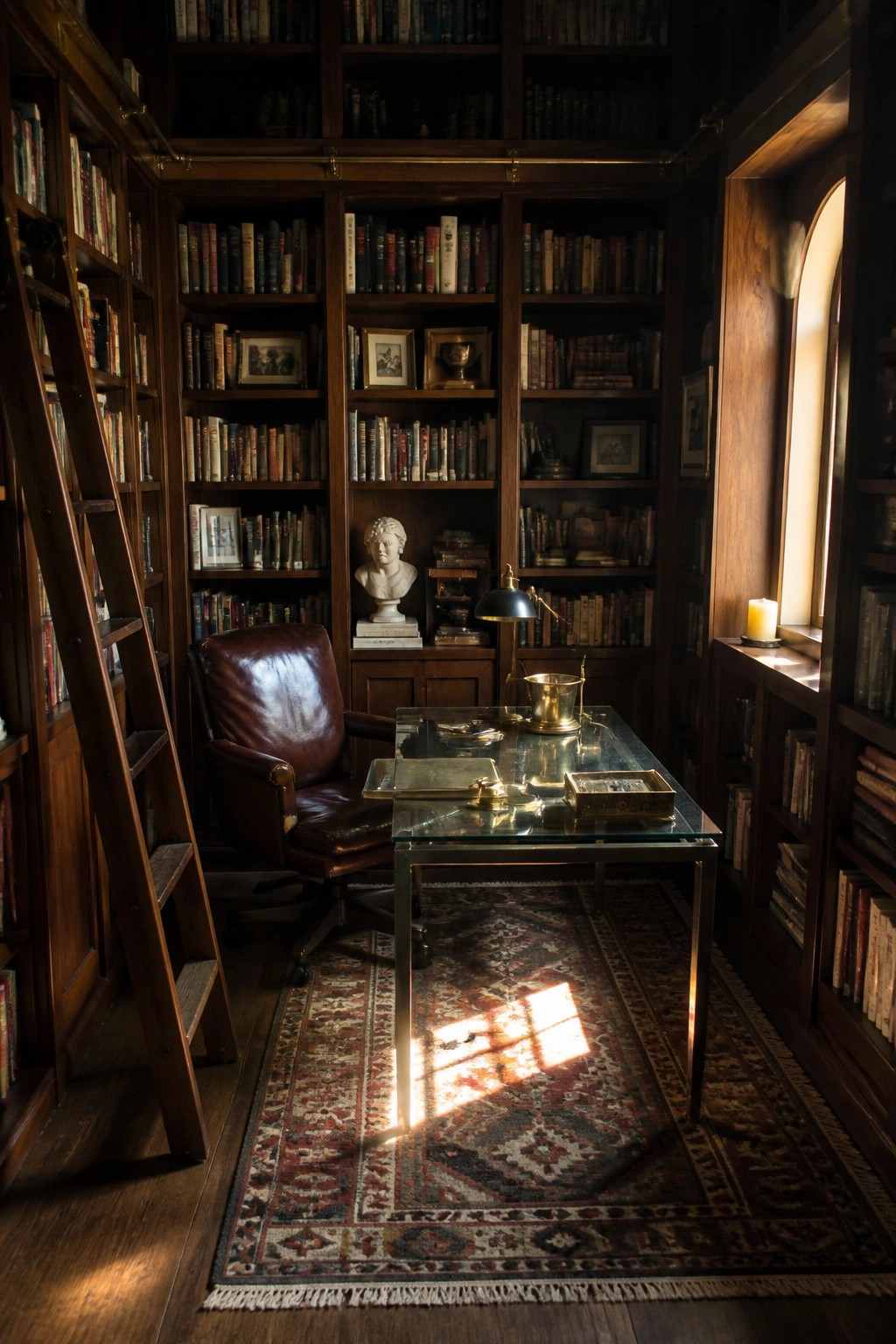
Built-in bookshelves can turn an ordinary room into a space that actually supports focused work. When the shelves wrap the walls from floor to ceiling, they give the room a clear purpose and keep books, files, and supplies close at hand without cluttering the desk.
This setup works best in homes that have a spare room or alcove. It creates natural boundaries so the office feels separate from the rest of the house, and the ladder makes every shelf usable without taking up extra floor space.
Wall-Mounted Desks Keep The Floor Open

A floating desk gives you a clean work surface without taking up floor space. This works well in smaller rooms or any office that needs to stay open and easy to move around in.
It suits homes where you want the space to feel calm rather than crowded. Pair it with nearby built-in storage so the desk stays simple and the room does not need extra pieces on the floor.
A Large Central Table For Your Home Office

Many people end up with cramped desks that force everything into neat piles. A big table changes that by giving you actual room to spread out sketches, samples, or open books without the surface feeling crowded right away.
This setup works best in a spare room or converted space where you can walk around the table. Place storage along one wall so the top stays clear for daily use and you are not constantly moving things aside.
Choosing Natural Wood for Your Desk

A large wooden desk brings a steady, grounded feel to a workspace that helps keep the mind clear. The simple shape and warm tone cut down on visual noise, so the focus stays on the work rather than on the furniture itself. Built-in shelves nearby add storage without crowding the room.
This approach works well in smaller home offices where you want the space to feel open yet practical. Keep the surface mostly clear and pair the desk with just one or two seating options so the room stays easy to move around in. It suits homes that already lean toward natural finishes and simple layouts.
Store Supplies In Drawers Right By Your Desk

Having storage drawers placed right next to the main work table makes a big difference in how easily a home office runs day to day. You can reach what you need without standing up or breaking focus, and it keeps the surface clear for actual work.
This setup suits any space where you handle a lot of small supplies or papers. Clear drawers work best because you can spot what you need quickly, and stacking a few units gives plenty of room without taking up extra floor space.
Round Tables for Team Meetings
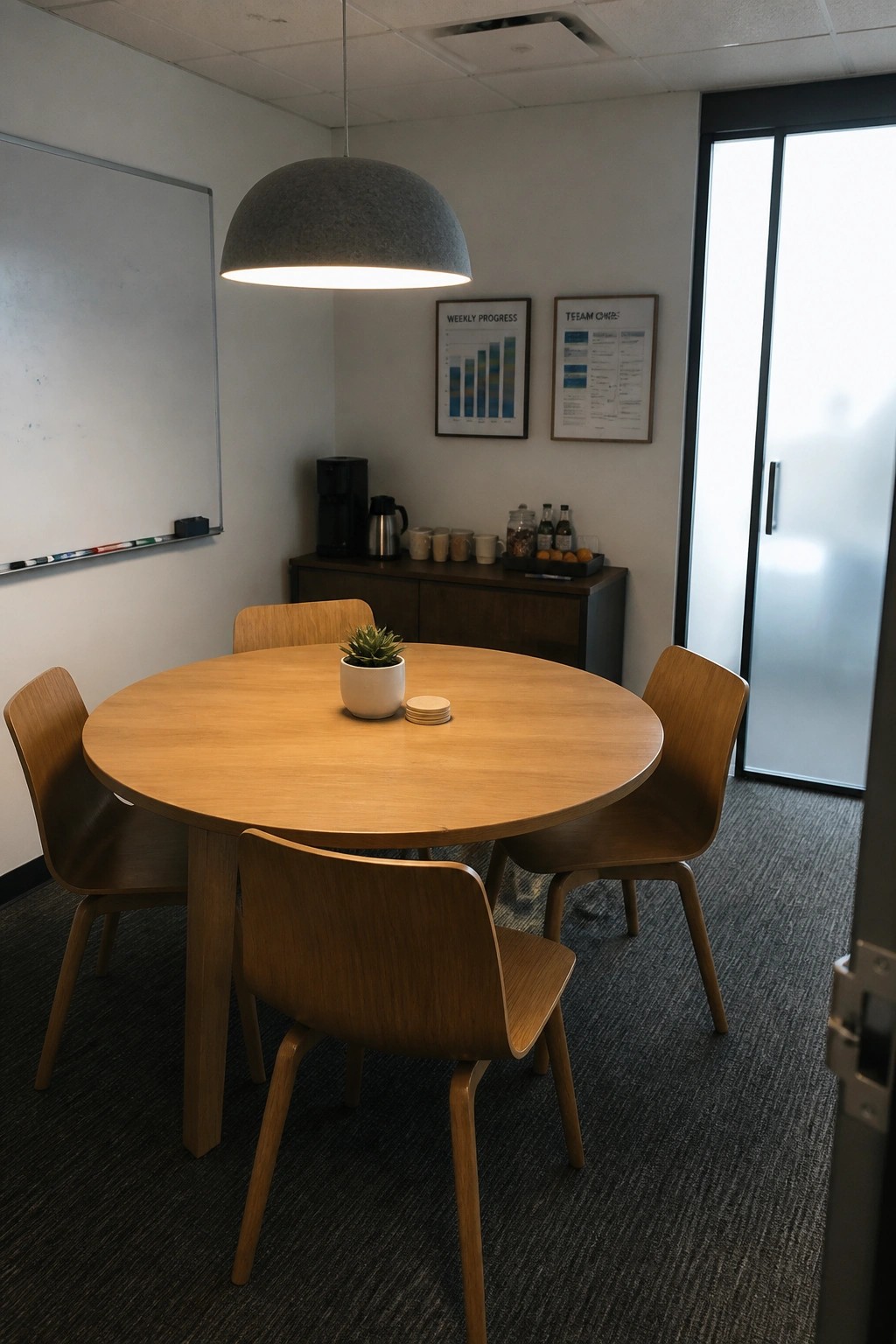
A round table keeps everyone on equal footing during discussions. In a compact office space it makes conversations feel more open and less formal than a long rectangular setup would.
This layout works especially well in smaller meeting rooms where teams gather for quick updates or brainstorming. Keep the surrounding chairs simple and the center clear so people can focus on each other instead of the furniture.
Include a Window Seat in Your Home Office
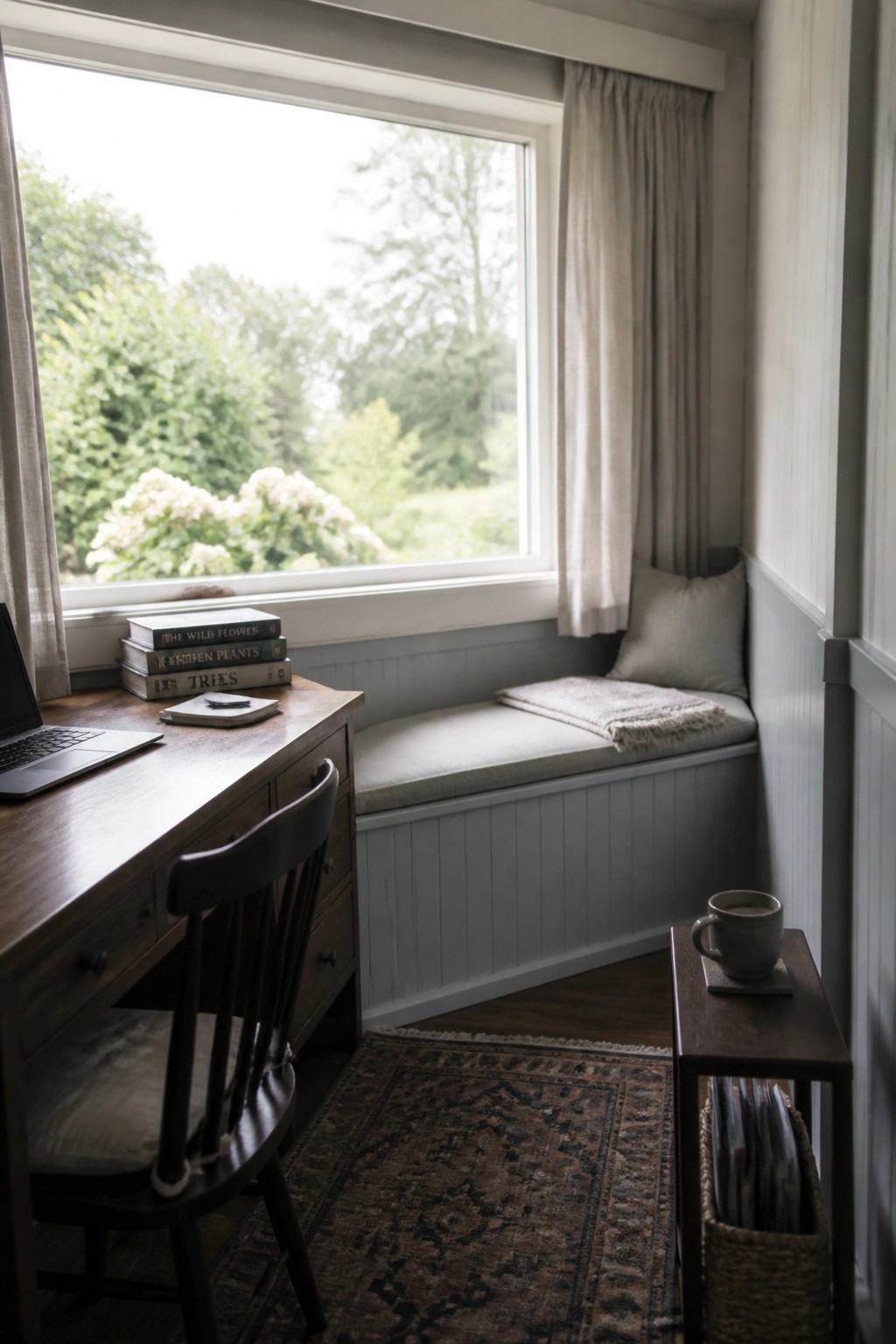
A window seat next to the desk gives you a second spot to work or think without leaving the room. It brings in natural light and a view that can help break up long hours at the computer.
This setup works especially well in smaller offices or rooms that already have a good window. Keep the cushion simple and add storage underneath if you need a place for files or extra supplies.
Built-In Desks In Alcoves

An alcove desk turns a small unused spot into a real workspace. The curved niche keeps the desk and shelves contained so the rest of the room stays open and uncluttered.
This works best in apartments or smaller homes where you need a dedicated spot without taking over an entire room. Keep the finish simple and add just enough storage above to stay organized.
Vertical Wood Slats On Reception Desks

Vertical wood slats wrapped around a curved desk front bring a bit of warmth into an office reception without making it feel too casual. The lines add texture and keep the area from looking flat or overly stark.
This approach works well in professional settings where the desk needs to serve as a clear boundary but still feel welcoming. It suits smaller offices or client-facing spaces that want a clean material mix without extra furniture pieces taking up room.
Use A Skylight To Light An Attic Office Desk

Natural light makes a big difference in how a workspace feels and functions. Placing the desk right under a skylight lets daylight reach the surface without needing extra lamps during the day. This setup works especially well in attic rooms where wall windows are limited and the ceiling angles inward.
The approach suits homes with unused attic space that can be turned into a quiet office. Keep the desk surface clear enough for the light to land fully and add task lighting only for evening use. Built-in shelves along the lower walls help store books and supplies without crowding the floor area.
Frequently Asked Questions
Q: My office is small. Which ideas from the list work best here?
A: Focus on vertical storage and task lighting to free up floor space. These keep things organized and bright without crowding the room. A single accent wall can add interest too.
Q: How do I balance personal style with a professional look?
A: Choose items that reflect your taste but stay neutral in color and shape. This mix makes the space feel like yours while still suitable for meetings.
Q: What if natural light is limited in my workspace?
A: Add layered artificial lights with warm bulbs to mimic daylight. Position a mirror to bounce light around the room for better energy levels.
