

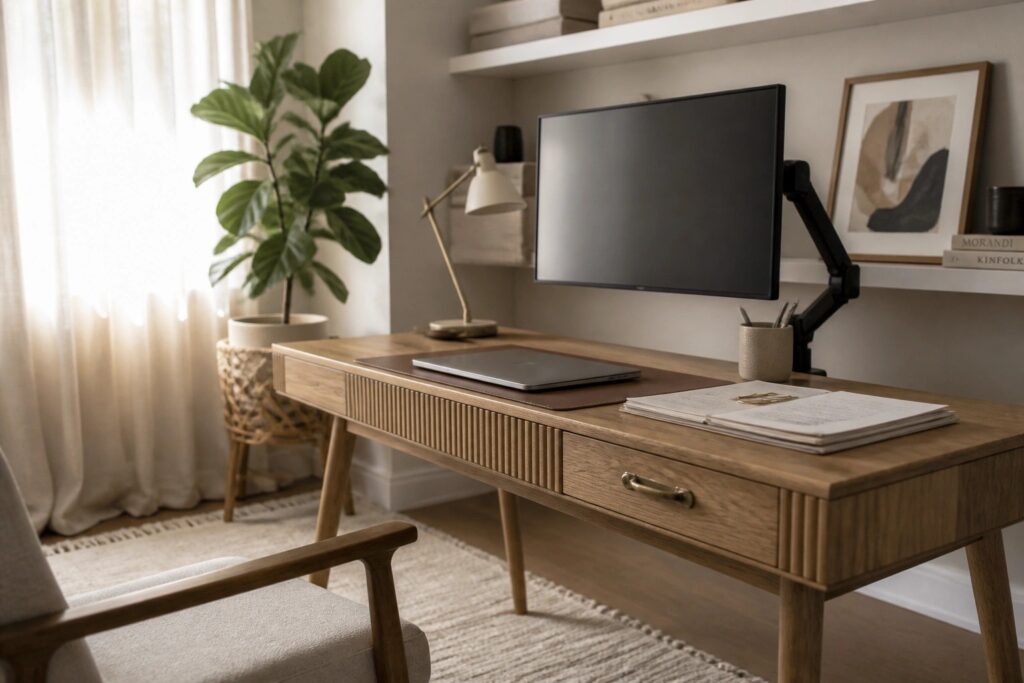
When setting up a workspace at home the table tends to shape how the rest of the room functions because it has to hold a laptop, a monitor, and paper piles without crowding the chair or blocking light.
I have found over the years that a table which seems roomy enough at first can quickly feel tight once cables and daily papers are added.
Layout matters more than most expect.
A table with the right depth lets me keep the monitor at eye level while still reaching notes without twisting, which keeps the whole corner from feeling cramped by mid afternoon.
Some of these designs stand out because they handle those small adjustments without making the room look like a dedicated office.
Use A Monitor Arm To Free Up Desk Space

A monitor arm keeps the screen off the desk surface so you still have room for a laptop and papers at the same time. It is a simple change that makes the whole table feel more usable without needing a bigger piece of furniture.
This works best in smaller home offices or when your desk has to handle more than one type of work in a single day. Make sure the arm is attached securely and that the monitor sits at a comfortable height for long hours.
A Long Wooden Desk For Multiple Monitors

A long wooden desk gives you plenty of room to set up two monitors along with a laptop and still have space left for papers and notes. The solid surface keeps everything within reach without forcing you to stack things or push items aside.
This style works best in a home office where you handle both screen work and physical documents on the same surface. Make sure the legs are strong enough to hold the weight and choose a depth that leaves enough room for your chair to slide in and out comfortably.
Floating Desk With Wall Storage
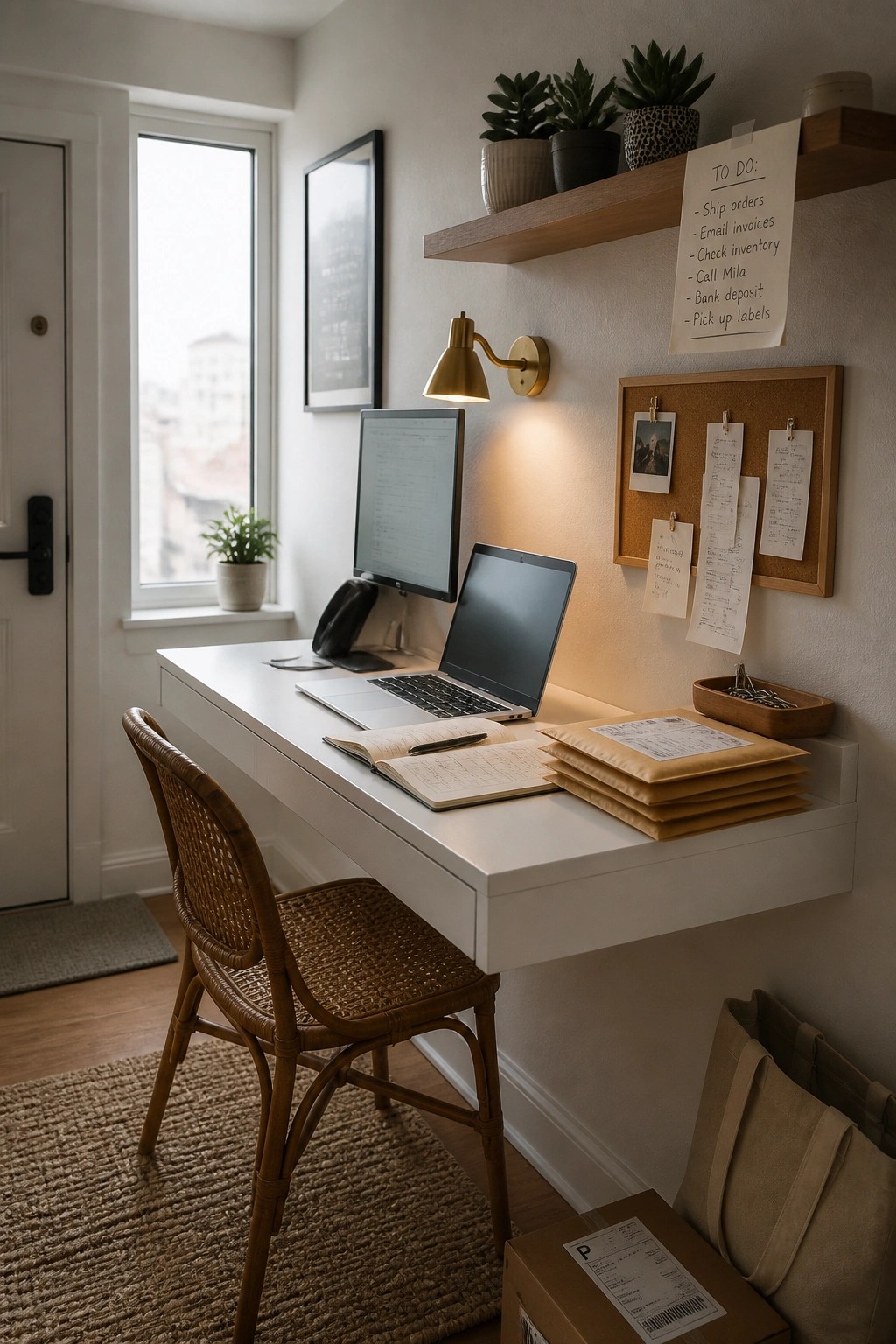
A floating desk works well when you need a clean surface for a laptop, monitor, and paperwork without taking up floor space. The setup keeps the area open underneath while the wall above holds a shelf and board for notes and supplies.
This approach suits smaller rooms or corners where built-in cabinets would feel heavy. Mount the desk at a comfortable height, add a narrow shelf for plants or lists, and hang a corkboard nearby so papers stay visible but off the work surface.
Desk With An Open File Drawer

An open drawer built into the desk gives you quick access to folders and papers without needing extra cabinets nearby. This keeps the work surface clear while you switch between a laptop, monitor, and physical documents.
It works best in smaller home offices or rooms where you want to stay organized but avoid bulky storage. Place it near a window so the light helps when you pull out files, and check that the drawer slides fully without blocking your chair.
Add a Runner to Protect the Desk Surface

A fabric runner across a wooden desk gives you a soft layer that handles daily wear from laptops and papers. It keeps the wood from getting scratched or marked while still letting the desk show through at the edges.
This approach works in smaller home offices where the desk gets used all day. Pick a washable fabric in a neutral tone so it fits with most rooms and can be swapped out when it needs cleaning.
Glass Desks That Keep A Room Feeling Open
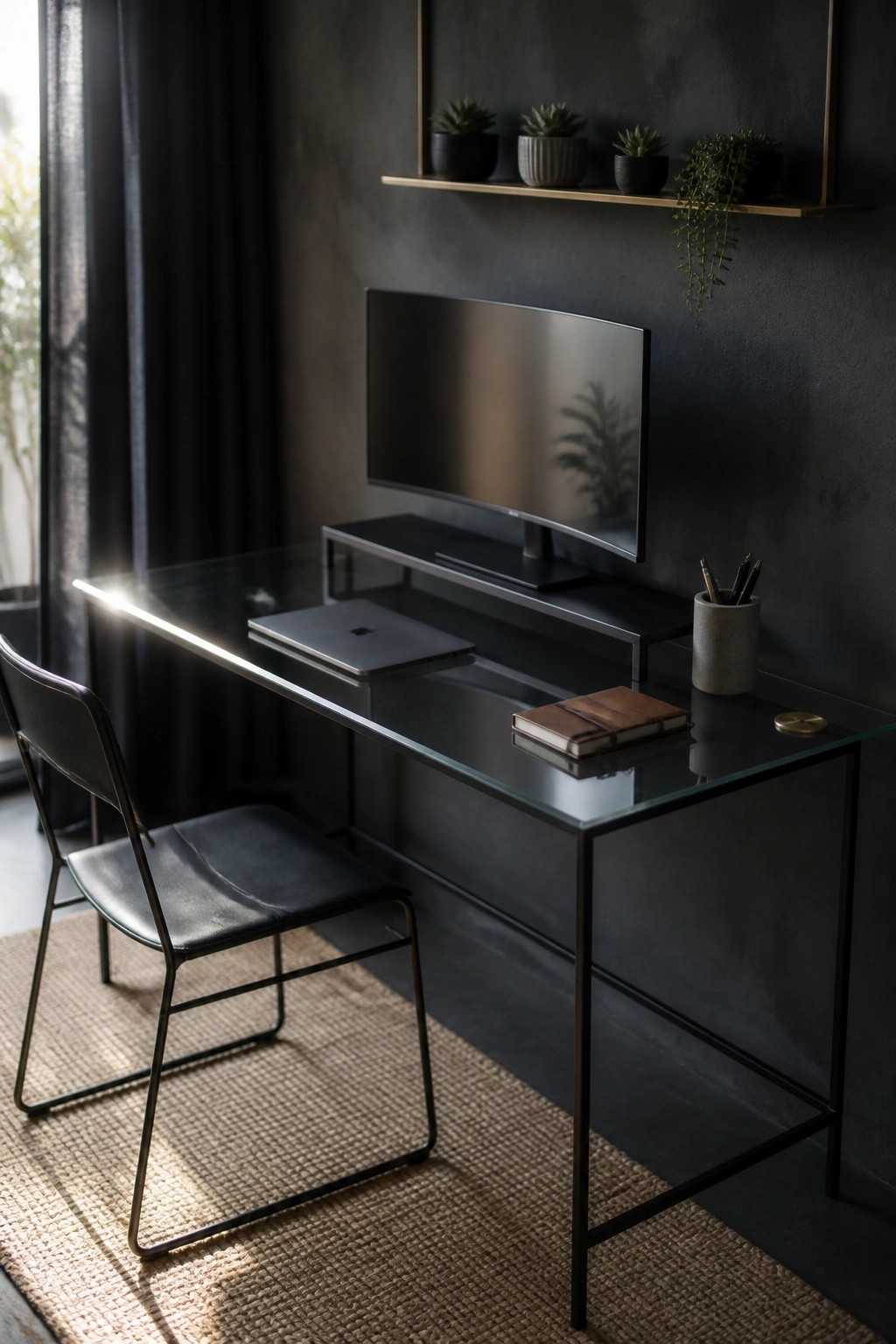
A glass desk lets light pass through instead of blocking it at the surface. This helps in rooms with dark walls or limited windows where a solid top would make the space feel heavier.
It works best in smaller offices or setups where you want the focus on the work area rather than the furniture itself. Pair it with a raised monitor stand so the surface stays clear and the light effect remains noticeable.
A Desk With A Soft Painted Finish
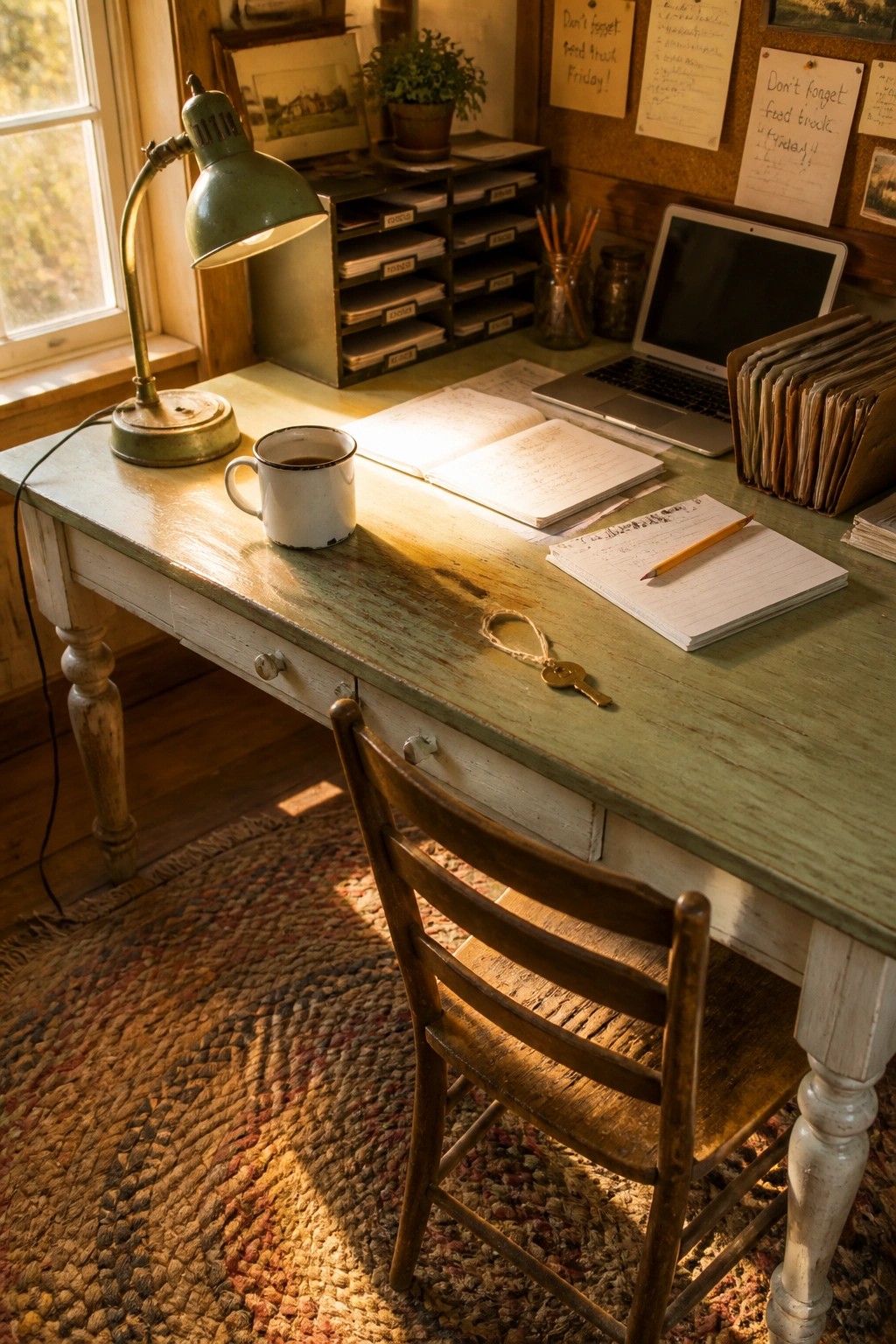
A painted desk with some wear can feel much more at home than a plain office model. The soft green finish here keeps the surface practical for daily use while adding just enough color to blend with the rest of the room.
This approach works well in smaller spaces or older homes where you want the desk to look like regular furniture rather than office equipment. Keep the top mostly clear except for what you need that day, and the finish will hold up fine even with regular paperwork and laptop use.
Built-In Cabinetry Desks With Integrated Storage

One practical way to keep a home office tidy is to build the desk into the surrounding cabinetry. It turns the whole wall into one working unit, so the desk does not feel like a separate piece that takes up extra space.
This setup suits smaller rooms or any space where you want storage close at hand. Match the cabinet color to the walls and add a wood top for contrast, then run a simple light under the shelf above to keep the surface usable without extra lamps.
A Solid Wood Desk With Metal Supports

A desk built from thick wood and a strong metal frame gives you a stable surface that holds up to daily use. It creates plenty of room for a monitor, laptop, and paperwork without feeling cramped or wobbly.
This style fits homes that already lean toward industrial or rustic looks. Keep the rest of the space simple so the desk can serve as the main work area.
Floating Corner Desks For Small Rooms

A floating desk that turns the corner gives you workspace without eating up floor space. It keeps the room open underneath and lets you place a monitor on the wall so the surface stays clear for papers and a laptop.
This works best in bedrooms, small apartments, or any spot where a full desk would feel too heavy. Keep the depth reasonable for your keyboard and add a narrow shelf or board above for quick reference items.
Leather Mats Over Marble Desks
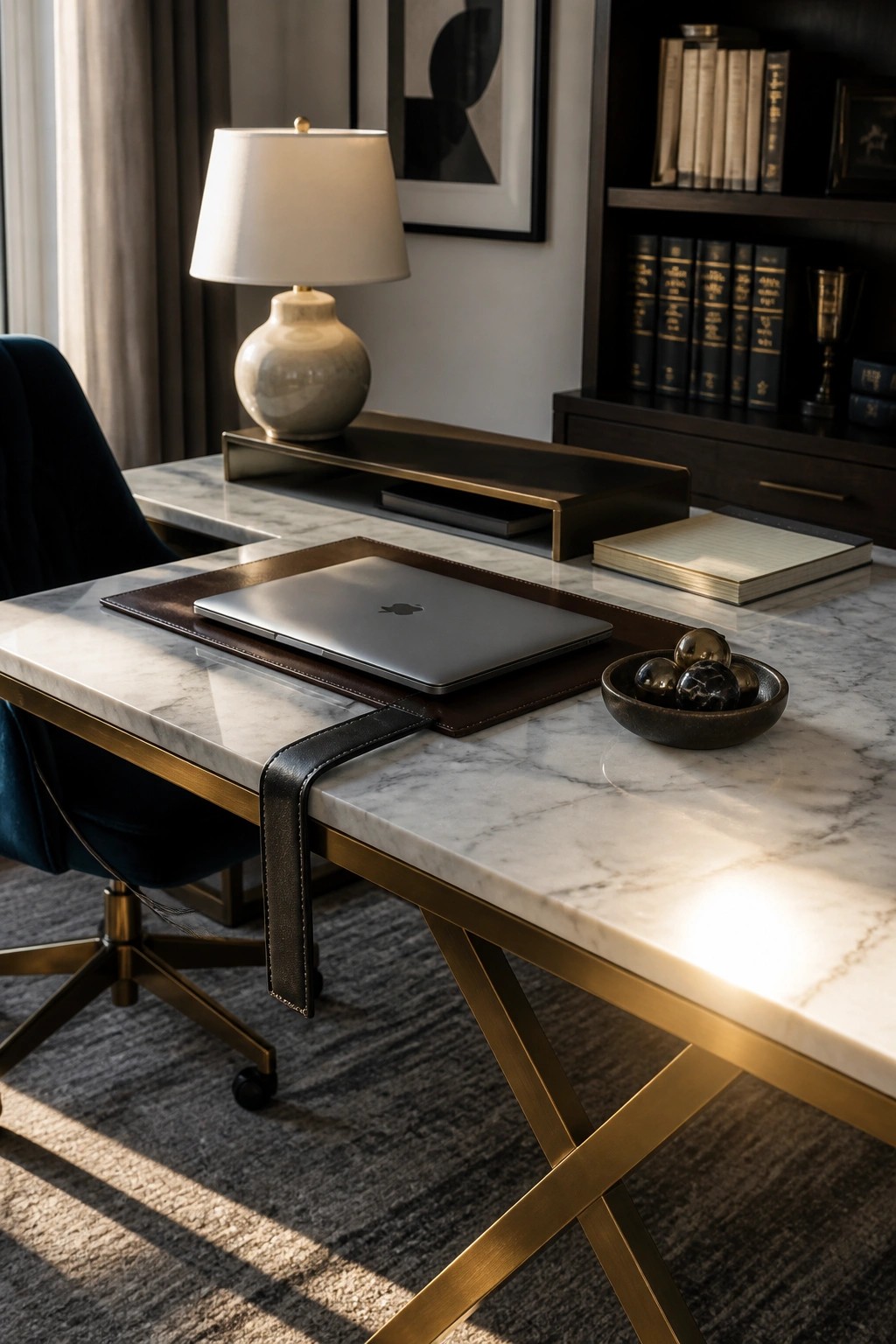
A leather desk mat on a marble surface gives you a soft, stable spot for your laptop without worrying about scratches or sliding. It keeps the desk looking clean while adding a bit of warmth that plain stone can lack.
This setup works well in smaller home offices where you want the desk to handle daily laptop use without extra clutter. Keep the mat centered and sized just right for your computer, and it stays practical without taking over the whole surface.
Cane Webbing On Desk Drawers
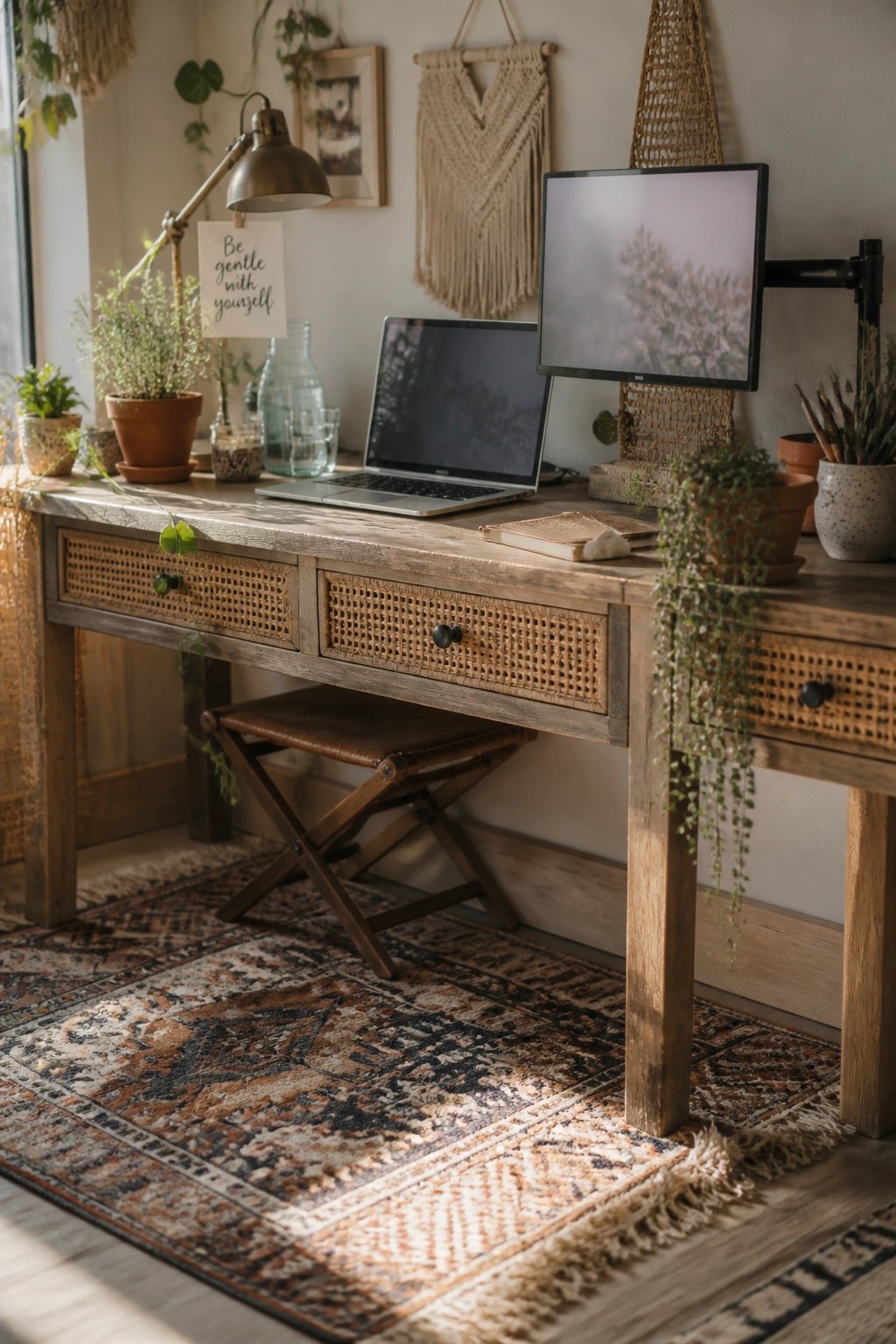
Cane webbing on desk drawers gives a workspace some texture while still keeping things practical. The woven fronts add a bit of warmth to a wooden desk without taking up extra room or making the surface feel cluttered.
This works best in smaller home offices that need solid storage but do not want a heavy all-wood look. It pairs well with simple furniture and a few plants, and it stays easy to clean as long as the cane is finished properly.
Adjustable Standing Desks For Home Offices

An adjustable standing desk gives you a simple way to move between sitting and standing without rearranging the whole room. It works especially well when your office space is small and you need one surface to handle a laptop, a monitor, and some paperwork at once.
This style suits apartments or spare rooms where furniture has to stay practical. Pair it with a low stool for quick sitting breaks and keep the surface clear so cords and trays do not crowd the workspace.
Secretary Desks With Drop Fronts For Laptop Work

A drop front desk gives you a ready workspace for a laptop without needing a big table that stays open all the time. The surface folds down when you need it and tucks papers and files into the slots behind it when you are done.
This setup suits smaller rooms or homes that already lean toward traditional furniture. Keep the height comfortable for typing and leave enough room above the surface if you add a monitor stand later.
Low Tables For Focused Laptop Work
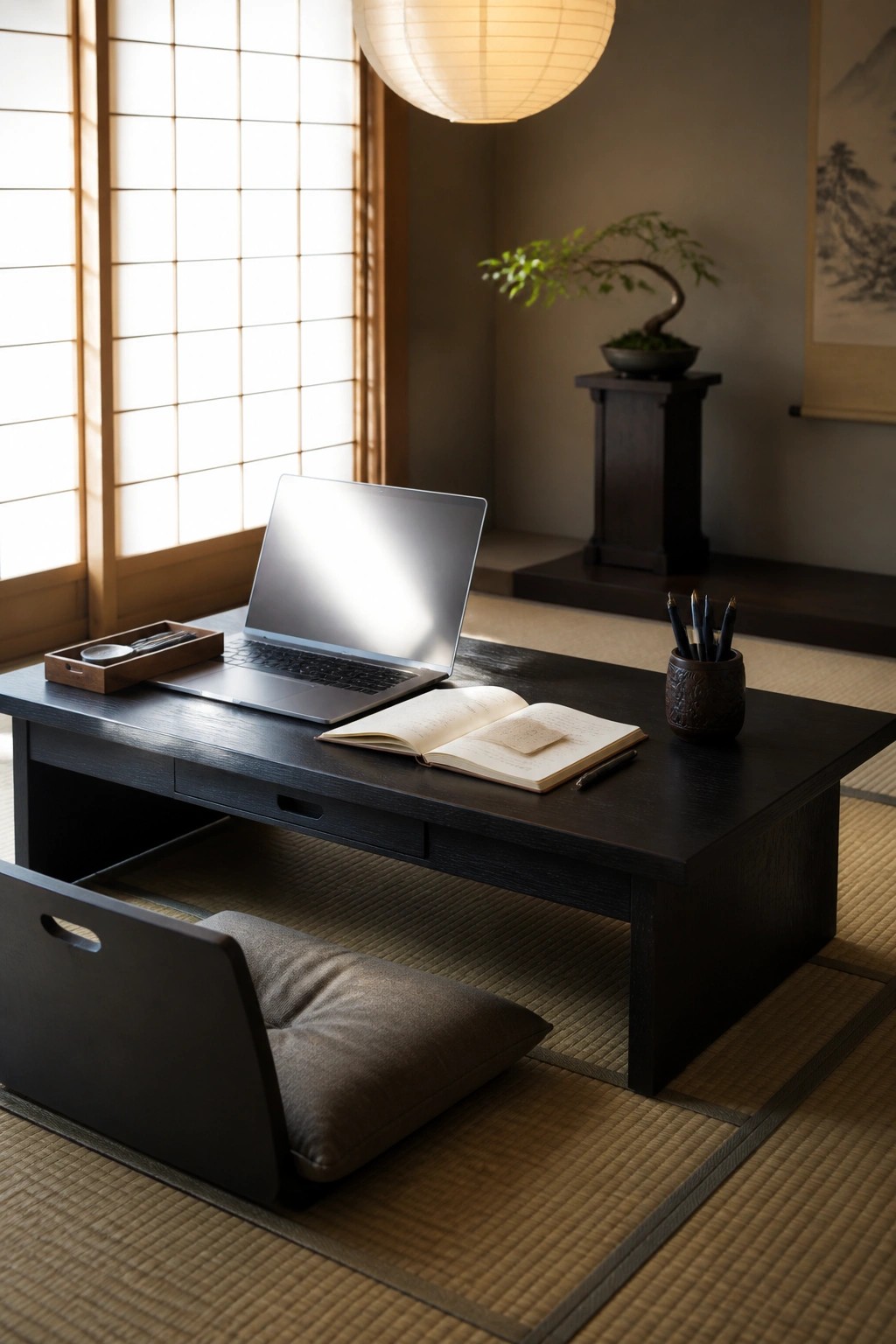
A low table keeps the workspace simple and close to the floor. It avoids the bulk of a standard desk while still giving you room for a laptop, some papers, and basic supplies without crowding the area.
This style works well in smaller rooms or homes that already use minimal furniture. Add a cushion underneath and you have a practical spot that stays out of the way when you are done for the day.
Long Desk for Two Workstations
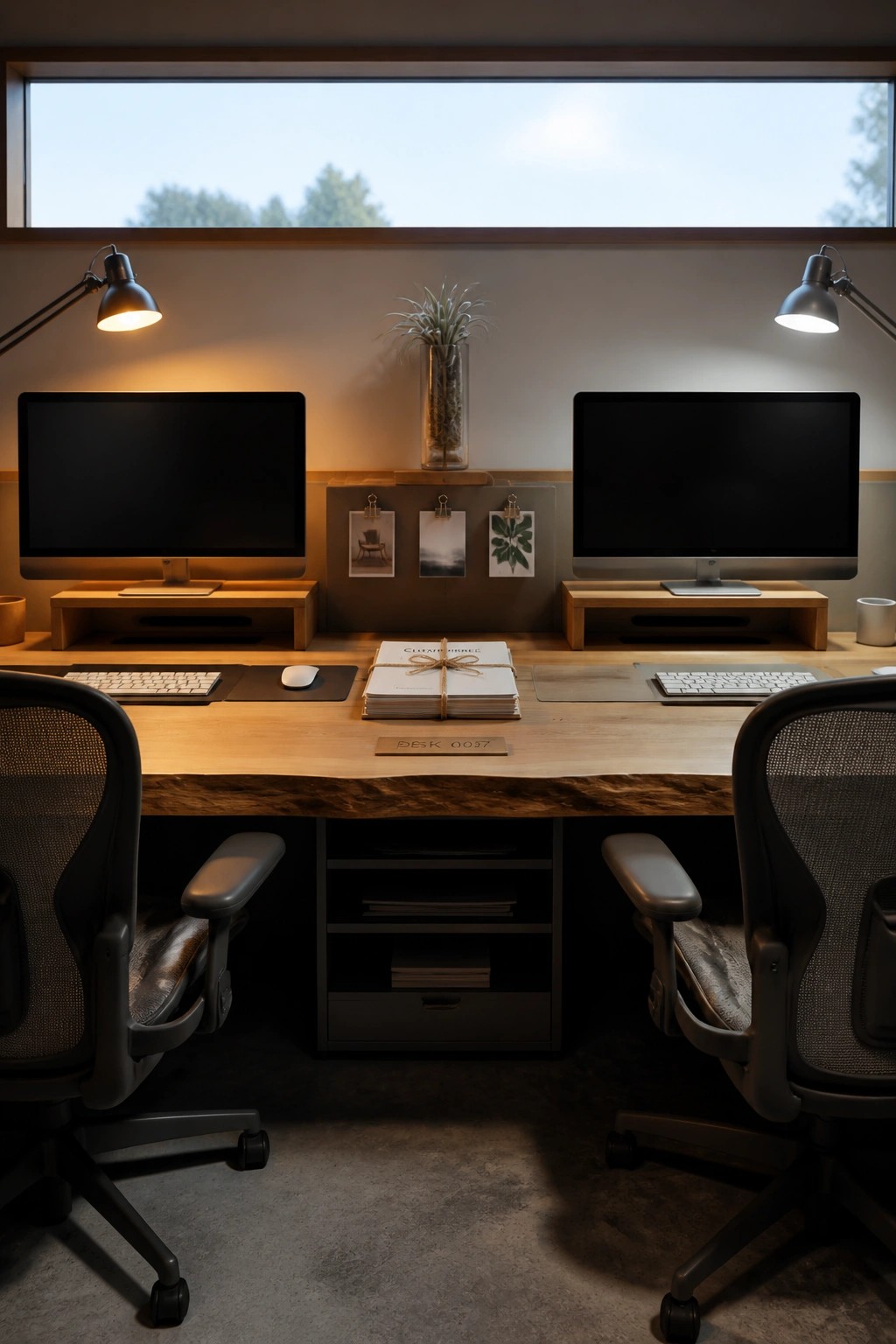
A long single desk makes it easy to fit two full workstations in one room without crowding the space. The continuous surface keeps everything connected while still giving each person their own area for a monitor, keyboard, and paperwork.
This setup works best in a spare bedroom or open corner where two people work from home. Add simple risers under the monitors and some under-desk drawers so each side stays organized without needing extra furniture.
Repurposed Cabinets Work Well As Desk Bases
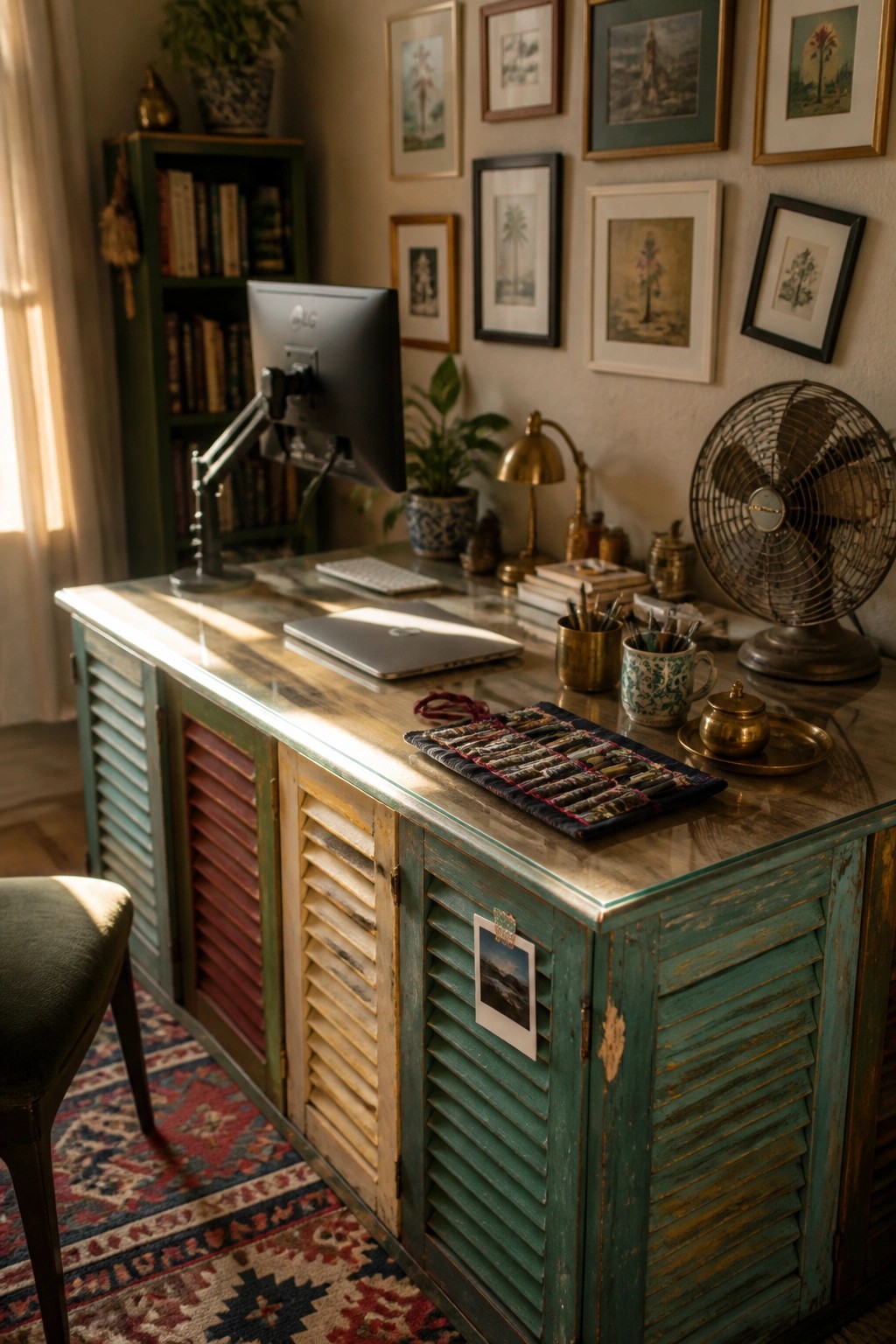
Many people turn old cabinets or sideboards into desk bases because they already come with built-in storage. This approach gives you room for files, supplies, and other items without adding extra furniture to the room.
It works best in smaller offices or spaces where you want a bit of character. Look for a sturdy piece, add a glass top for an even surface, and make sure the height feels comfortable for daily use.
Slim Desks That Handle Laptops And Paper

A narrow wooden desk can work well when you need room for both a laptop and some paper notes without taking over the whole space. The key is keeping the surface clear enough for a stand or riser so the screen sits at a better height while still leaving room for a notepad or a few files beside it.
This setup suits smaller rooms or corners where a full office table would feel too big. It works best if you keep accessories minimal and use the wall or a nearby shelf for extra storage. Just watch the depth of the desk so your chair can pull in close without crowding the walkway.
Drafting Tables For Mixed Digital And Paper Work
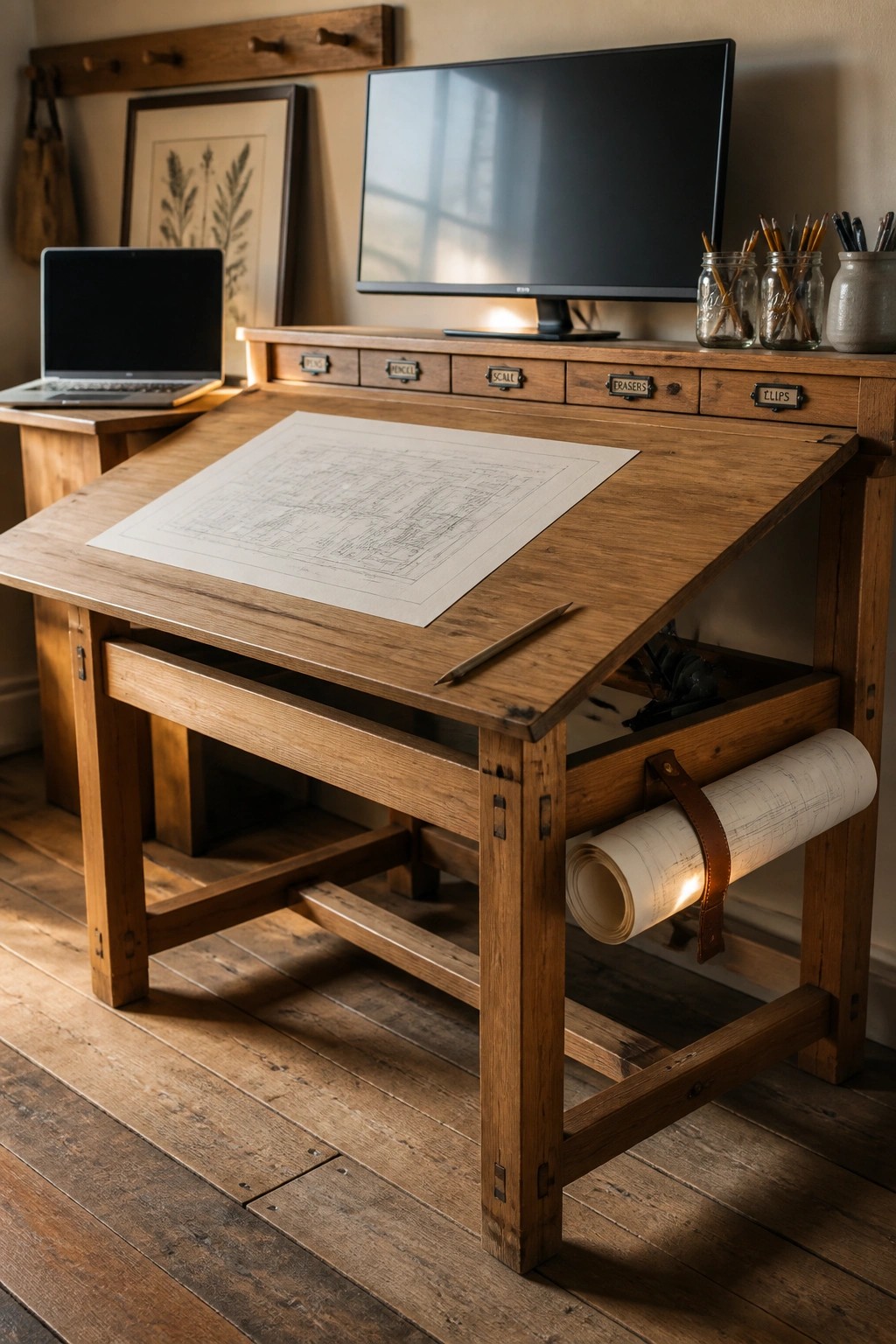
A drafting table brings back a useful shape that many home offices overlook. The slanted surface makes it easier to spread out drawings or notes without hunching over them, and the height still works fine for a monitor and laptop.
This style suits people who switch between screens and physical work throughout the day. It fits best in a smaller room where one piece needs to handle several tasks without looking cluttered. Keep the drawers organized for pencils and scales so the top stays clear for whatever you are working on right now.
Fold-Away Cabinet Desks That Hide Office Equipment

A desk that folds back into a cabinet gives you a real workspace without leaving papers and equipment out all the time. The setup works because everything stays in one spot, and the doors can shut when the day is done.
It suits smaller rooms or spaces that need to serve more than one purpose. Measure your monitor and keyboard first so the doors close without forcing anything.
Desks With A Lower Keyboard Area

Some desks include a built-in lower platform that holds the keyboard and mouse. This keeps the main surface clear for writing or other tasks while placing the keyboard at a more comfortable height for typing.
This setup works well in smaller rooms or for people who want the desk to feel less cluttered. It suits homes where the office doubles as a guest room or shared space since everything stays organized without extra trays or stands.
Frequently Asked Questions
Q: My desk space is tight. Which designs leave room for both a monitor and some paperwork?
A: Look for tables with built in side extensions. They tuck away when you need the main surface clear for your laptop. This setup keeps everything within reach without stacking papers on top of each other.
Q: Will a creative table design mess with my posture during long workdays?
A: Pick one with adjustable legs if possible. Raising or lowering the height helps your arms stay level with the keyboard. You can always add a footrest underneath to stay comfortable.
Q: How do I hide cables on an open frame table?
A: Run cables along the back legs using clips from any hardware store. Most designs leave room for a power strip out of sight.
