

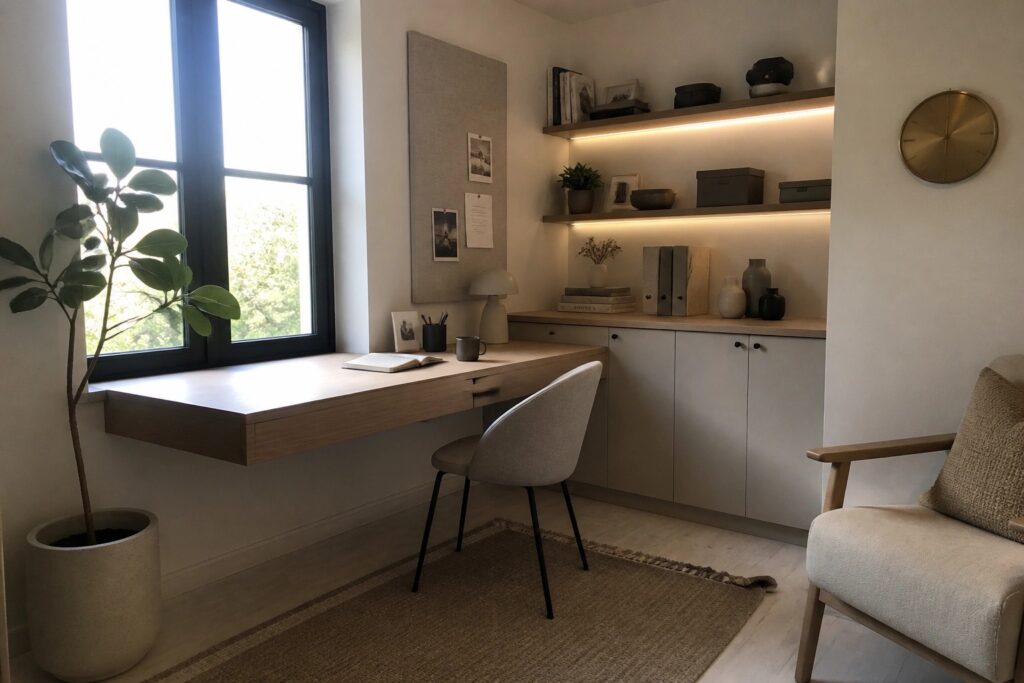
I have found that a home office only settles into daily use once the desk and storage actually leave walking room and keep everyday items within reach.
Clean lines can make the space feel open but they fall flat if there is no plan for the papers and devices that pile up by the end of the week.
Some layouts simply work better.
I tried moving my own monitor arm and adding a shallow cabinet last year and the difference in how quickly I could start work each morning was clear.
It helps to test one or two of these changes at a time so you can tell which ones match the way you move through the room.
Built-In Desks That Keep Things Simple

A built-in desk can turn an awkward corner into a real workspace without adding clutter. The desk sits right into the wall so the floor stays open and the room feels bigger than it is. Shelves above hold what you need without extra furniture taking up space.
This setup works best in smaller rooms or homes where every inch counts. Keep the materials light and the lines straight so the whole area stays calm and easy to use.
Built-In Shelving In An Arched Alcove
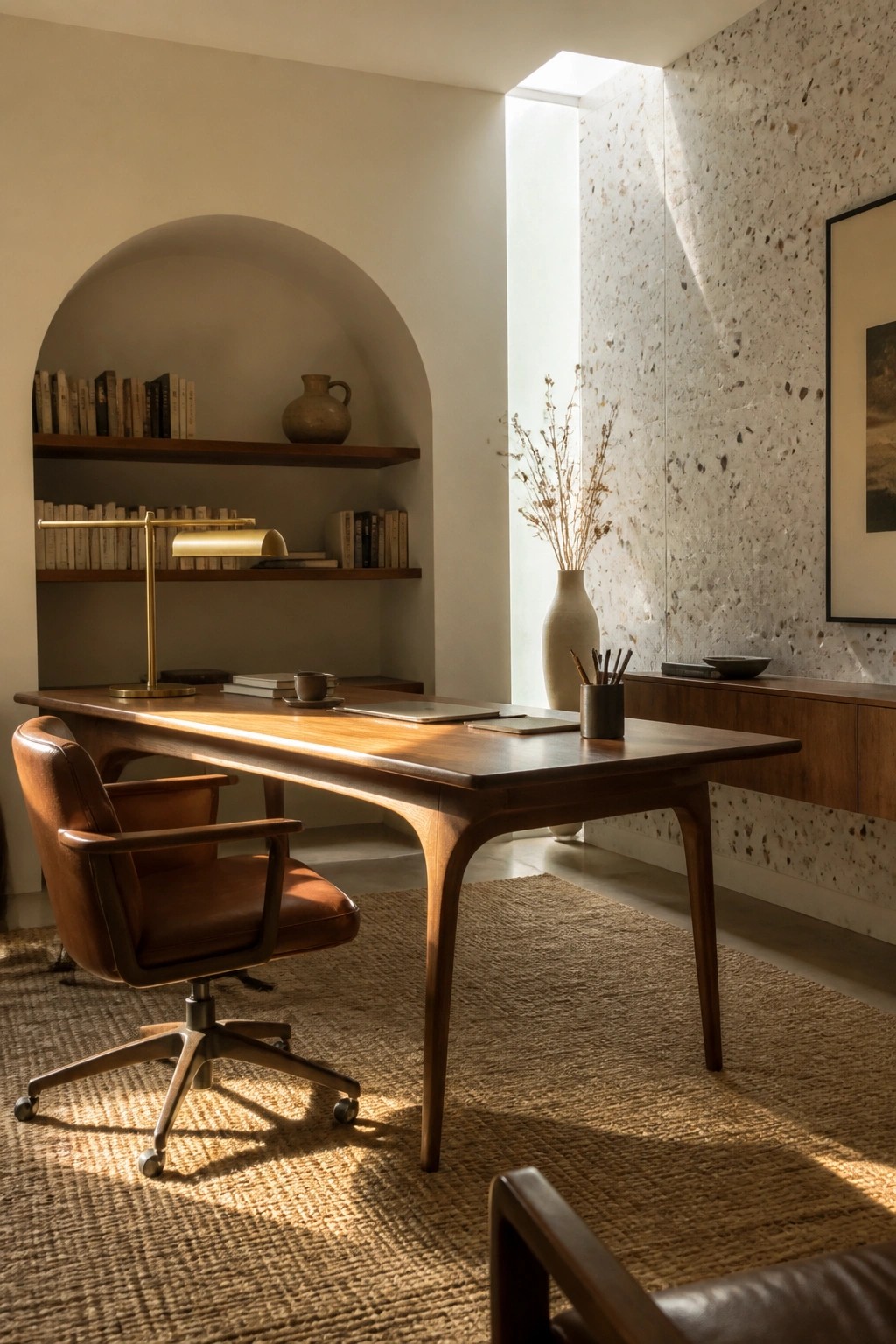
An arched alcove with floating shelves gives an office a clear spot for books and supplies without adding more furniture. It keeps the workspace open and lets the desk stay the main focus. The curve adds a bit of softness that plain rectangular shelves often lack.
This idea works well in rooms that already have some wall depth or taller ceilings. It suits smaller offices where you need storage but do not want the space to feel crowded. Just keep the shelves lightly filled so the area stays calm.
Built-In Desks That Save Floor Space
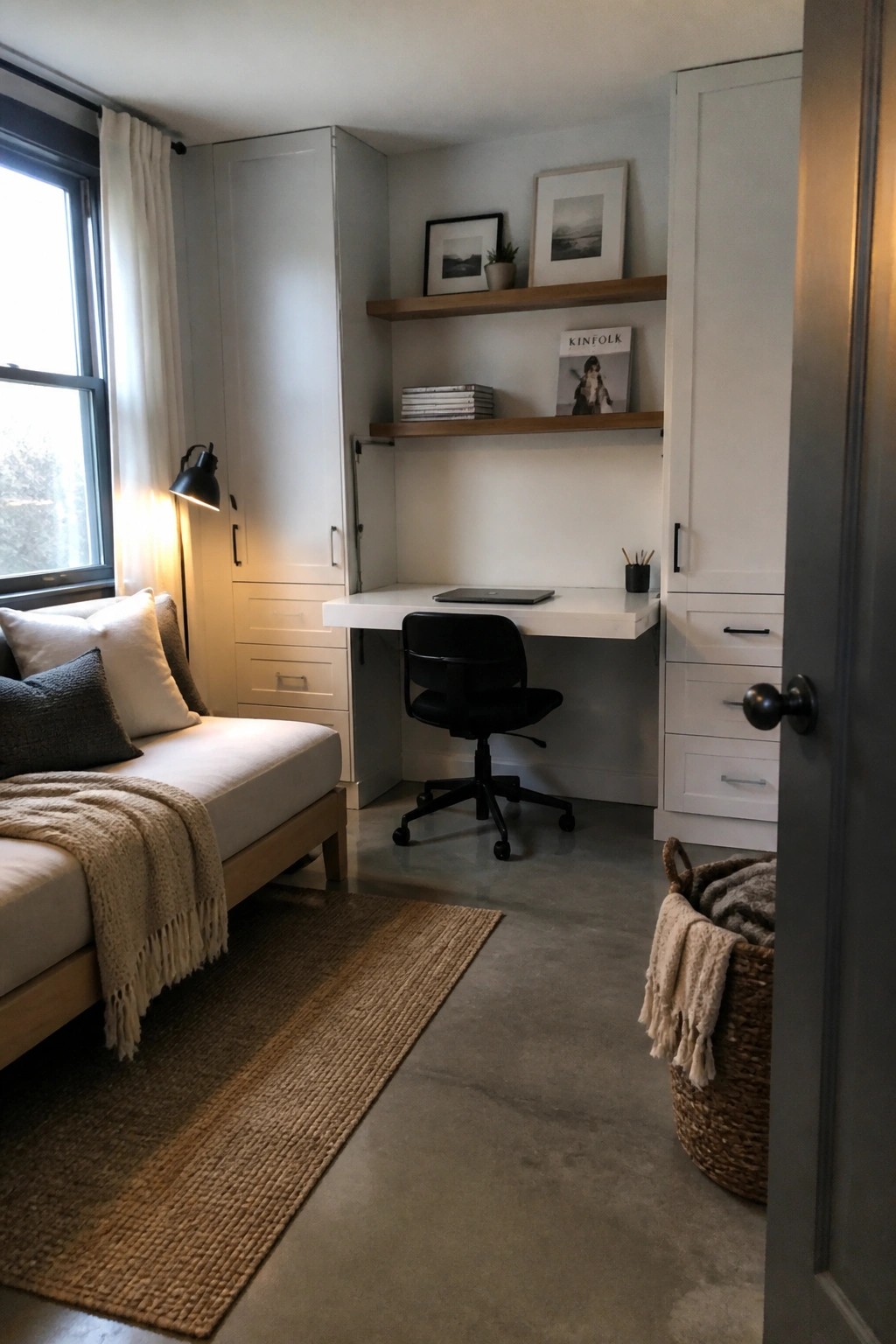
A built-in desk tucked inside cabinetry works well when you need a workspace but do not want it to take over the room. The cabinet doors and drawers keep everything contained, so the desk stays out of the way when it is not in use and the whole area still feels calm and open.
This setup suits small bedrooms or guest rooms that double as offices. It works best in homes where you want the desk to match the rest of the storage rather than stand out as a separate piece of furniture. Keep the surrounding cabinets simple so the desk blends in instead of creating extra visual clutter.
Add Low Open Shelving Next to the Desk
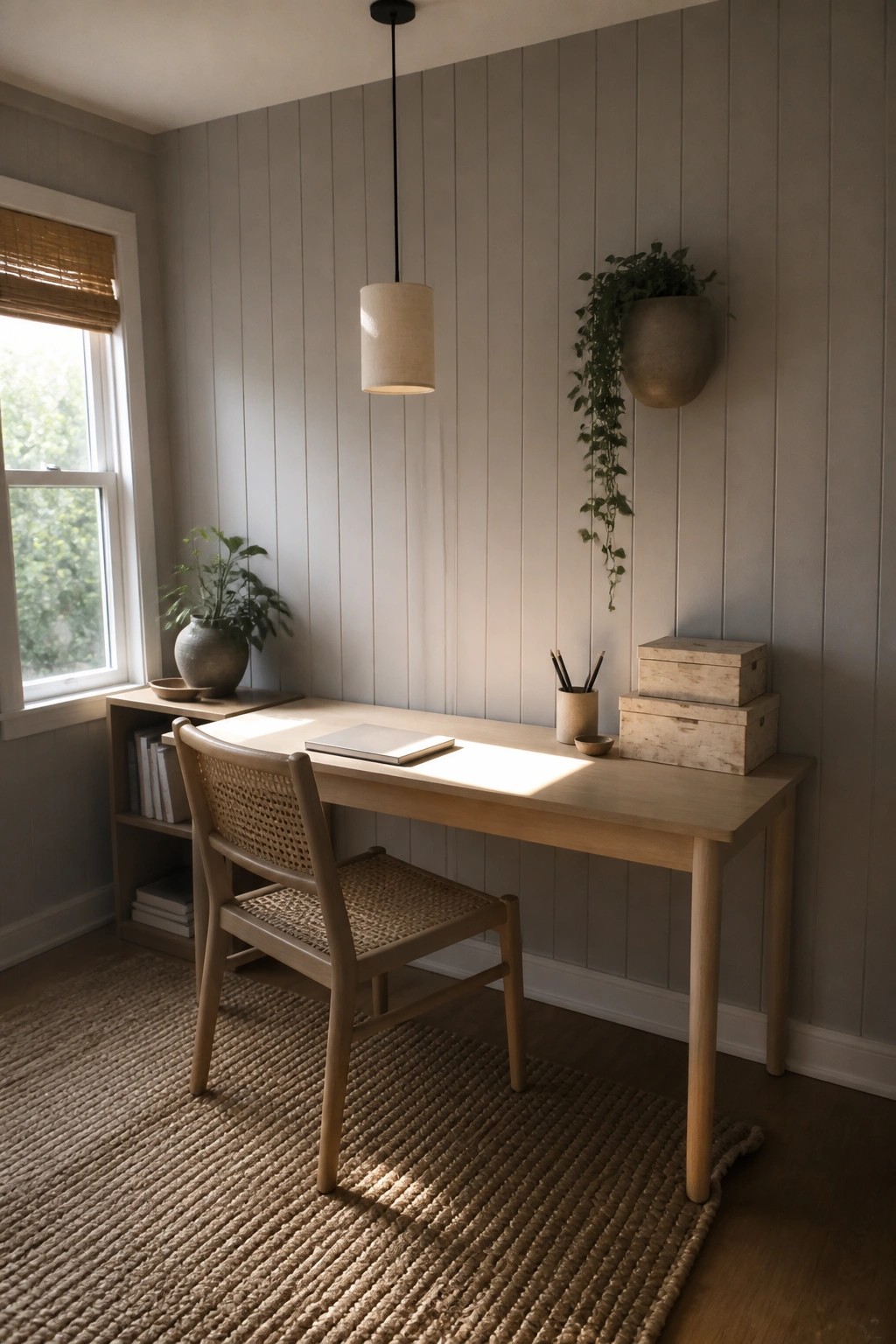
Many people like this setup because it keeps the desk surface clear while still giving easy access to books and supplies. The low shelf holds what you need without adding bulk or making the space feel crowded.
This works best in smaller rooms where you want function without heavy furniture. It suits homes that prefer simple lines and natural tones, and it keeps the focus on the work area rather than on storage pieces.
A Wood Desk With Metal Legs
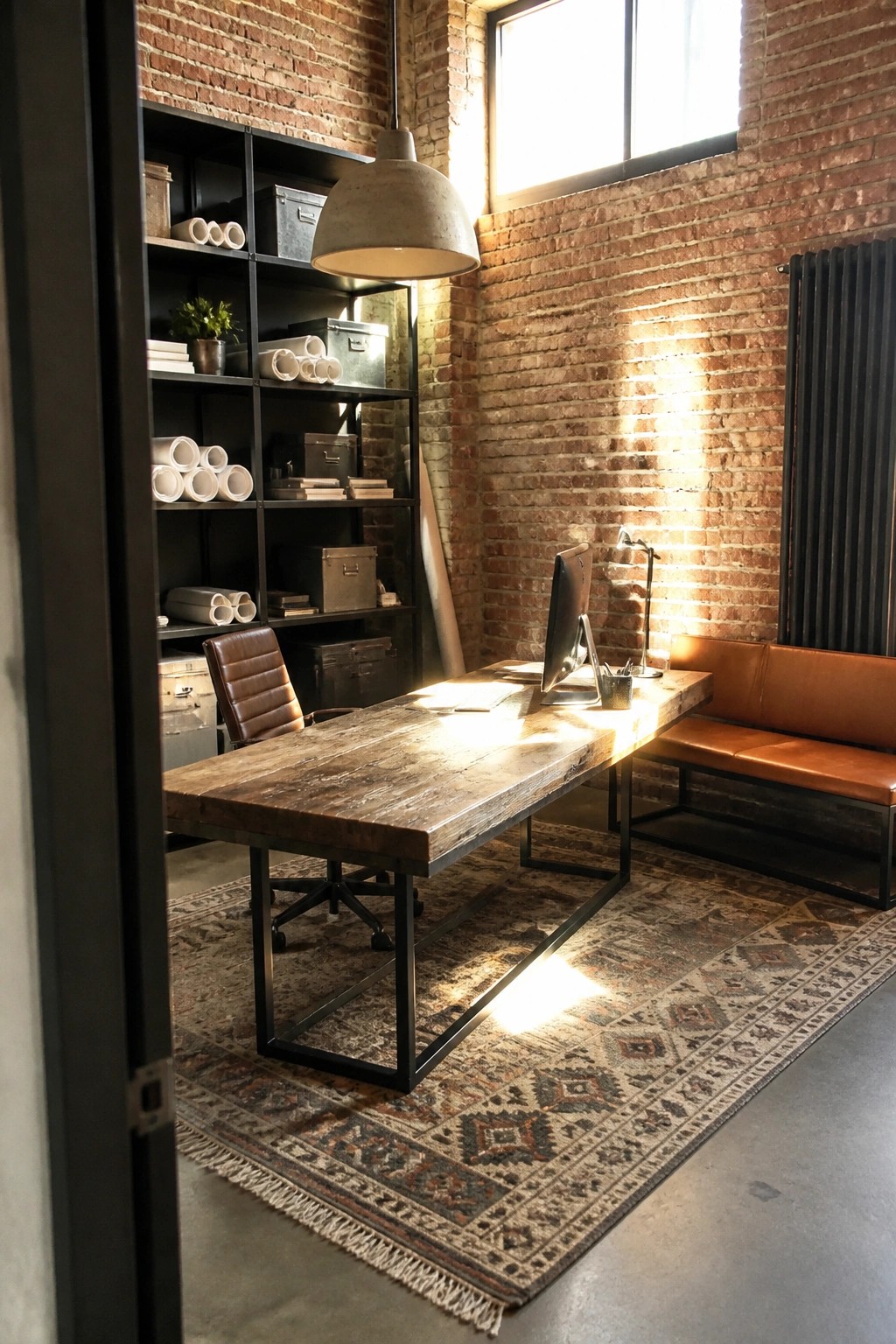
A desk made from thick wood on a simple black metal frame gives you a big, solid work surface that still feels clean. The natural wood adds some warmth while the metal base keeps the whole thing from looking heavy or old-fashioned. It works especially well when you need space for a computer, papers, and a few extras without the desk itself becoming the mess.
This setup suits rooms that already have some texture, like brick walls or concrete floors. Keep the rest of the furniture light so the desk stays the main piece. A patterned rug underneath helps mark the workspace without adding more furniture.
Built-In Storage Above The Desk

Built-in cabinets right above the desk give you a place to store binders, files, and supplies without adding extra furniture. This keeps the work surface clear and makes the whole setup feel more organized from the start.
It works especially well in smaller rooms where every inch counts. The lower drawers hold everyday items while the upper section takes care of things you reach for less often, so the space stays practical without looking crowded.
Floating Desks Help Small Rooms Feel More Open

A floating desk mounted to the wall takes up less visual space than a standard desk with legs. It leaves the floor clear underneath, which makes the whole area feel less crowded and easier to move around in.
This setup works well in a corner or along one wall where you need a workspace but do not want to block light or floor area. Make sure the desk is anchored properly and that your chair can slide in and out without hitting anything.
Built-In Window Desks Keep Small Offices Organized
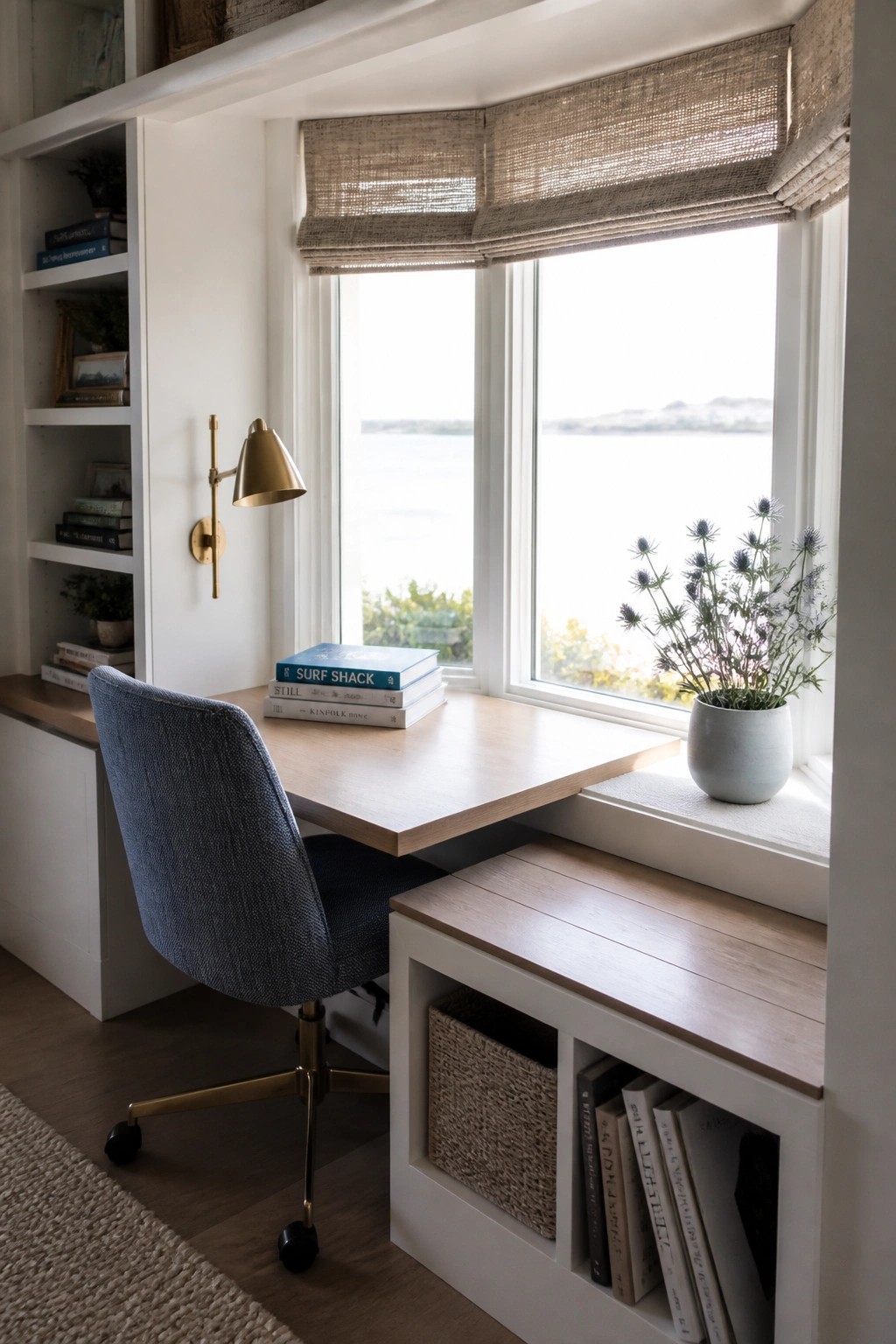
A built-in desk that runs along a window wall gives you a dedicated workspace without eating up floor space. The storage tucked underneath and the open cubbies on the side keep everything in reach while the clean lines stay simple.
This setup works best in rooms that need to handle more than one job. It suits smaller homes or guest rooms where you want natural light on the desk but still need a place to stash books and supplies out of sight.
Built-Ins That Add Storage Without Taking Over The Room

Built-in shelving and a desk can turn an empty corner into a working space that actually stays useful. The unit here combines open shelves, closed cabinets, and a long work surface all in one piece, which keeps books, files, and supplies close without adding extra furniture that would crowd the floor.
This approach works best in smaller rooms or rooms with awkward walls where freestanding pieces would leave wasted gaps. It suits homes that want a calm, uncluttered look but still need room for daily papers and reference books. Keep the finish simple and match it to the floor or trim so the whole thing feels like part of the architecture rather than an added piece.
Built-In Shelving For Practical Office Storage

Built-in shelving works well in a home office because it adds storage without taking up extra floor space. The unit here sits right beside the desk and holds books, plants, and smaller items so the work surface stays clear. That layout keeps things easy to reach while the room still feels open.
This approach fits best in smaller offices or rooms that double as guest spaces. It works with almost any desk style as long as the shelves match the wall color or wood tone. Just be sure to leave some open spots so the wall does not feel too heavy.
Built-In Desks In Small Spaces

One way to add a workspace without giving up a whole room is to fit a desk into a closet. The walls already exist, so the desk can be built in at a comfortable height and paired with a simple stool that tucks underneath.
This approach suits apartments or homes where every square foot counts. A pegboard on the back wall keeps papers and small tools within reach while the surface stays clear for actual work.
Positioning a Desk to Catch Natural Light

Placing the desk right under a skylight makes a small attic office feel much brighter and more usable during the day. The light hits the work surface directly, so you rely less on lamps and the whole space stays feeling open even with the sloped ceiling.
This works well in any room where the ceiling is low or the windows are limited. Keep the desk surface mostly clear and use a simple chair so the light is not blocked. It suits homes with awkward rooflines or bonus rooms that need to double as quiet workspaces.
Acoustic Panels Behind the Desk

Acoustic panels on the wall right behind the desk help cut down on echo and background noise in a home office. They turn an ordinary wall into something that actually supports focus without adding clutter.
Try them in rooms with hard floors or where conversations from other parts of the house carry through. They pair especially well with a simple adjustable desk and a few other soft surfaces like a rug.
Natural Textures Balance a Home Office

A desk made from solid wood paired with a woven chair gives the room a grounded feel without losing the clean lines that modern offices need. The materials bring in some softness and warmth that plain laminate or metal furniture often lacks, which helps when you sit there for long stretches.
This works best in spaces that already get decent natural light and do not need heavy storage. Keep other surfaces fairly plain so the wood grain and woven details do not compete with too much else.
A Peg Rail Keeps Desk Items Within Reach
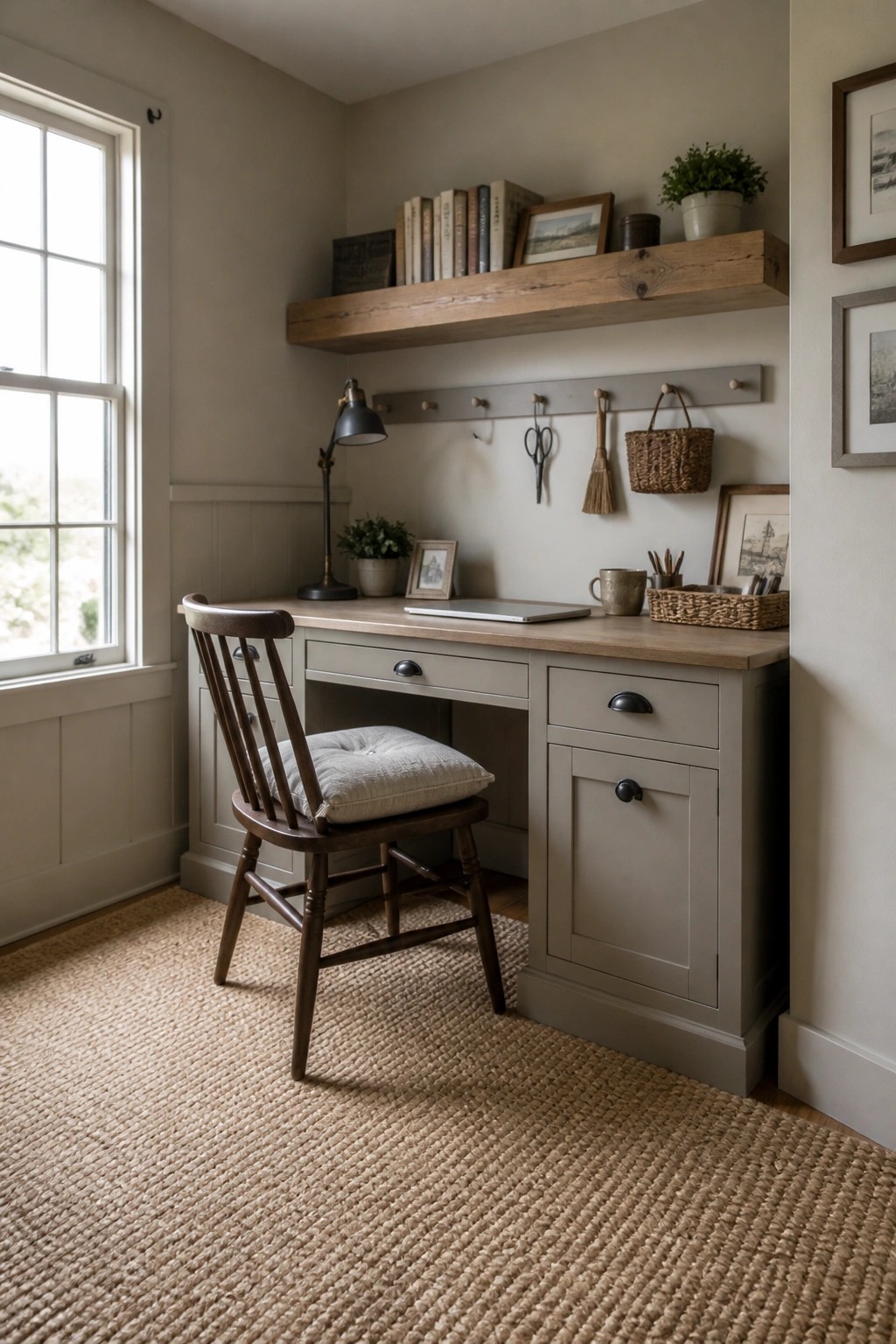
A peg rail above the desk gives you a spot to hang small tools and baskets without crowding the work surface. It turns empty wall space into quick storage that stays visible and easy to use every day.
This approach suits smaller offices or rooms that need to stay flexible. It works best when the rail sits at a comfortable height and you limit what hangs there to a few frequently used items.
Built-Ins That Make Room for Plants

One way to keep an office looking neat is to build the planter right into the cabinetry. It adds some greenery without taking up floor space or adding extra furniture.
This works especially well in smaller rooms or in homes that lean toward a minimalist style. Just make sure the plants you choose can handle the light levels in the space.
Built-In Shelving That Keeps an Office Organized

Built-in shelving along the walls gives a home office plenty of room for books and supplies without taking up extra floor space. The lower cabinets hide items that do not need to stay out, which helps the room stay neat even when the desk is in use.
This approach works best in rooms that already have a solid wall available for cabinetry. It suits homes where the office needs to hold reference materials or collections while still leaving room for a clear work surface.
Built-In Desks That Work In Narrow Spaces

A built-in desk with open storage right underneath makes good use of a slim wall without crowding the room. It turns leftover space near a window into a steady place to work while keeping the floor clear.
This kind of desk suits small apartments or rooms where you cannot fit a full office setup. Place it where you already have natural light and keep the lower shelf for books and bins you use every day.
Long Desks That Keep A Workspace Moving Smoothly
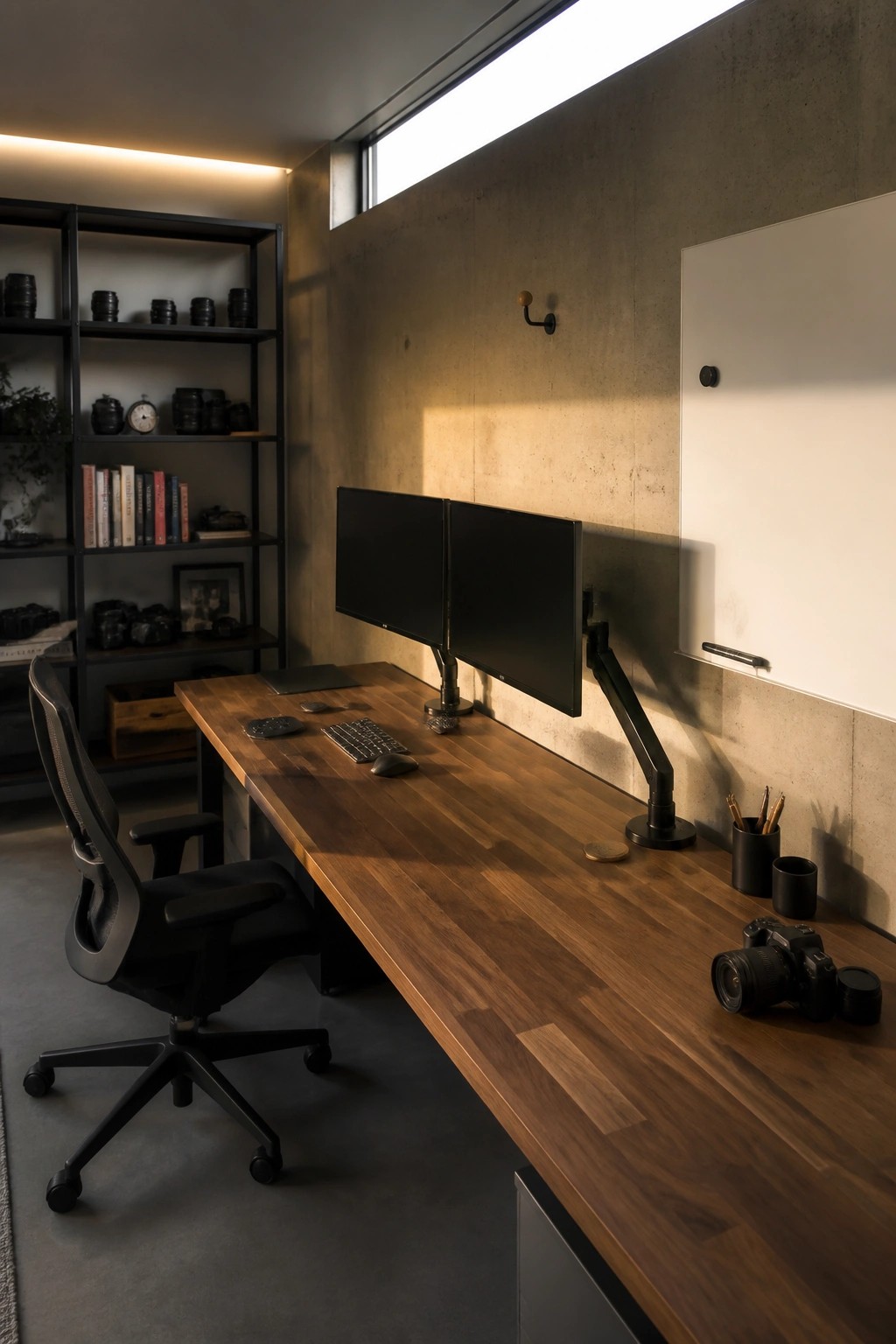
A long desk gives you one continuous surface that lets everything stay in reach without extra furniture breaking up the flow. The wood top here runs straight along the wall and holds the monitors on arms so nothing sits on the desk itself except what you actually use.
This setup works best in smaller rooms where you need the space to feel open rather than crowded. It suits anyone who wants a simple layout that stays practical day after day without constant rearranging.
Desk Placement by a Window

Placing a desk right beside a large window or glass door brings steady natural light into a home office without extra fixtures during the day. This setup keeps the workspace feeling open and reduces the need for constant artificial lighting while you work.
It works best in rooms where the desk can sit perpendicular to the glass so glare stays off the screen. A simple wall lamp above the surface then handles evening hours without taking up floor space.
Built-In Desks That Fit Small Corners

A built-in desk set into a recessed wall area turns an unused corner into a practical workspace. It keeps the surface clear and gives you storage right above without needing extra furniture.
The floating shelves hold books and supplies while the light underneath keeps the desk usable in the evening. This setup works best in spare rooms or along a quiet wall where you want a simple place to work without spreading out into the rest of the house.
Frequently Asked Questions
Q: How do I hide cables from monitors and chargers without drilling holes everywhere? A: Route them along the back edge of the desk with simple clips or a cord cover that matches the surface. Tuck the slack into a shallow tray underneath so nothing shows from the front. This keeps the lines clean while you still reach everything easily.
Q: What if my office has to double as a guest space sometimes? A: Pick a desk that folds flat against the wall and pair it with a slim daybed that holds extra storage underneath. Clear the top at the end of the day so the room shifts fast. One solid piece of art on the wall helps the space feel finished either way.
Q: Can I add a few personal items without breaking the minimalist feel? A: Limit yourself to three things on the desk at most and keep them small. A single plant or a favorite mug works better than a spread of photos. But skip anything that needs daily rearranging.
