

A home office tends to work better when the storage solutions are built around actual daily habits rather than just filling empty walls.
People often notice first how the desk area feels open or cramped once the chair and papers are in place.
I keep coming back to the idea that productivity drops fast if the room starts to look messy by midweek.
Layout choices matter more than most expect.
It helps to look at options that combine style with practical spots for everything from files to chargers so the space stays usable over time.
Built-Ins That Combine Desk Space And Storage

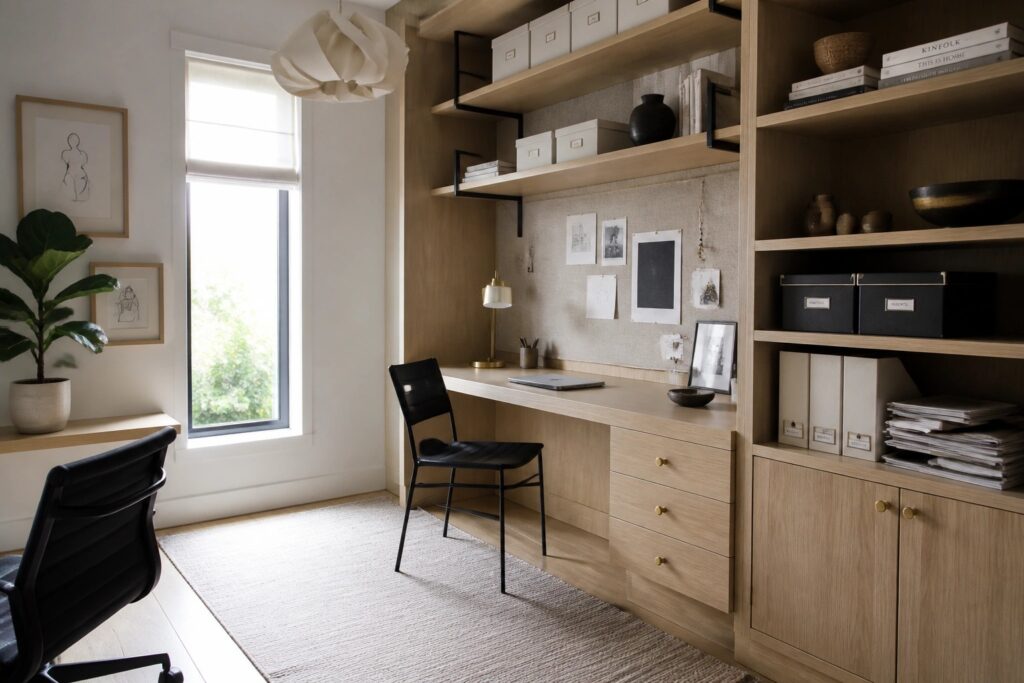
Built-in shelving and a desk can turn one wall into a complete workspace without adding extra furniture that takes up floor space. The setup keeps everything in reach and makes the room feel more organized from the start.
This works best in smaller offices or rooms that need to serve more than one purpose. It suits homes where you want storage but prefer a clean look rather than freestanding pieces. Just check the desk height before you commit so it feels comfortable for daily use.
Built-In Shelving That Adds Storage Without Crowding the Room

Built-in shelves give a home office real storage without needing extra furniture that takes up floor space. The arched alcove here holds books and a few small items right above the desk, so everything stays close but the surface stays clear for work.
This setup works best in rooms with enough wall depth to add the shelving without pushing the desk too far forward. It suits smaller offices or any space where you want the room to feel calm and organized rather than packed with standalone cabinets.
Desk Under a Window
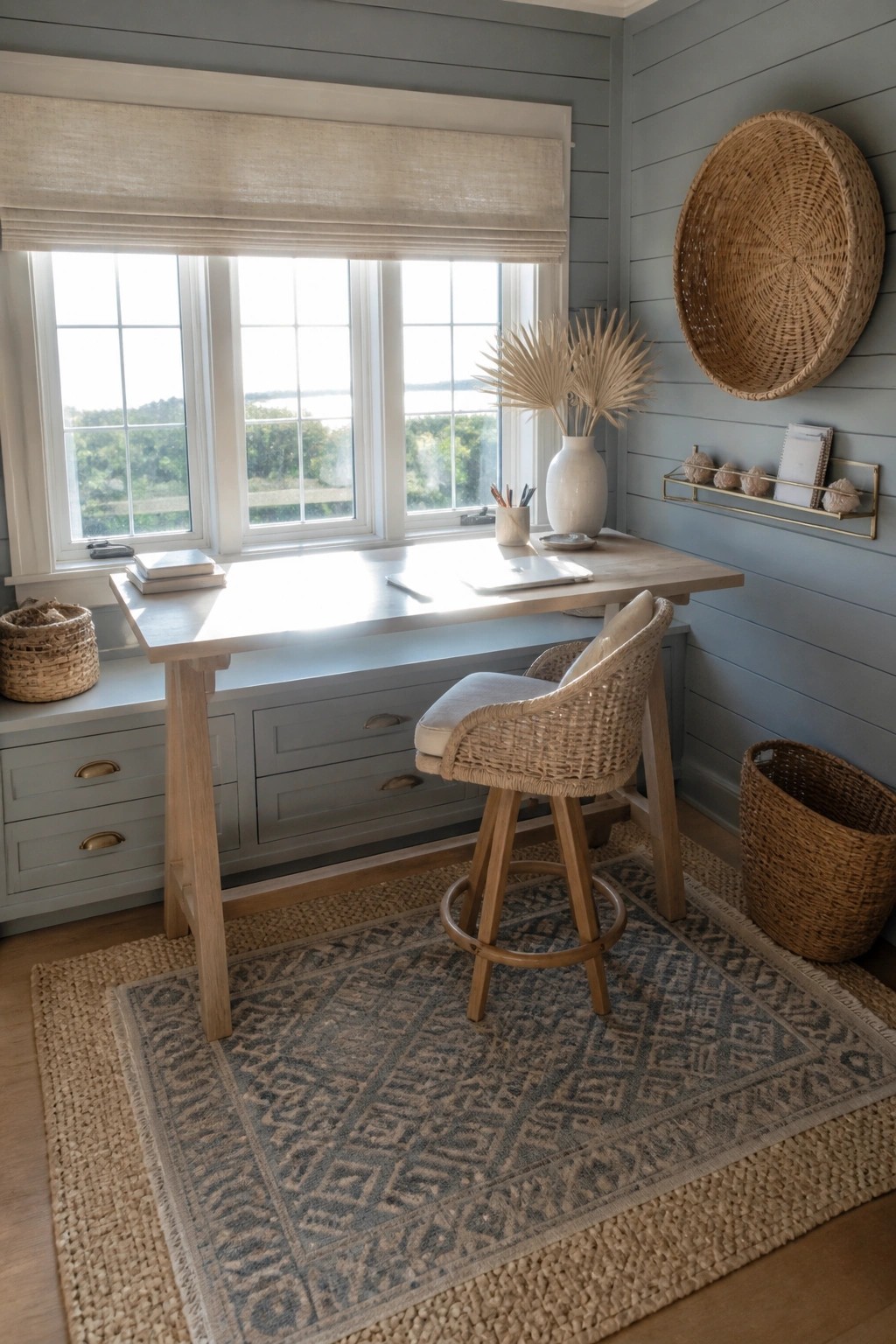
Placing a desk right under a window brings steady natural light into the workspace without needing extra lamps during the day. It also helps the room feel more open since the view outside becomes part of the setup rather than just a blank wall behind you.
This arrangement works best in rooms that get good daylight and where the window is wide enough to span most of the desk. Keep the surface fairly clear so the light is not blocked, and choose a chair that can swivel if you need to turn away from the glare on bright days.
Industrial Shelving For Everyday Office Storage
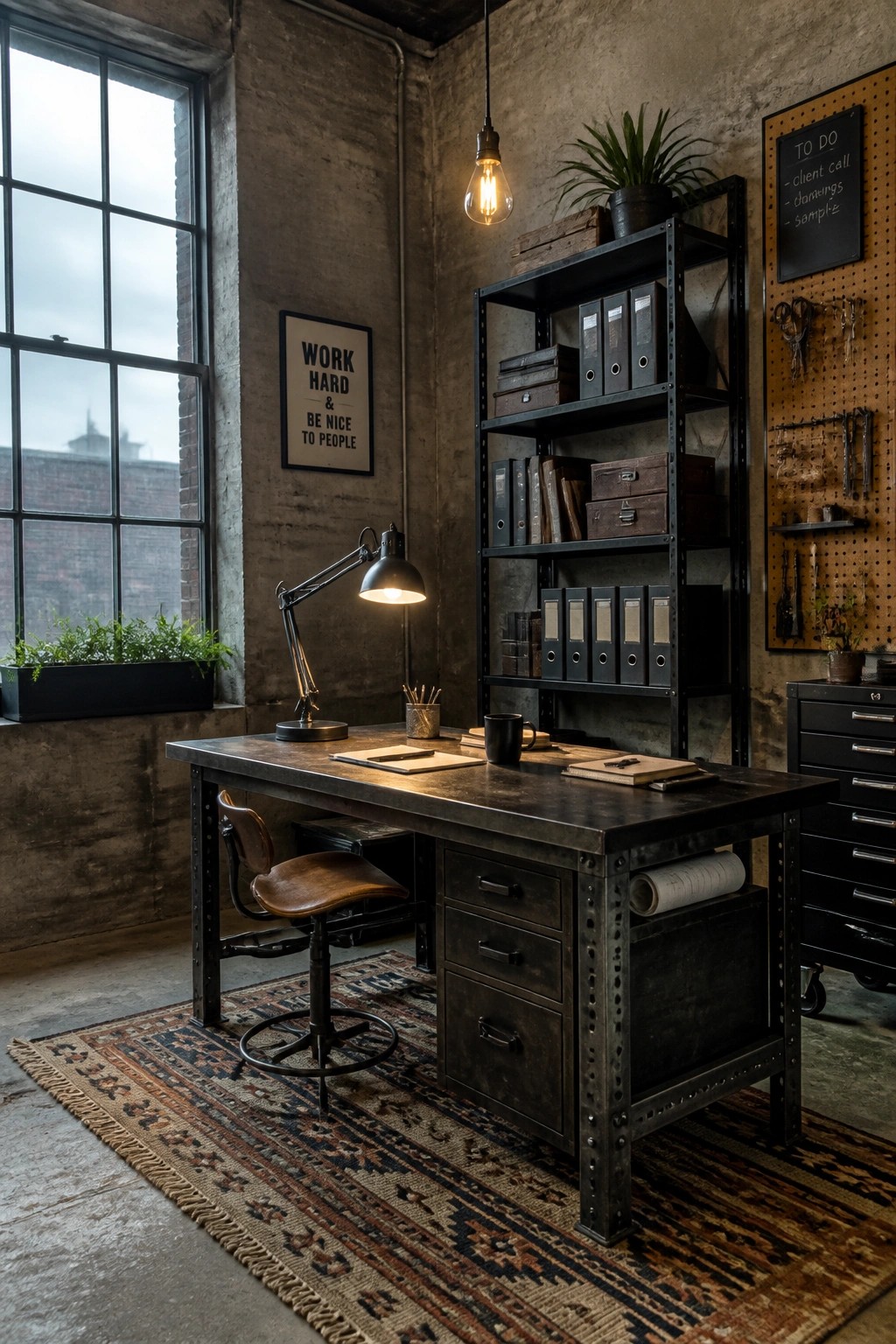
Open metal shelving works well in a home office because it keeps supplies visible and within reach while adding a solid, practical feel. The dark frames and simple shelves hold binders, boxes, and folders without taking up floor space or making the room feel closed in.
This approach suits smaller rooms or anyone who wants storage that stays useful rather than decorative. It pairs best with a sturdy desk that has its own drawers so papers and tools stay off the main work surface.
Add Woven Baskets For Office Storage

Many people like open storage under desks because it keeps supplies close without crowding the work surface. Woven baskets slide into cubbies and hold folders or projects in a way that still looks orderly.
This setup works best in rooms used daily where quick access matters. It suits smaller offices or shared spaces, though it helps to label the baskets so everything stays easy to find.
Tall Shelving That Adds Storage Without Crowding The Room
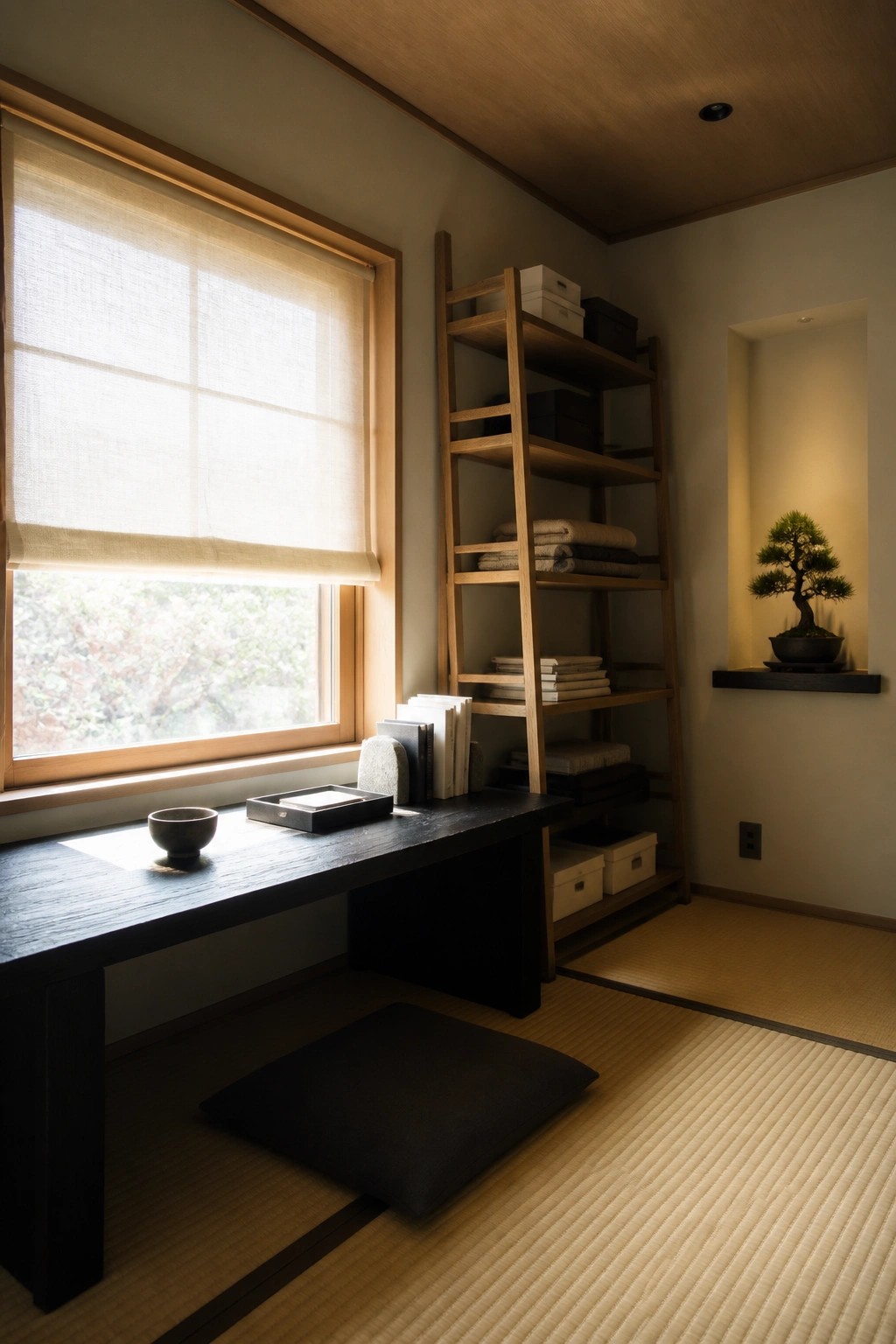
A tall open shelving unit placed right beside a low desk gives you plenty of room for books, boxes, and supplies while leaving the floor clear. This setup works especially well in smaller spaces because the shelves use vertical space instead of spreading out horizontally. The simple wood frame keeps the look light even when the shelves are full.
This approach suits homes that already lean minimalist or need a quiet workspace that does not feel packed with furniture. Keep the lower shelves for things you reach often and use higher ones for less-used items so the desk area stays open and easy to use.
Open Shelving And Wall Storage For A Home Office

Open shelving works well in a home office because it gives you quick access to books and supplies without making the room feel boxed in. Adding simple wall-hung storage like fabric pockets keeps papers and smaller items off the desk while still leaving the space open and easy to move around in.
This setup suits older homes or smaller rooms where you want to keep the original walls and wood floors visible. It works best if you stick to a few baskets or bins on the shelves so things stay organized rather than turning into a mess over time.
Built-Ins Help Turn Attic Space Into a Home Office
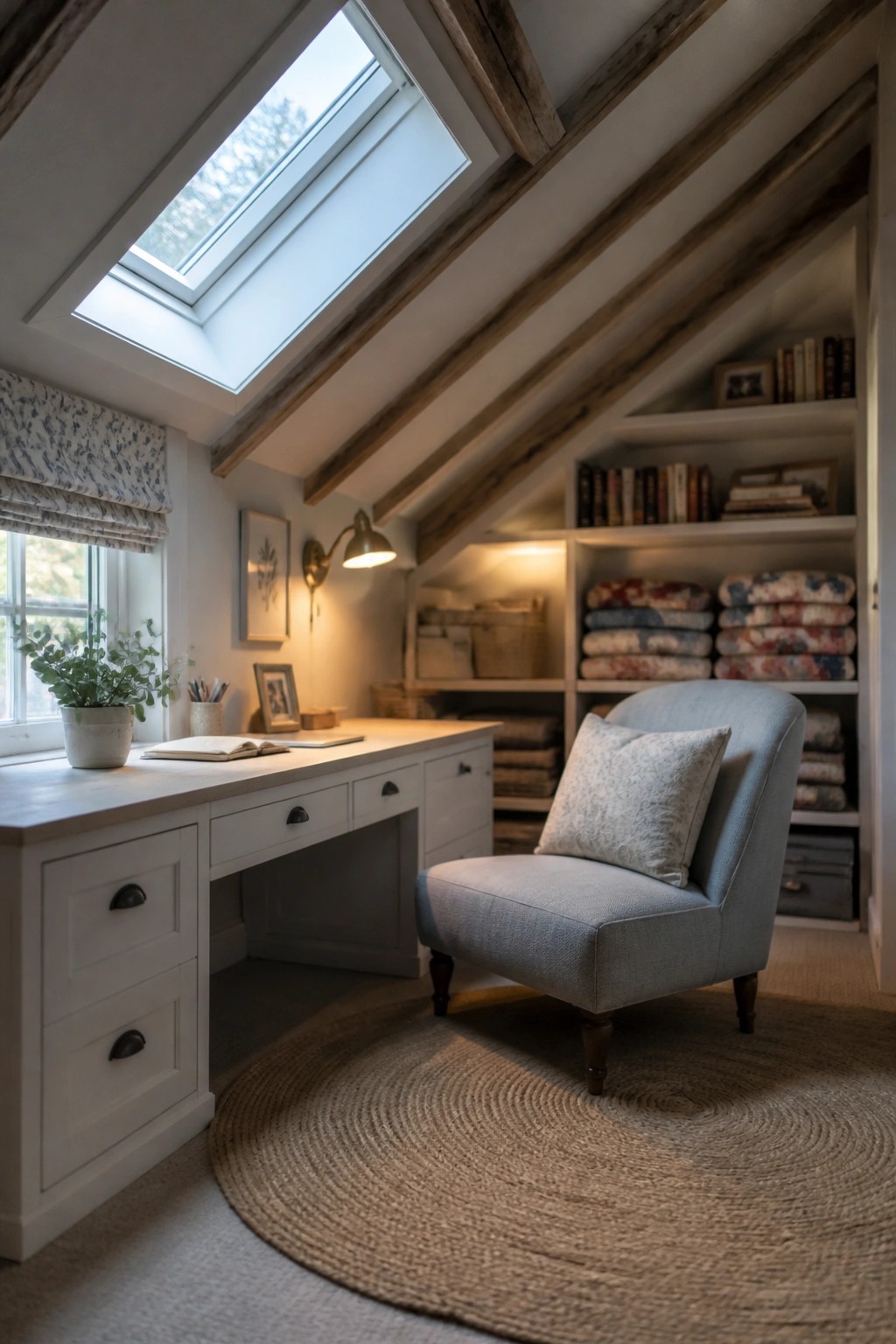
Attic rooms often get skipped for offices because of the low spots and odd angles, yet built-in shelves can make the whole area feel useful instead of wasted. The shelves here run along the slope and keep books and supplies organized without taking up floor space, so the desk stays open for actual work.
This setup works best in homes where the attic already has decent headroom in the center. Keep the finishes light and add a skylight if possible, since natural light makes the room feel larger and more pleasant for long hours at the desk.
Built-In Desks That Add Storage Without Taking Over A Room
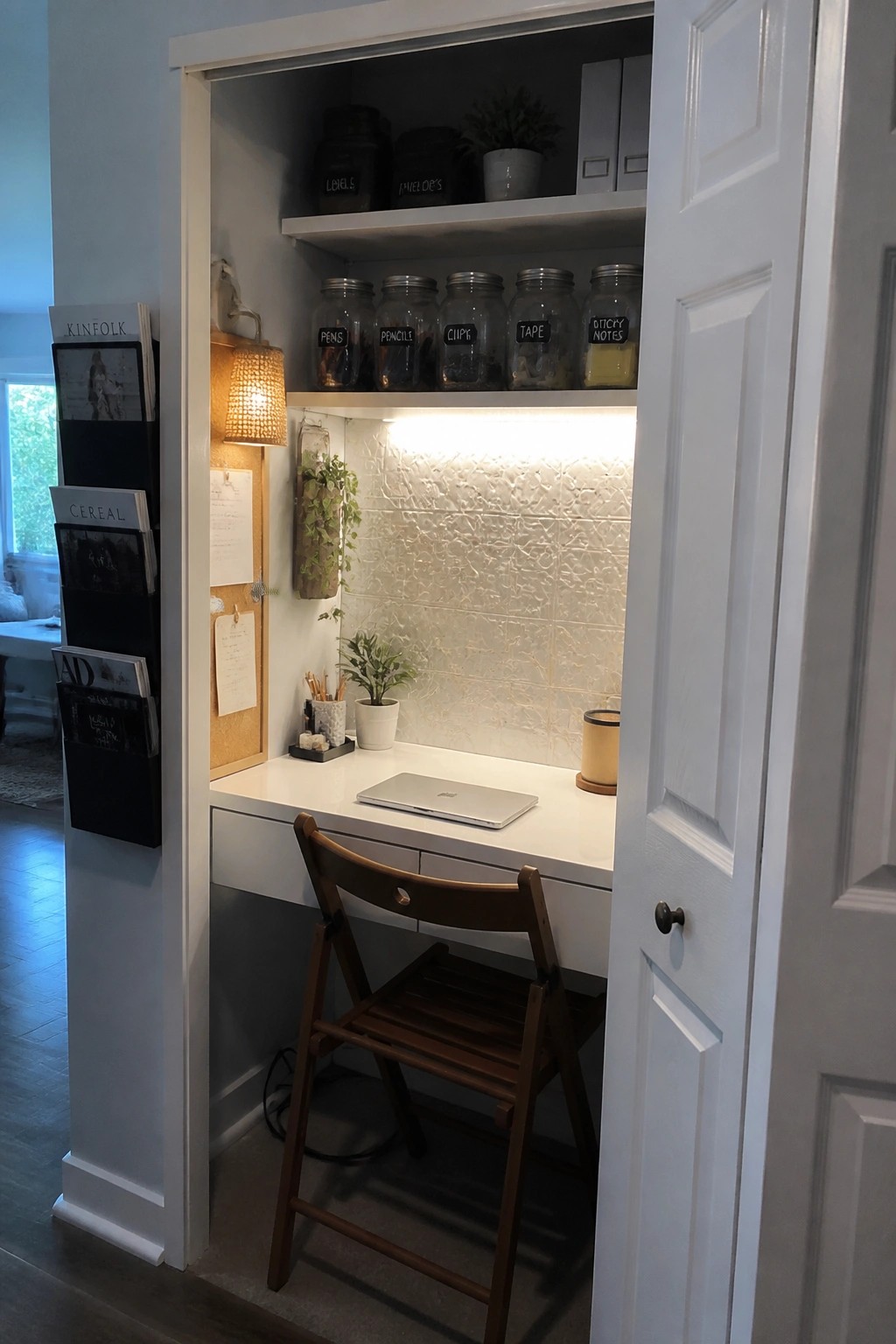
One practical way to fit a workspace into a smaller home is to build a desk right into a closet or alcove. The walls already provide structure for shelves above and drawers below, so the area stays neat while still giving you a proper surface to work on.
Labeled jars keep small supplies sorted and easy to reach, and the door can simply close when the day is done. This kind of setup suits apartments or any home where floor space is limited and you want the office to stay out of sight.
Built-In Shelving That Keeps Storage Organized

Many home offices feel cluttered because there is never enough room for books, files, and supplies. Built-in shelving solves that by turning the walls into useful storage while keeping the desk area clear for actual work. The warm lighting inside the shelves adds just enough visibility without needing extra lamps.
This setup works best in rooms that already have some architectural detail or in homes where you want a traditional feel. It suits people who keep a lot of reference materials on hand and prefer everything in one place rather than scattered across the room.
Built-In Shelving That Adds Real Storage
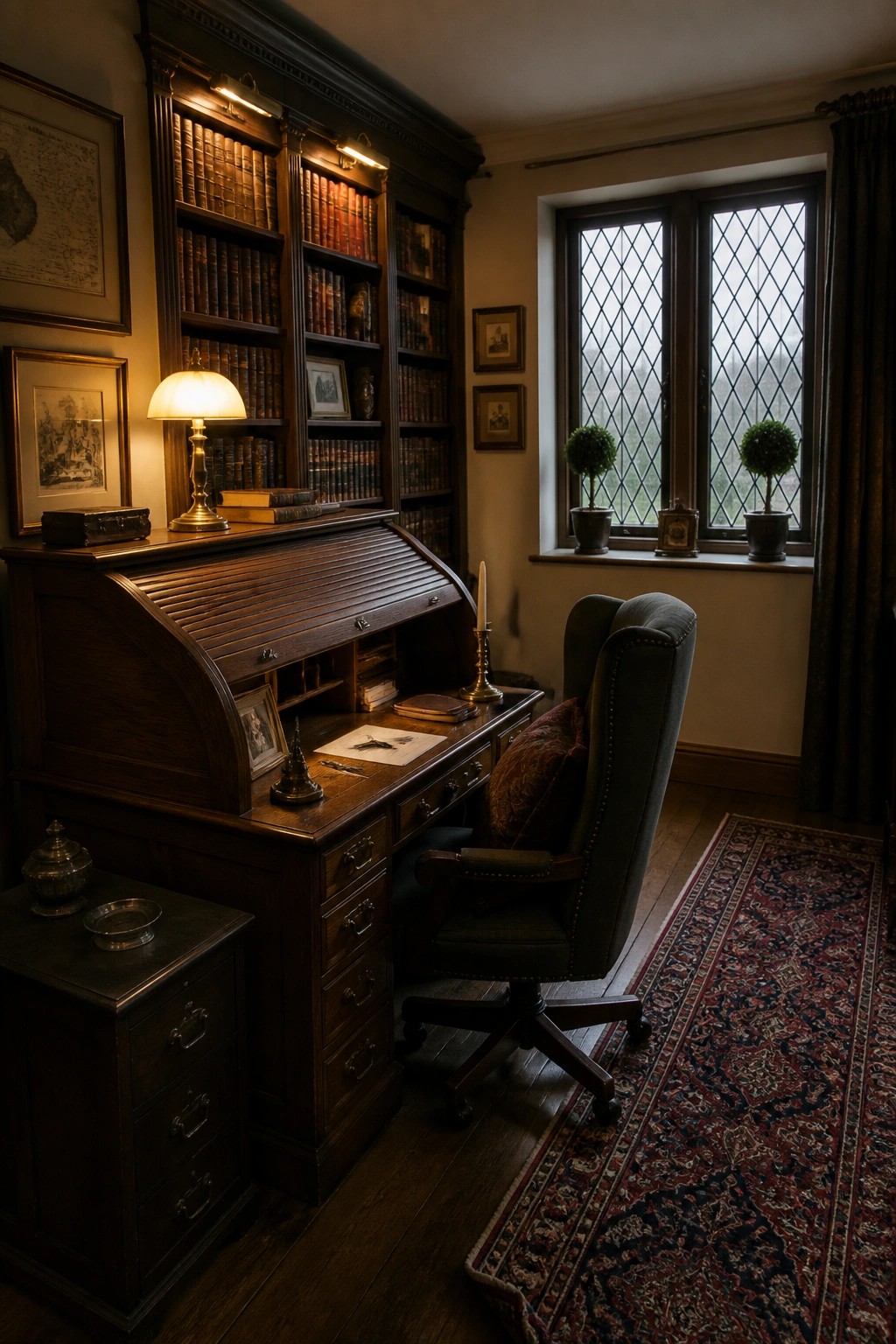
Built-in bookshelves on both sides of a desk give you room for books, files, and supplies without needing extra furniture. The shelves sit right where you work, so everything stays close and the surface stays clear for actual tasks.
This approach fits older homes or rooms with tall walls best. It turns blank space into useful storage while keeping the look simple and orderly. Just make sure the shelves are not too deep, or they can start to feel heavy.
Hide Your Desk Behind Sliding Doors

Many homes do not have room for a full office, so turning a closet or alcove into a workspace makes sense. Sliding doors let you keep the desk out of sight when it is not in use, which helps the rest of the room stay calm and uncluttered.
This works best in smaller homes or multi-purpose spaces where you need the area to feel open during the day but private when working. Add a few shelves above the desk for books and supplies, and choose doors that match your trim so the whole thing blends in when closed.
Built-In Drawers Keep The Workspace Organized

A desk with multiple drawers built right in solves one of the most common home office problems. It gives you a place to store papers, supplies, and small items without needing extra cabinets or shelves that take up floor space.
Put the desk against a wall near a window so the drawers stay accessible while you work in good natural light. This works especially well in rooms that need to stay simple and functional rather than overly styled.
Create a Built-In Desk with Overhead Storage

A small workspace becomes much more practical when you add open shelves directly above the desk. Everything stays within reach, and the setup avoids the need for extra cabinets or a separate storage unit.
This works especially well in homes where a full room is not available. Use clear jars for daily supplies and a simple board for notes so the area stays organized without feeling cluttered.
Labeled Storage Bins Keep Office Shelving Practical
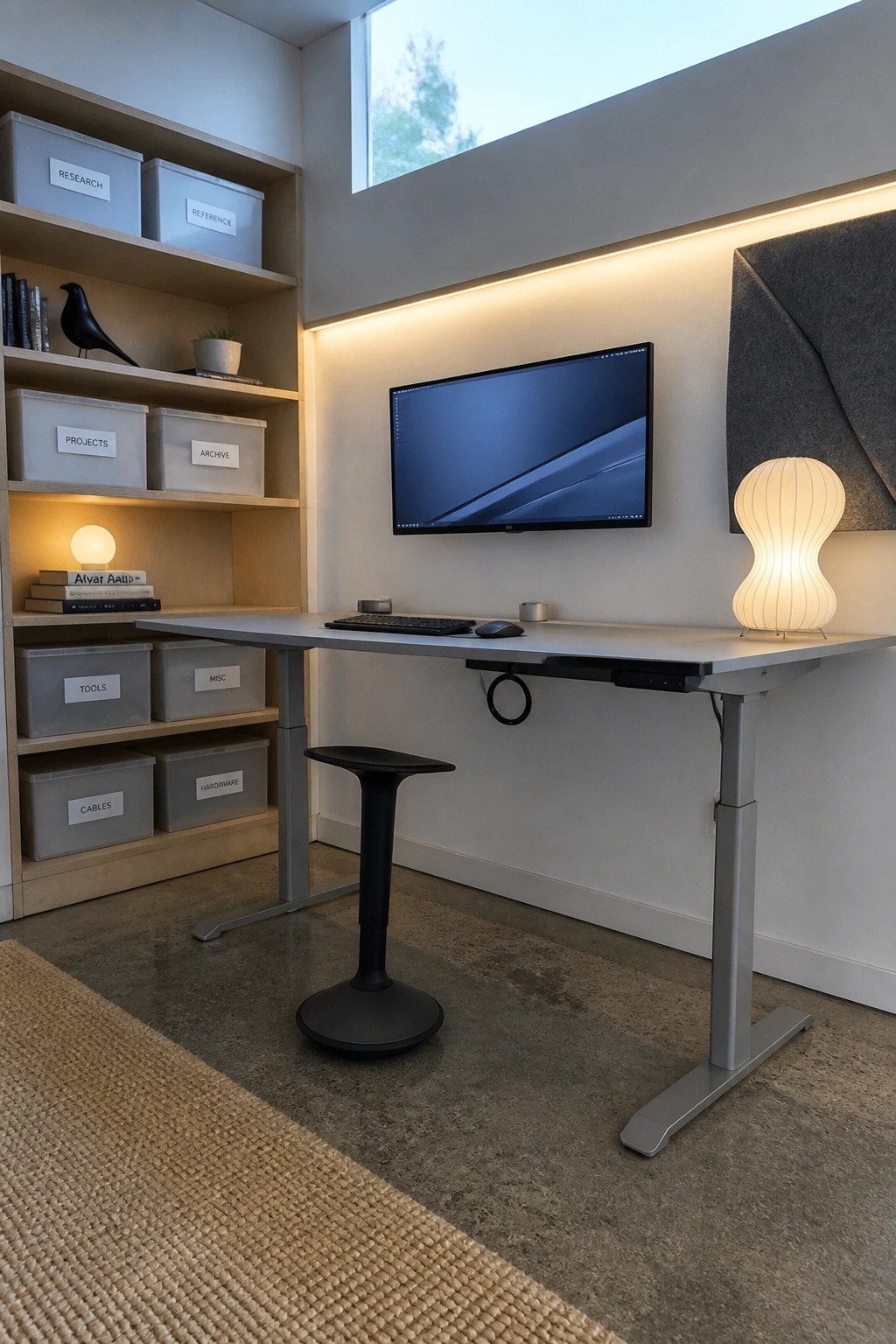
Built-in shelves work best when they actually help you find things instead of just looking full. Labeled bins turn open shelving into a working system that keeps papers, tools, and supplies sorted without needing to dig through piles every time.
This setup suits smaller rooms or any space where you want storage that stays visible but still feels calm. Stick to matching bins and simple labels so the shelves do not start to look messy over time.
Built-In Shelves With a Rolling Ladder

Built-in bookshelves paired with a rolling ladder give a home office serious storage without crowding the floor space. The shelves hold books, files, and supplies in one area, while the ladder makes the top rows easy to reach instead of wasted.
This approach works well in rooms with tall ceilings and a dedicated work spot. It suits older homes or anyone who already has a lot of books and wants them organized rather than stacked on the floor.
Built-In Storage for a Compact Home Office

A desk tucked under the stairs can feel cramped if there is no place to put things away. Adding drawers below the work surface and a pegboard on the wall above gives you spots for tools, cords, and small supplies without taking up extra floor space. The setup keeps the desktop clear while still letting you reach what you need.
This kind of built-in storage works best in smaller homes or rooms where every inch counts. It suits anyone who wants a simple workspace that stays organized without adding freestanding cabinets that might crowd the area.
Work A Desk Into A Bay Window

Many homes have a bay window that ends up as dead space. Fitting a desk to follow the curve makes the most of the light and turns the whole area into a working spot without blocking the view.
The seat built into the window adds hidden storage below, which helps keep the room tidy. This layout suits older houses that already have those nooks and works best when the desk stays low enough to leave the window seat usable.
Open Shelving On Exposed Brick

Open shelving works well in a home office when you want storage that stays useful but does not close the room in. The black metal units mounted right on the brick give you a place for books, files, and small supplies without needing extra furniture along the walls. It keeps things in reach while the texture of the brick adds some warmth that plain drywall would lack.
This setup suits older buildings or any space with an industrial feel already in place. Keep the shelves from getting too crowded so the desk area stays clear for actual work. If your office has limited wall space, a similar narrow unit can hold what you use most often and leave the rest in closed cabinets nearby.
Built-Ins That Keep a Home Office Feeling Open
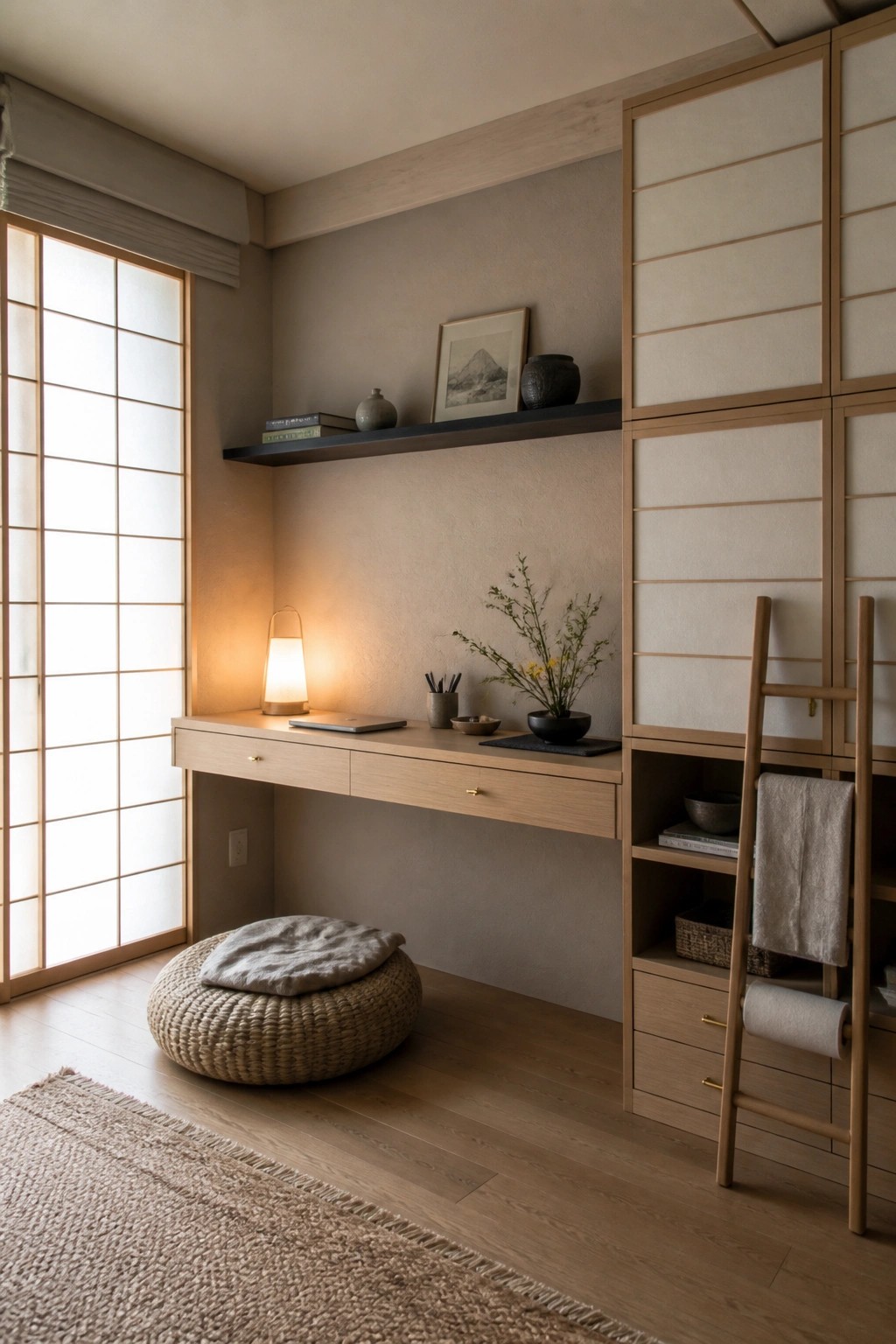
A built-in desk with matching storage on the side can help a workspace stay calm without taking up much visual room. The low seating option adds to that effect by keeping the floor clear and the whole setup feeling less heavy than a standard desk and chair.
This kind of arrangement works best in smaller rooms or homes that already lean toward simple lines. It suits people who want storage that does not add clutter and who prefer sitting closer to the floor for part of the day.
Frequently Asked Questions
Q: How do I stop my desk from getting buried under papers even with all the storage ideas? A: Set a simple rule to clear the surface at the end of each day. Keep a single tray or bin for anything that needs action tomorrow and move the rest into drawers or a nearby cabinet. This habit keeps the space ready for work the next morning.
Q: What if my office has to share space with the living room? A: Place a slim console table or low cabinet along one wall to hold supplies and files. Choose pieces that match the room’s existing furniture so the work area blends in when not in use. Close the doors or add a screen when guests arrive.
Q: How can I add color without making the office feel chaotic? A: Stick to two main colors on bigger items like the desk and chair. Bring in one accent shade through small pieces such as a lamp or a couple of storage boxes. That keeps the look balanced while still adding personality.
Q: My room has no built-in shelves. Where do I start with storage? A: Bring in a tall bookcase or a set of stackable bins that fit the room’s style. Put everyday items at eye level and less-used supplies higher up.
