

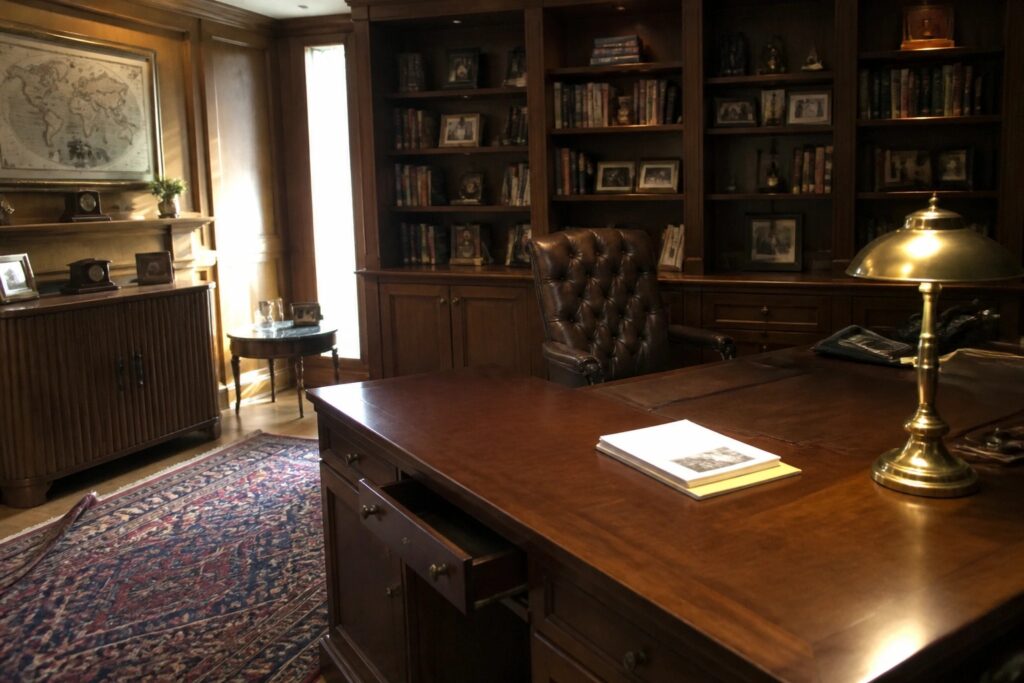
I have noticed that an executive office starts to feel right only when the desk placement actually supports how you move through the day.
The lighting and storage choices matter more than most people expect because they shape whether the room supports long hours without distraction.
Layout comes first.
When I rearranged my own workspace last year the difference in how clearly I could think surprised me more than any single piece of furniture.
Some of these approaches seem worth testing in real rooms rather than just imagining them.
Built-In Cabinetry With a Floating Desk
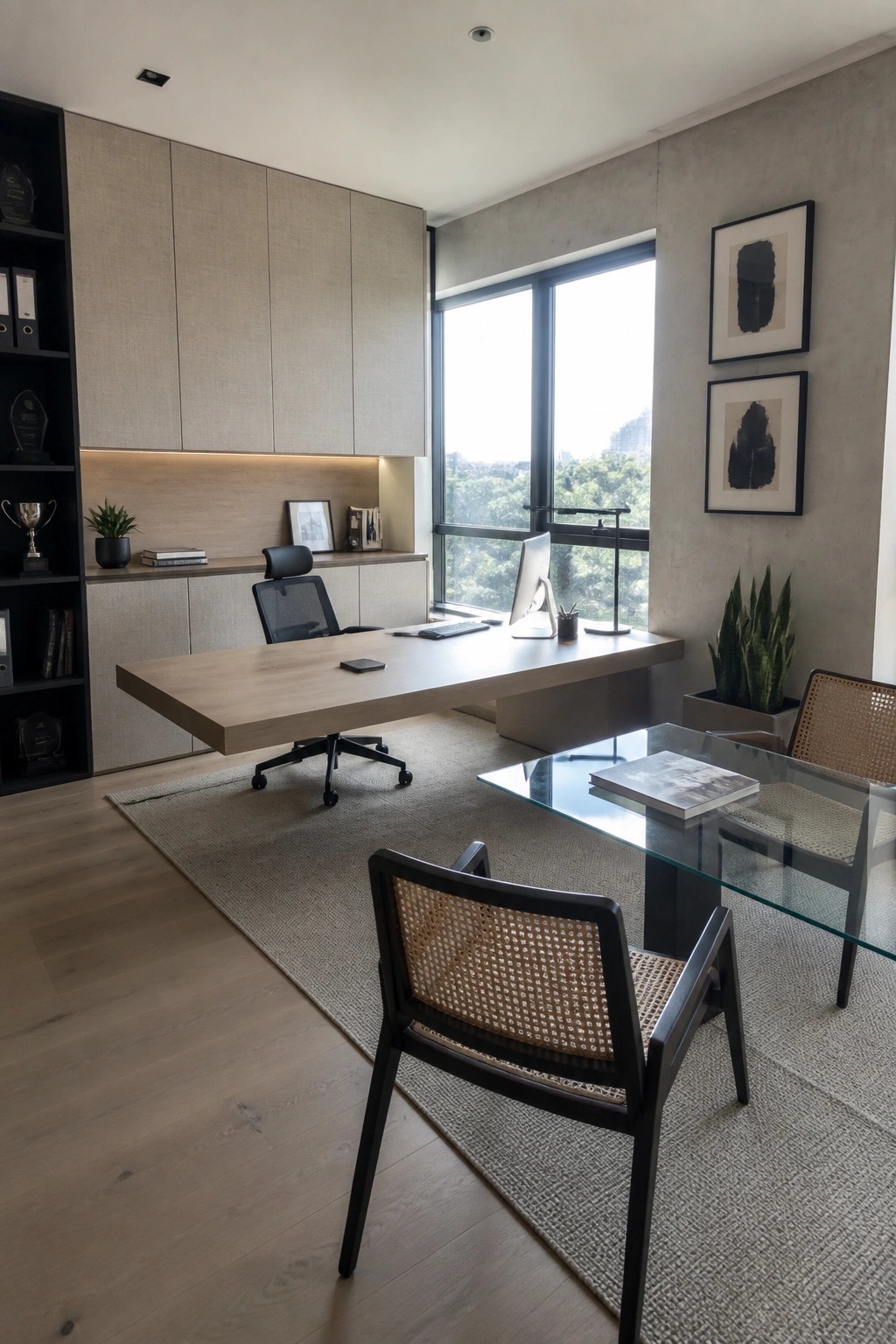
A long run of built-in cabinetry gives an office plenty of hidden storage while keeping the main surfaces clear. The desk extends straight out from the unit, so the floor stays open and the room does not feel crowded even with a large work surface in place.
This setup works best in home offices that need to handle both daily tasks and occasional meetings. It suits spaces where you want storage close at hand without adding extra furniture that would break up the flow.
Dark Built-Ins for Better Focus
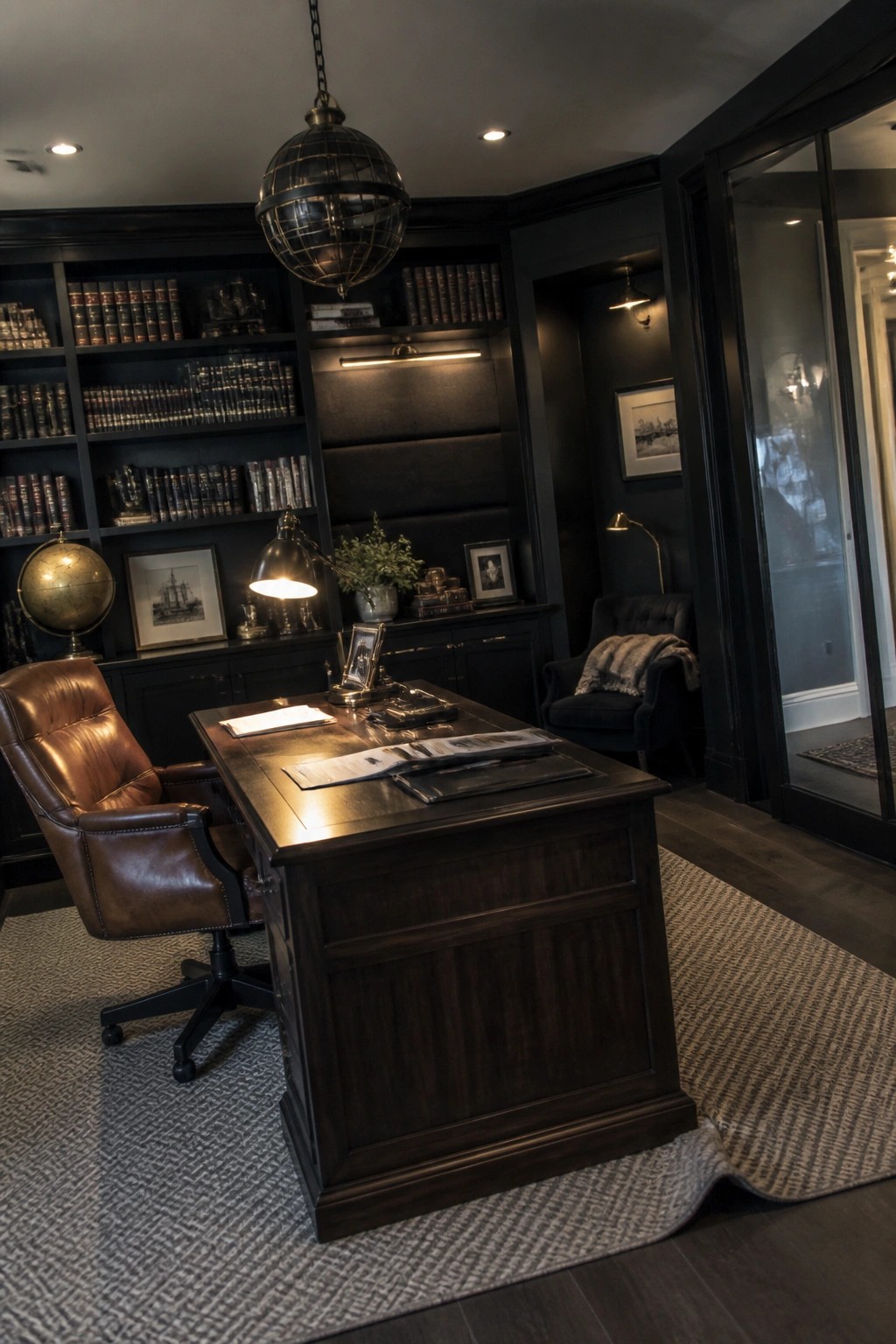
Dark built-in shelving can turn an office into a place where focus comes more naturally. The deep tone wraps the room and cuts down on visual noise, which helps when long stretches of work are needed. It also gives the space a settled, serious feel that suits leadership roles.
This approach works best in rooms that already have some size to them, since the dark finish can make smaller spaces feel tight. Keep the rest of the furniture simple so the built-ins stay the main feature rather than competing with extra pieces.
A Large Wooden Desk Sets the Right Tone
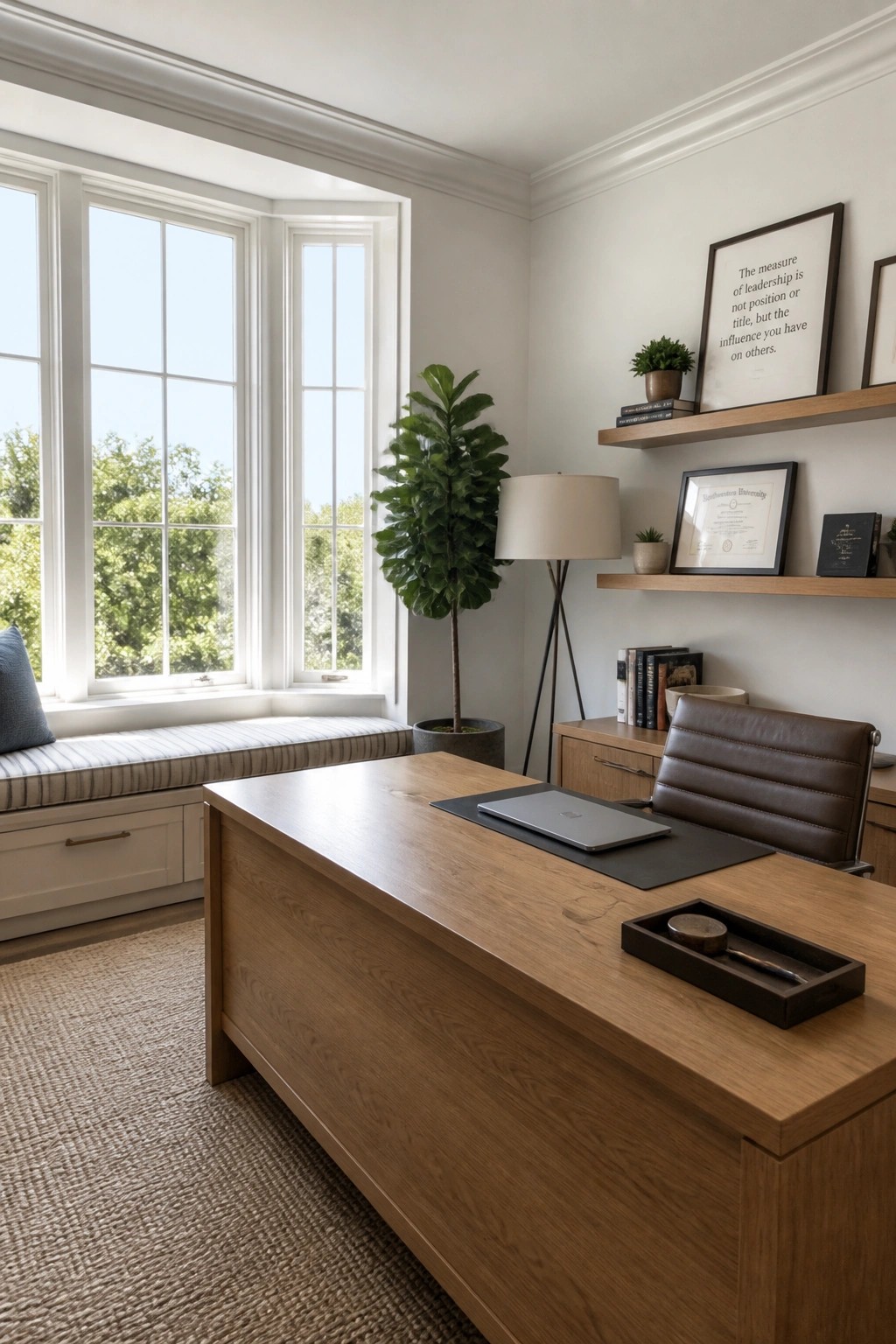
A big solid wood desk gives an executive office a clear sense of purpose. It takes up the right amount of space without feeling heavy and leaves room for focused work instead of clutter.
Place it where natural light comes in from the side so the surface stays usable throughout the day. This approach works especially well in home offices that need to feel professional but still comfortable for long hours.
Add a Sofa Facing the Desk
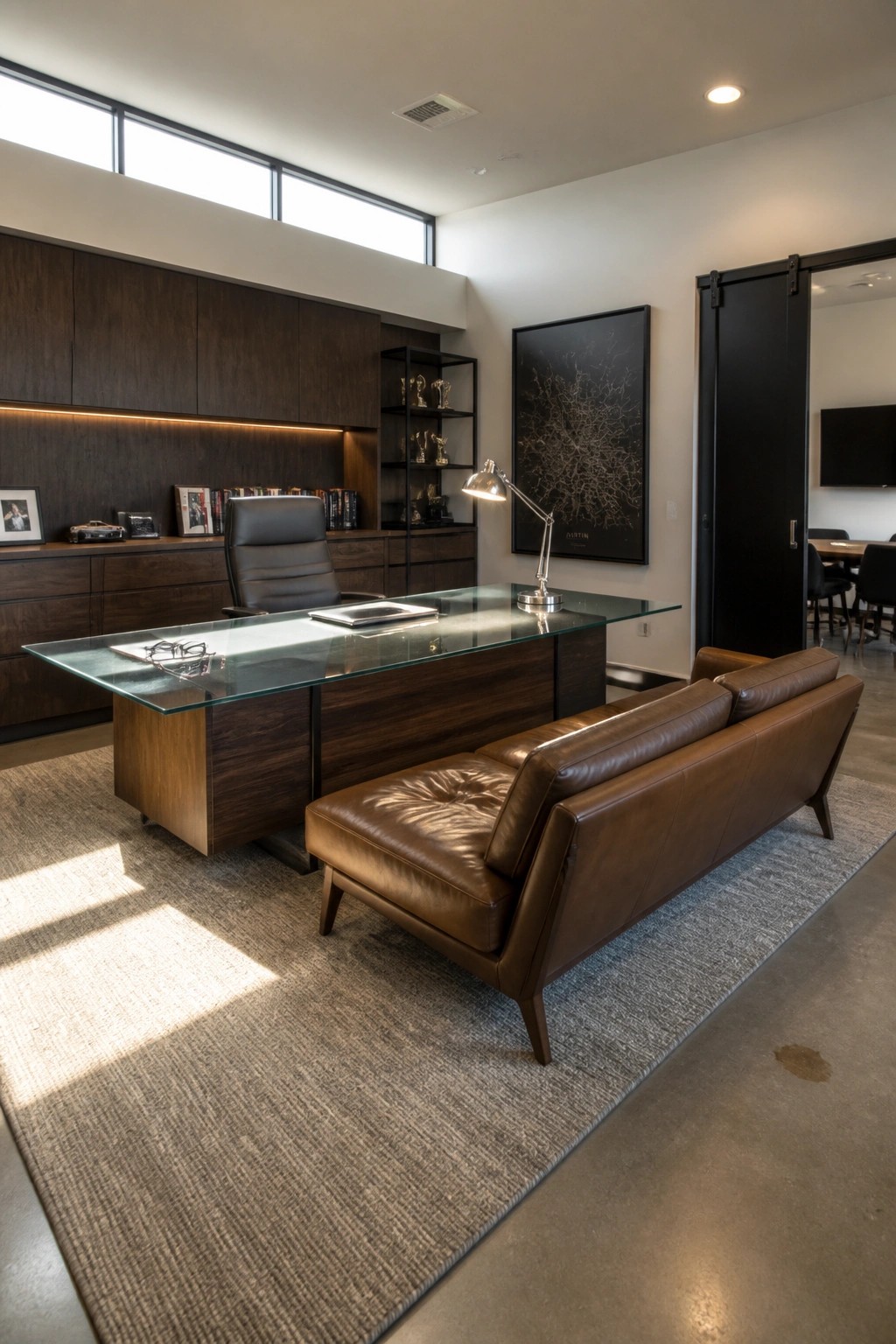
Many executive offices stay strictly desk-focused, but placing a sofa right in front creates a natural spot for quick conversations or small meetings. It keeps the main workspace intact while giving the room a more approachable feel without adding extra furniture elsewhere.
This setup works best in larger offices where the desk can stay centered and the sofa can sit on a rug to define the area. Keep the sofa low so it does not block light from windows or compete with the desk height.
Pairing Desks With A Round Meeting Table
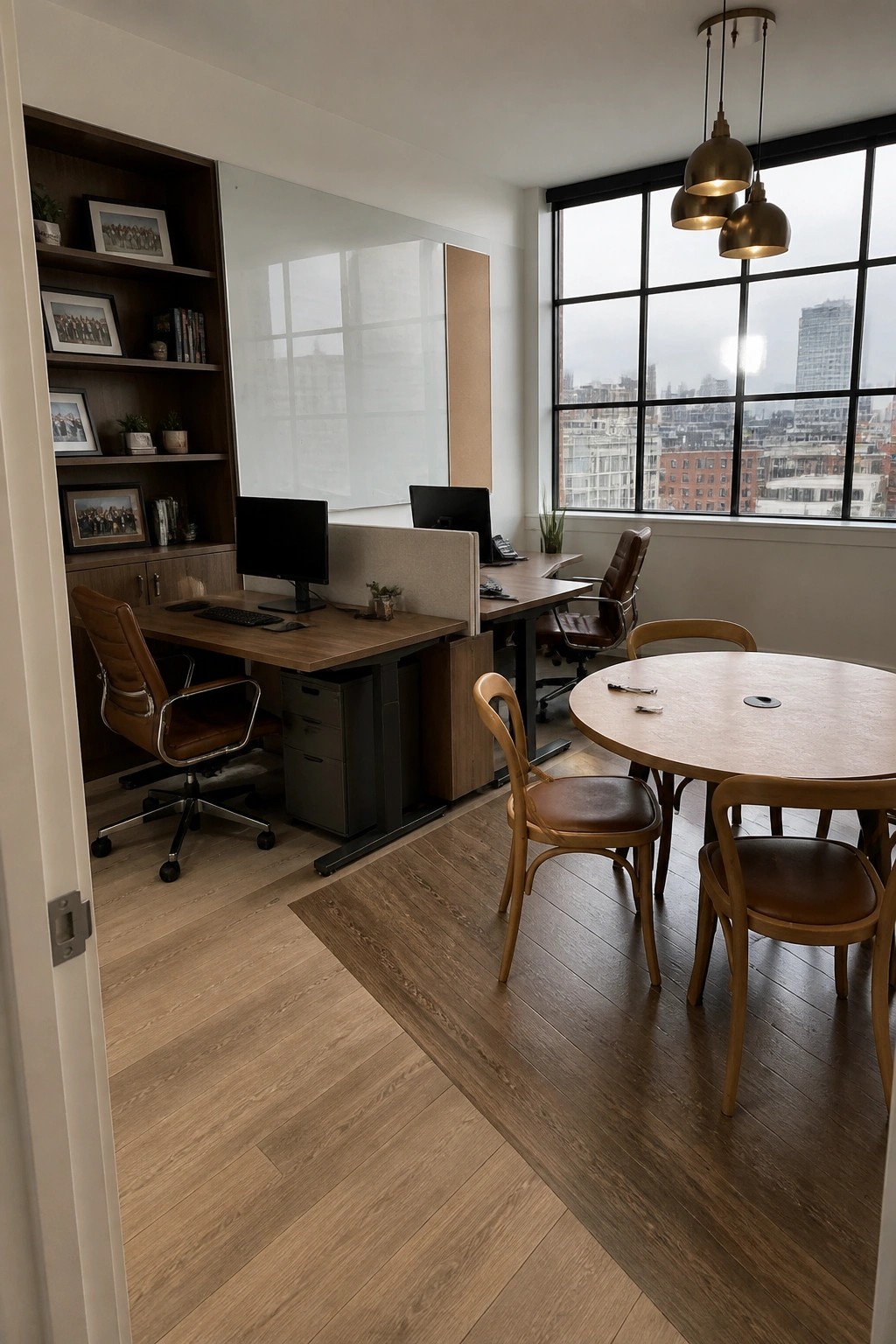
One practical way to support both focused work and leadership conversations is to place a round table in the same room as the main desks. This keeps everything in one space so you can switch between solo tasks and short meetings without leaving the office.
The setup works best in larger rooms where the table can sit off to the side without blocking desk access. It suits executives who often need quick input from team members during the day. Keep the table simple and make sure chairs can move freely around it.
A Large Desk Can Anchor the Entire Office
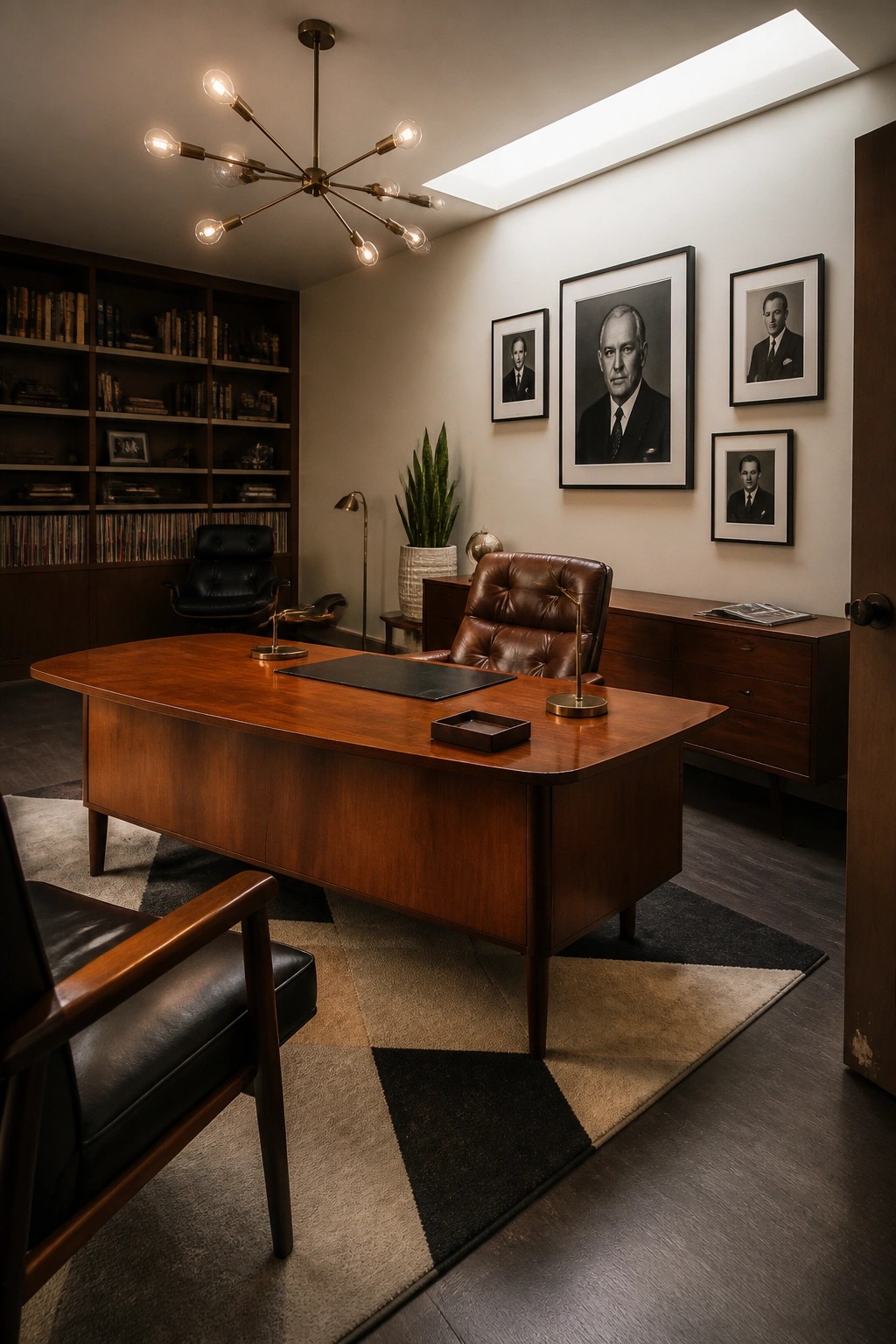
A big wooden desk like this one gives the room a clear center and makes the space feel purposeful. It sets the tone right away, showing that work happens here and that the person behind it means business. The scale matters more than fancy details.
Place it where it has room on all sides so you can move around it easily during the day. This setup works best in a dedicated home office that needs to feel serious rather than casual. Keep the rest of the furniture simpler so the desk stays in charge.
A Large Table Sets The Tone For Meetings
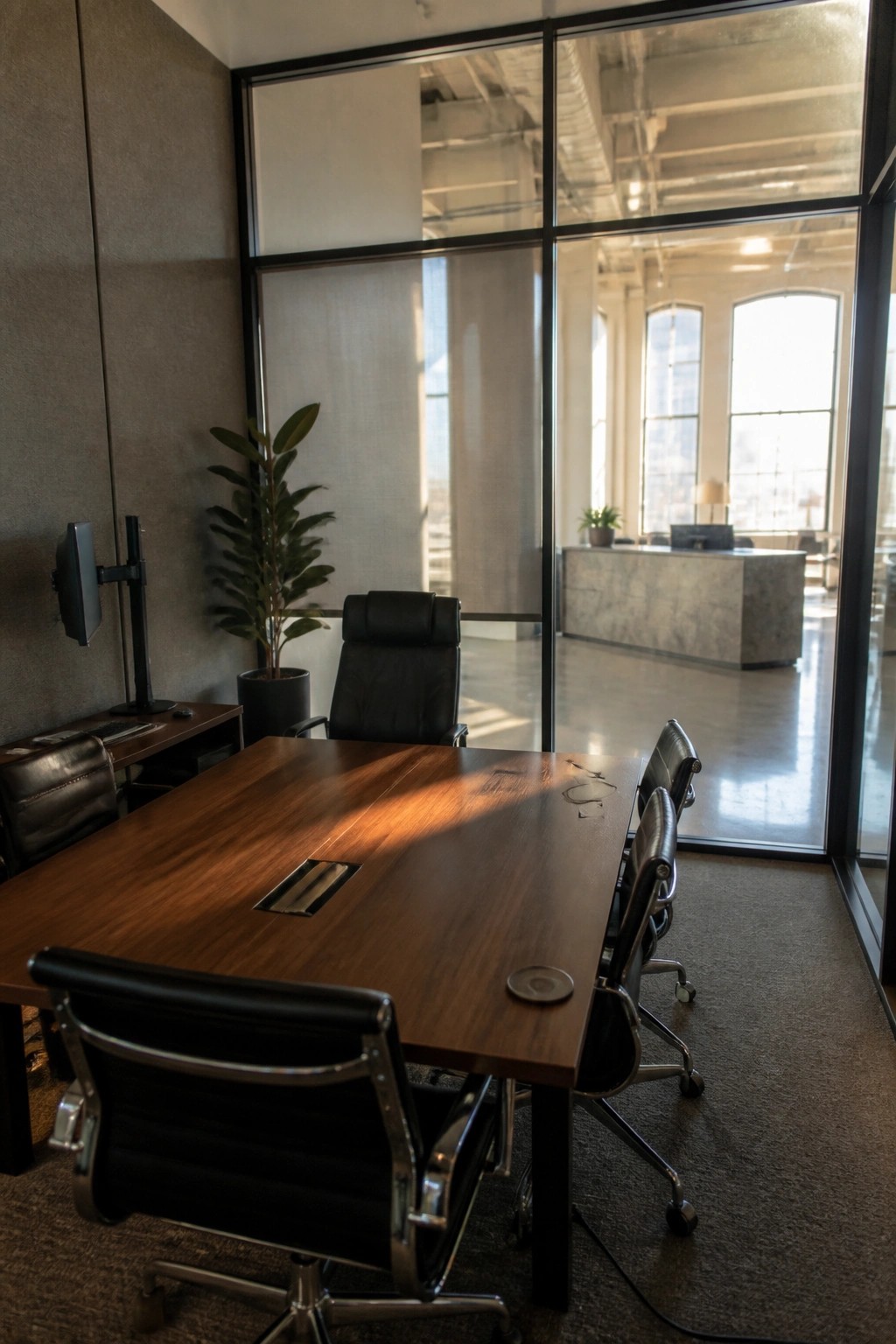
A big central table gives an executive office a clear purpose. It pulls attention to the middle of the room and makes it easy for people to gather, talk, and stay focused without extra distractions. The solid wood surface and surrounding chairs help the space feel ready for serious work.
This setup works best in rooms used for leadership meetings or client discussions. Keep the table simple and let it take up most of the floor space, then add only a few chairs and one or two practical pieces like a monitor or plant. Avoid crowding the edges with too much storage or decor.
Low Seating That Supports Focused Work
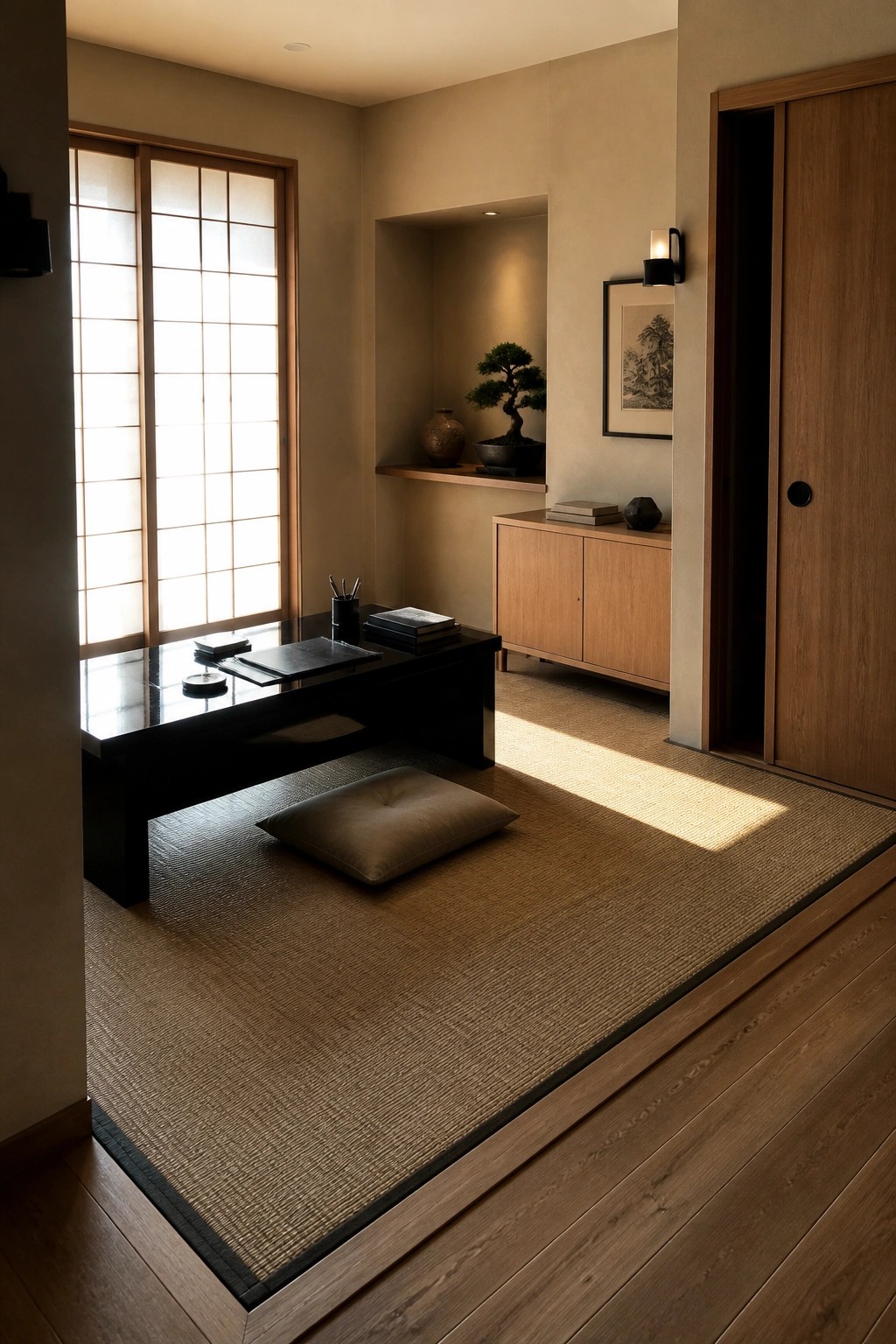
A low table paired with a simple floor cushion keeps the workspace grounded and free of clutter. This setup encourages a calmer posture and reduces visual noise, which helps many people stay concentrated during long stretches of work. The natural texture of the floor covering adds warmth without competing for attention.
This approach works best in smaller home offices or private studies where the goal is steady focus rather than frequent meetings. Keep the surrounding surfaces clear and choose one or two natural materials so the room stays quiet and purposeful.
Dark Wood Built-Ins for a Serious Office
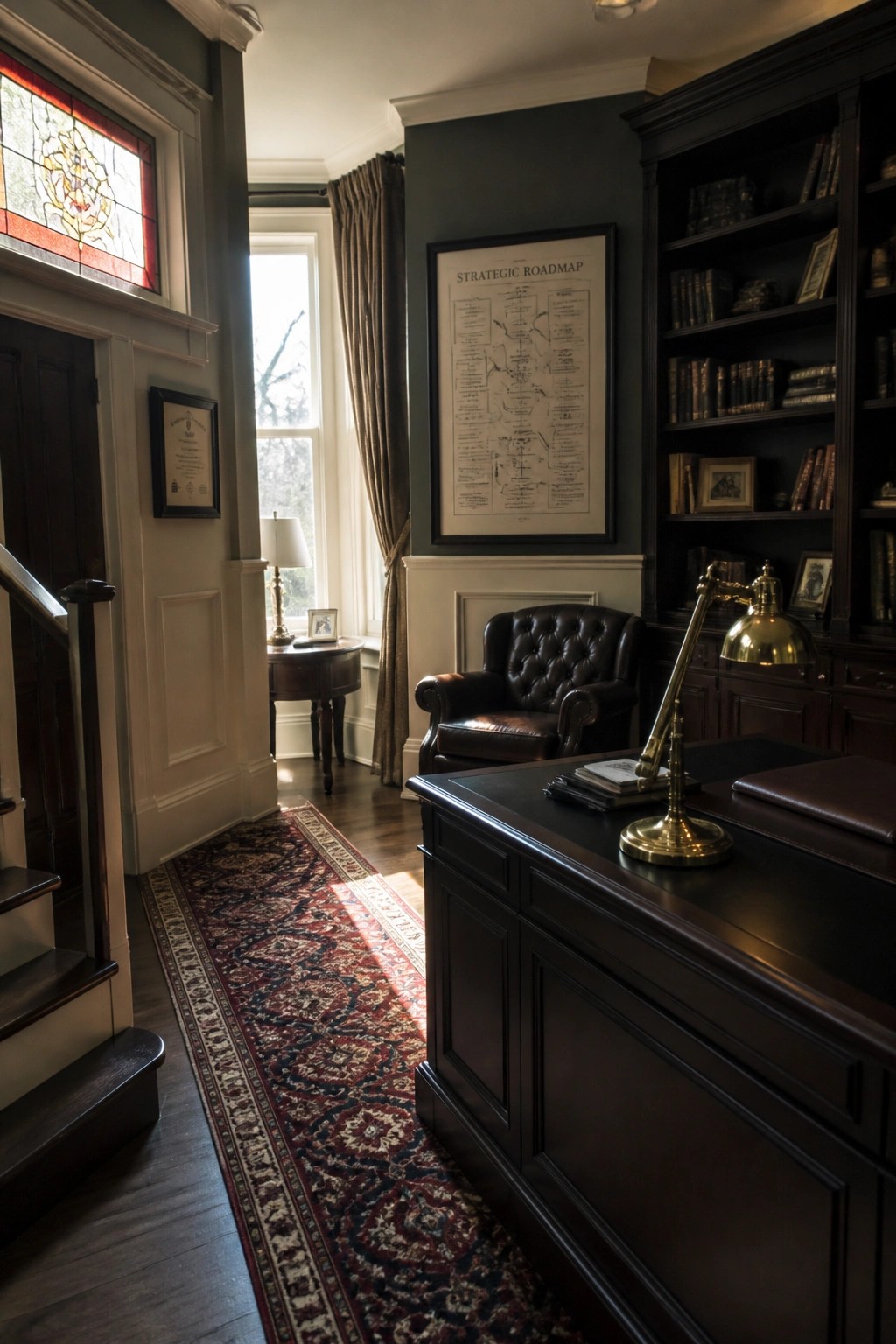
Dark finishes and solid wood furniture give an office a grounded feeling that supports long hours of focused work. The deep tones on the desk and surrounding shelving keep the space from feeling light or scattered, which helps when you need to stay in a leadership mindset for most of the day.
This approach works best in a dedicated room rather than a corner of another space. Keep the palette simple with one or two leather pieces and limit extra color so the room stays calm and purposeful instead of busy.
Built-In Storage For A Focused Office
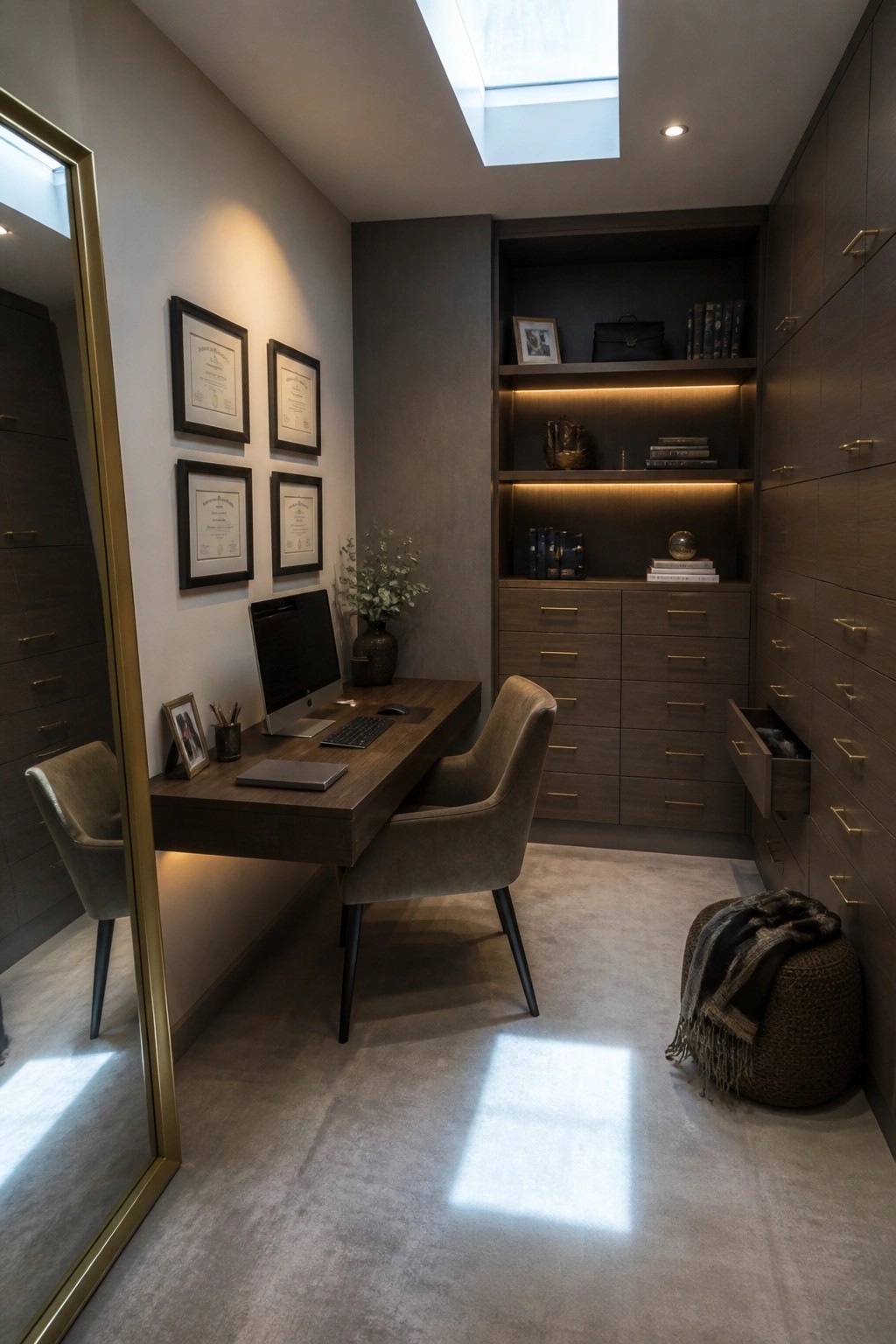
Built-in cabinetry and shelving give an office a calm, organized feel without taking up extra floor space. The unit here runs floor to ceiling and mixes open shelves for a few books and objects with plenty of closed drawers and cabinets below. That mix keeps the room from looking cluttered while still giving room for the things that matter.
This approach works best in smaller or shared spaces where every inch counts. Place the unit along the main wall behind the desk so supplies stay within reach but out of sight. Dark wood tones help the storage blend into the walls rather than stand out, which keeps attention on the work surface instead.
Built-In Bookshelves with a Rolling Ladder
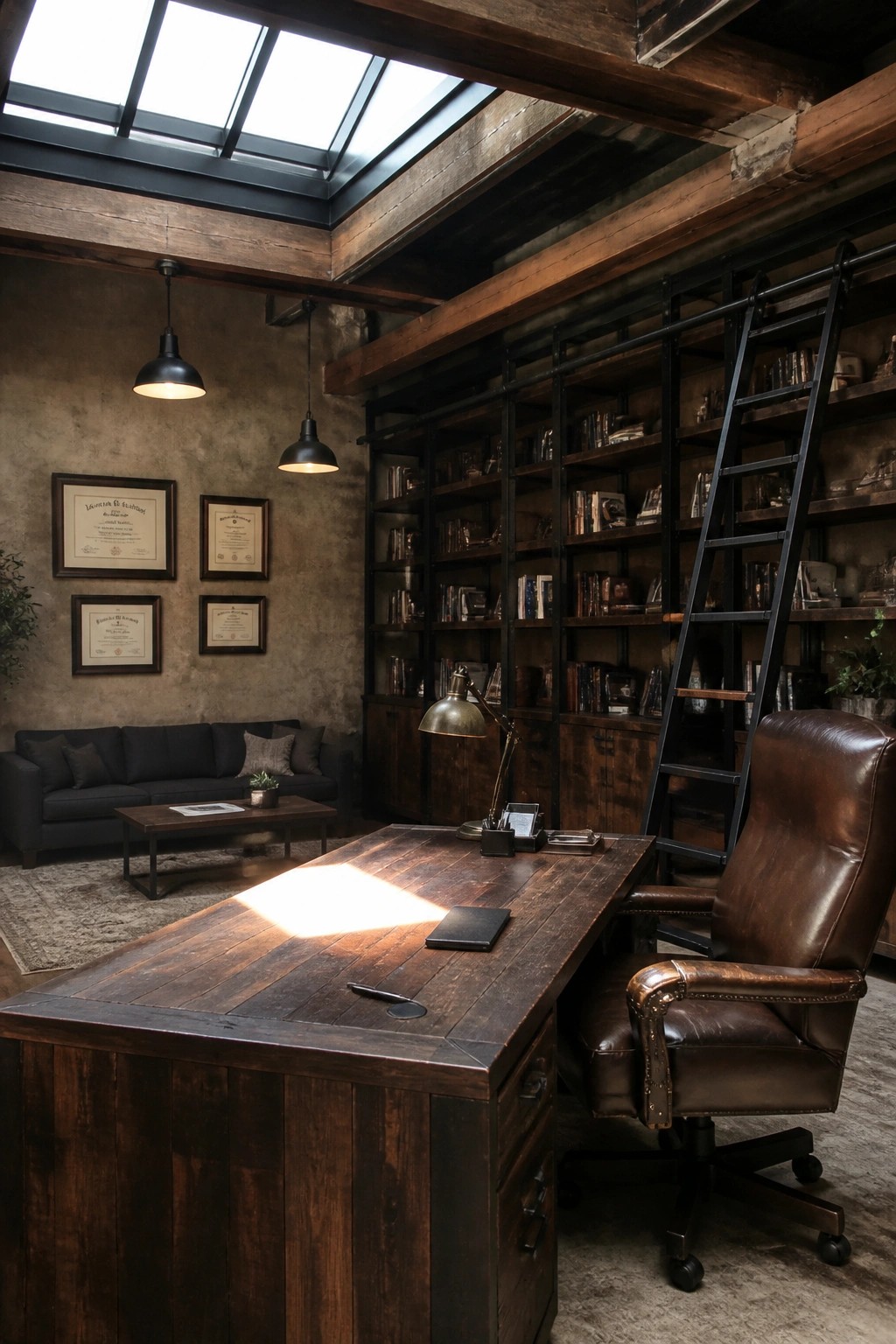
Tall built-in shelves give an office real storage capacity while keeping everything visible and easy to reach. The rolling ladder turns high shelves into usable space instead of dead storage above eye level.
This approach works best in rooms with high ceilings and at least one long wall. It suits homes where the office needs to hold books, files, and reference materials without adding more furniture. Skip it if the room is small or the ceiling is low, since the ladder needs room to move.
Add A Living Wall For A Calmer Office
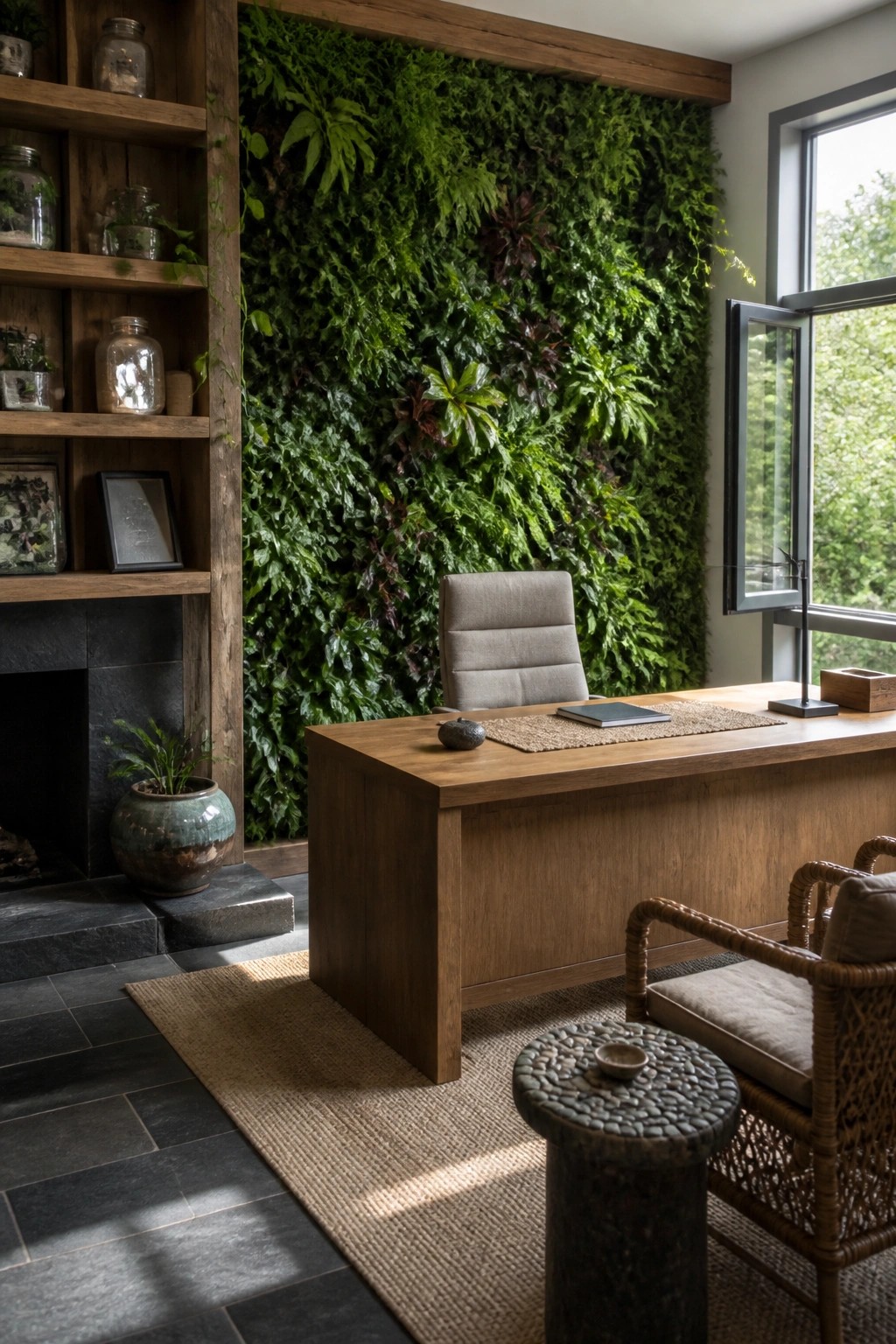
A living wall works well in an executive office because it brings steady greenery into the space without taking up floor room. The plants create a quiet backdrop that helps keep the focus on the desk and the work happening there.
This idea suits rooms that already lean on wood tones and simple furniture. Just make sure there is enough light for the plants and pick varieties that stay full so the wall does not thin out over time.
Curved Desks That Divide The Workspace
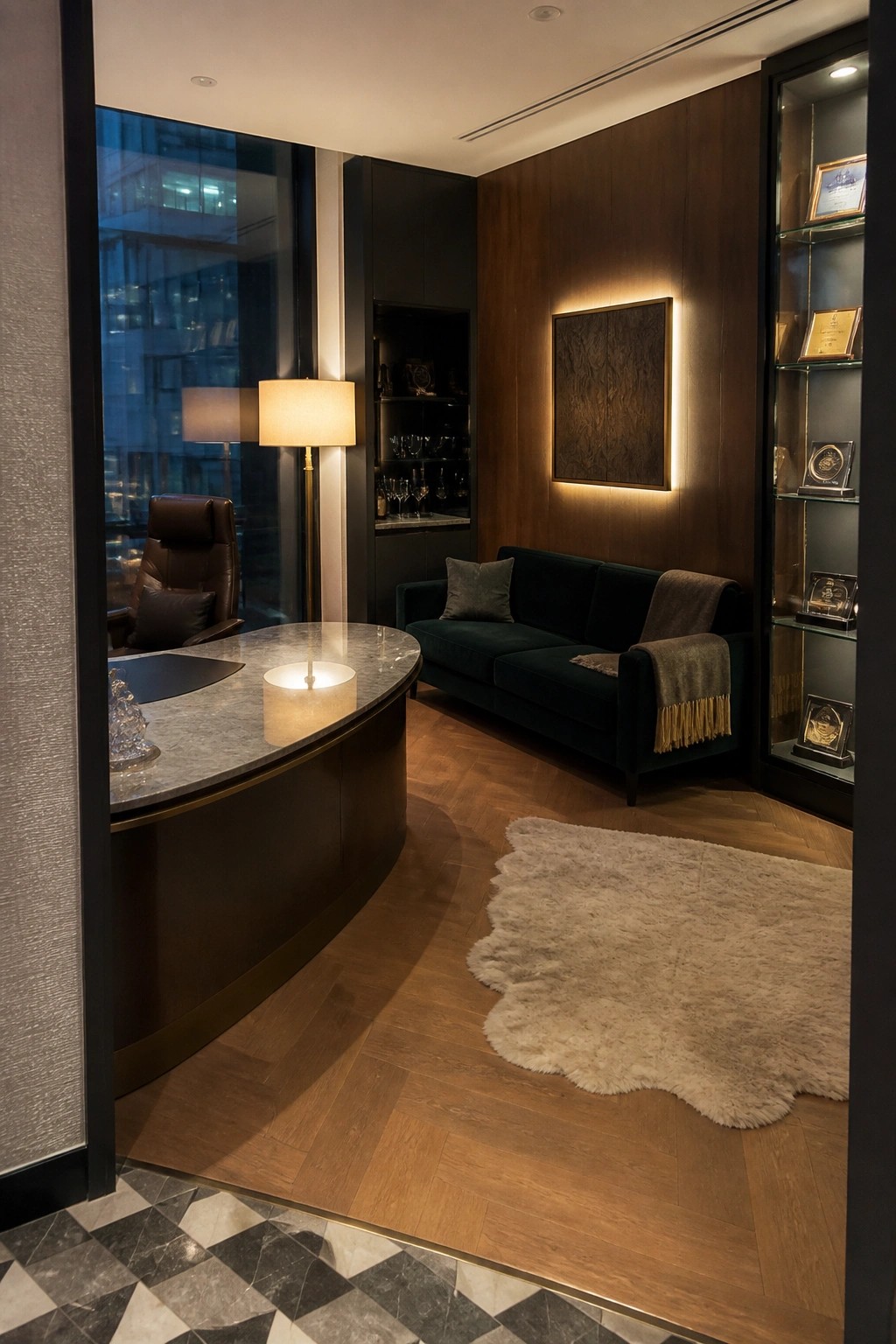
A curved desk gives the main work area a clear shape without closing it off from the rest of the room. It keeps the focus on the task at hand while still allowing an easy shift to a nearby seating spot when needed.
This layout suits larger home offices or private studies where both concentrated work and short meetings happen in the same space. Keep the curve gentle so the desk does not dominate the room or cut off natural walking paths.
Built-In Shelving That Keeps the Workspace Focused
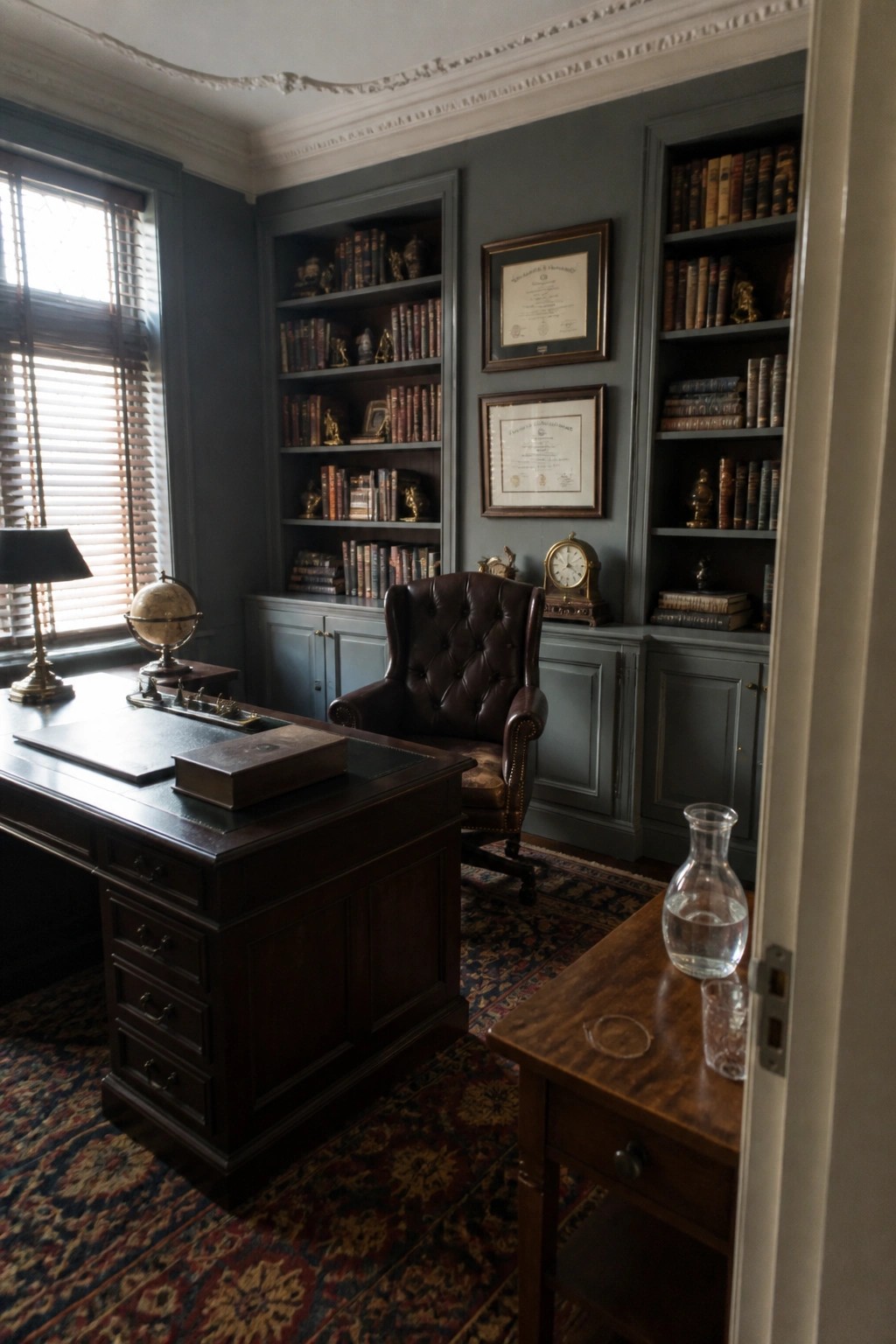
Built-in shelving gives an office a sense of order right from the start. When books and supplies stay tucked along the walls, the desk stays clear for the work that actually matters.
This approach works best in a home office that needs to feel serious but still livable. It suits rooms where you want storage that blends into the walls rather than adding more furniture that crowds the floor.
Incorporate a Leadership Timeline Wall
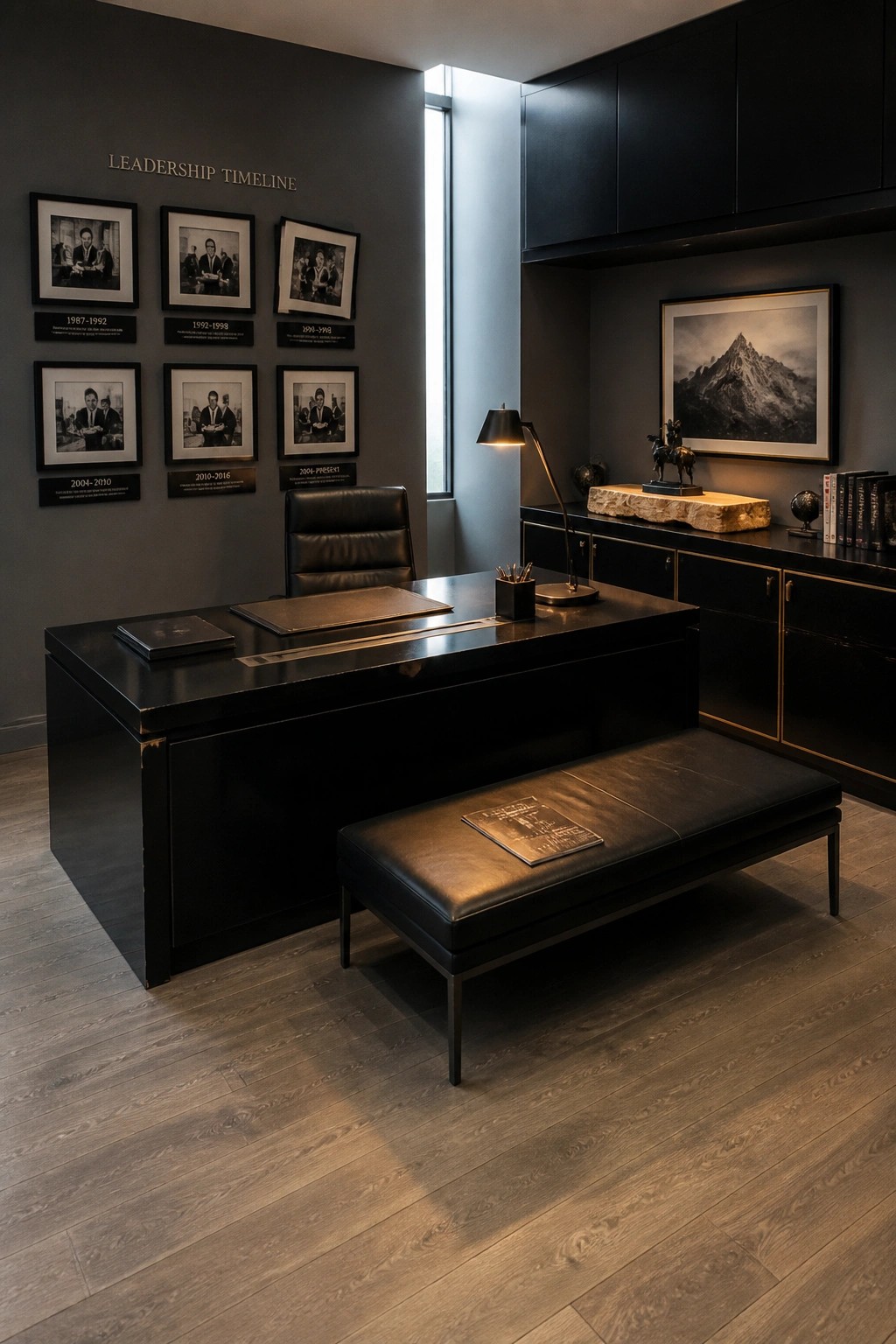
Many executive offices feel more focused when the walls show a clear record of progress. A row of framed photos with dates underneath turns one wall into a simple timeline of leadership roles and key years.
This approach works best in a home office that already uses dark finishes and heavy furniture. Keep the frames uniform and the spacing even so the display stays readable without crowding the rest of the room.
A Solid Desk Sets the Tone
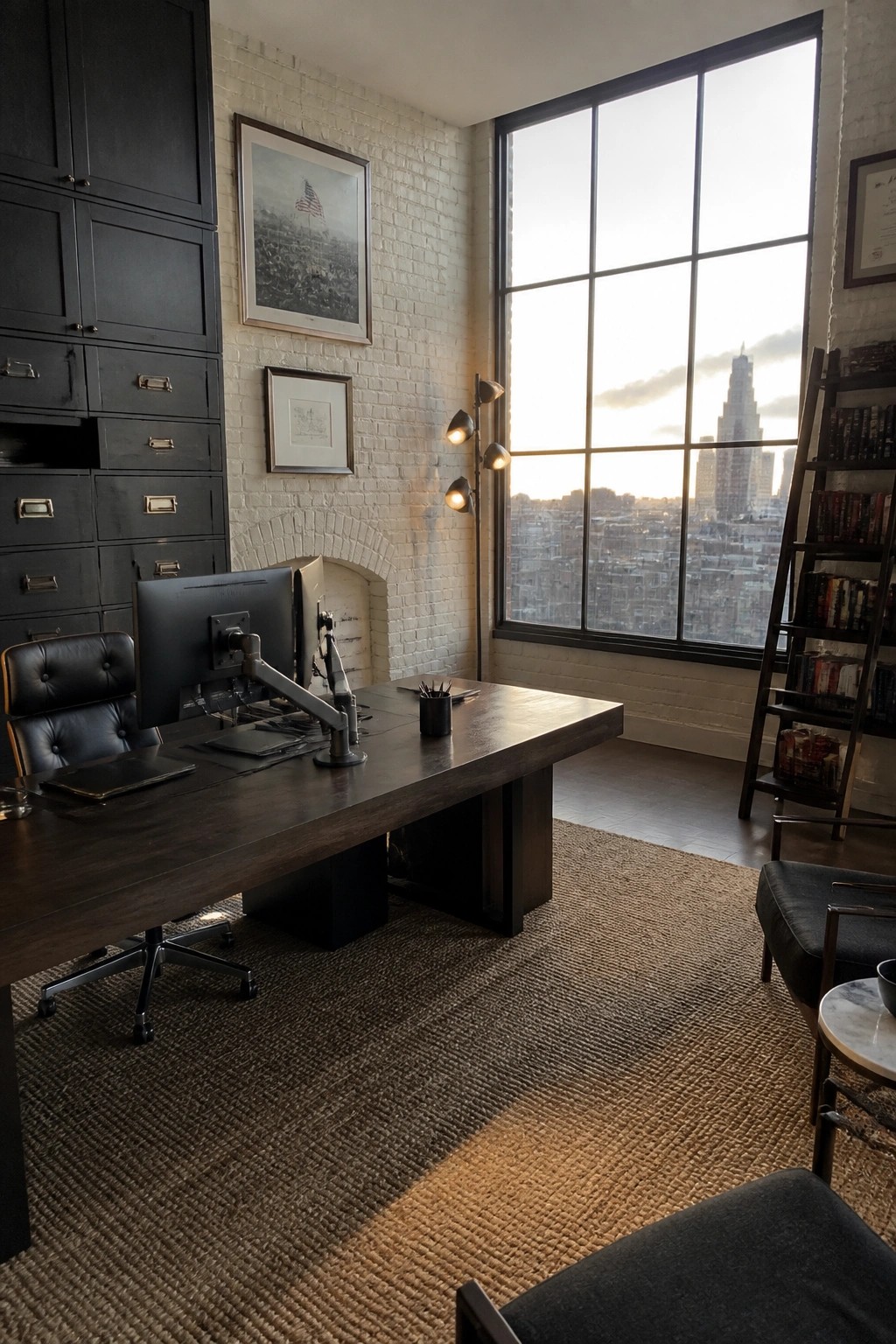
A large, heavy desk gives an office a clear sense of purpose. It turns the room into a place meant for real work instead of just catching up on emails.
Put the desk where it faces natural light or an open view so the space stays focused during long days. This layout works best in a home office that needs to feel professional without looking stiff.
A Central Conference Table for Leadership Meetings
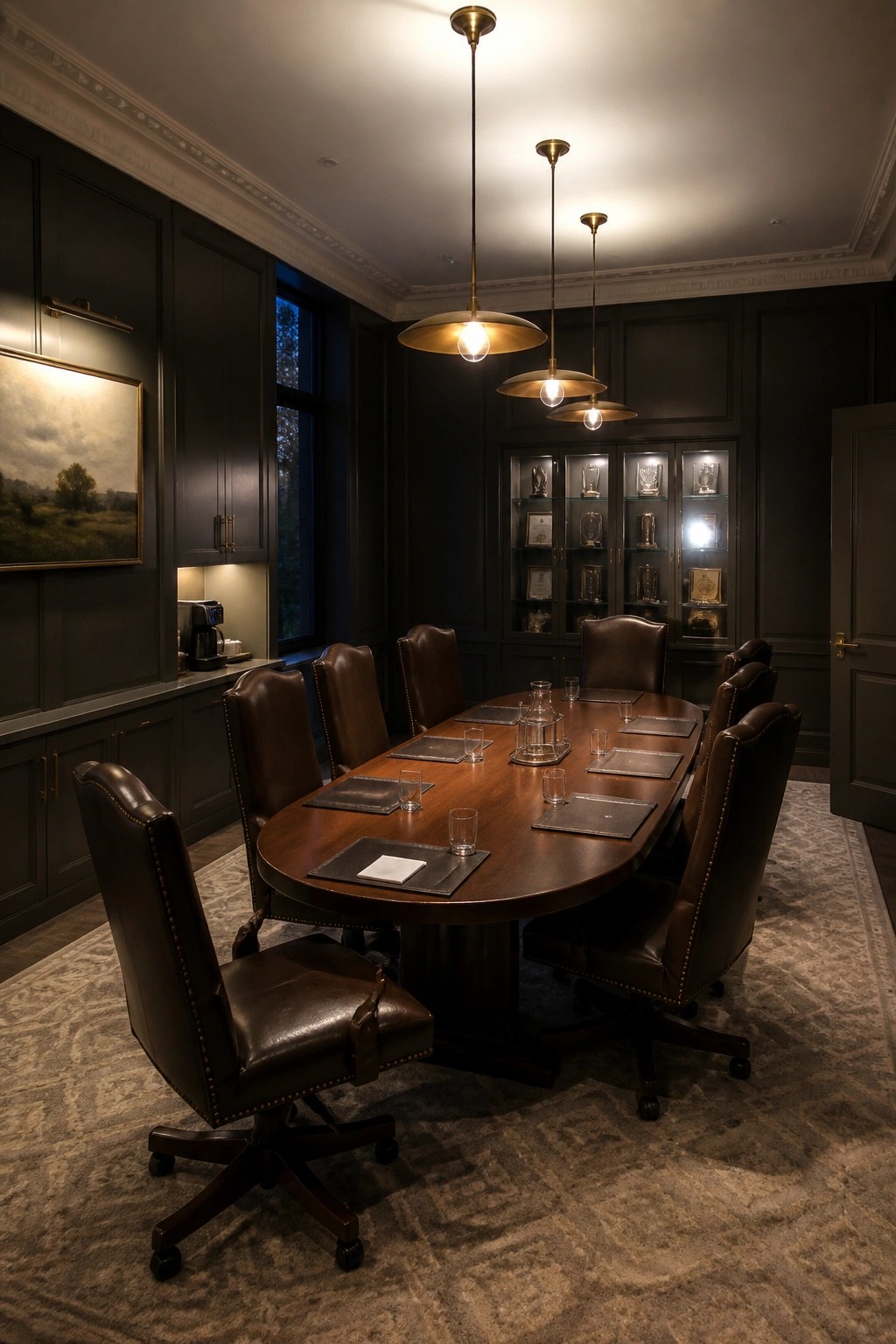
A large oval table with plenty of surrounding chairs gives an executive space a clear purpose. It turns the room into a place meant for discussion and decisions rather than just individual work. The dark finishes and solid build help the table feel grounded and serious.
This setup works best in offices where regular meetings happen with staff or clients. Keep the table size in proportion to the room so people can move around easily. Avoid crowding the space with too many extra pieces of furniture.
Use Dark Leather Seating in an Executive Office
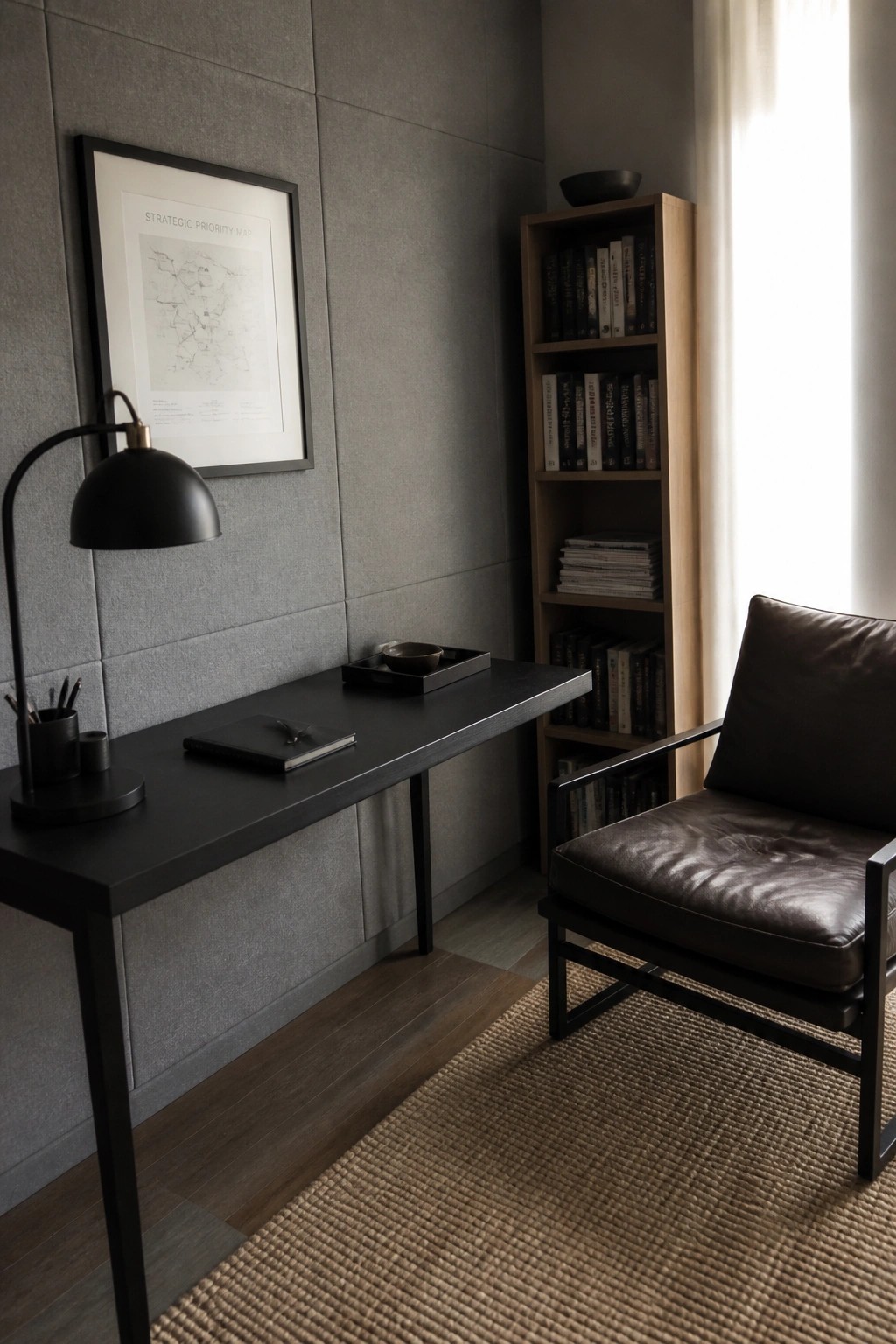
A dark leather armchair gives an office real presence without adding clutter. It creates a spot to sit back and think through decisions away from the desk, which helps with focus during long workdays.
This approach suits home offices that double as leadership spaces. Pair the chair with a simple desk and neutral walls so the seating feels like the main feature rather than one more piece of furniture.
Frequently Asked Questions
Q: Where should I place my desk to project leadership without losing focus? A: Set it against the longest wall so the room opens up in front of you. This setup lets you see who enters while keeping your work area private and direct.
Q: How can I use color without making the office feel too corporate? A: Stick to one deep tone on an accent wall behind your desk. Pair it with neutral furniture and a single piece of art in matching shades. The result feels personal yet authoritative.
Q: What kind of seating works best for quick meetings in the office? A: Choose two comfortable chairs that sit lower than your own. This small height difference reinforces your position at the desk. Keep them simple so they do not compete with your main workspace.
