

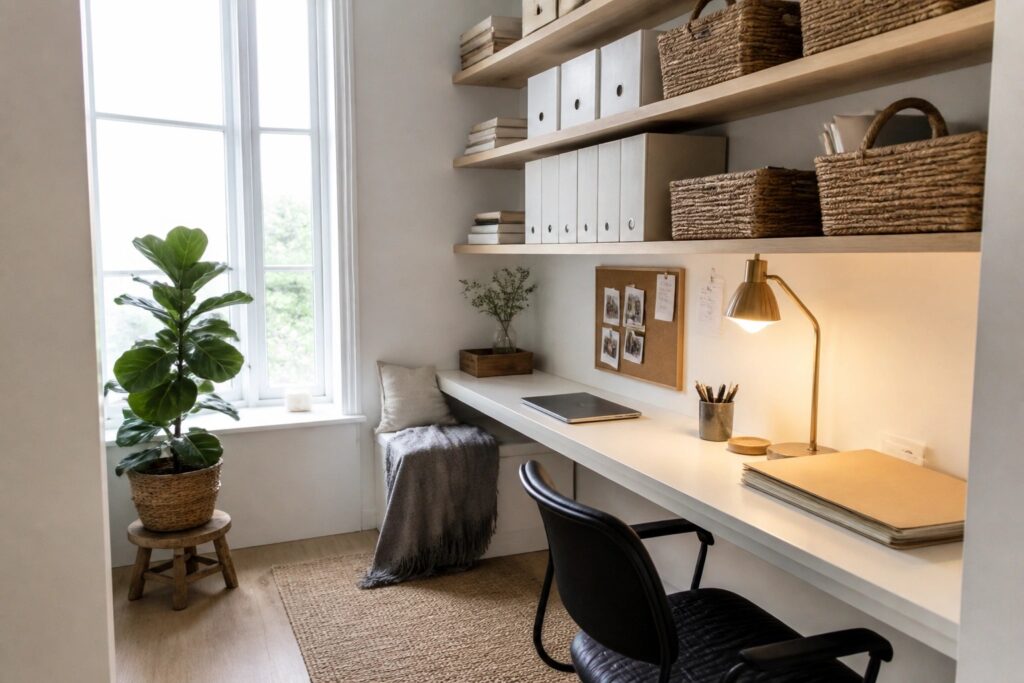
I have found that the way an office is arranged often determines whether work feels like a natural part of the day or something that drains energy quickly.
When I walk into a space where the desk faces a window and storage stays out of sight, the whole room seems lighter and easier to settle into.
Layout matters more than I expected.
Some of the setups I see make me want to rearrange my own desk right away to test the effect.
Over time these adjustments add up to a routine that supports both focus and breaks without forcing either one.
Built-In Shelves For Office Storage
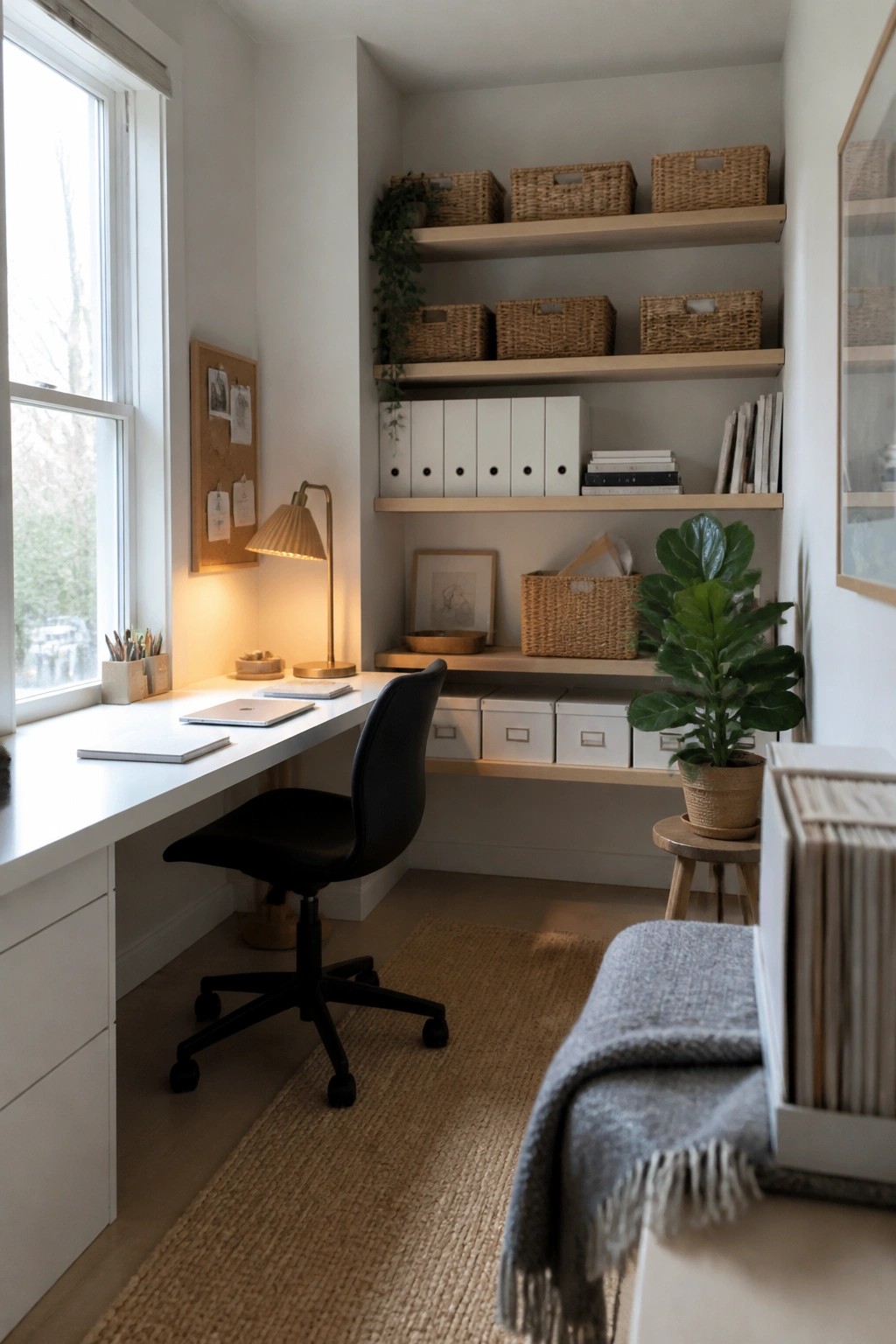
Many home offices stay calmer when storage sits right above the desk instead of scattered around the room. Built-in shelves let you keep files, supplies, and everyday items close without crowding the work surface. A simple mix of baskets and bins makes the whole thing feel neat rather than overloaded.
This approach suits smaller rooms or corners where floor space is limited. Match the bins to your walls so the shelves blend in, and leave a little breathing room between items so nothing feels crammed. It is an easy way to gain storage without buying extra furniture.
A Large Wooden Desk For Better Focus

A big wooden desk gives an office real presence. It anchors the room and makes the space feel ready for work instead of temporary or scattered.
This choice works best in rooms with some open floor space and a mix of harder surfaces like brick or metal shelving. It suits people who want their home office to feel solid and practical without needing a lot of extra pieces around it.
Position Your Desk Near A Window

Placing a desk right under a window brings steady natural light into the workspace and keeps the view outside within reach. Many people notice it helps the room feel less closed off during long hours at the desk.
This works best in homes with existing windows that line up with a simple built-in surface or a narrow table. It suits smaller offices or corners where you want the space to feel practical rather than styled, and it needs little more than a clear sill and a comfortable chair to function well.
Low Desks For A Calmer Work Routine
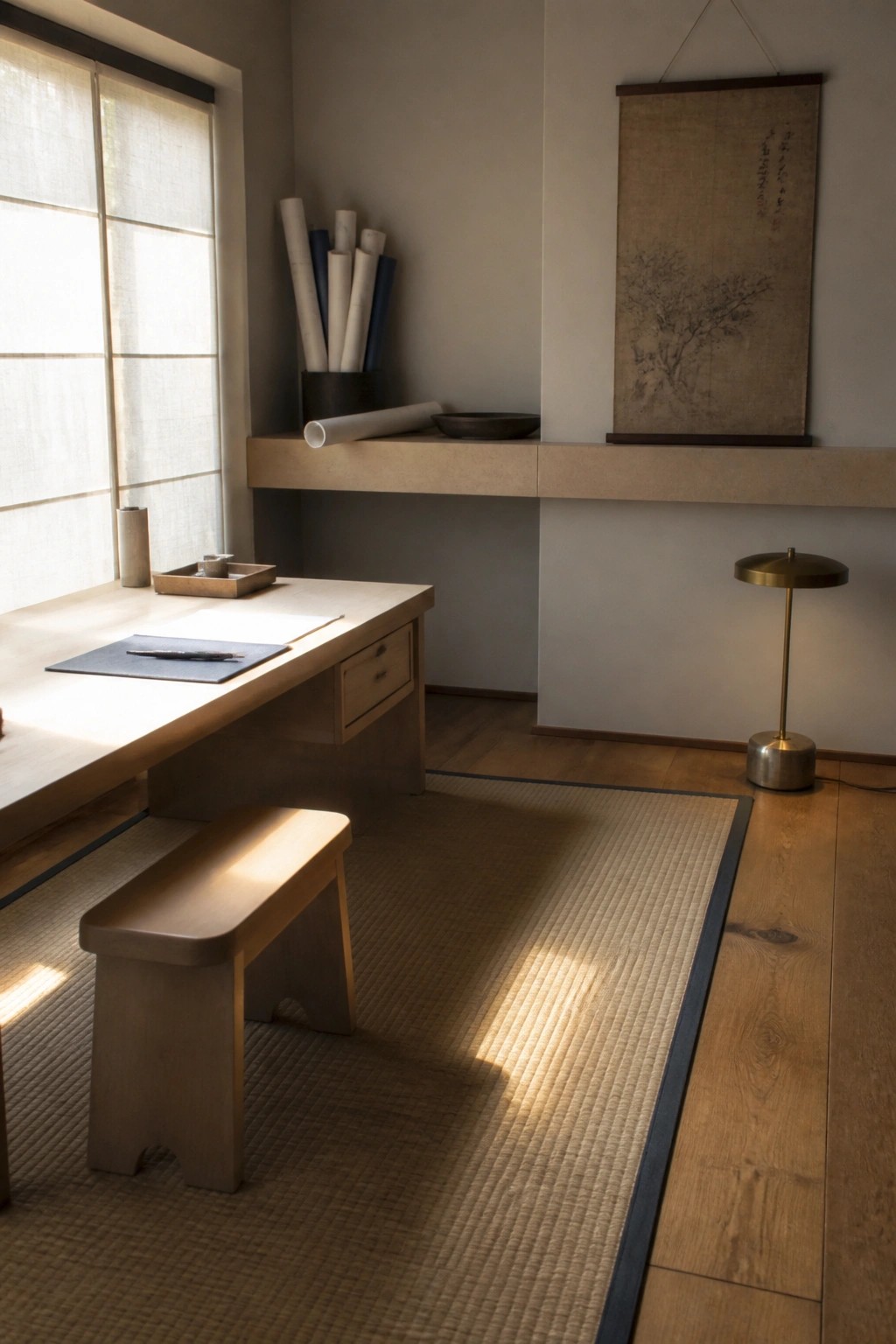
A low desk changes the pace of the room right away. Sitting closer to the floor tends to quiet the space and makes long hours feel less rushed.
This works best in smaller rooms or homes that already use simple materials and natural textures. Keep the rest of the furniture low too, and leave plenty of open floor so the setup stays easy to move around.
Add A Daybed For Better Breaks
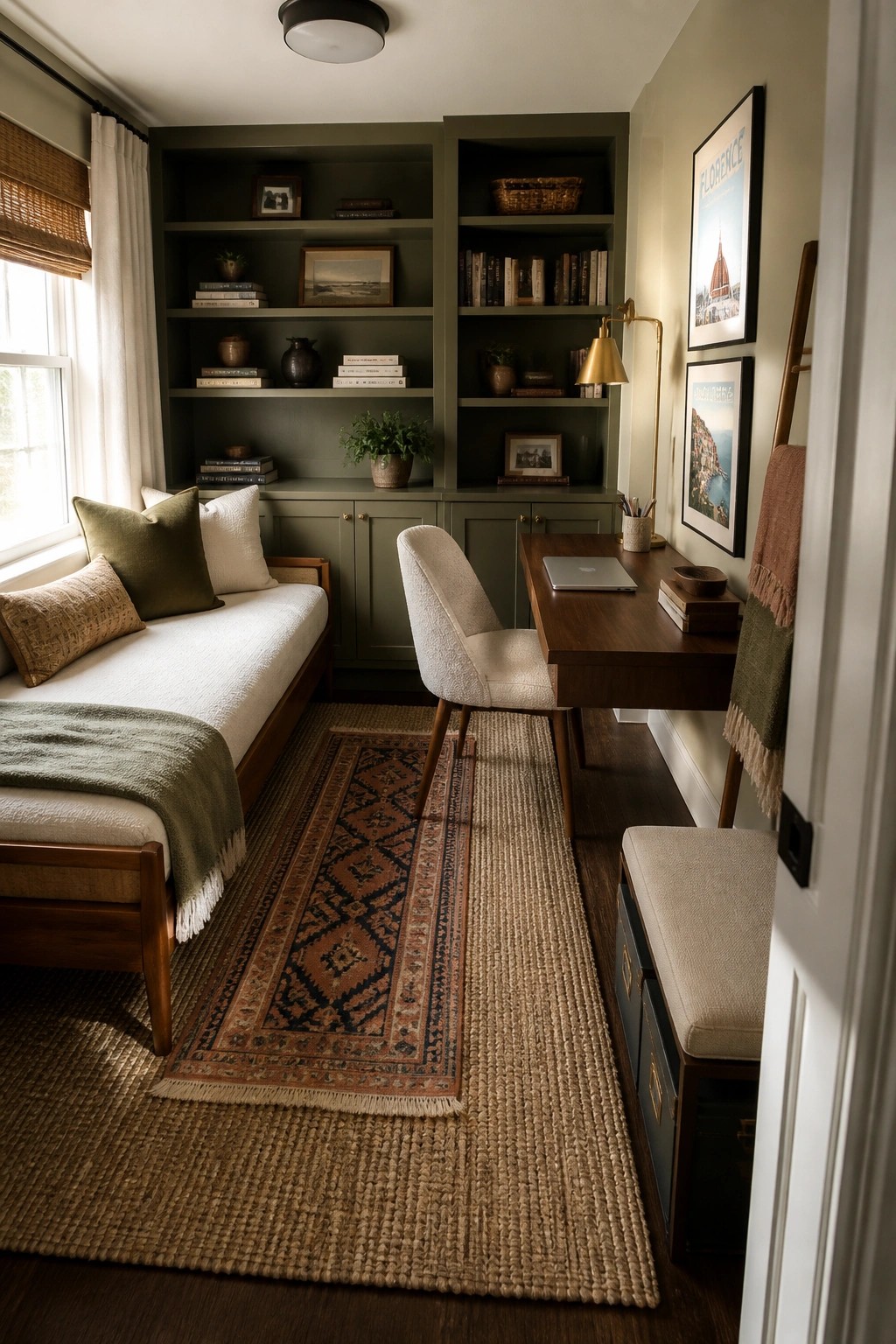
Many offices feel too rigid when the only furniture is a desk and chair. Adding a daybed gives you a place to sit back with a book or rest for a few minutes without leaving the room. It keeps the space flexible so work does not take over the whole day.
This works best in smaller rooms or homes where one space has to handle both focused tasks and downtime. Keep the daybed simple with a few pillows and a throw so it stays comfortable without adding clutter. The built-in shelves around it help keep books and supplies organized nearby.
Soft Blue Walls For A Calmer Workspace
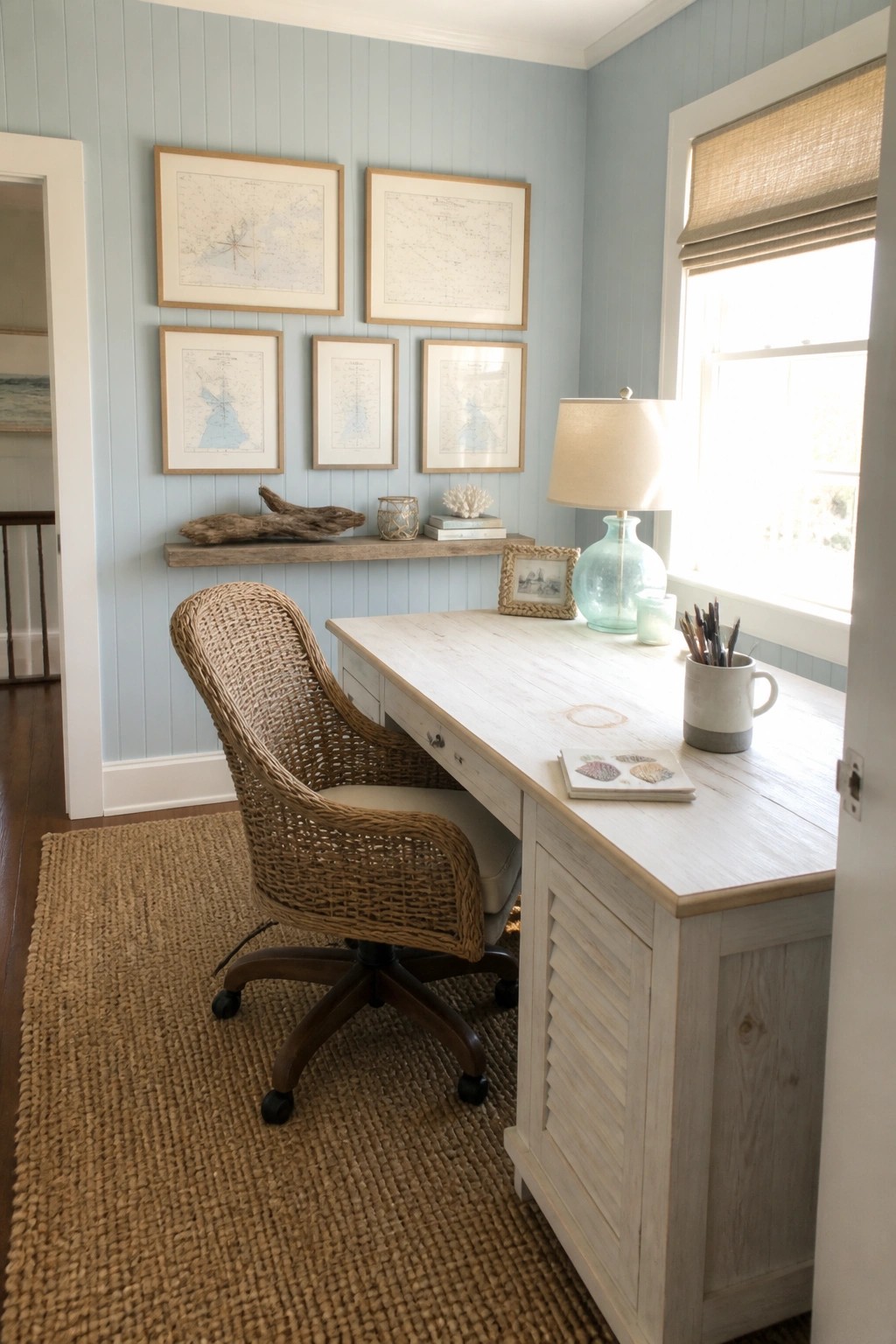
A soft blue on the walls can make a home office feel much more peaceful during the workday. It keeps the space bright without the glare that white often creates, and it pairs easily with natural materials like wood and woven seating. Many people find this kind of color helps the room feel less like a strict work zone and more like a place you can settle into without tension.
This works best in smaller offices or rooms that get decent natural light. Keep the rest of the palette fairly neutral so the blue stays gentle rather than overwhelming, and avoid adding too many dark accents that could pull the mood back down.
Built-Ins That Help Keep a Home Office Organized
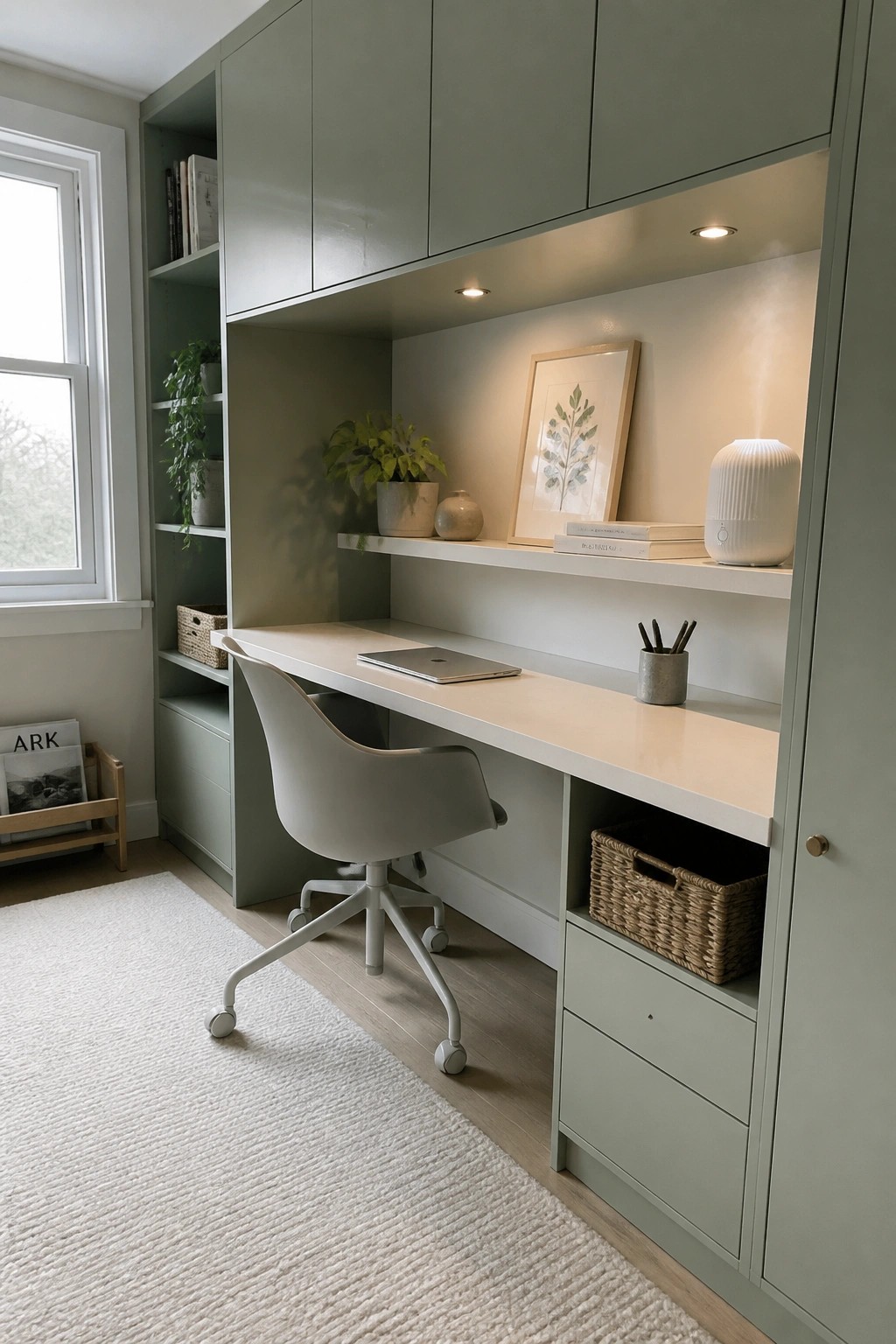
Built-in cabinetry around a desk gives you a lot of storage without crowding the room with extra pieces. Everything stays in one clean line, so the space feels less busy and easier to keep tidy.
This works best in smaller rooms or spaces that need to stay calm during the workday. Make sure the upper cabinets are deep enough for the things you actually want hidden away.
Built Ins Frame A Simple Desk Area
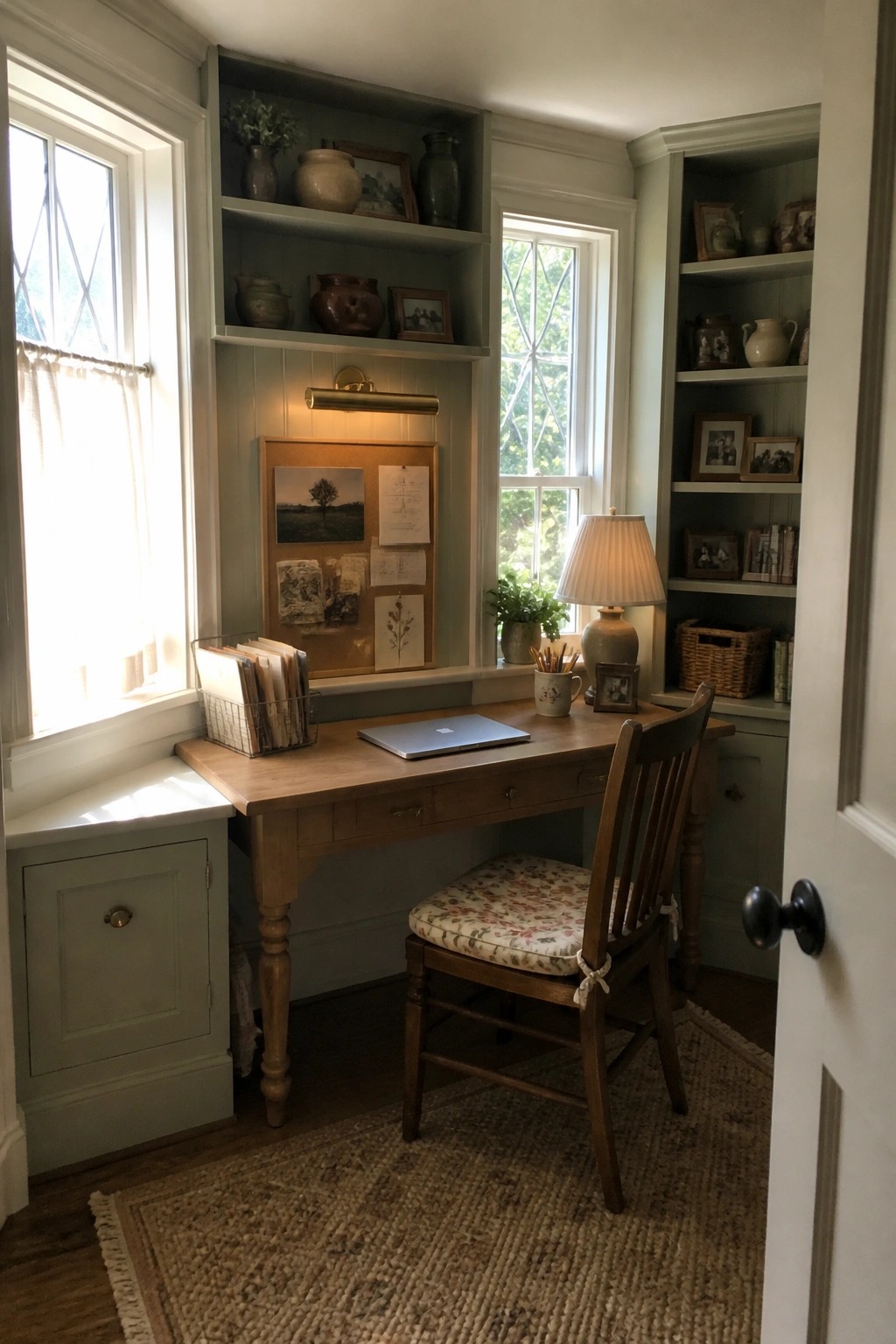
Built ins can turn a small corner into a workspace that feels like it belongs in the house instead of being added on later. The shelves and lower cabinets wrap around the desk so papers and supplies stay close without piling up on the surface, and the whole setup stays calmer because everything has a place.
This works well in older homes or rooms with odd angles where a freestanding desk might look out of place. Keep the finish on the built ins the same as the trim or walls so the area reads as one quiet zone rather than a separate office.
An Adjustable Desk For A Balanced Routine
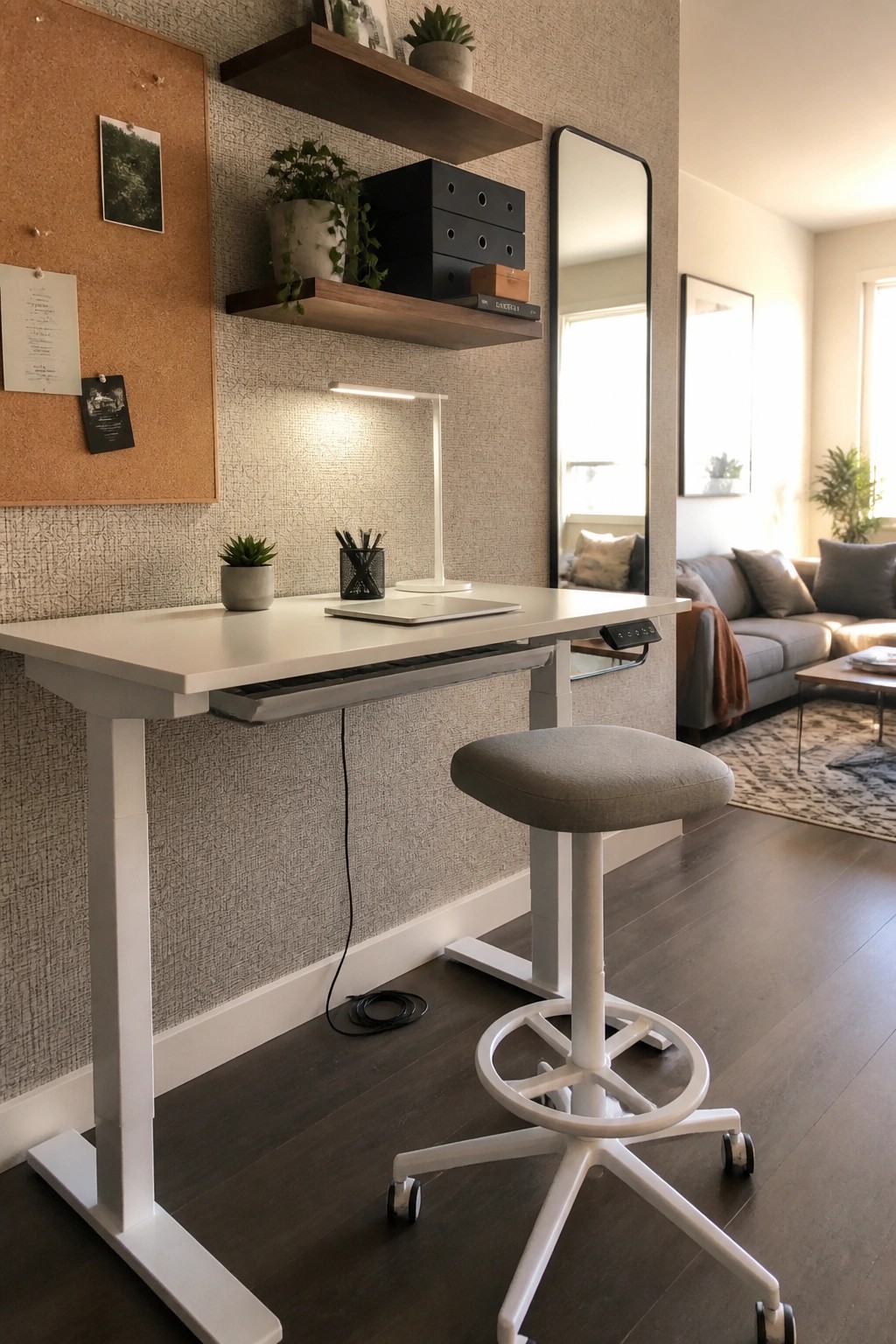
An adjustable desk makes it easier to switch between sitting and standing without much effort. Many people find this simple change helps them stay more comfortable during long work hours at home.
It works well in smaller spaces where you want one piece of furniture to serve multiple needs. Look for models with a smooth mechanism and enough surface area for your laptop and a few everyday items.
Natural Textures And Warm Lighting For Balance
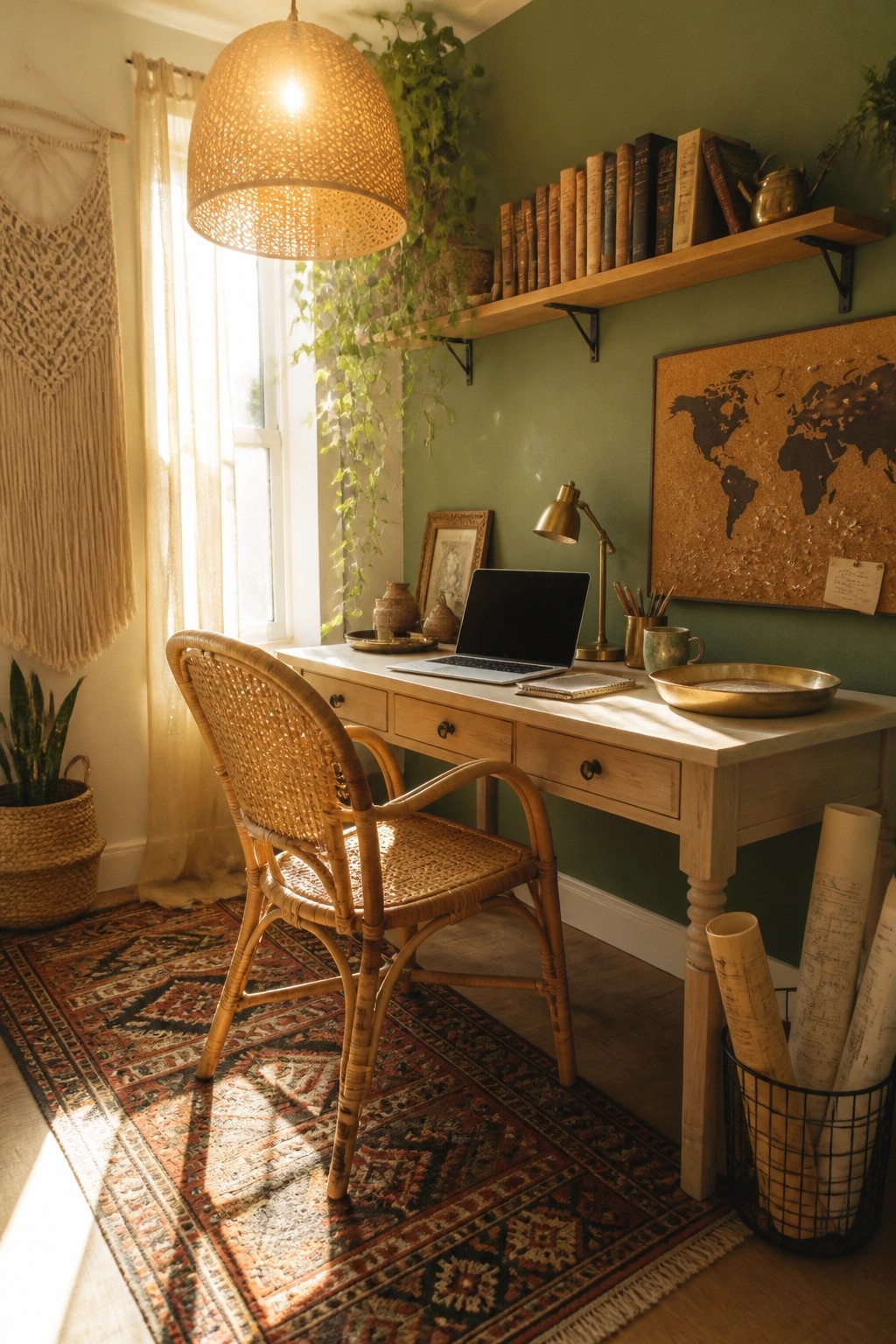
Many home offices end up feeling stark because they rely on too many flat, hard surfaces. Bringing in natural textures through a woven light fixture and a rattan chair softens the room and makes long work sessions feel less draining.
This setup works best in smaller spaces or rooms that need to feel connected to the rest of the house. Keep the palette simple with one or two natural pieces and warm overhead lighting so the desk area stays functional without becoming overwhelming.
Low Credenzas With Overhead Shelves
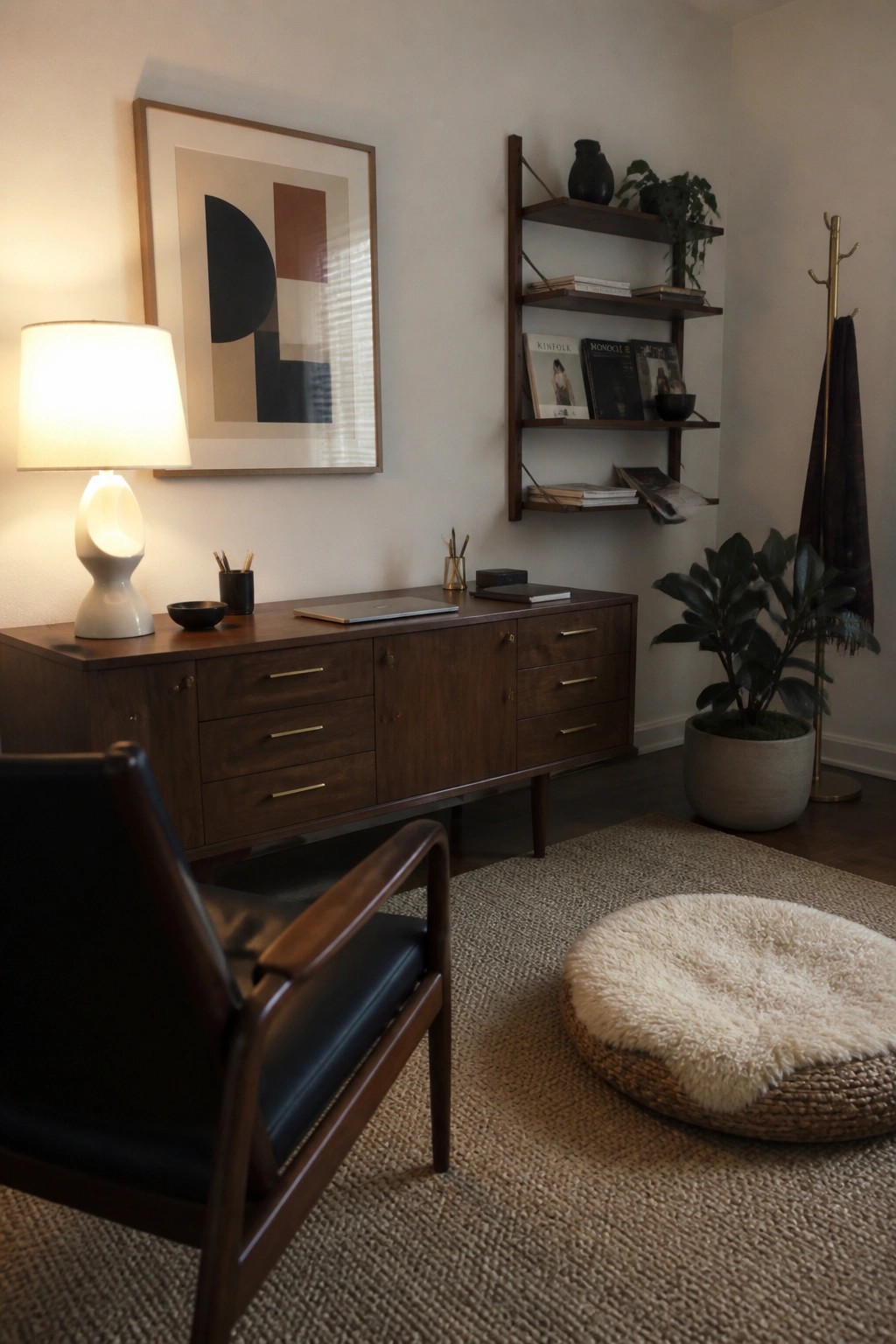
Many people like using a long, low credenza as the main work surface in a home office. It gives a solid spot for a laptop and a lamp without taking up much visual space, and the built-in drawers and cabinets hold supplies out of sight.
This setup works best when you add a few floating shelves directly above for books and small items you reach for often. It keeps the floor clear and suits rooms that double as guest spaces or living areas.
Desk Placement By The Window
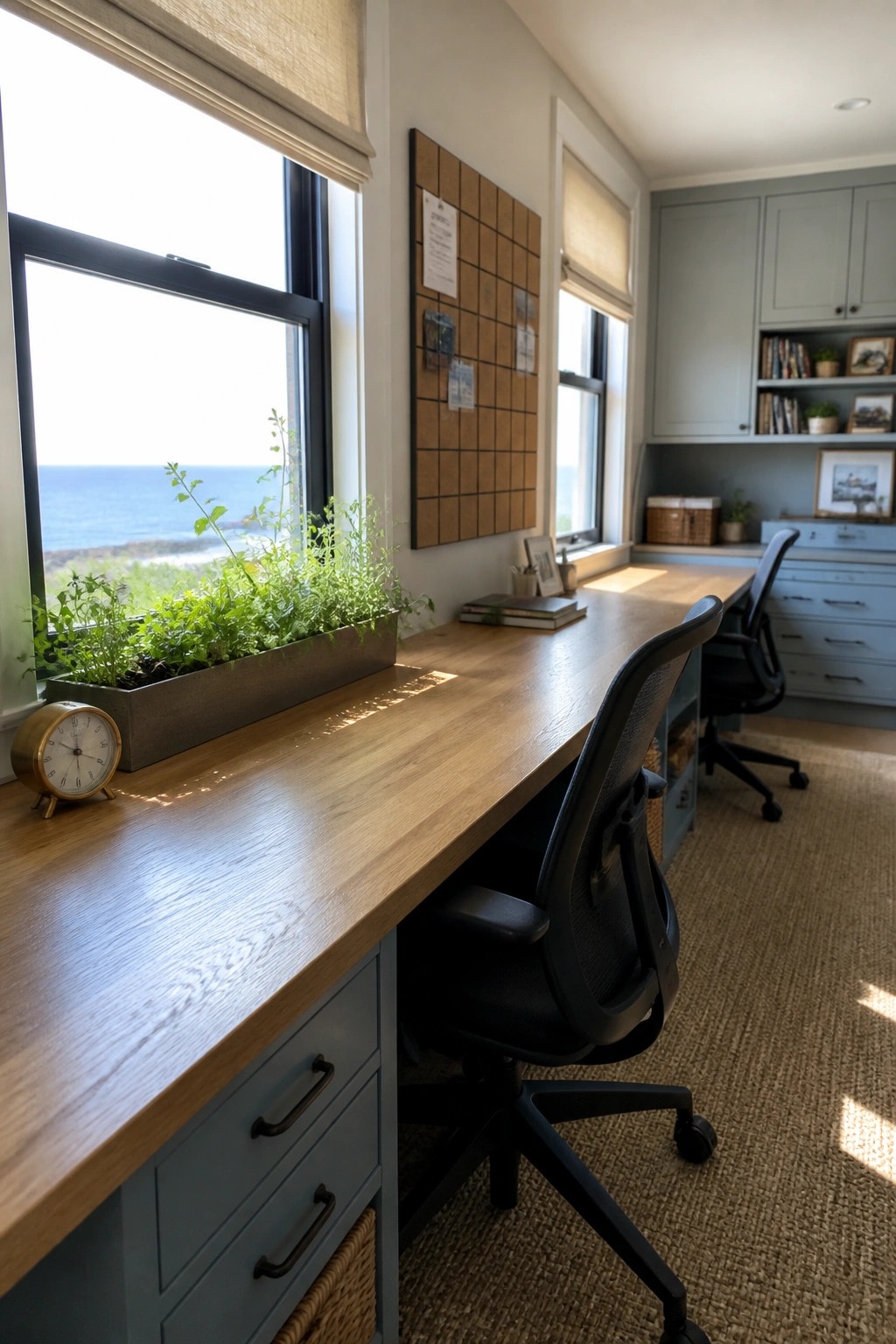
Placing the desk right along a window wall brings steady natural light into the workspace without needing extra lamps during the day. The setup also keeps the view visible while working, which helps the room feel less closed off and more tied to the outside.
This layout works well in smaller home offices or rooms that face a quiet view. Keep the desk depth shallow enough that it does not block too much light from reaching the rest of the space.
Using Dark Colors In Home Offices
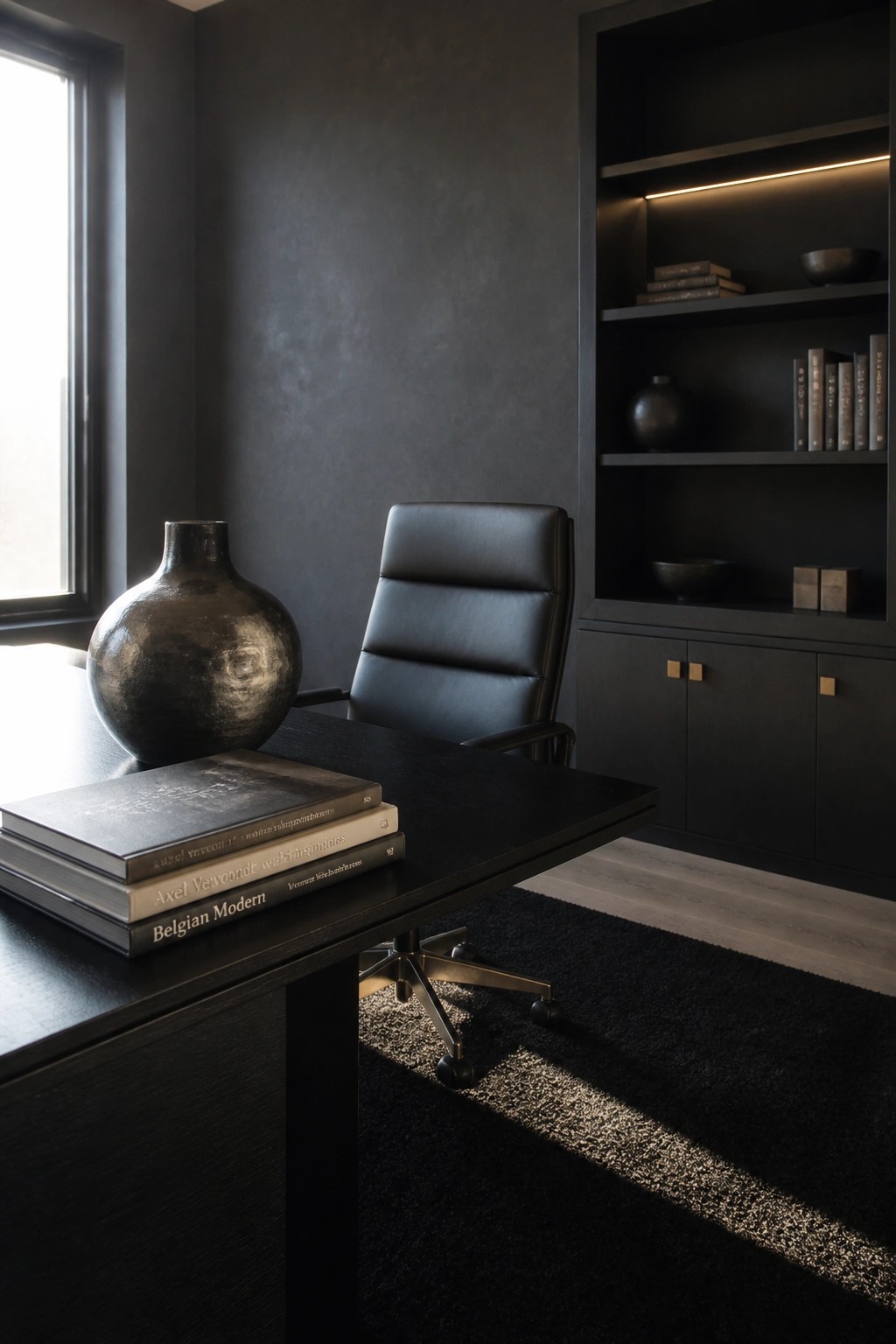
Many people like the look of a fully dark office because it feels quiet and contained. The deep walls and matching furniture pull everything together and help the room stay focused without a lot of visual noise.
This works well in smaller rooms or spaces that already have limited light. Keep the furniture simple and add built-in shelves for storage so the dark tones do not overwhelm the room.
Pegboard Storage Above A Desk
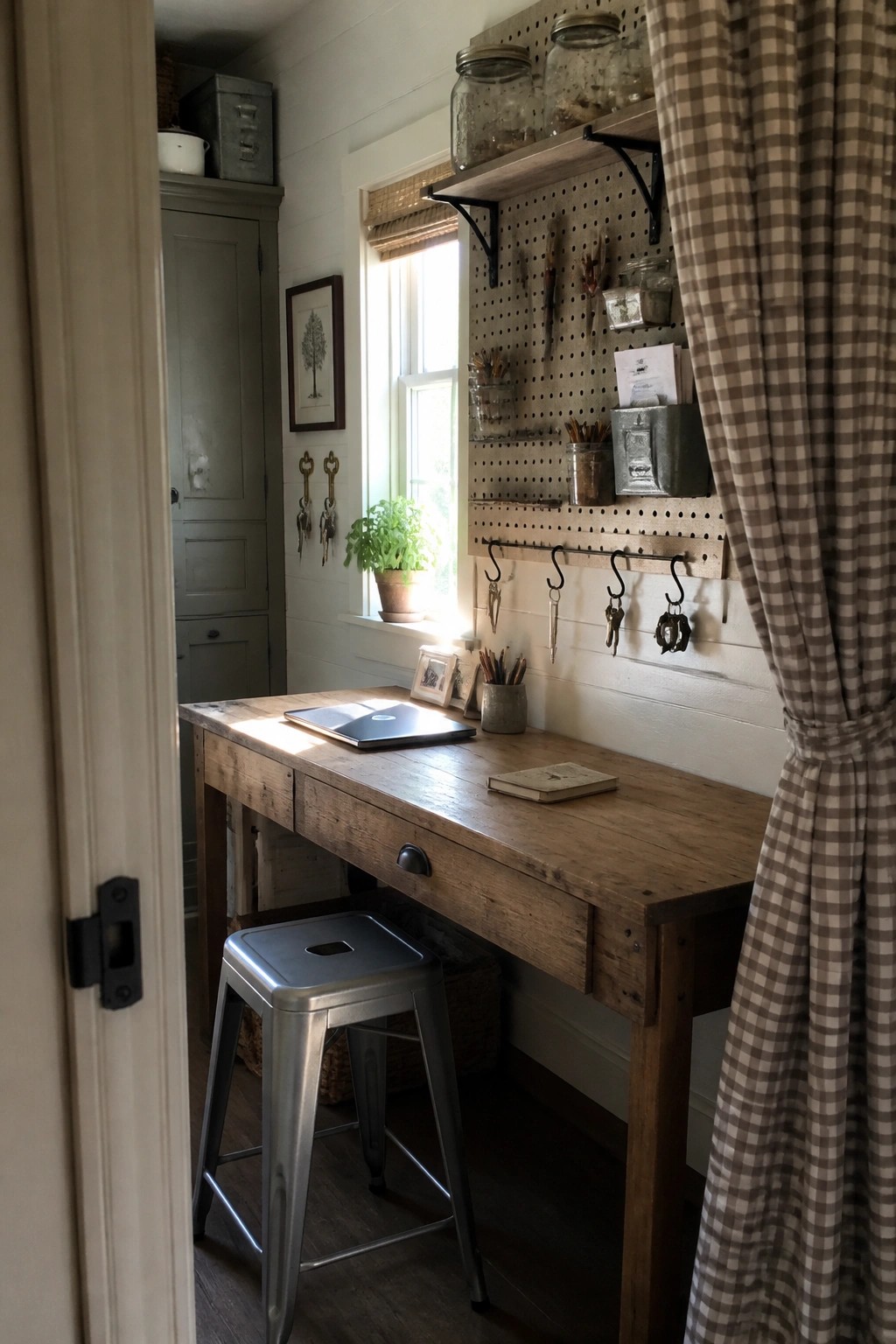
A pegboard wall keeps small office items in reach without cluttering the work surface. It turns empty wall space into a practical spot for tools, notes, and supplies that would otherwise pile up on the desk or get lost in drawers.
This setup works best in smaller rooms where floor space is limited. Mount the board at a comfortable height, add a mix of hooks and small containers, and keep only the items you use daily on display. It suits homes that need simple storage without built-in cabinetry.
Built-Ins Turn A Narrow Hallway Into A Workspace

Many homes have narrow hallways or leftover alcoves that never seem to earn their keep. Adding a slim desk with cabinets mounted right above it turns that space into a usable office without blocking the walkway or eating into other rooms.
This setup works best in smaller homes or apartments where every foot of floor space counts. Keep the desk surface mostly clear and use the wall above for a planner or a few shelves so the area stays organized and easy to move past.
Anchor The Desk Area With A Big Area Rug
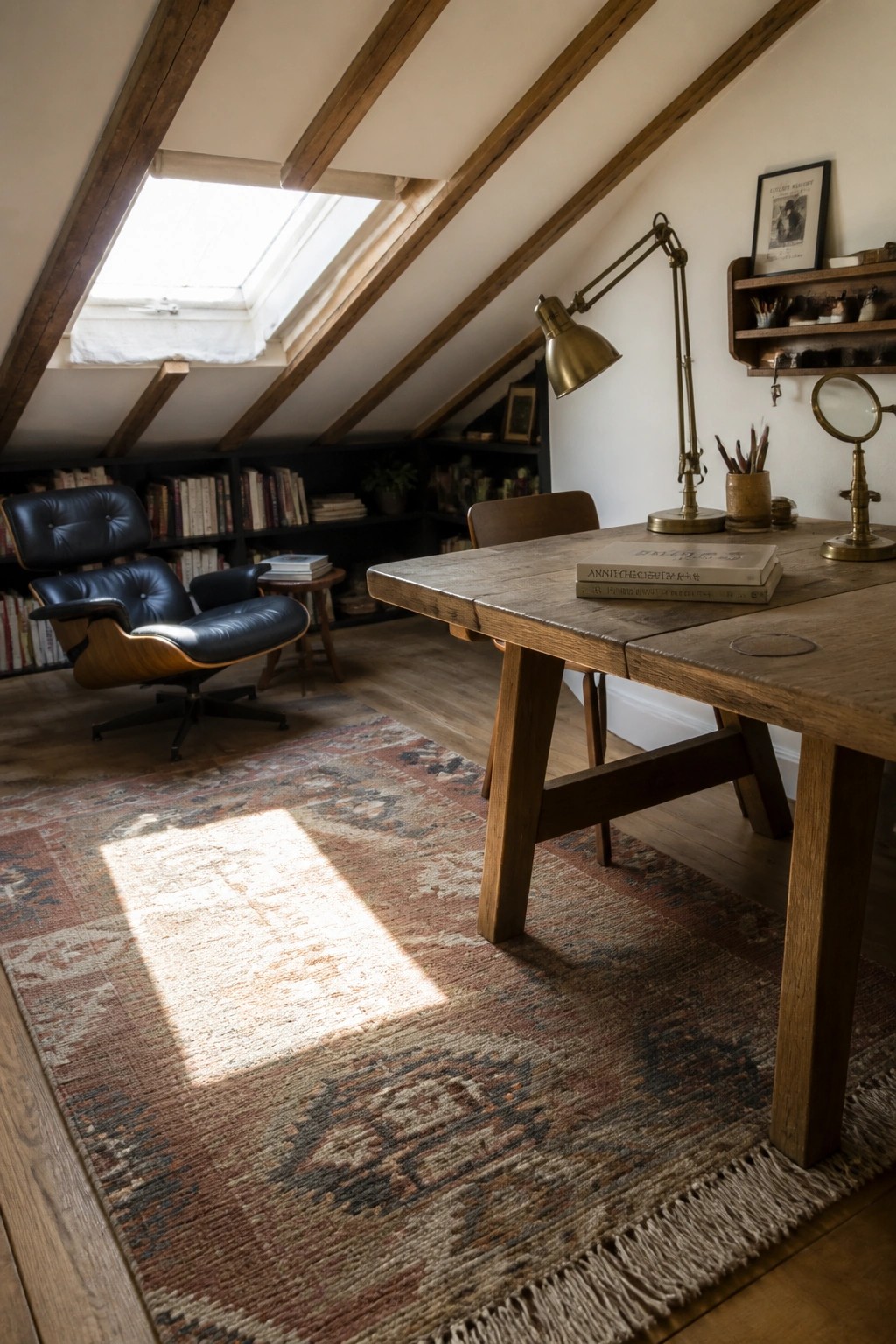
A large rug under the desk turns an attic office into something that feels more settled. It adds a layer of softness underfoot and keeps the workspace from feeling like it is just floating on bare boards.
This approach suits rooms with uneven floors or lots of wood already in view. Choose a rug that is big enough for the chair to stay on it when pulled back, and do not worry if it shows a little wear.
Low Seating For A Calmer Office Routine
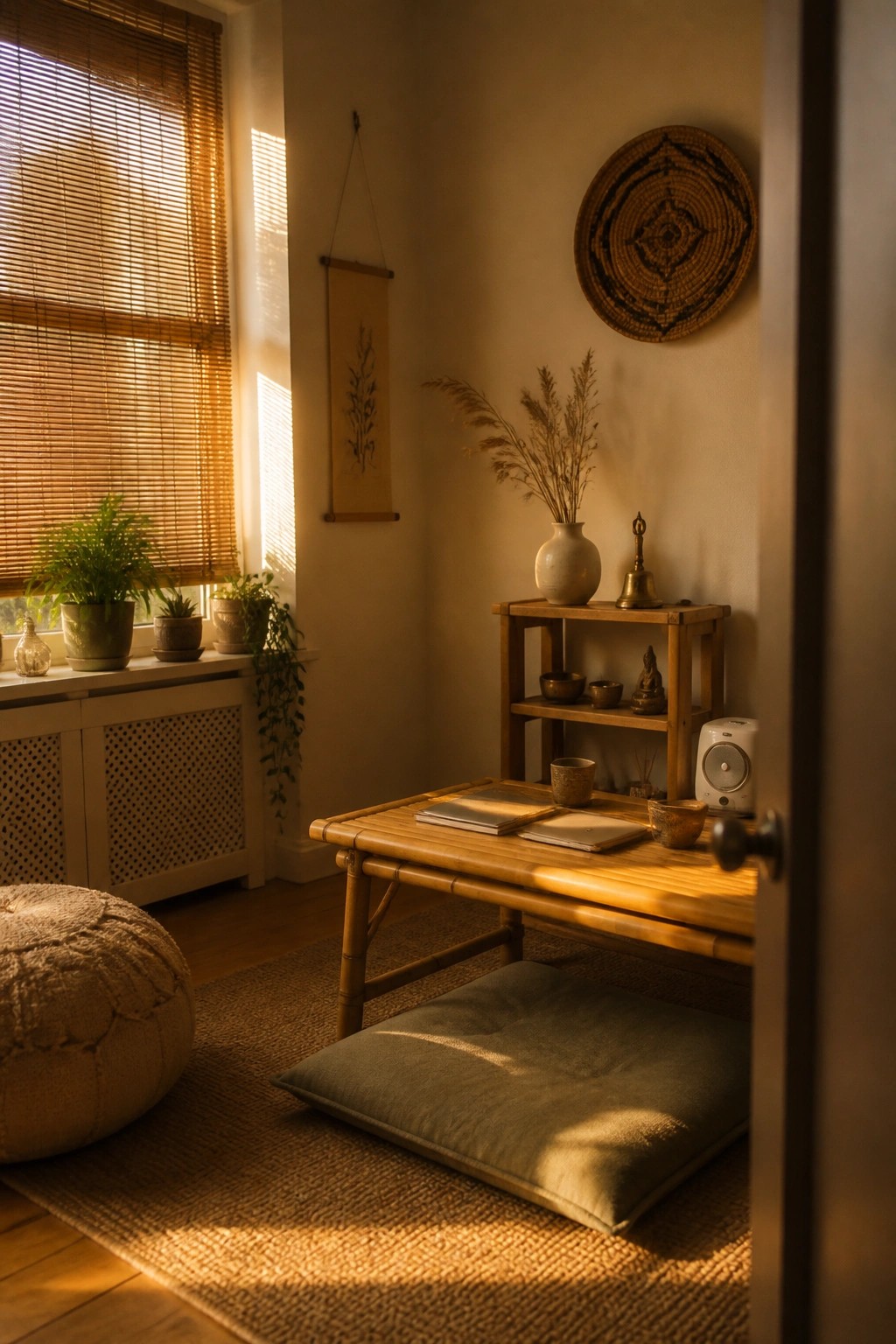
Many people are trying low tables with floor cushions instead of standard desks because the setup feels less rigid. Sitting closer to the ground can help keep the body relaxed and the mind more steady through long hours.
This works best in smaller rooms or homes that already use natural textures and simple furniture. Just make sure the table height matches the cushion so your back stays supported.
A Large Workbench With Pegboard Storage
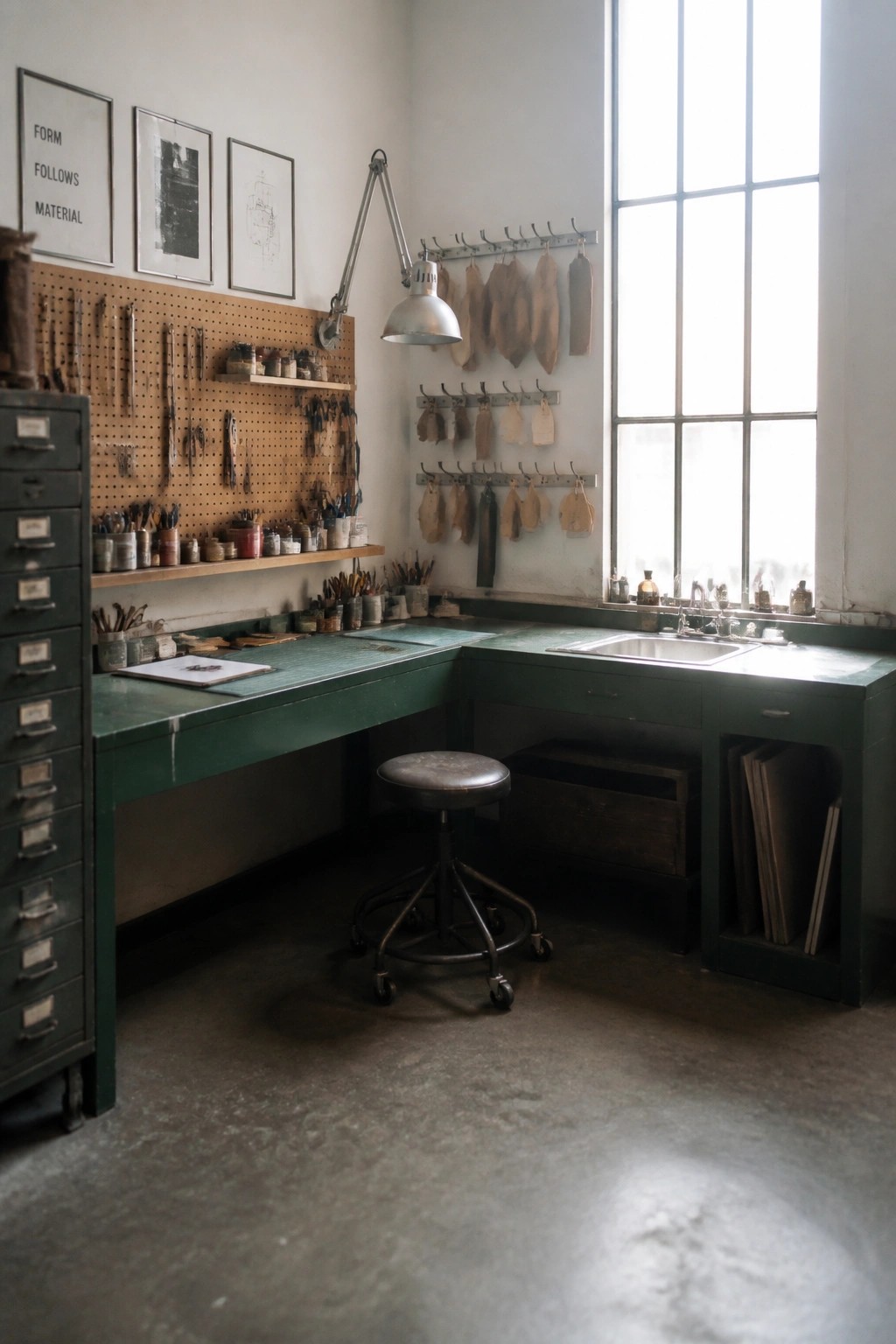
A big work surface paired with a pegboard wall keeps tools within reach and the rest of the room clear. This setup works well when you need space to spread out projects without hunting through drawers every few minutes. The pegboard also makes it simple to put things back in the same spot each time.
It suits a home office or craft room where hands-on work happens regularly. Place the bench near a window for daylight and keep the pegboard loaded with only the tools used most often. Avoid overcrowding the board or the surface will start to feel cluttered again.
Built-Ins That Keep A Home Office Organized
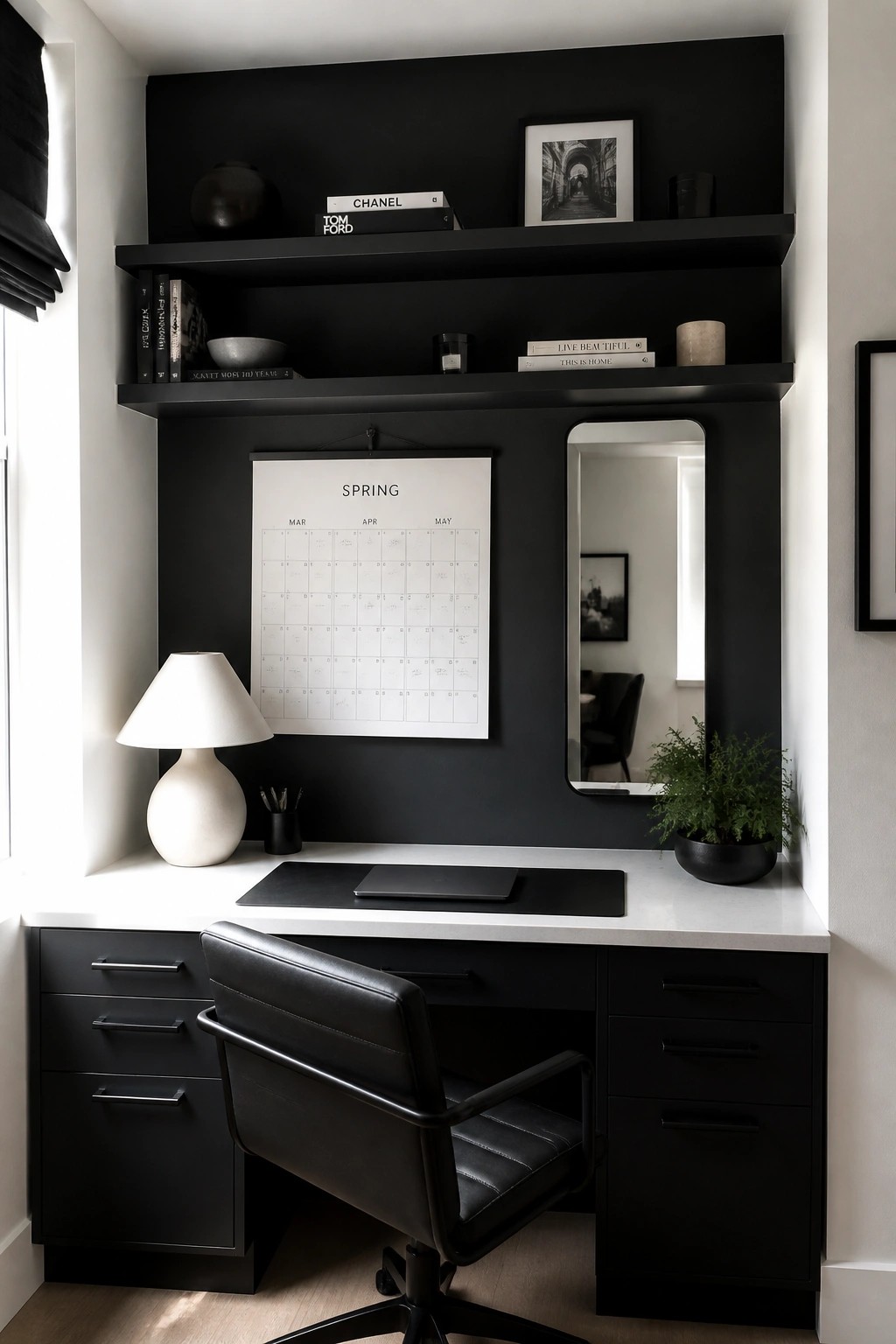
Built-in desks and shelving turn a plain wall into a working space that feels complete on its own. The dark finish pulls the desk, drawers, and upper shelves together so nothing looks added on later, and it gives a clear place for the calendar and a few everyday items.
This setup works well in smaller rooms or alcoves where you need storage but do not want extra pieces taking up floor space. It suits homes that want a quiet work spot without turning the whole room into an office.
Create a Workspace in the Nursery
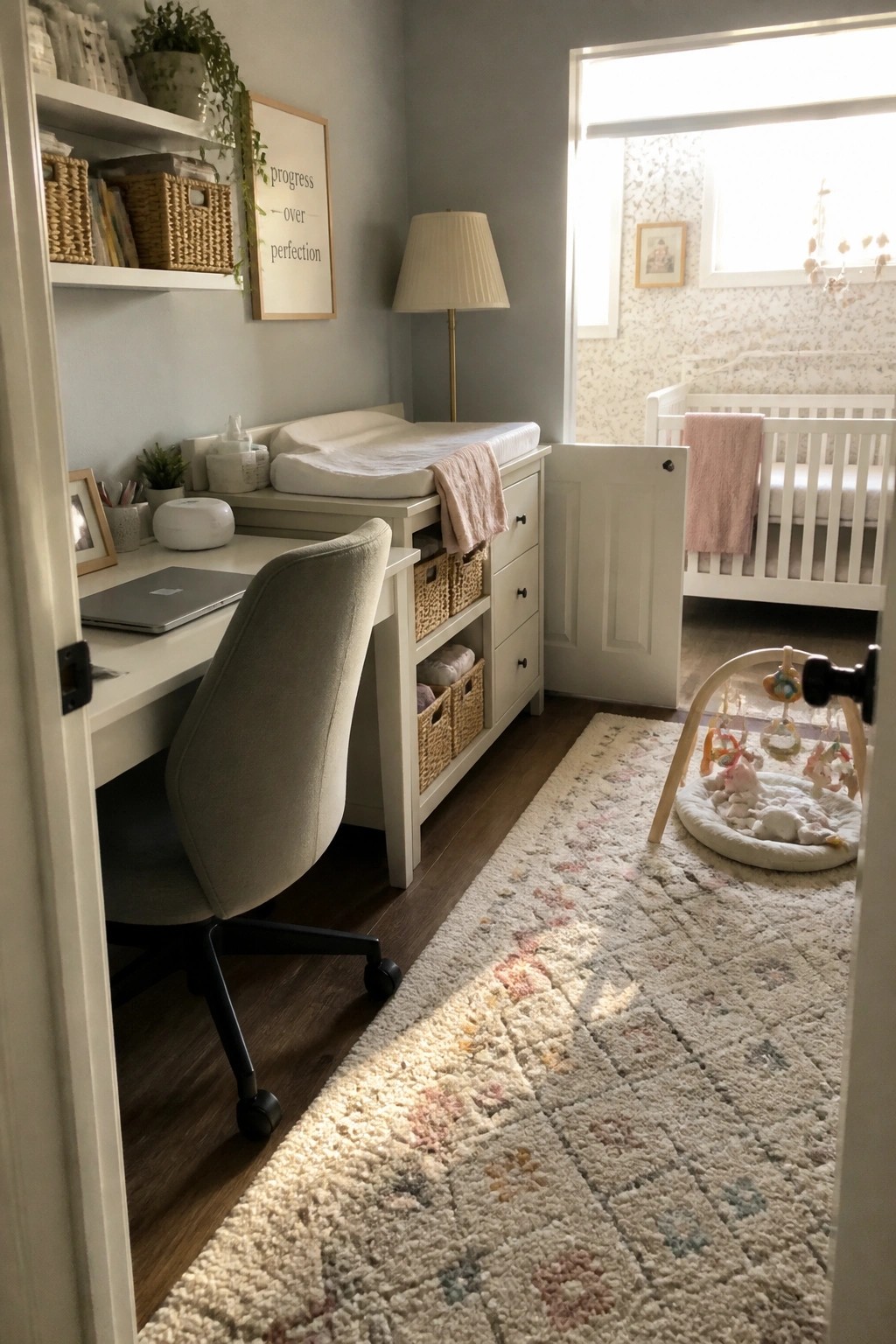
Many parents like keeping a desk in the nursery so they can manage a few work tasks without leaving the room. The setup keeps everything in one place and avoids the need for a separate office when space is tight.
This works best in smaller homes or for anyone who wants to stay close during nap times. Place the desk right next to the changing table and use the lower baskets for both baby supplies and basic office items.
Adding A Simple Desk Counter In A Busy Room

A long wooden counter makes a good workspace when you do not have a separate office. It keeps the computer and papers in one spot without taking over the whole room, and the height works fine for both quick tasks and longer stretches of work.
This setup suits smaller homes or open kitchens where you want to stay near daily activity. Keep the wall above it simple with a shelf for books and a few hooks for headphones or mugs so everything stays within reach but off the surface.
Built-In Bookshelves For A Focused Office
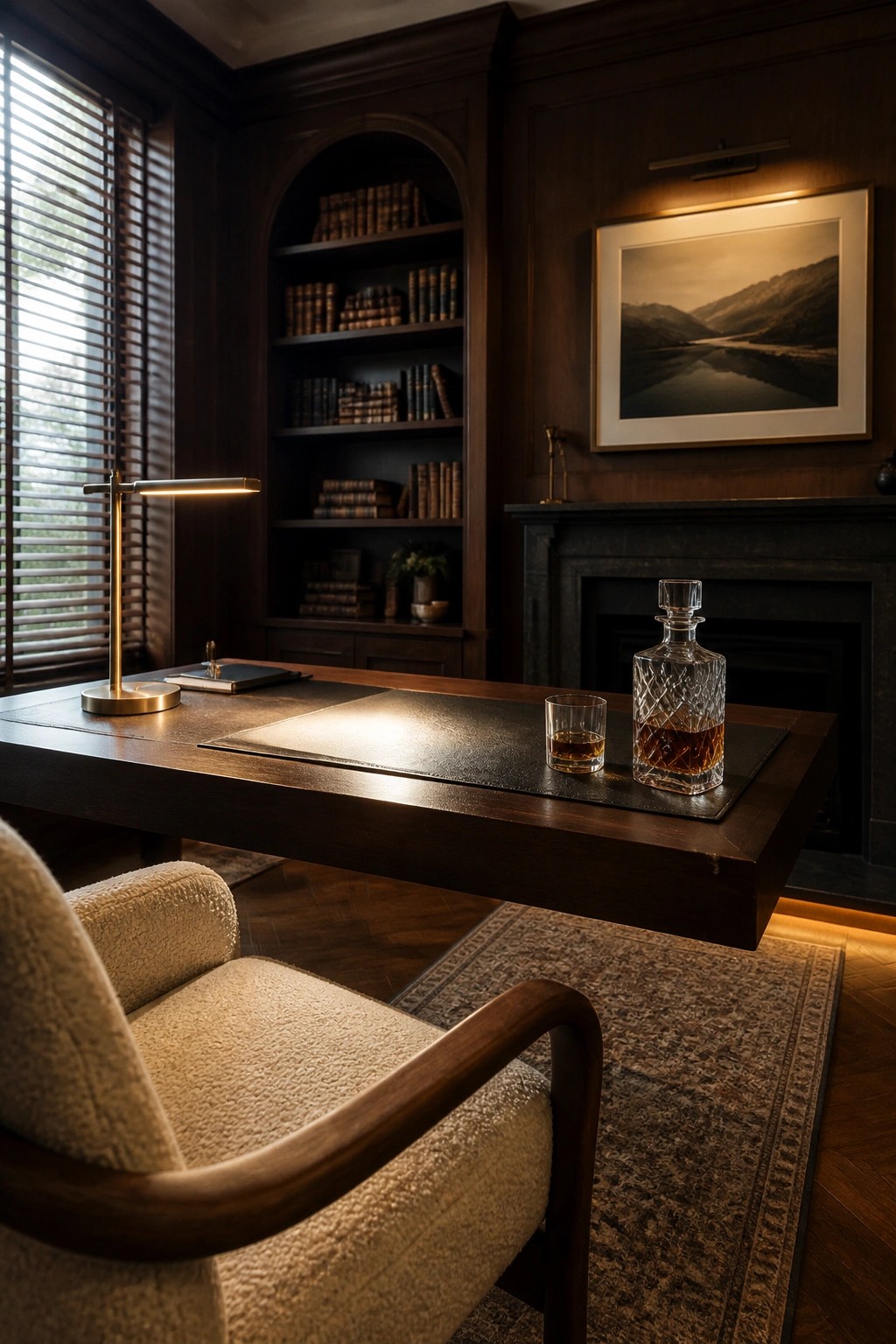
Built-in bookshelves give an office a settled feeling that helps with daily focus. They turn empty wall space into something useful while keeping books and papers off the desk and out of sight. The dark wood and full shelves in this setup make the room feel separate from the rest of the house.
This style works well in homes that already have wood trim or darker finishes. It suits people who spend several hours at a desk and want the space to feel enclosed rather than open and distracting. Keep the shelves organized but not overly styled so the room stays practical.
Frequently Asked Questions
Q: How can I add a few of these looks without spending much? A: Begin with free moves like shifting your desk to catch more light. Pick up one cheap plant or a secondhand cushion next. These steps build the vibe gradually.
Q: My space is small so how do I fit in new pieces without crowding it? A: Go for items that do double duty such as a slim chair with storage underneath. Keep the floor mostly open and hang one piece of art on the wall instead of adding shelves.
Q: Will better lighting really change how my day flows? A: It steadies your focus by cutting afternoon slumps. Move your setup near a window and use a simple bulb that mimics daylight. You notice the difference after a couple of days.
