

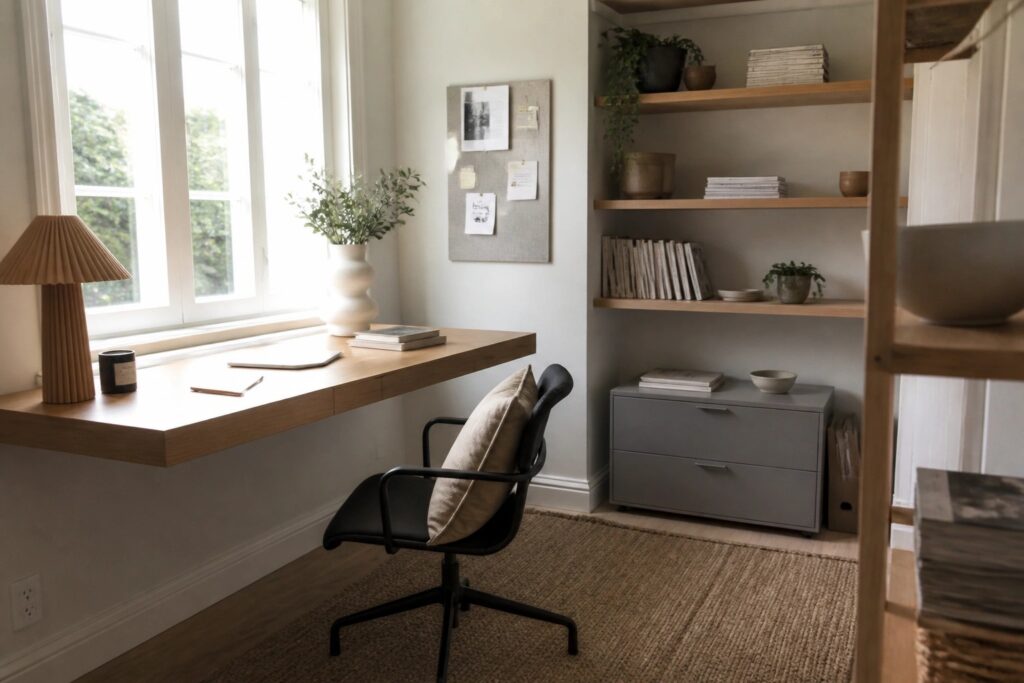
I have noticed that a workspace only feels right when the desk faces a window or a blank wall instead of a busy doorway.
When I rearranged my own setup last year the change in how long I could concentrate surprised me because the layout finally matched the way I move through the room.
A few practical tweaks tend to matter more than extra decorations.
I usually test ideas that improve storage first since piles of papers on the floor always pull my attention away from the task at hand.
It helps to pick one or two changes that fit the actual size of the space rather than copying every trend that appears online.
Wall Mount The Desk To Keep The Space Open
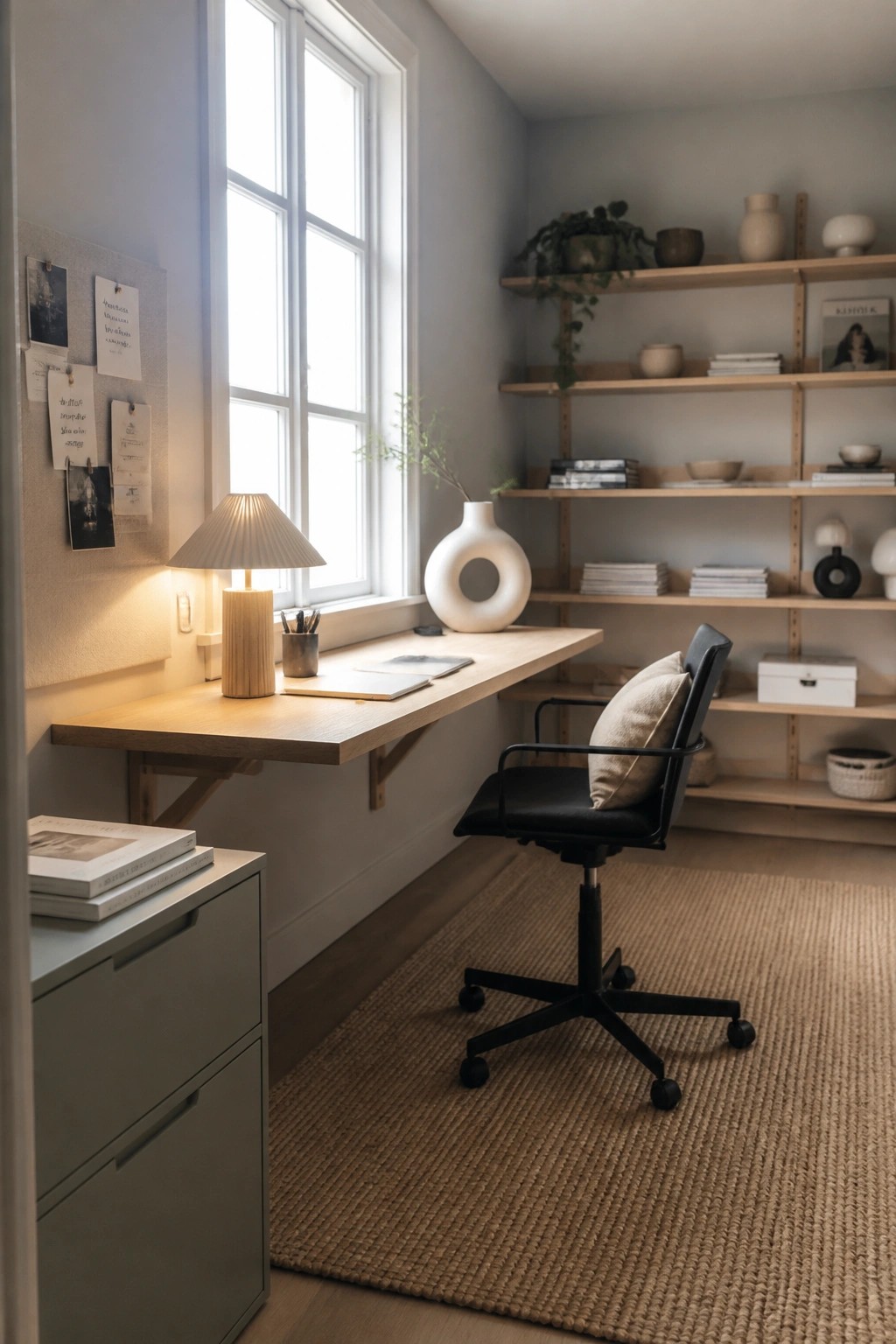
Mounting a desk straight to the wall gives you a clean workspace without eating up floor space. The desk stays out of the way so the room feels bigger and easier to move through. Natural light from the window helps too, since nothing blocks it from reaching the work surface.
This approach suits smaller rooms or anyone who wants the office area to feel calm instead of crowded. Keep the rest of the furniture simple, like a single chair and a few wall shelves, so the whole setup stays practical and uncluttered.
Built-In Shelving For A Focused Office
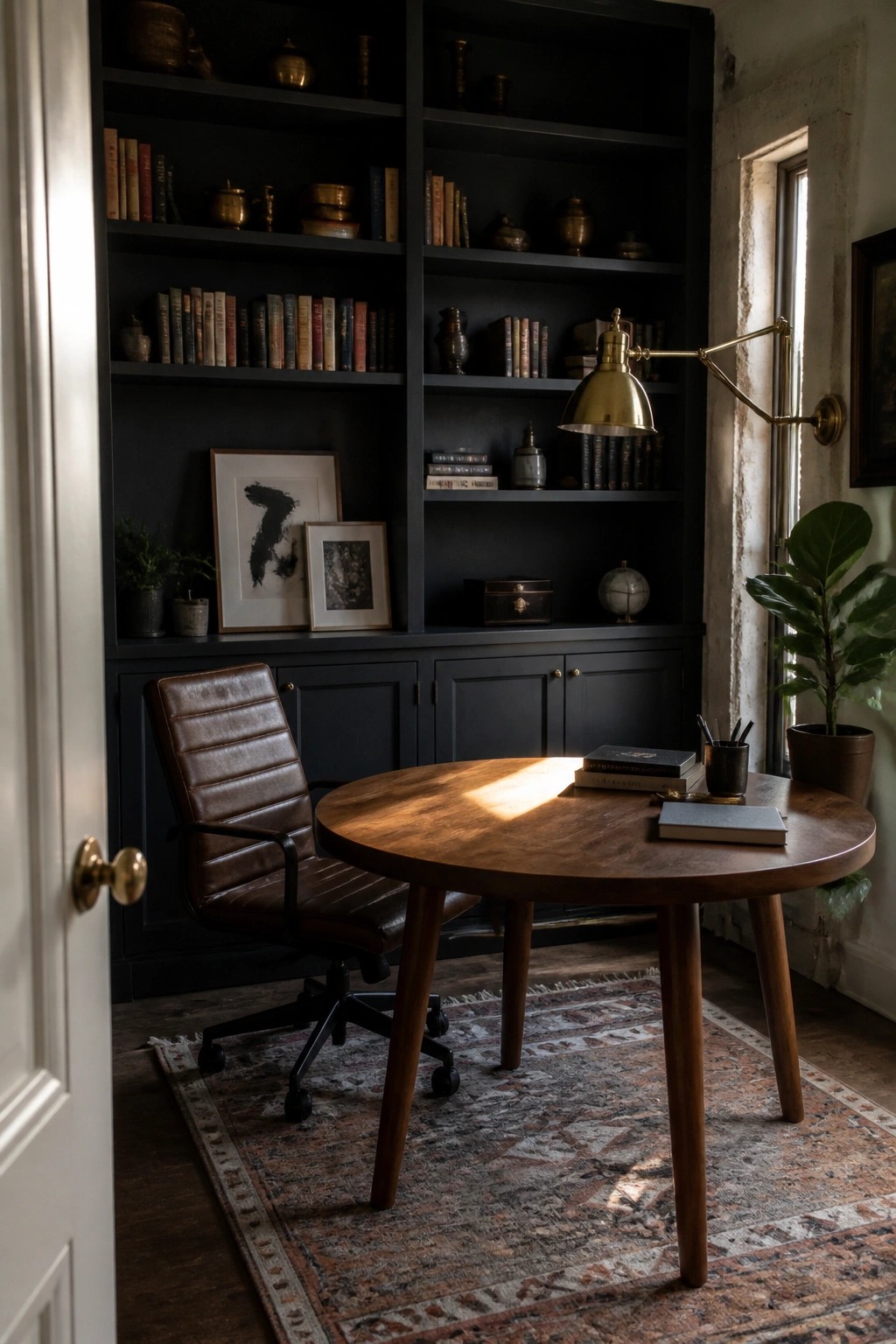
Built-in shelving works well in a home office because it turns wall space into storage without crowding the room. Everything stays in one place, which makes it easier to keep the desk clear and the space from feeling scattered.
This setup suits smaller rooms or any workspace that needs to feel contained. Dark finishes help the shelves blend into the background so the focus stays on the work surface. A round table fits nicely in front of the built-ins and leaves room to move around the chair.
Let Natural Light Shape Your Office Layout
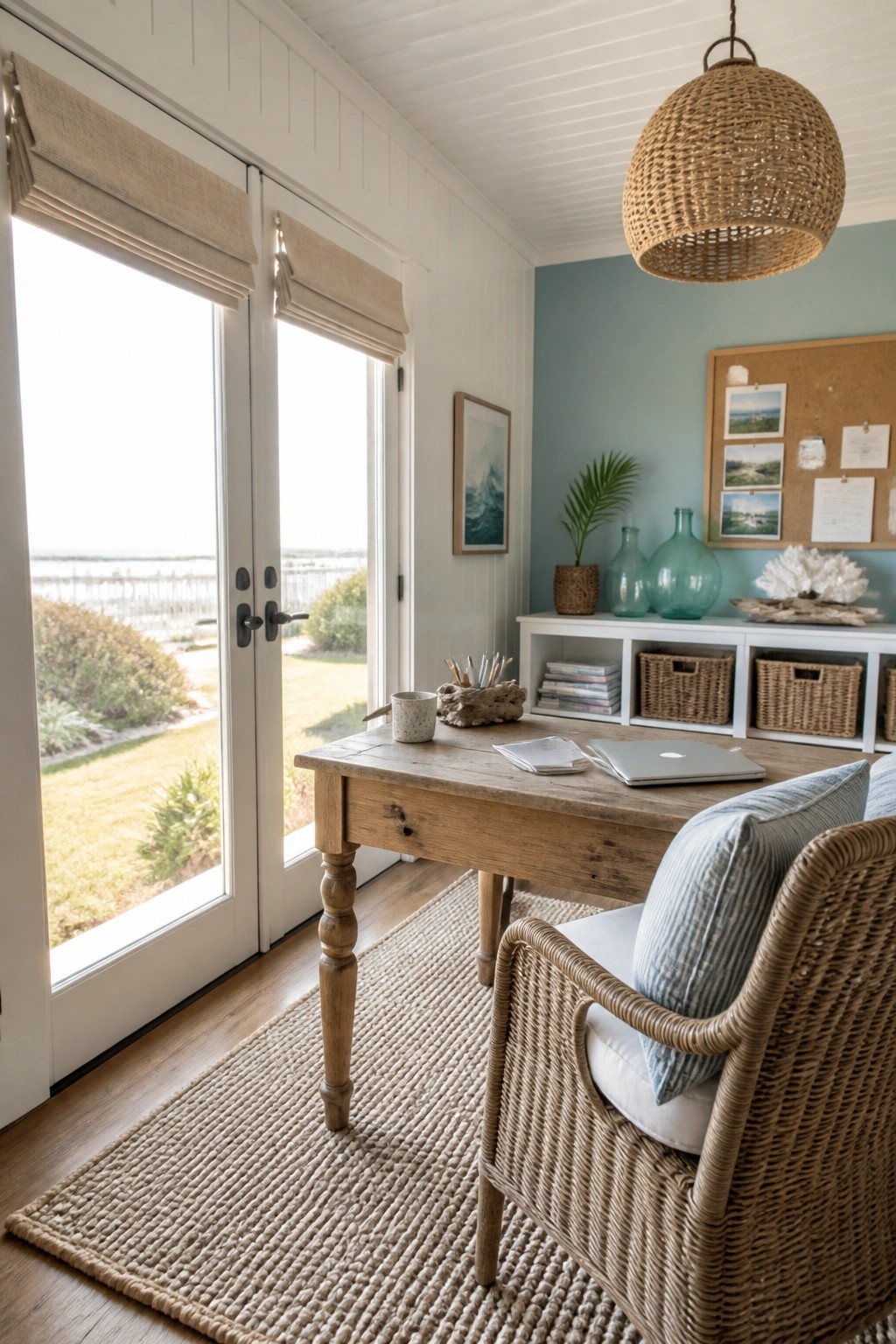
Placing a desk right by a set of glass doors brings in steady natural light that can make long work hours feel less tiring. The view outside also gives your eyes a place to rest, which helps keep focus from drifting.
This setup works best in rooms that face a quiet yard or garden. Pair the desk with simple wood and woven pieces so the space stays calm rather than busy, and check that screens do not catch direct glare during the day.
Labeled Storage Crates Organize Desk Space
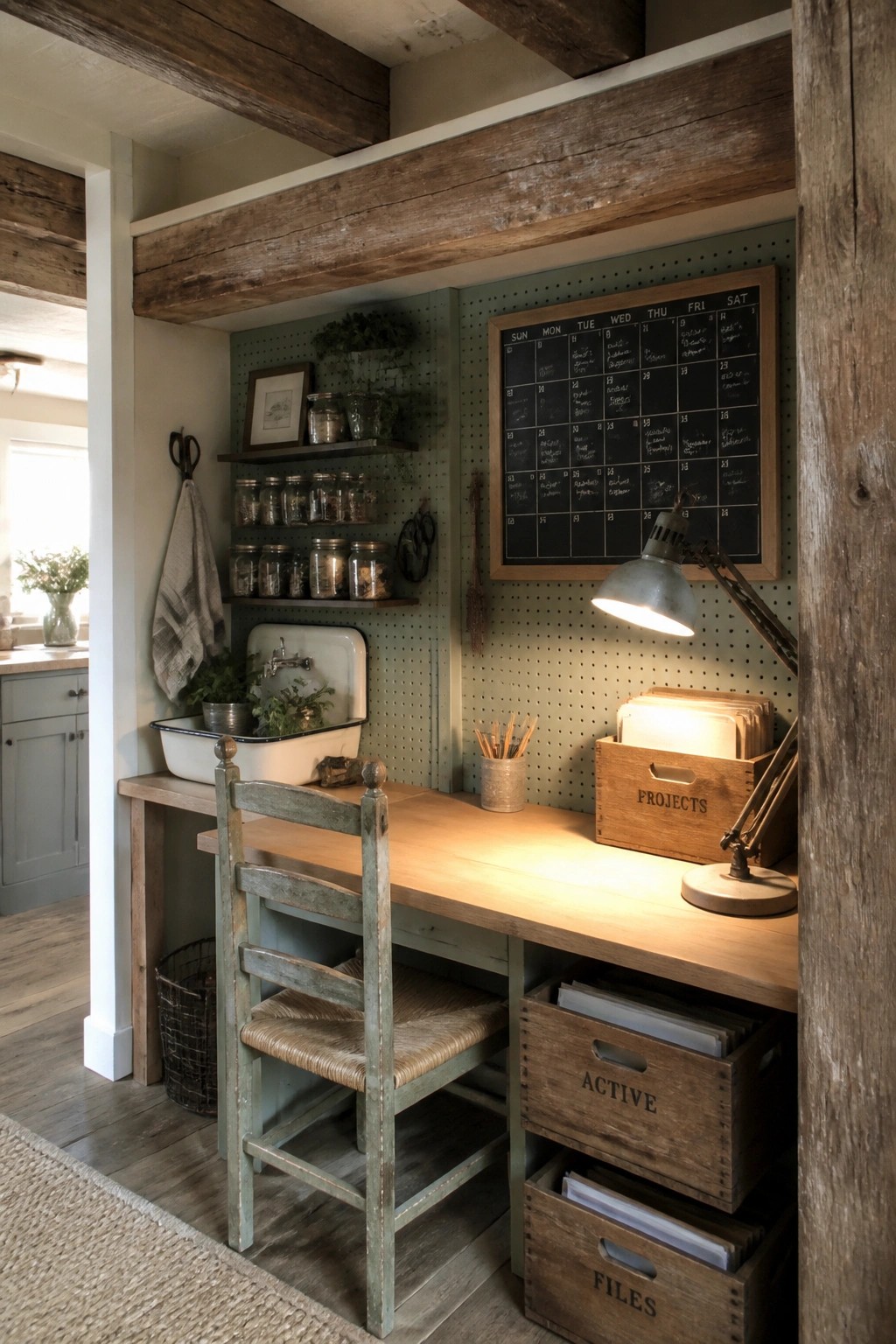
Many people like keeping active files and projects close at hand rather than tucked away in a separate cabinet. Wooden crates with simple labels let you sort things into categories and pull out what you need without digging through drawers.
This approach works best in smaller home offices or older homes where built-in storage is limited. Stack two or three crates under the desk and use them for files, current work, or ongoing projects so the surface stays clear.
Built-In Desks Turn Closets Into Focused Workspaces
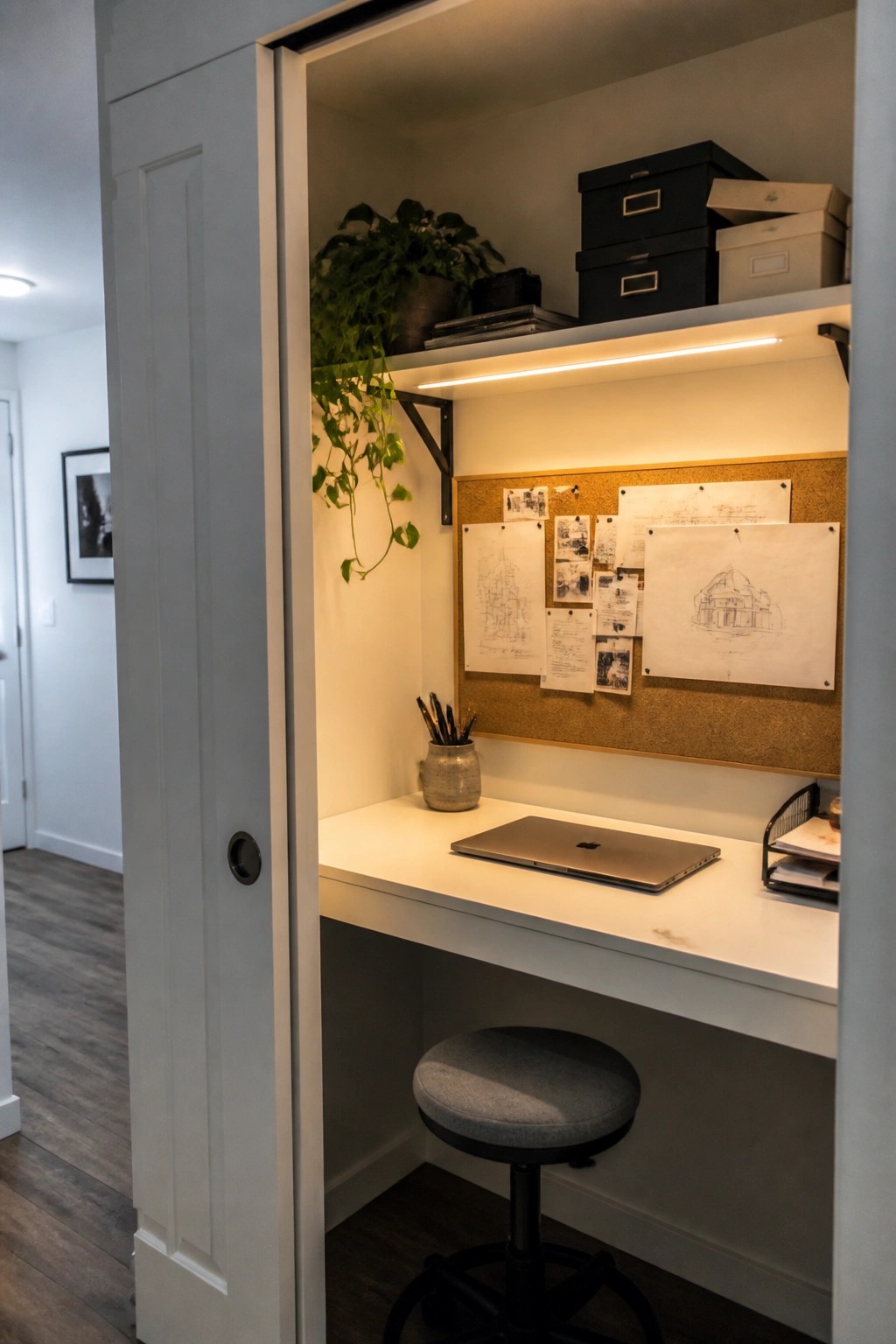
A small enclosed workspace like this helps keep distractions down because the walls and door create a natural boundary. The setup stays simple with a desktop that fits the depth of the closet and a stool that tucks away when not in use. Many people find they get more done when the work area feels separate from the rest of the house.
This kind of nook works best in homes that have spare closet space near a hallway or bedroom. Add a corkboard on the back wall for notes and a strip of lighting under the shelf so the area stays usable in the evening. Just make sure the door can still close fully when the space is not in use.
Rolling Carts Keep Supplies Within Reach
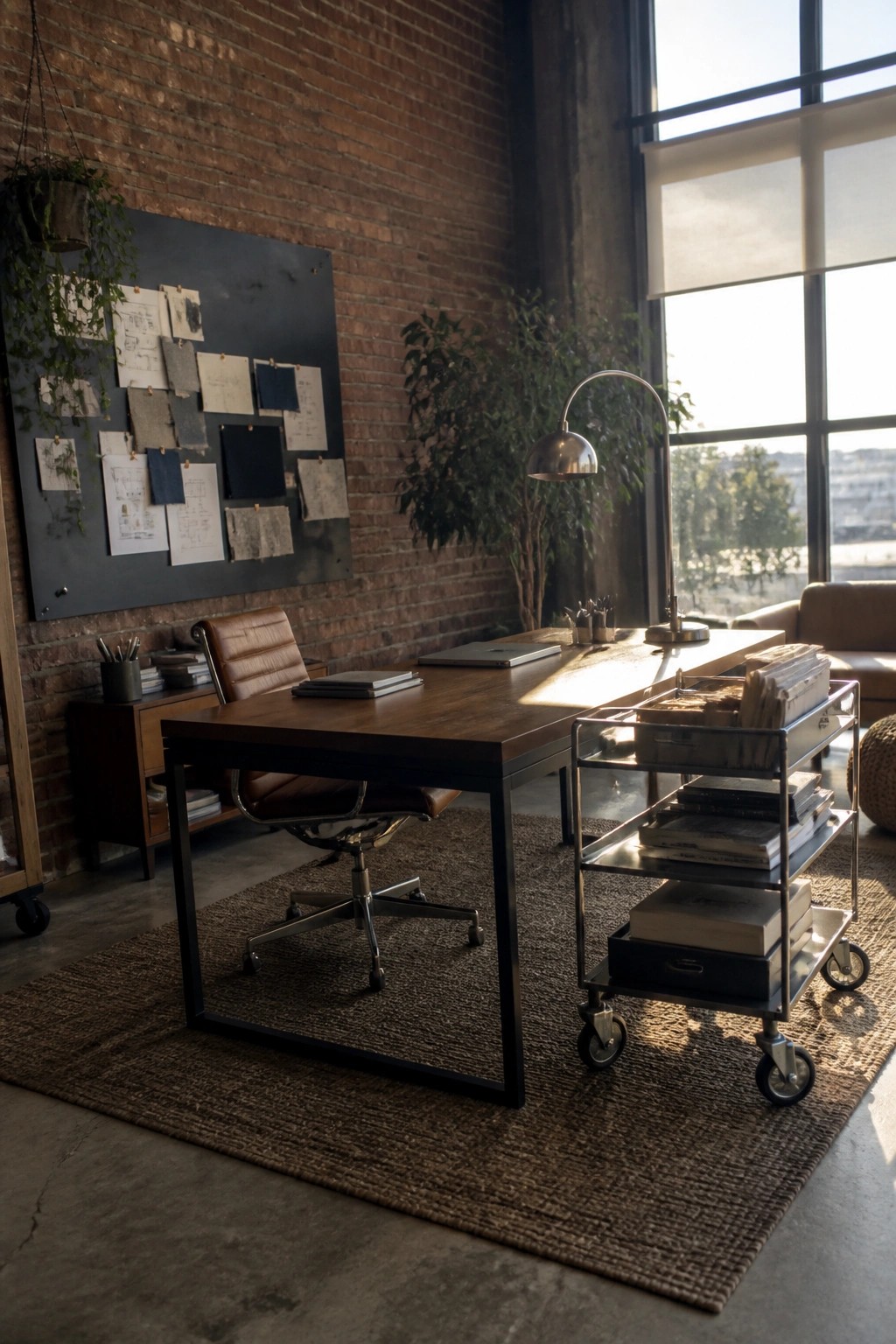
A rolling cart adds flexible storage right where you need it most in a workspace. It holds files, books, and extra supplies without crowding the desk surface, and it moves easily when you want to shift things around or open up the floor.
This idea works well in smaller home offices or rooms that serve more than one purpose. Keep the cart next to your main desk so you can roll it out during the day and tuck it back when the room needs to feel open again.
Built-In Shelving That Clears Desk Clutter
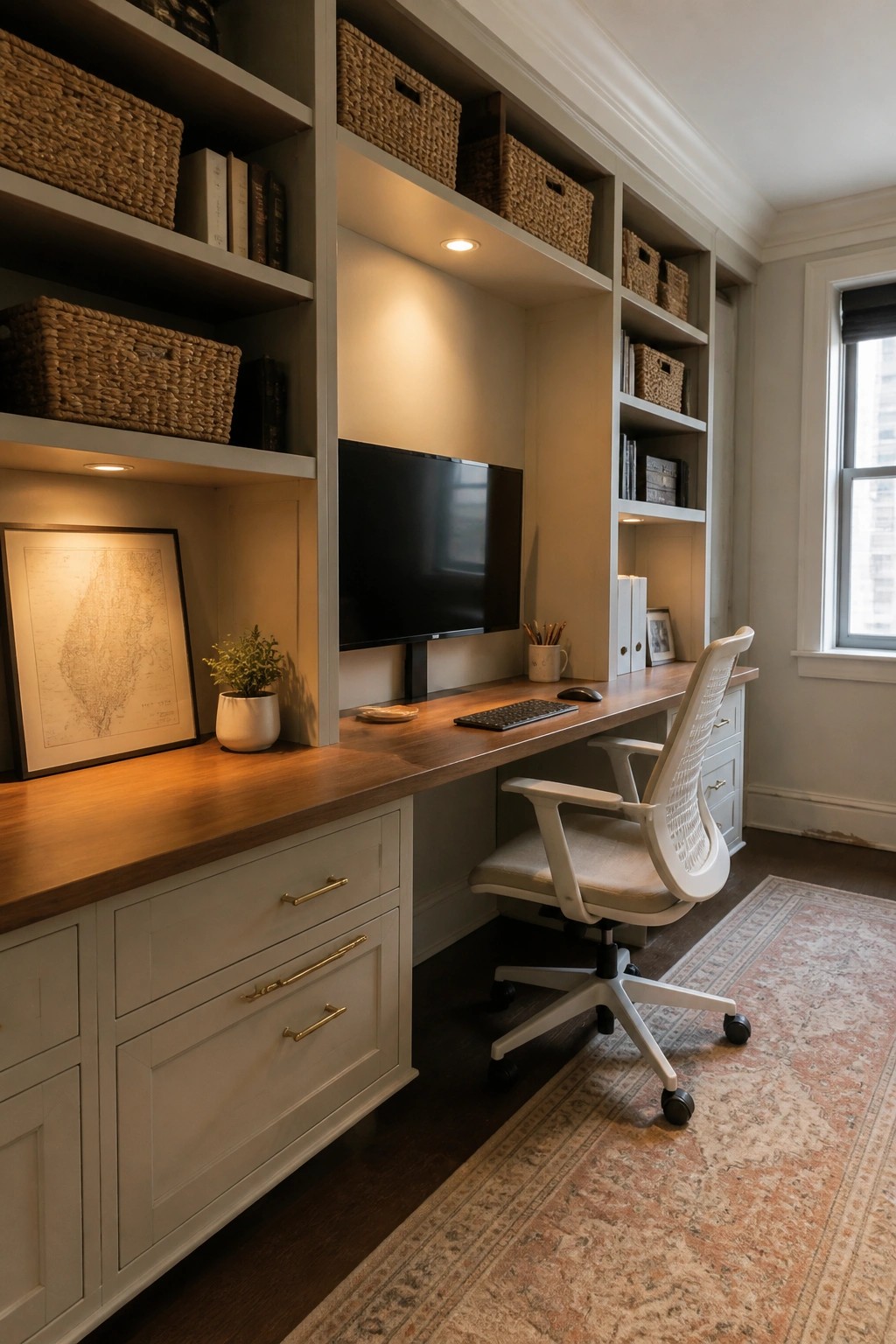
Built-in shelving around a desk gives you storage without adding more furniture that takes up floor space. It keeps books, supplies, and papers in one spot so the work surface stays open and easier to use.
This setup works best in smaller rooms or homes where you want everything within reach but out of the way. Lower cabinets can hide the messier items while open shelves hold things you grab often.
Monitor Arms Clear Desk Space For Better Focus

Mounting monitors on adjustable arms keeps the desktop open and lets you set the screen at the right height without stacking books or using big stands. This works especially well on a long desk where two people might share the space or one person needs room for notes and other tools.
The approach fits homes where the office has to double as another room. Choose arms that clamp or bolt securely to the desk and pair them with a simple chair that supports good posture. Keep the area above the desk for a few personal items so the focus stays on the work in front of you.
Add a Vertical Garden to Your Home Office

A vertical planter mounted on the wall next to the desk brings greenery into the workspace without crowding the surface. Many people notice it helps the room feel calmer and less boxed in during long work hours.
This setup suits smaller offices or corners where floor space is limited. Choose hardy plants that tolerate indoor light and keep the planter narrow so it does not compete with the desk itself.
A Workbench With Storage Built Right In
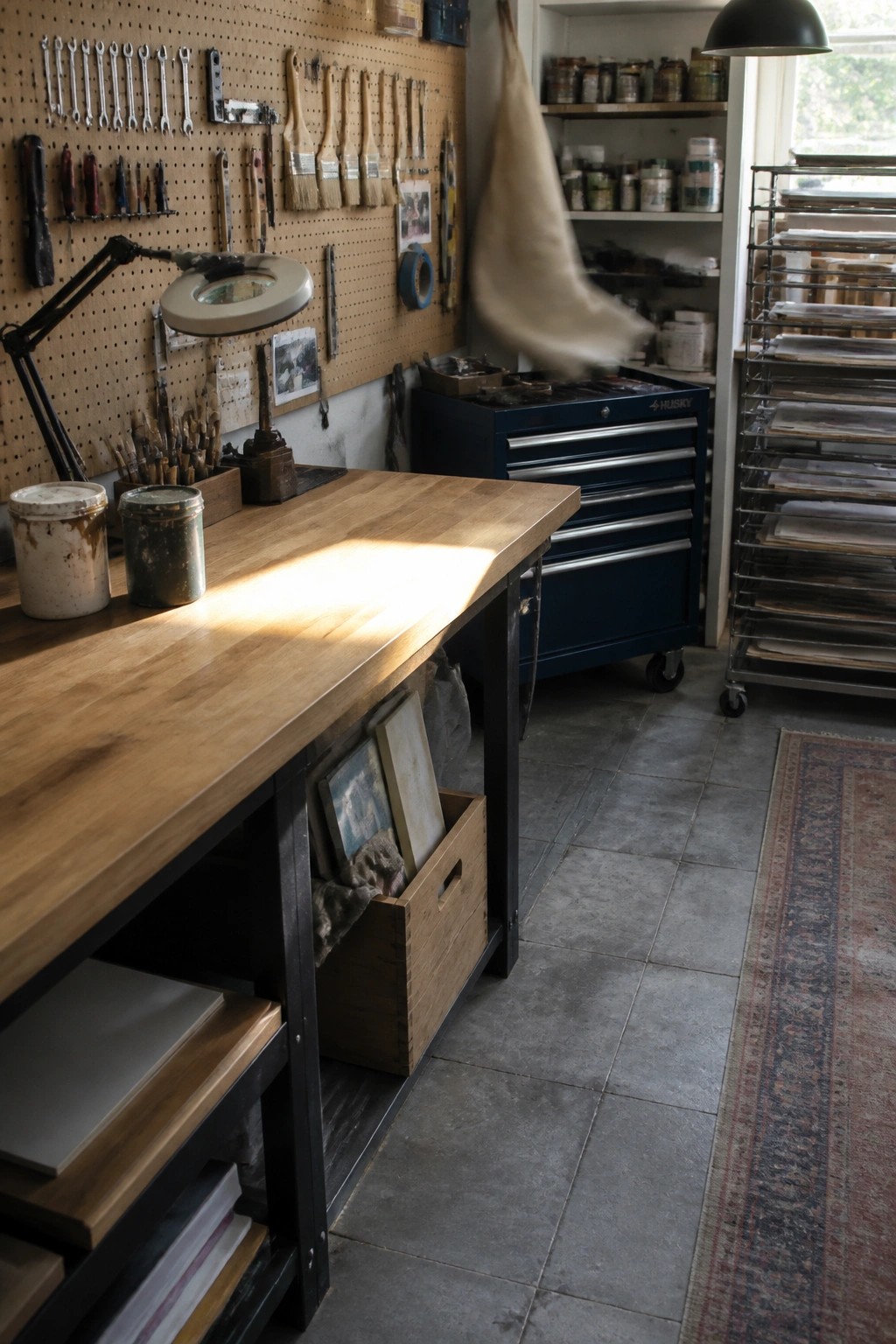
A big, solid workbench gives you room to work without feeling cramped. It keeps tools and supplies within reach so you can stay focused instead of hunting around the room.
Tuck crates or low shelves underneath for the items you use most. This works especially well in a home studio or craft space where you need quick access but still want the floor clear.
Built-In Shelves That Keep A Workspace Organized
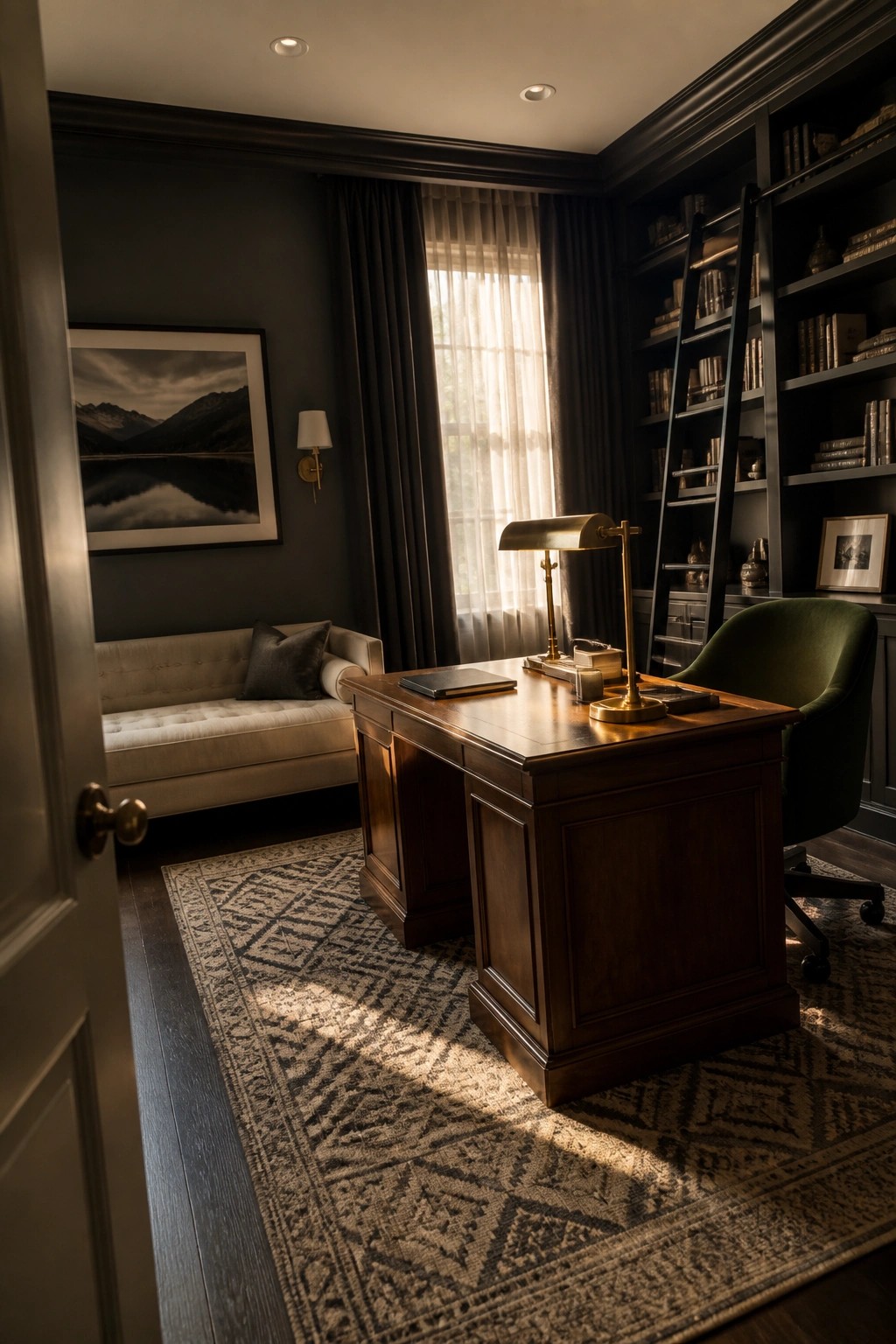
Built-in bookshelves give an office a sense of order that loose furniture rarely matches. When the shelves run floor to ceiling they hold books, files, and supplies in one place, so the desk stays clear and the room feels calmer.
This approach works best in a room with at least one long wall and decent ceiling height. Keep the shelves at a reachable depth and add a rolling ladder if the top rows are hard to reach. Dark paint on the surrounding walls helps the space feel enclosed and quiet, which many people find useful when they need to concentrate.
Position Your Desk Near Open Doors

Placing a desk right by a set of open doors brings steady natural light into the workspace and gives the eyes a place to rest. The view outside helps break up long hours at the desk without pulling attention away from the work.
This setup works best in rooms that connect directly to a garden or patio. Keep the doors clear of heavy curtains so the light stays consistent, and use a simple chair that does not block the path. It suits smaller homes where one room needs to feel larger and calmer at the same time.
Built-In Desks Under Stairs Create Useful Work Areas
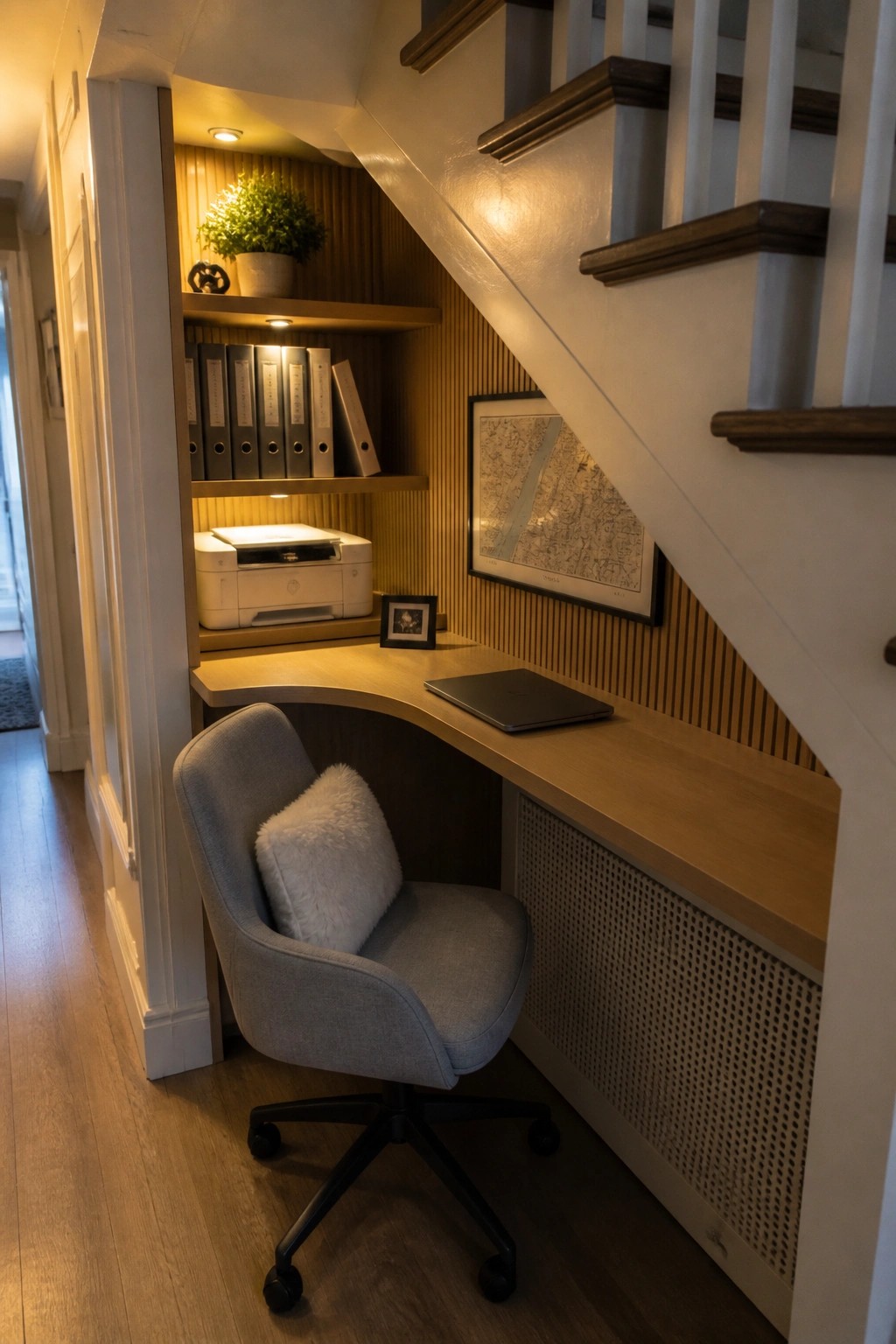
Many homes have odd leftover space under the stairs that often goes unused. Fitting a desk and shelves into that spot turns it into a small dedicated workspace that feels separate from the rest of the house.
This works best in smaller homes or any layout where you want a work area without dedicating a full room. Keep the desk height practical and add enough lighting so the area does not feel dark during the day.
Low Tables For Focused Work
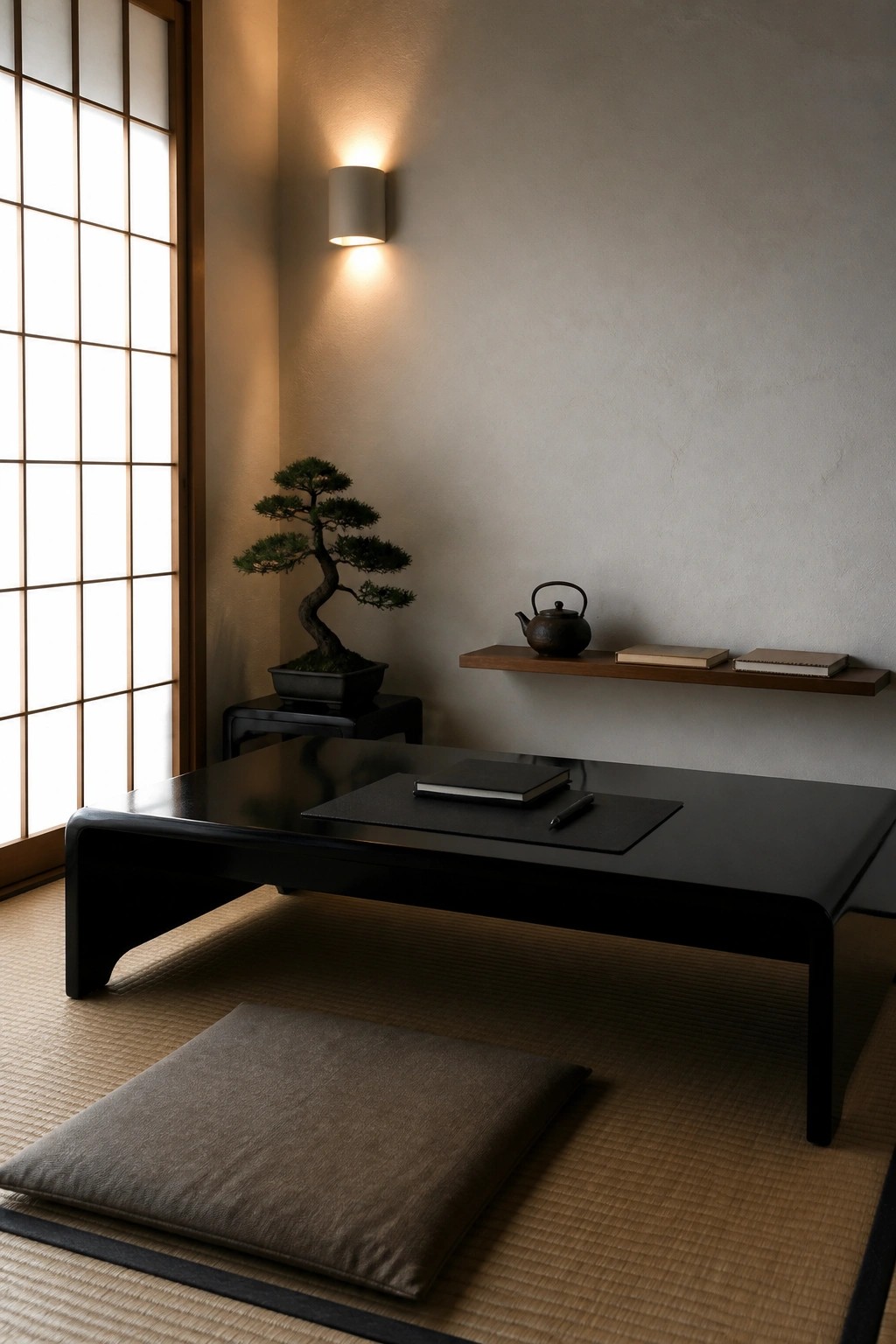
A low table set right on the floor gives a workspace a grounded feel that many people find easier to concentrate in. The simple height keeps everything within reach without the bulk of a regular desk taking over the room.
This kind of setup suits smaller spaces or homes that already use minimal furniture. Pair it with a flat cushion for seating and limit what goes on the table so the surface stays clear for actual work.
Built-In Desks With Wall Storage
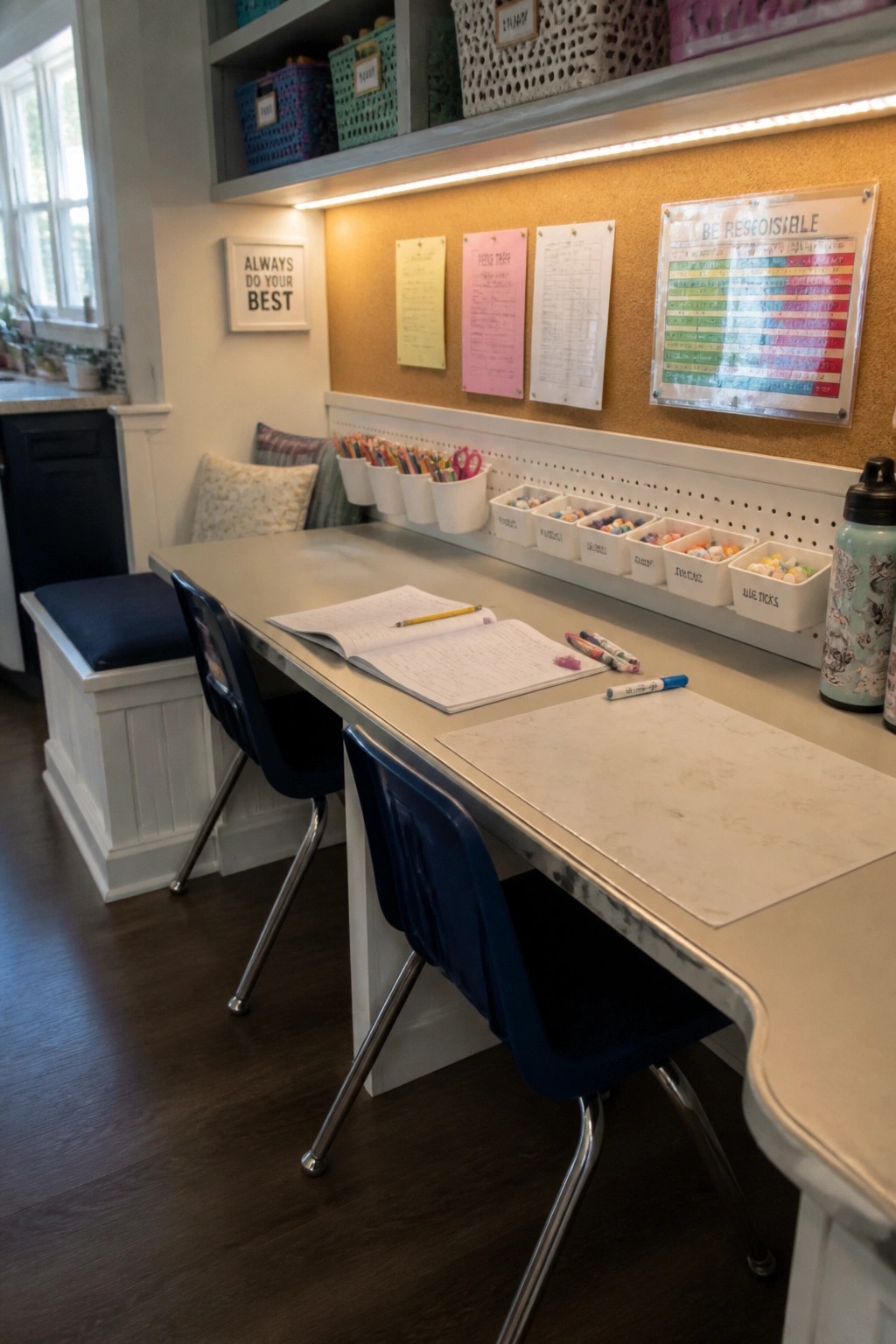
A built-in desk with storage right above it turns a plain wall into a place that actually helps you focus. The bins and cubbies keep supplies sorted and off the work surface, so the area stays clear for whatever task is in front of you.
This kind of setup works best in a spare room or along a hallway wall where you need a permanent spot for work or schoolwork. Adding simple labels and a board for reminders makes it easier to stay organized without extra effort.
Glass Enclosed Office Nooks
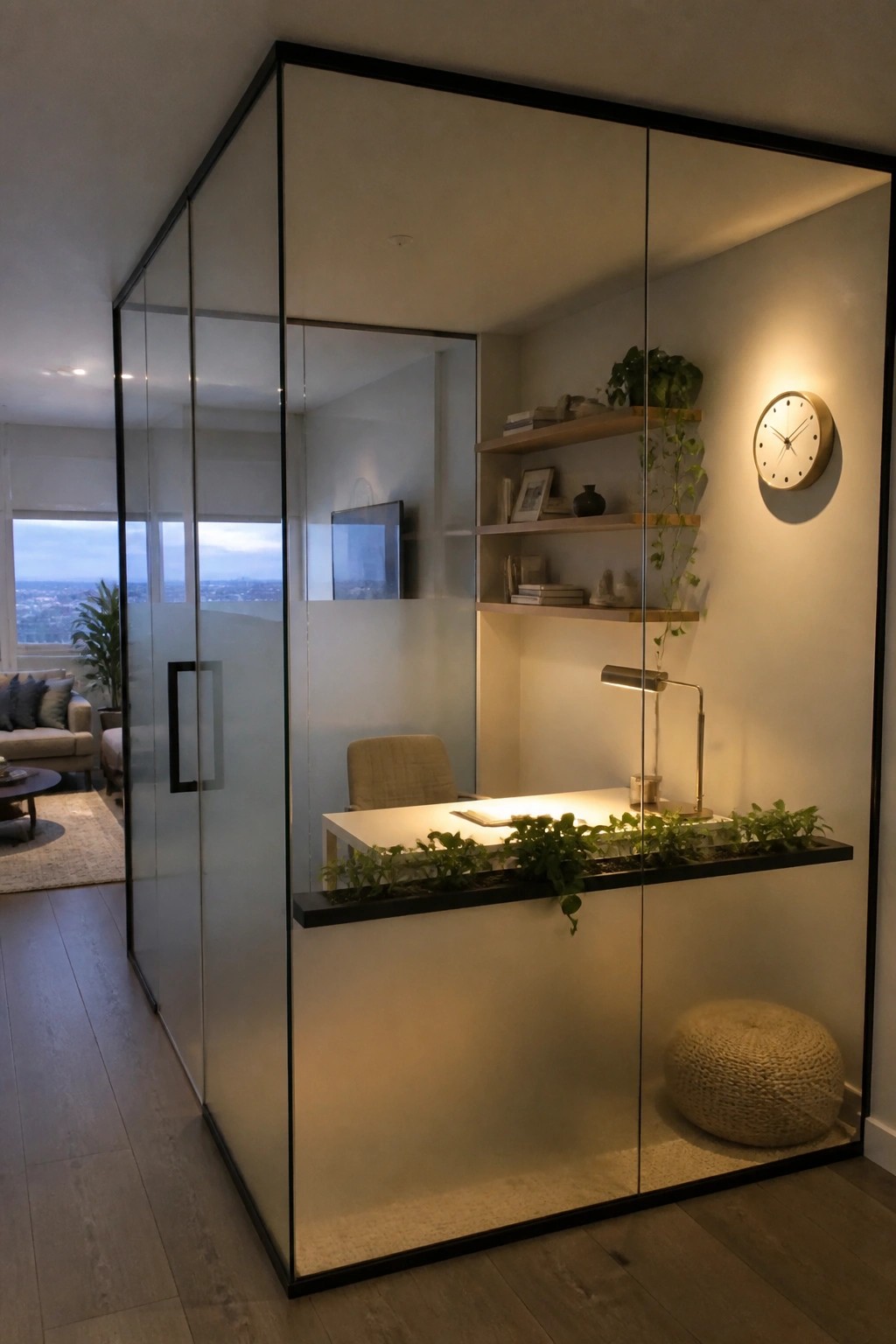
A glass enclosure creates a clear boundary for work without making the space feel cut off from the rest of the home. The see-through walls let light pass through and keep the room feeling open while still giving you a spot that signals it is time to focus.
This approach works best in apartments or open living areas where a full separate room is not possible. Use it where you need quiet for a few hours but still want to stay aware of what is happening nearby.
Skylights In An Attic Workspace
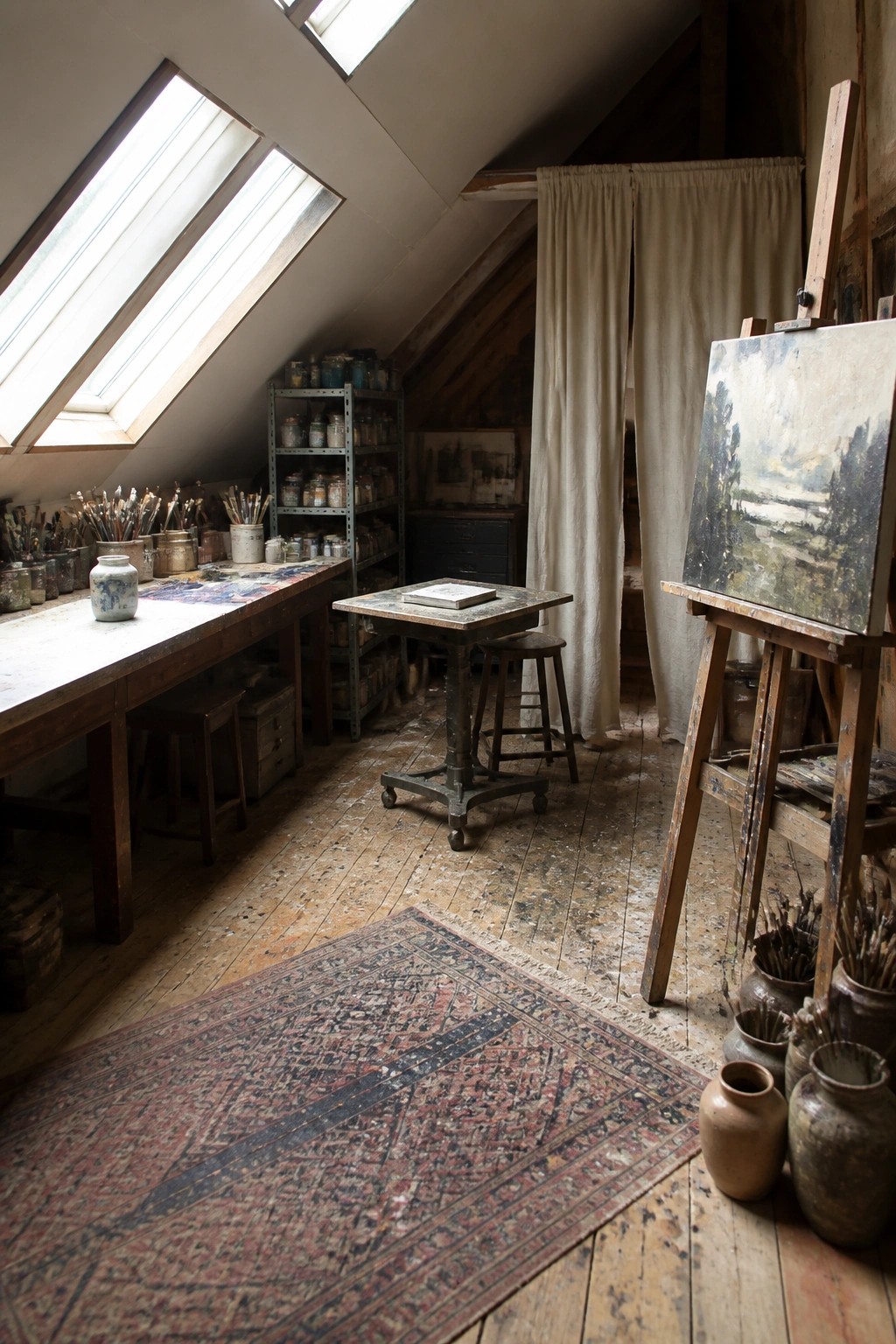
An attic can make a strong home office once you add skylights. They bring in overhead light that reaches the whole space without needing big windows on the walls. This setup feels especially useful for creative work where steady natural light helps with focus over long hours.
Place the main table right under the skylights and keep supply storage along the lower walls. The approach suits homes with steep rooflines and works best when you avoid blocking the light with tall cabinets or heavy curtains.
Built-In Desks In Bay Windows
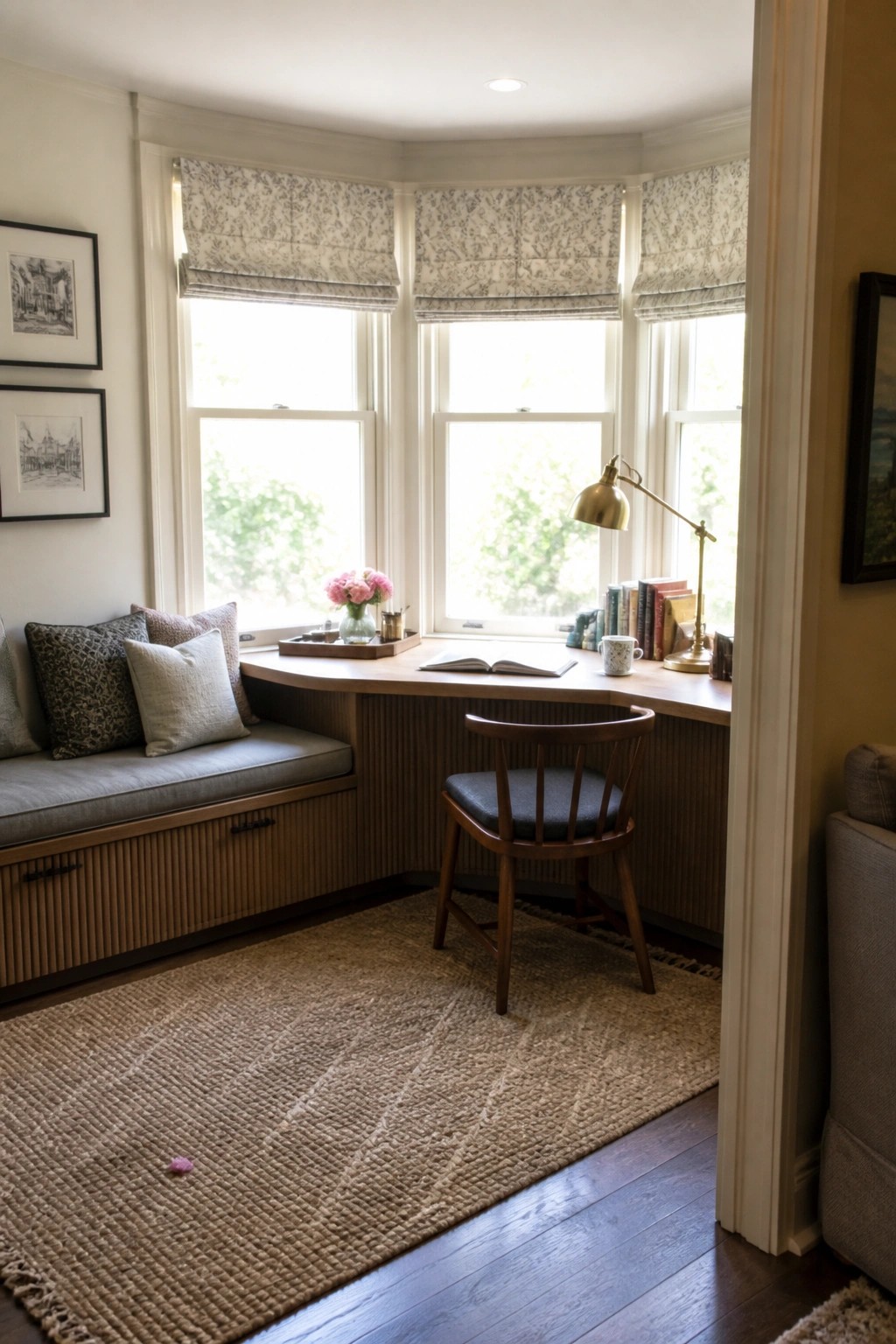
A built-in desk that wraps along a bay window creates a workspace that stays bright all day without needing extra lamps. The shape makes good use of an awkward corner and gives you room for papers and books right where you need them.
This idea works best in homes with older windows or smaller rooms where you want a dedicated spot for work without adding freestanding furniture. Keep the surfaces clear and choose a simple chair so the area stays calm and easy to use every day.
A Dining Table Makes A Solid Workspace
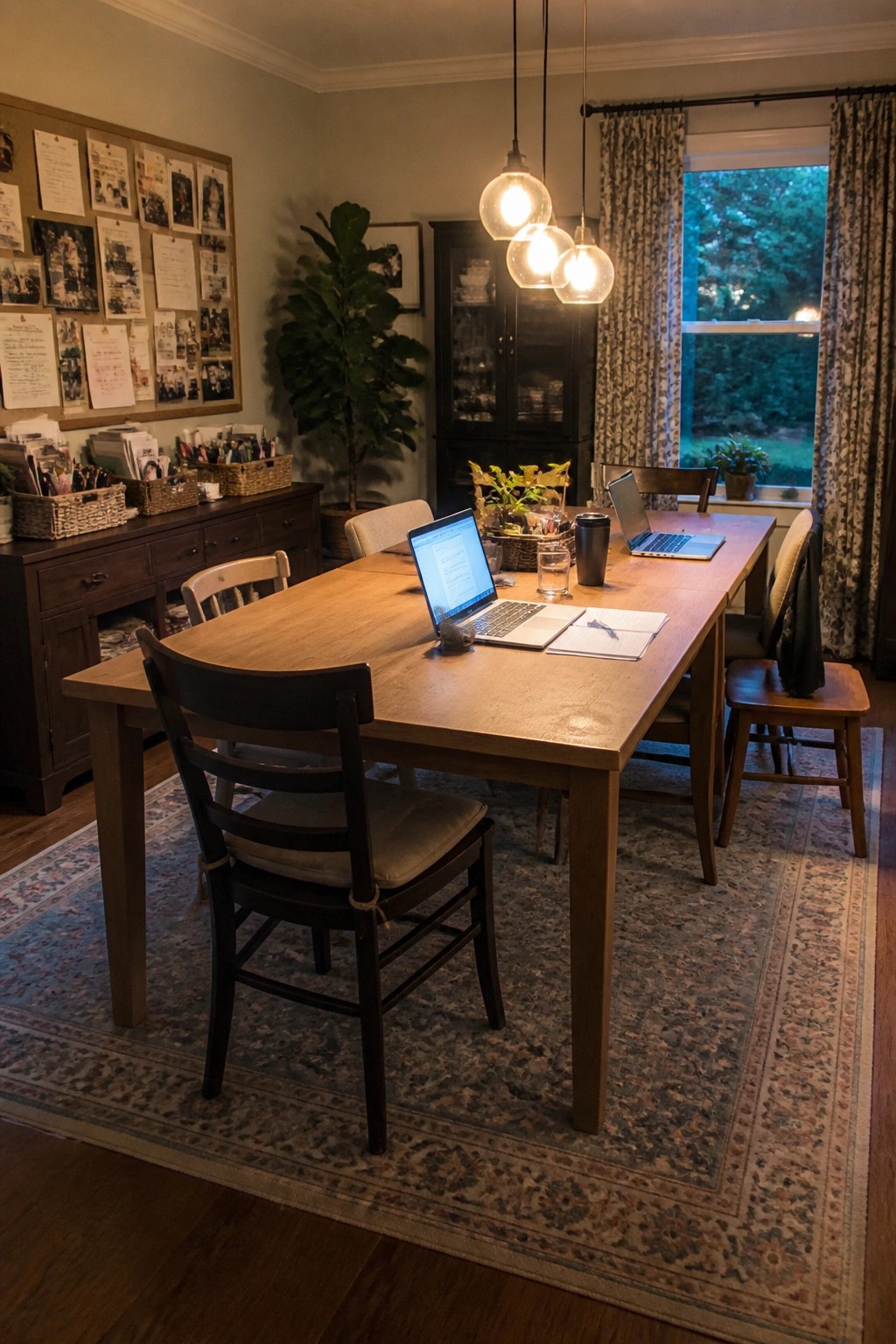
A big wooden table gives you room to spread out papers, a laptop, and a notebook without everything feeling crowded. It works especially well when you want a workspace that does not force you to hunch over a small desk all day.
This idea fits homes that already have a dining table they do not use for meals every evening. Keep the seating comfortable for longer hours and make sure the table surface can handle daily use without showing wear too quickly.
Add A Task Lamp For Focused Work
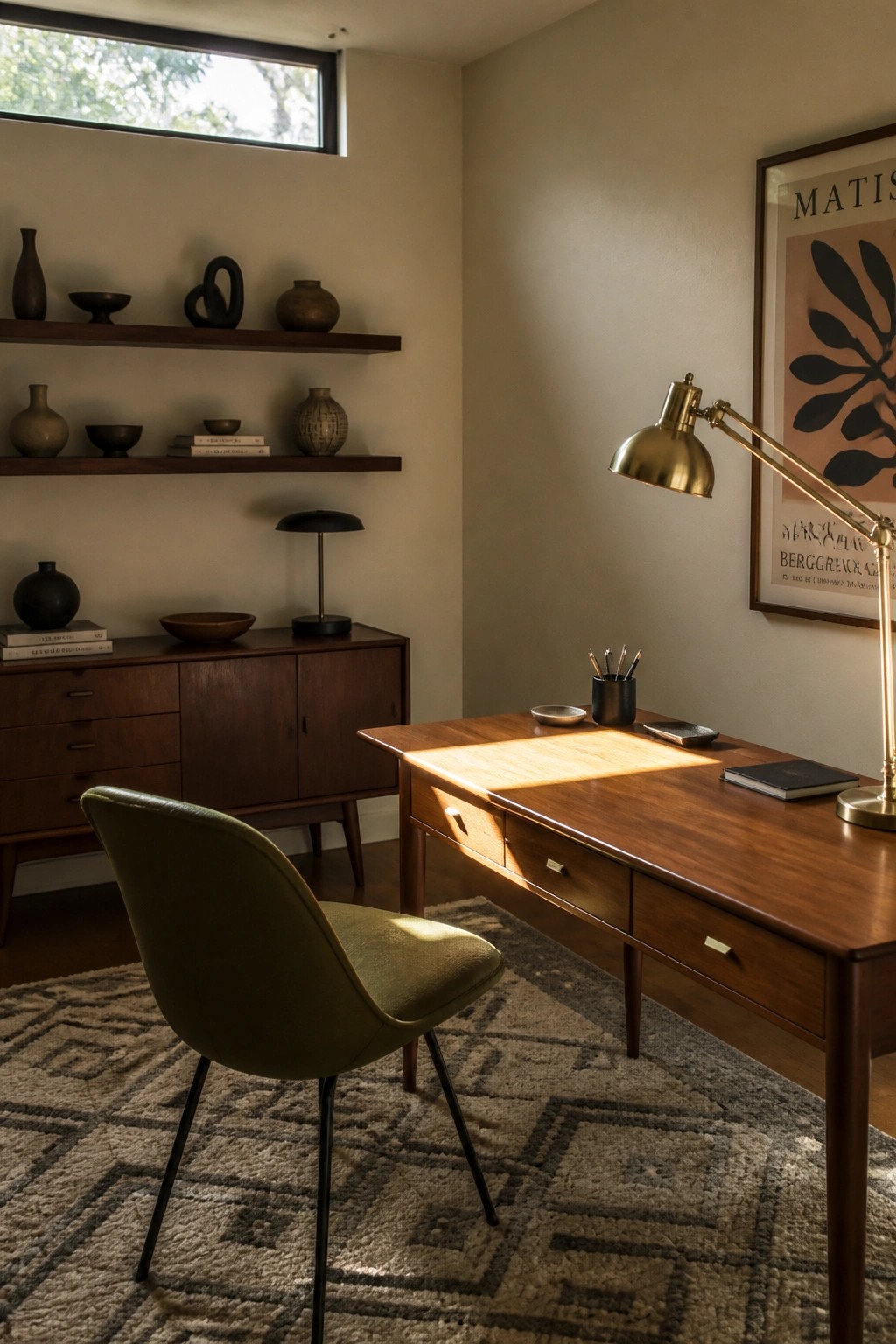
A task lamp gives you direct light right on the desk surface where you actually need it. This keeps the rest of the room from feeling overly bright while still making it easier to read or work without straining your eyes.
It works best in smaller home offices or rooms that double as workspaces. Look for one with an adjustable arm so you can shift the light as needed throughout the day.
Live Edge Wood Desks For A Calmer Workspace

A live edge wood desk brings a natural shape into the workspace that feels less rigid than standard furniture. Many people find the organic lines and visible grain help the room feel warmer and easier to settle into for longer stretches.
This style works best in smaller home offices where you want one strong piece to set the tone. Keep the rest of the room simple with neutral colors and a few plants so the desk stays the main focus without competing elements.
Tuck A Desk Into A Dark Wall Nook
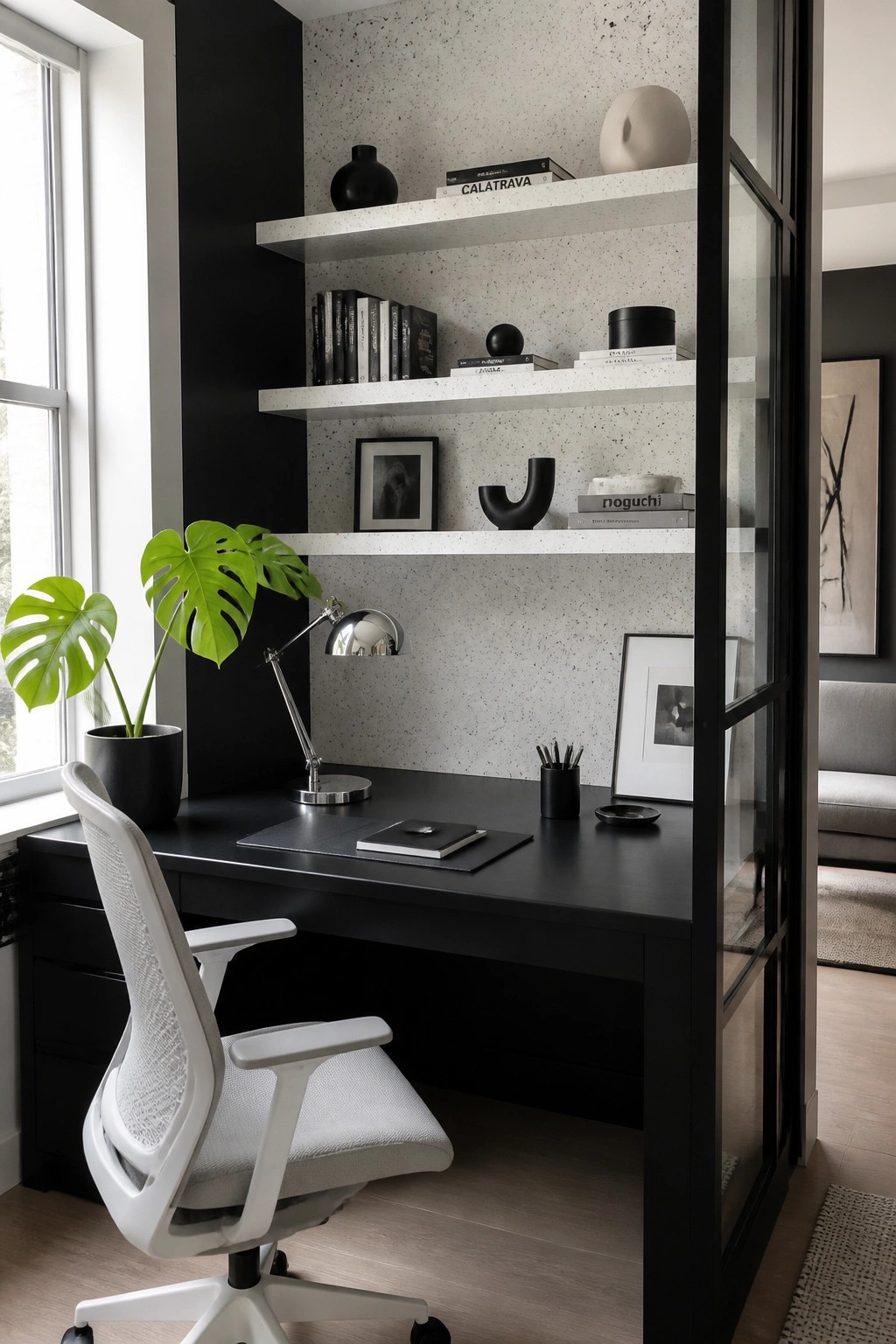
A dark wall behind the desk helps pull everything into one spot and cuts down on visual noise. The contrast with lighter shelves makes the workspace feel more contained without needing extra walls or doors. It works especially well in open homes where you want a clear work zone that still blends with the rest of the room.
This setup suits smaller spaces or rooms with high ceilings where a full built-in might feel heavy. Keep the desk surface clear and use the shelves for books and a few simple objects so the area stays practical rather than busy. Dark paint on the surrounding walls does most of the work here.
Built-In Bookshelves For A Focused Workspace
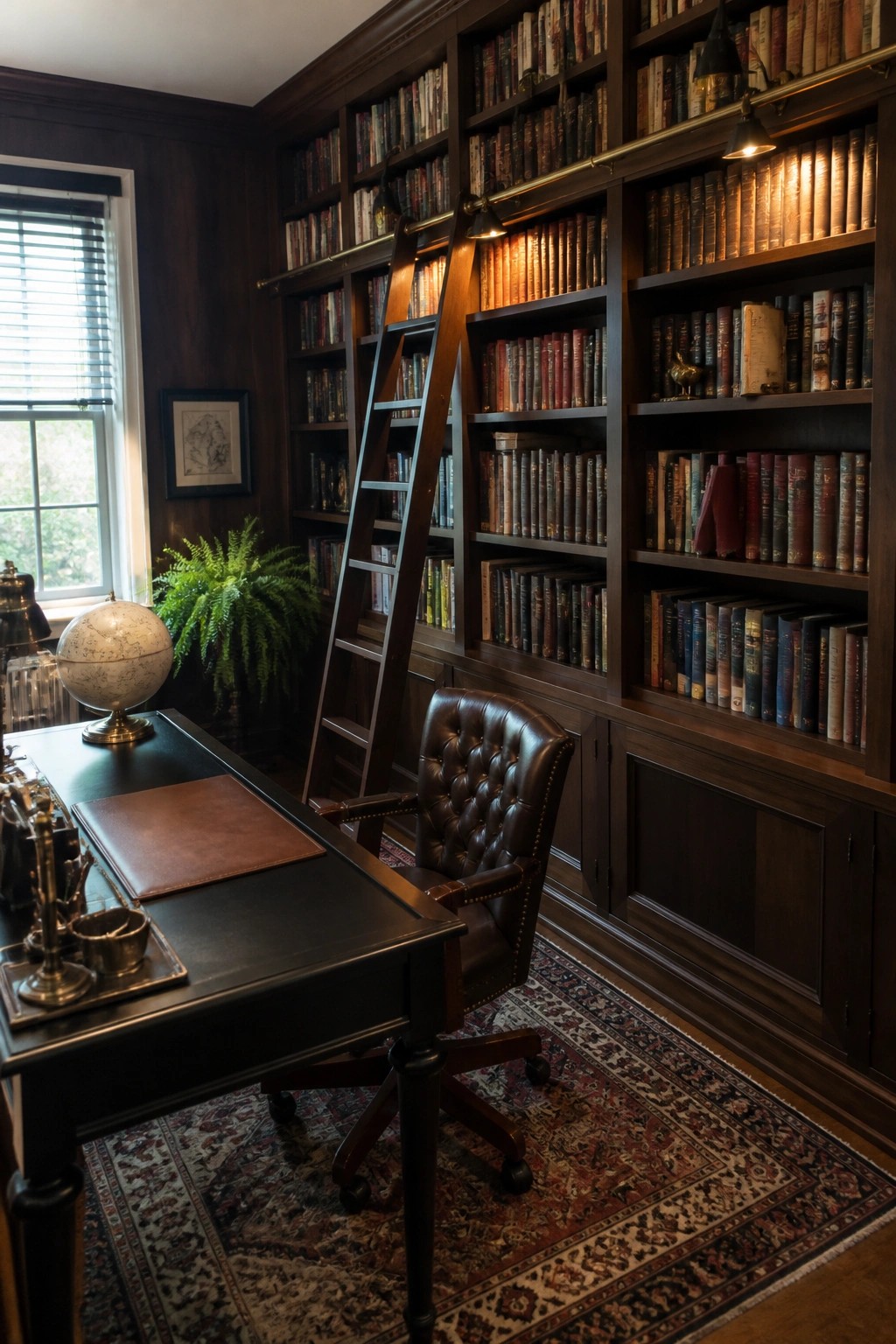
Built-in bookshelves give an office a sense of order that helps with concentration. When the walls are filled with books, the space feels purposeful and contained, which reduces the urge to look elsewhere for stimulation.
This setup works well in rooms that can spare the wall space and have decent ceiling height. A rolling ladder keeps the upper shelves reachable without crowding the floor, and the style suits older homes or any workspace that can handle dark wood tones.
Create A Workspace In Your Laundry Room
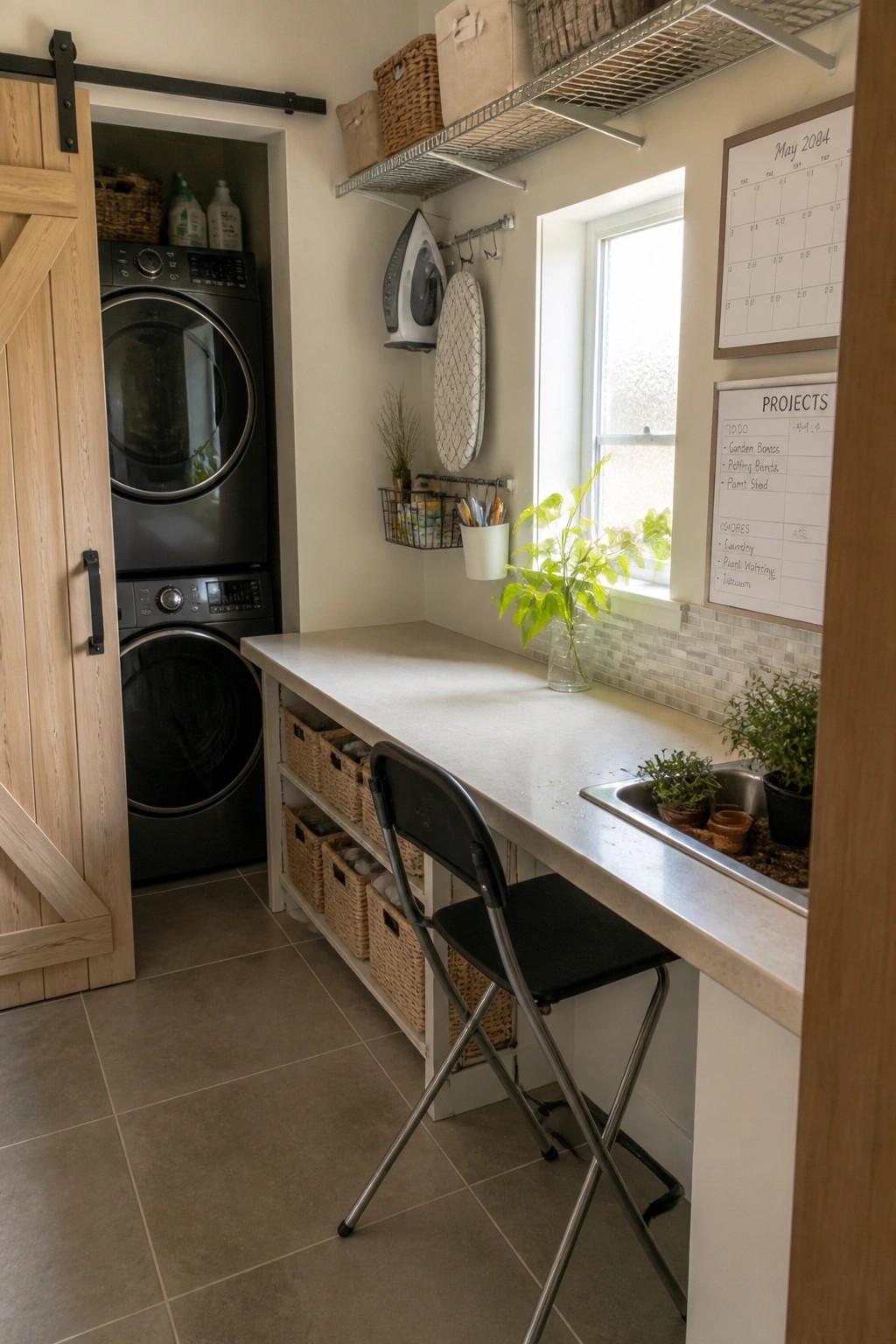
Many laundry rooms already have a long counter that mostly sits empty between loads. Adding a simple chair turns that surface into a place to sort mail, jot notes, or keep a projects list without needing a separate room.
A folding chair that tucks under the counter keeps the space flexible for folding clothes or other tasks. This works best in homes that need every square foot to serve two purposes at once.
Add A Sofa To Your Home Office
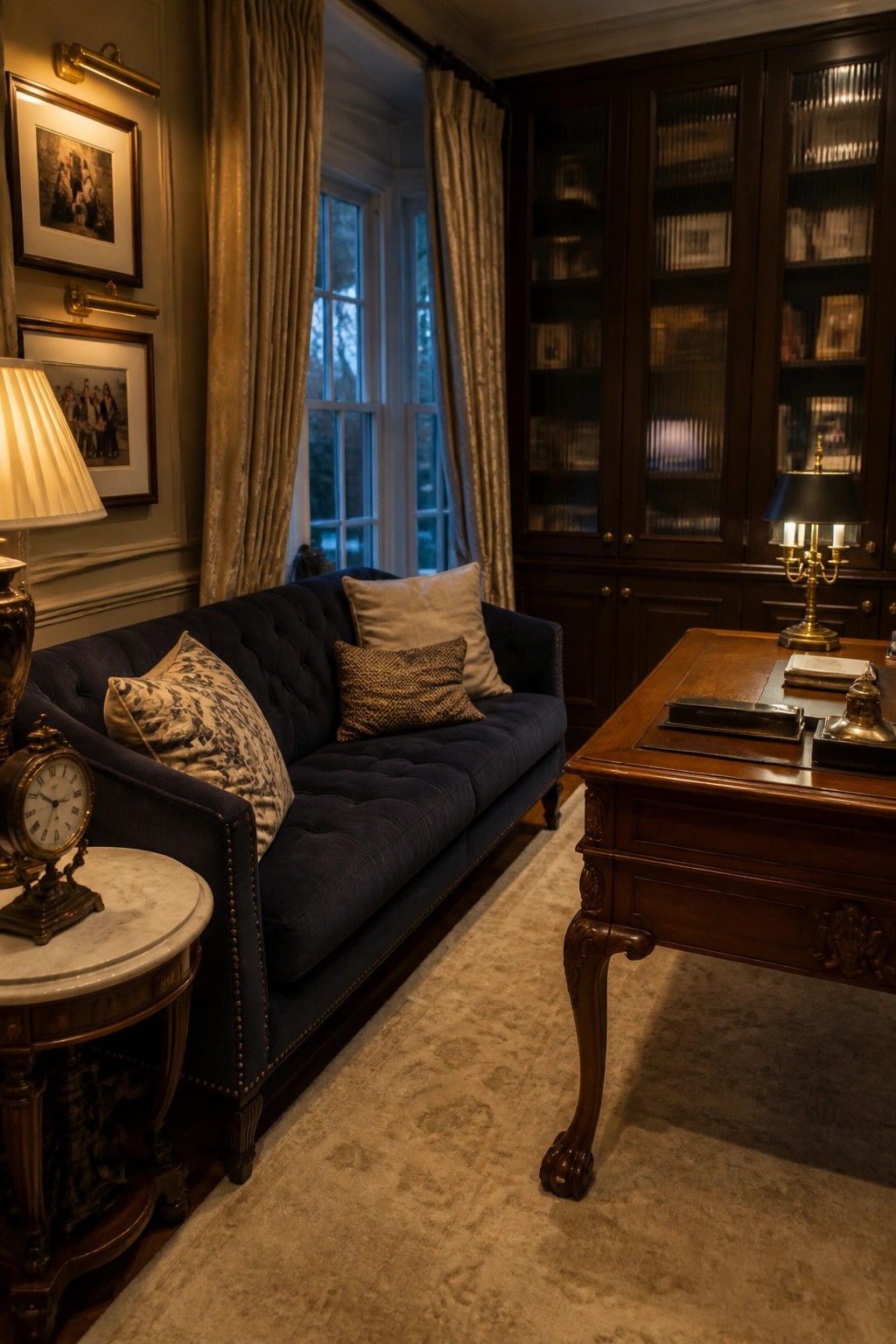
A sofa gives you a second spot to work without staying glued to the desk all day. It works well when you need to read through papers, review notes, or just take a short break while still staying in the room. Many people find this setup helps them stay focused longer because they can change positions instead of forcing themselves to sit in one chair for hours.
This idea fits best in a larger home office that already has room for both pieces. Place the sofa across from or beside the desk so the two areas feel connected but not crowded. Dark wood furniture and built-in shelves pair nicely with it, but the same layout works in lighter rooms too if you keep the colors simple.
Frequently Asked Questions
Q: My desk faces a wall and feels boring. How do I fix that without a full makeover?
A: Hang a few favorite prints at eye level and add a small lamp with warm light. This pulls your eyes away from the blank wall and keeps you engaged during long hours. Rotate the prints every couple months to refresh the view.
Q: Plants sound nice but I kill everything I touch. Any easy options?
A: Go for a hardy plant like a snake plant. Set it in a spot with indirect light and forget about it until the soil dries out.
Q: I share my space with family so noise is constant. Which idea helps most with focus?
A: Try noise canceling headphones paired with a small water fountain on your desk. The sound masks distractions and creates a calm bubble around your work area. Keep the fountain low so it does not become another distraction itself.
