


Over time I have learned that a home office needs more than just a desk and chair if it is going to support long hours without wearing on you.
Neutral tones give a steady background but they only really work when the textures vary enough to keep the eye moving in a gentle way.
I usually start by testing one new texture at a time so I can see how it changes the feel of the space.
Some setups look fine in photos yet fall flat once you sit down to work.
The approaches that last are the ones that make the room feel both organized and comfortable at the same time.
Built-In Shelves That Add Storage Without Crowding a Desk

Built-in shelves work well in a home office because they give you room for boxes, books, and small items while keeping the main workspace clear. The neutral finish blends with the walls and desk so the whole area feels calm rather than busy.
This kind of storage suits smaller rooms or any space where you want to avoid extra furniture. Keep the lower shelves for things you reach often and use the upper ones for lighter pieces. Add a small light inside one section if you work in the evening.
Layer Textures in a Neutral Home Office
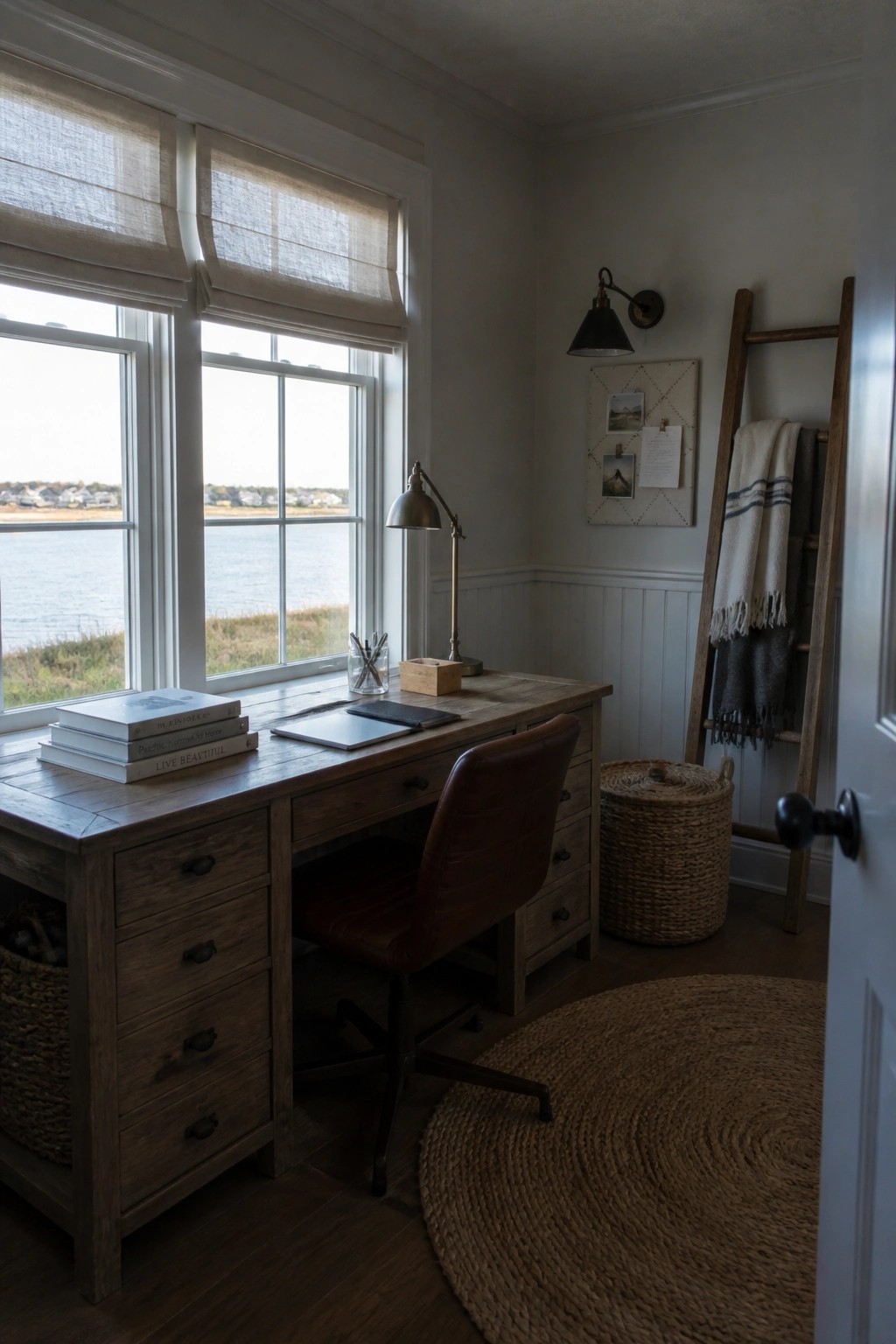
A wooden desk paired with a leather chair gives an office a solid base that feels both practical and comfortable. Adding woven baskets and soft textiles keeps the space from looking flat while staying within a calm color range.
This approach works well in smaller rooms or spaces with lots of natural light. Keep the main pieces simple in tone and let the different surfaces do the work of adding interest.
Built-Ins For A Compact Home Office

A built-in desk with upper shelves and lower cabinets turns a narrow corner into a working space without crowding the room. The setup keeps books, supplies, and decor in one place so the rest of the room stays open and calm.
This approach suits smaller homes or rooms where a freestanding desk would feel too big. Stick to the same neutral tones on the shelves and walls, then layer in a few textured pieces like a fabric chair or a soft stool to keep the area comfortable for daily use.
Layering Wood And Woven Textures In A Neutral Office

Mixing solid wood furniture with cane panels and leather seating gives a home office more depth while staying quiet on color. The different surfaces catch light in their own way, so the room feels warmer and more finished without extra decoration.
This approach works well in smaller offices or any space that needs to feel calm during long workdays. Start with a wood desk as the base, then add one or two pieces that bring in woven or leather texture so nothing feels too flat.
Cork Panels Add Texture Over A Desk

Cork panels on the wall above a desk give a simple office some natural texture without adding clutter. They break up the plain surface while keeping the overall look calm and neutral.
This setup works best in smaller rooms or homes that already lean toward simple materials. Mount a few panels at different heights to create interest and give yourself a spot for notes or reminders.
Layer Textures With Natural Materials
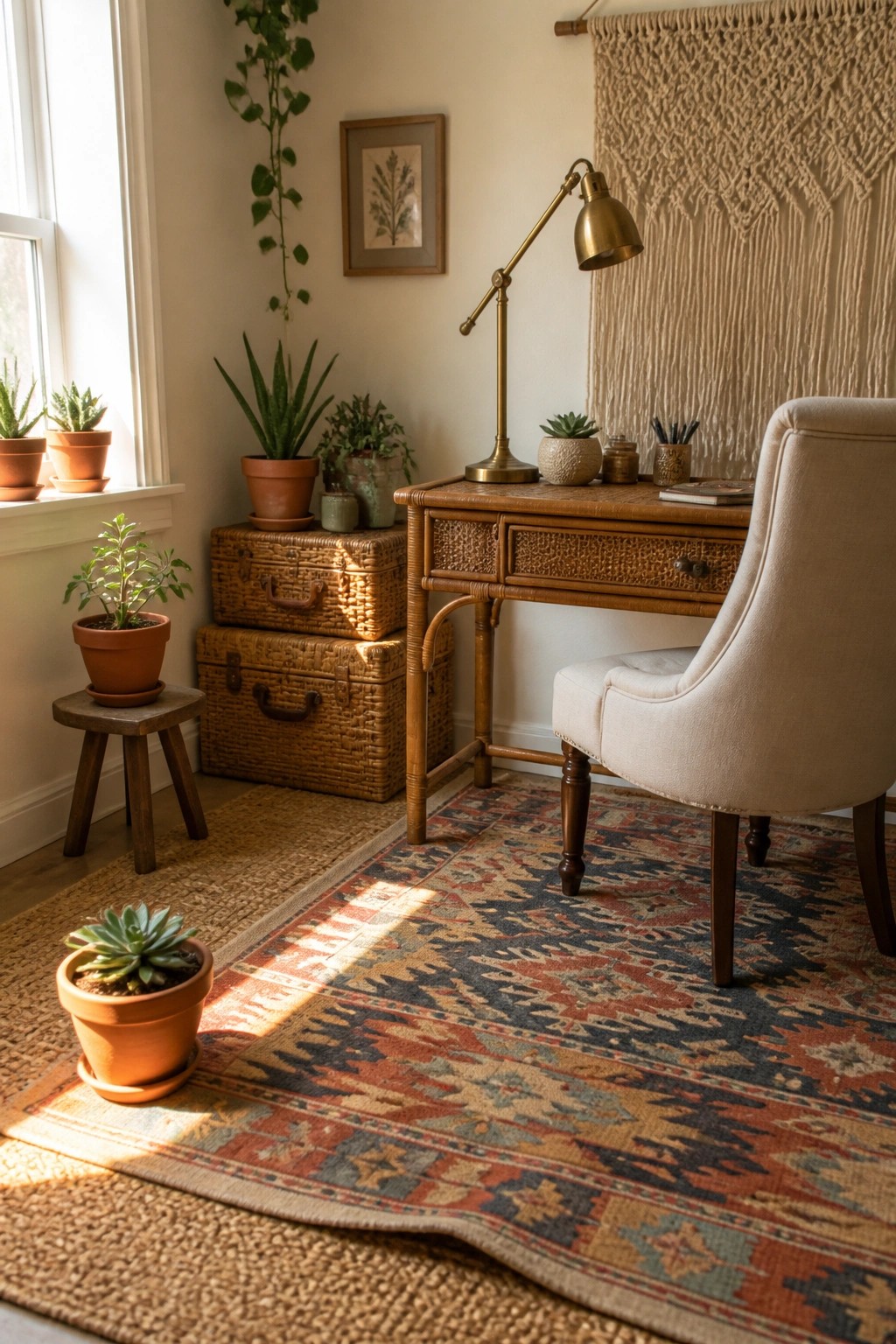
Many home offices feel flat when everything matches too closely in tone and finish. Adding rattan, woven rugs, and a macrame panel gives the space some depth while staying within a calm neutral palette.
This works especially well in smaller rooms that get steady daylight. Keep the larger pieces simple, then bring in one or two textured accents like a woven desk or a patterned rug so the room feels collected rather than busy.
Overhead Shelves Keep The Desk Clear

Mounting shelves above the desk gives you storage without taking up floor space or crowding the work surface. The metal brackets and simple bins hold files, supplies, and extra items while the desk itself stays open for daily use.
This approach suits smaller rooms or homes that already lean industrial. Keep the palette to wood, concrete, and metal so the layers of texture stay calm instead of busy.
Built-In Desks With Overhead Shelving

One practical way to fit an office into a small room is to build the desk straight into the wall under a window and run shelves above it for books and supplies. This setup uses the height of the room without taking up extra floor space and keeps the work area contained.
It suits older homes or spaces with sloped ceilings where standard furniture would feel awkward. Paint the built-ins a soft color that blends with the walls, then add a simple rug and a few textured cushions nearby to make the spot feel less like a workstation and more like part of the room.
Built-In Cabinetry for a Home Office

Built-in cabinets and shelves along one wall give a home office plenty of storage while keeping the floor clear. This setup works especially well in neutral rooms because the wood tones blend into the walls and the under-cabinet lighting adds a soft glow without extra lamps.
The same idea suits most small to medium offices where you need room for files, books, and supplies but still want the space to feel open. Keep the finishes simple, add one or two textured pieces like a leather chair, and the room stays calm and functional.
Wood Desks Add Texture To Neutral Offices
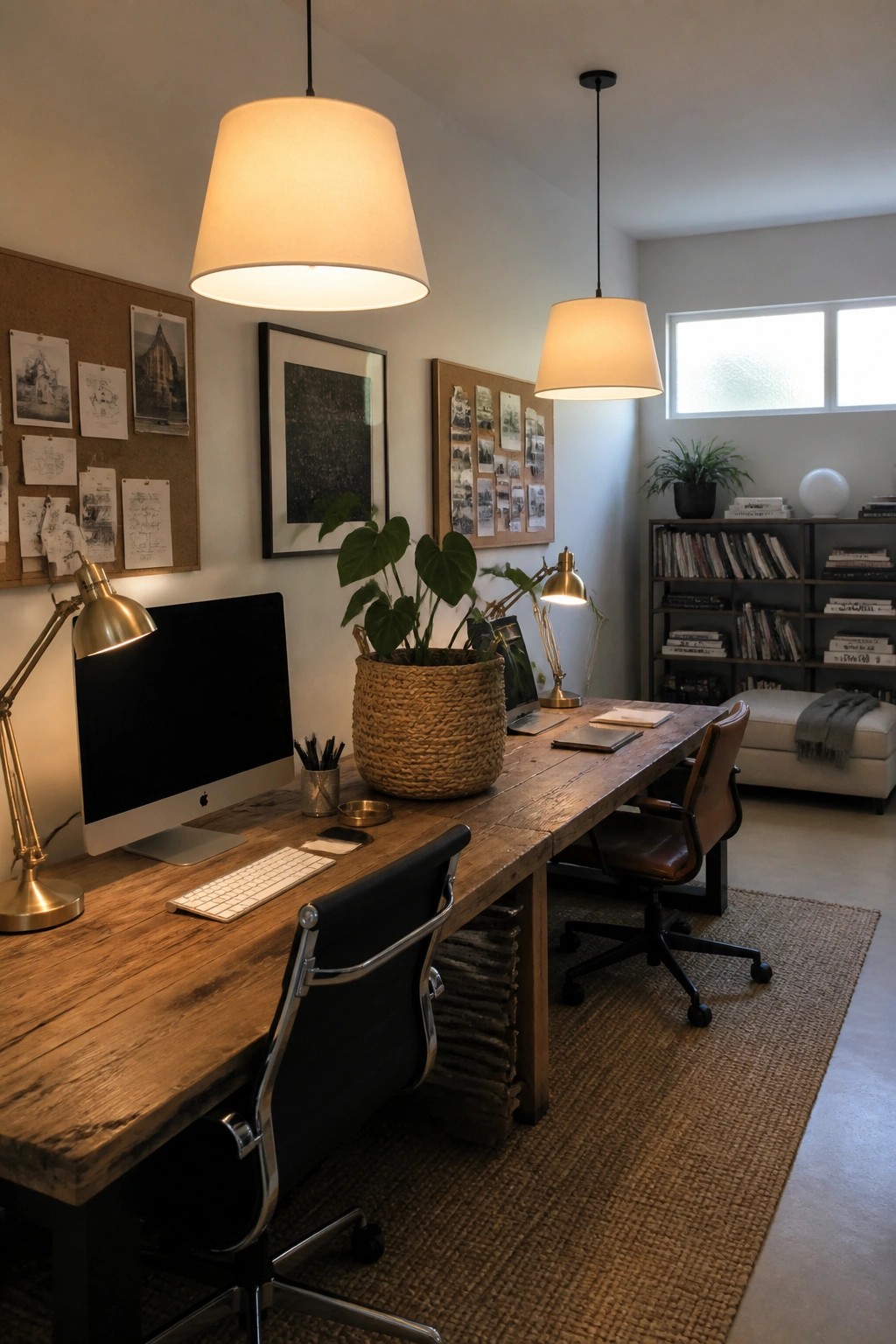
A solid wood desk gives a neutral office something to build around. The grain and weight of the wood bring in natural variation that keeps the space from feeling flat or too planned.
This setup works well in rooms used every day because the desk can handle wear and still look better over time. Pair it with simple leather seating and a few woven accents so the textures layer without competing.
Long Desk With Basket Storage Below

A long desk works especially well in attic offices or rooms with sloped ceilings because it gives plenty of surface area without crowding the space. The baskets tucked underneath keep papers and supplies out of sight while still easy to reach, which helps the room stay calm and uncluttered.
This setup suits homes where you need both a workspace and a bit of lounge room in the same area. Keep the desk surface mostly clear and choose simple woven baskets that blend with the floor and walls so the storage does not feel like an afterthought.
Built-In Cabinetry For A Tidy Office

Built-in cabinetry and shelves give a home office a place for everything without the room feeling crowded. The painted finish keeps the look calm and tied together, while the wood desk adds a bit of warmth that prevents the space from feeling too stark.
This setup works especially well in rooms that double as guest spaces or sit near living areas, since the doors can hide clutter quickly. It suits homes that already have trim details or want a custom look without a full renovation.
Live Edge Desks For Home Offices
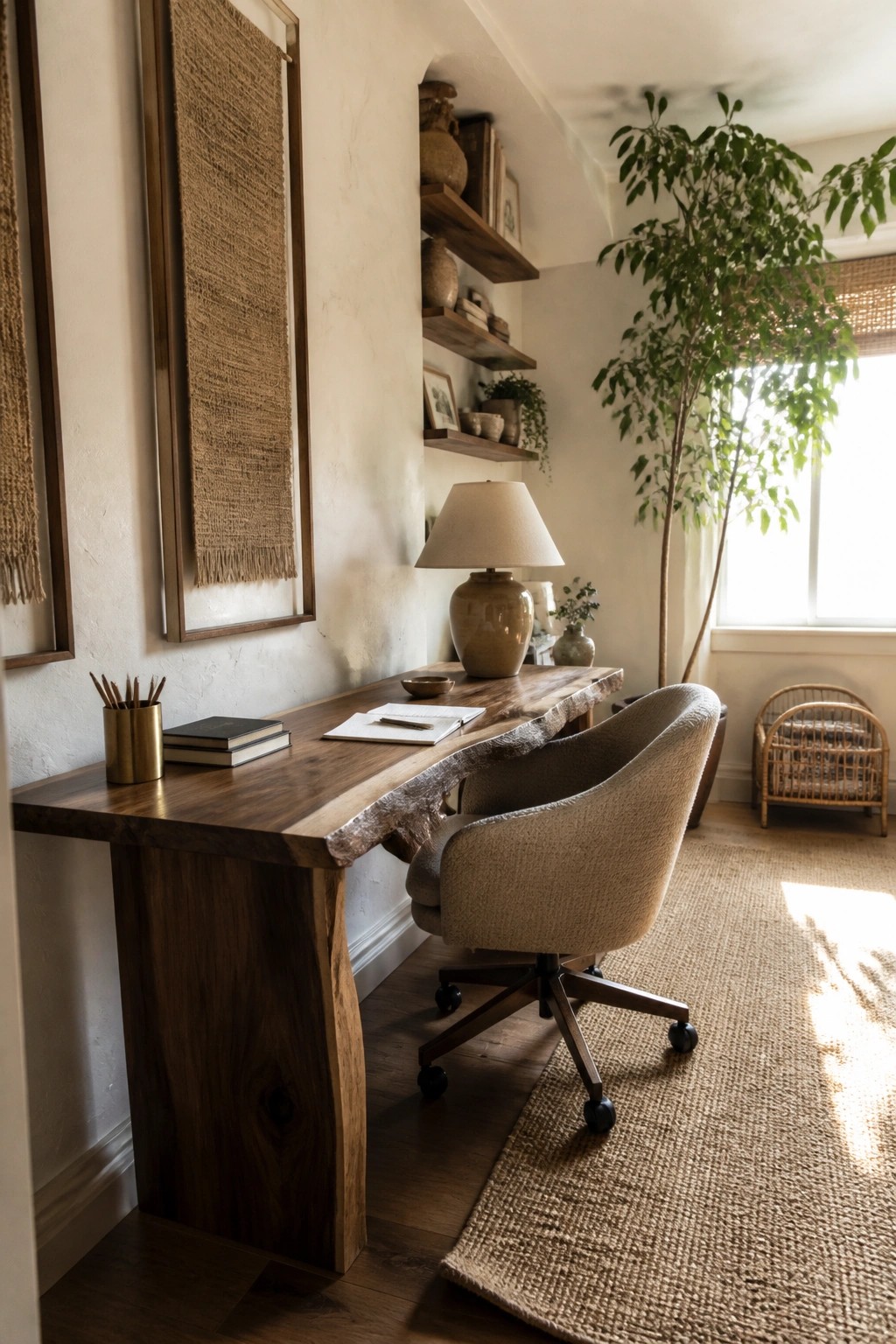
A live edge desk gives a home office an organic shape that fits easily into a neutral palette. The uneven edge and visible wood grain add texture on their own, so the room can stay calm without relying on lots of patterns or extra color.
This works best in smaller or shared spaces where the desk needs to feel like regular furniture. Keep the rest of the room simple with a textured chair and a natural fiber rug so the wood stays the main point of interest.
Wood Paneling for a Warm Home Office

Wood paneling works well in a home office because it brings in natural texture and keeps the space feeling grounded. It pairs easily with neutral furniture and soft lighting, so the room stays calm without looking plain.
This choice suits smaller offices where you want some enclosure. Match the wood tone on the walls to your desk and shelves so the whole room feels pulled together instead of busy.
Create a Workspace in a Closet

Tucking a desk into a closet gives you a quiet spot to work without taking over another room. The shelves above keep books and supplies close while the door can close off the space when you are done. It works especially well in homes where square footage is tight but you still want a place that feels separate from the rest of the house.
Try it in a spare bedroom, hallway alcove, or even a corner of a larger room. Keep the materials simple so the area stays calm, and make sure the stool or chair tucks in fully when not in use. One thing to watch is lighting, since most closets need an added fixture to stay comfortable during the day.
Wood Desks With Wall Hooks Keep an Office Simple

A wooden desk gives a home office a sturdy base that works with neutral walls and floors. Adding a few wall hooks and a narrow shelf above it keeps papers and small items off the surface without adding extra furniture.
This setup works best in rooms that already have some wood tones or soft colors. It helps the space feel open while still giving you places to hang a bag or store everyday things you reach for often.
Built-Ins That Add a Window Seat

Built-ins with a window bench give a home office both storage and a place to sit without crowding the room. The drawers underneath the bench keep extra supplies out of sight, while the open shelves hold books and a few small items in a way that still feels open.
This works best in rooms that already have decent natural light and where you want the workspace to feel like part of the house rather than a separate zone. It suits smaller homes or anyone trying to cut down on freestanding furniture.
Pegboard Walls for Simple Office Storage

A pegboard on the wall gives you a flexible spot to pin up notes, hang small tools, or clip papers without crowding the desk surface. It keeps the space feeling open and calm while still making everything easy to find.
Place woven baskets underneath for extra storage and layer in a natural rug to soften the floor. This works well in any small or medium home office that needs more organization without adding heavy cabinets.
Add a Living Wall for Natural Texture
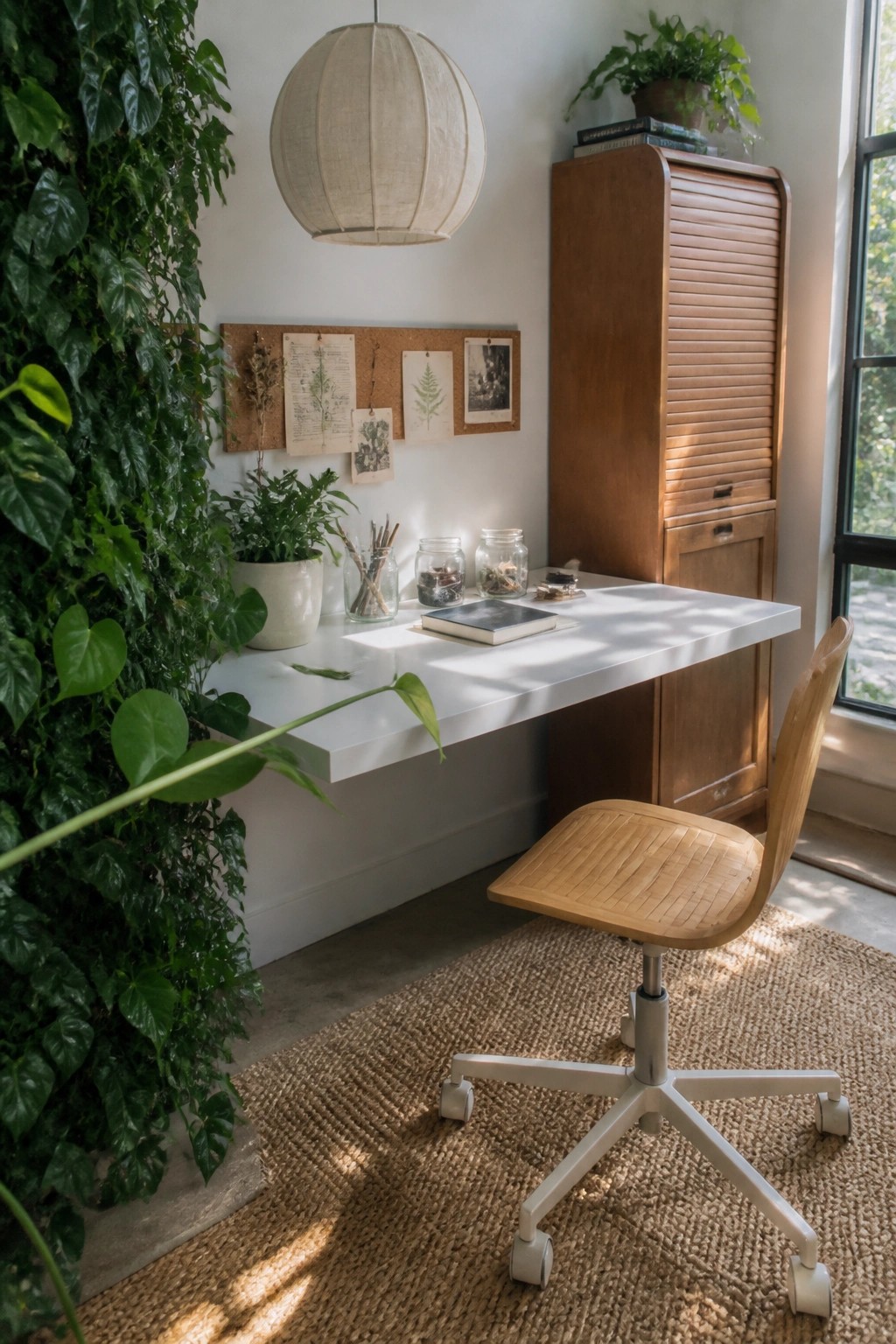
A living wall brings real depth to a neutral office without adding clutter or extra furniture. It layers in varying shades of green against the clean white desk and wood tones, which keeps the space feeling fresh while still staying calm and simple.
This works best in smaller rooms where you want to soften hard walls and create a bit of separation between work and the rest of the house. Pick hardy indoor plants and make sure they get enough light from a nearby window so the wall stays healthy over time.
Fold Down Desks Keep Small Spaces Functional

A wall mounted desk that folds away is one of the easiest ways to add a workspace without losing floor space. In rooms that serve more than one purpose, it lets you keep the main area open for other uses while still giving you a proper surface for a laptop or papers when needed.
This works especially well in bedrooms or guest rooms that double as offices. Choose a simple wood tone that matches the rest of the furniture and add a comfortable chair with some texture so the spot feels intentional rather than temporary. Just make sure the desk height lines up with a regular chair so you can sit comfortably for longer stretches.
Built-Ins Pair Well With a Large Bulletin Board

A built-in desk setup with overhead cabinets gives the room plenty of hidden storage while keeping the surface clear. The big fabric-covered board on the wall adds a soft layer that breaks up all the dark wood and gives you a place to pin notes or photos without needing extra frames.
This works best in a room that already has some wall space above the desk. It suits homes where you want the office to feel calm rather than cluttered, especially if you like keeping papers and ideas visible instead of tucked away in drawers. Just watch the scale so the board does not overpower the rest of the wall.
Pegboard Storage For A Home Office

Pegboard walls give you a simple way to keep supplies and small items in order without adding more furniture. The board takes up little space yet holds shelves, hooks, and bins at whatever height works best for daily use.
This setup works well in smaller offices or any room where you want to stay organized without a heavy look. It is easy to move things around later, and the neutral finish keeps the wall from feeling busy.
Mix Textures in a Neutral Palette

A home office feels more inviting when you skip bold colors and focus on different textures instead. Wood, metal, woven fibers, and concrete all sit together without competing, and the result stays calm while still feeling layered and warm.
This approach works well in smaller rooms or multi-use spaces because the textures do the work of adding depth. Try a wood desk, a metal stool, a jute rug, and linen upholstery, then keep the walls and larger surfaces light so nothing feels heavy.
Layer Natural Textures in a Neutral Office

Mixing wood, woven fibers, and soft fabrics keeps a neutral office from feeling flat. The desk and floor bring warmth while the chair cover and rugs add softness that makes long hours at the desk more comfortable.
This works best in rooms with decent natural light where the textures can show up clearly. Start with one or two wood pieces, then add a woven blind or jute rug so the space stays calm but never bare.
Frequently Asked Questions
Q: Where should I begin when layering textures around my desk?
A: Start with a simple base like a cotton desk pad in beige. Add one woven tray for papers and a wool coaster set on top.
Q: What if my current chair feels too plain next to the neutral layers?
A: Drape a linen throw over the back and tuck a small sheepskin seat pad underneath. This adds depth without buying new furniture.
Q: How do I stop the whole room from looking flat with only neutrals?
A: Mix in different weaves like a ribbed curtain next to a smooth linen shade. Keep the shapes varied so the eye has places to rest.
