

I have found that home offices tend to feel more usable when storage is built right into the desk instead of added as separate pieces that crowd the floor.
When I set up a workspace in a spare bedroom the table I chose ended up shaping how the whole room functioned day to day.
Designers seem to be getting better at hiding drawers and shelves within slim profiles so the surface stays open for actual work.
It is worth checking how a desk sits against the wall or under a window since those placements often decide whether the piece feels light or overwhelming.
Small details like leg shape and drawer pull placement can shift the balance more than expected once the table is in the room.
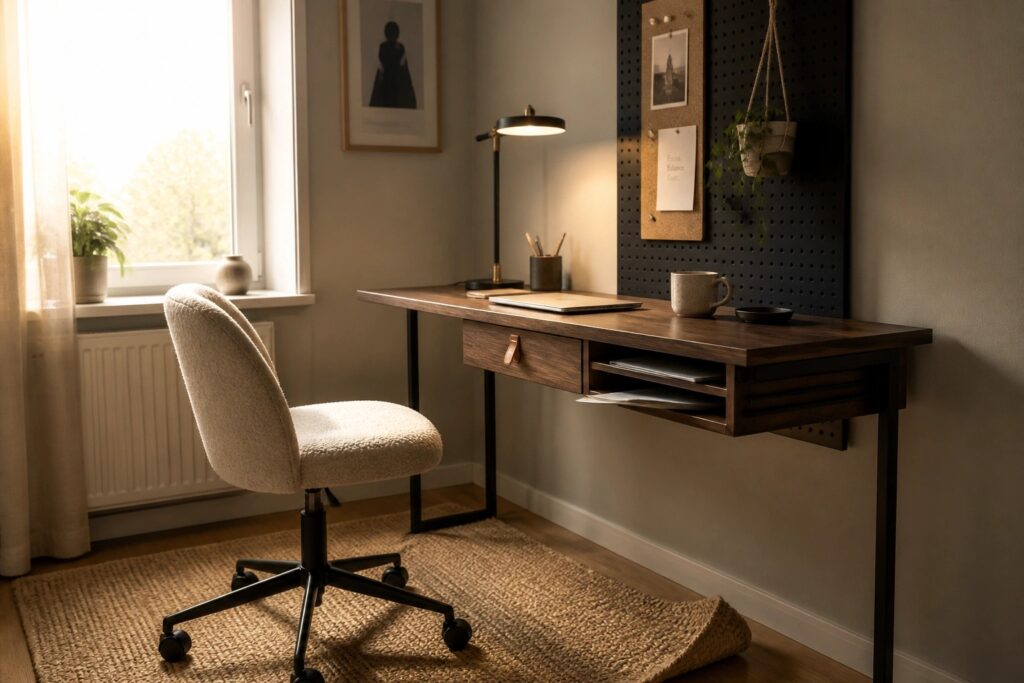
Hanging Trays Add Storage Below The Desk

Many people want more room for papers and supplies but do not want a heavy desk that fills the room. Hanging trays mounted under the work surface give you that extra space while keeping the top clean and the overall look light.
This setup works well in smaller home offices or rooms that double as guest spaces. Place it against a wall with a simple pegboard above for notes and the trays stay out of sight yet easy to reach. Just make sure the trays do not sit too low if you need to tuck a chair underneath.
Floating Wall Desks With Integrated Drawers

A desk that mounts to the wall and includes its own drawers solves a common problem in smaller rooms. It gives you a place to work and store papers or supplies without the visual weight of a full piece of furniture sitting on the floor. The low profile also keeps the space feeling open.
This approach works well in homes that already use built-ins or in rooms where floor space needs to stay clear. It suits anyone who wants storage close at hand but does not want the desk to dominate the room. Just make sure the wall can support the weight and that the height feels comfortable for daily use.
Desks With Built-In Drawers That Stay Light

Many modern desks solve the storage problem by tucking drawers right into the frame instead of adding separate bulky cabinets. The woven fronts and slender legs keep the piece from feeling heavy even when it holds quite a bit. This approach works especially well in smaller rooms where a big block of furniture would close things in.
Place the desk against a wall with the lower cabinet on one side only so the rest of the space stays open underneath. It suits homes that need function without making the room feel crowded. Watch the scale of the drawers so they match the top surface and do not overpower the overall look.
Glass Tops Keep Storage Light

A glass top desk adds useful storage without making the room feel crowded. The clear surface lets the drawers sit underneath where they stay visible but do not block the view or add weight to the look.
This works best in smaller offices or rooms that already have plenty of other furniture. Keep the frame thin and choose simple drawer fronts so the whole piece stays open and easy to move around.
Baskets Add Storage Without Bulk
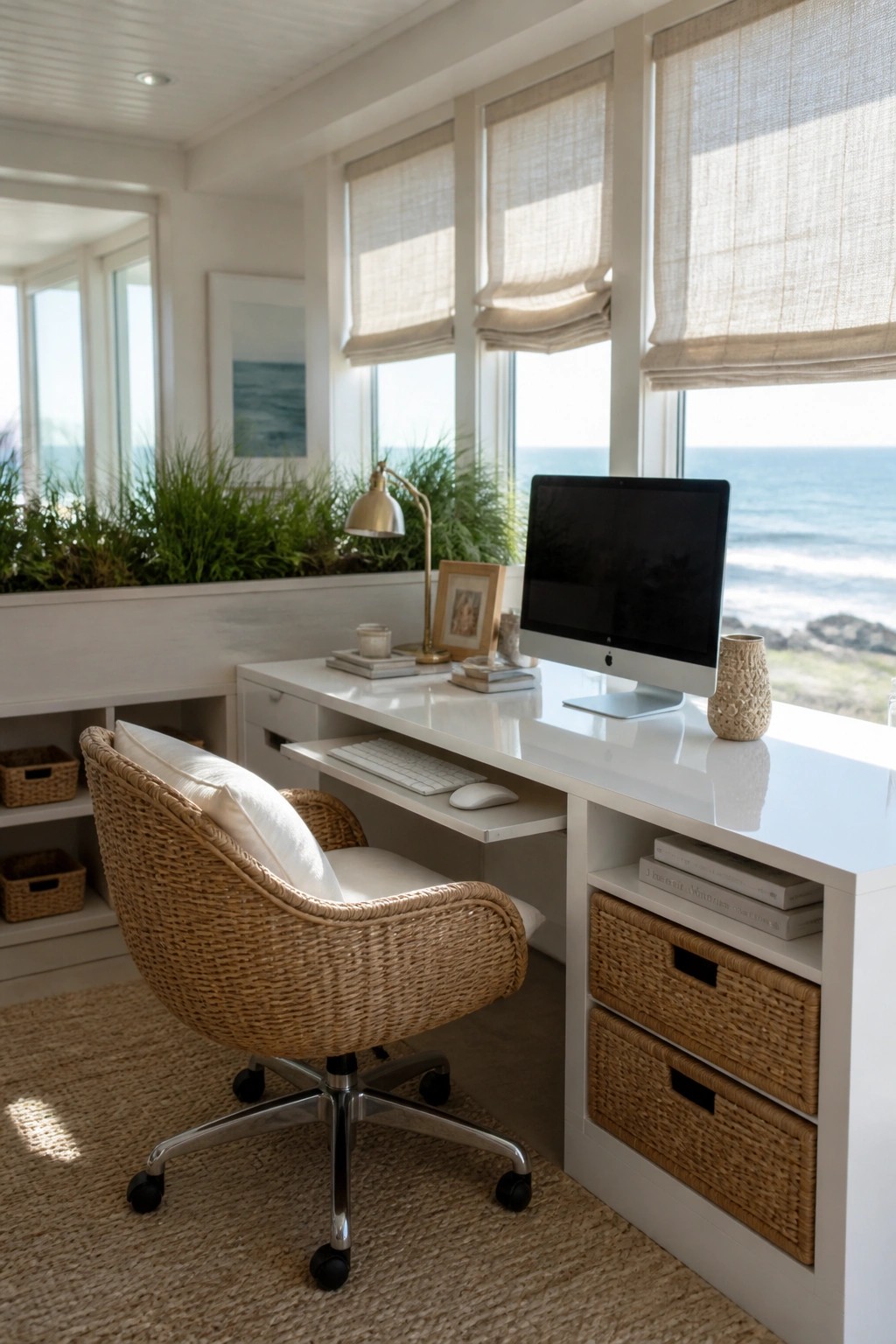
A simple way to add capacity to a desk is to use woven baskets in open lower shelves. They hold files, supplies, and everyday items while keeping the top surface clear and the whole piece from looking heavy.
This approach works best in rooms that already have good natural light and a light color palette. Match the basket size to the cubbies so the storage stays tidy and the desk keeps its clean lines.
Floating Wall Desks With Hidden Storage Compartments

A desk that hangs on the wall instead of sitting on legs can give you real storage without crowding the room. The drawers tuck underneath the surface and keep papers and supplies out of sight while the top stays clear for work.
This kind of desk suits smaller offices or open living areas where a full size piece would feel too heavy. Make sure the wall is solid enough to hold the weight and keep the area around it simple so the floating look stays clean.
Built-In Desks That Add Storage in Small Areas

One simple way to gain storage without a bulky desk is to build the workspace into an existing alcove or closet. The shelves above hold books and boxes while the drawers and lower cabinets keep supplies out of sight, leaving just a clean surface for work.
This approach suits small homes or rooms that serve more than one purpose. It works best when the space already has some depth, so the desk fits without sticking out into the room.
Open Lower Shelves Keep Storage Light

Many desks now include a short shelf along one side instead of a full bank of drawers or cabinets. This setup gives you room for a basket or files while leaving most of the space under the desk open so the piece does not feel heavy.
The approach works best in smaller rooms or shared spaces where you need storage but still want the desk to look simple. Keep the shelf partial so your chair can slide in easily and the overall frame stays slim.
Mix Drawers With Open Storage
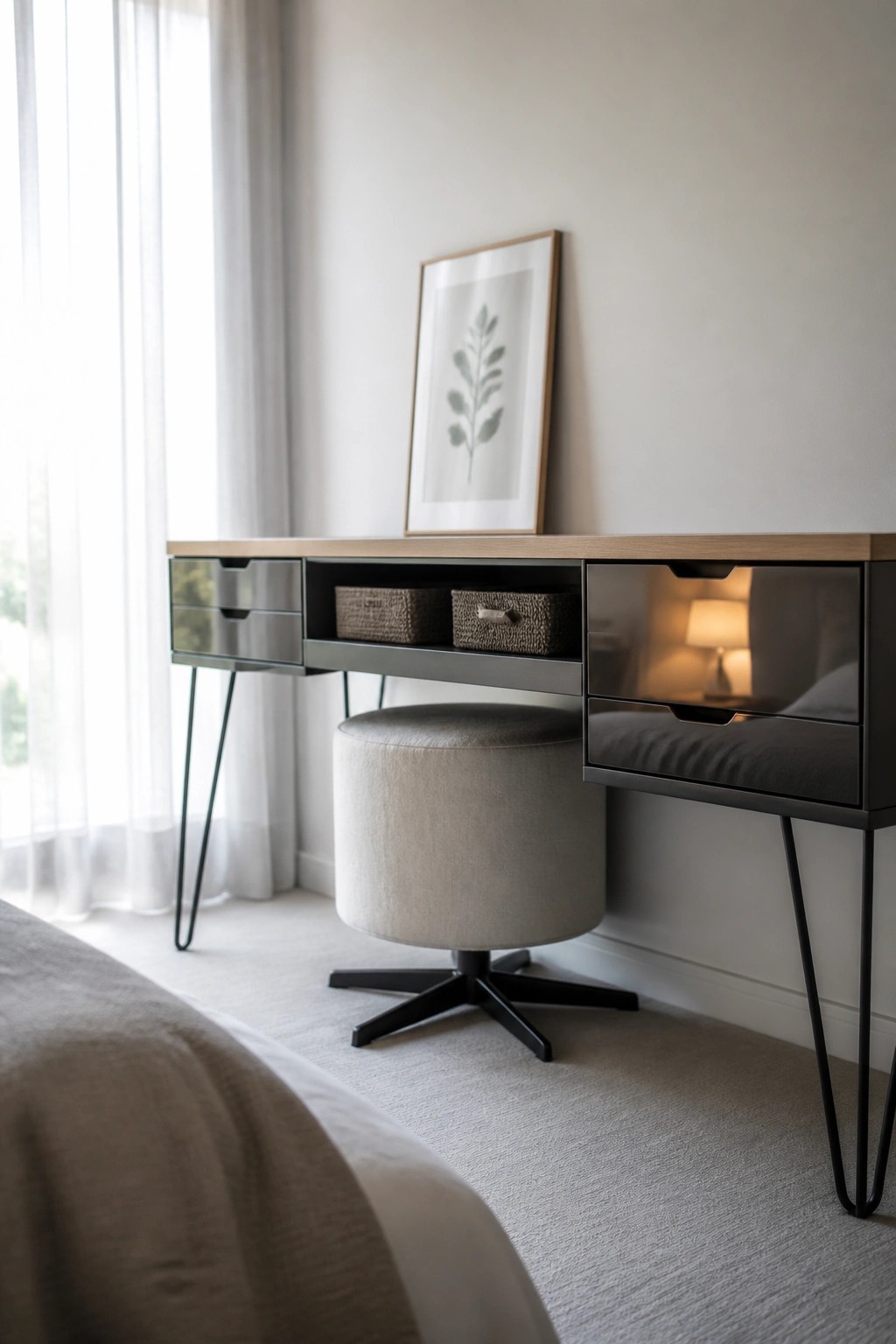
A desk that offers both closed drawers and open compartments gives you flexible storage without making the whole piece feel heavy. The mix keeps everyday items tucked away while letting you reach for baskets or supplies quickly, and the open sections stop the design from looking too solid.
This approach works well in smaller rooms or shared spaces where you need function but do not want a bulky office piece. Look for versions with slim legs so the storage stays useful without dominating the room.
Rows Of Shallow Drawers Keep Supplies Organized
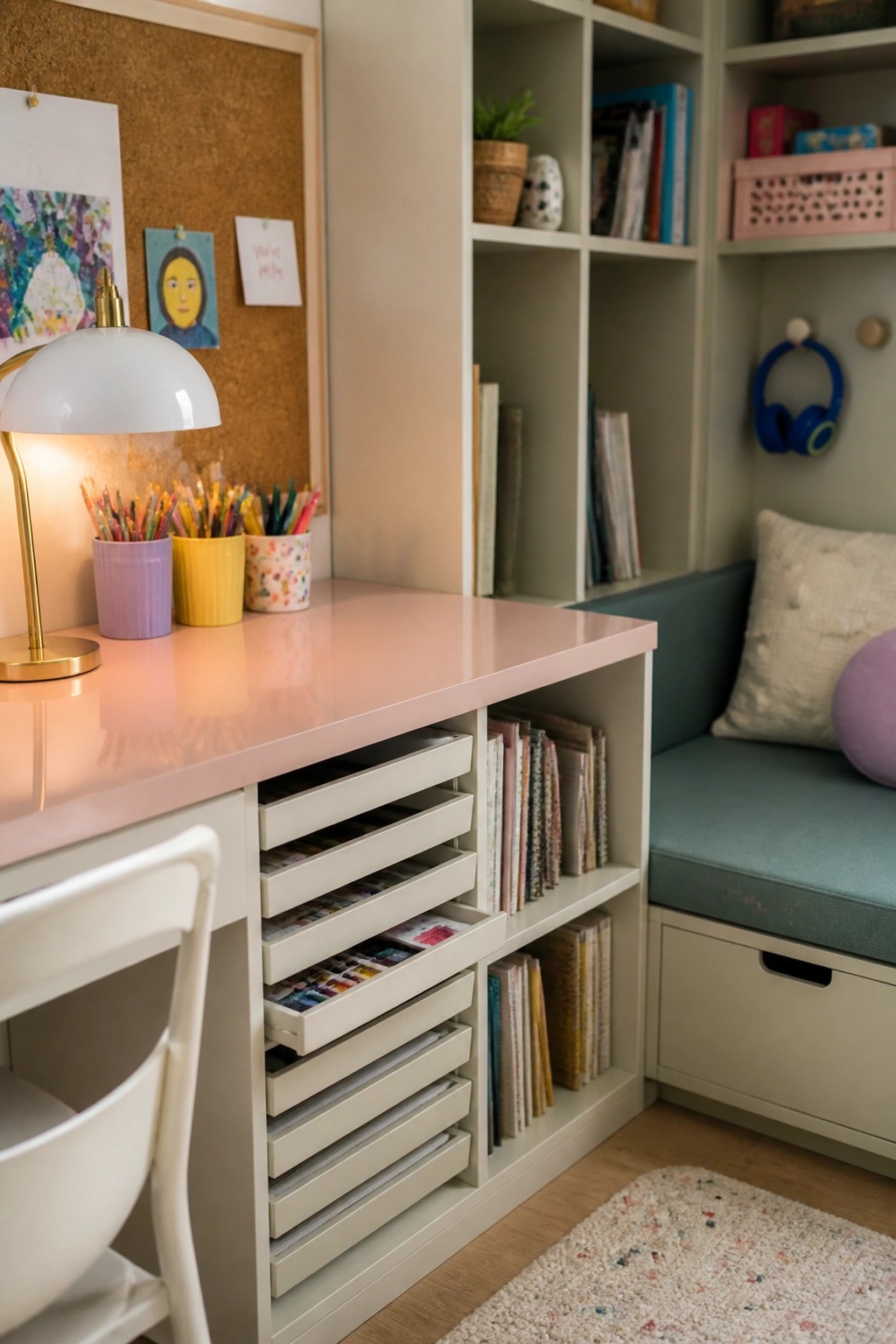
Many desks now use rows of shallow drawers set directly into the base instead of adding side cabinets or deep boxes. This keeps supplies close at hand while the desk itself stays slim and open underneath.
It suits smaller rooms or kids spaces where you need real storage but want the furniture to feel light. Try it along a wall with open shelves above so the drawers handle the small items and the shelves take the books.
Built-In Shelving Keeps Desk Storage Light

Many people want a simple desk that does not take over the room, and built-in wall storage makes that easier. The recessed shelves and cabinets sit flush with the wall, so they hold books and items without adding any extra furniture around the desk.
This approach suits smaller offices or rooms used for work part of the day. Keep the shelving depth shallow and the lighting soft so the space stays open rather than closed off.
Floating Desks Keep The Space Open

A floating desk mounted straight to the wall gives you a workspace without legs or a heavy base taking up floor room. This keeps the area feeling lighter and makes it easier to move around the rest of the room.
Add a couple of wall shelves above for books and supplies so you still get storage without needing a big cabinet or credenza. The setup works best in smaller homes or rooms that double as something else during the day.
Add An Open Shelf Below The Desk

An open lower shelf on a desk frame gives you a place to store rolled papers or plans without adding doors or extra weight. The metal construction stays slim, so the whole piece still feels light even when it holds quite a bit.
This works well in a home office where you need quick access to documents but do not want a heavy cabinet. It suits smaller rooms or industrial-style spaces where you want function without crowding the floor.
Built-In Wall Systems That Combine Desk And Storage

One of the easiest ways to add storage in a small office is to run a single unit along the wall that holds both the desk surface and the shelves and drawers. This setup keeps everything in one plane instead of scattering separate pieces around the room, so the floor stays open and the space feels larger.
It works especially well in rooms that already have limited wall space or need to stay tidy for daily use. The key is keeping the unit shallow and matching the finish to the rest of the room so it reads as part of the architecture rather than extra furniture.
Desk With Drawers On Thin Legs

Many people want storage at their desk but worry it will make the piece feel heavy. A desk with shallow drawers and slender legs solves that by keeping the lower half open. The drawers handle everyday items while the frame stays light enough to suit smaller rooms.
This style works best in homes that already have wall storage or nearby shelving. It suits spaces where you want the desk to feel like furniture rather than a big block. Just make sure the drawers are not too deep or the legs too thick, or the whole look starts to feel clunky again.
Floating Desks With Under-Shelf Storage
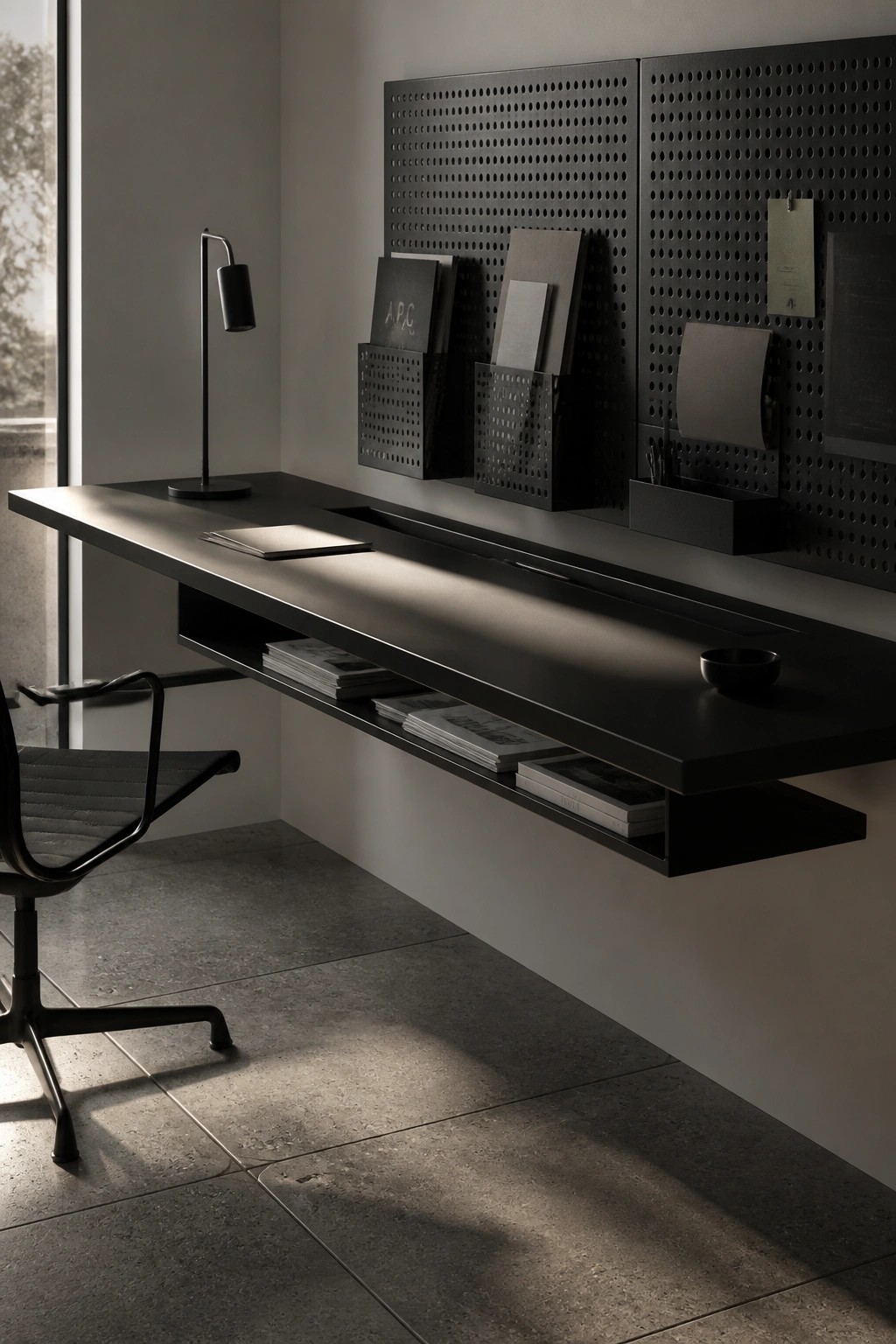
A floating desk gives you a clean work surface and hidden storage at the same time. The open shelf below holds books and papers without adding a big cabinet or drawer unit that would crowd the room.
This setup works best in smaller offices or any space where you want the floor to stay open. Mount it at the right height for your chair, and use a wall organizer above to keep everyday items off the desk itself.
Shallow Frame Drawers Reduce Visual Clutter

A desk with drawers built into the frame gives you places to tuck things away without needing a separate cabinet or heavy credenza. The drawers stay shallow and low profile, so the whole piece still feels open and easy to move around.
This setup works best in smaller rooms or shared spaces where you want storage but not extra furniture. Pair the desk with a few open shelves above and use baskets to hold the rest, keeping the look simple and the room from feeling crowded.
Storage Built Into The Desk Frame

Many desks try to hide storage behind doors or drawers that can make them feel heavier than they need to be. This setup uses open compartments right in the frame to hold a printer below and smaller items up top, so the surface stays clear without extra furniture nearby.
It suits smaller home offices where space is tight and you want things within reach. The open style works best with light wood tones that keep the piece from looking solid or closed in.
Long Floating Desks With Concealed Drawers

A long floating desk with drawers underneath gives you workspace and storage in one piece without adding any legs or bulky bases. It keeps the floor clear so the room feels bigger and easier to move around in.
This kind of desk works well in hallways, small offices, or any spot where you need a surface but do not want heavy furniture. Just check that the wall can handle the weight and plan the drawer layout to match what you actually store.
Slim Desks With Hidden Storage

A narrow desk with a shallow pull-out tray keeps the surface clear while still giving you a spot for a laptop or notebook. The storage stays out of sight when not needed, so the whole piece stays light instead of turning into a bulky workstation.
This setup works best in smaller rooms or spaces with limited floor area. Use the tray for just a few daily items and leave the rest of the desk open so the room does not feel crowded.
Built-In Desks With Cane Front Drawers

A built-in desk can add real storage while staying light in a small space. The cane panels on the drawers keep the whole piece from looking solid or heavy, and the open shelf underneath gives easy access without adding more cabinet doors.
This works best in a quiet corner or alcove where you already have wall space. Keep the upper shelves simple so the desk stays the main feature, and choose a stool that tucks away completely when not in use.
Minimalist Desk Frames With Built-In Organization

A desk with drawers built right into the frame gives you storage without making the piece feel heavy or blocky. The thin legs keep the look open, so the room does not get crowded even with the extra function.
This works best in smaller offices or shared spaces where you need to keep the floor clear. It suits homes that already use simple, modern furniture and want storage that stays out of the way.
Built-In Desks With Basket Storage

A desk with open baskets underneath gives you storage without adding weight or bulk to the room. The baskets slide in and out easily and keep papers and supplies tucked away while still letting the space feel open. This setup works especially well in smaller rooms or under sloped ceilings where a full cabinet would feel too heavy.
It suits homes that already have some wood tones and simple finishes. Keep the desk surface fairly clear and let the baskets handle most of the everyday clutter. Just make sure the baskets are sturdy enough for whatever you plan to store in them.
Low-Profile Desks With Drawer And Shelf Storage

A desk like this keeps the work surface clear by tucking storage into shallow drawers and open lower slots. The design stays light because the storage does not add extra depth or heavy cabinet doors.
This approach suits small rooms or shared spaces where a full office would feel too much. It works best when the drawers sit low and the frame stays thin so the piece does not block light or movement.
Frequently Asked Questions
Q: How do I hide cables on one of these tables without adding extra boxes? A: Route cords through any rear cutouts or side channels right after you set up the desk. Tuck power strips on a lower shelf if the design has one. This keeps the top clear for work.
Q: What size works best if my office space is under eight feet wide? A: Measure twice and pick a table no deeper than twenty-four inches so you still have room to move around it. Narrower frames with side storage slots save floor space while holding files and supplies.
Q: Will these tables stay steady with a big monitor and keyboard on top? A: Choose models built with solid legs and a thick top surface. Test the wobble in the store if you can. Most modern options handle everyday gear without issue once assembled right.
Q: Can I add more storage later if the table feels too open? A: Slide in a low rolling crate underneath or hang a slim organizer on the side frame. Stick to pieces that match the table’s lines so nothing looks tacked on.
