

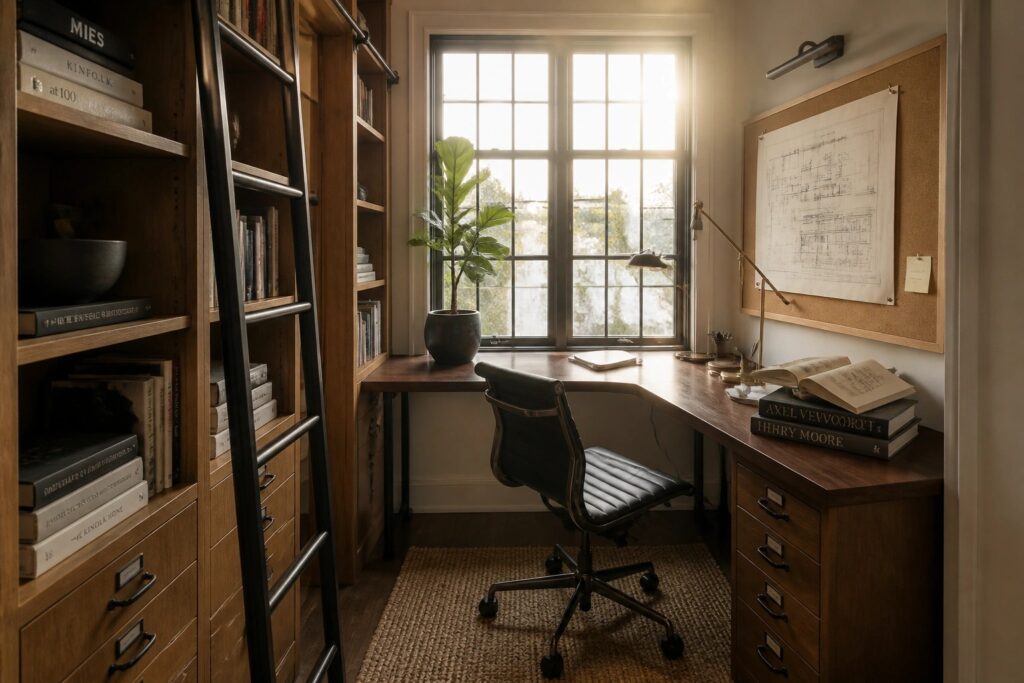
When I set up my own home office I quickly learned that storage needs to support how I actually move through the day rather than just fill empty walls.
Circulation paths often determine whether a space feels open or cramped once the furniture is in place.
Details add up.
I usually spot workflow problems first when I have to reach across the room for something I use often.
Some of the ideas here seem worth trying because they address those everyday friction points directly.
Add A Rolling Ladder For High Shelves
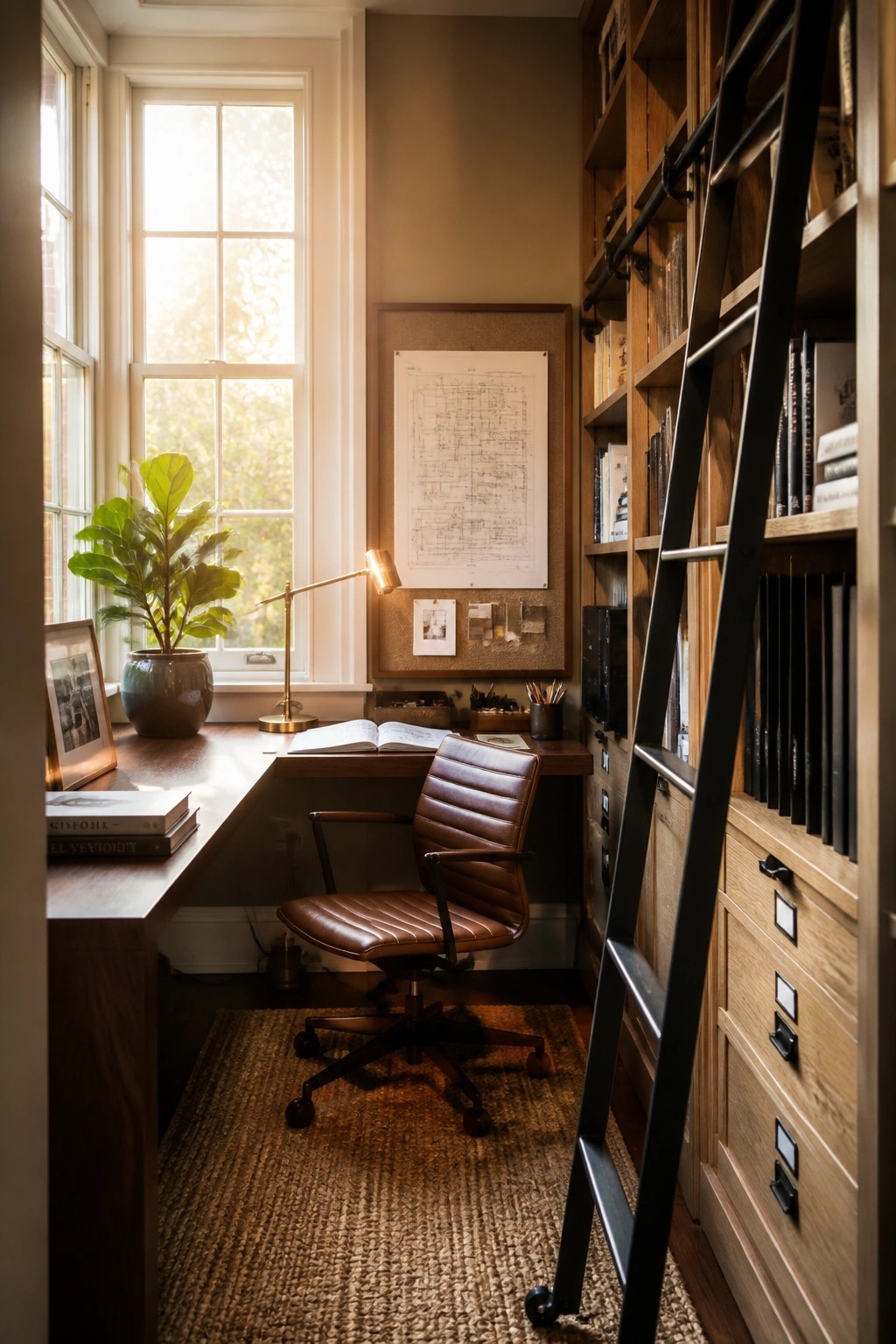
A rolling ladder helps in small offices where wall space goes unused above eye level. It turns tall shelving into something practical instead of just decorative, and it keeps the floor clear for the desk and chair.
This setup works best in narrow rooms with built-in bookcases. Place the track along the top of the shelves and make sure the ladder rolls smoothly without hitting furniture or windows.
Pegboard Storage For Better Office Workflow
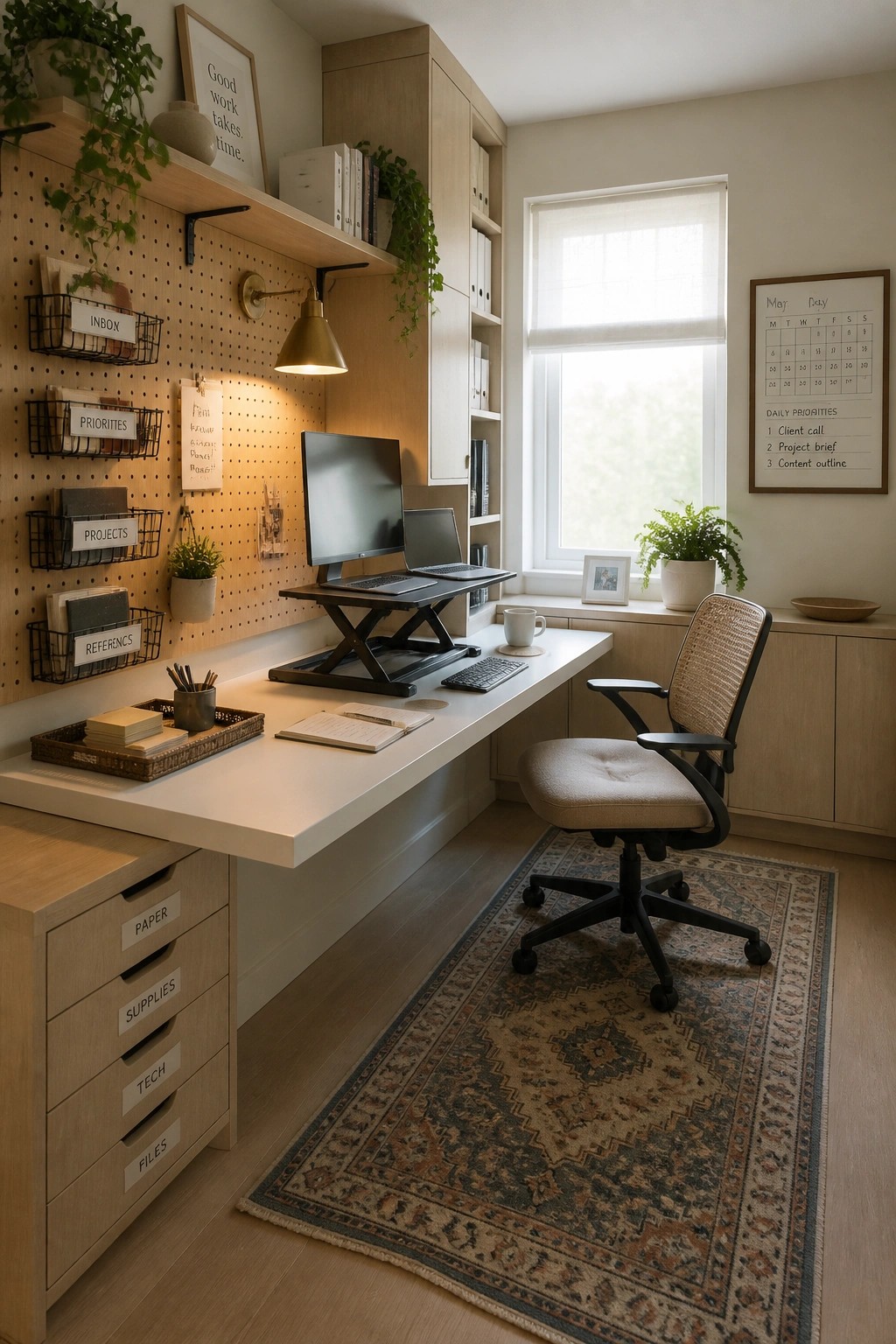
A pegboard wall above the desk gives you a simple way to keep everyday items in reach without crowding the work surface. Baskets and hooks hold papers, supplies, and notes in plain sight, so you spend less time digging through drawers during the day.
This setup works well in smaller rooms where floor space matters. Mount the pegboard at a comfortable height, add a few labeled baskets, and keep the desk surface mostly clear for a laptop or monitor. It suits anyone who wants storage that stays visible and easy to adjust later.
Open Shelving With Labeled Bins
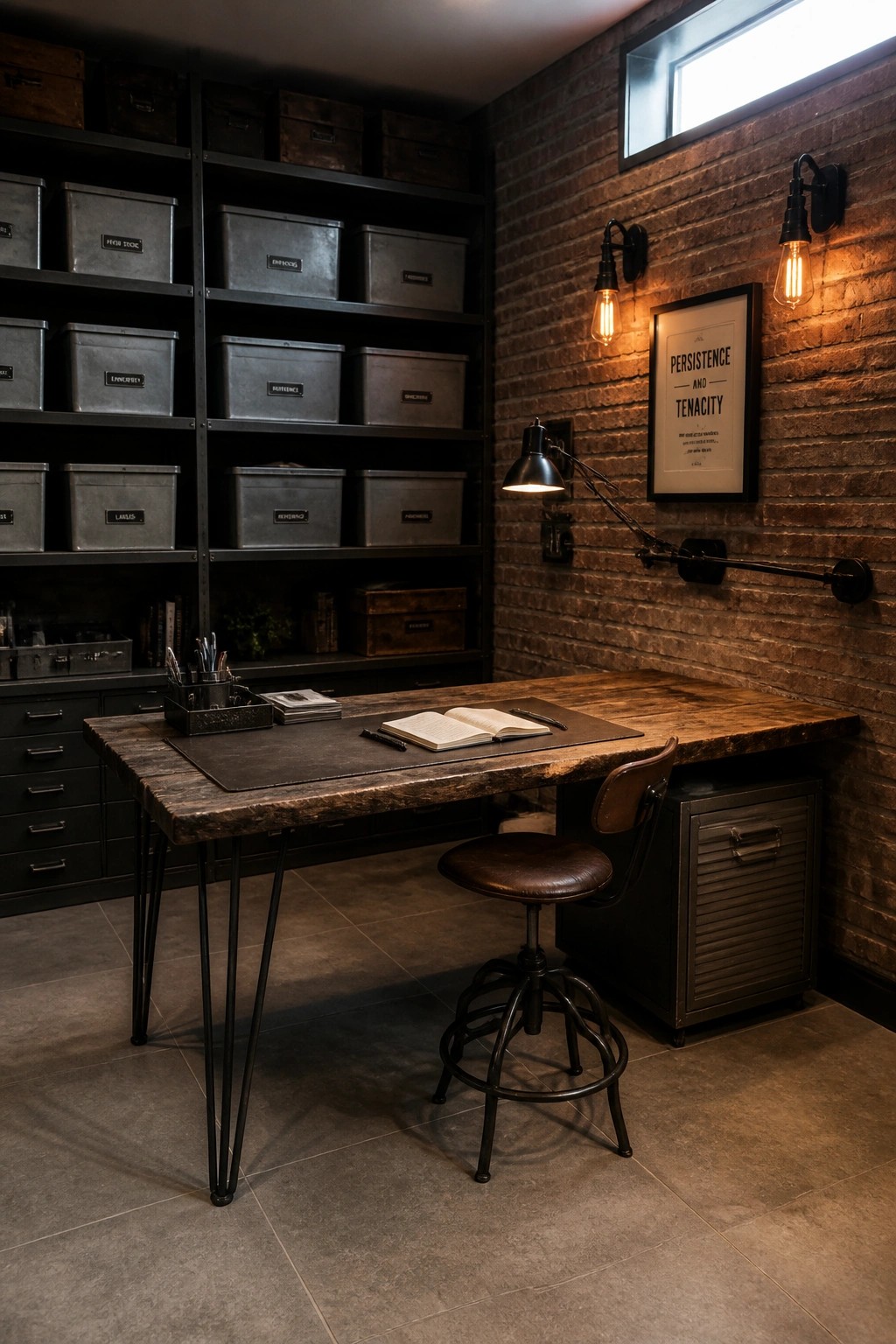
Open shelving with matching metal bins keeps office supplies visible and easy to reach. You can label each one so nothing gets lost, and the uniform look keeps the wall from feeling cluttered even when it holds a lot.
This setup works best in smaller rooms or homes without much built-in storage. Just make sure the shelves sit at a comfortable height so you are not stretching or bending every time you need something.
Low Desks With Side Storage
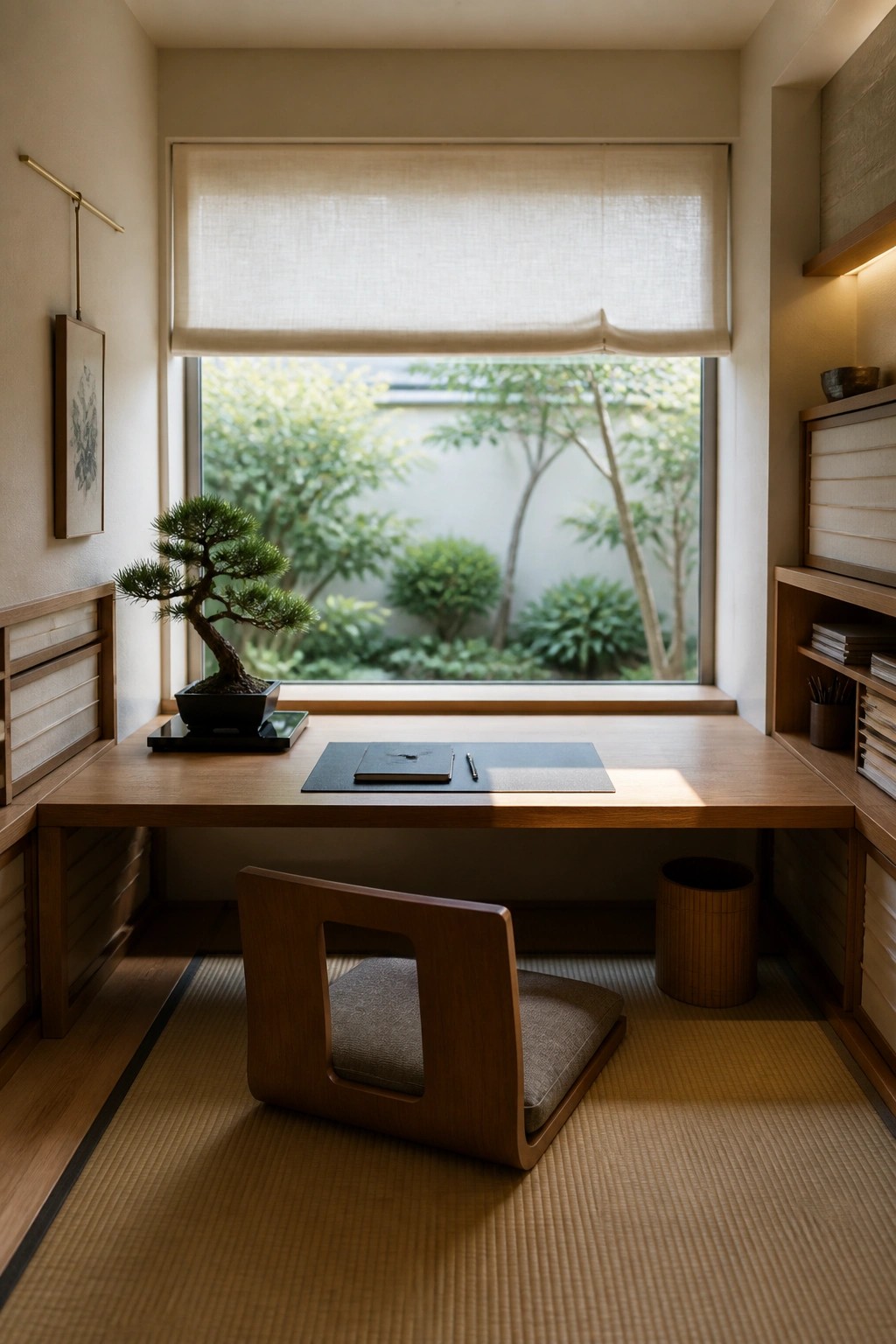
A low desk keeps the workspace open and easy to move around. It sits close to the floor so there is more room to stand or walk past without bumping into furniture. Side cabinets and shelves hold supplies without adding bulk to the main area.
This works well in smaller rooms or homes that already use floor seating. Keep the desk against a window for light and use the side units for files and tools so daily tasks stay simple and nothing blocks the path.
Desk Drawers For Everyday Storage
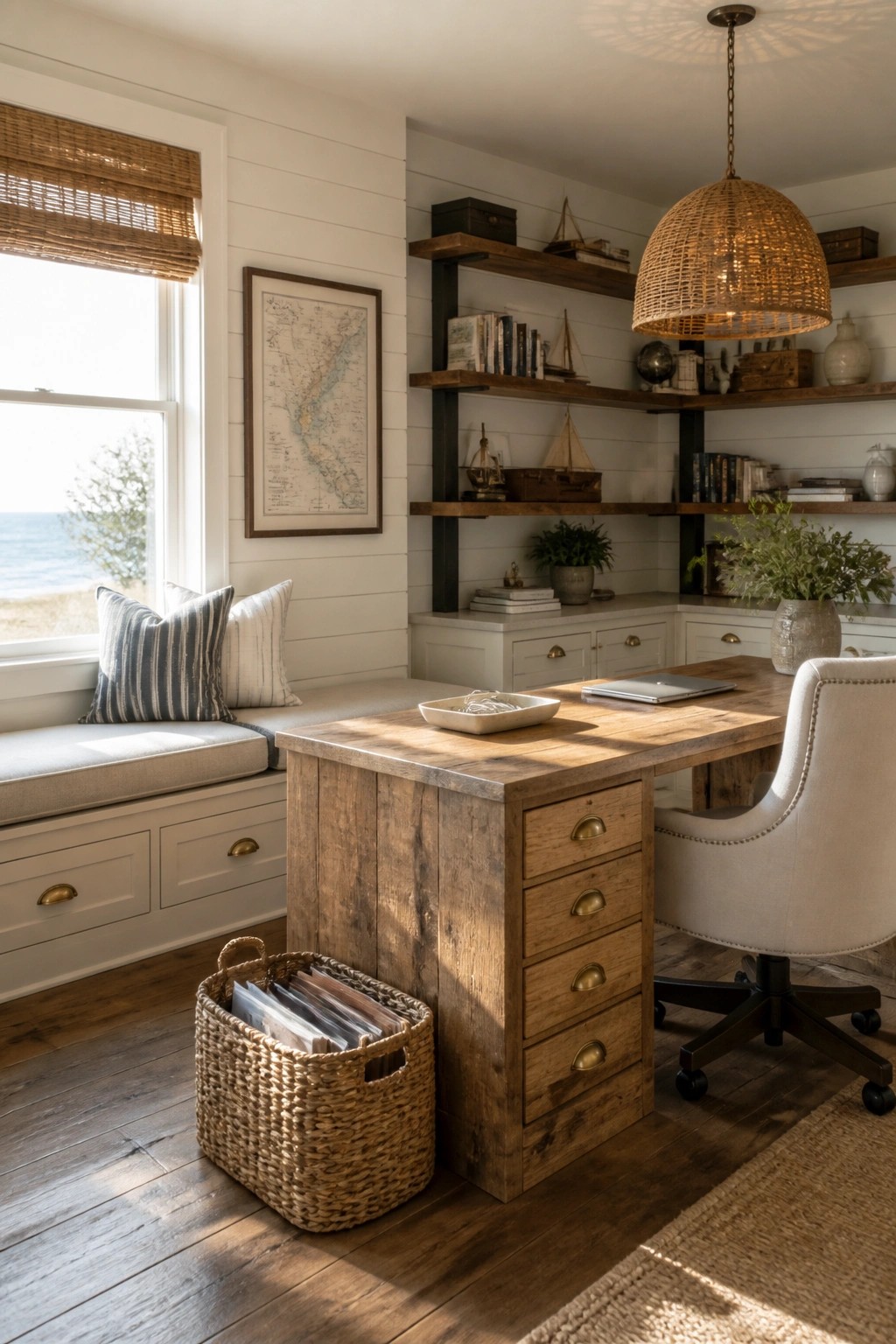
A desk with plenty of built-in drawers makes it easier to stay organized without adding extra furniture. You can keep papers, supplies, and small items close at hand while the top stays clear for actual work.
This approach suits smaller offices or rooms that need to serve more than one purpose. Put the most-used items in the top drawers and save the lower ones for things you reach less often. A simple basket nearby can handle overflow like magazines or files that do not fit inside.
A Desk That Folds Away When Not in Use
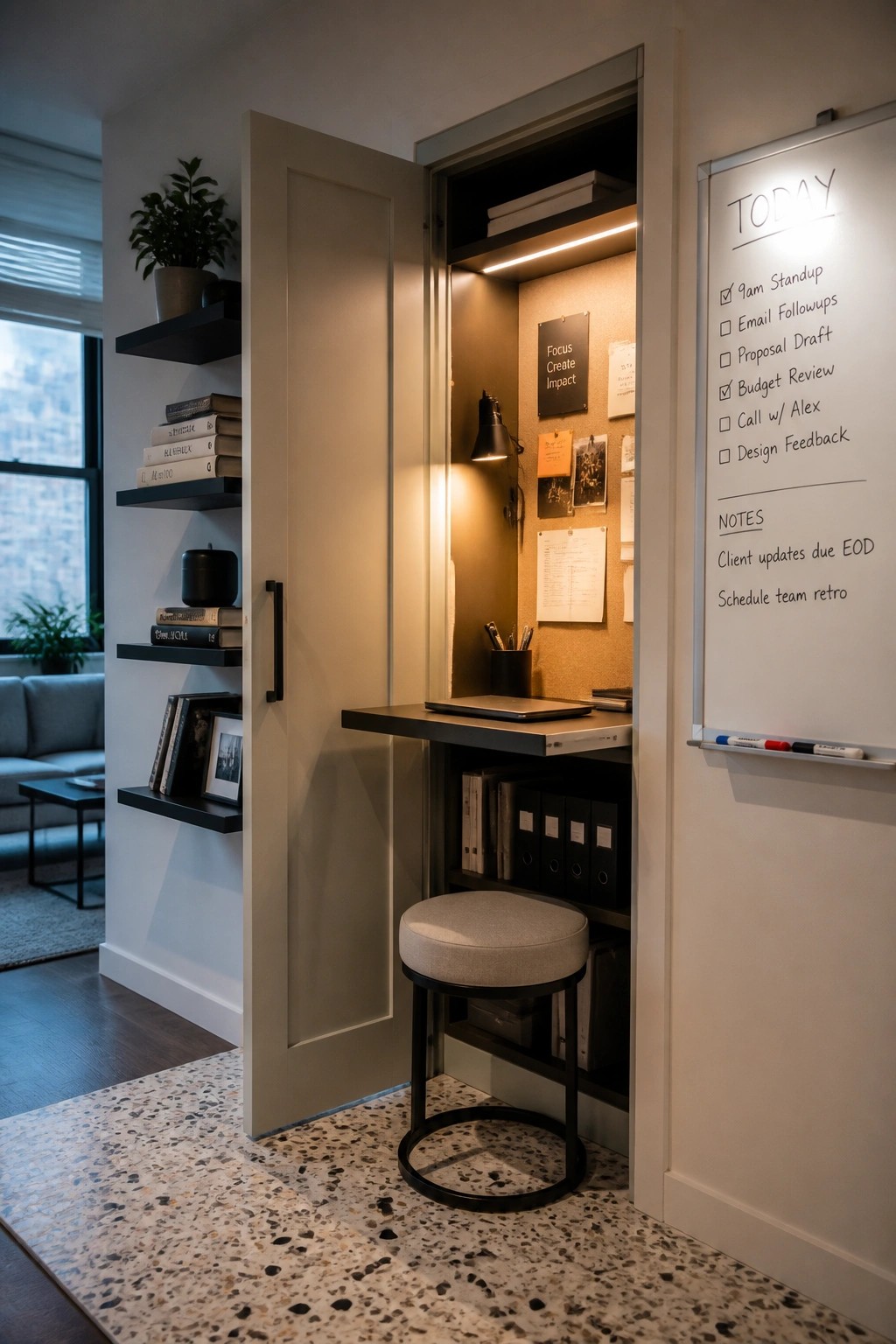
Many homes need a place to work without giving up the whole room to an office setup. A desk that tucks behind doors keeps the surface and supplies out of sight while still giving you a real workspace when you open it up.
This approach suits smaller homes or shared living areas where you want to separate work from the rest of the day. It also helps with circulation since nothing sticks out into the walkway once the doors are closed.
Built-In Shelving For Everyday Office Storage
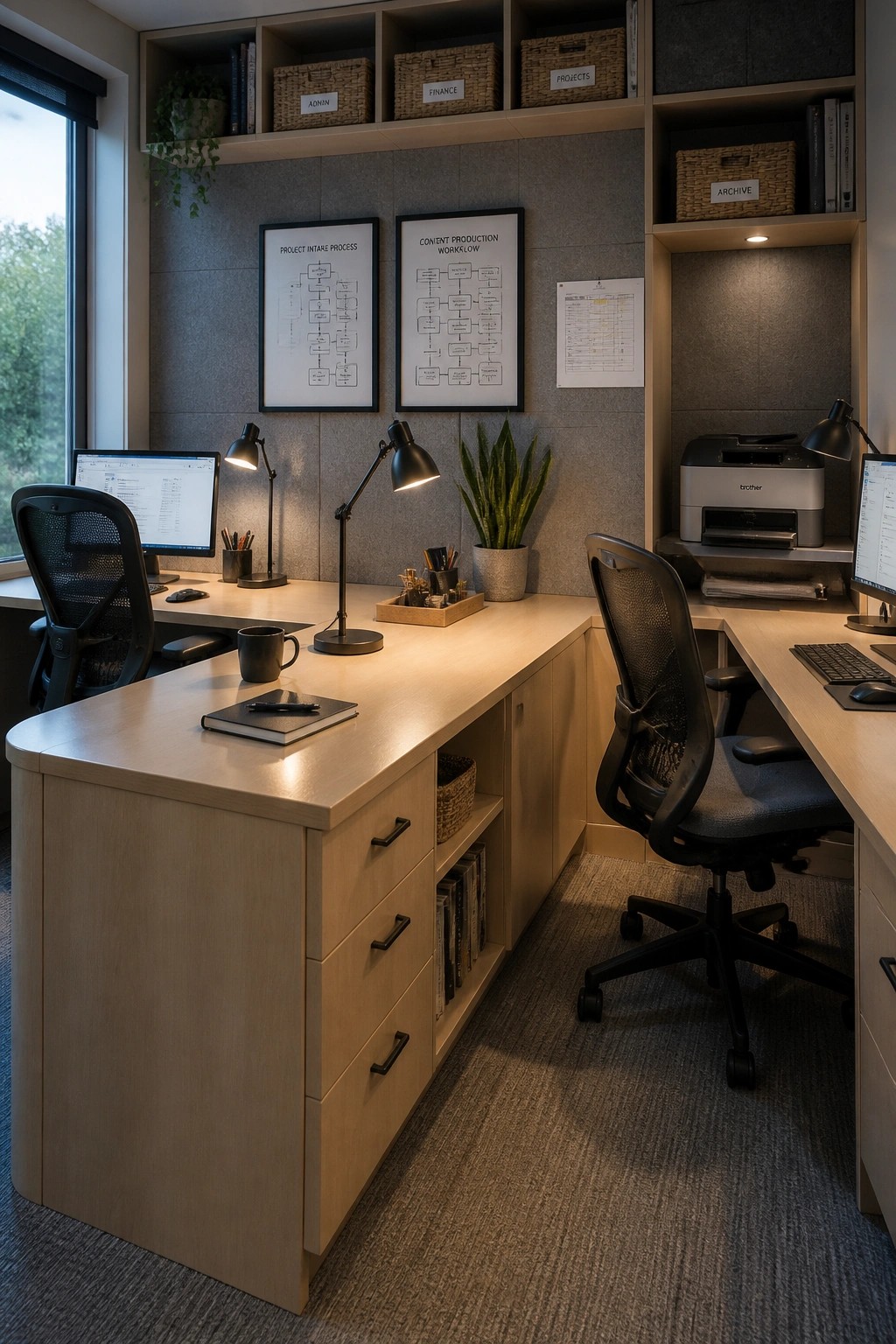
Built-in shelving above a desk gives you a place for everything without crowding the work surface. In this setup the shelves hold labeled bins and a few books, while the lower cabinets tuck away files and supplies. It keeps the room feeling open and makes it easier to grab what you need without digging through piles.
This kind of storage works well in smaller home offices where every inch counts. Place the shelves at a height that matches how often you reach for items, and keep the labels simple so anyone using the space can find things quickly. Avoid filling every shelf, or the room can start to feel closed in.
Anchor The Desk With A Rug
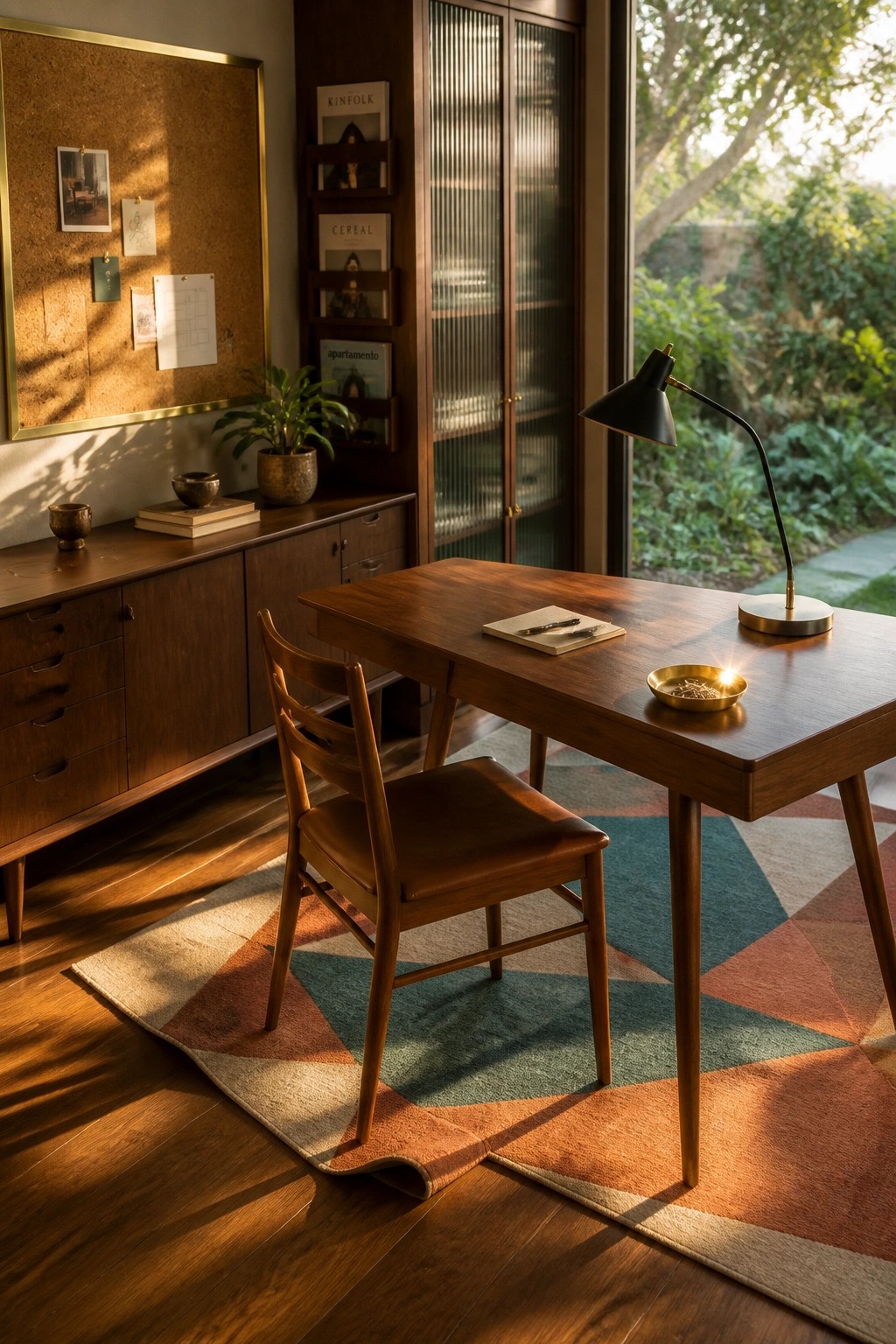
A rug under the desk helps mark the workspace as its own zone. It keeps the chair from sliding around on hard floors and makes the area feel more settled without adding walls or extra furniture. The pattern also breaks up the wood floor so the desk does not just float in the room.
Place the rug so the front legs of the desk and the chair stay fully on it. This works best in rooms that double as other spaces because the rug signals where work happens and where it stops. Keep the rug size simple so you can still walk around the desk without tripping on the edge.
Built-Ins Under The Stairs
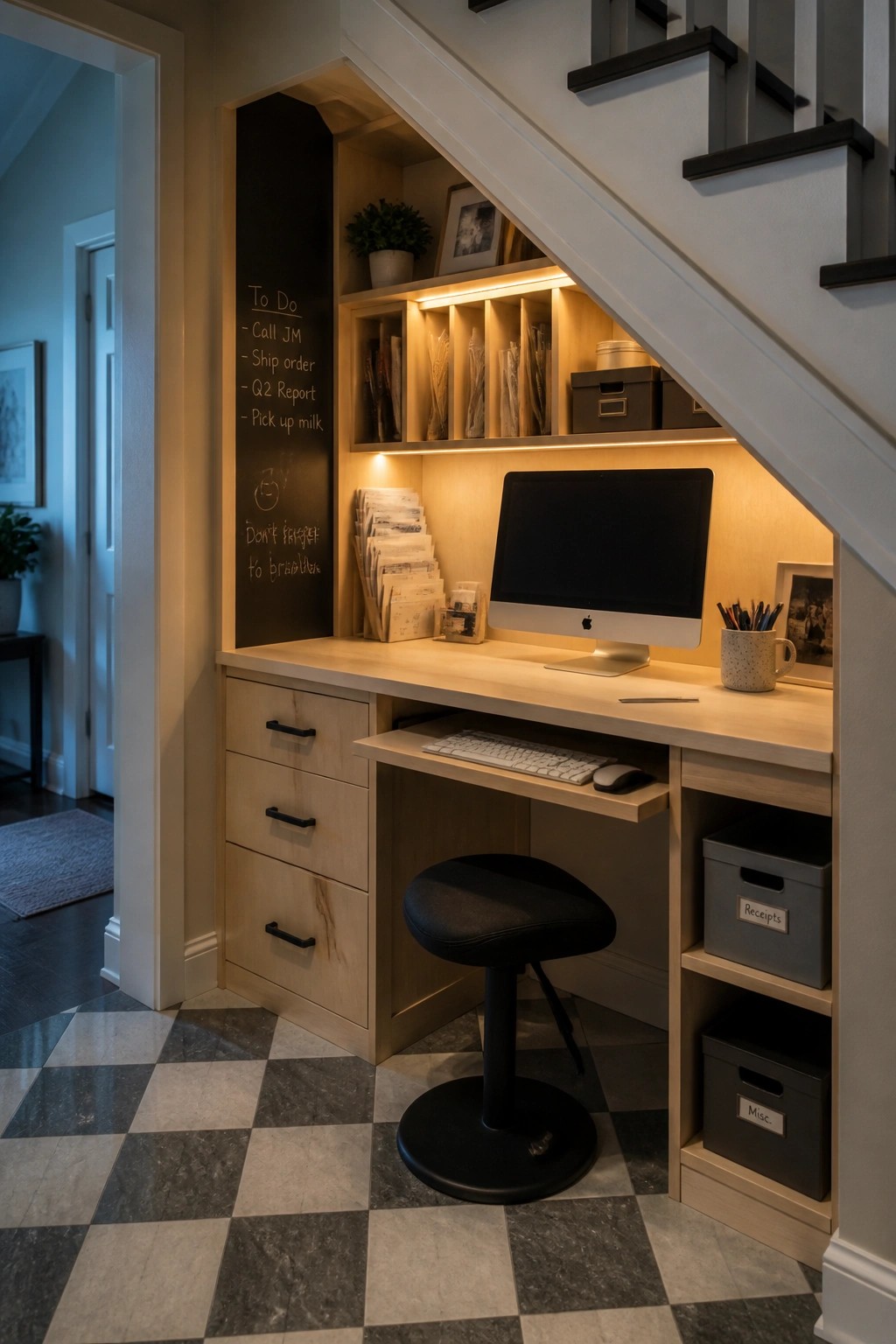
Many homes leave the space under the stairs empty or only lightly used. Adding a built-in desk with drawers and open shelves turns that area into a working spot that stays out of the way but stays handy for daily tasks.
This kind of setup fits best in houses with limited square footage or busy main floors. Keep the desk surface clear enough for a computer and keyboard, then use the surrounding storage for papers and supplies so the workflow stays simple and contained.
Built-In Cabinets That Keep The Workspace Open
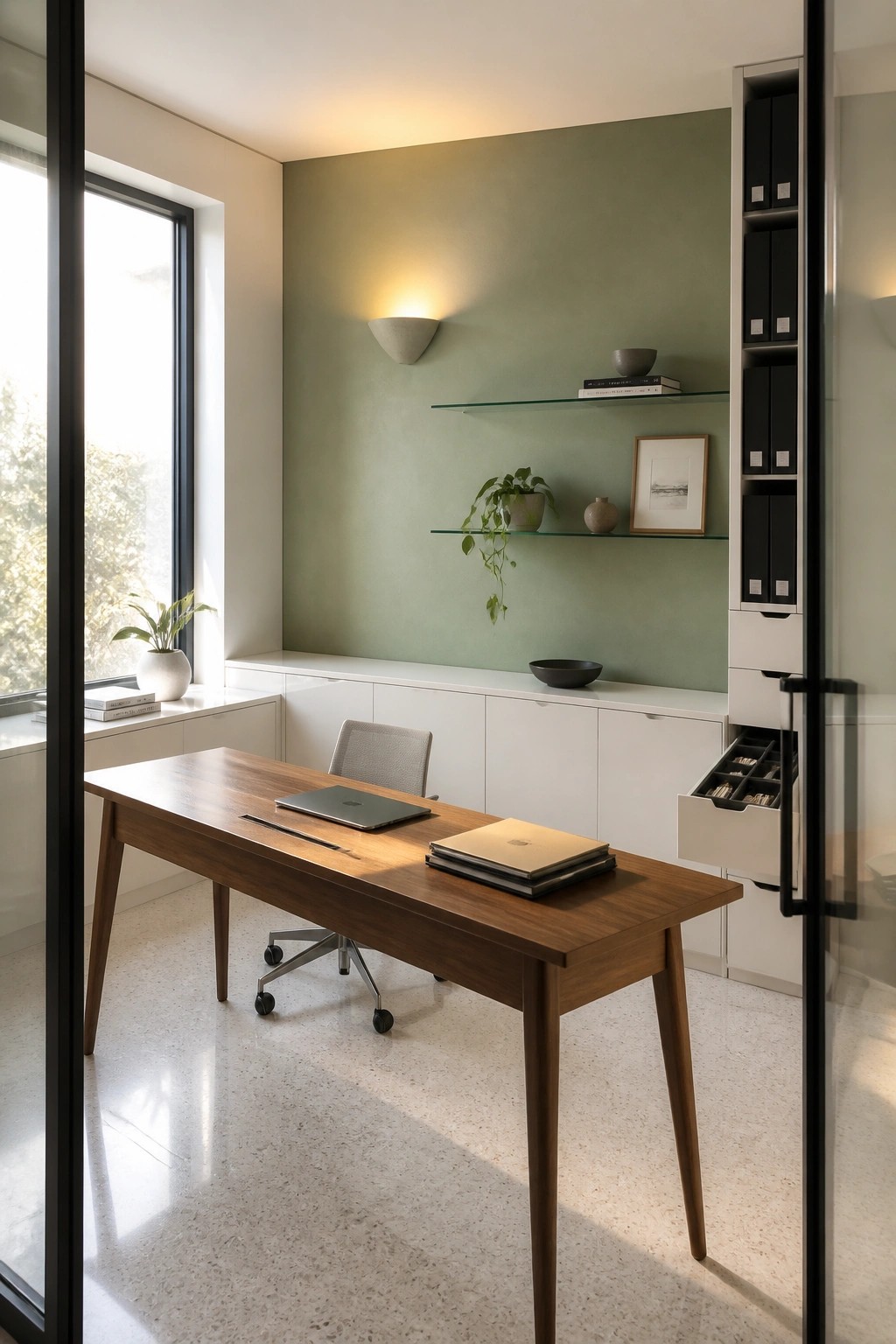
Running a row of low cabinets along the back wall gives you plenty of hidden storage while leaving the floor open. This setup makes it easier to move around the desk and avoids the cluttered look that comes from too many separate pieces.
It works best in smaller offices where every inch counts. Keep the cabinets simple and low so the desk can sit in front without blocking access, and add a few open shelves above if you need a place for plants or supplies you reach often.
Closet Offices With Built-In Storage
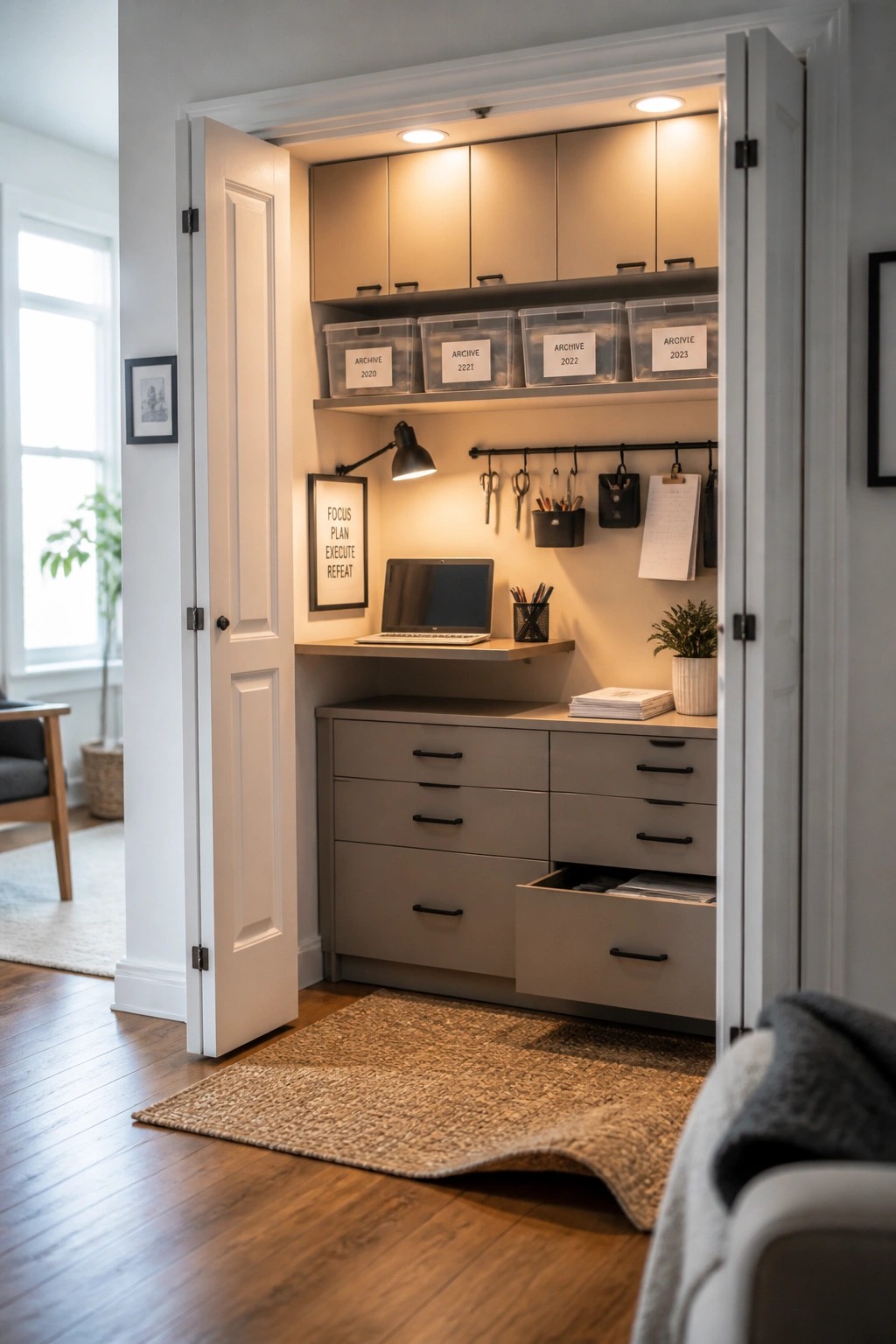
Many homes lack a full room for an office, so turning a closet into a workspace makes sense. Built-in drawers, shelves, and labeled bins keep files and supplies sorted without taking up floor space elsewhere.
This approach suits small homes or apartments where every inch counts. Keep the desk height comfortable and add lighting inside so the area stays usable throughout the day.
Built-In Storage Keeps Small Offices Organized
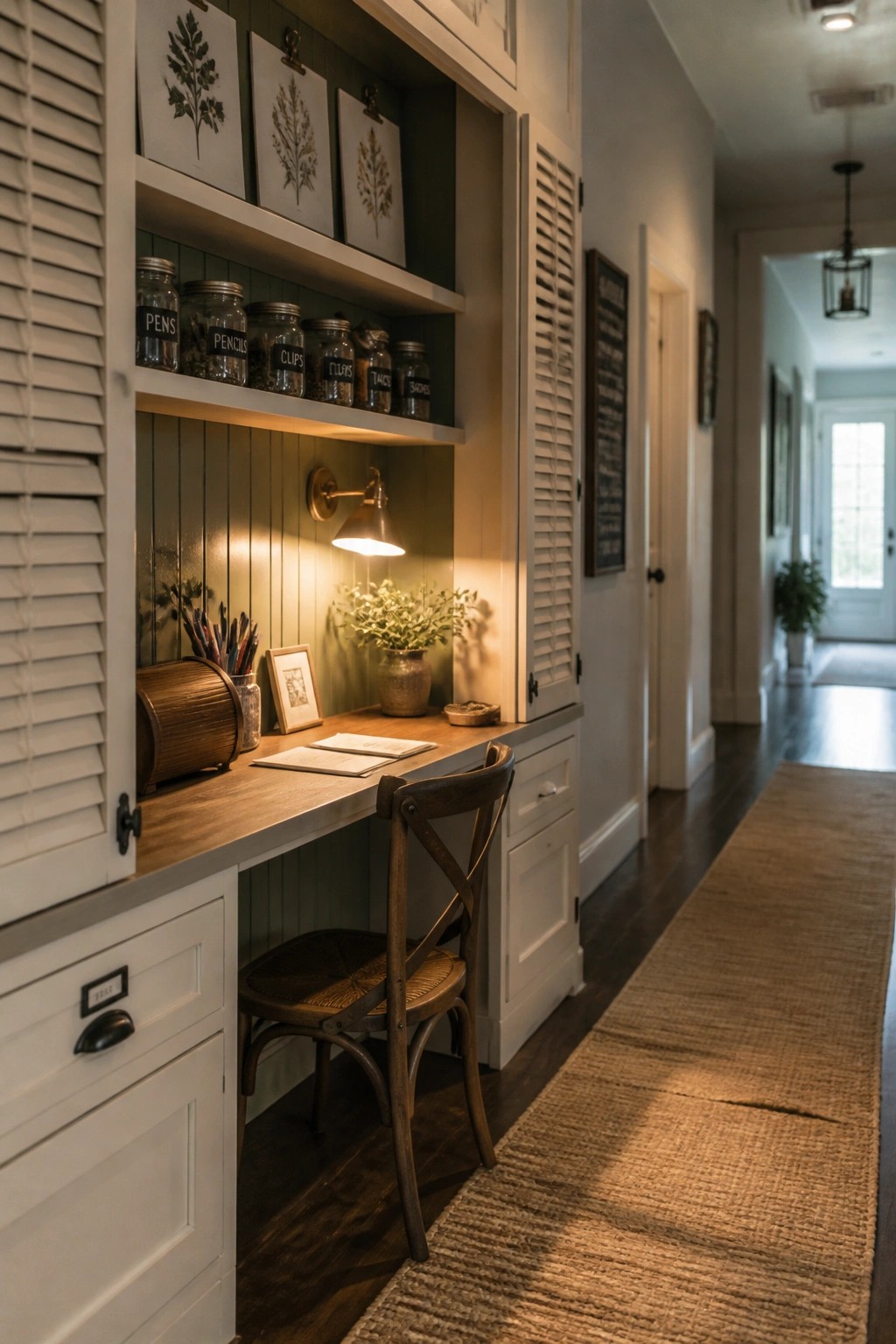
Built-in shelves above a desk give you a place for supplies without adding extra furniture. The labeled jars make it easy to see what you have and reach for it quickly during the day.
This setup works well in hallways or small rooms where a full office would feel crowded. It suits homes that need the workspace to stay out of the way when not in use.
Built-In Shelving Next to the Desk
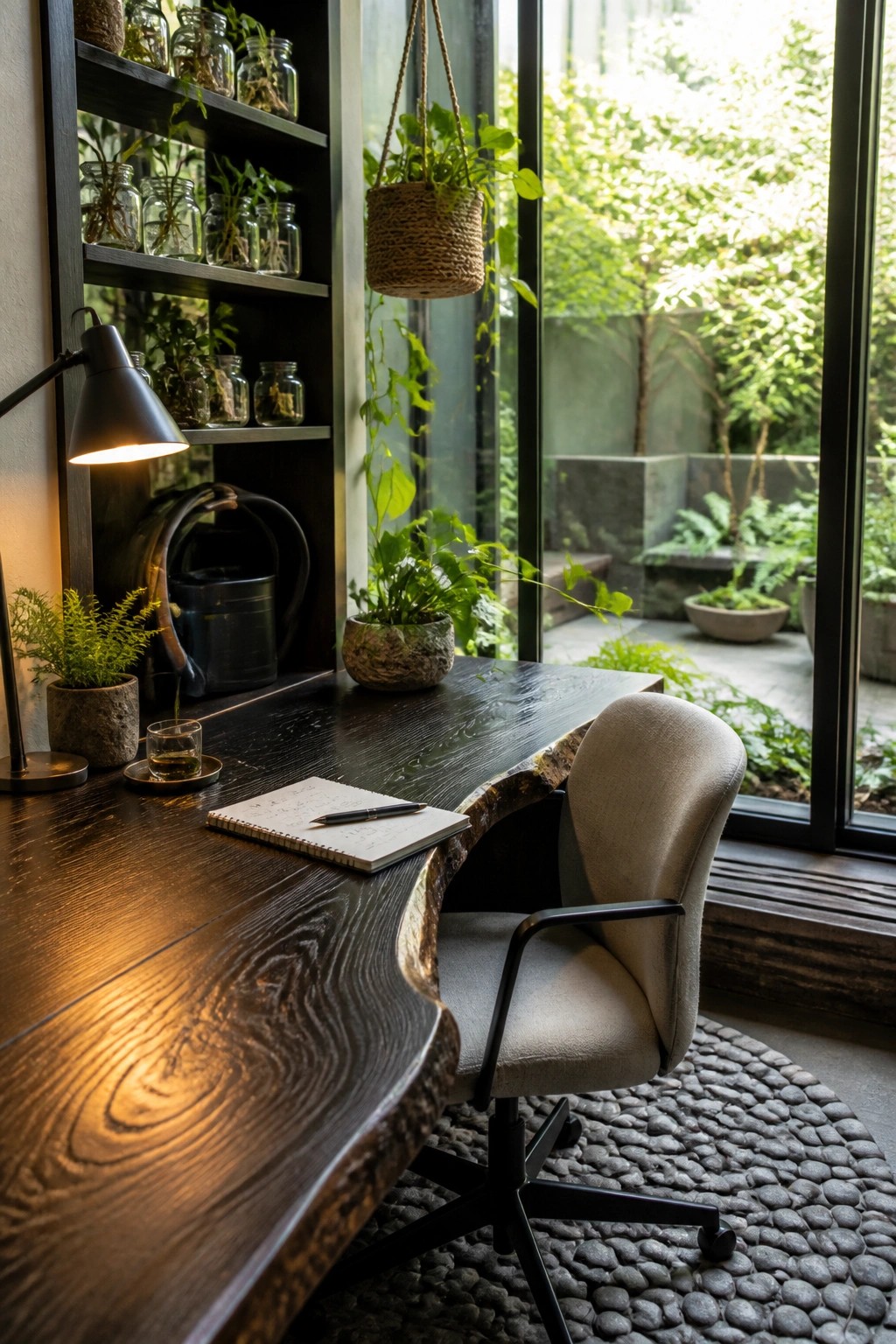
Open shelving placed right beside or above a desk gives you a place to keep supplies, notes, and small tools without crowding the work surface. It keeps everything visible and within reach, which helps the space feel more organized during a normal workday.
This setup works best in smaller home offices where you need storage but do not want to add more furniture. Use jars or simple bins on the shelves so items stay tidy, and leave a little empty space so the area does not feel too full.
Built-In Cabinets for Office Storage
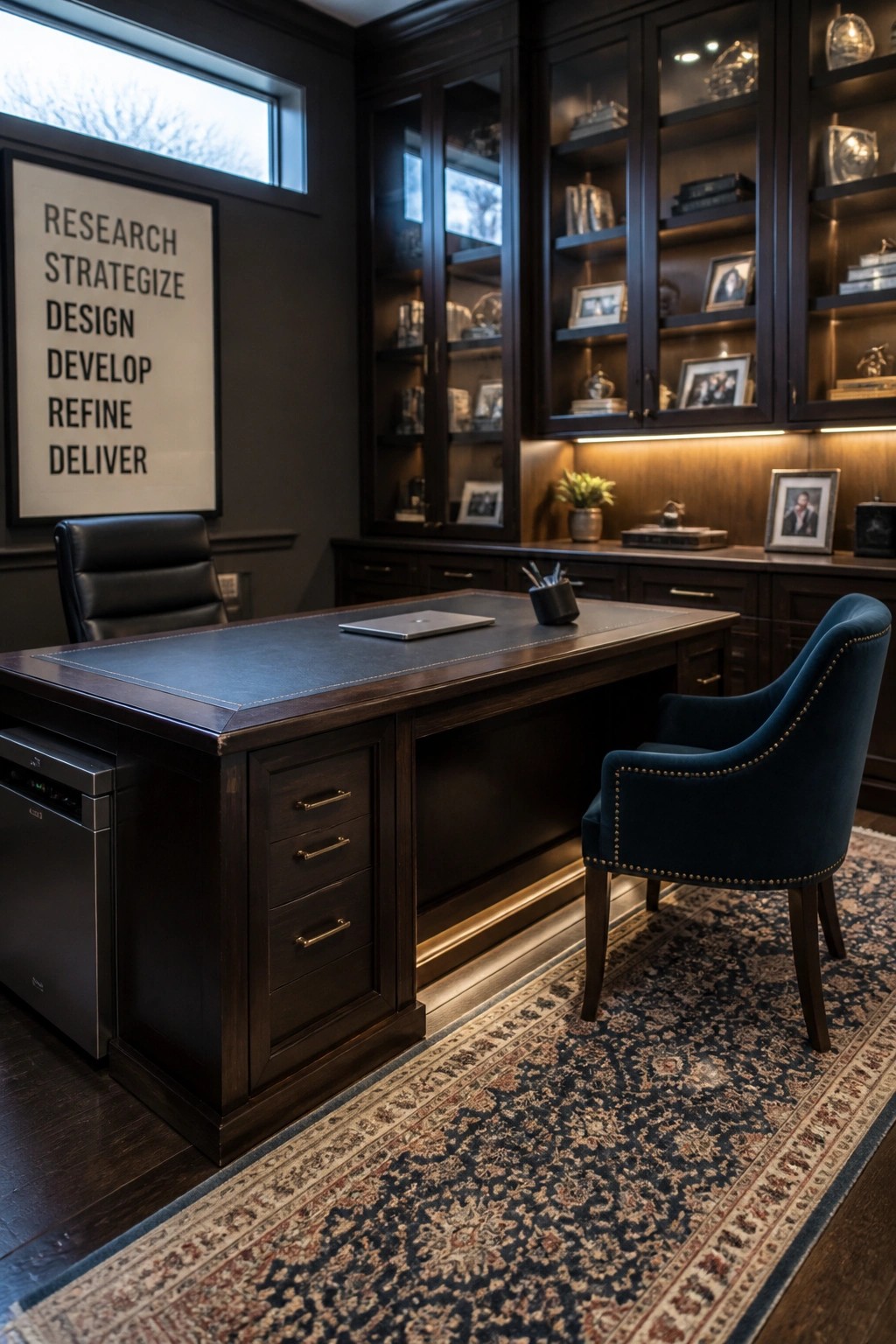
Built-in cabinets give you a lot of storage without crowding the floor space. In this setup the cabinets run across the whole wall and hold books, files, and smaller items behind glass doors, while the lower section stays closed. That leaves the desk area open for actual work.
This approach works best when you need to keep papers and supplies close but out of sight. It suits a room that doubles as a guest space or when the office sits inside a main living area. Make sure the cabinet depth stays shallow enough for easy reach from a seated position.
Use A Divider To Carve Out An Office Area
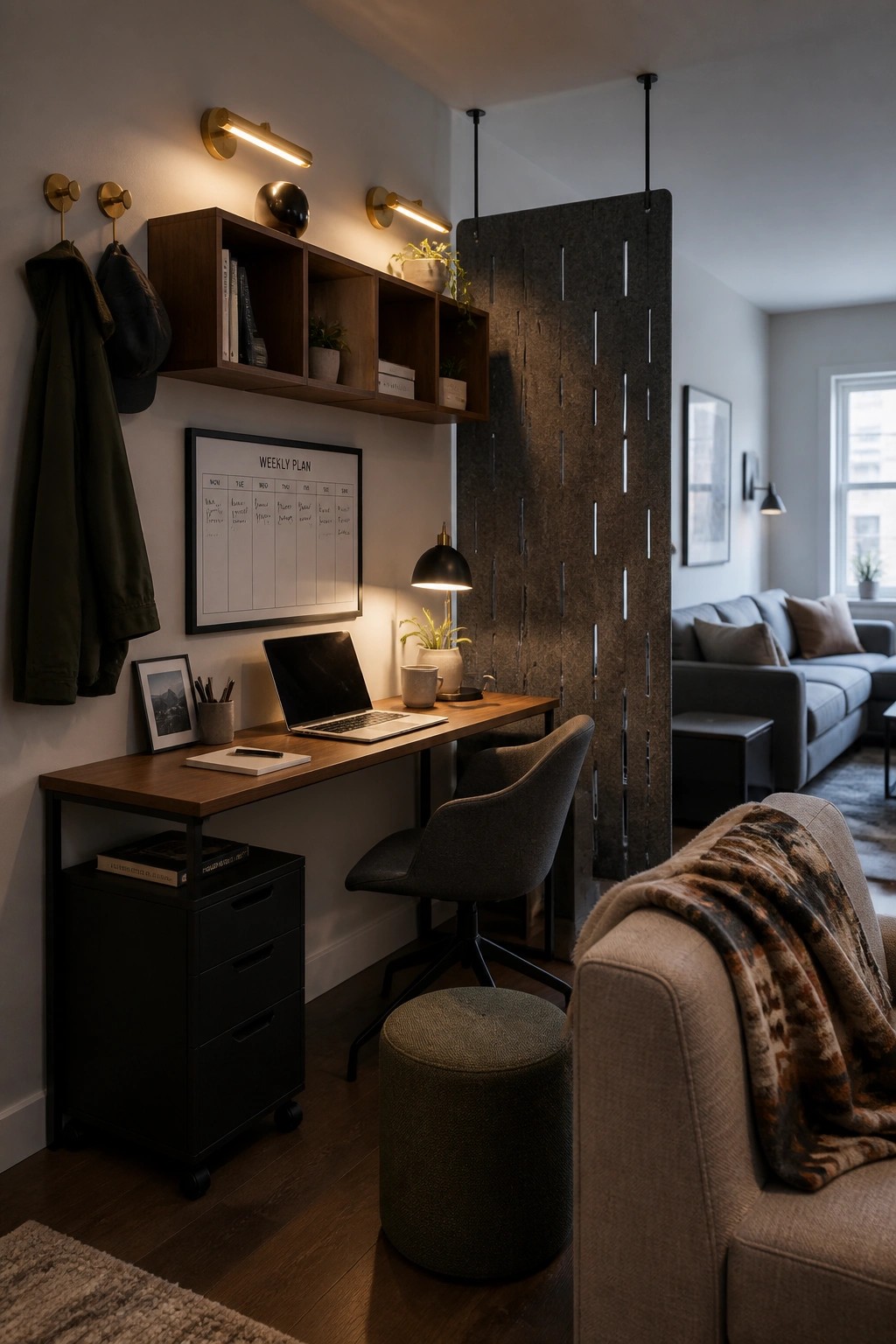
A tall divider can turn part of a living room into a workable office without building walls. It gives the desk its own spot while still letting the rest of the room feel open and easy to move through.
This setup works best in smaller homes or apartments where one room has to handle more than one job. Place the divider behind the desk so it blocks views from the seating area, and keep storage close by so papers and supplies stay within reach during the day.
Desk Storage That Keeps Workflow Smooth
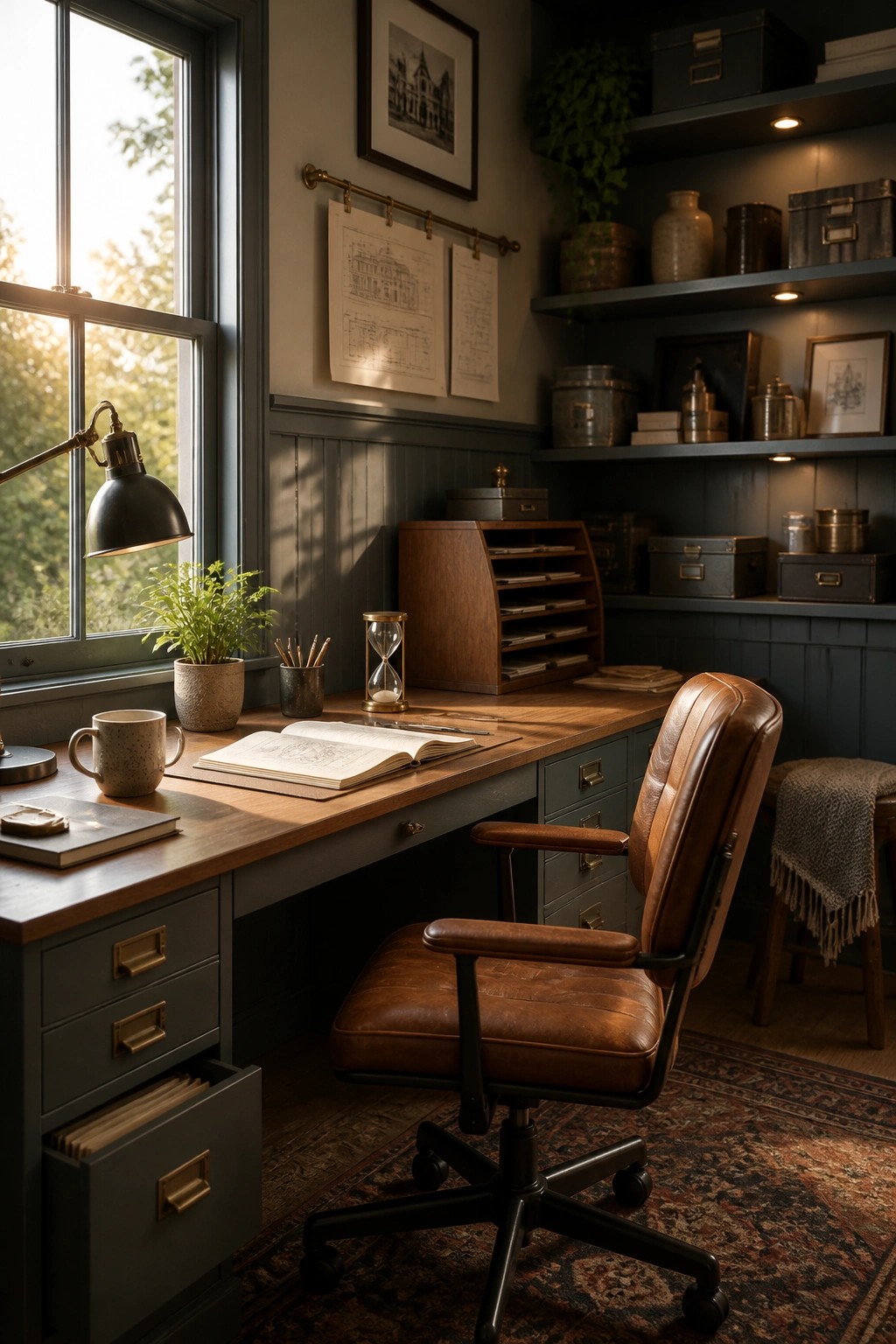
Many home offices run better when storage sits close at hand instead of tucked away in a closet. A desk with several drawers paired with open wall shelves above it holds papers, supplies, and files right where they are needed during the day.
This approach works well in smaller rooms or spaces that serve more than one purpose. Place everyday items on the shelves and keep less frequent ones in the drawers so the surface stays clear for actual work.
Pegboard Storage For Office Supplies
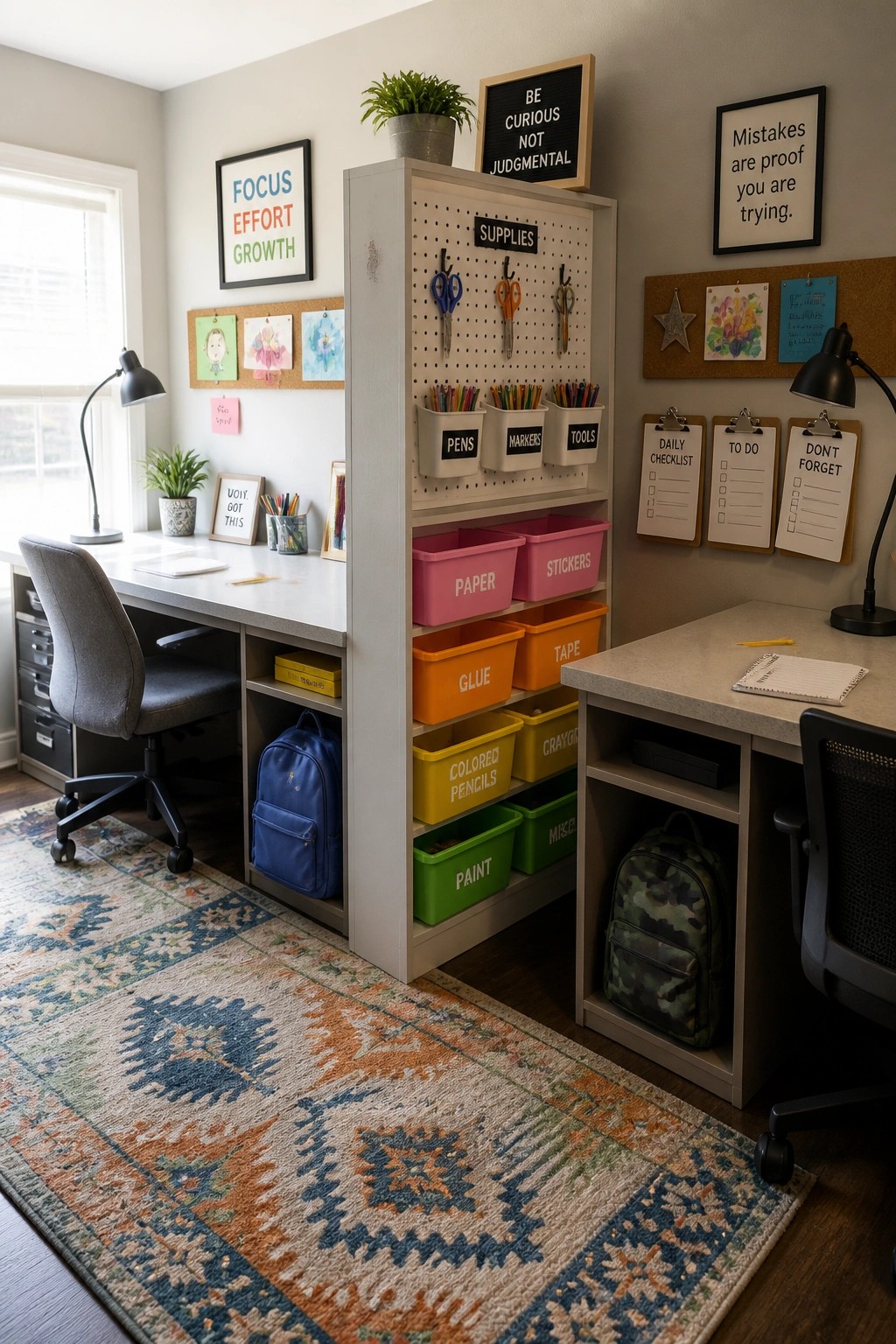
A pegboard wall with hooks and bins turns empty vertical space into quick access storage. It keeps pens, scissors, and other small items visible so you do not have to dig through drawers every time.
This setup works best in rooms used for homework or daily paperwork where supplies need to stay sorted. Label the bins and use bright colors for younger users so the system stays easy to follow.
Wall Mounted Monitors Free Up Desk Space
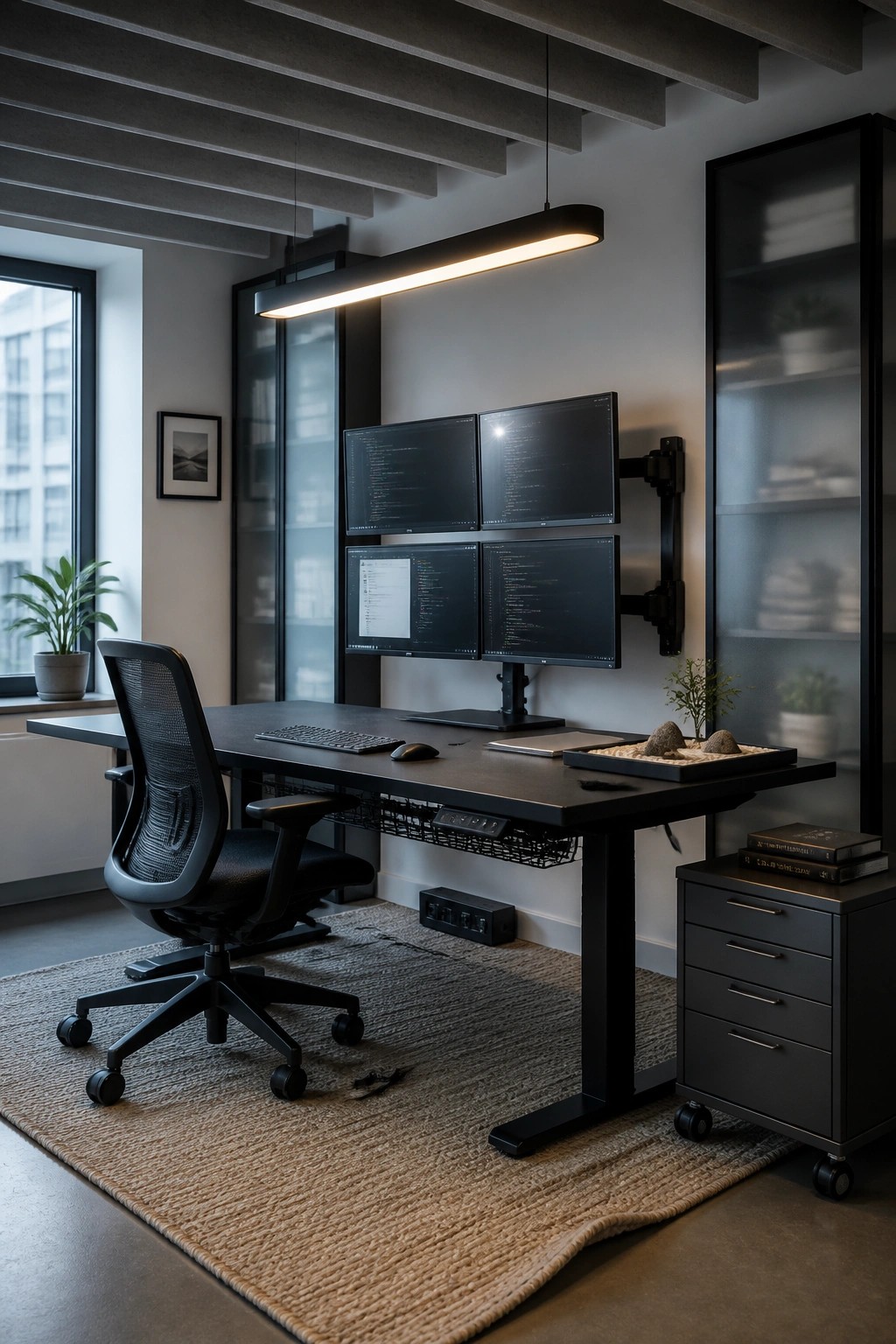
Mounting monitors on the wall instead of using desk stands gives you more usable surface area for daily tasks. The setup keeps cables organized and leaves room for a keyboard, mouse, and a few essentials without crowding the workspace.
This approach works best in smaller home offices where every inch counts. It suits people who spend long hours at a computer and need easy access to storage below the desk or on a nearby rolling cabinet.
Built-In Storage For Everyday Workflow
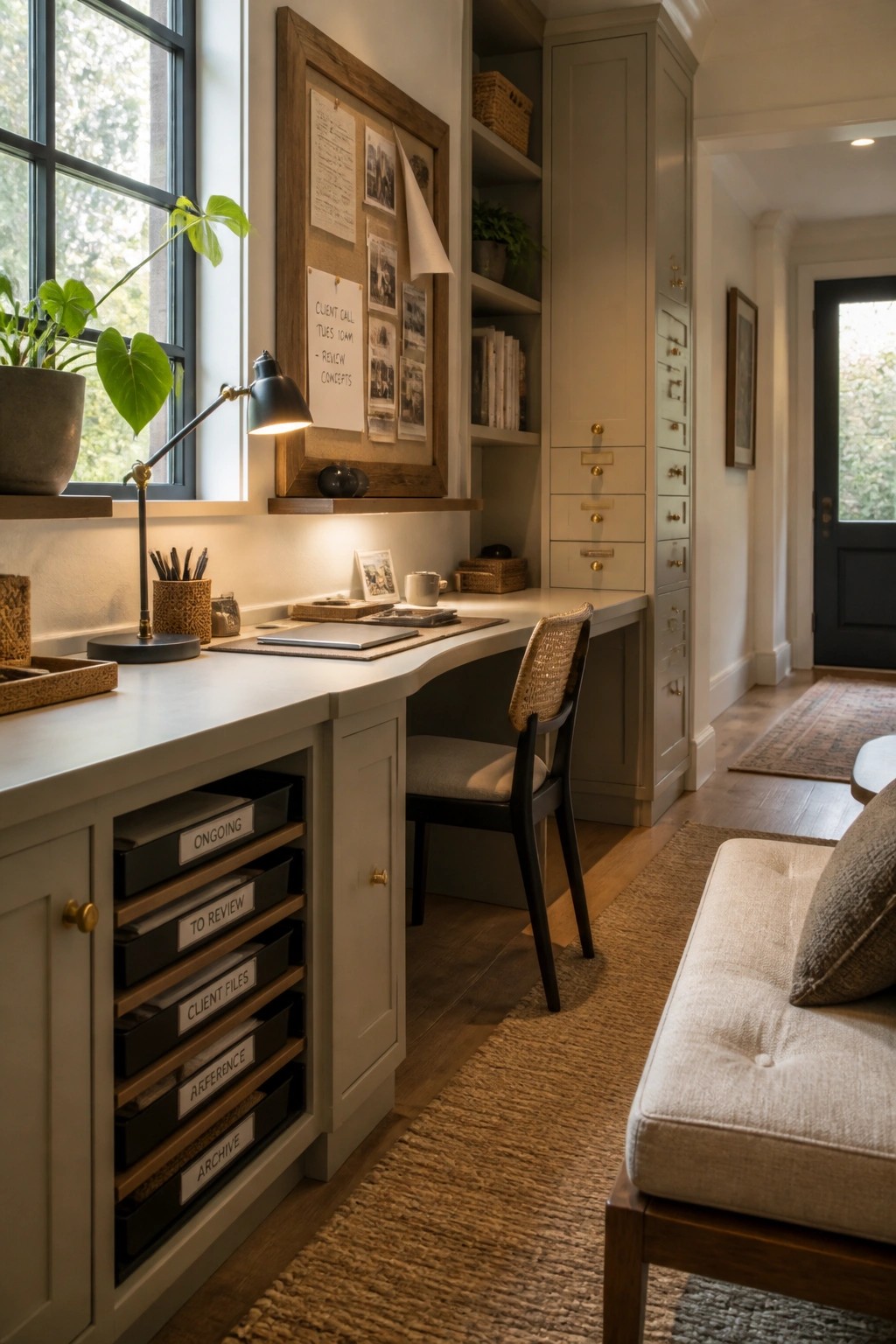
Built-in filing and cabinet storage right at the desk makes a big difference in how an office actually functions. The trays and drawers sit close enough to reach without standing up, and they keep papers sorted by category instead of piling up on the surface.
This kind of storage works best in rooms that need to stay usable for other purposes too. It suits homes where the office shares space with living areas, since everything stays contained and the desktop stays clear at the end of the day.
Frequently Asked Questions
Q: What if my office is tiny and I need lots of storage without blocking the way? A: Mount a few narrow shelves right above your desk to hold papers and supplies you reach for often. Keep the floor clear with just one rolling cart for the rest so you can push it aside when you need to move. This setup leaves room to walk straight through without tripping over bins.
Q: How can I make sure I can walk around my office without bumping into things? A: Measure the gaps between your desk chair and the walls or other pieces before you lock anything in place. Aim for paths wide enough to turn around in while carrying a coffee mug. Walk the route yourself a couple times once the furniture sits where you want it.
Q: How do I set up my desk so my daily tasks flow better? A: Place your monitor straight ahead and keep your keyboard and mouse close in front of you. Put a single tray for incoming papers on one side and a pen cup on the other so you grab what you need without stretching. Shift anything you touch less than once a day into a drawer or onto a side table.
