


I have walked into executive offices where the oversized desk and rigid seating made the whole room feel stiff long before any work actually got done.
The real test comes when you try to arrange the space so authority shows in the layout while still leaving room to sit comfortably through a full day.
Layout decisions matter more than most people expect.
In my own setup the desk position made the biggest difference because it needed to face the entry without turning the rest of the room into an afterthought.
A few of these approaches stand out because they keep the power in the main pieces and use softer elements to make the room feel usable instead of just impressive.
A Substantial Desk As The Office Centerpiece

A large wooden desk can give an executive office real presence without making it feel stiff. It becomes the natural spot for work while leaving room around it for a comfortable chair and easy movement.
This setup works best in rooms with built-in shelves or wood paneling already in place. Keep the rest of the furnishings simple so the desk stays the focus and the space still feels usable day to day.
Floating Shelves Above the Desk
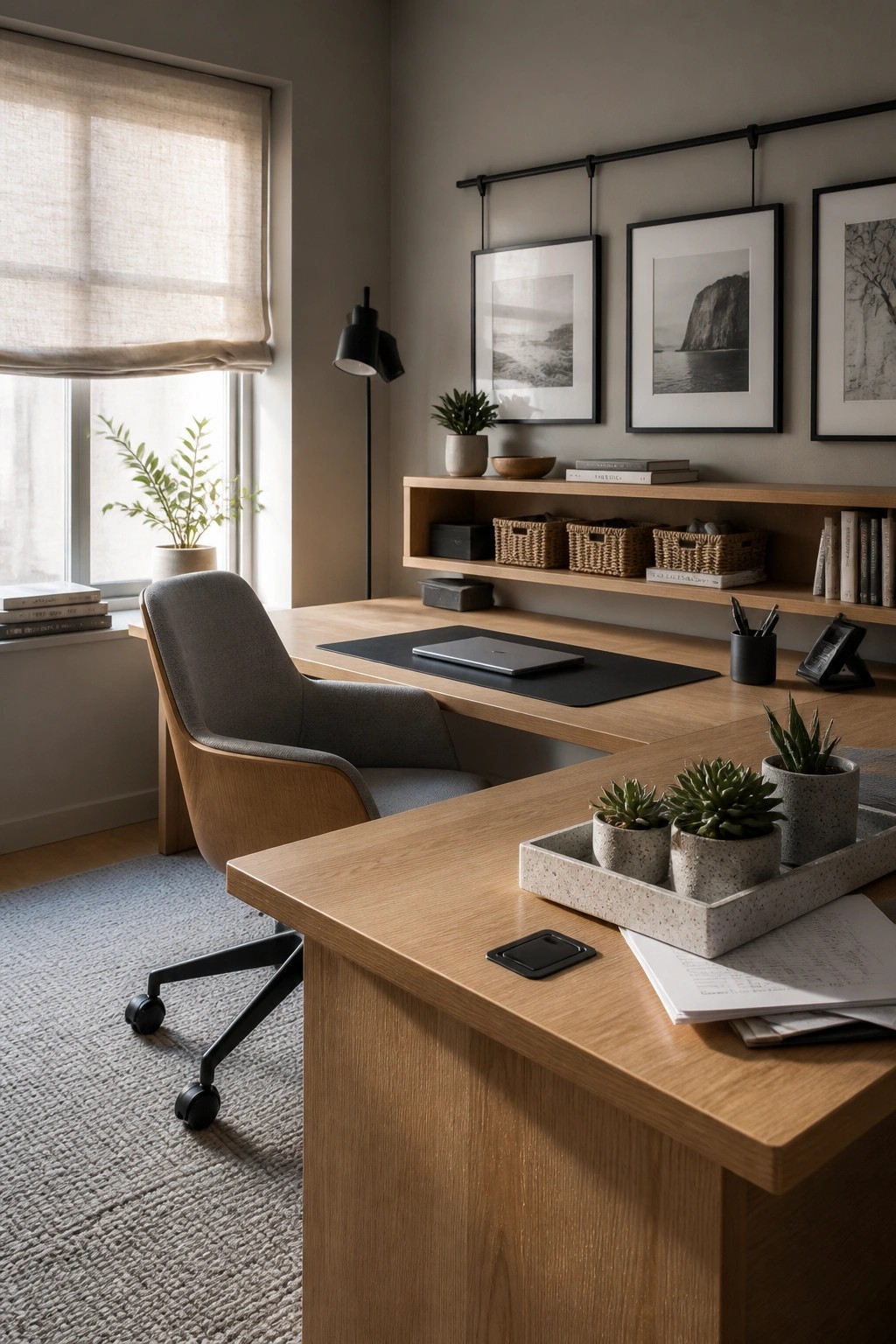
A long floating shelf above the desk gives you storage without eating into floor space or making the room feel crowded. It keeps everyday items within reach while leaving the main work surface clear for actual tasks.
This approach works best in home offices that need to double as guest rooms or shared spaces. Mount the shelf at a height that clears your chair back, and limit what you put on it to a few baskets and a couple of framed pieces so it stays useful instead of turning into another surface to dust.
Built-In Bookshelves With Lighting

Built-in bookshelves with integrated lighting give an executive office both storage and presence. The lights highlight the books and keep the room from feeling too heavy, which helps balance the formal desk and seating.
This setup works best in larger rooms where the shelves can run along one full wall. Use warm bulbs and keep the shelves filled rather than sparse so the space feels lived in instead of showy.
A Curved Desk Adds Flow To An Executive Office

A curved desk changes how an office feels without losing its sense of authority. The rounded shape lets you move around the surface more easily and keeps the room from feeling boxed in by a big block of furniture.
This works best in home offices where you spend long hours at the desk but still want the space to feel open. Keep the rest of the room simple so the desk shape stays the main feature.
Anchor Your Desk With A Woven Rug

A large desk can feel like it is floating in an open room. Setting it on a woven rug gives the workspace a clear spot and adds some softness underfoot without losing the professional look.
This setup works best in bigger offices or loft spaces where you want the desk to feel like the main feature. Make sure the rug is big enough for the chair to roll on it too, and keep the rest of the floor simple so the desk area stays the focus.
Pair a Large Desk With a Soft Chair

A big desk sets the tone for an executive office and gives you plenty of room to work. Adding a comfortable upholstered chair keeps the space from feeling stiff or cold during long days.
This combination works best in home offices that need to look professional but still feel livable. Choose a chair with some cushion and a desk with a bit of texture so the room stays balanced.
Built-Ins Around a Fireplace

A fireplace paired with tall built-in shelves gives an executive office real presence while keeping the room from feeling stiff. The fire adds steady warmth and a place to pause, and the shelves provide the storage and display space that makes the room feel established.
This works best in a larger home office where you already have the chimney or can add one. Match the wood tones on the shelves to the desk and trim so the whole room reads as one calm, useful space rather than a collection of separate pieces.
Built-In Shelving For Attic Offices

Attic offices often end up cramped or underused because of the angled walls. Built-in shelves solve that by following the roofline and giving plenty of storage without eating into floor space. This keeps the room open while still holding books, files, and supplies in an orderly way.
The setup works best in homes with unused attic space that can be turned into a private work area. It suits people who want a quiet, focused office that still feels comfortable rather than stark. Keep the desk surface fairly clear so the room does not feel overloaded.
Adding a Sofa Bench Behind the Conference Table

A sofa bench along the back wall softens a long conference table without making the room feel less serious. It gives people a place to sit comfortably during longer meetings or quick side conversations, and the mix of seating keeps the space from looking too rigid.
This layout works well in larger offices that need to handle both formal presentations and smaller group discussions. Keep the sofa simple with a few pillows so it adds comfort but does not compete with the table as the main focus.
Built-In Cabinetry For A Cleaner Office

Built-in cabinetry can make an executive office feel more organized without taking up extra floor space. When the storage runs from floor to ceiling along one wall, it holds files, supplies, and equipment while keeping the room looking calm and open.
This setup works especially well in home offices that need to double as meeting spaces. It keeps daily clutter out of sight and leaves room for a simple desk and chair arrangement that still feels comfortable for long workdays.
Glass Desk With Full Wall Shelving
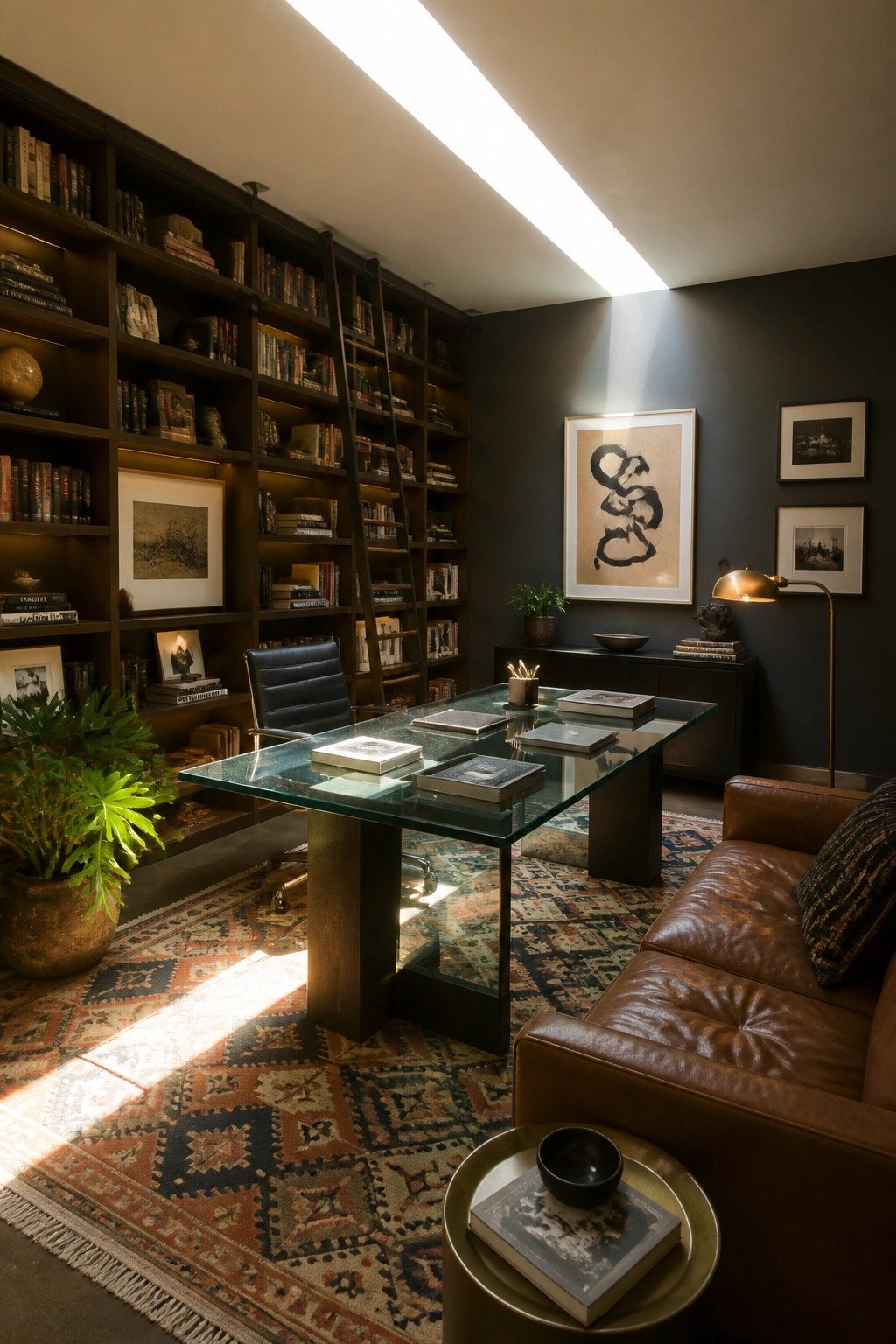
A glass desk works well in an executive office when the rest of the room is built up with dark shelving and solid seating. The clear surface keeps the space from feeling crowded, while the bookshelves and leather pieces give it weight and presence.
This setup suits a home office that needs room for files and books but should still feel comfortable for long hours. Keep the desk simple and let the surrounding storage and seating carry the authority.
Opening An Office To The Garden

Many executive offices stay shut away from the rest of the house, but setting the desk right against a full wall of glass changes the feel completely. The view to trees and plants softens the space without making it feel less serious.
This works best when the room can borrow light and greenery from outside. Keep the furniture low and natural so the garden stays the main point rather than competing with too many pieces inside.
Round Tables That Soften An Executive Office

A round table works well in an executive office because it avoids the stiff feel of a traditional desk setup. It keeps the space professional while making conversations feel more natural and less one-sided.
This layout suits home offices that double as meeting spaces. Position the table on a textured rug with a couple of upholstered chairs, then use built-in cabinetry along the wall to handle storage and keep the room looking organized.
Woven Pendant Lights Over a Large Desk

Many executive offices rely on a big solid desk to set the tone. Adding a pair of woven pendant lights above it brings texture and a warmer glow that keeps the authority from turning cold.
This approach works best in home offices where natural light already fills the room. Keep the fixtures simple in shape and hang them low enough to feel intentional but high enough to leave clear sightlines across the desk.
Choose a Large Desk as the Focal Point

A big, solid desk gives an executive home office its sense of weight and purpose. The dark wood surface and heavy frame make the workspace feel serious without needing extra decoration or bold accents.
Place it in the main part of the room so the rest of the layout can stay open. This works especially well in apartments or homes where the office shares space with living areas, since the desk itself creates a clear work zone while still allowing room for a sofa or reading chair nearby.
Using A Pegboard Wall For Office Storage

A pegboard wall gives you a place to keep notes, tools, and small supplies right where you can see them. This setup works well in an executive office because it clears the desk surface while still making everything easy to reach during the workday.
Place the board on a side wall near your main desk so it stays in your line of sight but does not dominate the room. It fits best in spaces that already lean rustic or practical, and it helps the office feel organized without needing extra cabinets.
Define the Workspace with a Bold Geometric Rug
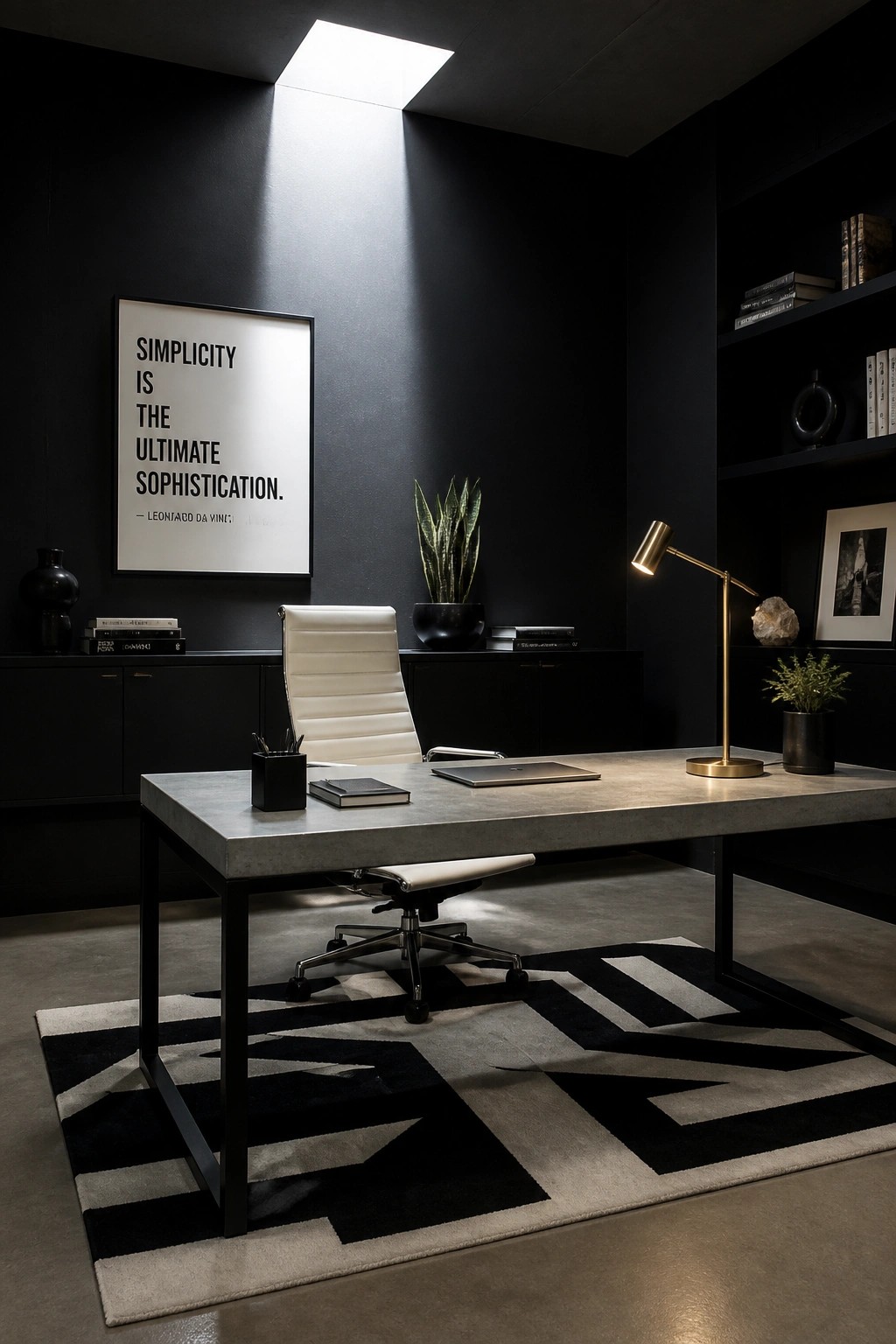
A large patterned rug under the desk helps mark the workspace clearly. It turns a plain concrete floor into something more structured and intentional without any extra construction.
This works well in modern offices that lean dark and minimal. Choose a rug big enough for the chair to stay on it when pulled back, and let the pattern do the rest. It adds some softness while keeping the room feeling sharp and in charge.
Built-Ins That Turn A Bedroom Into A Workspace
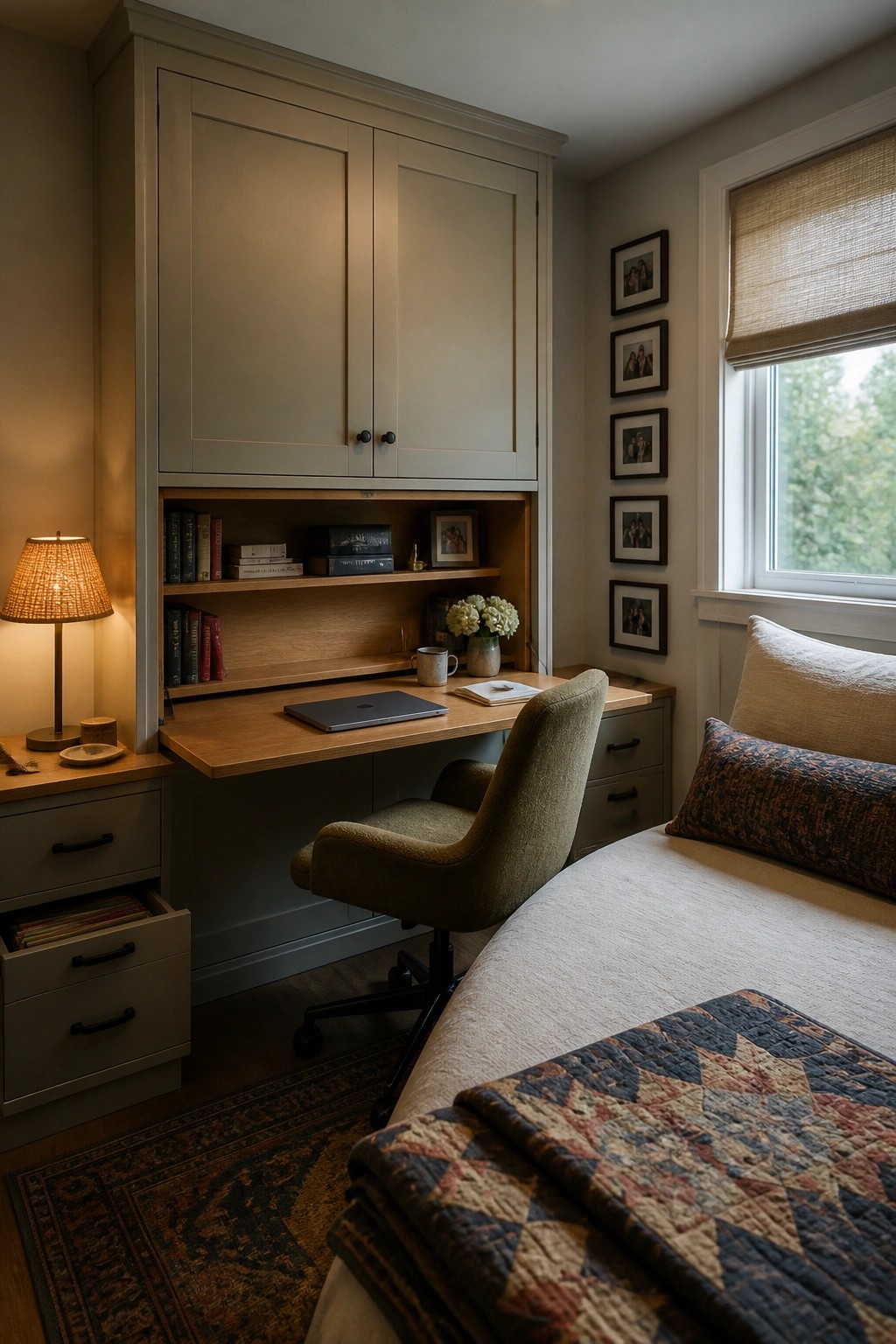
A built-in desk and cabinet unit can give you a real work area without needing a separate room. The cabinet doors above the desk hide clutter when the day is done, while the open shelves keep books and supplies within reach. This setup works especially well when the room has to serve two purposes.
It suits homes where space is limited or where someone prefers to keep work contained rather than spread across the house. The key is making the cabinetry match the rest of the room so the desk feels like part of the furniture instead of an added office. Keep the chair and lighting simple so the space still reads as a bedroom first.
Add A Built-In Bench For Added Comfort

A built-in bench gives an executive office a place to pause without breaking the flow of the room. It keeps the space from feeling like a strict desk-only setup and lets you handle calls, read, or just step away for a few minutes while staying in the same area.
This works best in a home office where the room needs to handle both focused work and lighter tasks. Keep the bench simple with neutral cushions and a few pillows so it supports the desk rather than competing with it. Make sure the scale stays balanced so the desk still feels like the main piece.
Position The Desk Toward Open Doors

Many executive offices stay closed off, but placing the desk so it faces a set of doors that open to the outside makes the room feel less boxed in. The view and fresh air help the space stay comfortable even during long workdays.
This setup works best in homes that already have a patio or small courtyard right outside. Keep the doors simple in style so they do not fight with the desk and chair for attention.
Set Up a Drafting Table for the Main Work Area
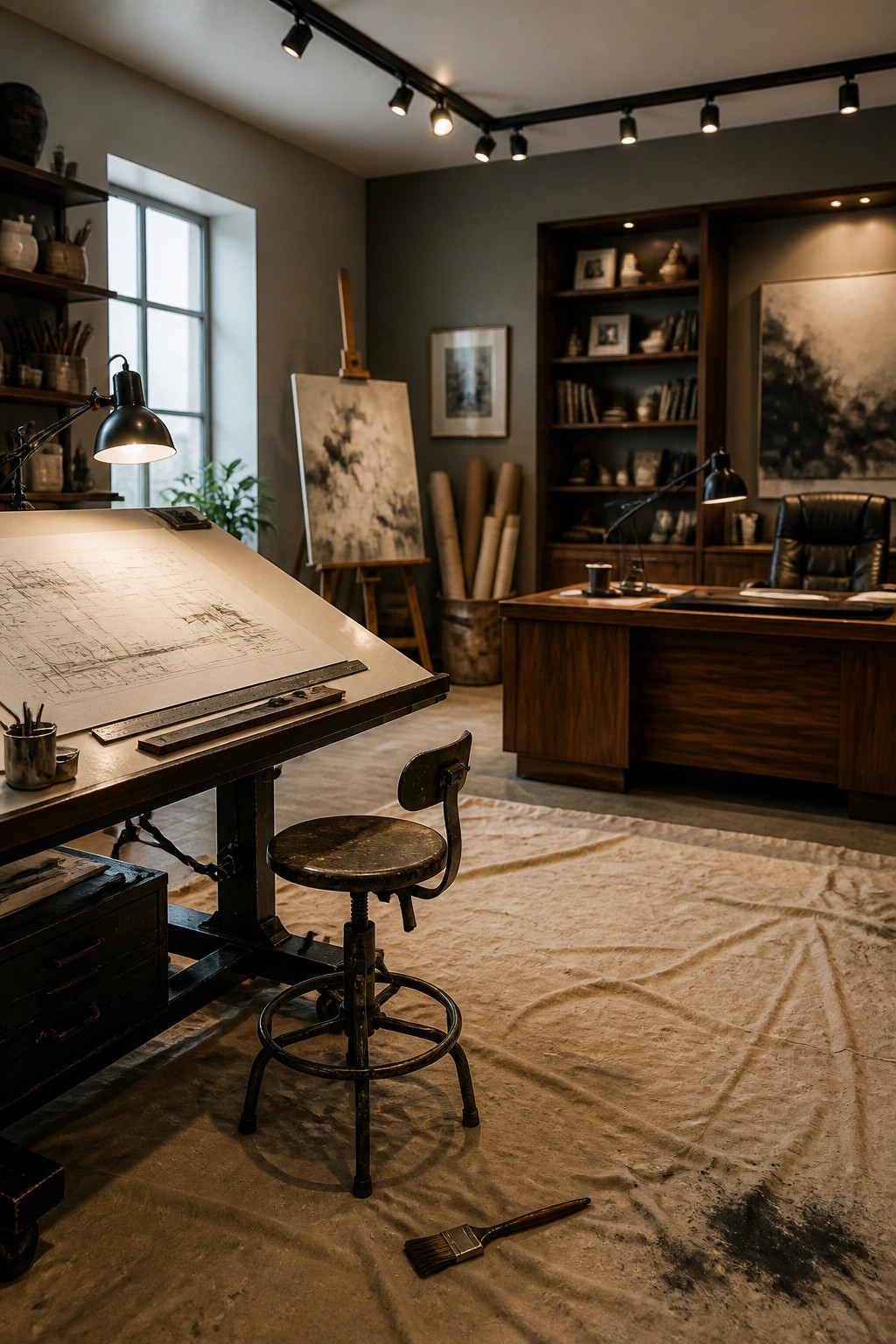
A drafting table gives an executive office a clear sense of purpose. It creates a dedicated spot for focused tasks like reviewing plans or spreading out documents, while the rest of the room can stay open for other uses.
This layout works best in spaces that need both authority and flexibility. Place the table where it gets good light, add a simple stool that tucks away easily, and keep the main desk free for meetings or computer work. The mix keeps the room from feeling too formal.
Frequently Asked Questions
Q: Where should I put my desk if I want to project authority right away?
A: Place it so you face the entrance but keep some open space around it. This setup lets you greet visitors directly while the room still feels open. Add a comfortable chair nearby to soften the look.
Q: Can I include family photos without losing that executive edge?
A: Keep photos to a small framed group on a side table. Choose simple frames that match your other pieces. Too many will shift the focus away from work.
Q: Does the paint color on the walls really matter that much?
A: Go with a warm neutral. It supports both the authority and comfort you want.
Q: How do I handle cables and tech gear so they stay hidden?
A: Route them through desk grommets or behind furniture. Use a small basket under the desk for extras. This keeps the surface clean and the room looking sharp.
