

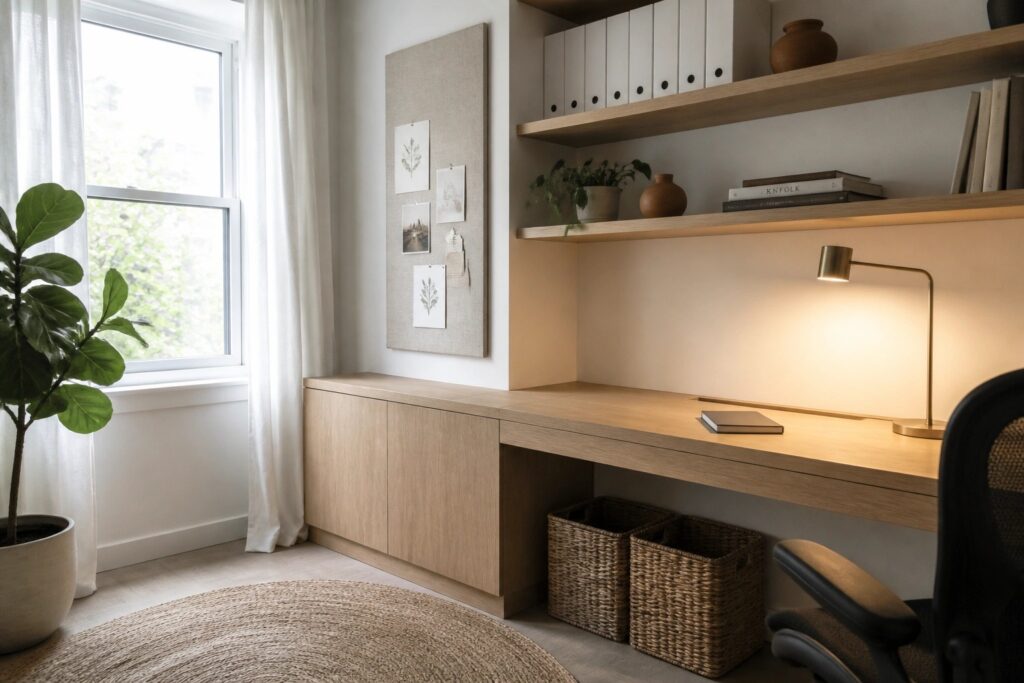
I have noticed that home offices tend to feel off when the desk and storage do not line up with the way light moves across the room during the day.
The setups that hold up are the ones where every piece serves a clear purpose instead of just filling a corner.
Small tweaks like better lighting can shift the whole mood.
When I review fresh office ideas I always ask myself which ones would still make sense once the chair is pulled out and the cables are in place.
Trying a couple of these changes in my own workspace has shown that real motivation grows from how the room supports daily movement rather than from any single visual choice.
Built-In Desks With Extra Storage
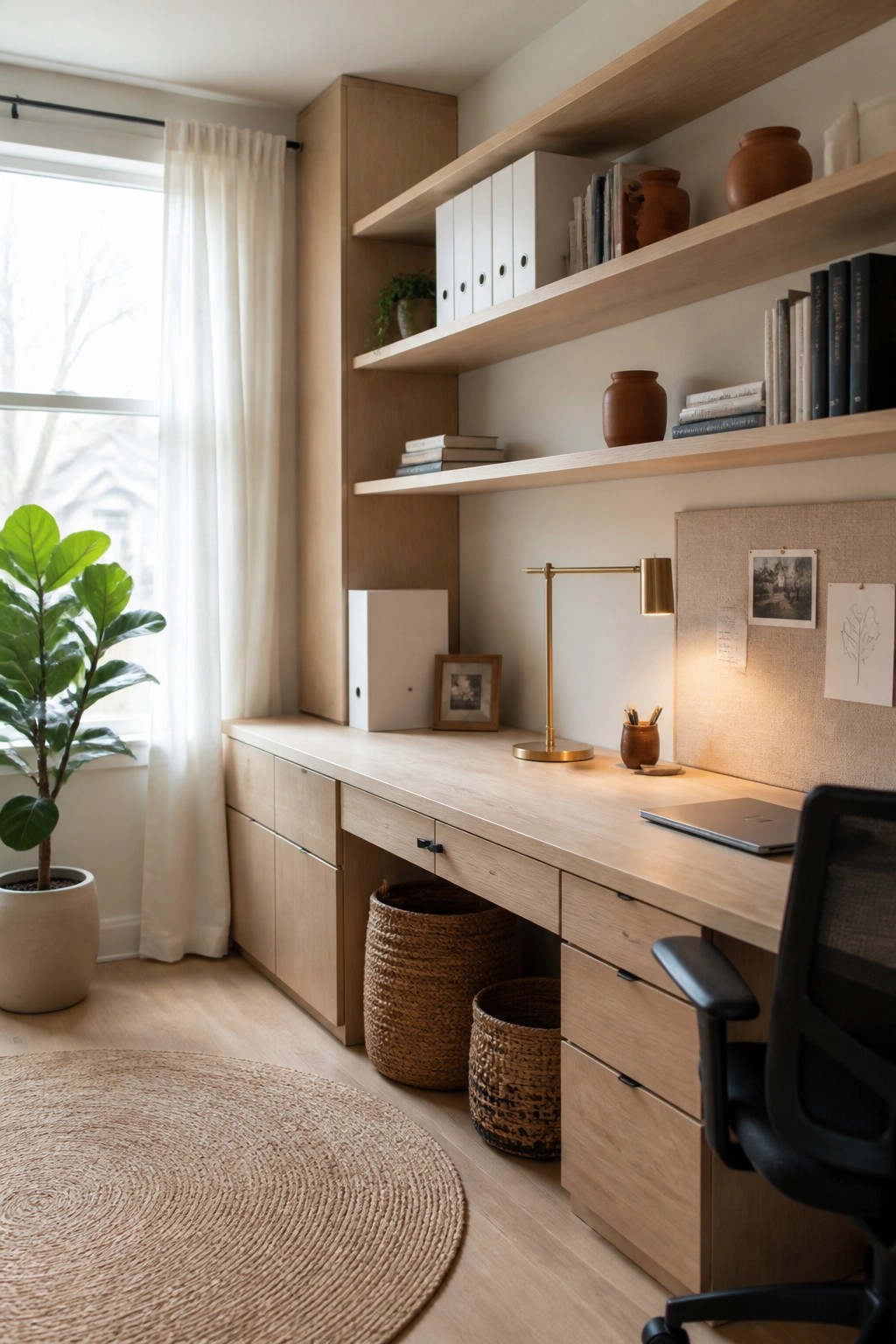
Built-in desks with matching cabinets and shelves give a home office a clean, organized look without taking up extra floor space. The continuous surface makes the room feel calmer, and the drawers keep papers and supplies out of sight.
This setup works best in rooms that already have some wall space to spare. Measure twice before committing, and choose a wood tone that matches the rest of your furniture so the whole area feels like one piece instead of several separate parts.
Industrial Desk And Leather Chair For Daily Work
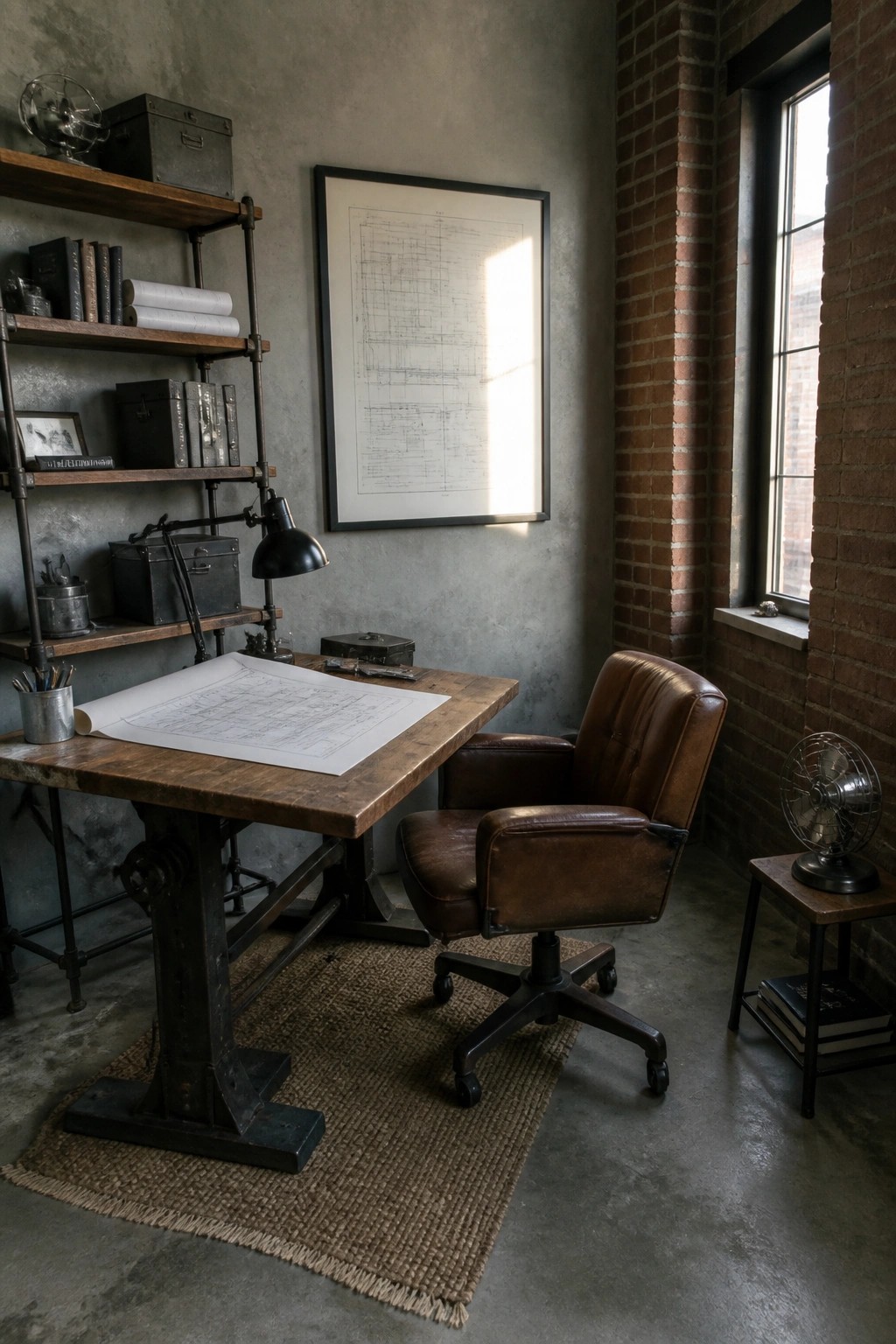
An industrial desk gives a workspace real presence. The heavy frame and thick top feel built to last, which helps the room look like a place where actual work happens instead of just another pretty setup.
This combination suits homes with exposed brick or concrete walls. Keep the chair comfortable and the surrounding shelves simple so the desk stays the main focus without the space turning cold or cluttered.
Wall Shelves Above The Desk

One simple way to add storage in a small office is to run a couple of floating shelves right above the desk. This keeps the floor clear and gives you a place to put books, plants, or small collections without crowding the work surface.
It works best in corners or narrow rooms where every inch counts. Keep the shelves at a height that is easy to reach, and use them for things you want to see but do not need every day.
Bring Plants Into Your Office
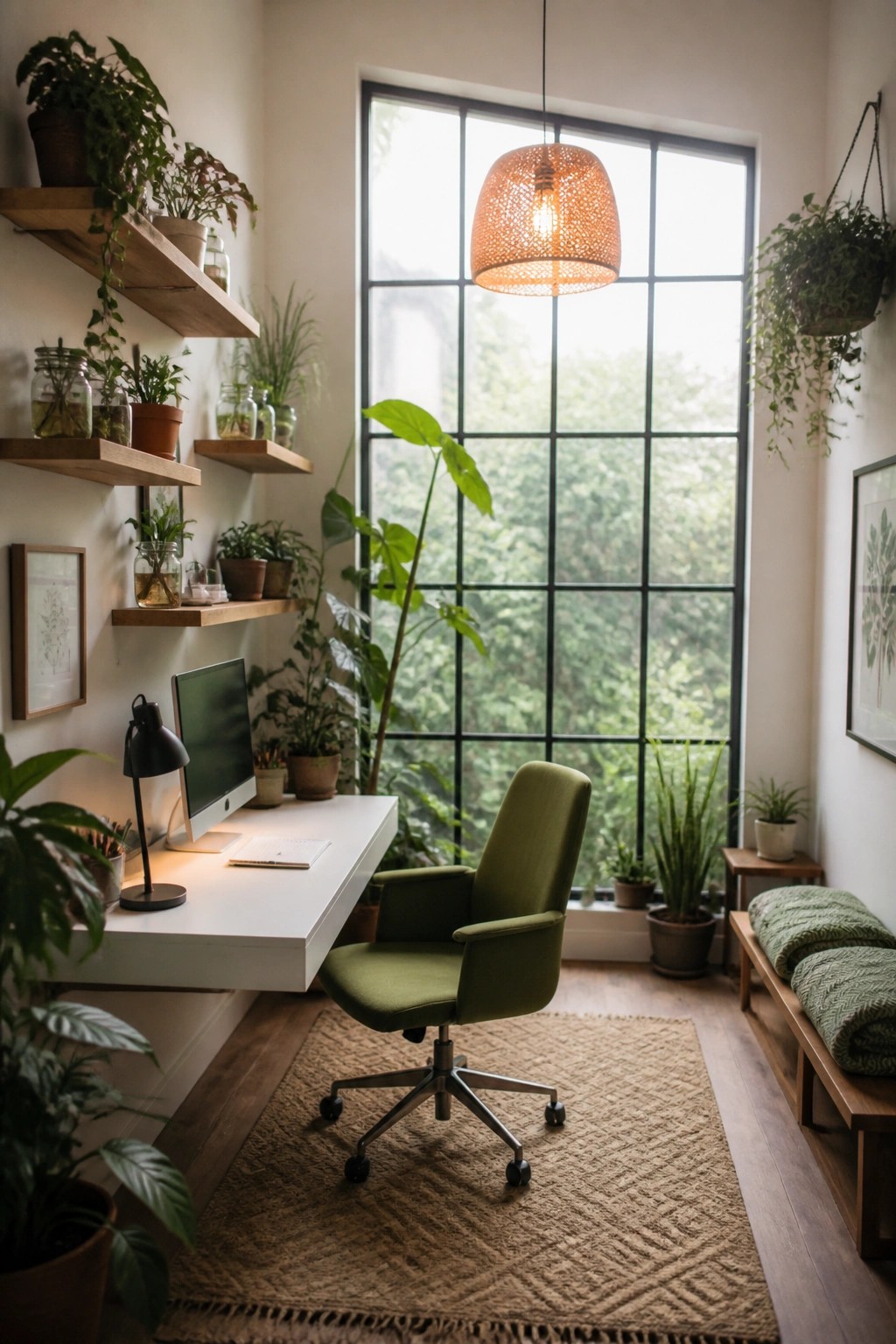
Plants can turn a plain workspace into something that feels alive and easier to spend time in. Shelves along the wall hold rows of greenery that soften the hard surfaces and bring in color without much effort.
Start with a few low-maintenance varieties on floating shelves and add more as they grow. This approach works best in rooms with good natural light, and it helps if you pick plants that match the amount of sun the space actually gets.
Built-In Cabinetry Keeps A Home Office Organized
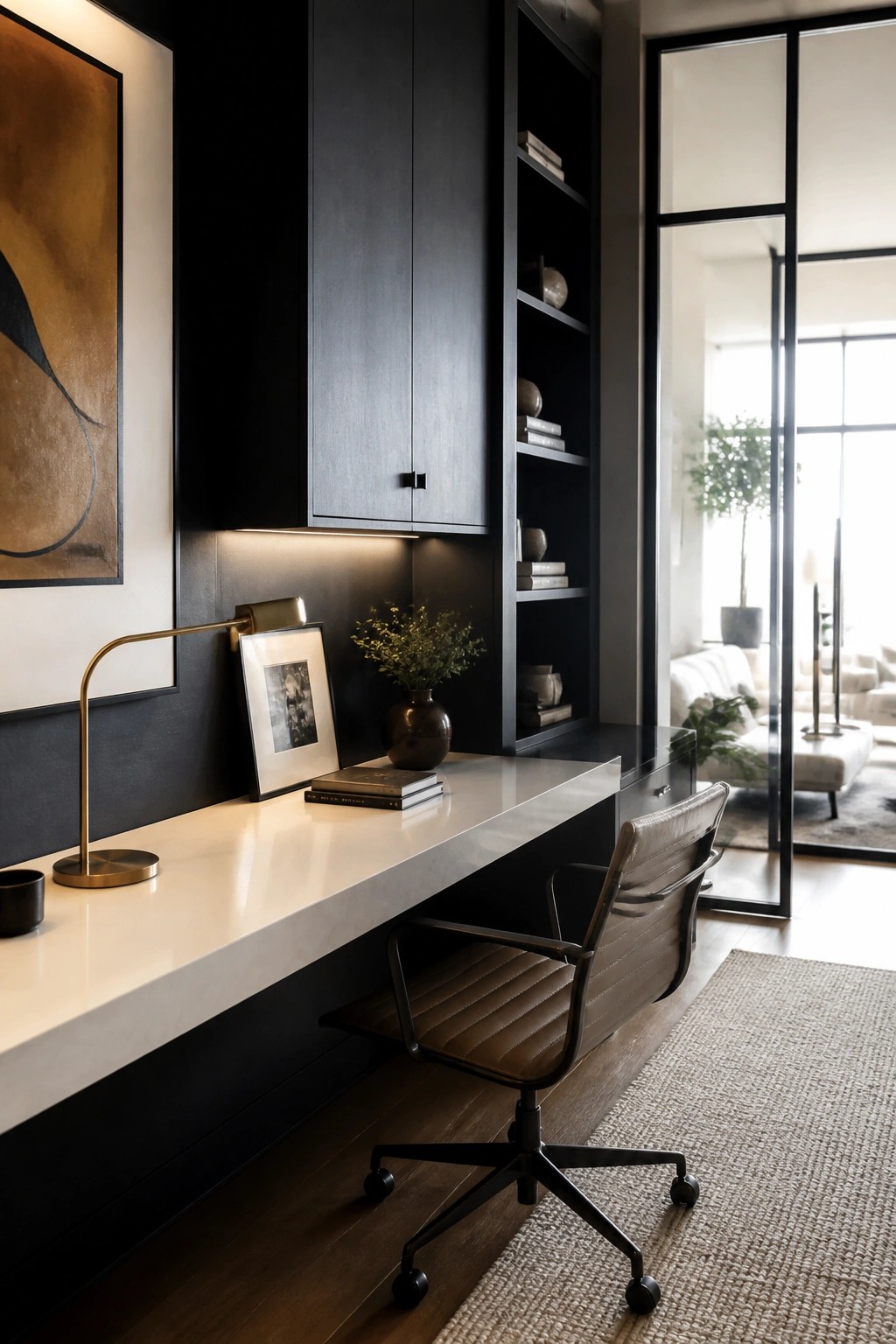
Built-ins along one wall give you storage without crowding the desk surface. The dark finish on the cabinets and shelves blends into the background, so the workspace stays open and the focus stays on the work itself.
This approach suits smaller rooms or anyone who wants fewer visible distractions. Run the cabinetry from floor to ceiling on a long wall, keep the desk depth shallow enough for the chair to roll back, and leave some open shelves for the few items you reach for often.
A Big Table Works Better Than A Standard Desk

A large wooden table gives you plenty of room to spread out without feeling boxed in. It turns the workspace into something more open and flexible, which helps when you need to move between projects or keep supplies close at hand.
This setup suits creative rooms that get steady natural light. Keep the surrounding furniture simple so the table stays the main focus and the space does not feel crowded.
Built-Ins Turn Small Corners Into Useful Offices

A built-in desk with matching shelves gives a small space a clear purpose without eating into the rest of the room. It keeps the work area contained while still leaving room for storage right where it is needed.
This approach suits older homes or any layout where you want a dedicated spot for work but lack a full room to spare. Open shelves with a few labeled baskets help keep papers and supplies sorted so the surface stays clear at the end of the day.
Wooden Desks Add Warmth to White Offices

A simple wooden desk can keep an all-white office from feeling too stark. The natural tone brings a bit of softness and makes the space feel more lived in, especially when the rest of the room stays bright and clean.
This works best in smaller home offices where you need both a work surface and storage. Look for one with drawers or a drop front so papers stay tucked away, and keep the rest of the room light so the wood stays the main focal point.
Use a Central Planter to Divide Workstations
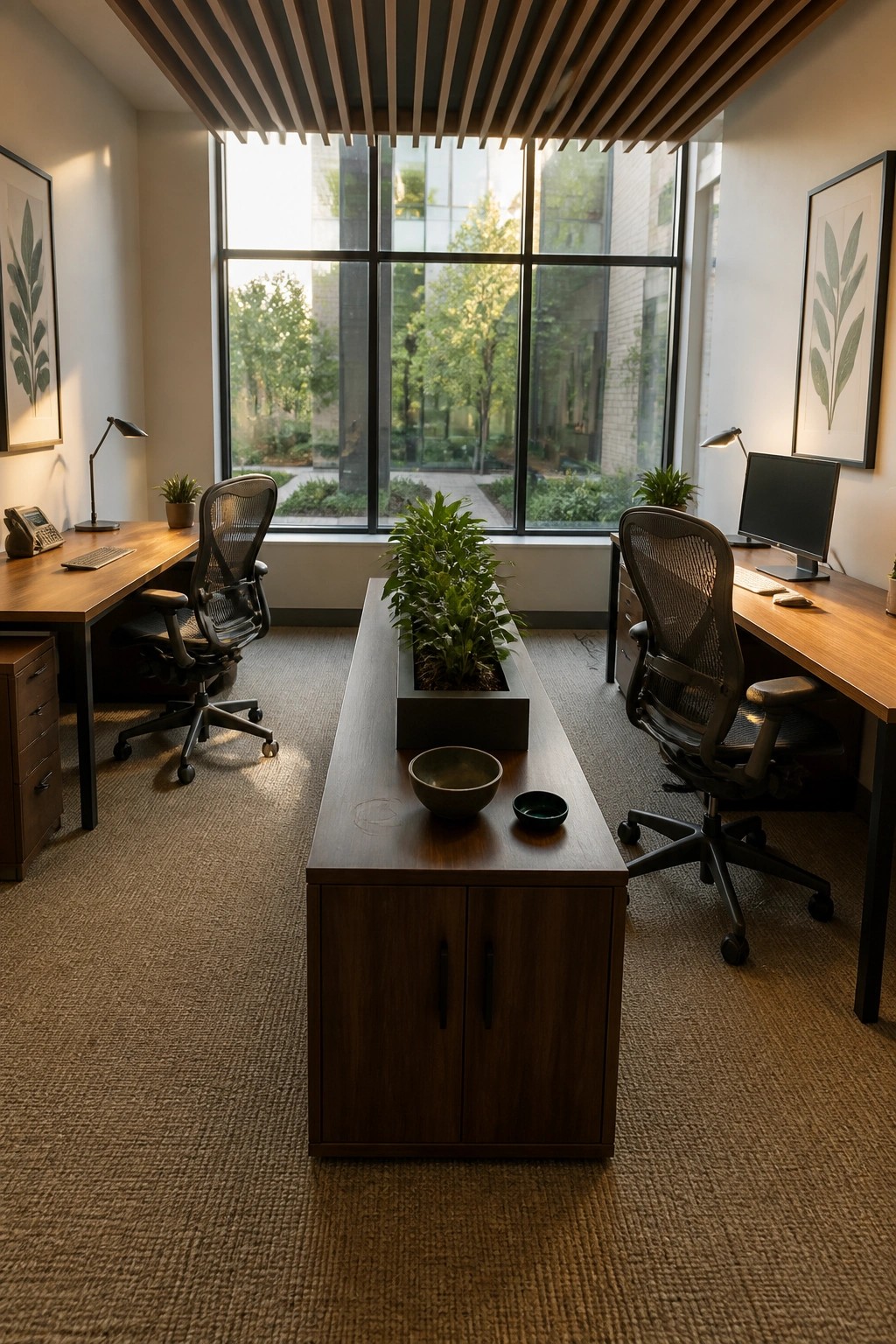
A long planter running down the middle of a shared desk setup gives each person their own side without putting up walls. The plants add some life and help soften the look of two desks sitting close together.
This approach works best in smaller home offices or shared workspaces where you still want an open feel. Choose sturdy plants that do not need much attention and keep the planter height low enough so it does not block conversation or light.
Let Natural Light Shape Your Workspace
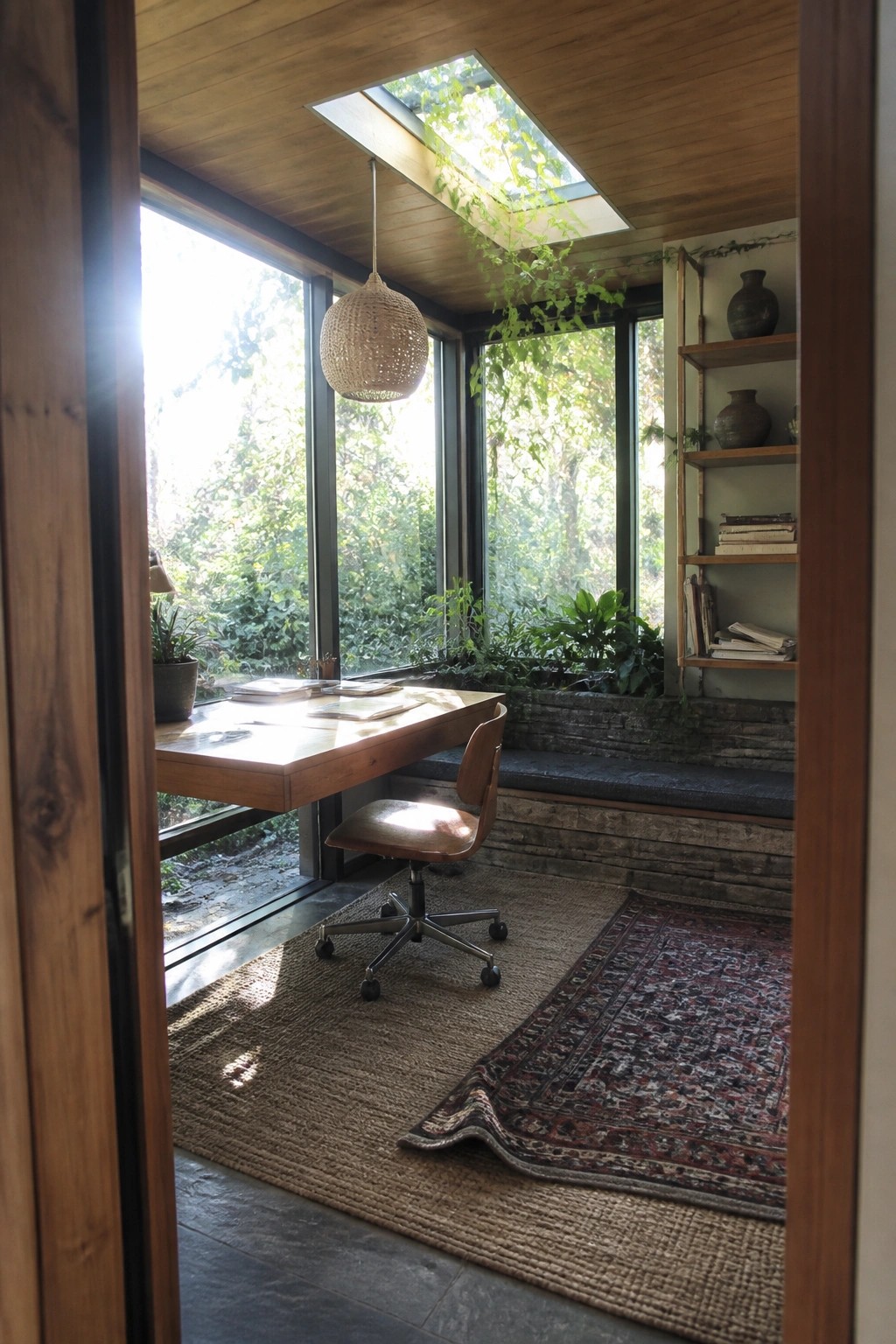
Natural light changes how an office feels during the day. Large windows and a skylight keep the space bright without extra lamps and give a steady view of trees outside.
Place the desk so daylight falls across the work surface from the side. This works best in rooms with good window access and suits homes where the office shares space with living areas. Keep coverings minimal so the light stays consistent.
Let a Tall Window Open Up the Room
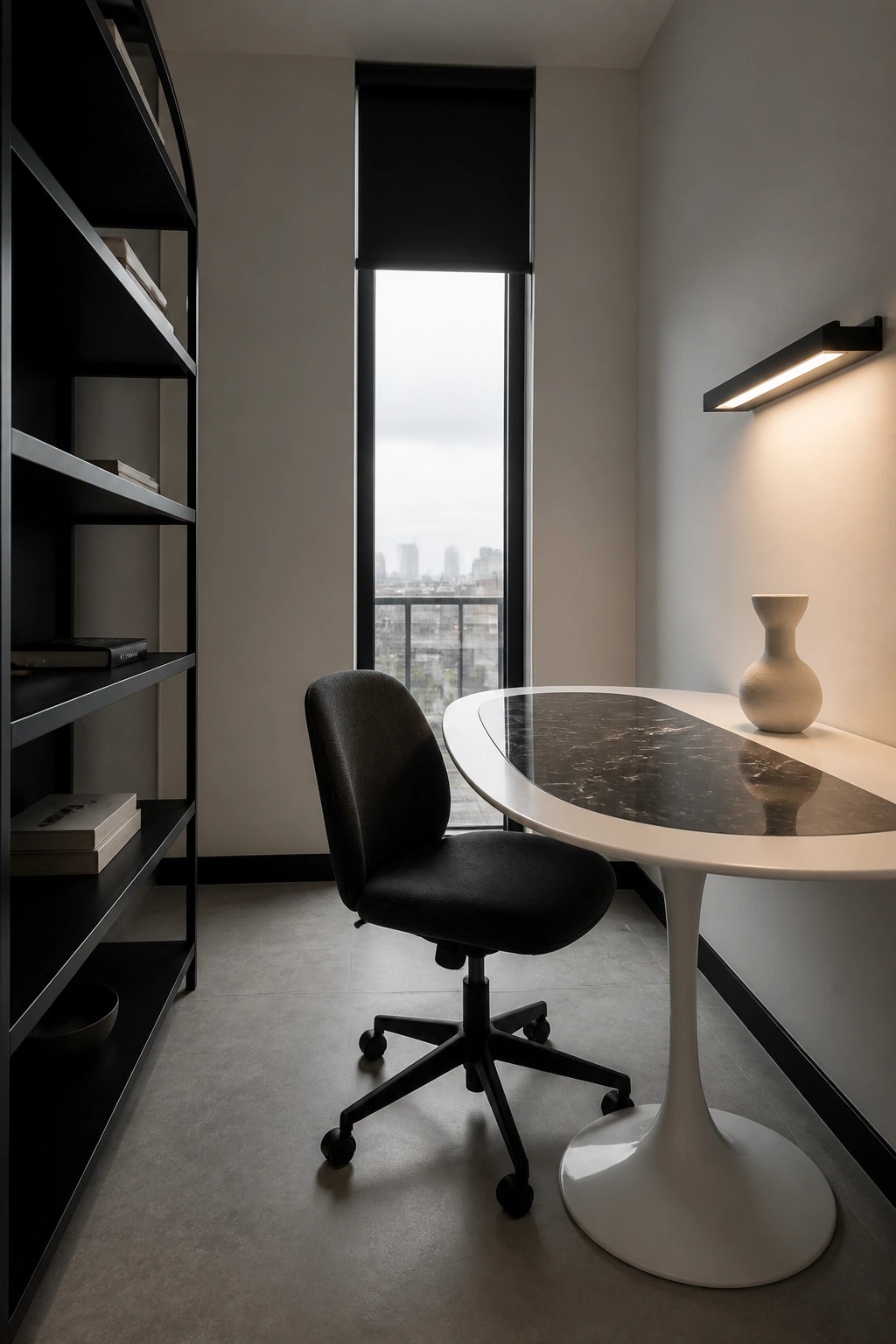
A tall window can make a narrow office feel less boxed in. It pulls in daylight across the whole space and gives the eye somewhere to rest, which helps the room stay calm even when you spend long hours there.
Set the desk so the light comes from the side or slightly behind you. This layout suits small apartments or homes where the office shares space with another room. Keep the rest of the furniture low and simple so the window stays the main feature.
Built-In Desks For Attic Offices

Running a long built-in desk under the window works well in an attic because it follows the roofline instead of fighting it. The desk stays low enough to fit the slope while still catching good natural light all day.
This setup suits homes where the attic has decent headroom near the center. Keep the surface wide enough for daily work and add storage underneath so the rest of the room stays open.
Floating Desks Help Keep A Home Office Open
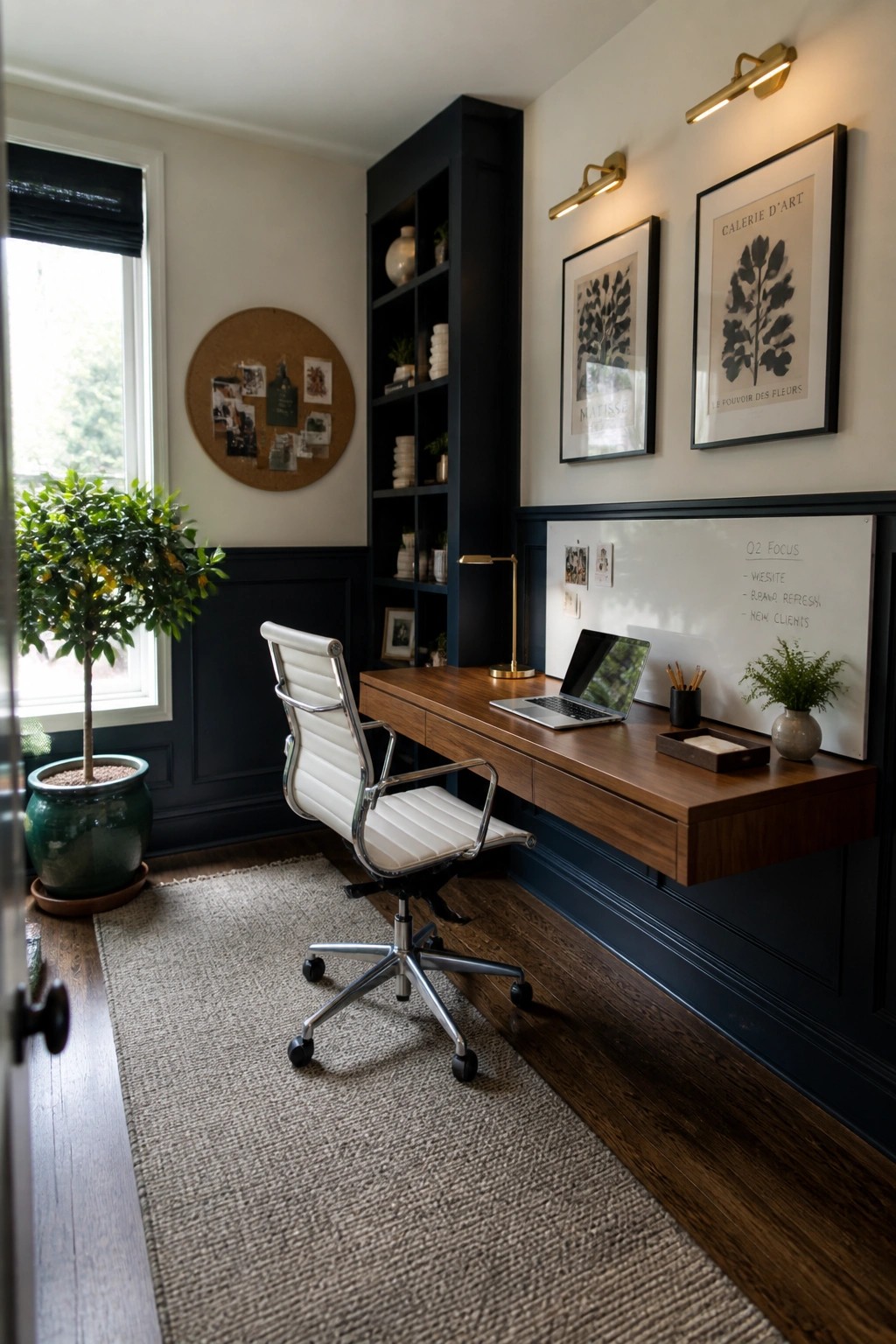
A floating desk mounted right to the wall gives you a full work surface without the legs or base taking up floor space. In rooms that feel tight, this choice keeps the area open so the chair can move freely and the space does not feel crowded.
It works well in a smaller spare room or corner of a bedroom where you still need room to walk around. Pair it with lower wall paneling for a bit of contrast and add simple shelves above if you need storage. Just make sure the desk is secured properly so it can hold your gear without any wobble.
Use A Murphy Bed To Keep Your Office Flexible
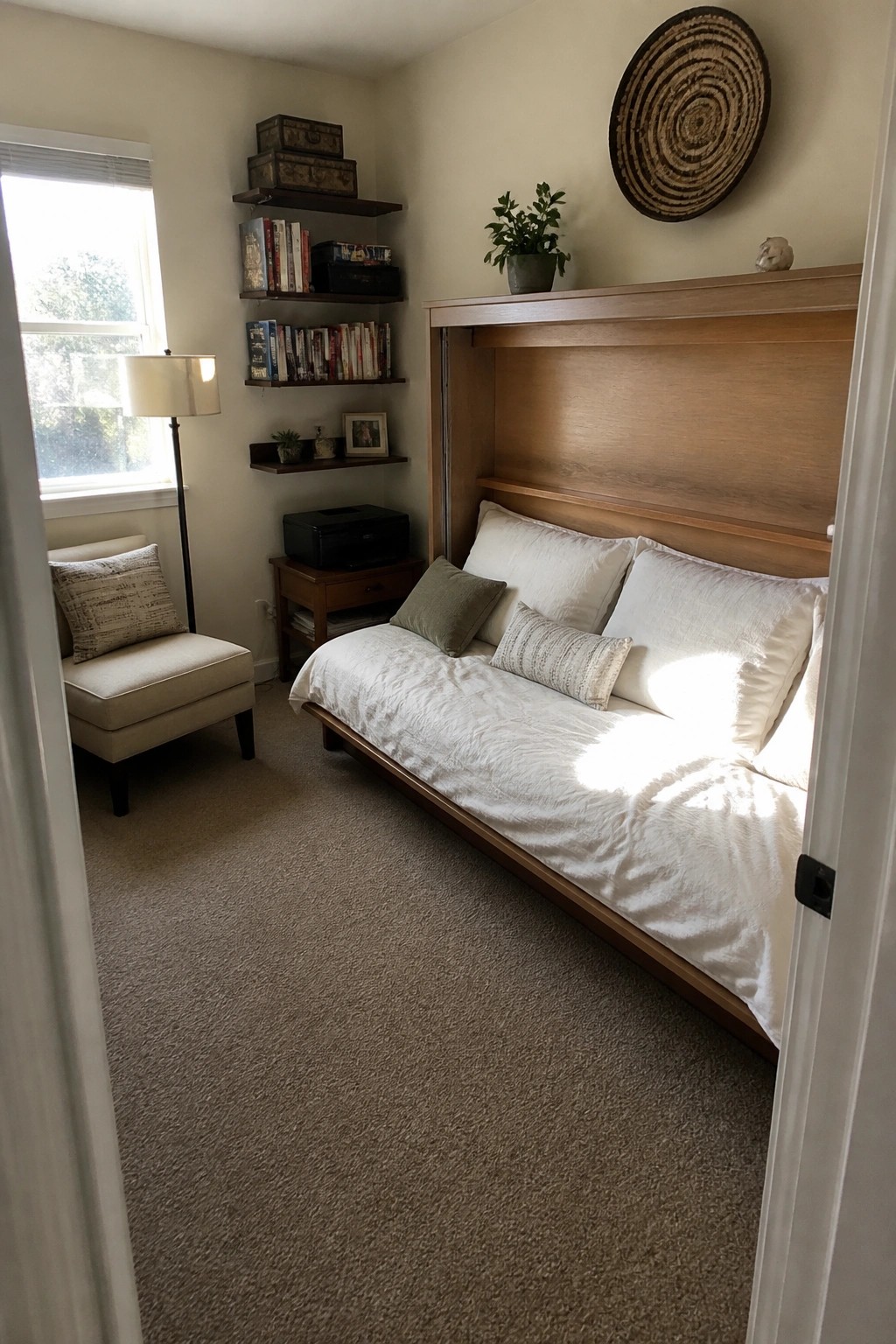
A Murphy bed gives a room the ability to switch between workspace and guest room without feeling cramped. When the bed stays folded up during the day, the floor space opens up for a desk, chair, and whatever else the work needs.
This approach suits smaller homes or apartments where one room has to handle both tasks. Built in shelving around the bed frame helps the space look intentional even when the bed is stored away.
Built-In Bookshelves Turn an Office Into a Personal Library
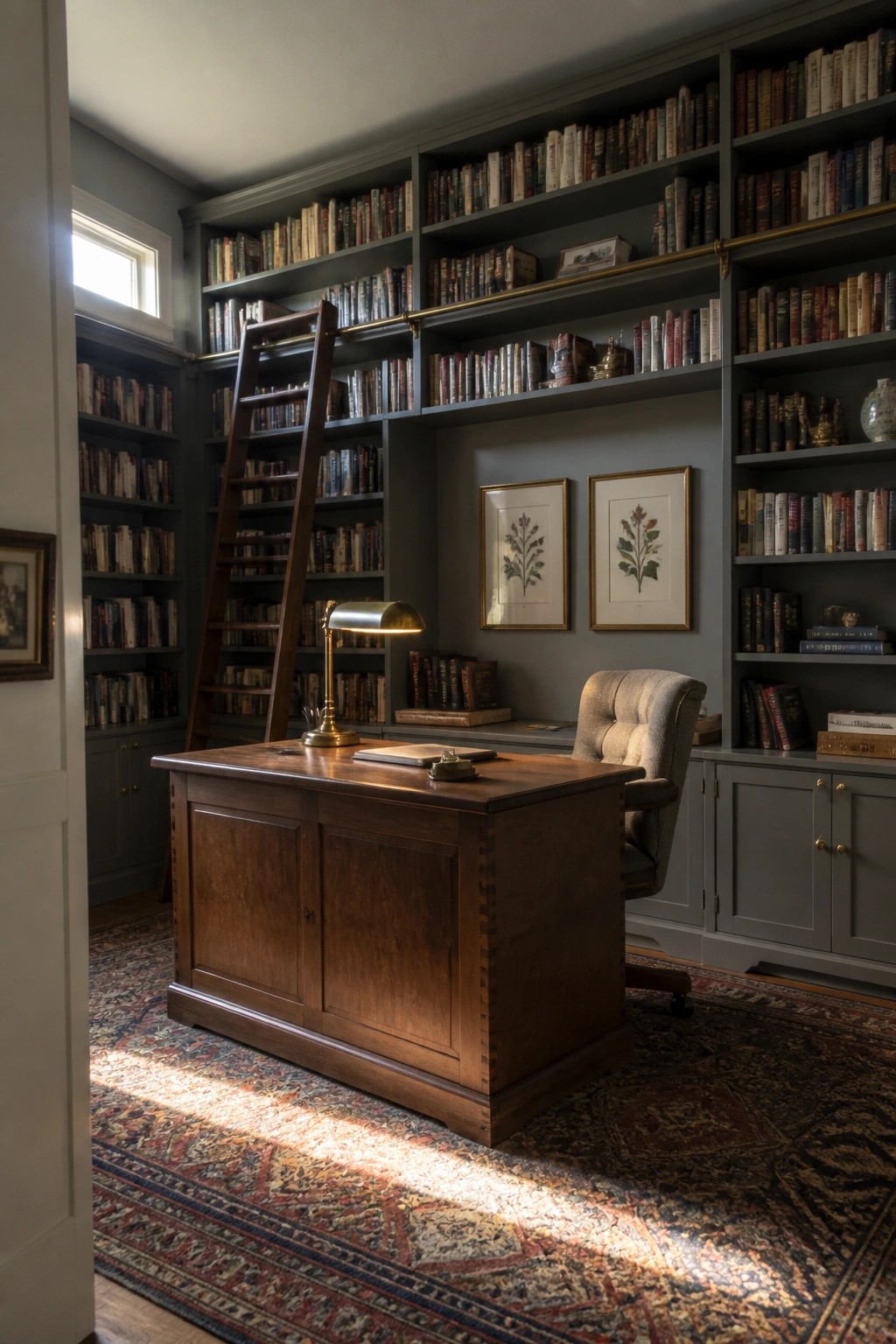
Built-in shelves that cover most of the wall space give an office a calm, enclosed feeling that helps with focus. The books create visual interest without needing much extra decoration, and the setup makes the room feel purposeful rather than just functional.
This approach works well in a spare bedroom or a larger study where you can dedicate the walls to storage. A rolling ladder keeps everything reachable and adds a practical touch that also fits the library look.
A Low Desk On Tatami For Focus

A low desk placed directly on tatami gives an office a steady, grounded feel that helps many people stay calm during long work hours. The simple surface keeps supplies limited and makes the whole space feel less cluttered than a standard desk setup.
This approach works best in smaller rooms or homes that already use natural textures and minimal furniture. Keep the surrounding area open and choose a dark, solid table so the eye stays on the work rather than the surroundings.
Built-Ins That Turn A Small Corner Into A Workspace

A floating desk paired with overhead shelving can give you a real workspace without eating up floor space. It works especially well in homes where rooms serve more than one purpose, since the whole setup stays tucked against the wall and leaves the rest of the area open.
This approach suits smaller homes or any spot that already has an alcove or blank wall section. Keep the shelves for books and supplies you use often, and leave the desk surface clear except for a laptop or a couple of daily items so the area stays functional rather than cluttered.
Try a Pegboard for Office Organization
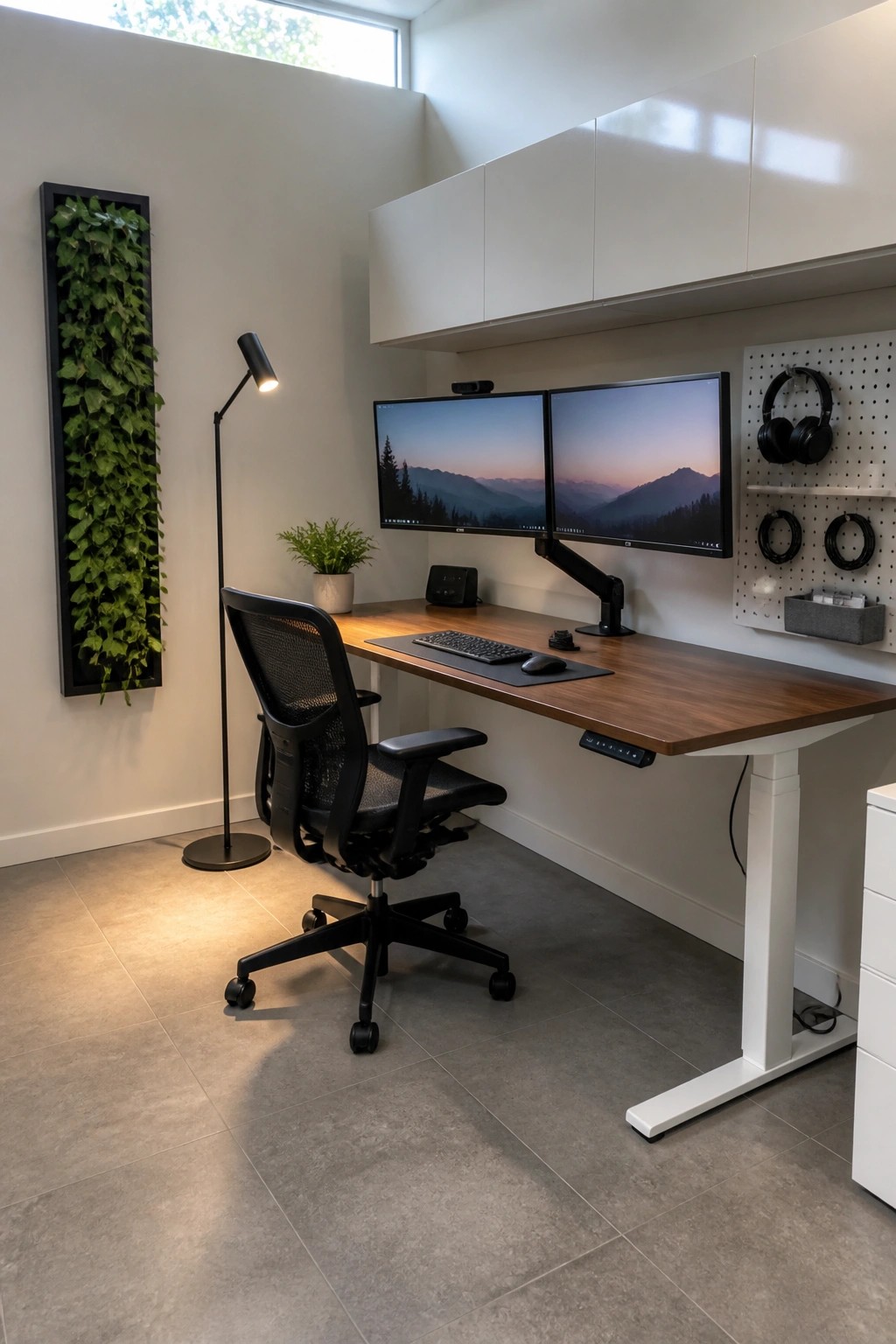
A pegboard next to the desk gives you a simple spot to hang headphones, cables, and small supplies. It keeps the work surface open and makes those items easy to grab without digging through drawers.
This setup works especially well in a home office that needs to stay flexible. Mount the board at a comfortable height and rearrange the hooks as your needs change. Just avoid crowding it so the wall stays useful instead of turning into another storage problem.
Frequently Asked Questions
Q: How do I pick lighting that feels bright but not glaring during long workdays? A: Place a floor lamp behind your chair and pair it with a smaller adjustable one on the desk. Angle both away from your screen so shadows stay soft. This setup cuts eye strain without extra fixtures.
Q: What if I rent and cannot change the walls or floors? A: Bring in a large rug and hang art with damage-free hooks instead. Swap out the desk chair for one with color and keep a couple of plants nearby. These pieces shift the mood fast while staying removable.
Q: How can I refresh the space every few months without buying new furniture? A: Move one or two pieces around and swap in a different throw or lamp shade. (The change keeps the room from feeling stale.) Stick to what already works for your daily routine.
