

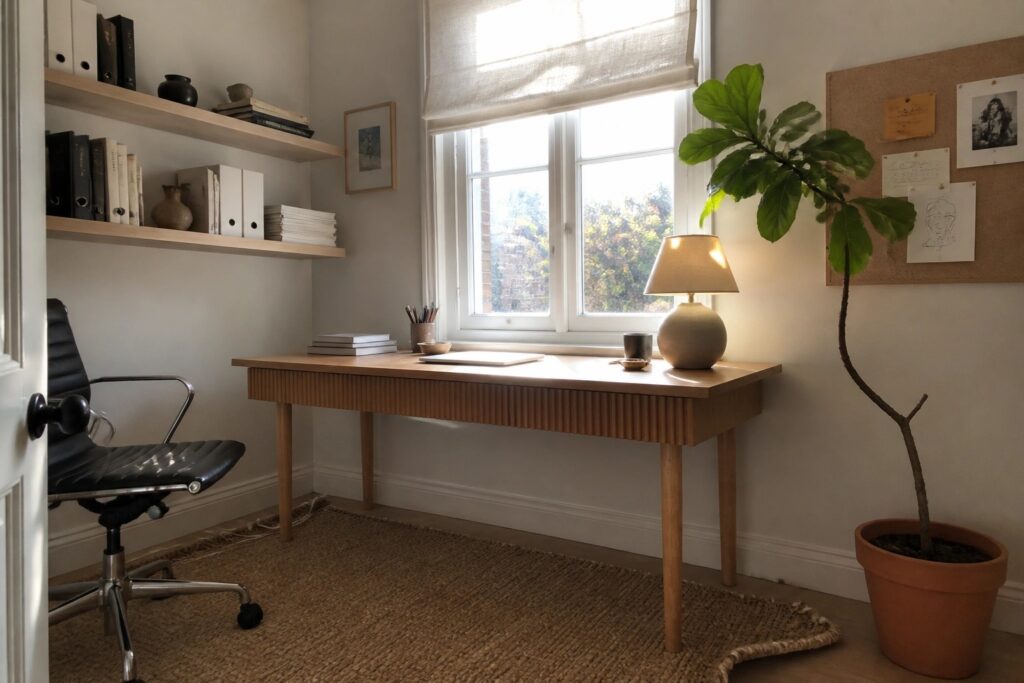
I have spent time in offices where the furniture arrangement either helps ideas flow or gets in the way.
The best setups often start with simple choices like where the desk faces and how light moves through the space during the day.
Small details change everything.
When storage stays hidden and surfaces stay clear, the whole room feels ready for work instead of cluttered.
I would try adding a quiet corner with a comfortable chair first if I were updating my own space.
Floating Shelves for Office Storage
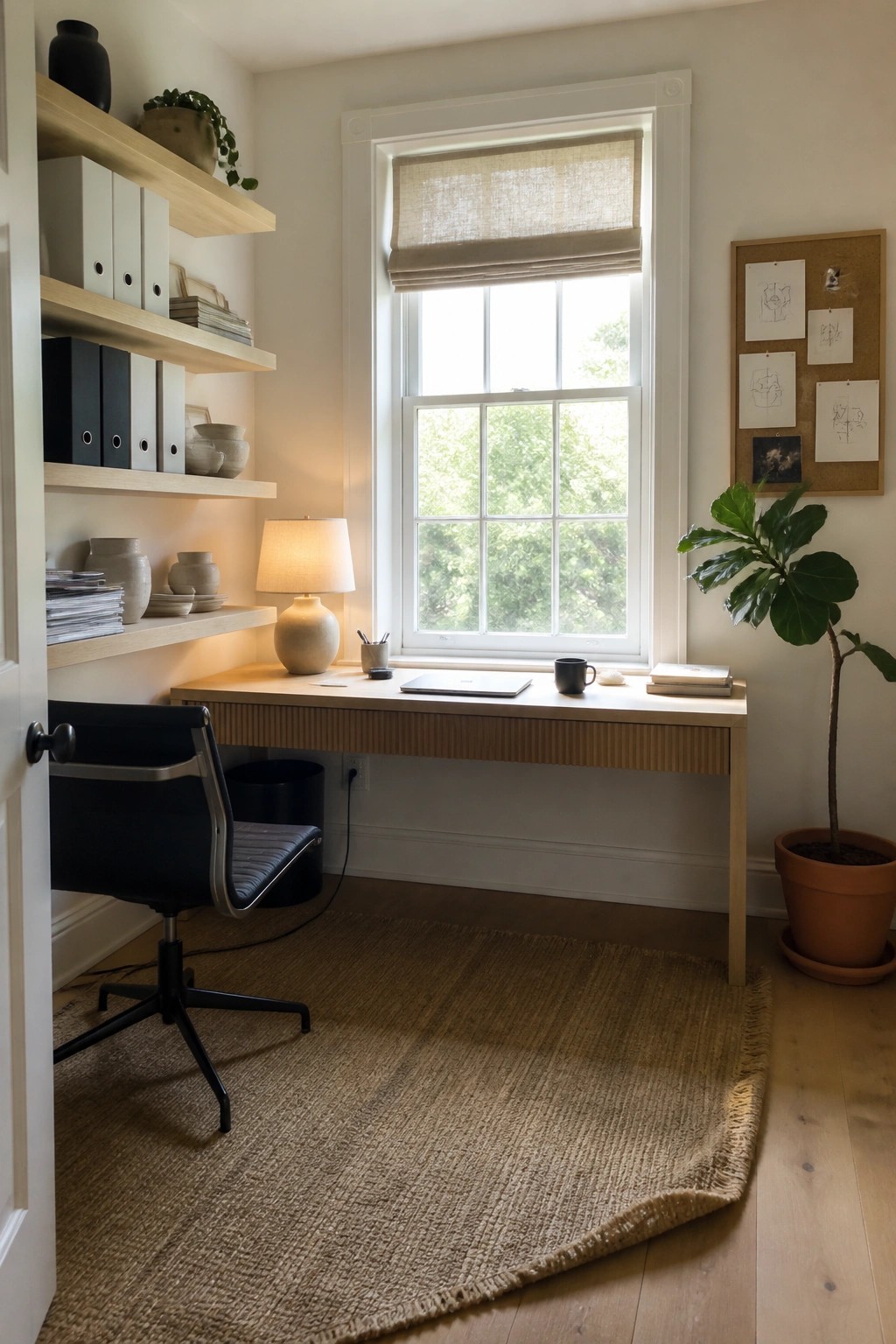
Floating shelves work well in a home office because they give you storage without eating up floor space or making the room feel crowded. Placing them next to a desk lets you keep papers, books, and supplies within reach while the work surface stays clear.
This setup suits smaller rooms or spaces that already get good natural light from a window. Keep the shelves at a height that feels easy to use and avoid overloading them so the area stays open and practical.
Vertical Texture Behind a Desk
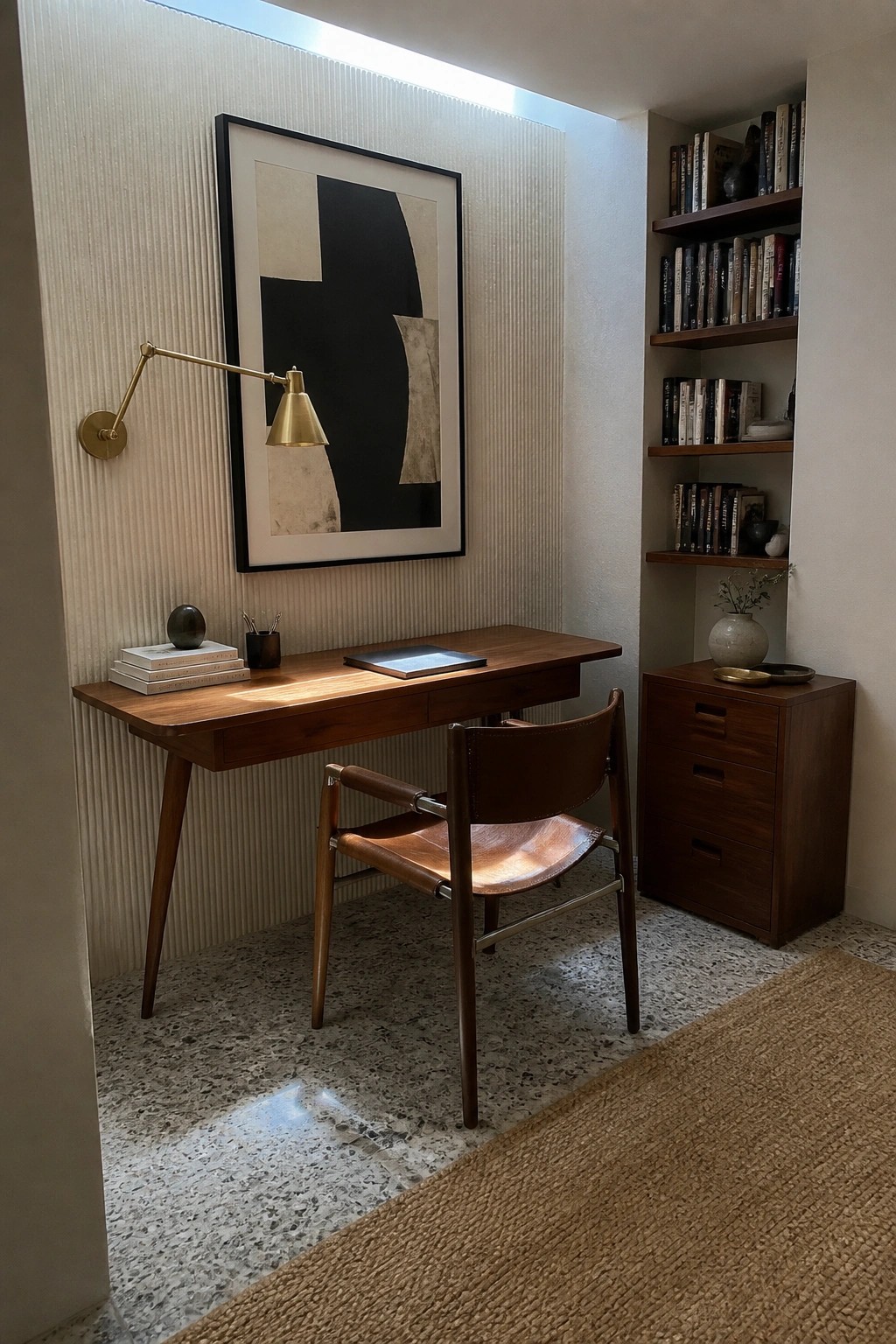
A ribbed wall treatment gives a small workspace just enough depth without crowding it. The vertical lines catch light nicely and make the area feel more defined, even when the room itself is tight. Pairing it with a simple desk and one wall lamp keeps the focus on the work surface instead of extra decor.
This approach works best in narrow corners or alcoves where you want separation but not full walls. It suits homes that already lean modern or minimalist, and it avoids the need for bold color or heavy furniture. Just watch the scale so the texture does not overpower the room.
A Long Desk Works Well Under an Attic Window

An attic office often has one good stretch of wall with decent headroom and light. Running a simple desk along that wall lets you use the best part of the room without fighting the slope. The desk stays low enough that the ceiling does not feel like it is pressing down.
This setup suits homes where the attic is being turned into a quiet workspace rather than a bedroom. Keep the desk surface clear and add a few floating shelves above it for books and small items. Avoid tall storage pieces that would crowd the low areas on either side.
Dark Wood Desks In Light Rooms

A dark wood desk can give a home office a steady feel without making the space feel heavy. The solid shape and deep tone stand out against lighter walls and floors, which helps the room stay calm even when the desk takes up a fair amount of space. Natural light from a large window keeps the overall look balanced.
This works best in rooms where you want fewer visual distractions. Keep the top mostly clear and let the material do the work. It suits smaller or shared spaces that still need to feel open, and it pairs well with simple built-in shelving in the same tone so storage does not compete with the desk.
Keeping Inspiration Boards Close to Your Workspace
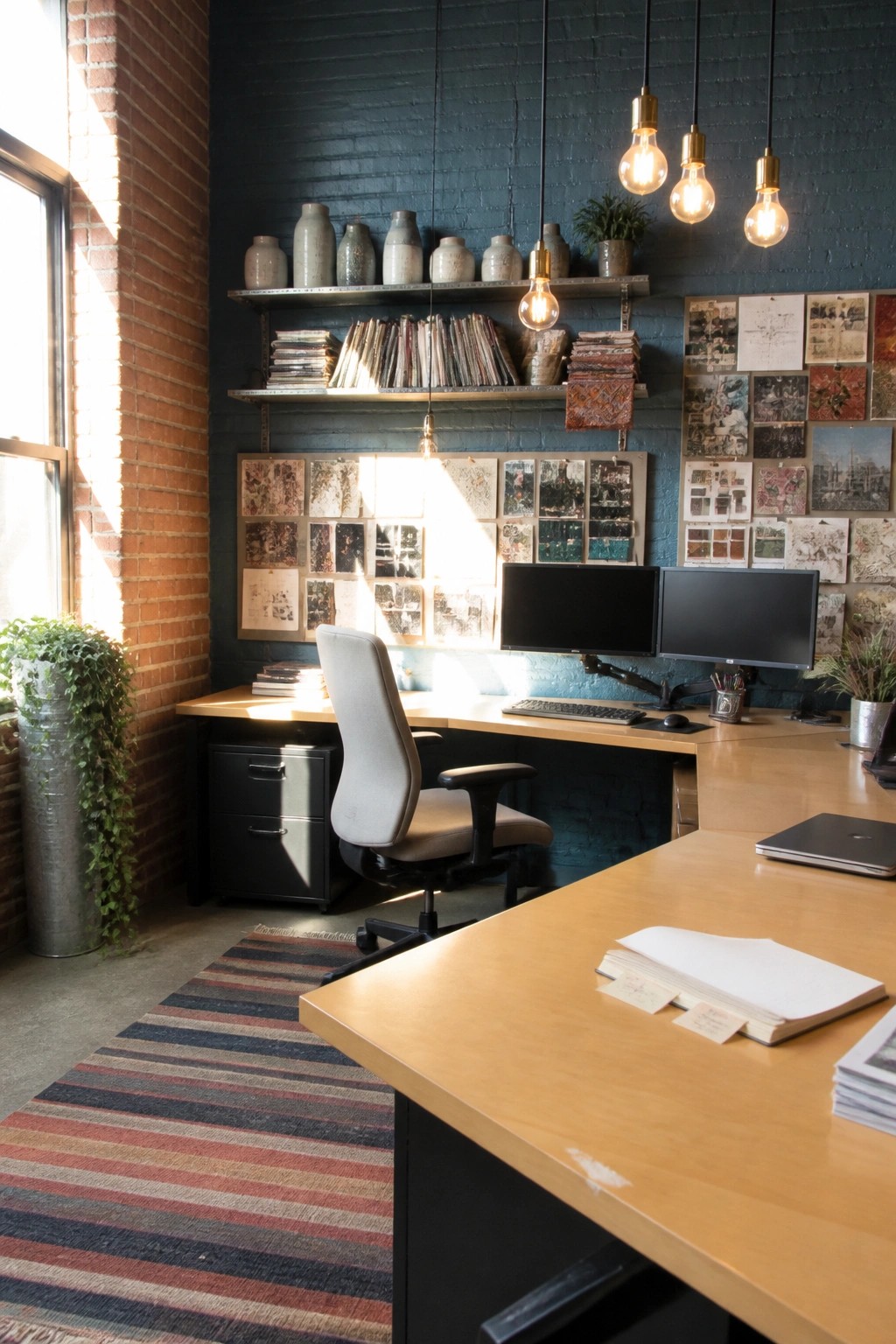
Many people find it helpful to keep mood boards and reference materials right next to their main work area. This approach makes it easy to look over and pull new ideas without stopping what you are doing or searching through folders.
The setup works best in smaller home offices where space is limited and quick visual access matters. Just be sure the boards stay organized so they support the work instead of adding clutter.
Placing Your Desk In Front Of Large Windows

Many home offices feel better when the desk faces big windows instead of a wall. The light changes through the day and the view outside gives your eyes a break without needing to leave the room.
This setup works best in spaces that already have decent outdoor scenery. Keep the chair and desk height comfortable so you are not straining to look out, and add a few plants nearby if you want to soften the edges.
Peg Rails Keep a Desk Area Tidy
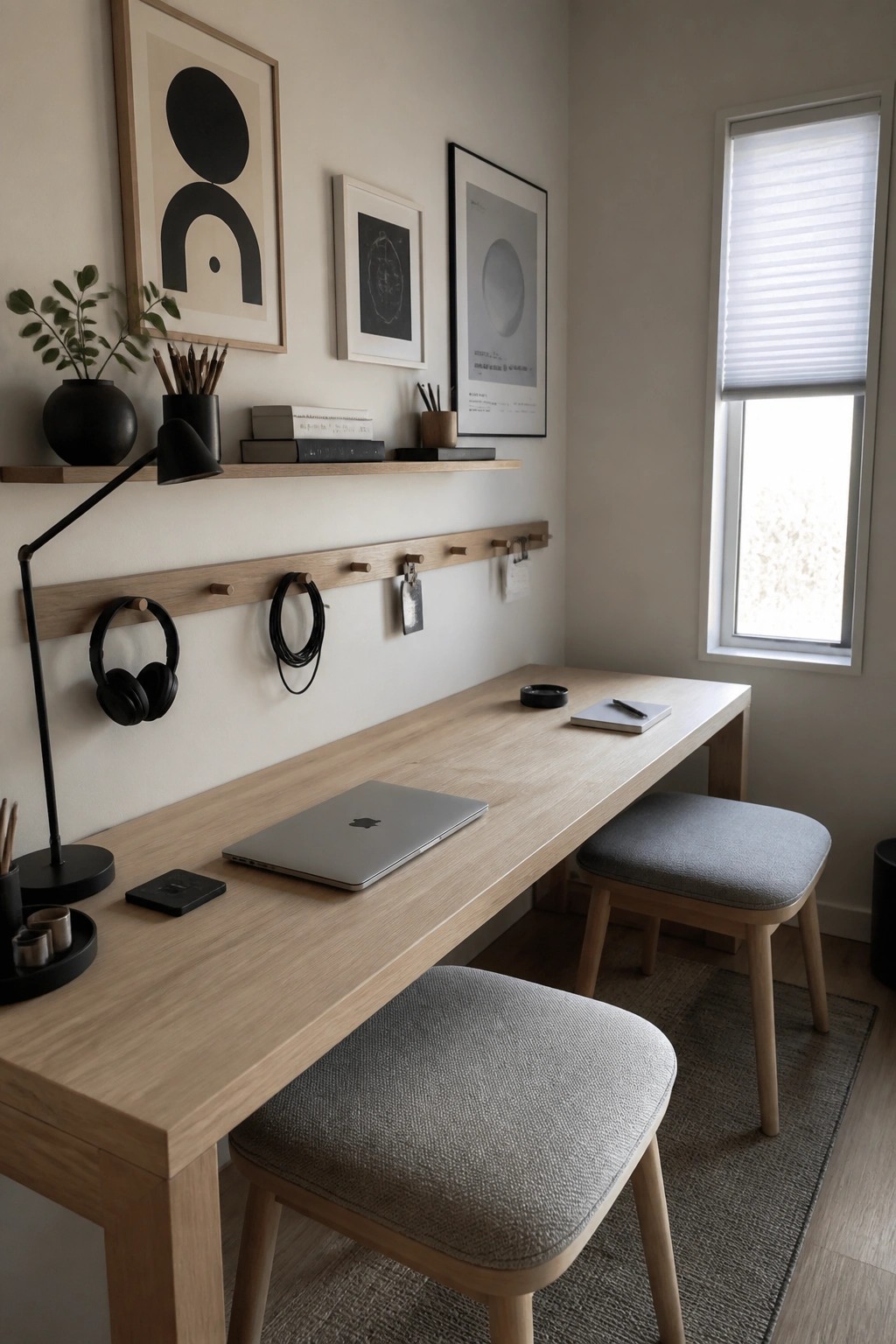
A peg rail mounted above the desk gives you a simple way to store headphones, cables, and small items without adding clutter to the work surface. Many people find this setup useful because it keeps things visible and reachable while leaving the desk itself clear for actual work.
This approach works well in smaller rooms or any space where you want to avoid extra shelves or drawers. Match the rail to your desk wood if possible, and limit what hangs there so it stays functional rather than busy.
Dark Walls Give an Office Real Presence
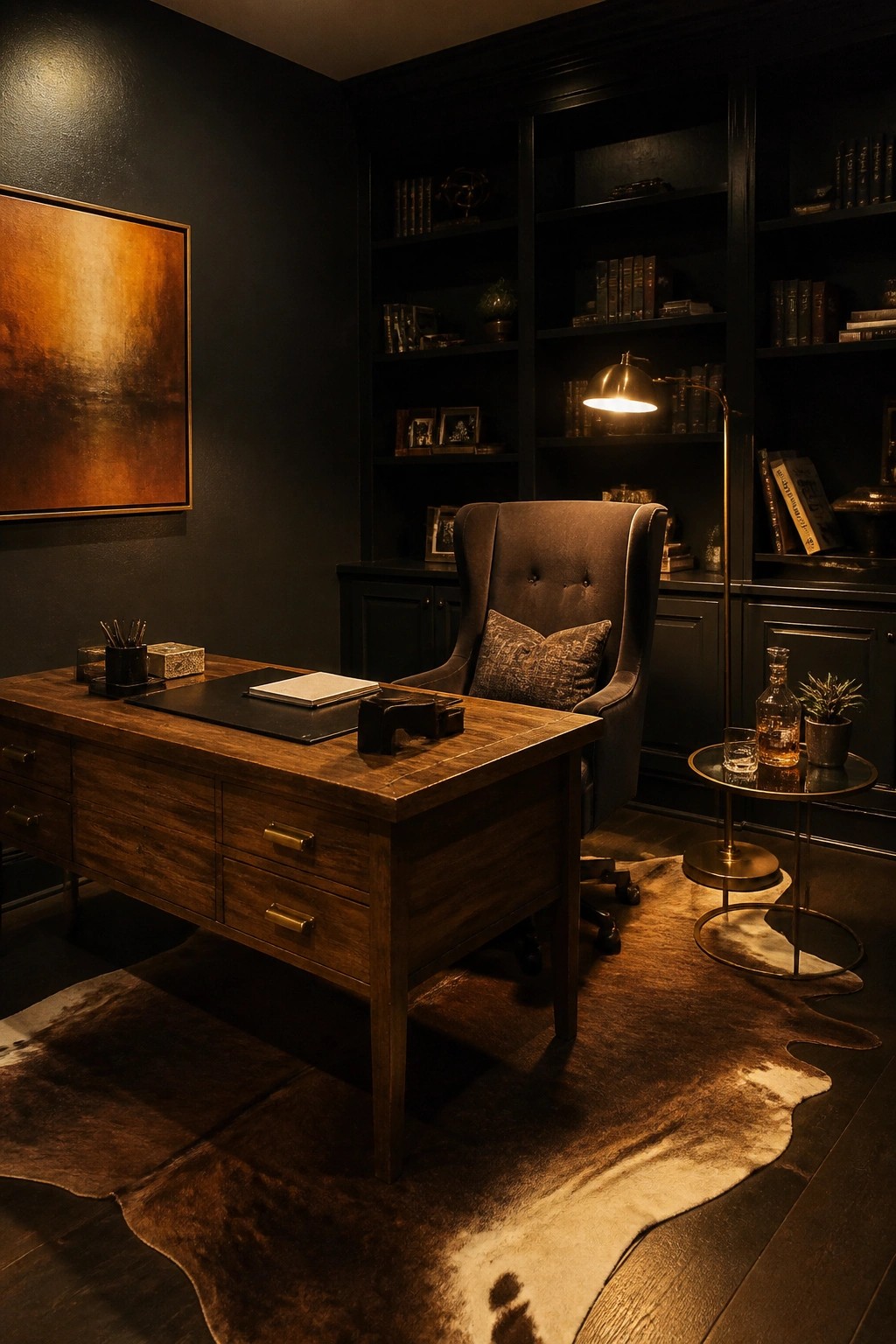
A deep wall color changes how a home office feels right away. It makes the room feel more enclosed and separate from the rest of the house, which helps with focus during long work hours.
This approach works best in smaller rooms or homes where the office needs to read as a dedicated space. Pair the dark paint with wood furniture and built-in shelving so the room stays warm instead of feeling closed in.
Add a Corkboard to Keep Ideas Visible
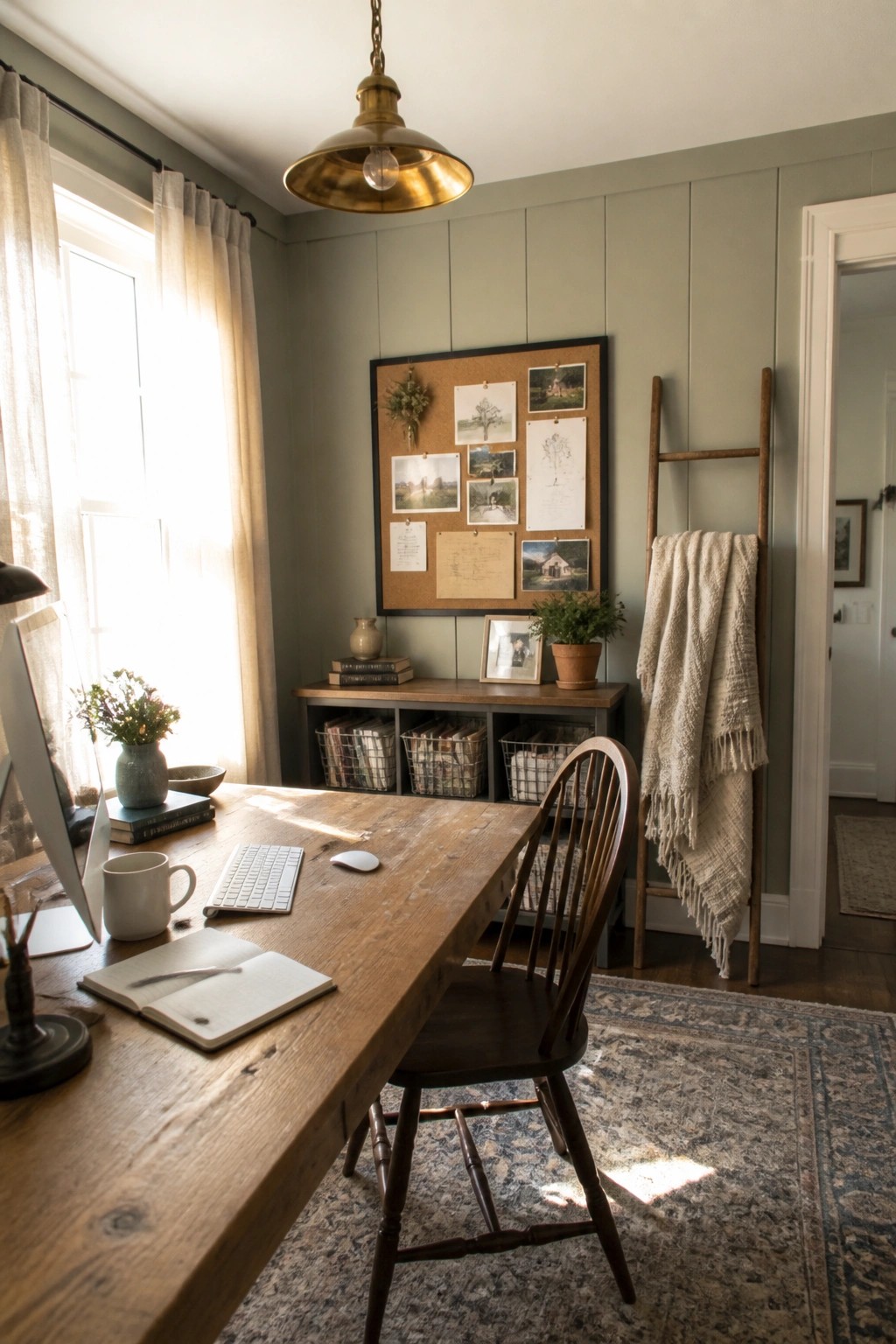
A corkboard gives you an easy spot to pin up images, notes, and sketches without crowding the desk surface. It works well in a home office because it keeps reference material right in view while the rest of the room stays simple and calm.
Place the board above a low storage bench or shelf so everything stays at a comfortable height. This setup suits smaller rooms or any space where you want quick access to ideas without extra frames or clutter.
Built-In Cabinets That Clear Up Desk Space
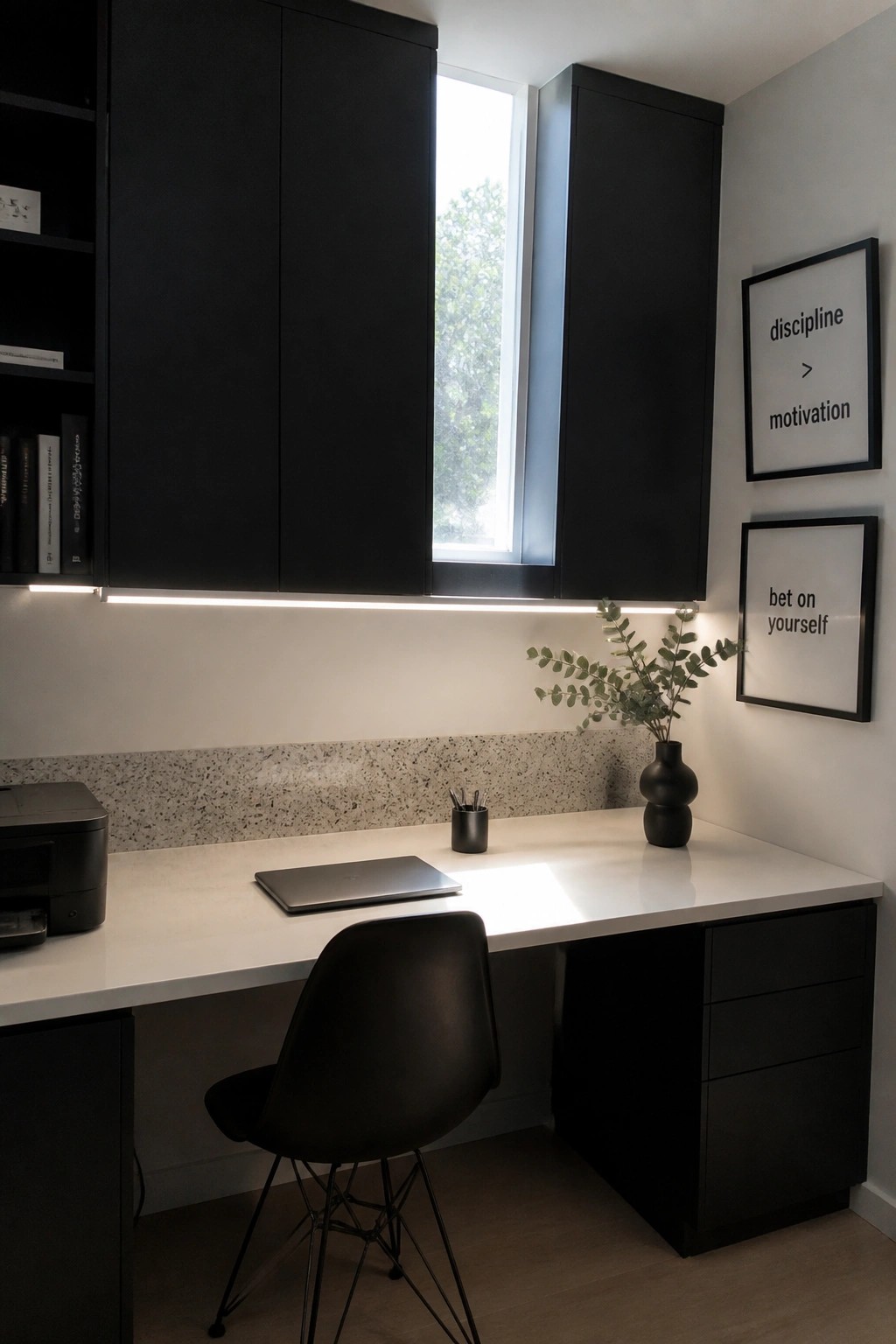
Many home offices end up with papers and supplies scattered across the desk. Overhead cabinets give you a place to tuck things away while keeping everything within reach.
This works best in smaller rooms where floor space is tight. Dark cabinets against a light desk create a simple contrast that feels neat without needing much extra styling.
Wall Mounted Desks Fit Attic Offices
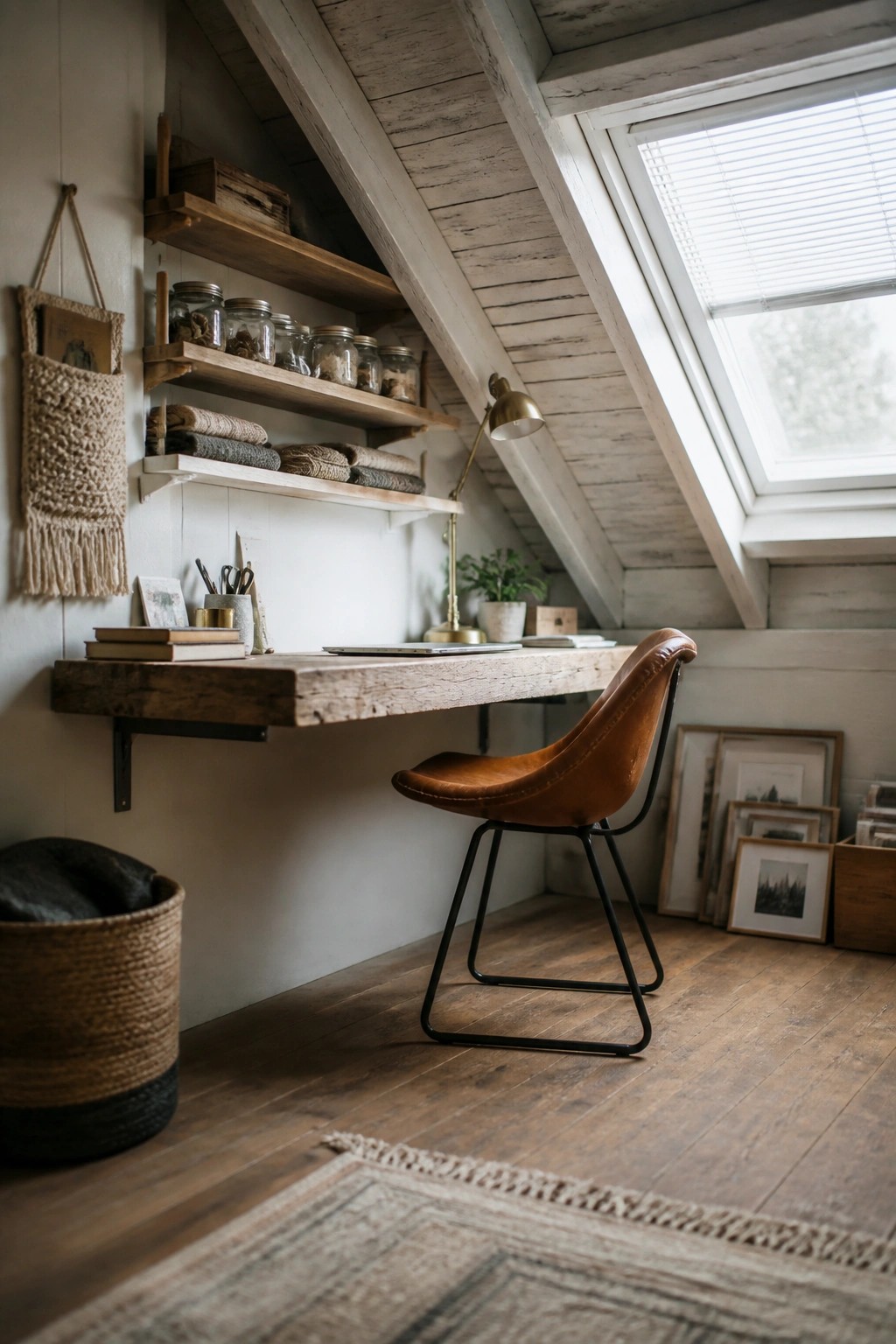
Attics often have sloped ceilings that make regular furniture hard to place. A desk that mounts straight to the wall solves that by using the vertical space and leaving the floor open underneath.
This works well in smaller homes or rooms where you need to keep things simple. Add a couple of shelves above the desk for storage and the whole setup stays useful without crowding the area.
Glass Partitions For A Home Office
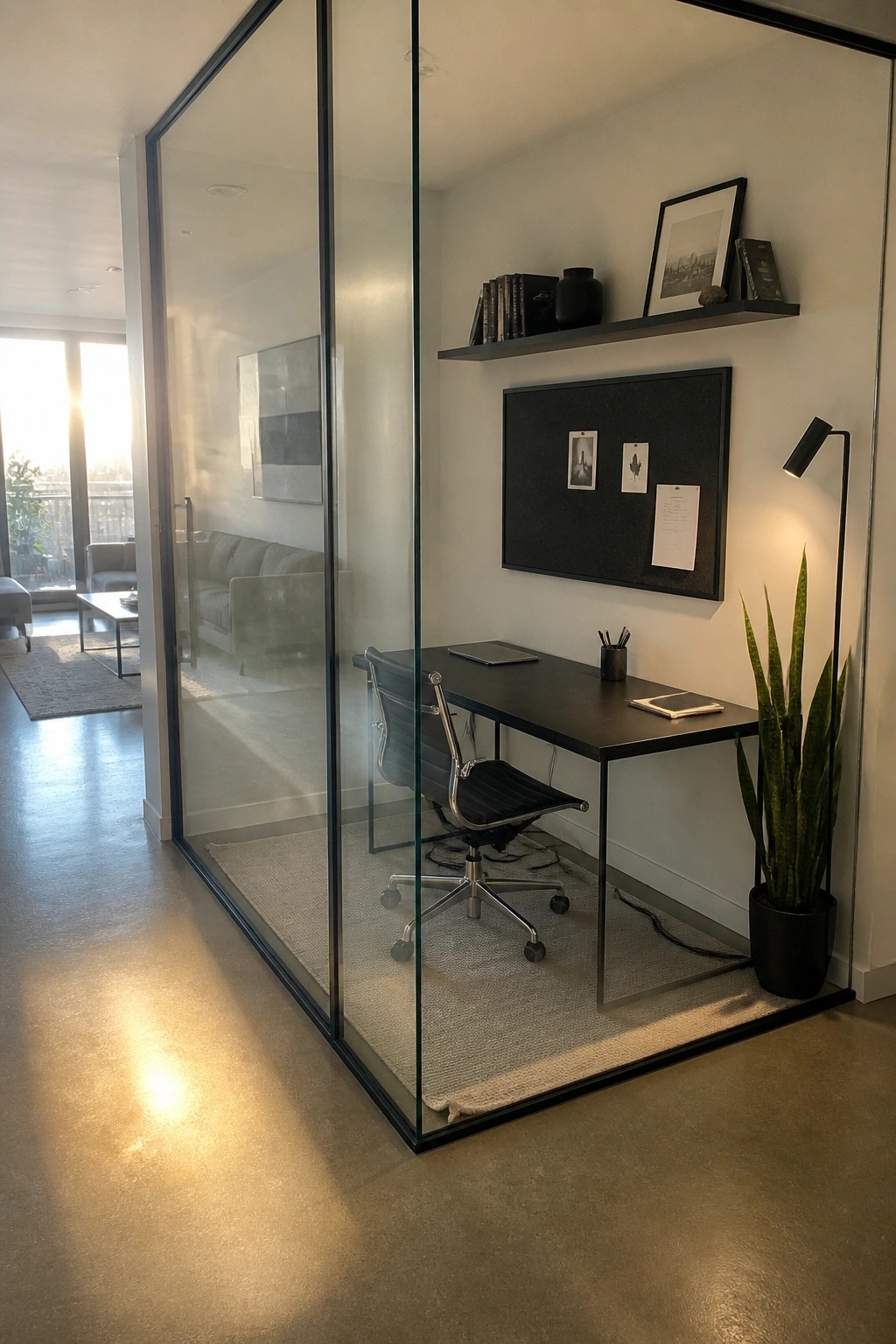
Glass walls can turn a corner of a larger room into a real workspace without making the whole place feel chopped up. The clear panels keep the light moving through and let you stay aware of what is happening outside the office while still giving you a boundary that helps with focus.
This setup works best in open living areas where you want the office to feel like part of the home instead of a closed-off room. Keep the desk and seating simple so the glass stays the main feature and the space does not get too busy.
Deep Green Walls For A Creative Workspace
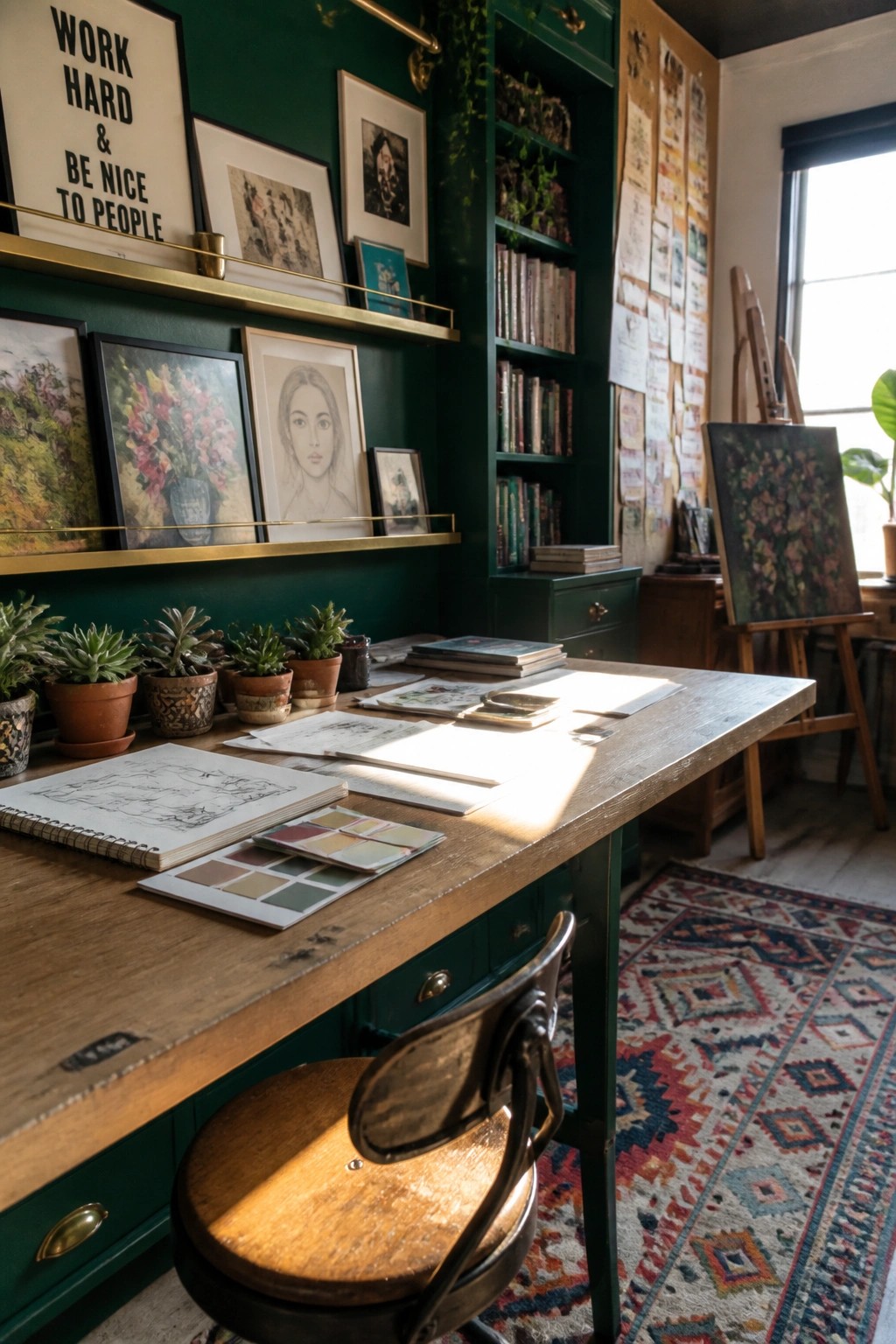
A deep green wall gives a home office a grounded feel that still leaves room for ideas to move around. The color works well when the rest of the space stays simple, letting the wood tones and natural light do most of the work.
This choice suits smaller rooms or spaces used for drawing, writing, or planning. Keep the furniture light in tone and add only what you actually use so the color stays the main feature instead of competing with clutter.
Built-In Floating Desks For Smaller Rooms
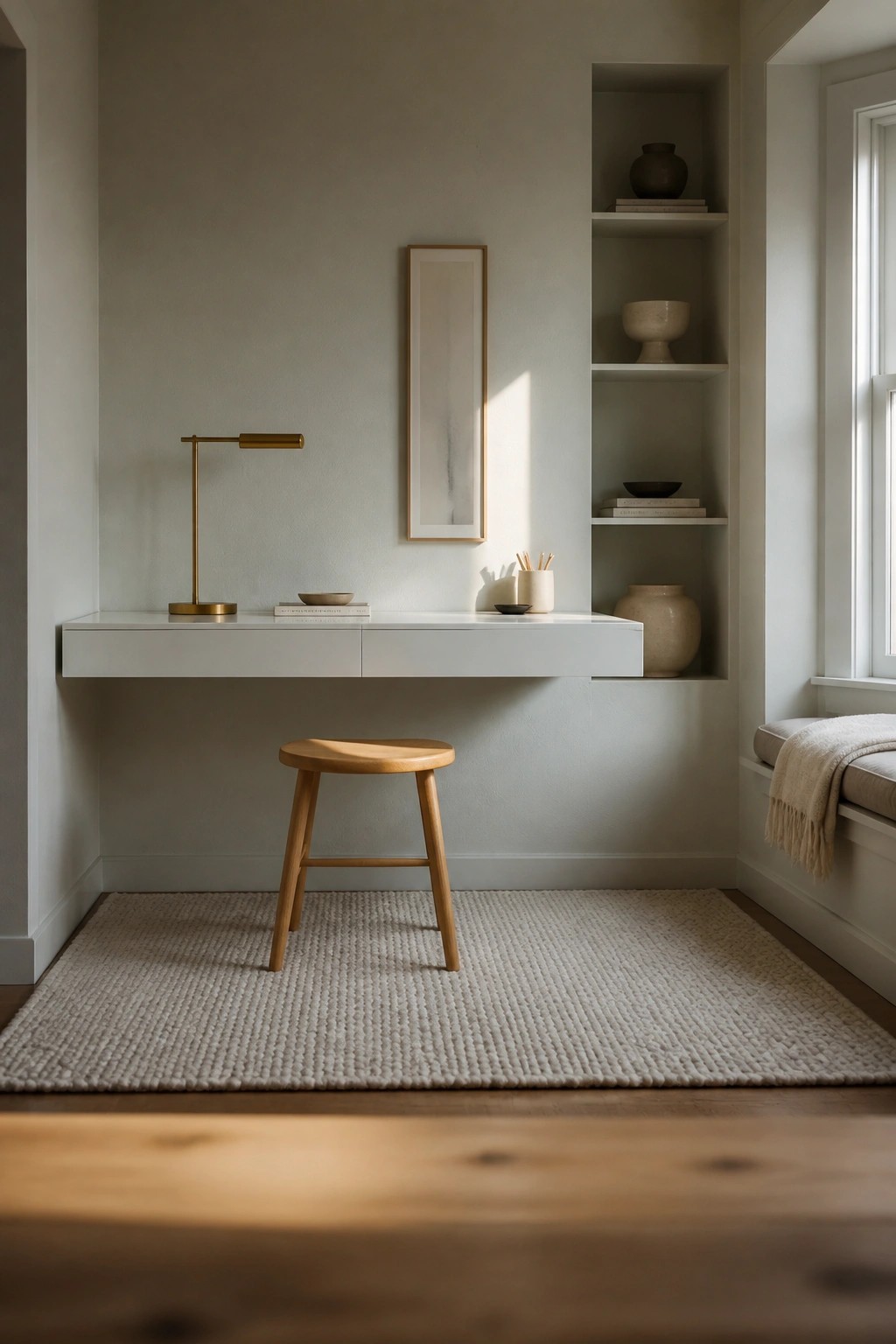
A floating built-in desk keeps the floor clear and makes a room feel more open. The design works especially well when the workspace has to share space with another room, since nothing blocks movement underneath.
This approach suits homes that need a simple, low-profile office area. Keep the top mostly empty and use nearby recessed shelves for a few items only so the surface stays usable for daily work.
Floating Shelves Over A Desk Add Useful Storage
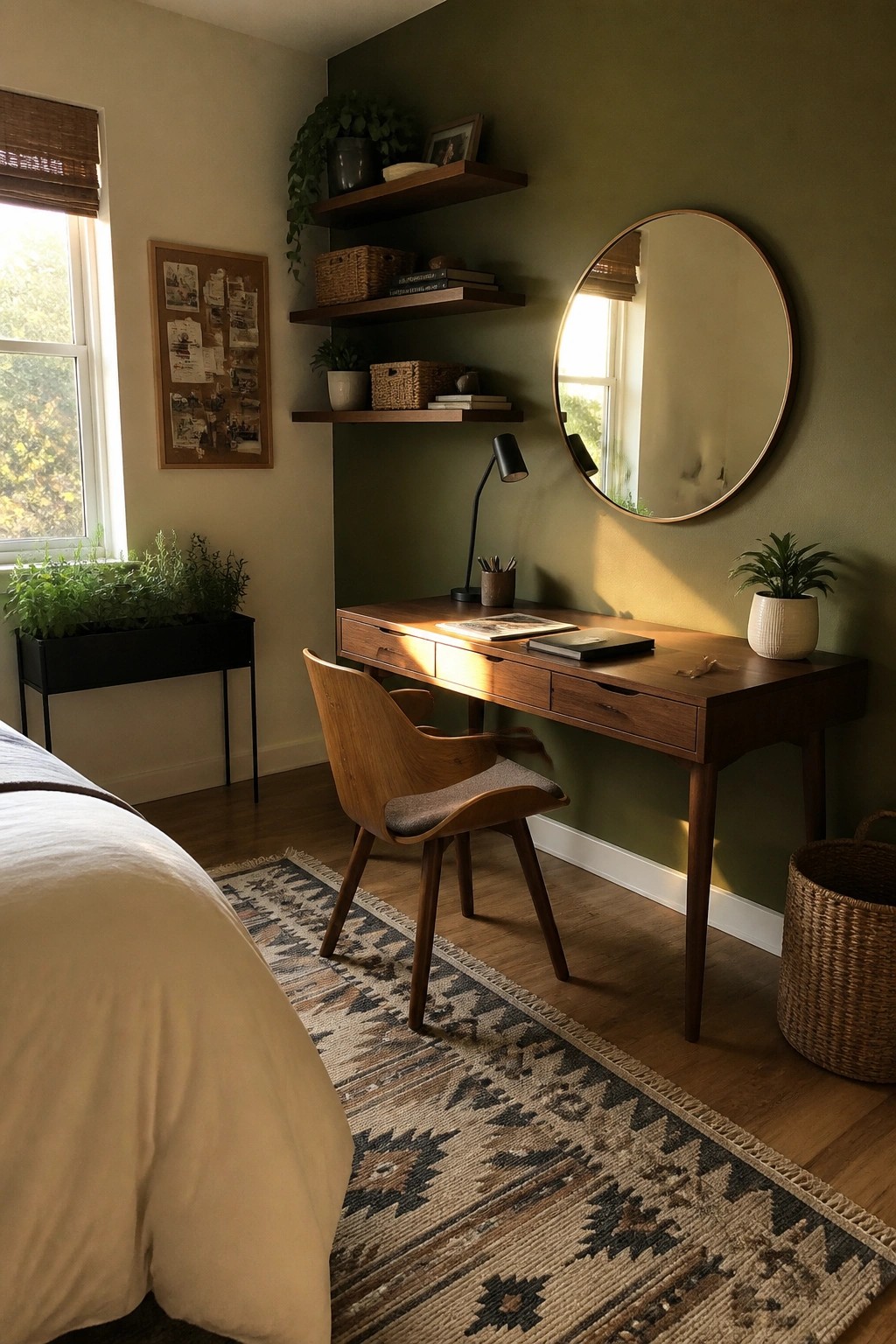
Many people like putting floating shelves right above a desk because it gives extra room for books, baskets, and small plants without taking up floor space. The setup feels lighter than a tall bookcase and still keeps everyday items within reach.
This works best in smaller rooms or shared spaces where you need the desk to stay functional but not dominate the room. Keep the shelves fairly open so they do not start to feel crowded over time.
Long Wooden Tables As Office Desks

A long wooden table makes a strong choice for an office desk when you want extra surface space without feeling boxed in. It gives room to spread out papers, keep multiple monitors in reach, and still have space left over for other tools or projects.
This setup works best in rooms with enough floor area so the table does not crowd the walls. Look for sturdy legs that can handle the weight, and pair it with monitor arms to keep the surface clear.
Create a Workspace in a Small Alcove
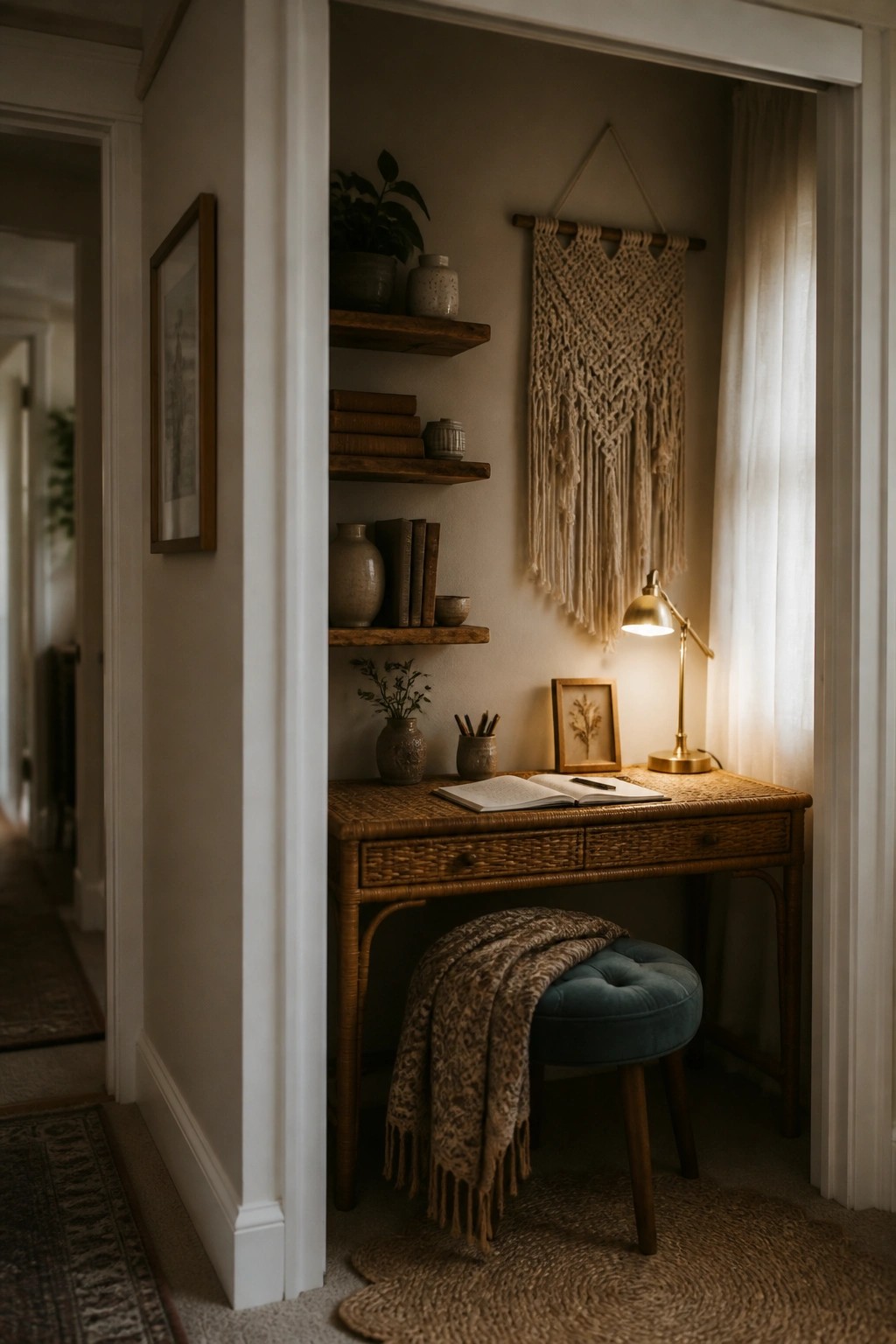
Many homes have leftover corners or narrow spaces that can be turned into a simple office without taking over a whole room. Tucking the desk into an alcove keeps the work area contained while still leaving the rest of the space open and usable.
Natural materials like a woven desk and wood shelves help the spot feel calmer and less like a typical office. This setup works especially well in smaller homes or rooms where you want the work area to blend in rather than dominate.
Built-In Desks That Work In Small Spaces
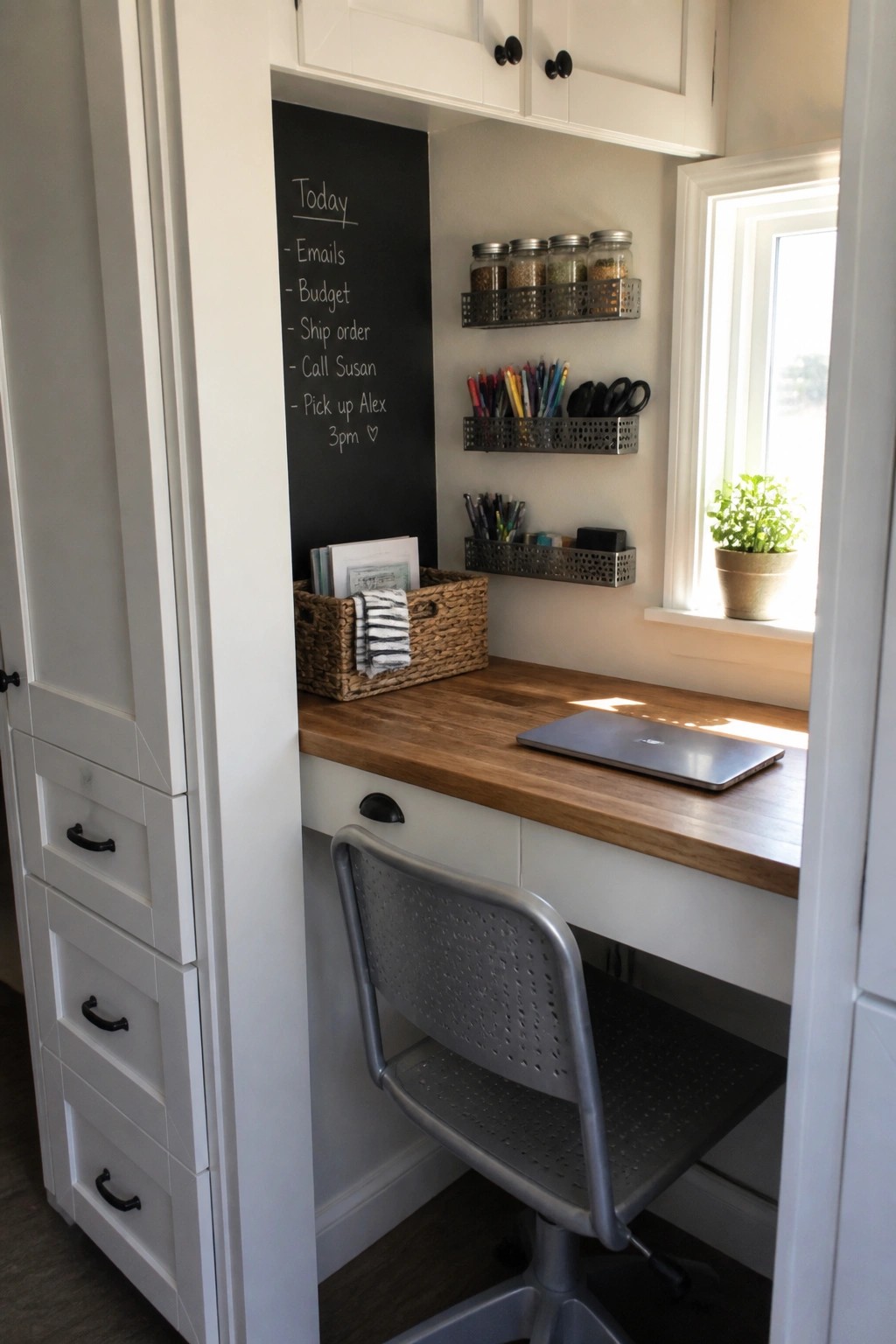
One practical way to add a workspace is to fit a desk right into a closet or cabinet opening. It turns unused space into a focused spot for work without taking over another room.
This setup suits smaller homes or apartments where a full office would feel too big. Keep the surface simple, add a board for quick notes, and use the surrounding shelves for supplies so everything stays in one place.
Built-In Storage That Keeps an Office Organized
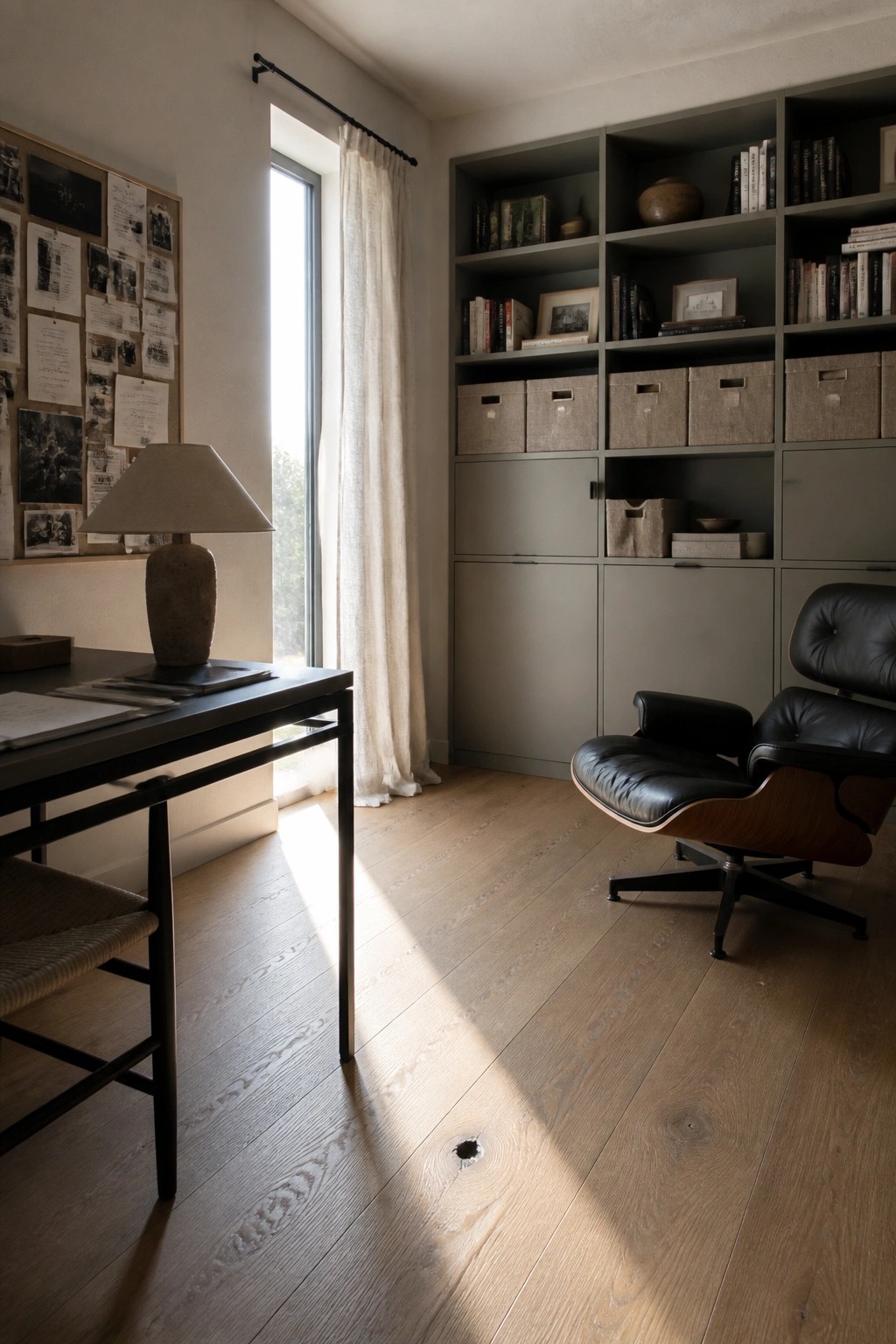
Built-in cabinetry with a mix of open shelves and closed doors gives a home office steady storage without crowding the room. The lower section hides papers and supplies while the upper shelves hold books and a few personal items, so the workspace stays calm and usable.
This approach suits smaller or multi-purpose rooms where separate furniture would feel too heavy. Keep the rest of the furnishings light and place the unit along the longest wall to leave floor space open.
Frequently Asked Questions
Q: How can I try some of these ideas in a small home office without knocking down walls? A: Pick one wall and paint it a fresh color that stands out from the rest. Add a tall plant or two near your desk to break up the space. Rearrange your chair so it faces a window or open area for better flow.
Q: What kind of lighting keeps the ideas coming during a full workday? A: Use a mix of overhead lights and a movable desk lamp to cut down on shadows. Aim for warm bulbs that feel easy on the eyes rather than bright white ones. Test the setup at different times to see what keeps you alert longest.
Q: How do I add creative touches without making the room feel messy? A: Stick to a few key pieces like a unique desk or wall art instead of filling every corner. Clear off surfaces at the end of each day so the space stays open. Focus on items that serve a purpose while looking interesting.
