

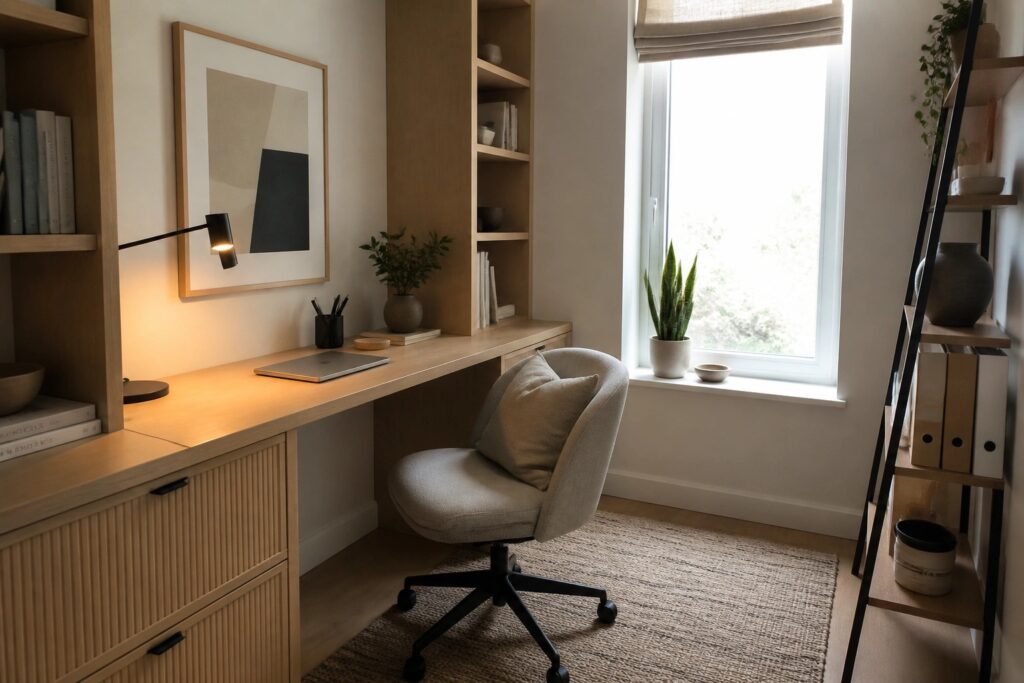
When I set up my own workspace I noticed right away that the way the desk faces the window changes how the whole room feels during the day.
It is not just about picking nice pieces but about making sure the lighting and storage actually support the way I move through the space.
Some rooms click right away.
I have seen offices where a single shelf arrangement pulls everything together in a way that makes daily tasks feel less scattered.
Those are the kinds of choices I keep coming back to when I think about what would actually work in my own setup.
Built-Ins That Keep A Home Office Feeling Organized
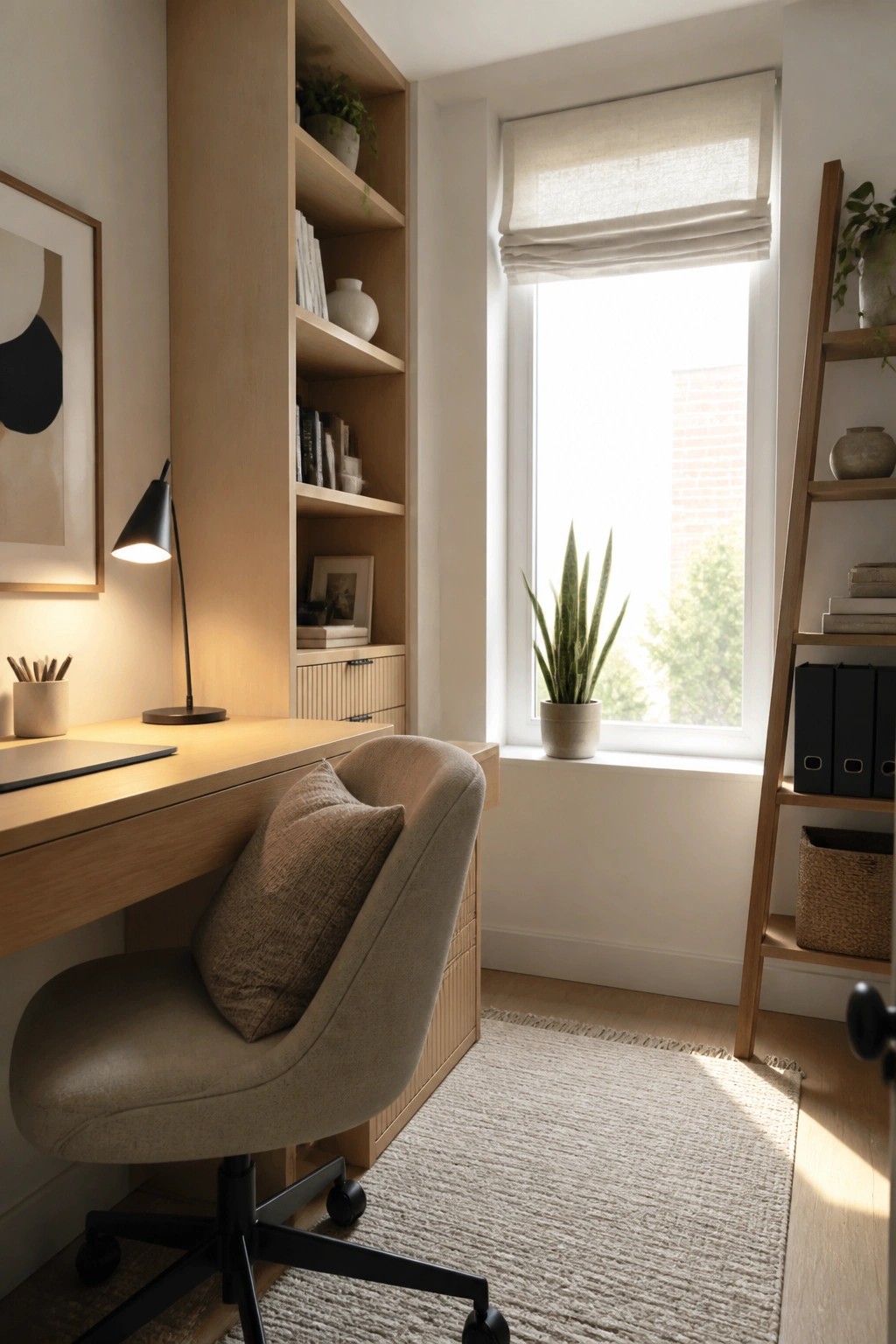
A built-in desk and shelving unit can turn a small corner into a real workspace without adding extra furniture that takes up floor space. The shelves hold books and supplies right where you need them, so the surface stays clear for actual work.
This approach works well in homes where the office shares space with another room. It keeps things simple and makes the area feel more permanent than a freestanding desk ever would.
Mixing Wood and Metal in a Home Office
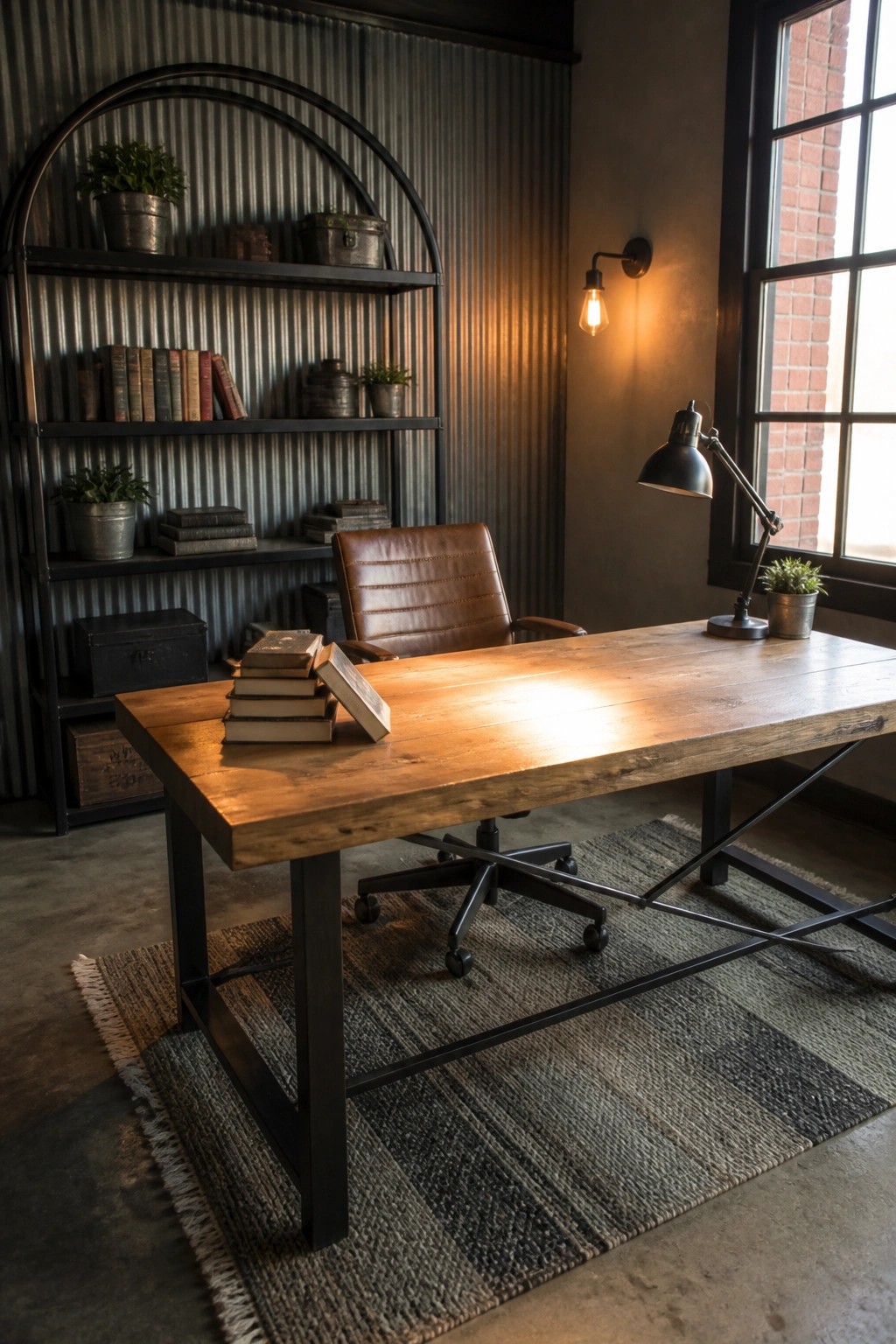
A large wooden desk with black metal legs gives a home office real presence without making the room feel crowded. The solid top provides plenty of work space, and the darker frame keeps everything grounded even when the desk sits on a rug in the middle of the room.
This mix works best in spaces that already lean industrial or simple, like rooms with metal accents or basic lighting. It suits homes where the office needs to feel practical first and still look like it belongs with the rest of the house.
Facing the Desk Toward the Windows

Placing a desk right in front of a window changes how the space feels during the workday. The light stays even and the view gives a sense of openness that a blank wall never provides. It works especially well in rooms that already have good natural light coming from multiple directions.
This setup suits homes near water or open land where the view adds calm rather than distraction. Keep the desk surface fairly clear and use side storage like built-in cabinets so the focus stays on the window rather than clutter. A simple chair in natural materials helps the area feel balanced instead of too office-like.
A Floating Desk Keeps the Floor Clear
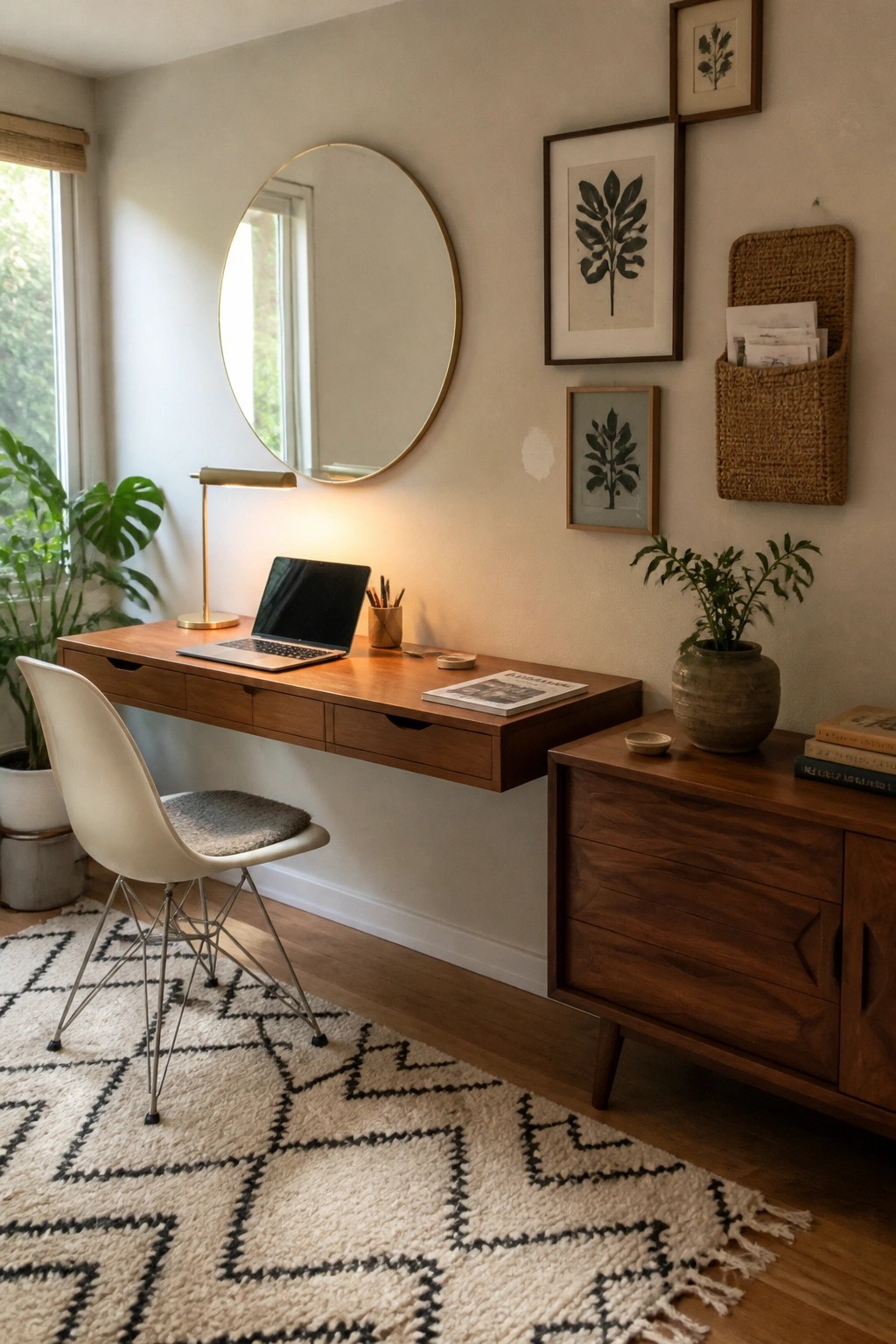
A desk mounted straight to the wall leaves the floor open underneath. This makes the room feel less crowded and easier to move around in, especially when the space needs to serve more than one purpose during the day.
It works well in smaller rooms or any office that shares space with living areas. Keep storage low and simple next to it so papers and supplies stay organized without adding extra bulk.
Round Tables Work Well As Home Office Desks
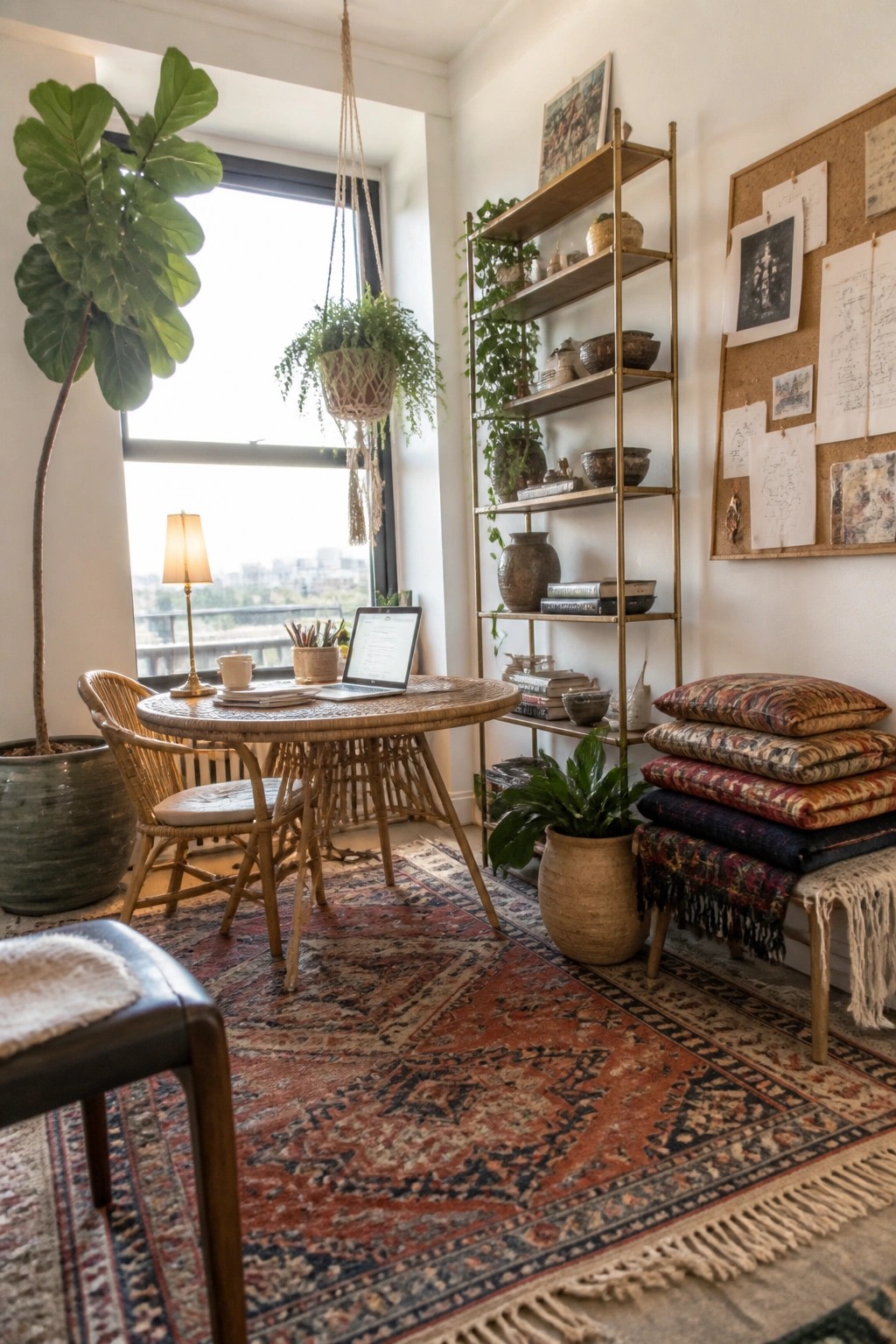
A round table can soften the look of a home office and keep the space from feeling too rigid. It lets you sit at different angles and makes the room feel more open, especially when the rest of the furniture stays light.
This setup works best in smaller rooms or in spaces that double as living areas. Keep the chairs simple, add a few plants around the edges, and use a large rug underneath to tie everything together without crowding the floor.
Built-In Cabinets Keep an Office Organized
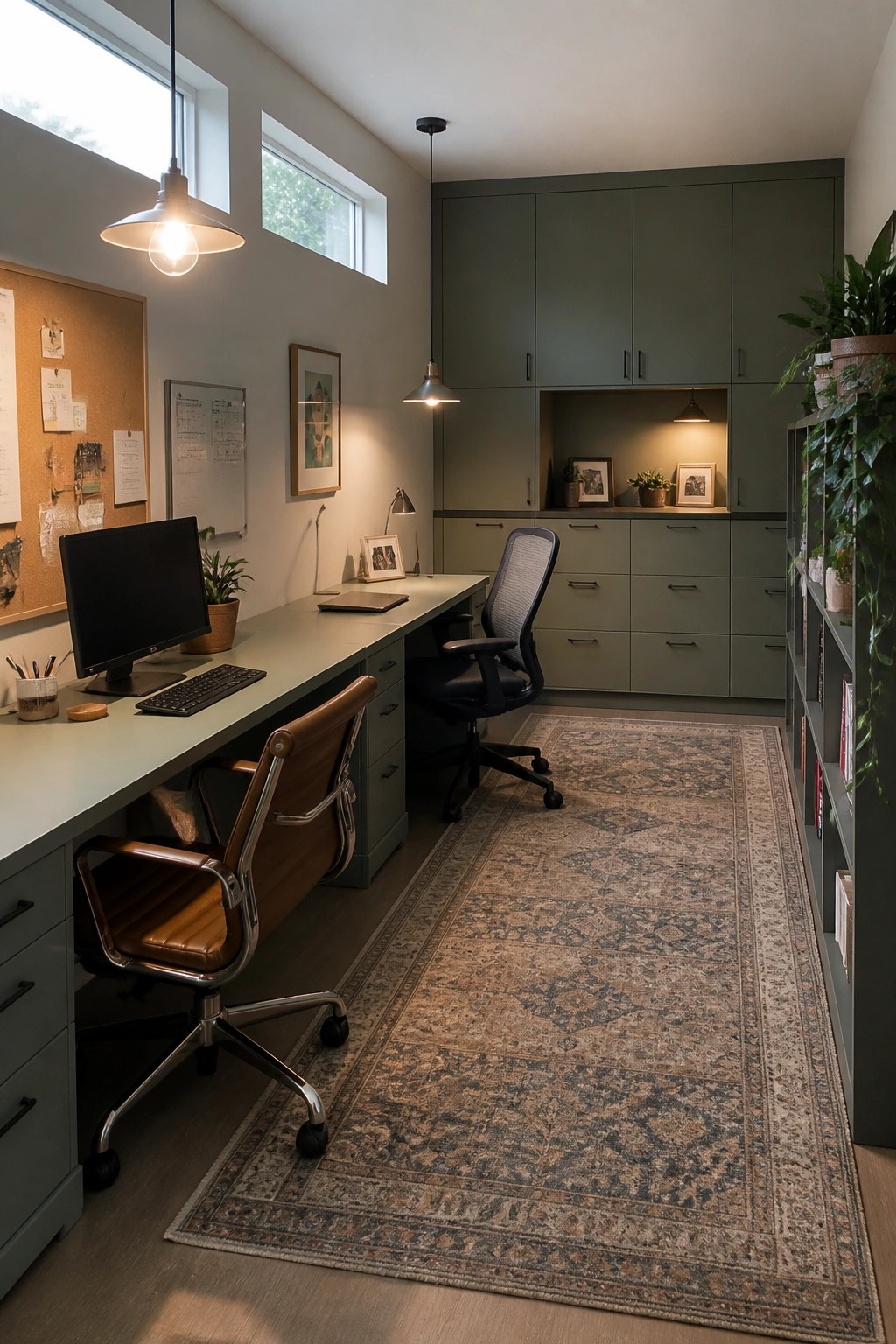
Built-in cabinets along one wall give a home office plenty of storage without adding extra pieces of furniture. This approach leaves more open floor space and helps the room stay tidy even when papers and supplies pile up during busy weeks.
It works best in smaller or shared rooms where every inch counts. Keep the desk area simple and add a rug underneath to mark the workspace, then use the cabinets for anything that does not need to stay out.
Built-In Bookshelves With A Reading Nook

Built-in bookshelves give a home office real storage and a settled look at the same time. The arched alcove with a cushion turns what could be empty wall space into a place to sit and read, which keeps the room from feeling like just a desk and chair.
This setup suits older homes or any office where you want the space to feel calm and useful. Match the wood tone across the shelves and keep the seating simple so the nook actually gets used instead of turning into extra storage.
Floating Cabinets Keep the Floor Clear
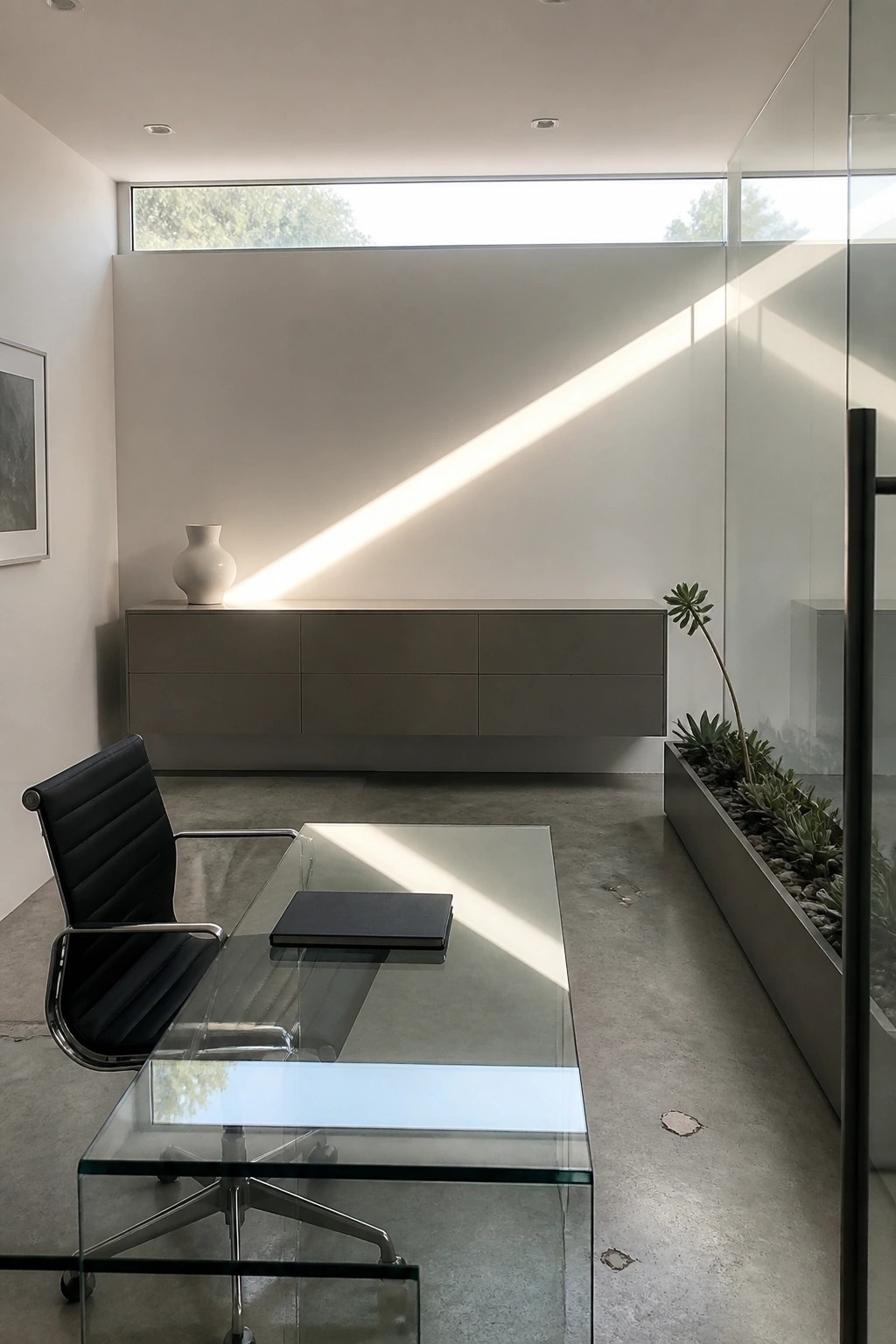
A wall mounted cabinet like this one works well because it leaves the floor open and makes the whole room feel less crowded. The light from the window can move across the space without anything blocking it, and the room stays easy to walk through even when you have a desk and chair in place.
This approach works best in smaller home offices or any room where you want to avoid a heavy, grounded look. Keep the cabinet depth shallow and match the color to the wall if you want it to blend in even more.
Built-Ins Keep A Home Office Feeling Organized
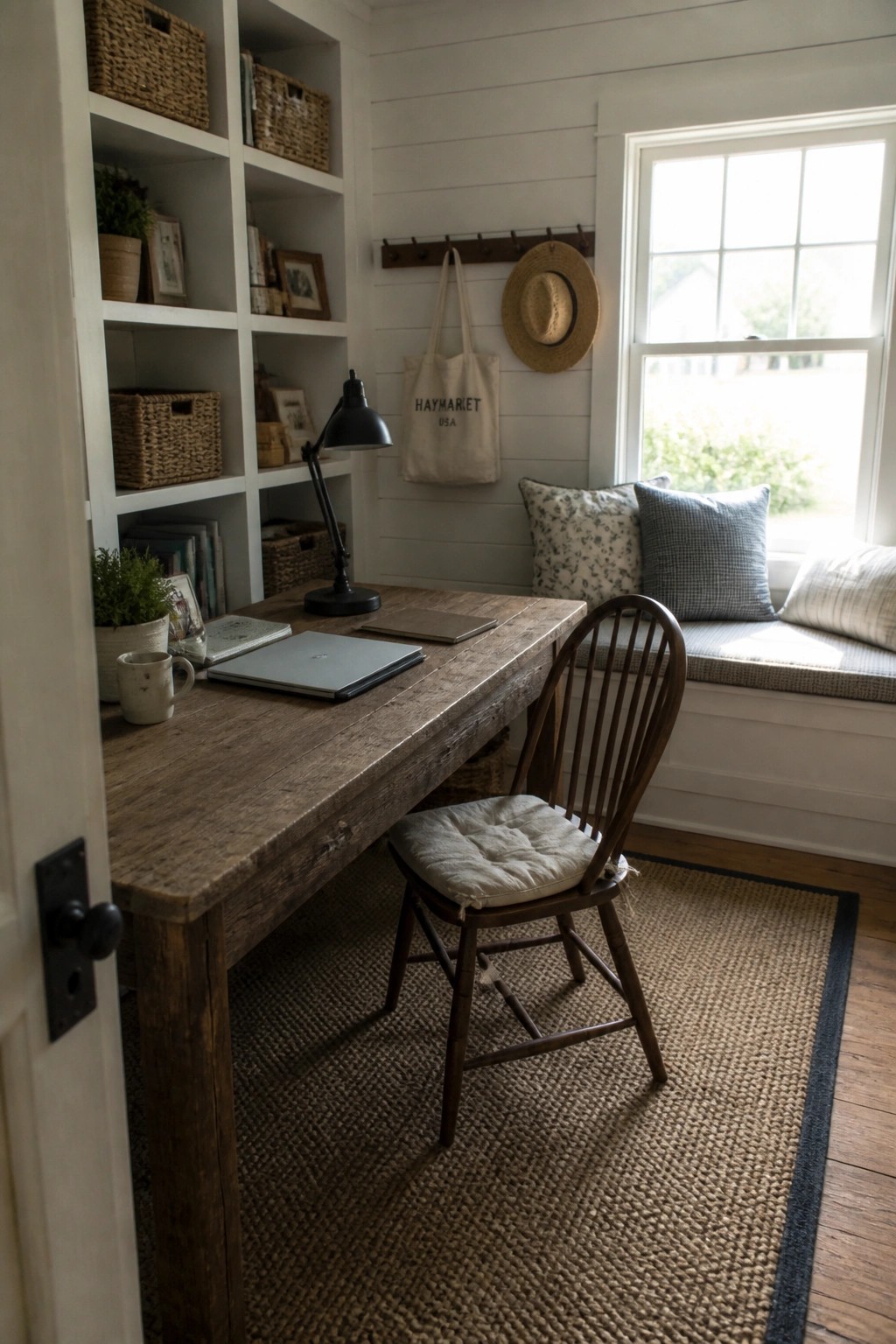
Built-in shelves around a desk give you a place for everything without crowding the room with extra cabinets. The open cubbies hold books and baskets while still leaving the desk surface clear for daily work.
This kind of setup works best in smaller rooms or shared spaces where you need both storage and a calm surface. A simple wood desk against white built-ins keeps the look clean and makes the office feel finished rather than temporary.
A Drafting Table For Focused Creative Work
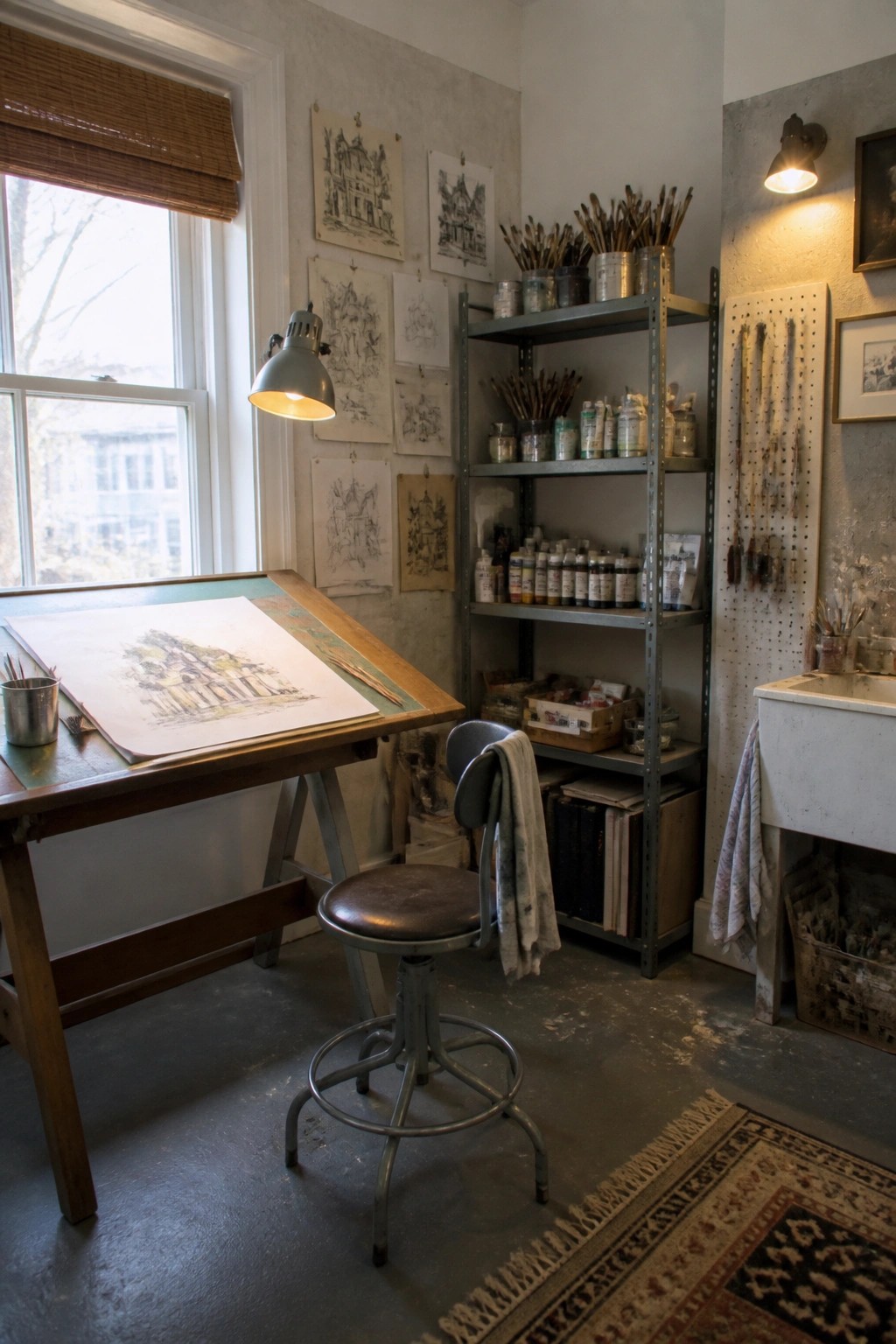
A slanted drafting table gives you a dedicated surface that supports better posture and steadier hands during detailed work. It turns even a small room into a proper workspace without crowding the floor with extra furniture.
This approach suits older homes or studios where rooms are modest in size. Keep supplies on open metal shelves right beside the table so materials stay visible and easy to reach while you work.
Turning A Closet Into A Workspace
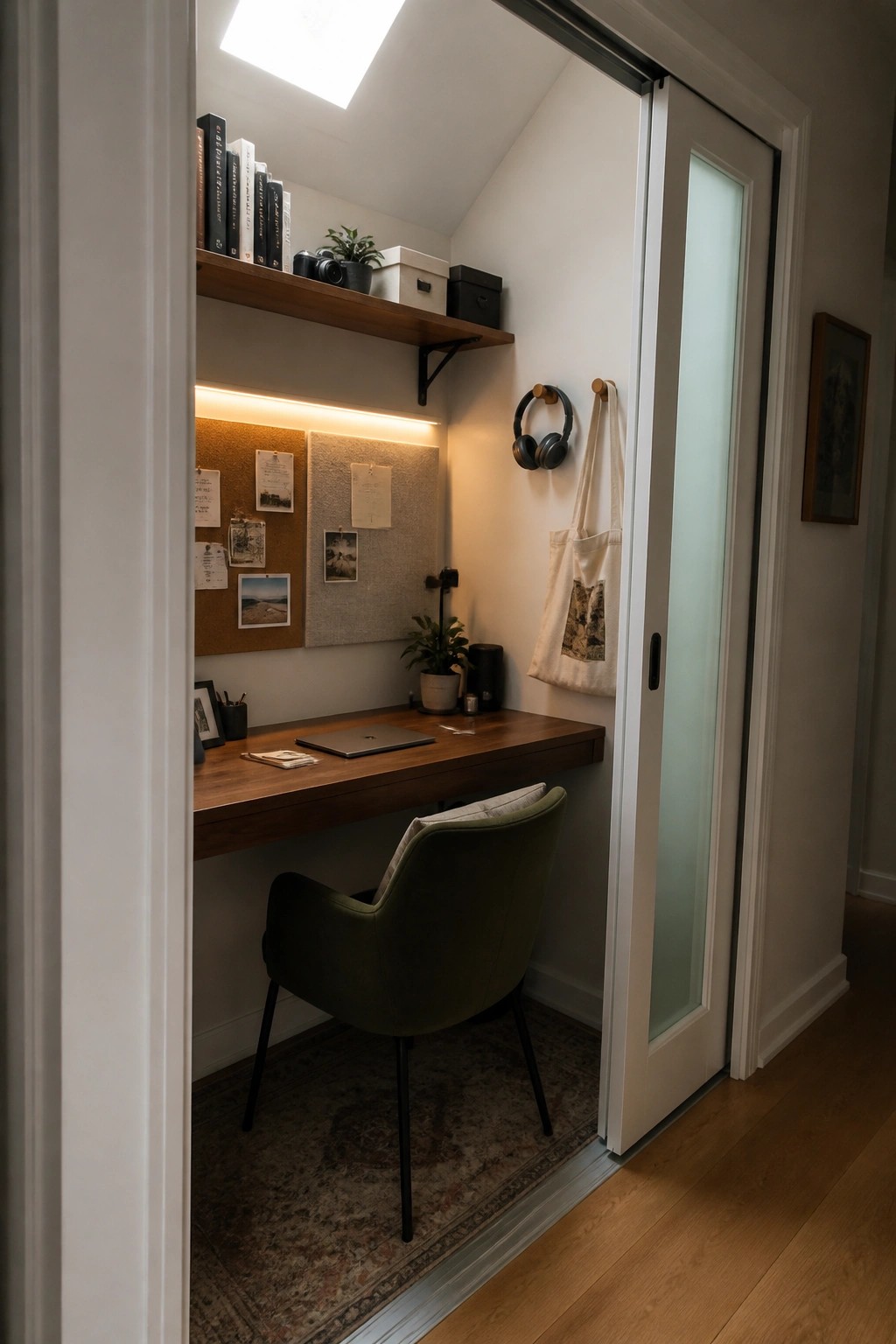
A small closet can become a surprisingly effective home office when the desk fits the space and the walls handle most of the storage. The enclosed feel helps cut down on distractions, and the limited footprint keeps the setup from spreading into the rest of the room.
This approach works best in homes where square footage is tight or when you want a clear boundary between work and living areas. A narrow desk, a few wall shelves, and a simple board for notes are usually enough to keep things organized without crowding the floor.
Woven Materials Keep a Home Office Feeling Light
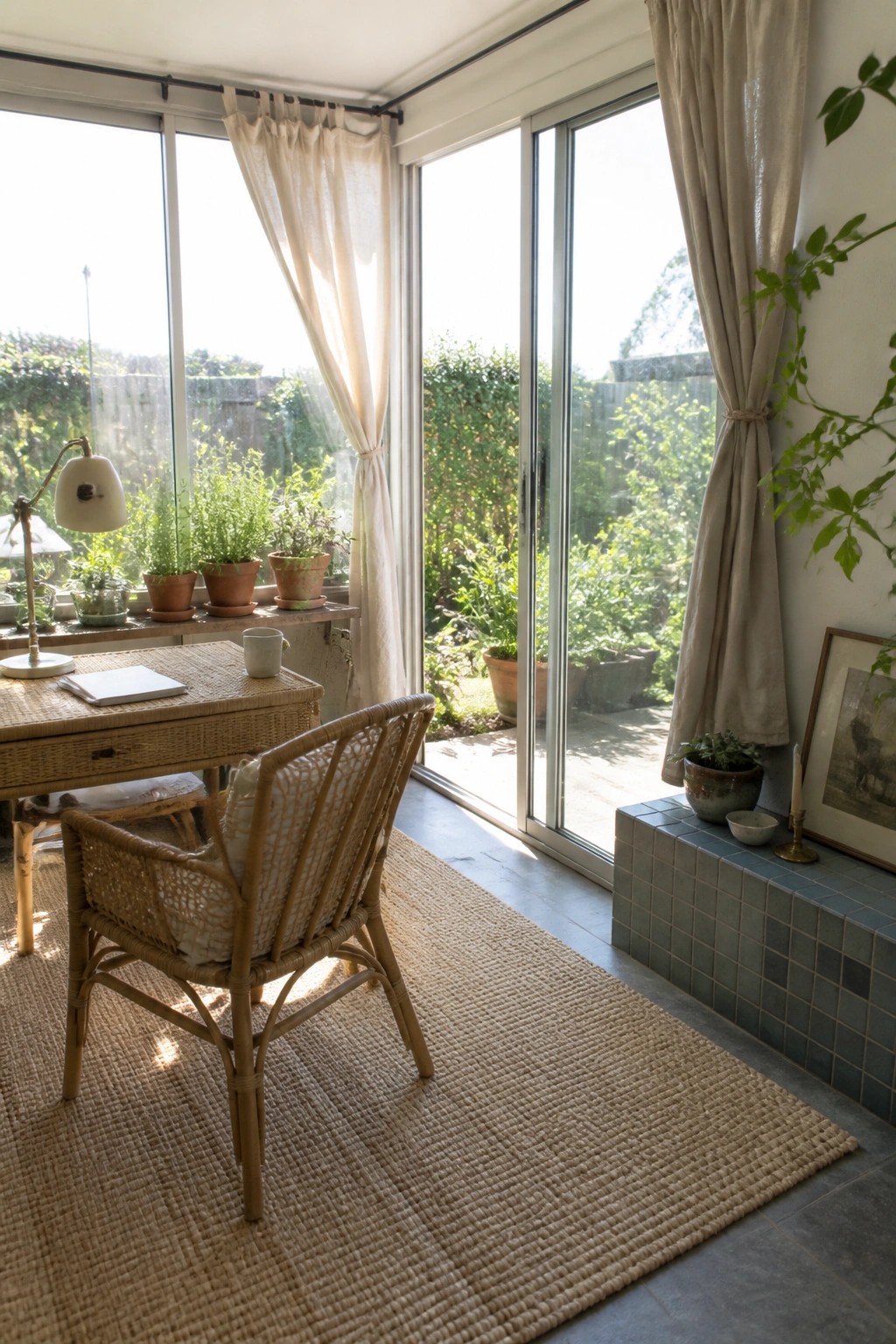
Natural weaves like rattan and jute work well in an office because they add texture without making the space feel heavy. They let the room stay simple while still looking finished, especially when the furniture stays low and the colors stay neutral.
This approach suits smaller rooms that get good light or open to a garden. Keep the rest of the space fairly plain so the woven pieces stand out without competing.
Dark Walls In A Home Office
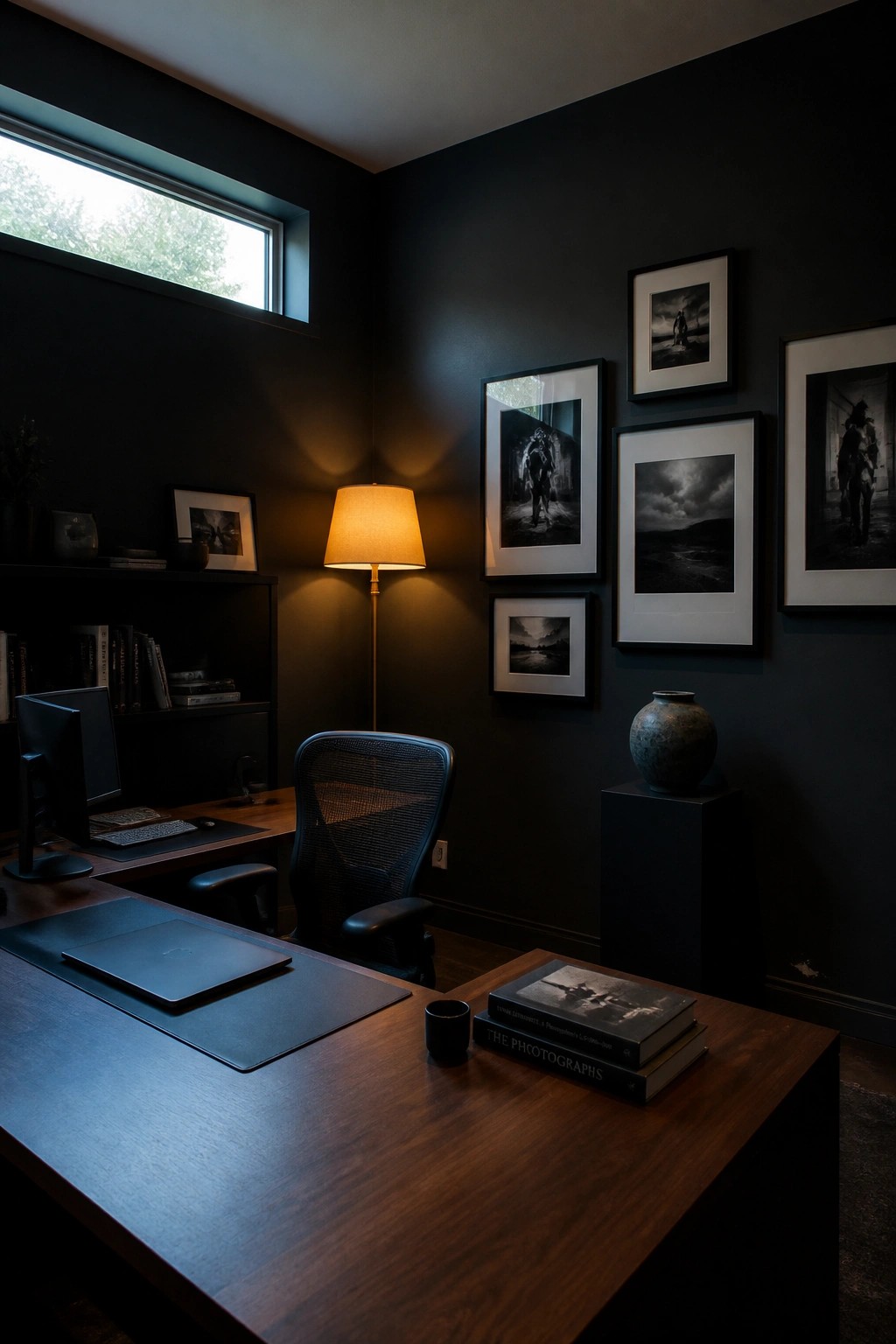
Dark walls can give a home office a settled, focused feel that lighter colors often miss. The deep tone wraps the room and cuts down on visual noise, which helps the space feel more like a place to work rather than just another room in the house.
This works especially well when you pair the walls with warm lighting and wood furniture to keep the room from feeling closed in. It suits smaller offices or anyone who wants their workspace to feel separate from the rest of the home.
Bringing Plants Into the Home Office
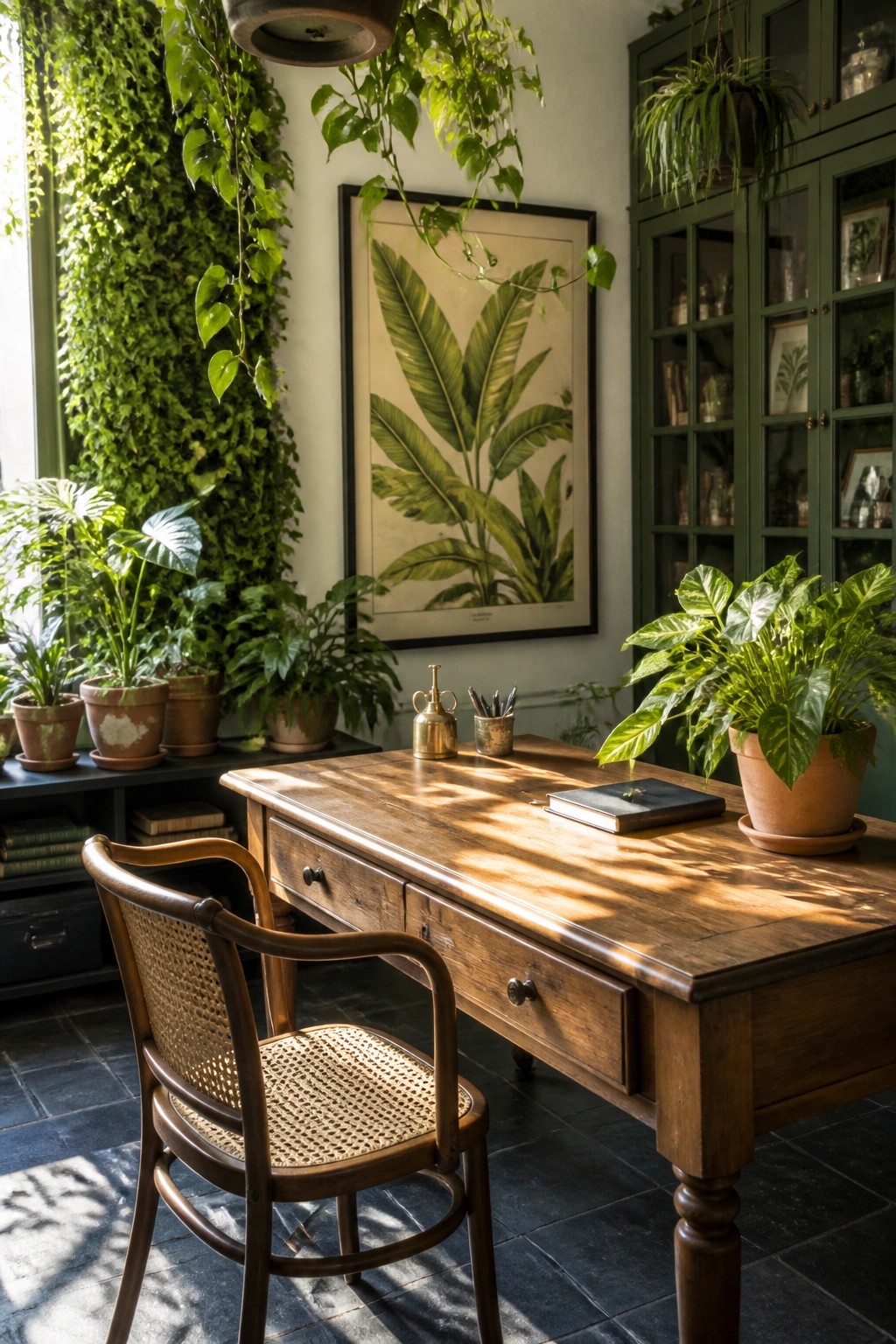
Many home offices still feel a bit bare and closed in. Adding plenty of plants changes that fast. The mix of floor pots, hanging vines, and a full green wall turns the space into something that feels alive instead of just functional.
Start with a few larger plants near the window and work in smaller ones on side surfaces. Hanging plants help fill the upper space without taking up floor room. This works best in offices that already get decent light and suits anyone who wants the room to feel calmer during long workdays.
Built-In Desks In The Kitchen
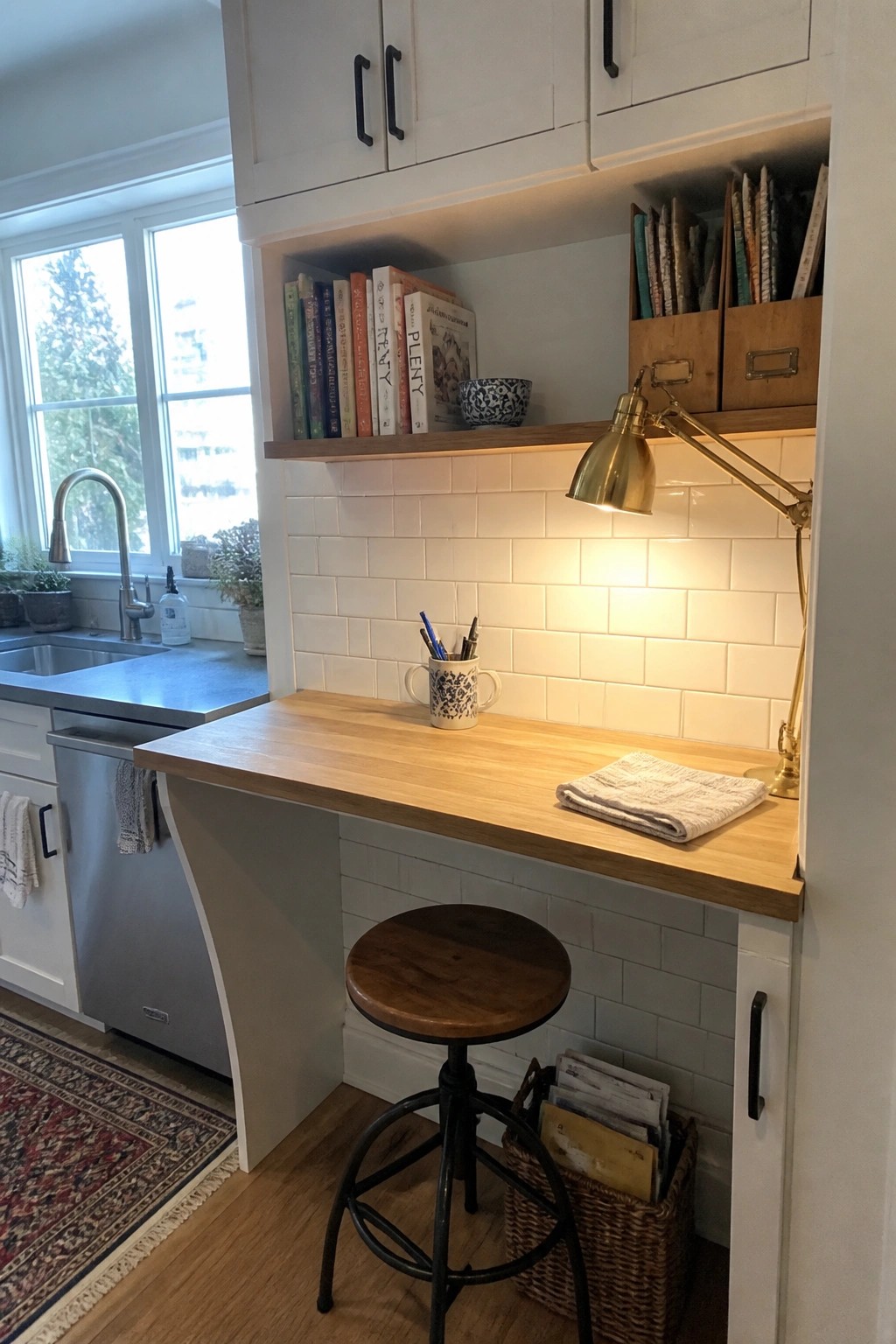
A small workspace built right into the kitchen can handle quick tasks without taking over another room. The wooden counter and open shelves above keep everything close at hand while the rest of the kitchen stays open and usable.
This setup works best in homes where the kitchen already serves as the main hub. Match the desk height and materials to the existing counters so the area feels like a natural extension rather than an add-on. Watch the depth though, since a counter that sticks out too far can block traffic.
Built-Ins That Fit An Attic Office

Built-in desks and cabinetry can turn an attic into a steady place to work. The long run of wood follows the roof angles and adds drawers right where they are needed, so the room stays open instead of crowded with separate furniture.
This approach suits older homes with leftover attic space that is already finished. It works best when the built-ins stay low enough to keep the center of the room open, and when storage like baskets is added underneath to hold what does not fit in the drawers.
A Long Table Can Simplify a Home Office
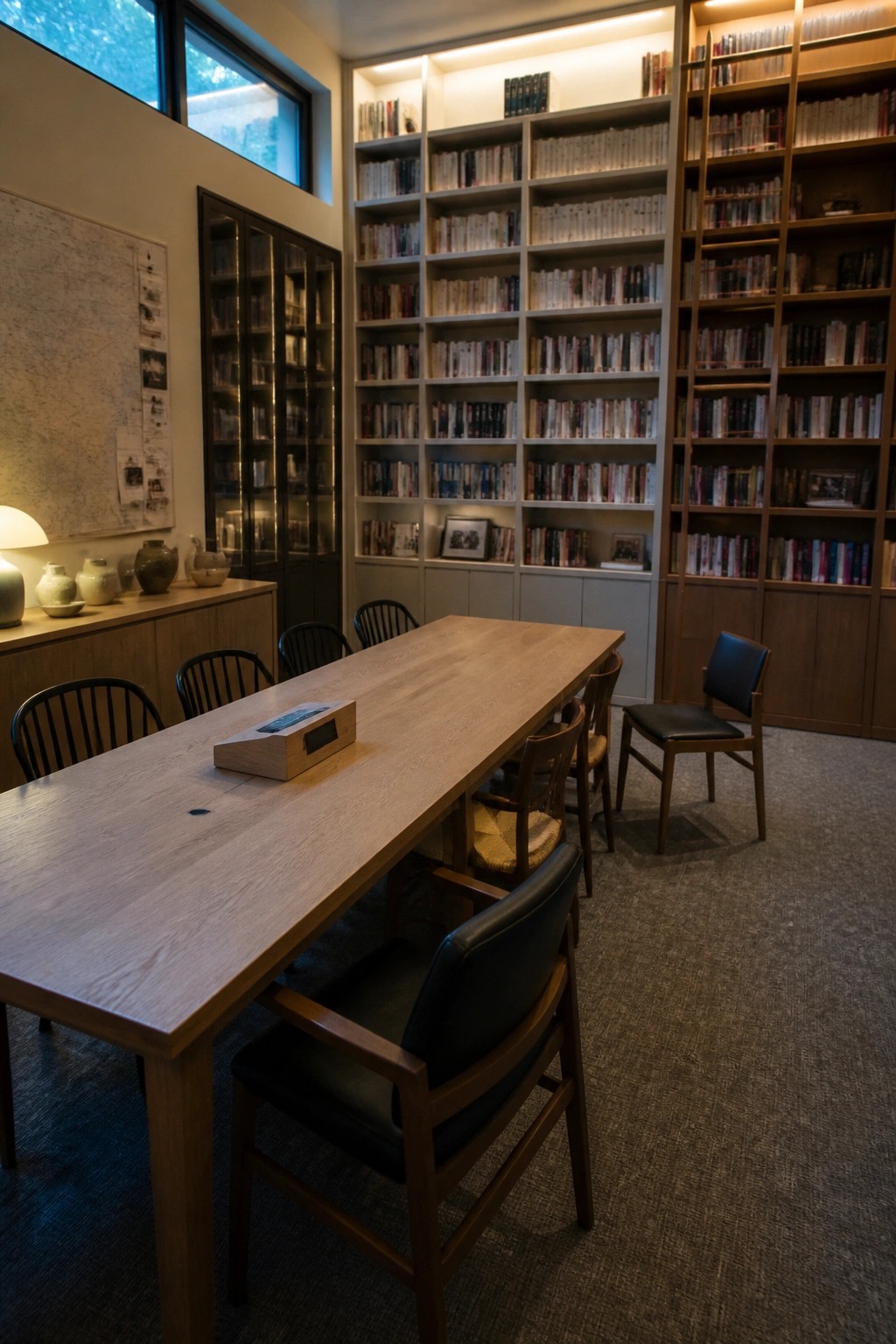
A single long table often works better than multiple desks in a smaller or shared workspace. It gives you one clear surface for spreading out papers or setting up a laptop, and it avoids the boxed-in feeling that comes with standard desk arrangements.
This setup suits rooms with good wall storage already in place, since the table itself stays simple. Mixed chairs around it keep things flexible for one person or a few, without needing extra furniture to make the space feel complete.
A Low Desk Setup That Works For Younger Kids

A low desk with small chairs lets kids sit comfortably without needing help to get settled. The height keeps everything within reach and makes the space feel like it belongs to them rather than just a smaller version of an adult desk.
Wall storage right above the desk keeps art supplies and books visible so kids can grab what they need on their own. This kind of setup works well in a spare room or bedroom corner where you also want room for floor play.
Built-Ins That Give An Office Real Storage
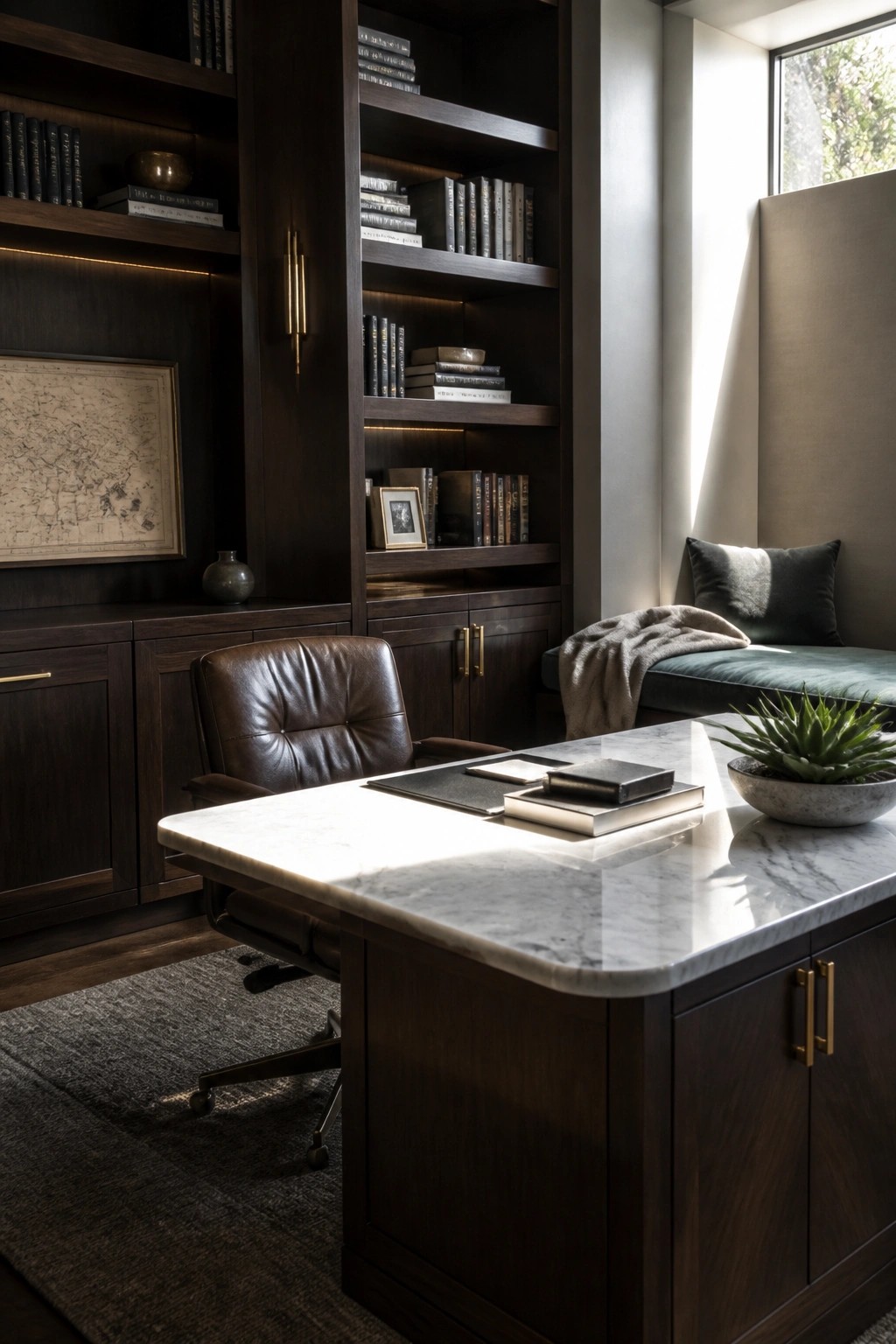
Built-in shelving and cabinetry can turn a basic office into a space that actually holds everything without looking cluttered. The dark wood here creates a solid backdrop that feels substantial and keeps books, files, and smaller items in one place instead of scattered around the room.
This approach works best in rooms that already have some architectural weight, like older homes or new builds with taller ceilings. It helps if the built-ins run floor to ceiling so nothing feels half finished, and pairing them with a simple desk keeps the whole setup from getting too heavy.
Frequently Asked Questions
Q: How do I keep my desk from looking messy with all my daily items?
A: Sort your tools into a couple of trays that match your desk color. Put the rest in a drawer until you need them. This leaves room for the pieces you actually use every day.
Q: Does adding plants really make an office feel more finished?
A: A few small plants near the window add life without taking over. Choose ones that match the scale of your furniture. They soften the edges and tie the space together naturally.
Q: What about hanging art on the walls?
A: Hang one large piece above your desk. Group any smaller ones with matching frames so the wall looks planned out.
