


I have found that most office spaces start to feel off when they lack any sense of warmth or personal touch from the start.
The way furniture placement and color choices come together can make a big difference in whether the room supports steady work or just sits there unused.
Lighting changes everything.
Small adjustments like adding texture to walls or rethinking storage can shift the whole mood without much effort.
I would test a few of these changes in my own setup before committing to larger updates.
Deep Green Built-Ins for Office Warmth

Dark built-in shelves paired with a saturated wall color can turn an ordinary office into a room that actually feels comfortable to spend time in. The color wraps around the space and gives the books and other items a place to settle without the whole room looking sparse or overly bright.
This approach works especially well in older homes or rooms that already have some architectural detail. Keep the wood tones warm and add a few natural textures like leather or wool so the dark finish does not feel heavy. Just make sure the room gets enough natural light or good lamps, since deep colors can close in quickly if the lighting stays flat.
Floating Desks With Pegboard Storage

A floating desk takes up less visual space than a full piece of furniture and leaves the floor open underneath. Pairing it with a pegboard gives you a simple way to keep papers, pens, and small plants within reach without adding clutter to the surface.
This works best in rooms that double as living space or bedrooms where a separate office would feel out of place. Keep the desk height comfortable for daily use and leave enough room for the chair to pull out easily.
Warm Lighting For Dark Office Walls

Dark walls can make an office feel heavy if the lighting stays flat or cool. Warm bulbs change that by casting a soft glow that brings out the wood grain on the desk and keeps the room from feeling closed off. The result is a focused workspace that still feels comfortable for long hours.
This works especially well in smaller home offices where you want depth without adding clutter. Hang a few bulbs at varying heights above the work surface and keep the rest of the lighting low. It suits homes that already lean toward richer tones and helps the space feel intentional rather than stark.
A Woven Chair Softens a Home Office
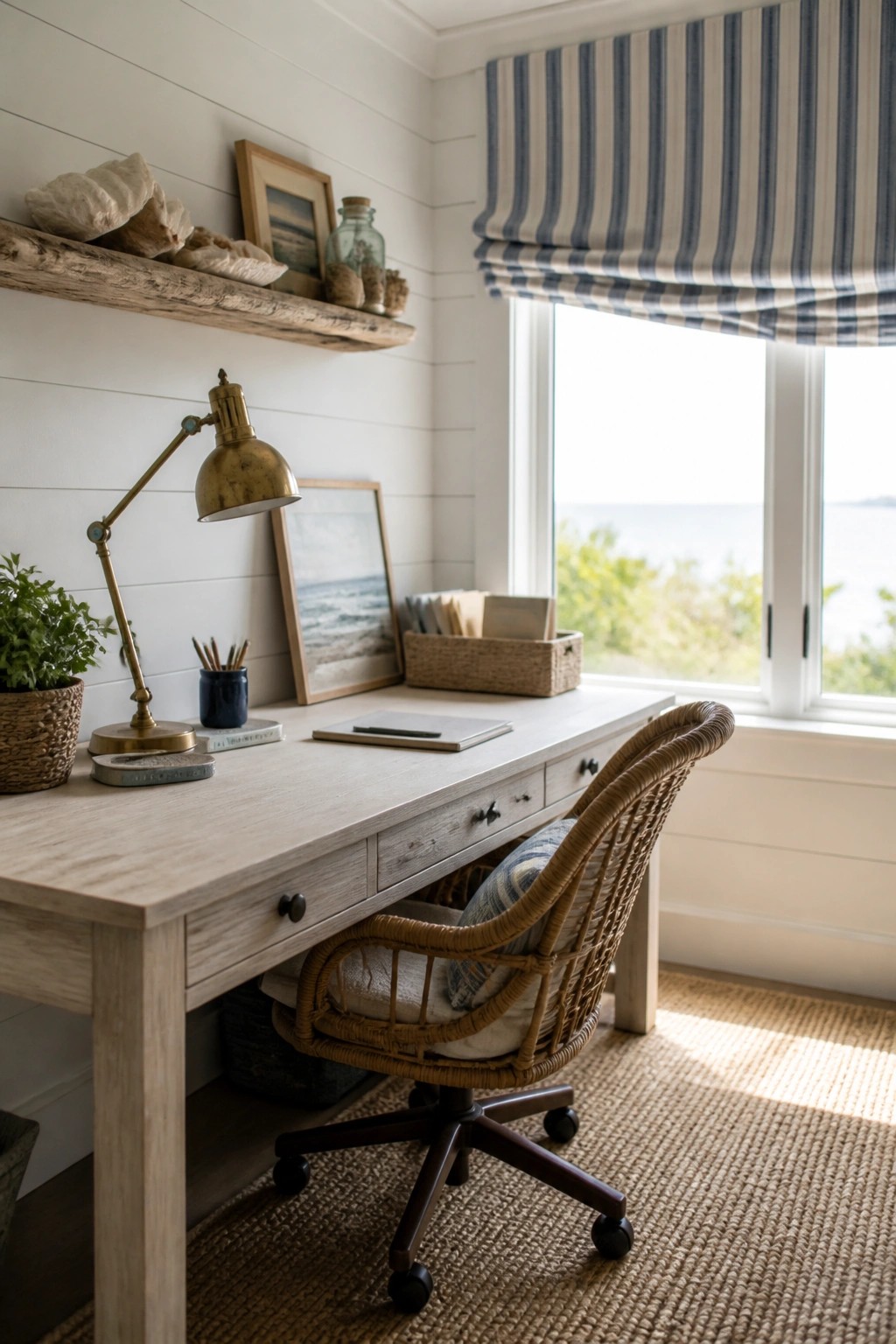
A standard office chair can make any workspace feel stiff. Switching to a woven rattan chair changes that fast. The natural material adds texture and a relaxed shape that keeps the room from looking too formal or empty.
This works best in smaller rooms or coastal-style homes where you want comfort without extra clutter. Keep the rest of the desk simple so the chair stands out. Make sure the seat height still works for long hours at the computer.
Grounding an Office With a Patterned Rug

A patterned rug under the desk gives an office floor some life without adding clutter to the walls. It breaks up the hard surface, brings in color and texture, and makes the whole space feel more like a regular room than a workspace.
This works best in smaller offices or rooms that already have wood furniture. Keep the rug large enough to fit the desk and chair fully on top so the pattern stays visible and the area feels settled.
Hide The Office With A Sliding Door

A sliding barn door lets you close off a workspace without giving up floor space to a full room. It keeps the desk and papers out of view when the office is not in use, which helps the rest of the house feel less cluttered.
This works best in smaller homes or open layouts where a permanent desk would stand out too much. Keep the door hardware simple and make sure the hidden area has its own light so it does not feel closed in when you need to work.
Daybeds With Storage In Small Offices

A daybed with deep drawers underneath gives you a place to rest or read without turning the room into a full bedroom. It softens the look of a workspace and adds useful storage for files, linens, or extra supplies that would otherwise clutter the desk area.
This works best in a spare room or a corner of a larger bedroom where the office needs to stay flexible. Keep the desk simple and add open shelves above the daybed for books and a few personal items so the space feels lived in rather than temporary.
A Slatted Wood Desk Adds Warmth
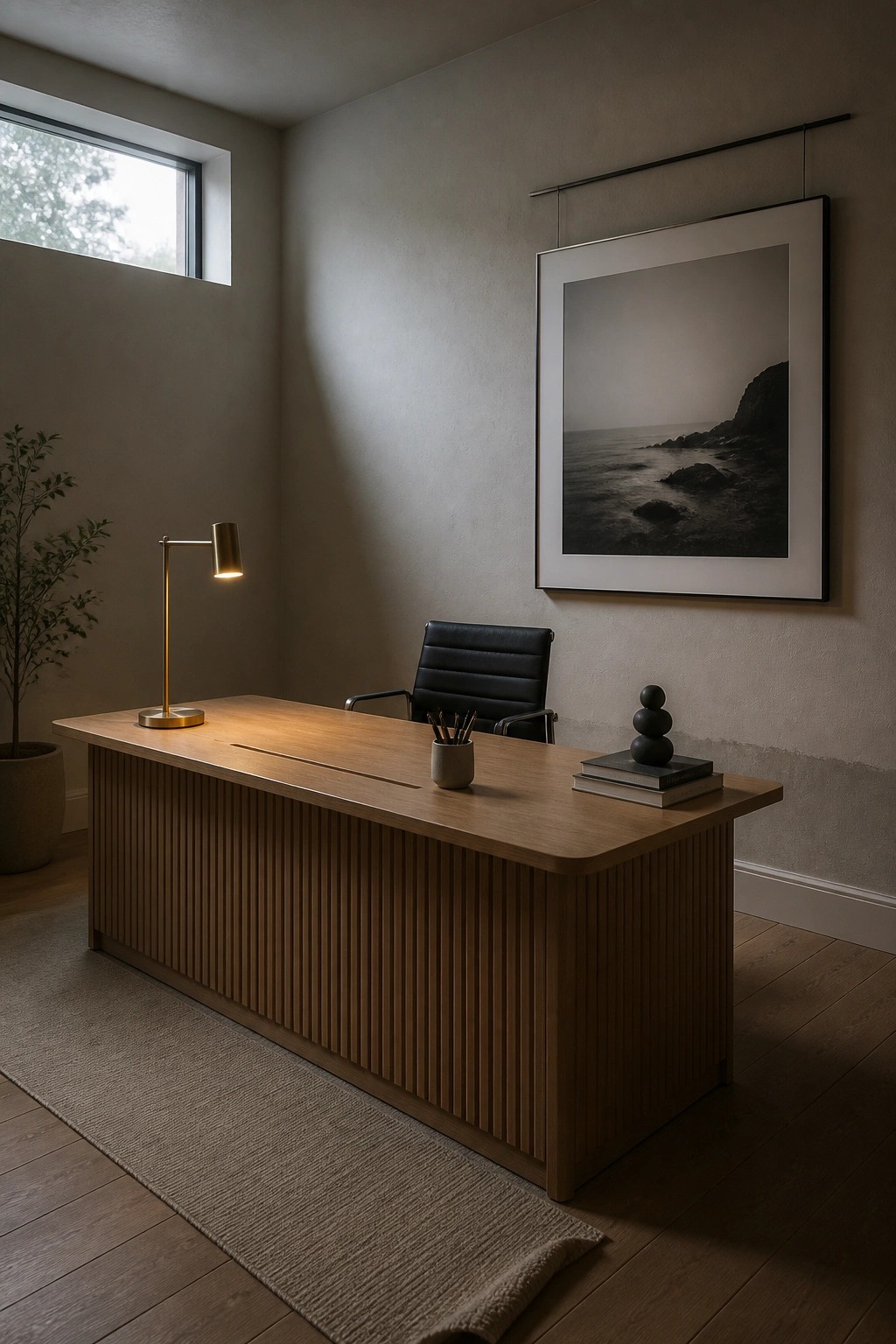
A solid wood desk with vertical slats gives an office real presence without making it feel heavy. The natural grain and simple lines bring texture that softens the whole room, especially when the walls are kept plain.
This works best in smaller home offices where you want the desk to feel like furniture rather than equipment. Keep the rest of the space light with one good lamp and a few natural touches so the wood stays the main feature.
Woven Furniture And Plants In A Home Office

Many home offices end up feeling a bit stiff when everything is smooth and hard. Switching to woven pieces like rattan or wicker for the desk and chair brings in texture right away and makes the space feel more relaxed.
This works especially well if your room gets steady light. Keep the plants varied in height so they fill the corners without crowding the desk, and let the natural fibers do most of the warming up.
Built-In Shelving With a Rolling Ladder

Built-in shelves that wrap around a desk give an office real storage without making it feel like a storage room. The wood tones and the ladder add warmth that plain walls never manage on their own. It turns the space into something you actually want to sit in for hours.
This setup works best in rooms that already have some height and can spare the wall space. Keep the shelves filled with books and a few personal items so the room stays lived-in instead of staged. Avoid overcrowding the desk surface underneath.
Built-In Shelving That Makes an Office Feel Finished
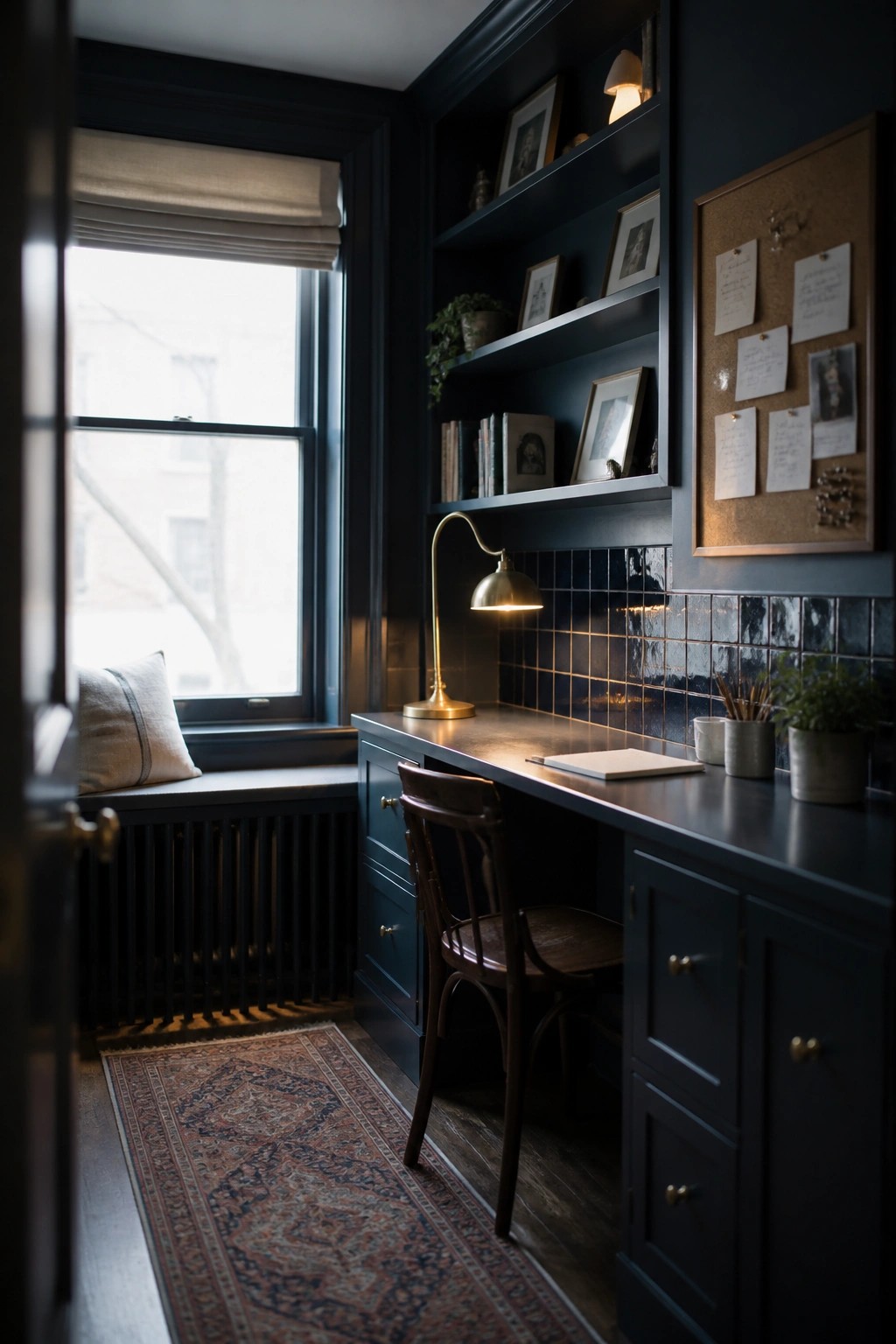
Many small offices end up looking like an afterthought once the desk and chair are in place. Built-in shelving changes that by giving the room structure and a place for everything without adding extra furniture that eats up floor space.
This works best in narrow rooms or older homes where you already have some wall depth to work with. Keep the color consistent with the walls so the shelves feel like part of the room rather than added on later.
A Solid Wood Desk for Attic Workspaces

Many attic offices end up feeling a little stark because of the angled ceilings and limited wall space. A heavy wooden desk changes the feel right away by bringing in natural grain and warmth that softens the whole room.
This approach works best in older homes or any space where you want the office to feel like part of the house rather than an afterthought. Keep the rest of the furnishings simple so the desk can carry the room without competing with too many other pieces.
Built-In Bookshelves For A Traditional Office

Built-in bookshelves give an office a finished look that plain walls never quite manage. They turn empty space into storage while adding the kind of weight and warmth that makes the room feel like a real study instead of just a workspace.
This approach works best in homes with decent ceiling height and wall space to spare. Keep the wood tone consistent with the desk and any trim so the room reads as one complete space rather than a collection of separate pieces.
Cover One Wall With Pinned Artwork

Many offices still end up with plain walls that feel bare and uninspiring. Filling one wall with sketches, prints, and reference images gives the space personality without much effort.
This works best in rooms where you spend long hours at a desk. Place the display where you can see it easily from your main seat, and let the pieces overlap a bit rather than lining them up in perfect rows.
Natural Materials In A Home Office

Many home offices end up feeling flat when everything is painted white or made from the same light wood. Using darker wood, marble, and leather gives the space weight and makes it feel more like a real room.
A marble-top desk with a wood frame works especially well when the rest of the room already has wood cabinetry or trim. This mix suits older homes or any space where you want the office to blend in rather than stand out as a separate zone.
Long Built-In Desks For Narrow Rooms

A long built-in desk works well in a narrow room because it turns the full length of the wall into usable workspace without adding bulky furniture that would crowd the floor. The desk stays low and simple, so the room still feels open even when it is only a few feet wide. A runner helps keep the path clear and gives the space a finished look.
This setup suits homes where an extra bedroom or hallway needs to become an office but cannot handle a standard desk and separate storage. Keep the desk surface mostly clear and use the drawers below for what you need daily. It works best with good natural light along one side so the narrow shape does not feel closed in.
Built-In Desks Under Stairs
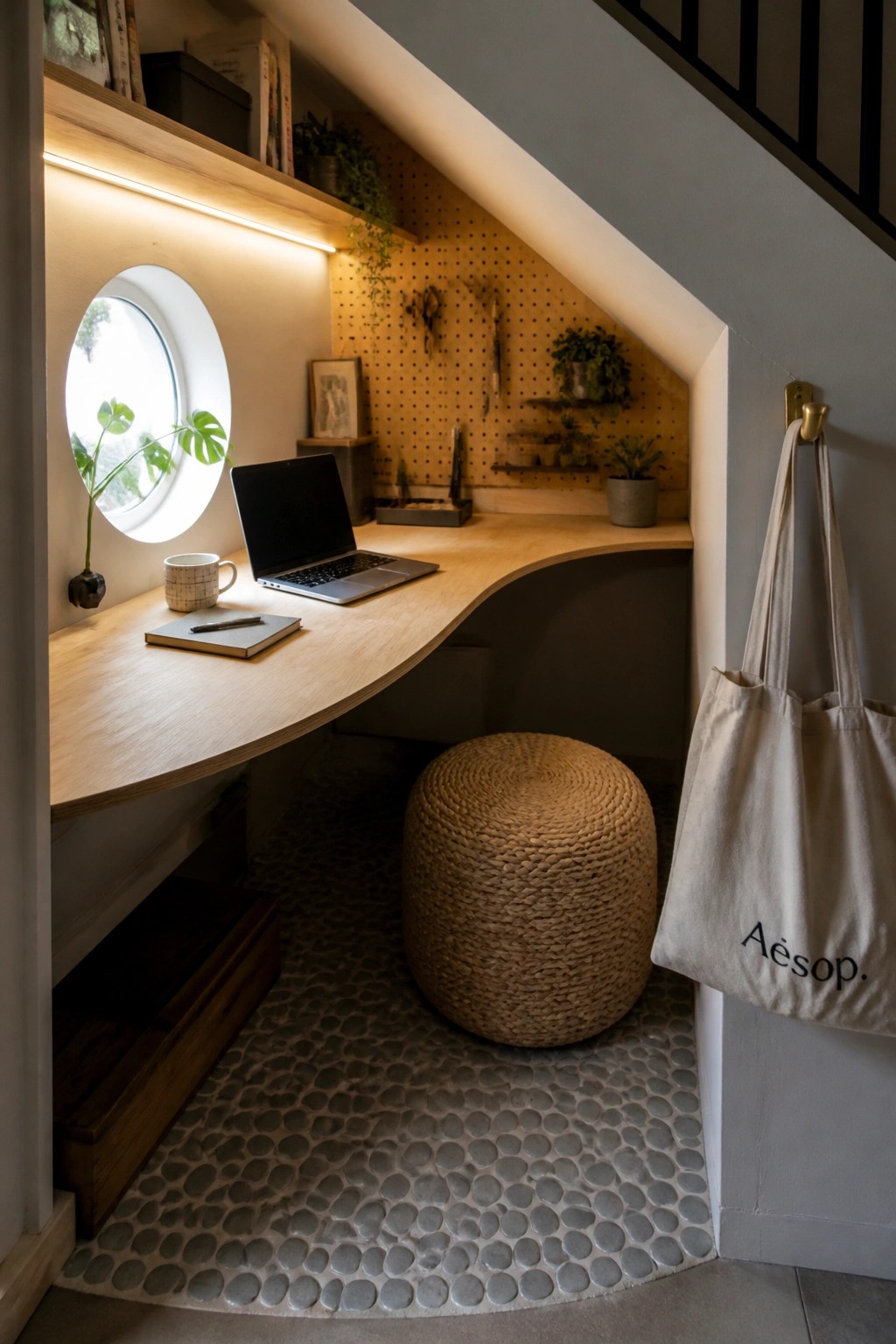
Many homes have leftover space under the stairs that ends up wasted or just used for storage. Turning that area into a simple built-in desk creates a quiet workspace without needing a separate room.
This idea suits smaller homes or houses with open layouts where you still want a defined place to work. Choose materials that match the rest of the room and add lighting so the spot feels usable instead of tucked away.
Choose Wood and Leather for Office Furniture

Wood and leather give an office a settled look without much effort. The natural tones keep the room from feeling stark, and the materials age well over time.
This approach works best in rooms that already have some character, like older homes or spaces with fireplaces and interesting windows. Stick to one main wood tone and add leather only on the seating so it does not feel overdone.
A Central Planter Through the Work Table

One way to soften a shared workspace is to run a long planter right down the middle of the table. The plants break up the flat surface, add some life, and keep the room from feeling like a plain conference setup. It works especially well when the table is used by two people facing each other.
This idea suits homes where a spare room doubles as an office or where a couple works side by side. Keep the planter narrow so it does not crowd the surface, and choose low plants that will not block views or get in the way of laptops and papers.
Frequently Asked Questions
Q: What colors work best if I want to avoid plain white walls? A: Go for soft grays or warm beiges that still bounce light around the room. Layer in wood trim or textured panels on one accent wall to break up the space. These choices keep the office feeling open without turning cold.
Q: How can I include my team’s personality without turning the office into a clutter zone? A: Pick a few shared items like photos or awards and display them on one shelf. Rotate them every few months to keep things fresh. This way everyone feels represented.
Q: Does open shelving really help or does it just collect dust? A: Open shelves invite easy access to your favorite books and decor. Style them loosely and dust weekly.
