

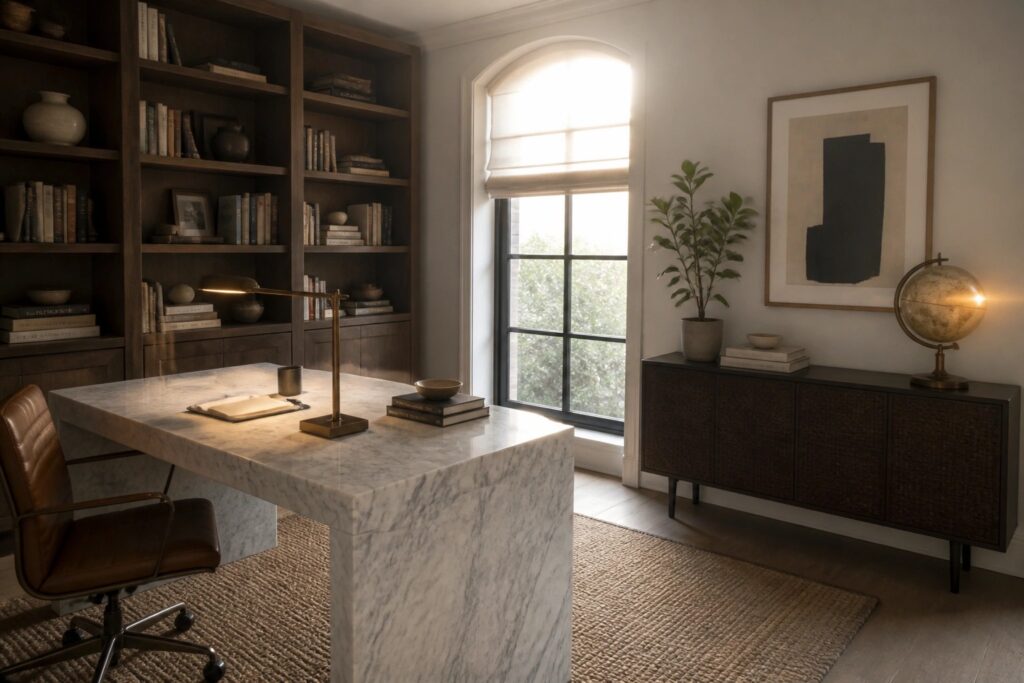
I have rearranged my own workspace more times than I can count, and the difference usually comes down to how the furniture relates to the windows and doorways.
When a desk faces the right direction, it changes how the whole room feels during long workdays, especially once the morning light shifts.
Small adjustments often make the biggest difference in daily comfort.
I notice that layouts which leave clear paths around the desk tend to keep the space from feeling closed in after a few hours.
A few of these approaches seem worth testing based on how my own office has evolved over time.
Marble Desks In Home Offices
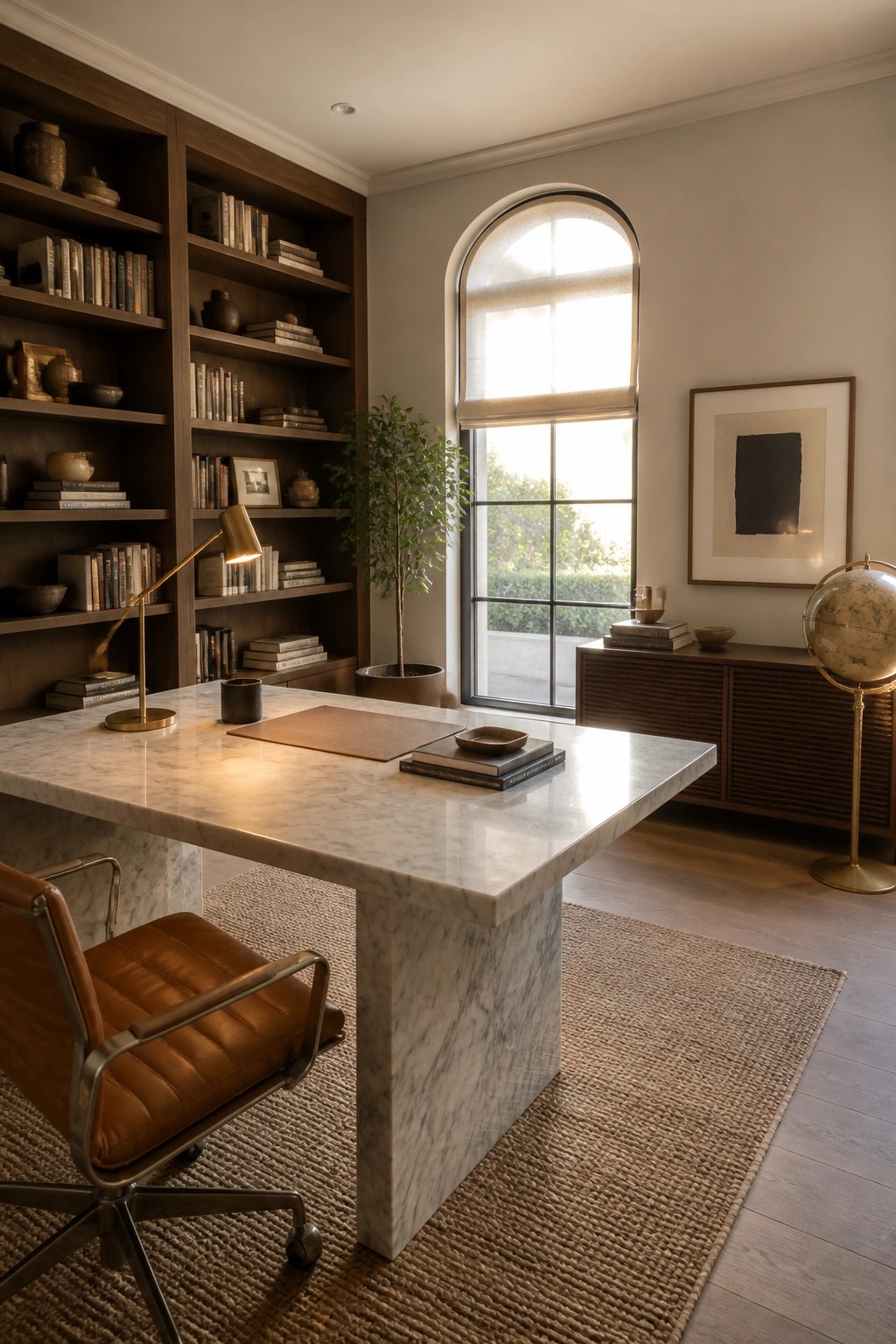
A thick marble desk gives a home office real weight without filling the room with extra furniture. The solid surface stays cool and clean, and the single base keeps the floor open so the space feels larger than it is.
This setup works best in rooms that already have built-in shelves or a strong window. It suits homes where the office needs to feel calm rather than busy, though the desk does need a rug underneath to soften the sound and the look.
Built-In Desks That Fit Small Spaces
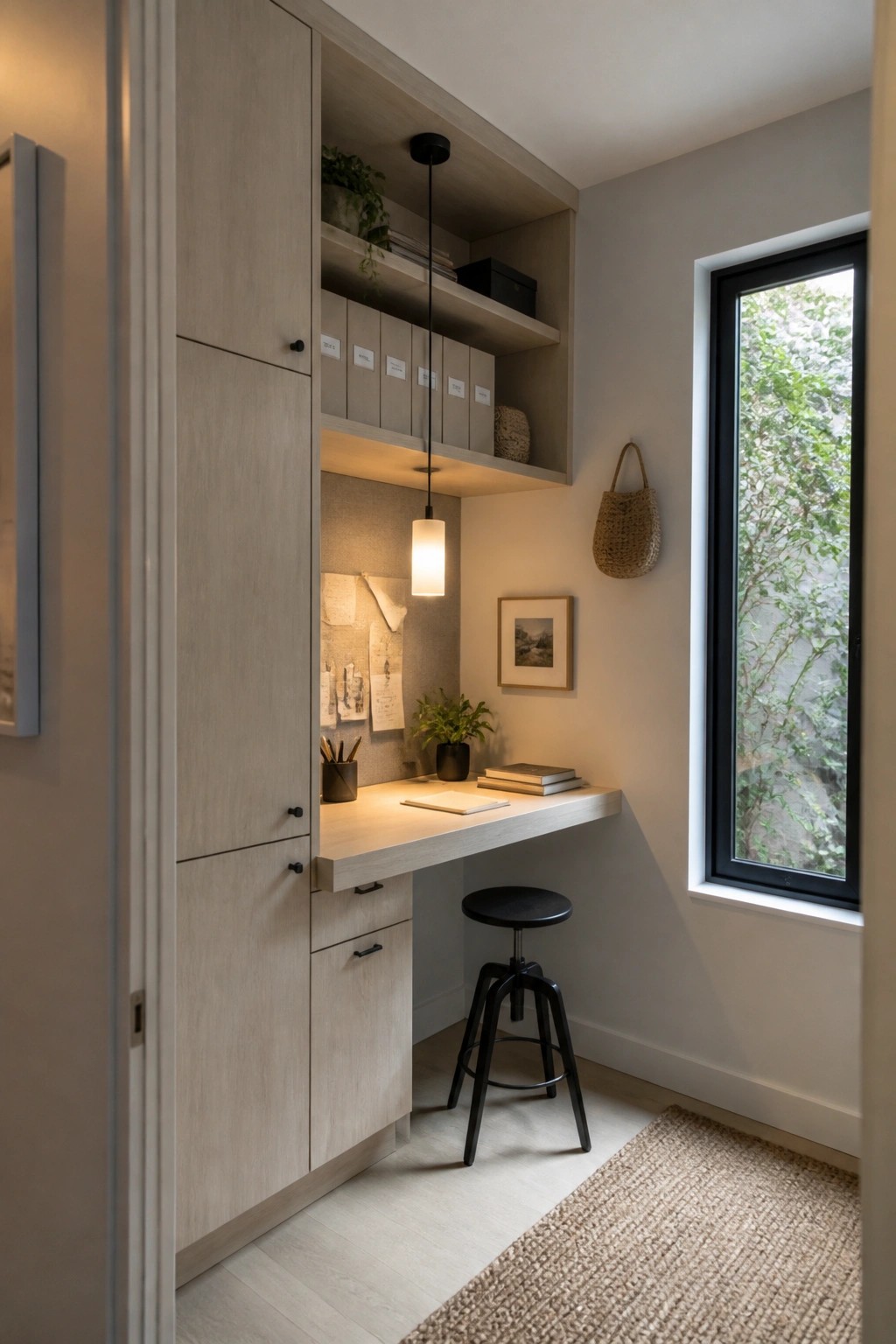
A built-in desk with overhead shelves and cabinet storage turns an awkward corner into a complete workspace. The desk surface stays clear because files and supplies stay hidden above and below, which helps the whole area feel more open.
This kind of setup works best in homes that lack a spare room for an office. It uses vertical space well and keeps everything in one spot, so you can close the doors and hide the work when the day is done.
Anchoring An Office With A Large Area Rug
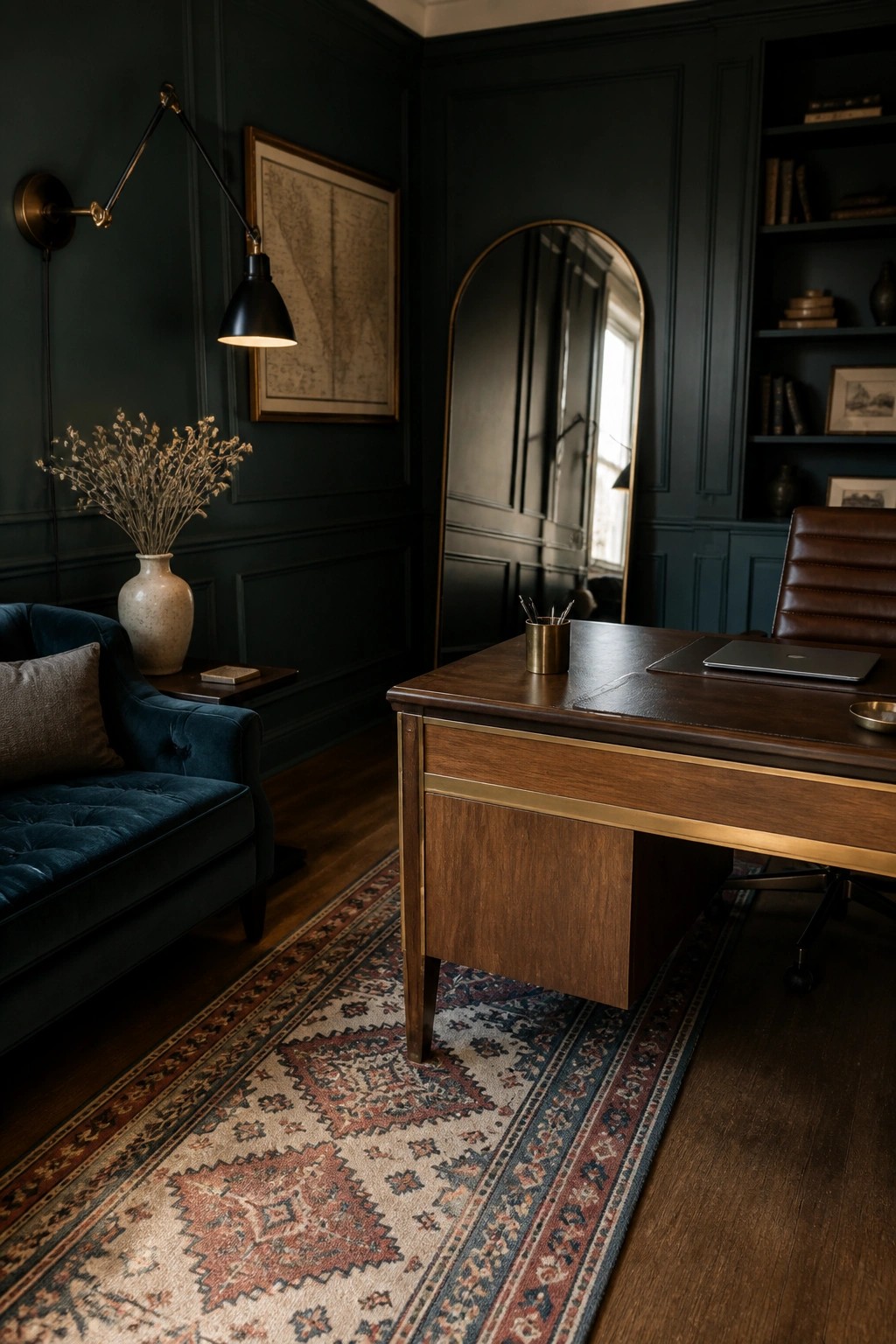
A large rug helps tie a desk and extra seating into one clear workspace instead of letting the pieces feel scattered. It also adds some softness underfoot and keeps the room from looking too stark when the walls are dark.
This works best in offices that need to handle both focused work and the occasional meeting or reading break. Make sure the rug is big enough to sit under the front of the desk and reach the sofa so everything feels connected rather than floating on the floor.
Built-In Desks That Maximize Window Space
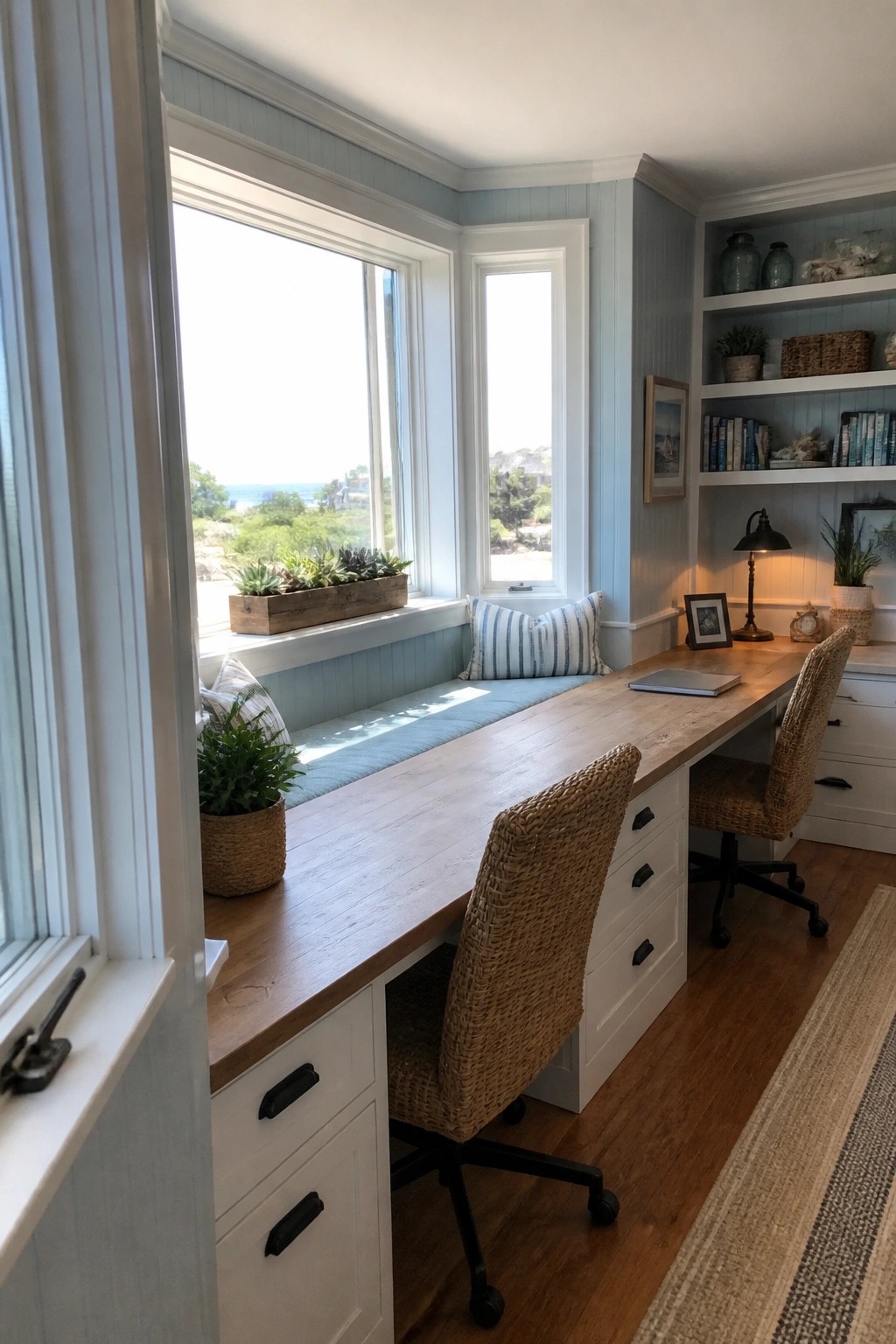
A built-in desk that follows the line of the windows gives you a long work surface without crowding the room. Cabinets below keep supplies tucked away, and the window seat on one side turns leftover space into something useful.
This layout works best in rooms where natural light matters for daily tasks. It suits smaller offices or homes that already have good views, since the desk faces outward rather than against a wall. Keep the surface clear so the light still reaches the rest of the room.
Leather Chairs With a Wooden Desk
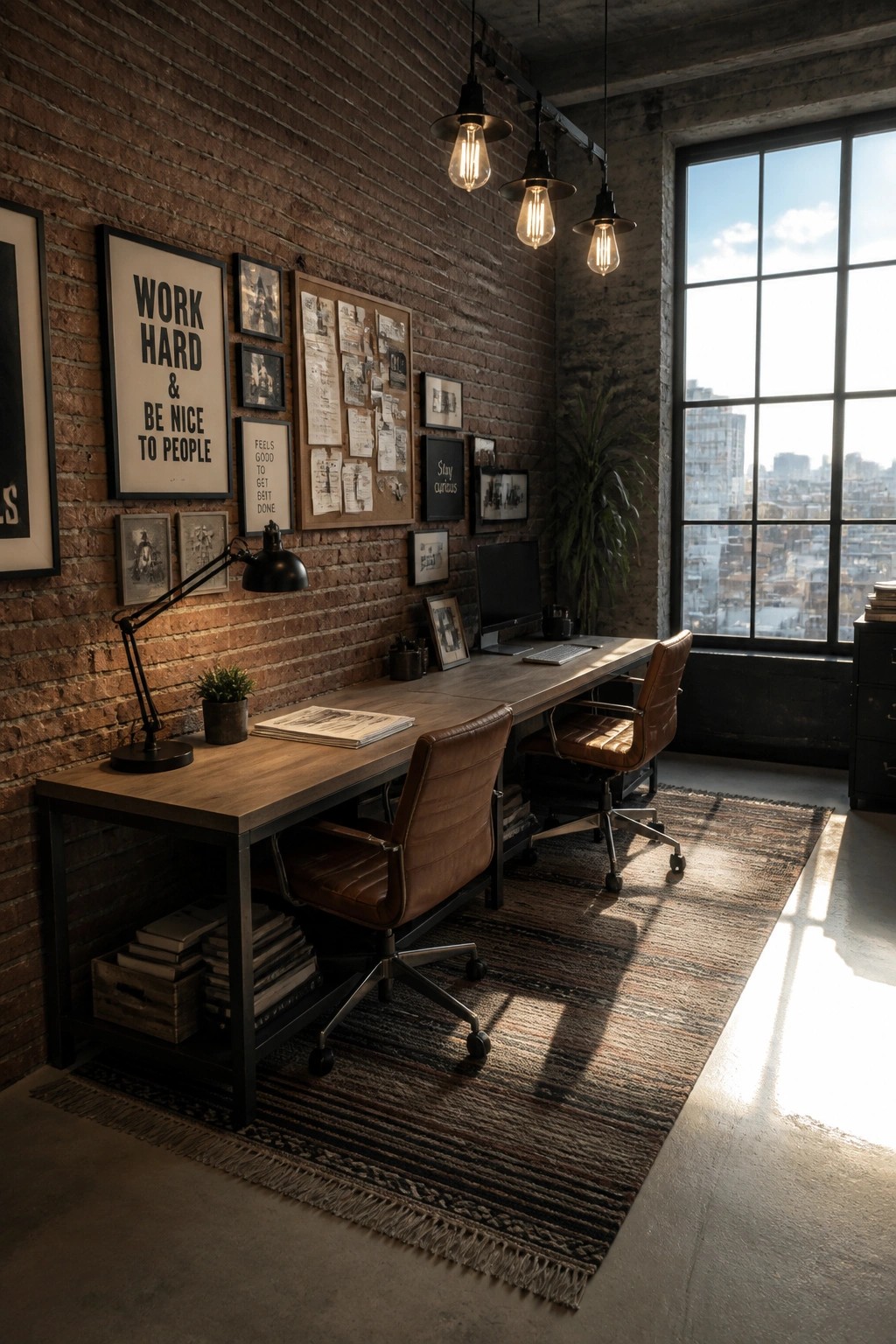
A long wooden desk paired with leather swivel chairs gives an office a solid, practical feel that holds up to daily use. The leather adds a bit of comfort and polish while the wood keeps everything simple and grounded, especially when set against a brick wall.
This setup works best in homes where the office needs to double as a guest spot or small meeting area. Keep the rug underneath so the chairs move easily, and leave some open space below the desk for storage bins or extra files.
A Central Island Gives A Home Office More Storage Room
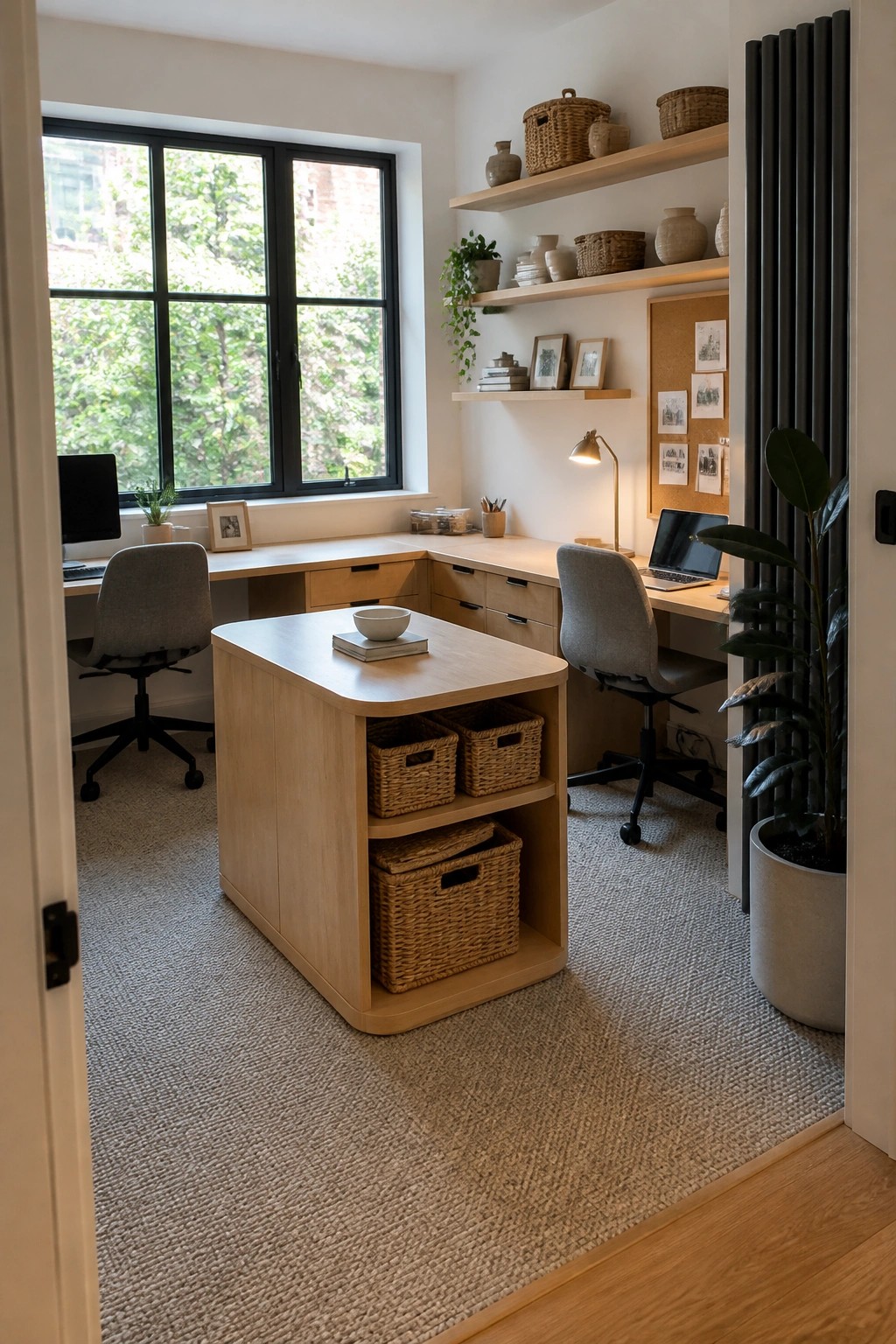
Many smaller offices end up with storage pushed to the edges, which leaves the middle of the room feeling empty and the desk surface cluttered. A low central island fills that gap with extra workspace while keeping everyday items close without adding more wall cabinets.
This layout works best in rooms that already have an L-shaped desk along the walls. Keep the island height close to desk level so it can serve as a second surface, and use open lower shelves for baskets that hold supplies you reach for often.
A Floating Desk Keeps The Floor Clear
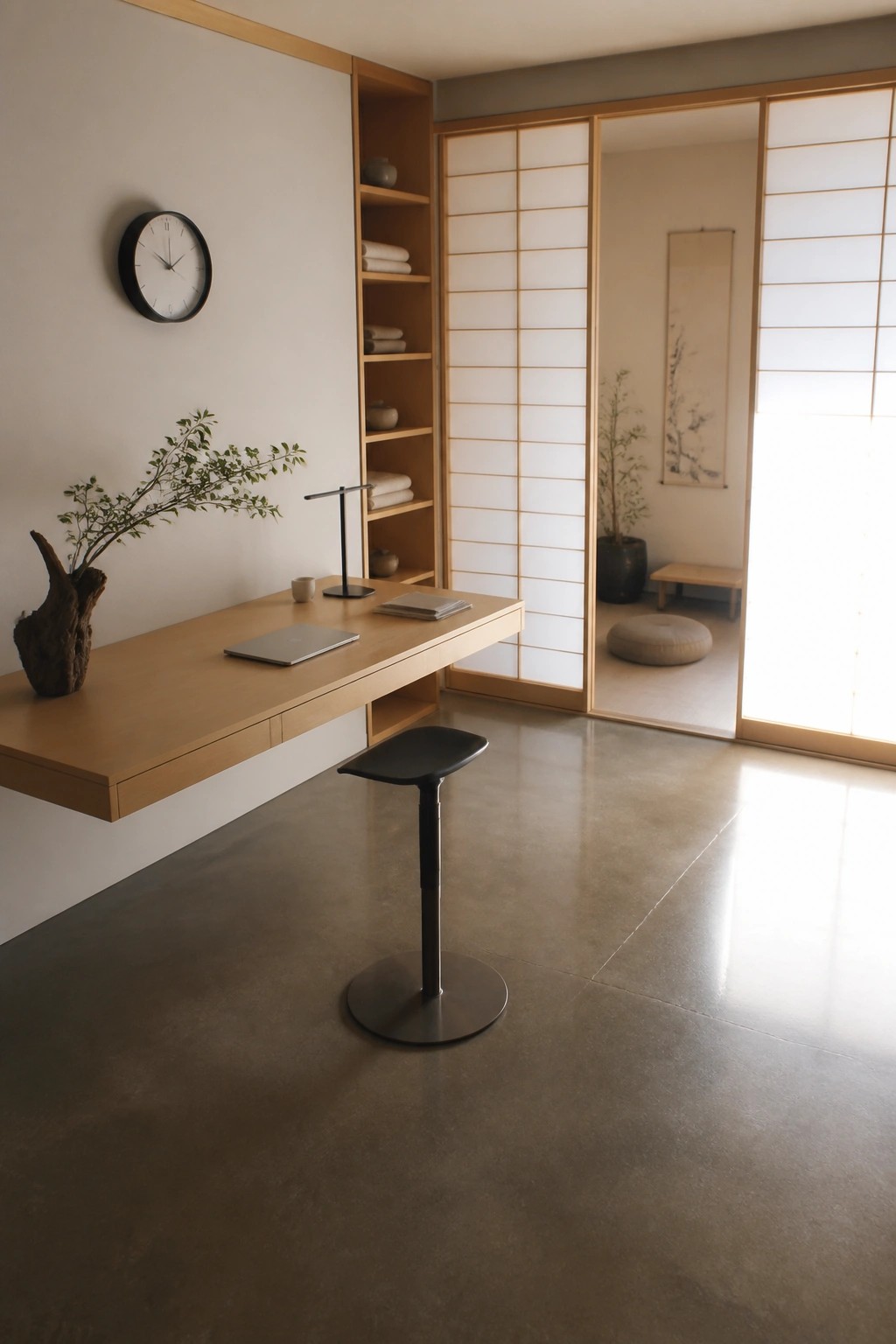
A floating desk works well because it removes the usual legs and base that crowd the floor. This leaves more open space underneath, which makes the room feel larger and easier to clean around.
It suits smaller homes or rooms that serve more than one purpose. Anchor it to a solid wall and pair it with a simple stool that can tuck away when not in use. Make sure the desk is mounted securely if you plan to store anything heavy on it.
Built-In Shelving With A Library Ladder
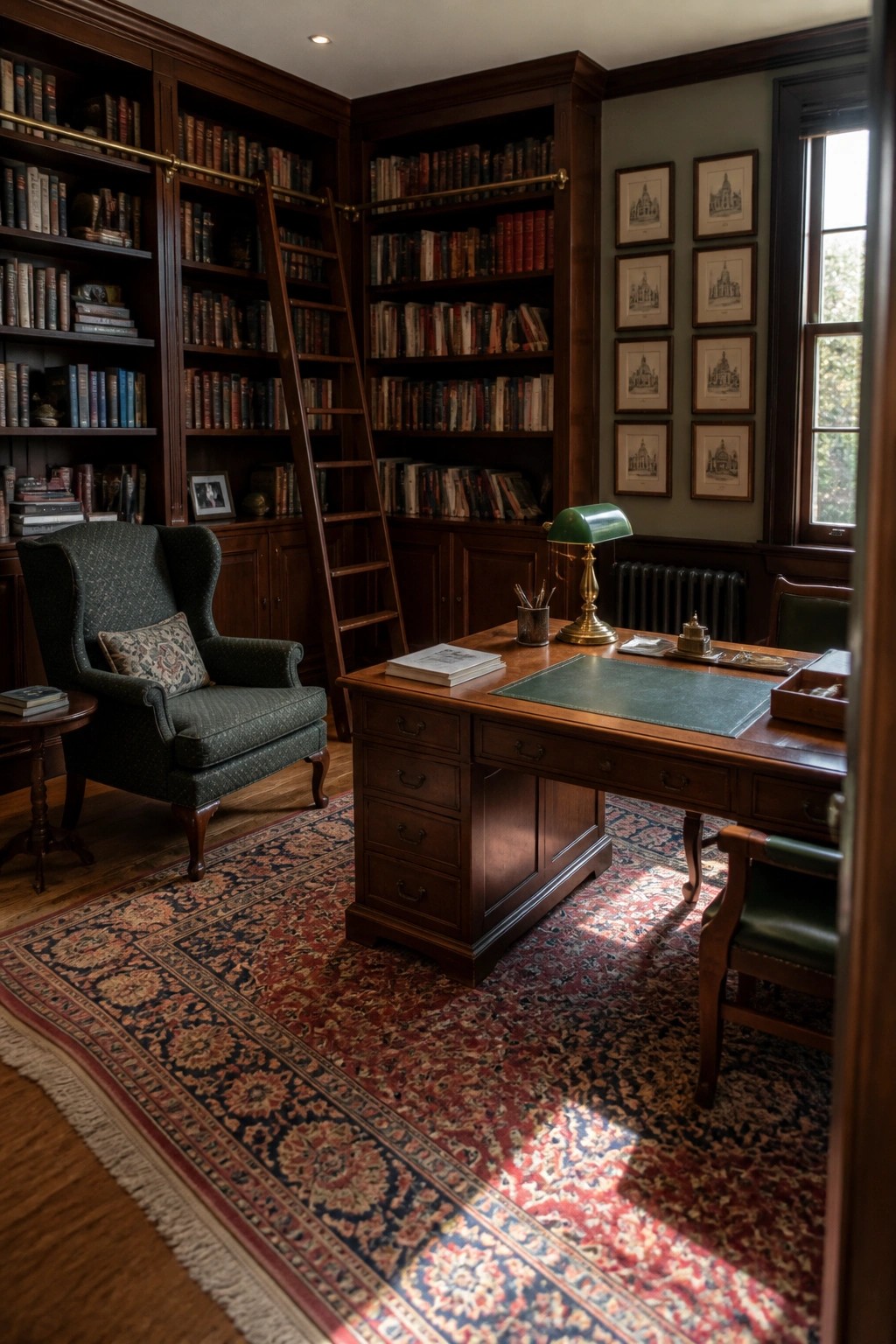
Built-in shelves that cover entire walls give a home office far more storage than freestanding bookcases ever could. The rolling ladder turns those high shelves into usable space instead of wasted area, and it keeps everything in one organized system rather than scattered across the room.
This approach works especially well in older homes or any office with tall ceilings and at least one solid wall. It suits people who keep a lot of books or reference materials and want the room to feel purposeful rather than temporary. Match the wood tone to the desk and trim so the built-ins blend in instead of standing out as separate pieces.
Built-In Storage Keeps The Desk Surface Clear
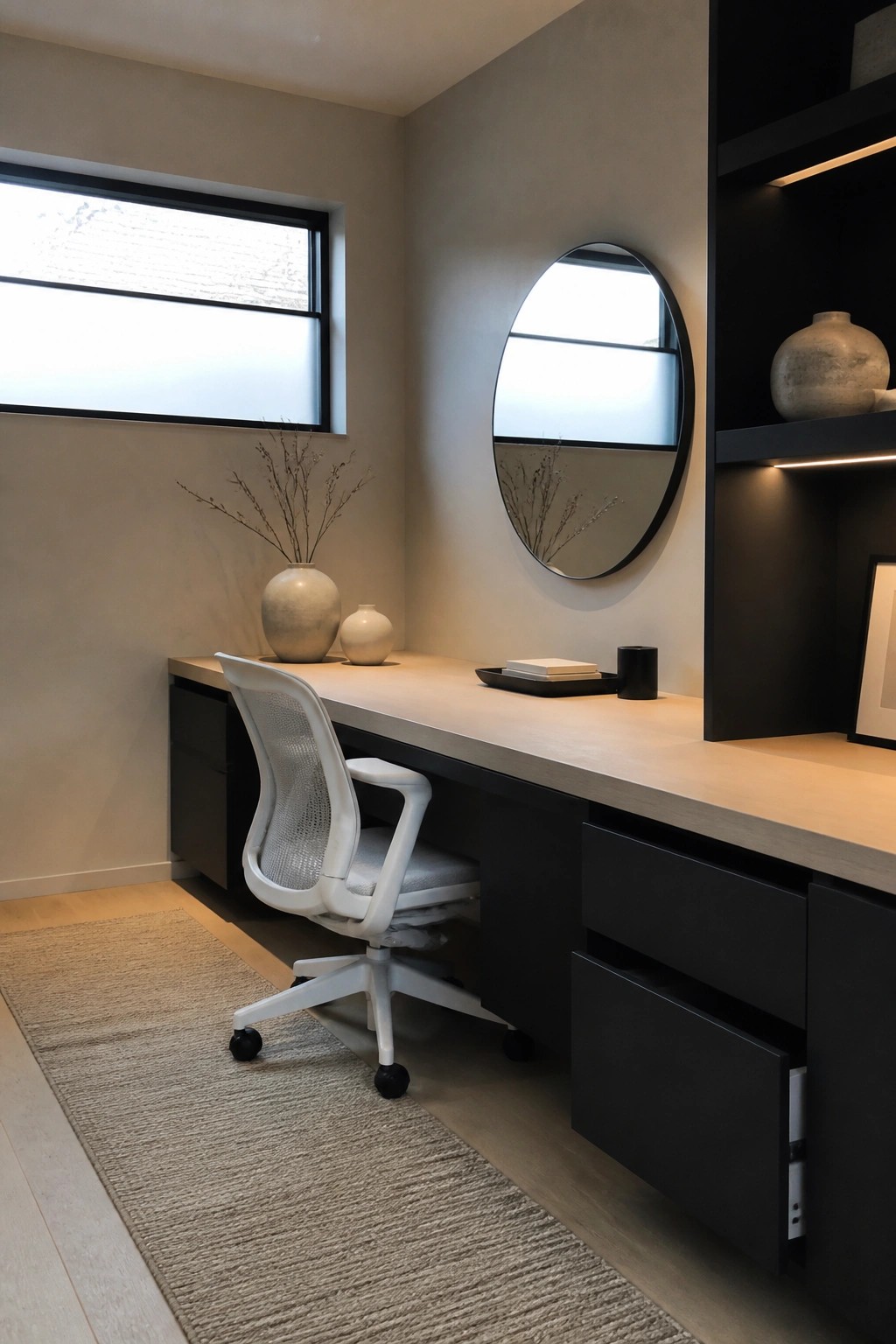
A long desk with cabinets and drawers built right into the base gives you plenty of room to store papers, supplies, and everyday items without crowding the top. This setup works well because it keeps the workspace feeling open while still offering real function. The dark cabinetry against lighter walls also helps the desk blend into the room instead of standing out as a bulky piece.
This approach suits smaller home offices or any space where you want to avoid extra furniture. Just measure your wall length first so the cabinet run fits without blocking windows or doors. Stick to a simple surface like wood or laminate on top and keep decor minimal so the storage does the main job.
Desk Placement By a Window
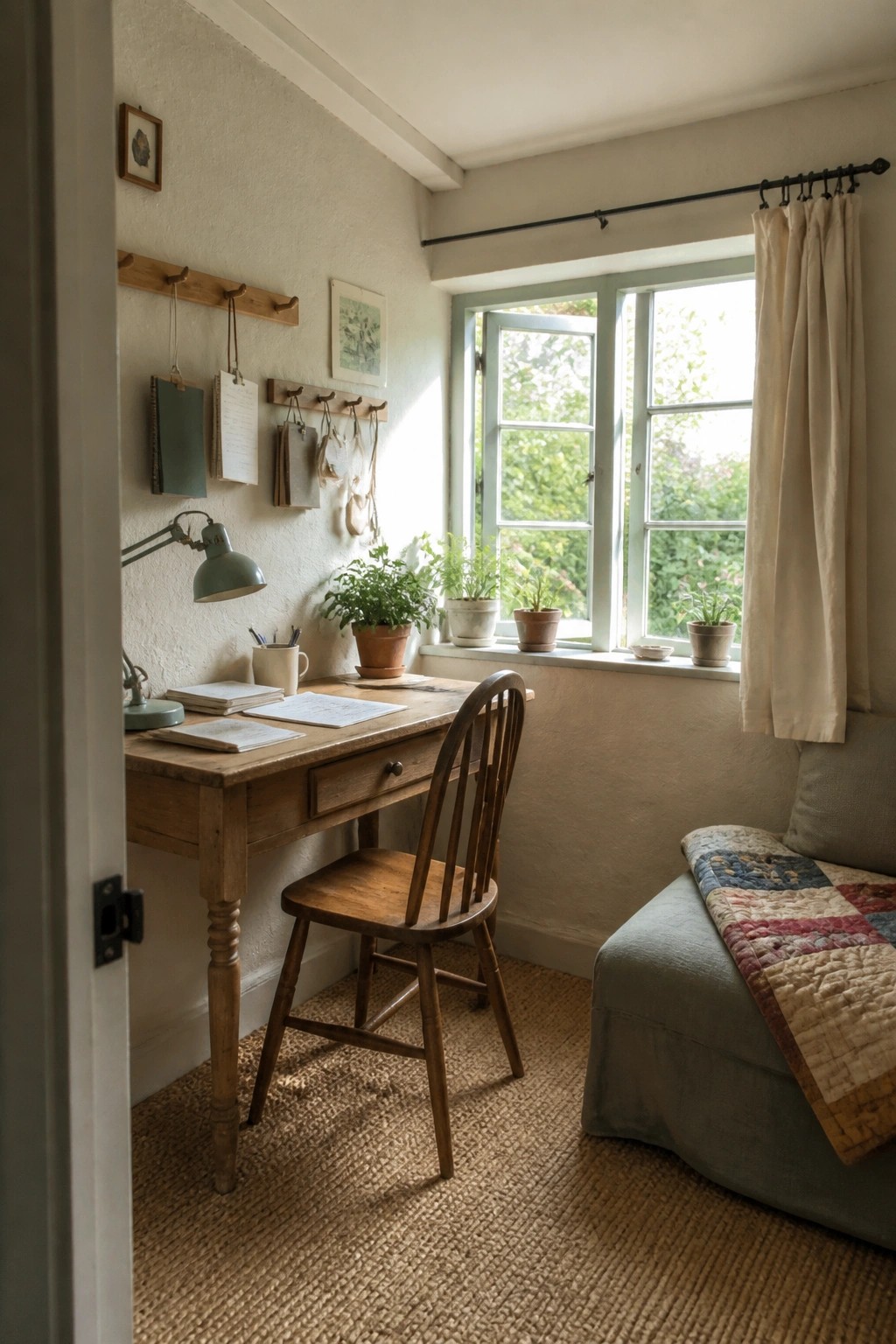
A desk set right by the window gives steady natural light that helps keep the space from feeling closed in. It also turns the view into a quiet break during long work hours, which makes the room feel more balanced overall.
This layout works best in smaller homes or spare rooms where you need both focus and a spot to step away. Keep the desk simple and low so the light stays the main feature, and add just a few plants on the sill if you want a bit of green without crowding the surface.
Use A Mirrored Desk In Your Office
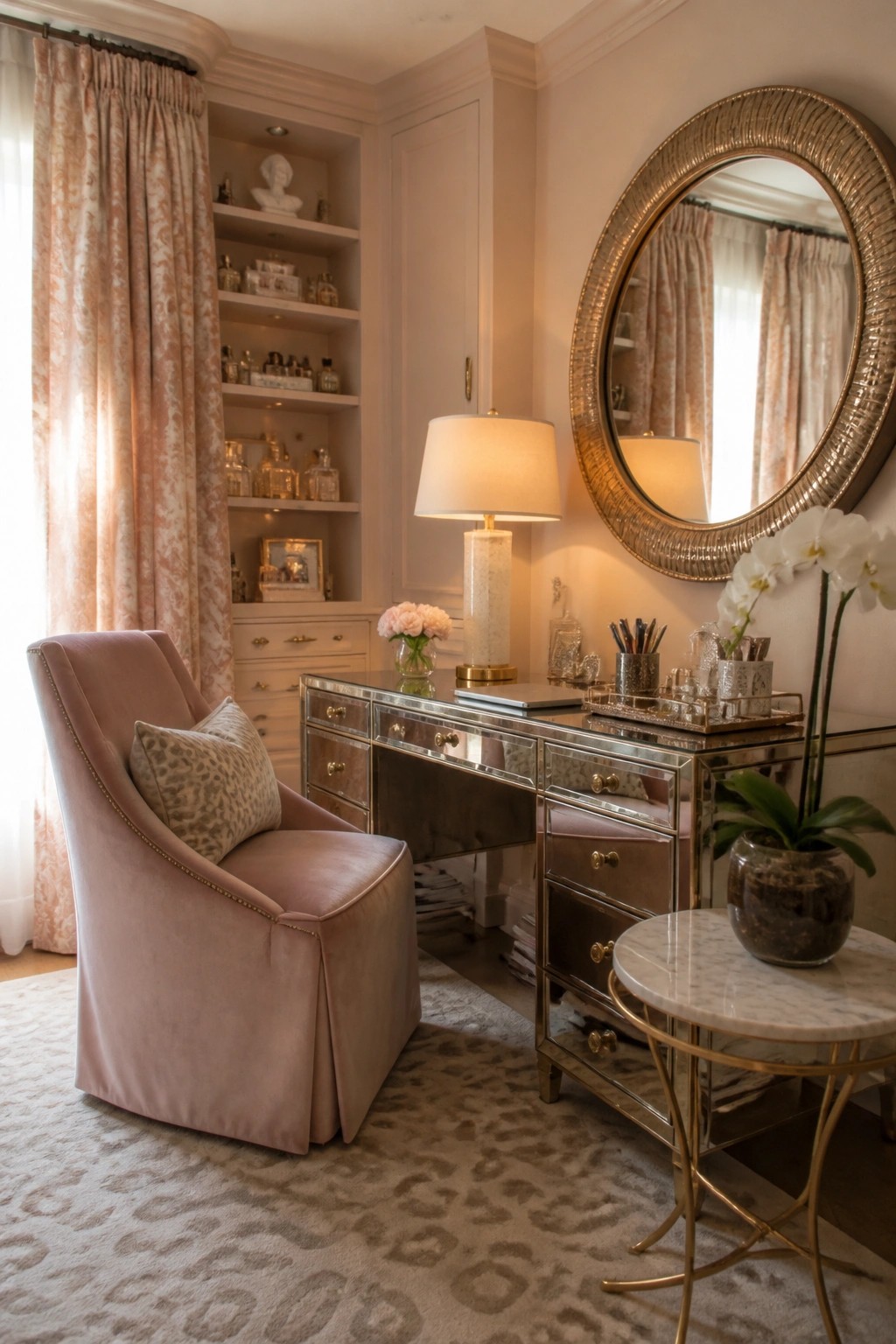
A mirrored desk adds light and a sense of space to a home office without taking up extra room. It also gives you plenty of drawers for keeping papers and supplies out of sight while still looking polished.
This setup works best in smaller rooms or spaces that need to feel brighter. Pair the desk with a comfortable upholstered chair so the area feels inviting enough to sit and work for longer periods.
Use A Ladder Shelf For Vertical Storage
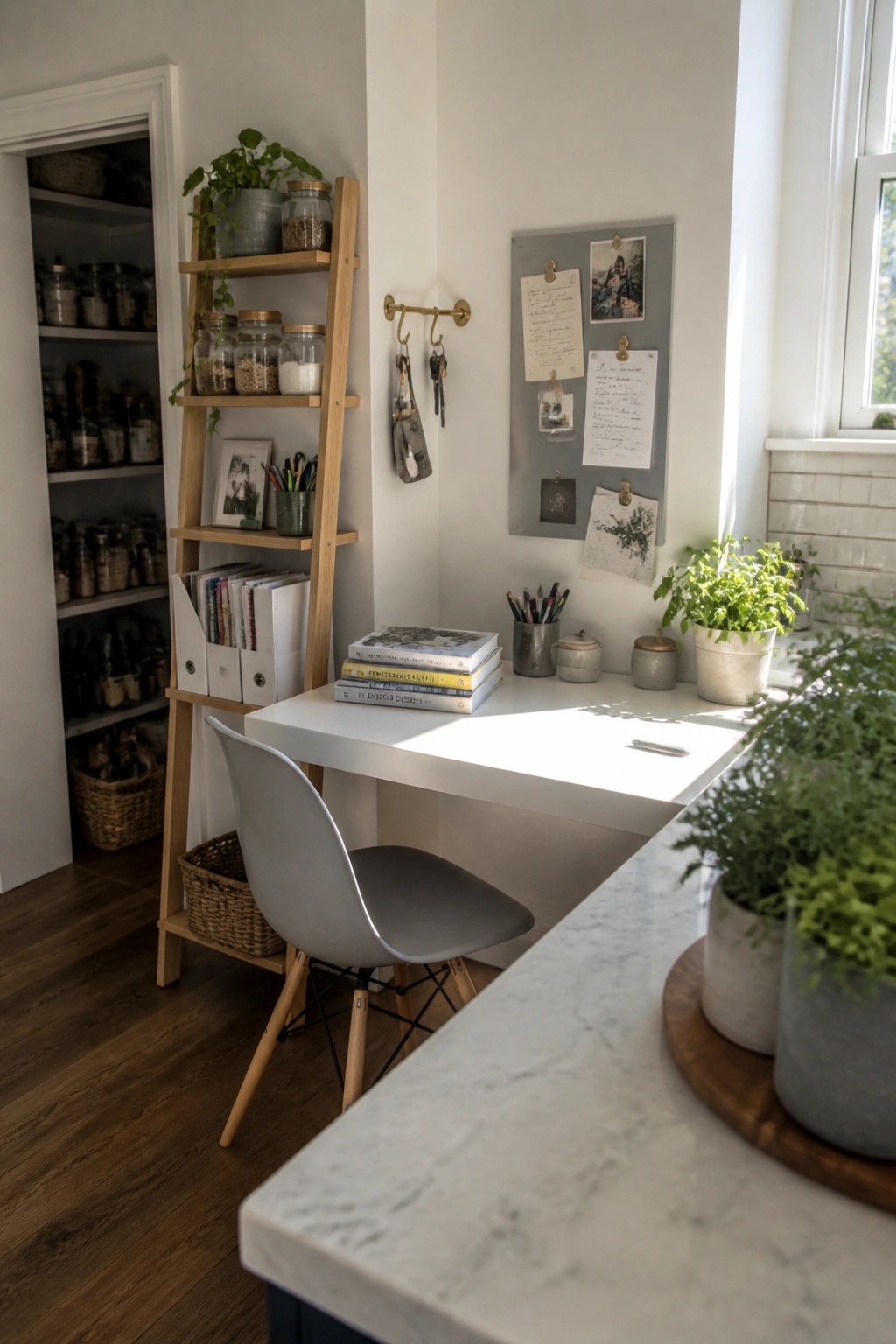
A ladder shelf next to a small desk gives you useful storage without taking up much floor space. The open shelves hold everyday items while the desk surface stays clear for actual work.
This setup works well in homes that need an office in a leftover corner or narrow room. Keep the shelf lightly loaded so the area stays airy and easy to move around in.
Positioning Your Desk Under A Window
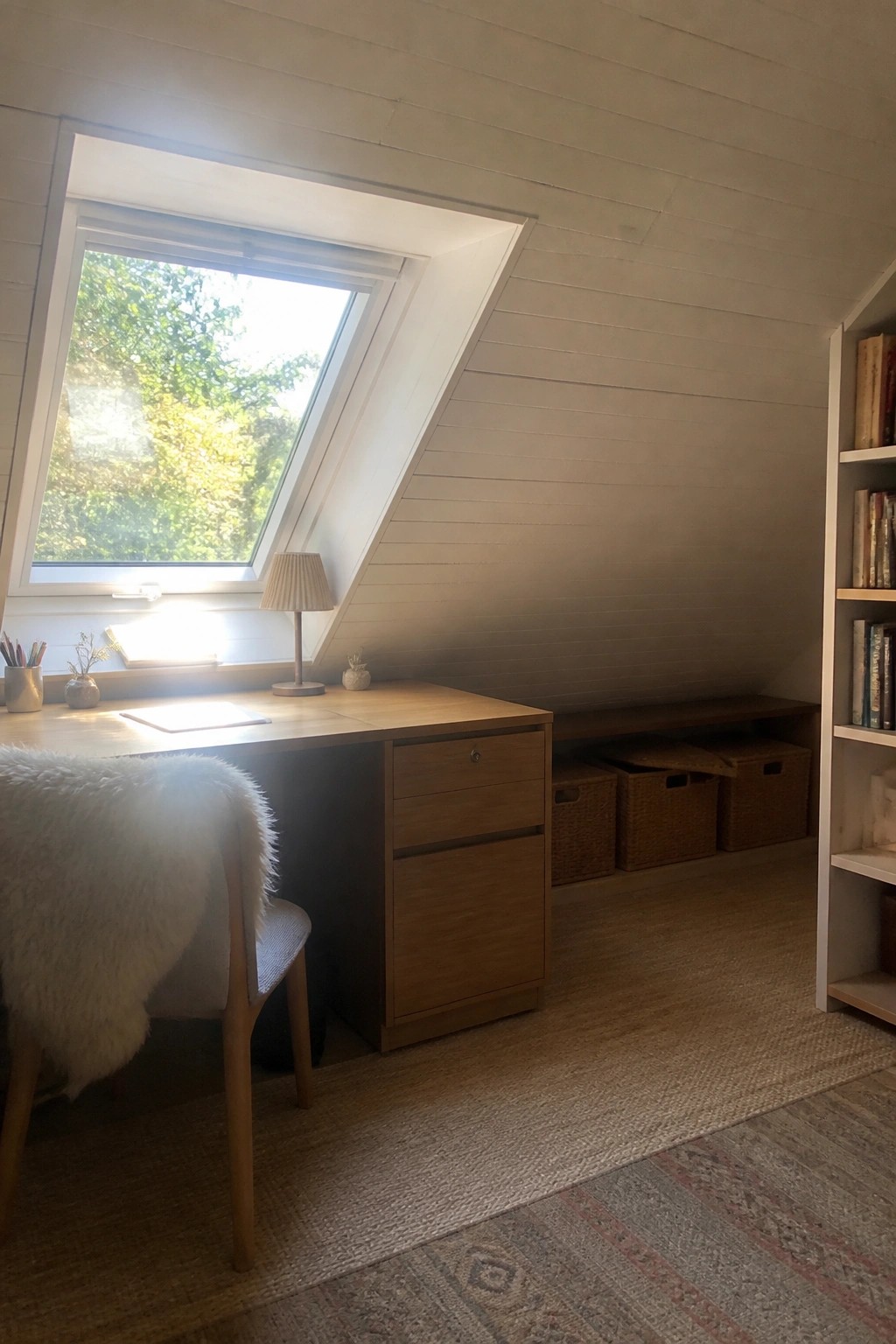
Placing the desk directly under a window brings steady natural light onto the work surface without needing extra lamps during the day. This setup works especially well in rooms with angled ceilings where wall space feels limited.
It suits small home offices or attic rooms where you want the space to feel open rather than closed in. Keep the surrounding storage low so it does not block the light or make the area feel crowded.
Use a Large Rug to Anchor the Desk
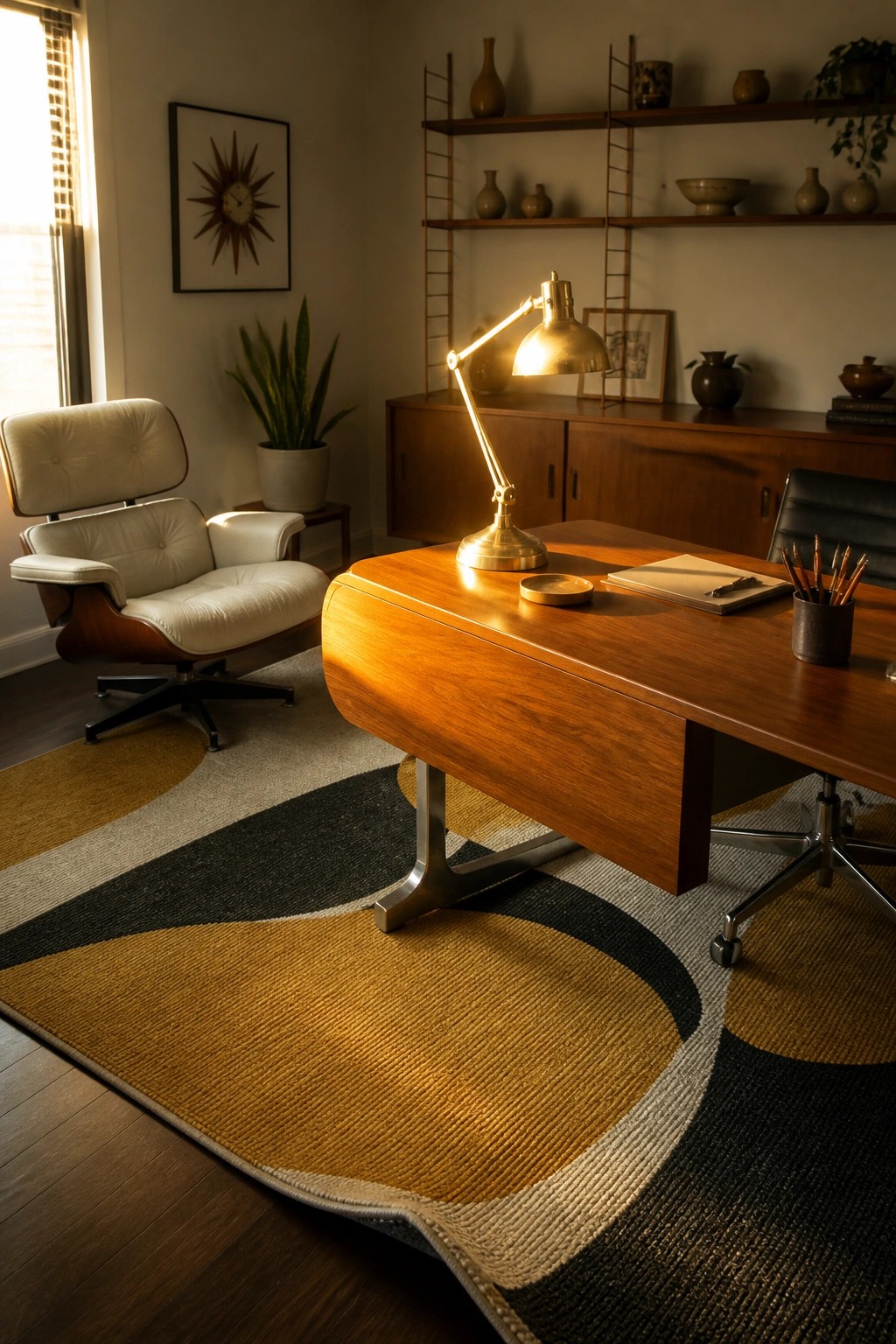
A large patterned rug gives the desk a clear place to sit and keeps the whole setup from feeling scattered across the floor. It adds some softness underfoot while making the work area feel separate from the rest of the room.
This approach works best in home offices with hard flooring. Choose a rug that is big enough for the desk and chair to stay fully on it during normal use, and keep the pattern simple enough that it does not fight with the rest of the furniture.
Create a Workspace Inside a Closet
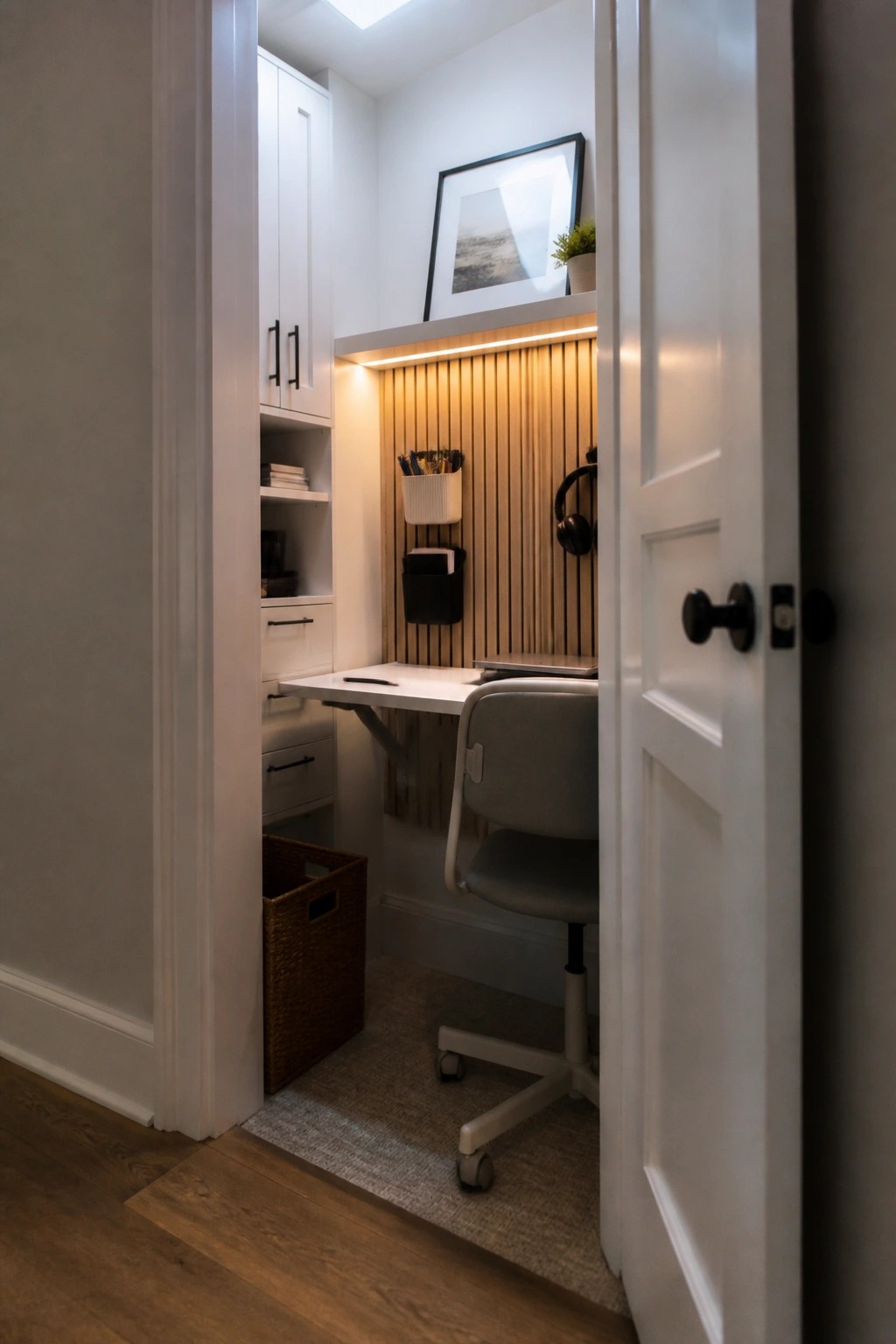
A small closet can become a useful spot for focused work when space is tight. A wall-mounted desk that folds down keeps the area clear when it is not needed, while shelves and hooks above handle supplies without adding clutter. This setup works especially well in apartments or homes where a full room is not available.
It suits anyone who wants separation between work and living areas without major construction. Look for a sturdy bracket system and good lighting so the space feels practical rather than cramped. A simple rug on the floor helps define the area and makes the chair more comfortable for longer sessions.
Bring A Living Wall Into Your Office
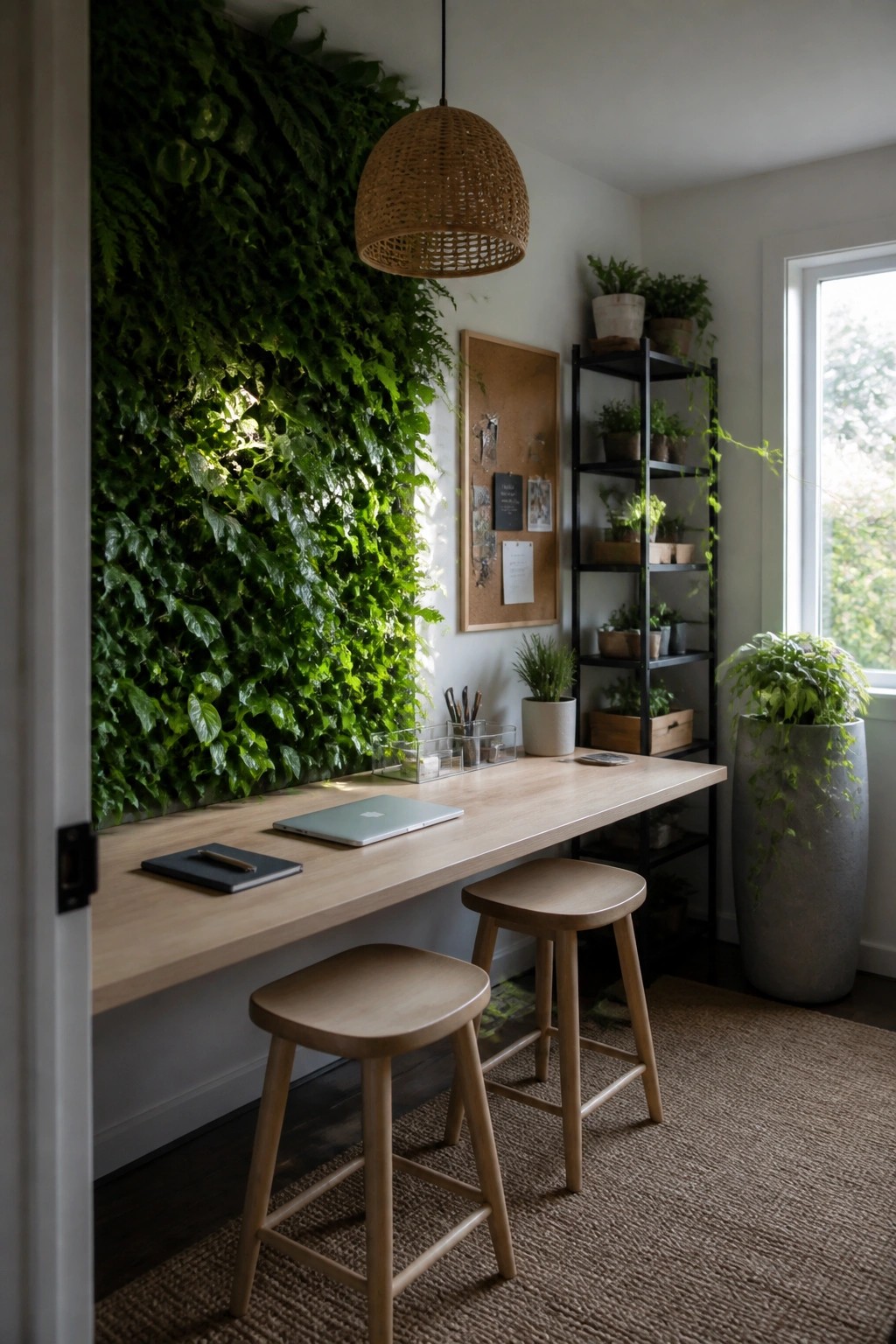
A living wall behind the desk adds real greenery without taking up floor space. It turns the workspace into something calmer and more connected to nature, which many people find helps them stay focused during long hours.
This idea works best in rooms that get decent natural light. Keep the desk simple so the plants stay the main feature, and choose a wall system that makes watering easy to manage over time.
Built-Ins Keep A Home Office Organized
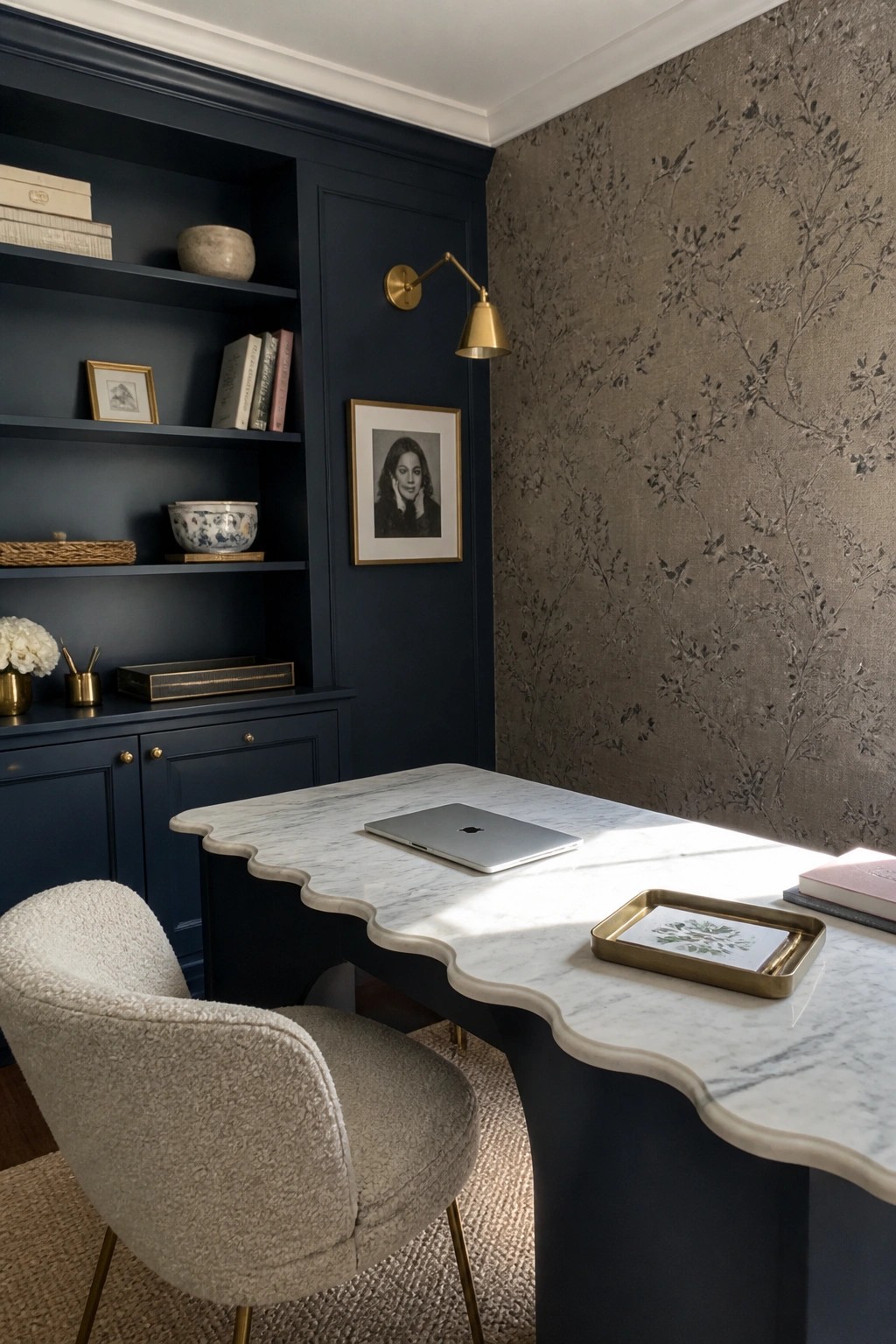
Built-in shelving and cabinets painted to match the walls give a home office a clean, settled look without crowding the room. The storage stays out of the way yet holds everything from books to supplies, so the desk can stay clear for actual work.
This setup suits smaller rooms or any space where you want things to feel calm rather than busy. Keep the built-ins simple and let the desk surface carry the main material interest.
Built-In Desks For Narrow Spaces
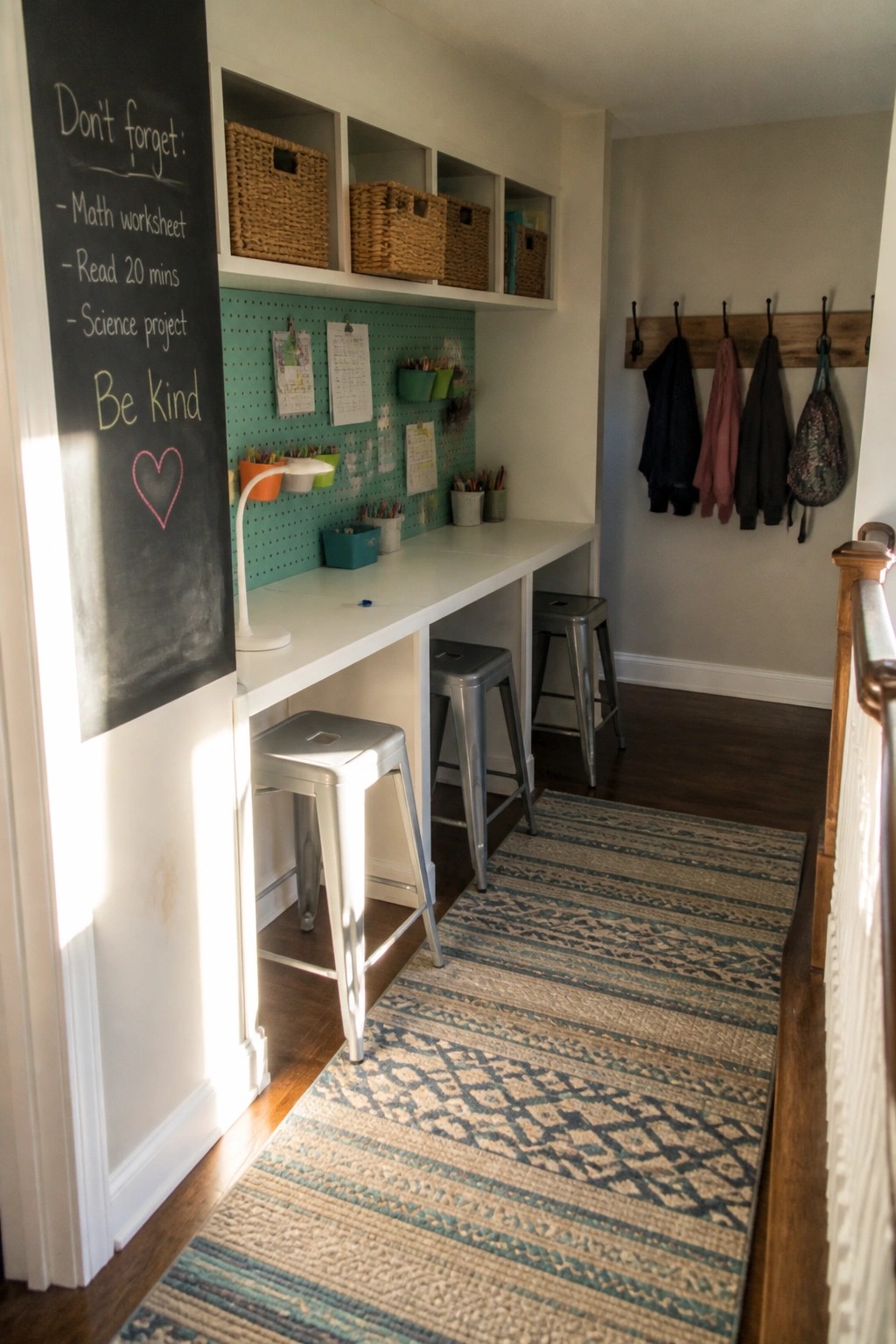
Running a long built-in desk along a hallway or entry wall gives you a workspace without dedicating an entire room. It turns leftover space into something useful while keeping the main living areas clear.
This works best in homes that need flexible spots for homework or light work. Add simple wall storage like shelves and a pegboard so supplies stay organized and within reach. Make sure any stools slide fully under the desk so the walkway stays open.
Positioning Your Desk By A Window
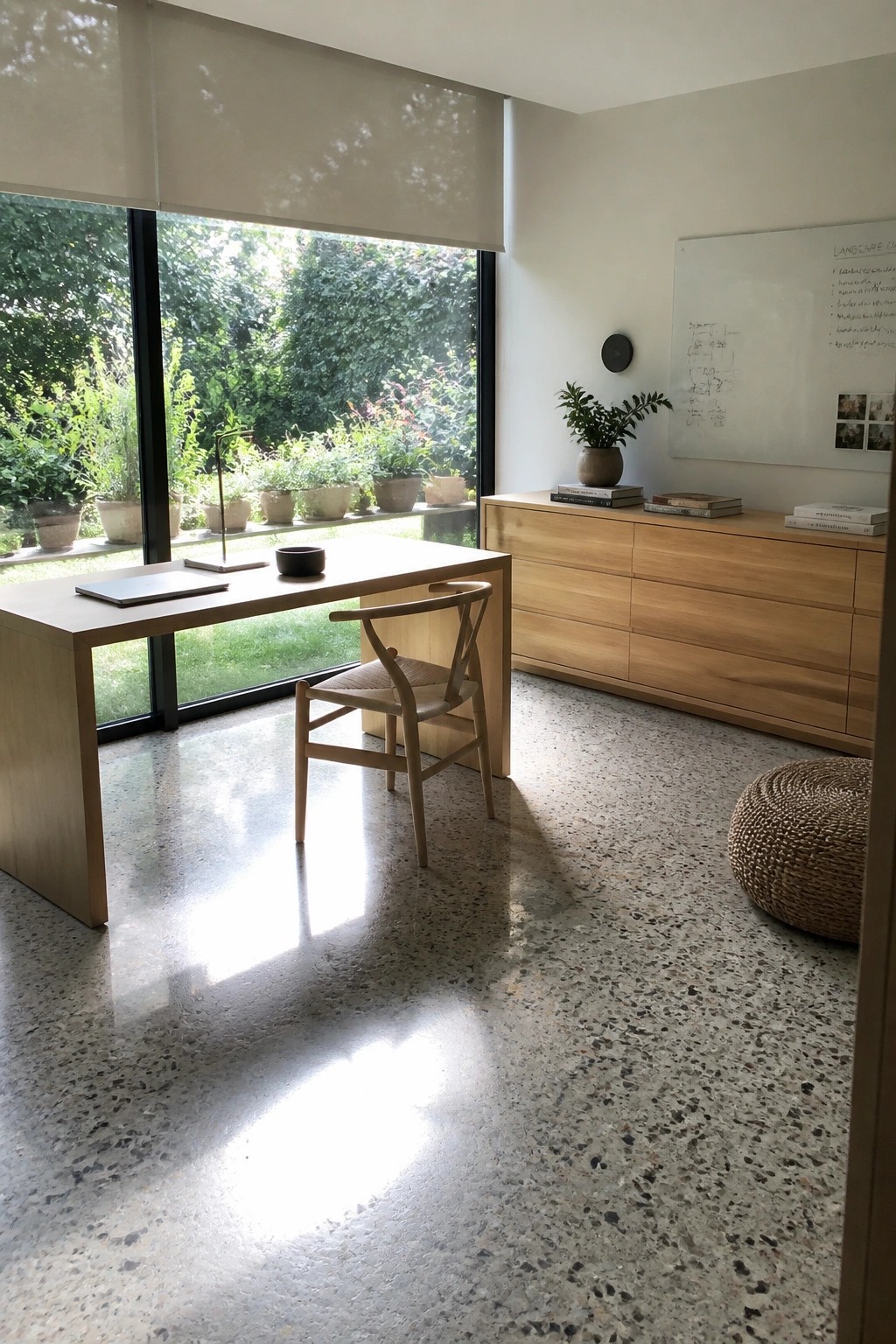
Placing the desk right next to a large window changes how the whole room feels during the day. Natural light reaches the work surface without needing extra lamps, and the view outside keeps the space from feeling boxed in. Many people find they stay more focused when the room stays connected to what is happening outdoors.
This works best in homes where the window looks out on something calm like trees or a garden. Keep the desk surface fairly clear and choose a lower profile chair so the light can still move across the room. It suits smaller offices where you want the space to feel bigger without adding more furniture.
A Long Table Works Well as a Desk
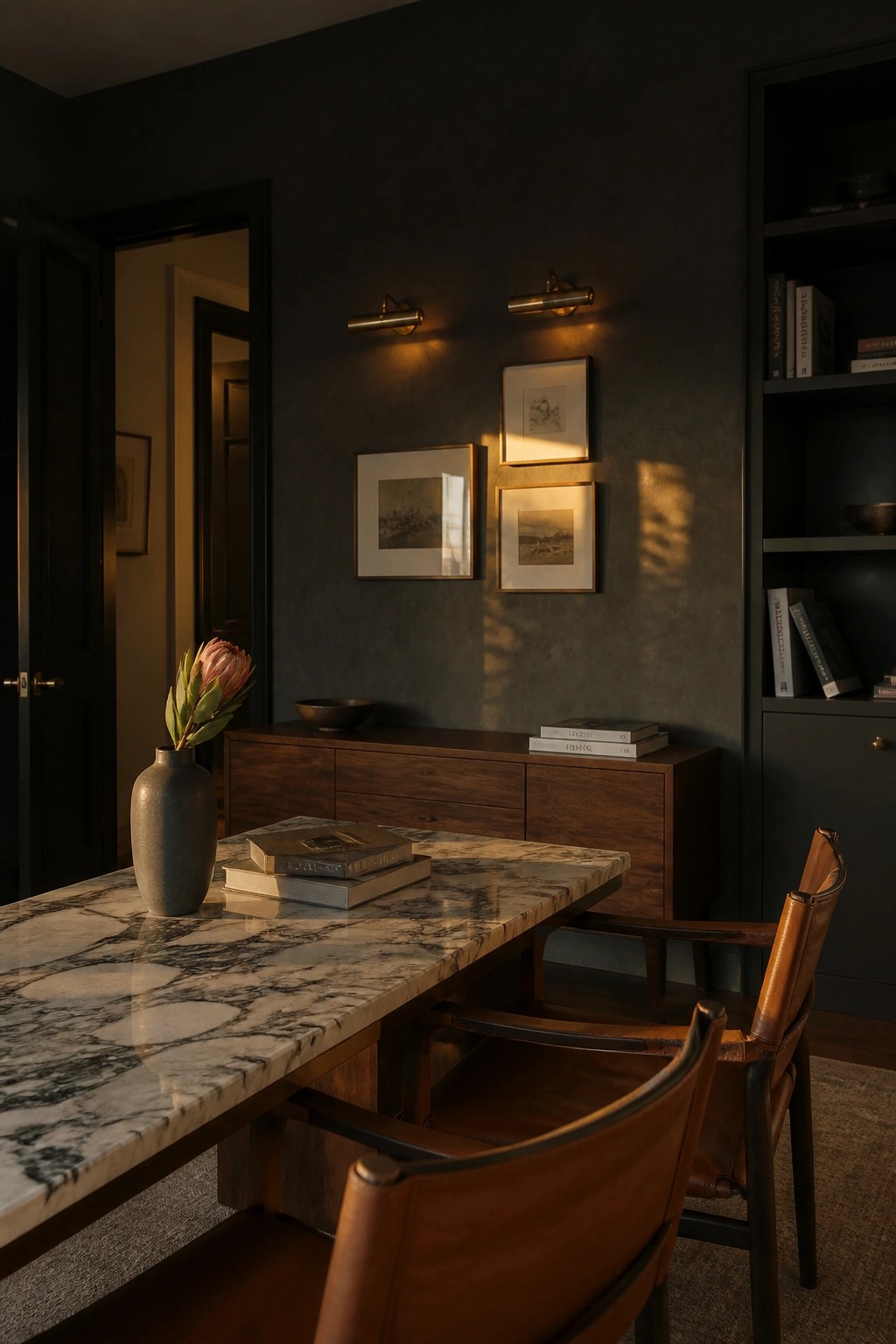
A long table gives you more usable surface than most standard desks. It handles stacks of papers, multiple devices, or reference books without crowding the space, and the solid top keeps everything feeling steady during long work sessions.
Place a low storage piece along the wall behind it for files, books, and supplies. This setup works best in a room that already has some depth, where the table can sit away from the wall without blocking traffic. Dark paint on the walls helps reduce glare and keeps the focus on the work rather than the furniture.
Soft Green Walls Help Create A Calmer Home Office
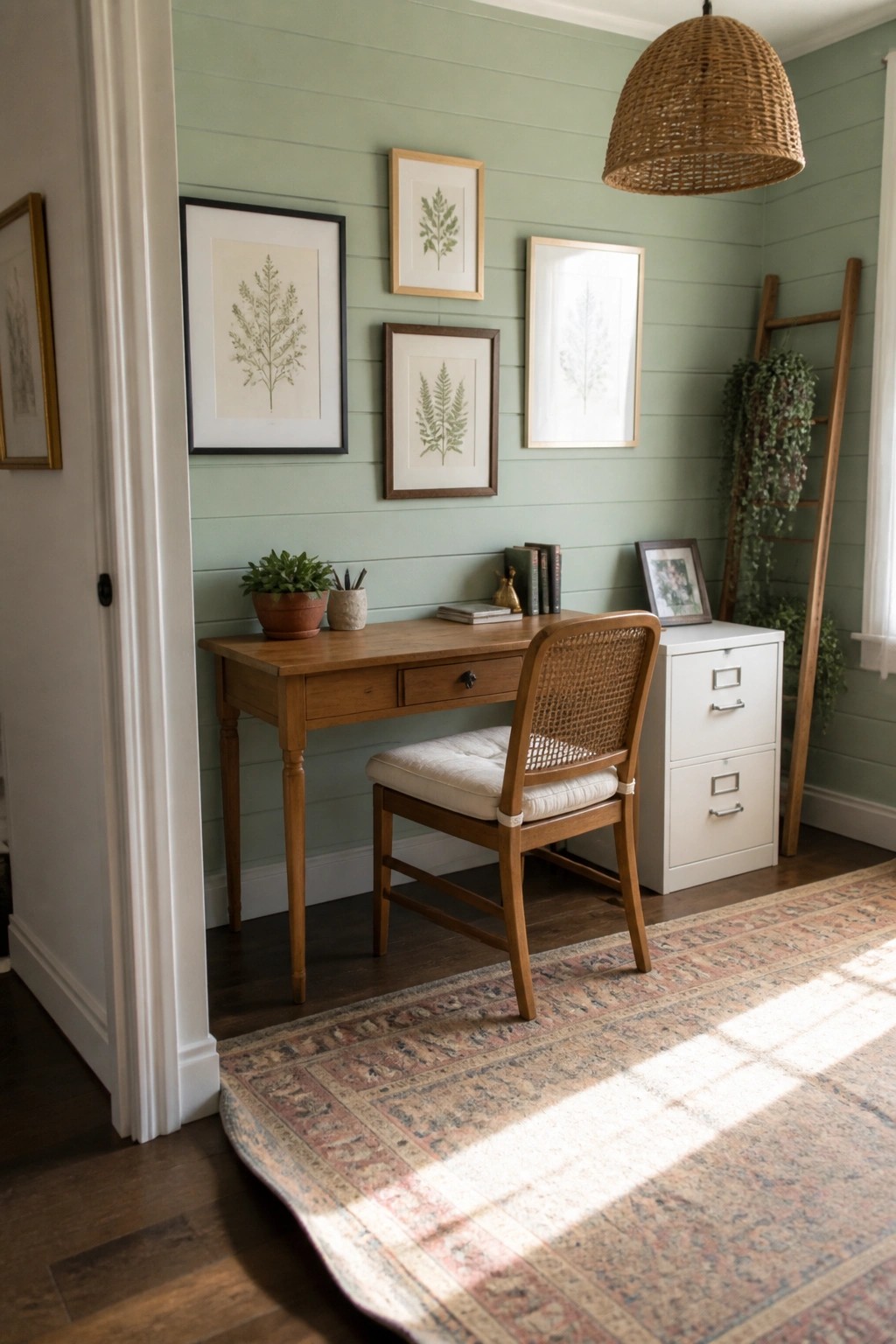
A soft green on the walls can make a home office feel much less like a work zone and more like a place you actually want to sit in for hours. The color stays quiet enough not to distract, yet it still brings a gentle outdoor feel that helps the space feel less closed in.
This works especially well in smaller rooms or spaces that double as something else during the day. Keep the furniture simple, add a few botanical prints, and let the wall color do most of the work. Just watch that the green does not lean too cool or it can start to feel chilly under certain lighting.
Built-In Desks For Compact Spaces
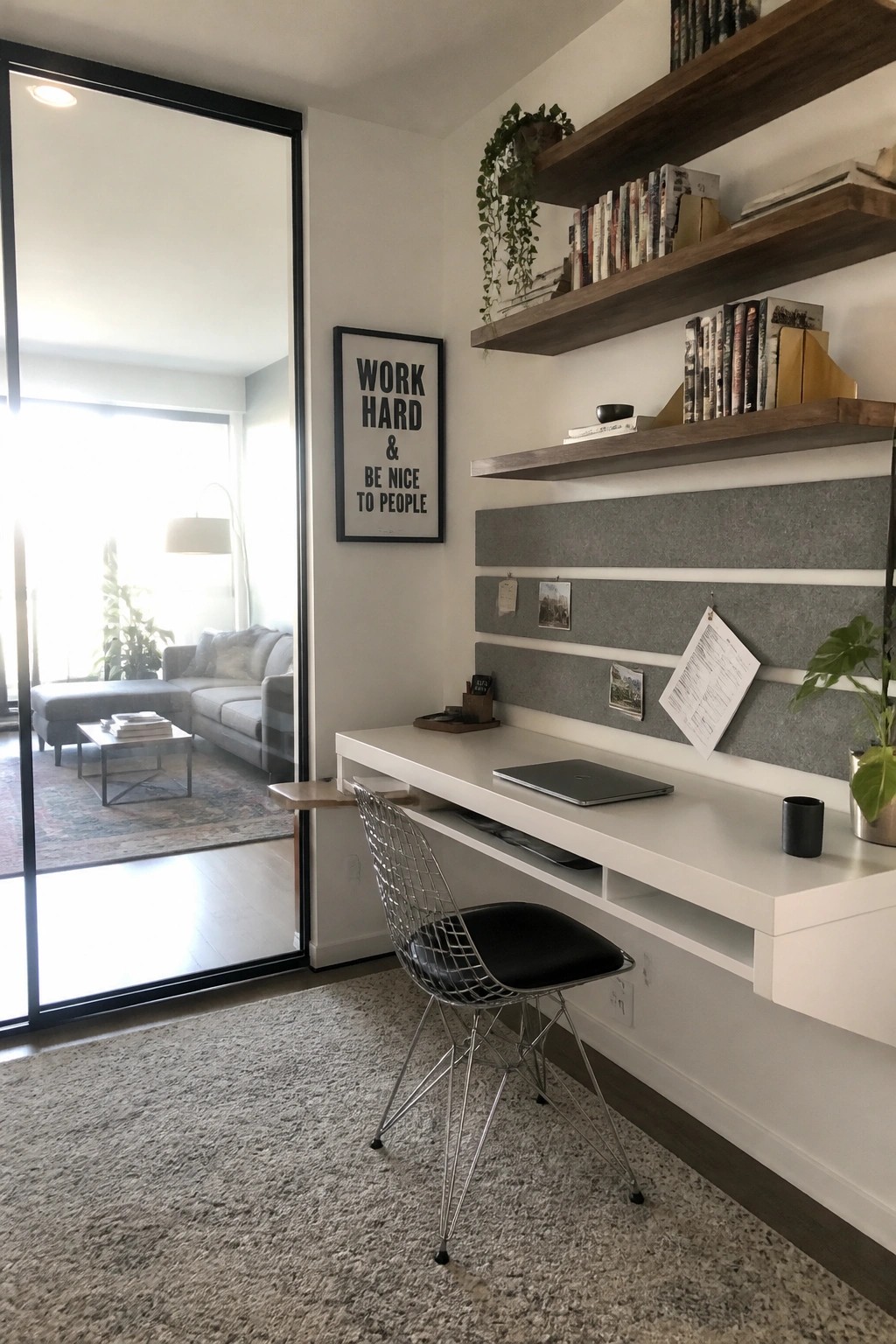
A built-in desk along one wall gives you a full workspace without eating up floor space. The shelves above keep books and supplies handy while the desk surface stays clear for daily work.
This kind of setup fits best in apartments or homes where the office shares a room with living areas. Mount it at a comfortable height and use the wall behind for notes so the whole station stays organized.
Frequently Asked Questions
Q: How do I pick the right layout from all 22 options? A: Look at your main tasks first. Pick a setup that puts those tools within easy reach. Then live with it for a few days before deciding if it clicks.
Q: What if my room has awkward corners that none of the ideas seem to fit? A: Angle your desk to make use of that odd spot. It can turn into a quiet nook for focused work. Add a slim shelf above it to keep things tidy.
Q: How soon will I notice a change in my workflow? A: Most people feel it within a few days. Keep notes on what slows you down so you can adjust fast.
