

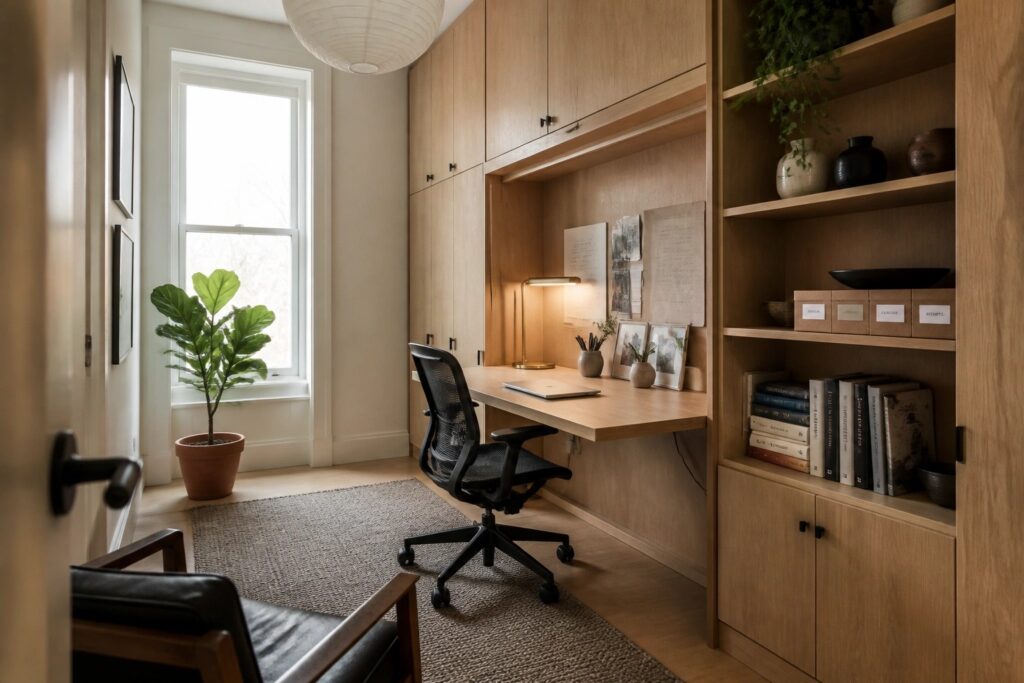
I’ve found that an office area only feels workable once the desk placement and storage actually match how I move through the day.
Small shifts in lighting and chair position often make a bigger difference than any big furniture swap.
Layout matters more than it seems at first.
Many setups look balanced in photos but end up creating tight spots when I need to grab files or stretch during a long call.
Trying out a few of these ideas in my own space helped me see which ones keep the room feeling open without adding extra clutter.
Placing The Desk Near A Window For Steady Natural Light

Natural light changes how a workspace feels during the day. Setting the desk right beside a window lets sunlight move across the surface without needing extra lamps for most hours. The result is a steadier, calmer feel that makes long stretches at the desk less tiring.
This setup works best in rooms that already get decent daylight and where the view outside is not too busy. Keep the window treatment simple so you can adjust glare without losing the light. In smaller homes or apartments it often turns a basic corner into the most usable spot for focused work.
Sawhorse Legs Keep A Desk From Feeling Heavy

A desk with sawhorse legs leaves the floor open underneath. This makes the workspace feel less blocked and easier to move around, which helps the room stay calm even when the desk itself is fairly large.
This approach works best in lofts or rooms with tall ceilings and big windows. It suits people who want a solid work surface without the visual weight of cabinets or thick side panels.
Low Tables For A Grounded Workspace
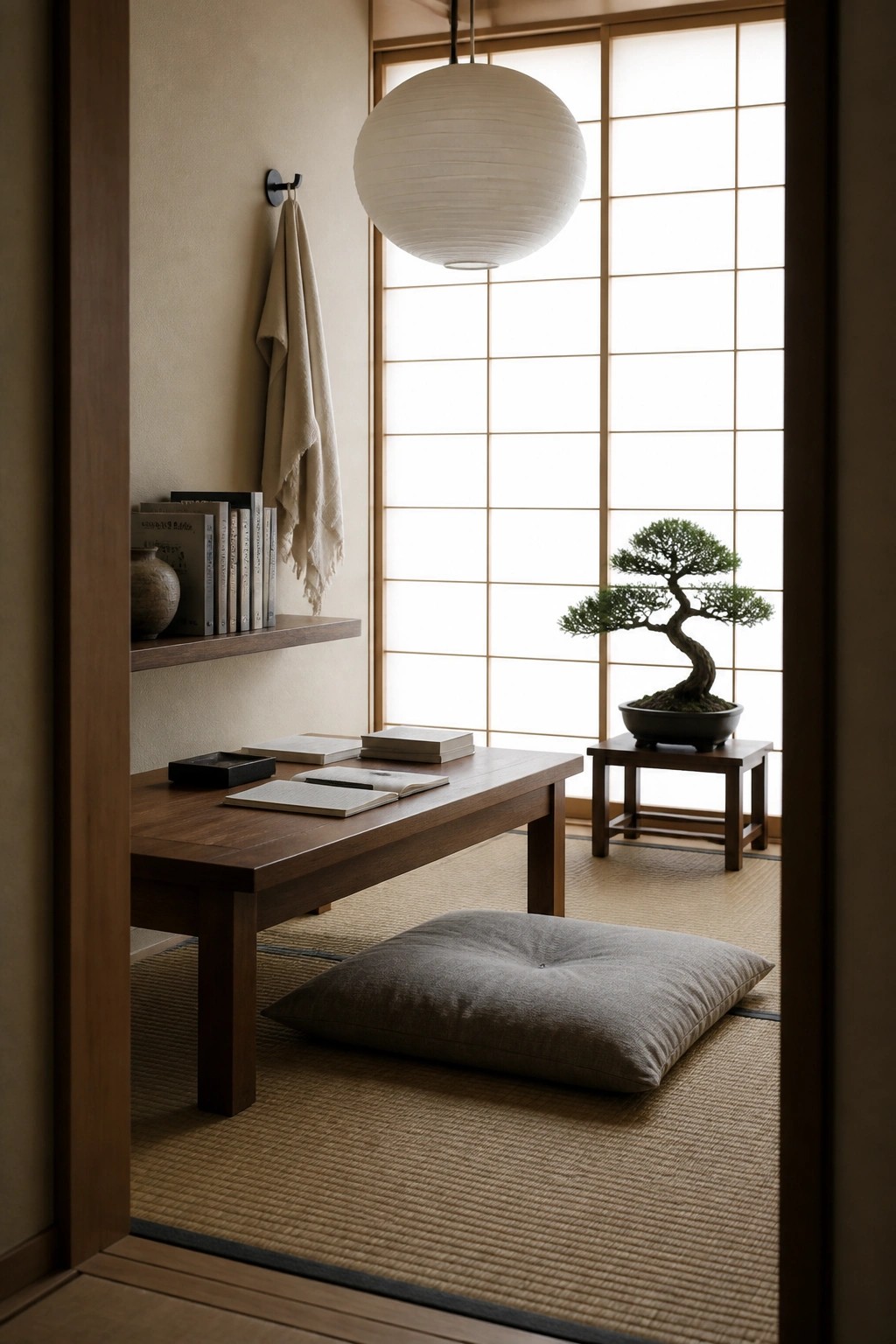
Many people like the way a low table changes how a workspace feels. Sitting closer to the floor seems to slow things down and keeps the whole area from feeling crowded with furniture.
This setup works well in smaller rooms or homes that already use natural materials and soft light. It suits anyone who wants a simple place to read or handle paperwork without a big desk taking over the space.
A Living Wall For A Calmer Office

Many home offices feel a little closed in after a few hours, and a living wall can change that without much extra furniture. The plants add texture and life to one side of the room, which helps the space feel less like a work zone and more like a place you actually want to stay in.
This idea works best in rooms that already get steady daylight, since the plants need it to stay healthy. It suits smaller or medium offices where floor space is limited, and it pairs well with simple wood furniture and neutral tones so the green does not feel overwhelming. Just plan for easy access to water the wall or set up a hidden irrigation system.
Dark Walls In The Home Office

Many people are choosing deeper wall colors for their home offices these days. It helps the room feel more enclosed and cuts down on outside distractions during the day.
This works especially well in rooms that get decent light and already have some wood tones or built-ins. Keep the lighting warm and focused so the space stays comfortable rather than heavy.
Add A Window Seat To Your Office
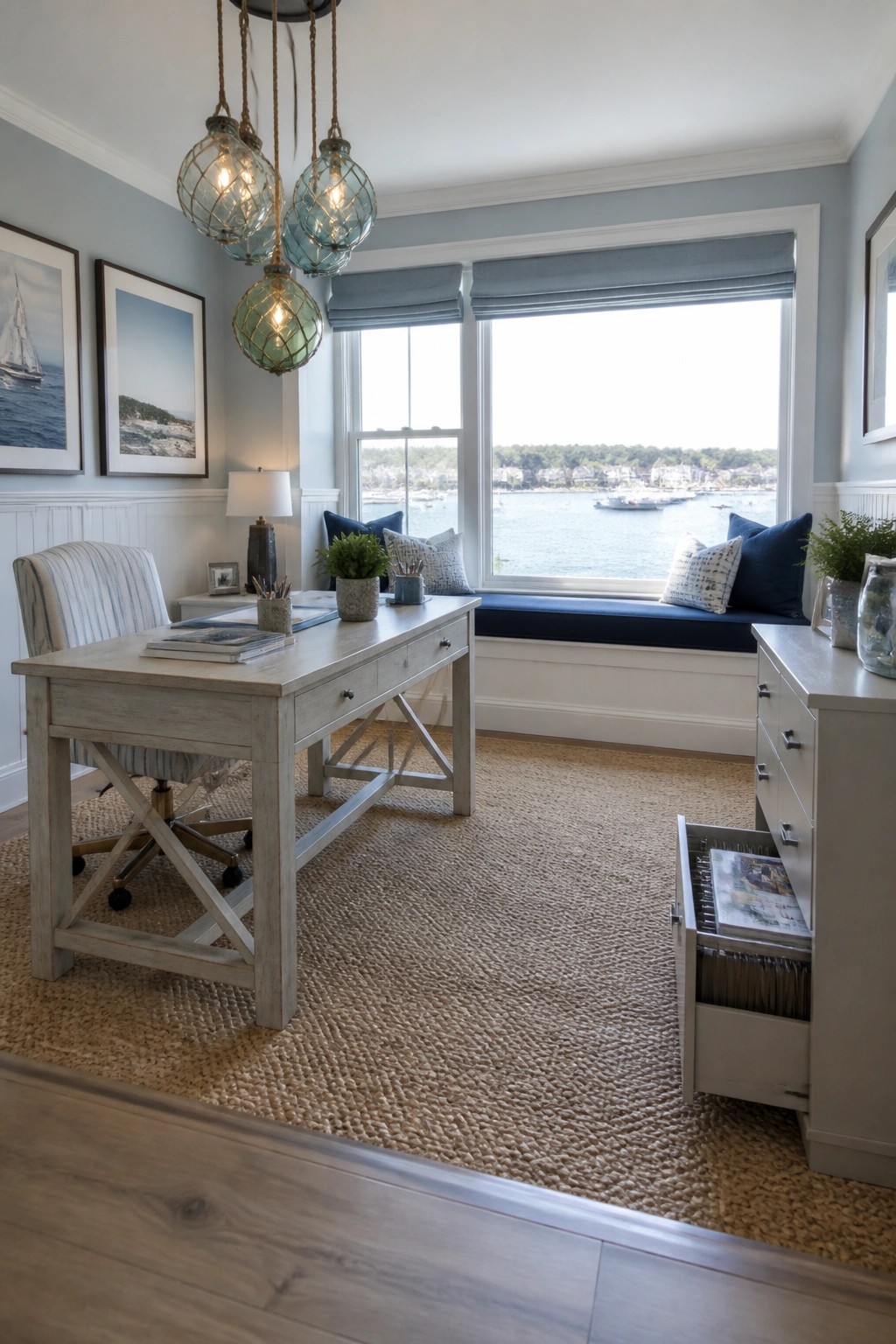
A window seat gives an office a built-in spot to pause without leaving the room. It turns a plain wall of windows into something useful, especially when the view outside helps the space feel less closed in. Many people find that having that extra seating changes how the room feels during a long day.
This works best in rooms that already get steady light and have enough wall space under the windows. Keep the cushion in a simple fabric and add storage below if you need a place for files or extra supplies. It suits smaller offices where every surface needs to earn its keep.
Built-In Desks With Open Shelving
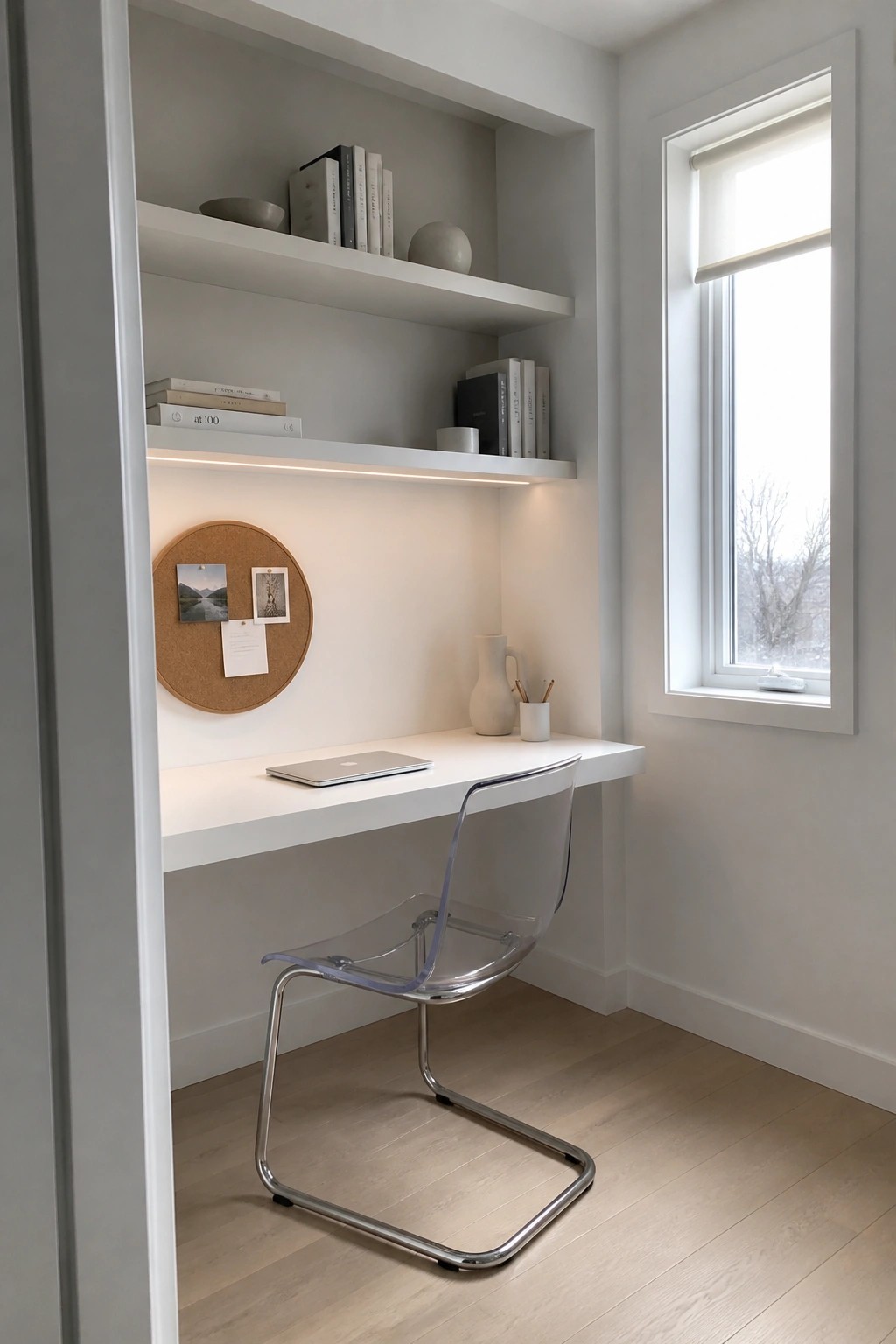
A built-in desk tucked into an alcove gives you a quiet place to work without spreading into the rest of the room. The shelves above keep books and supplies close but off the work surface, which helps the space stay calm and organized.
This setup works best in smaller homes or apartments where you need a dedicated spot but do not have a full room to spare. Keep the desk clear and use the shelves for only what you reach for often.
Setting Up Dual Workstations At Home
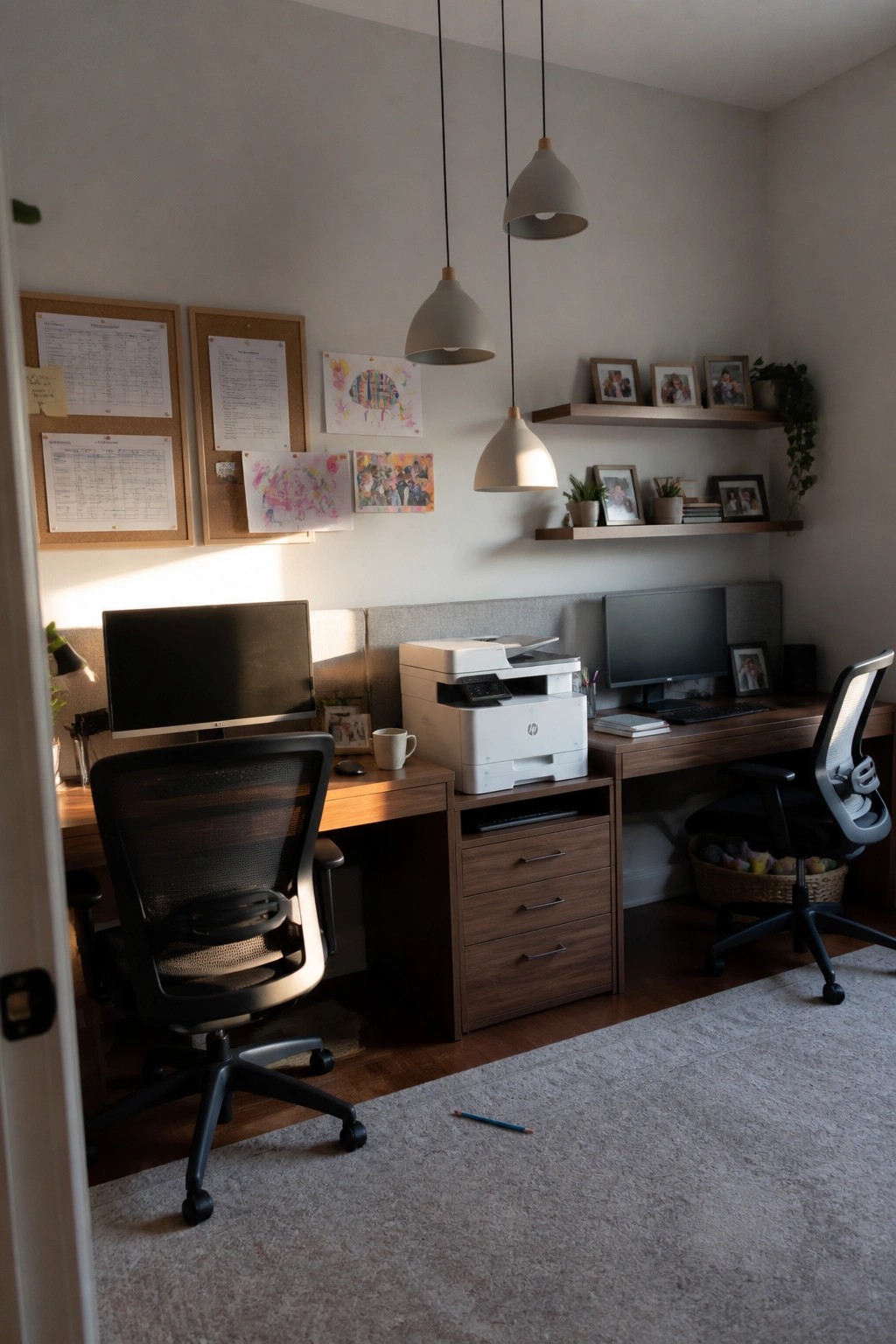
A shared home office works best when each person has their own clear space without the room feeling split in two. Placing two desks side by side with matching chairs keeps the layout simple and lets both people work without constant distraction or one person taking over the whole area.
This setup suits smaller homes or anyone who needs to share the room but still wants focused work zones. Keep the middle section open for shared items like a printer or storage drawers so the space stays practical instead of crowded.
Adding A Skylight To An Attic Office
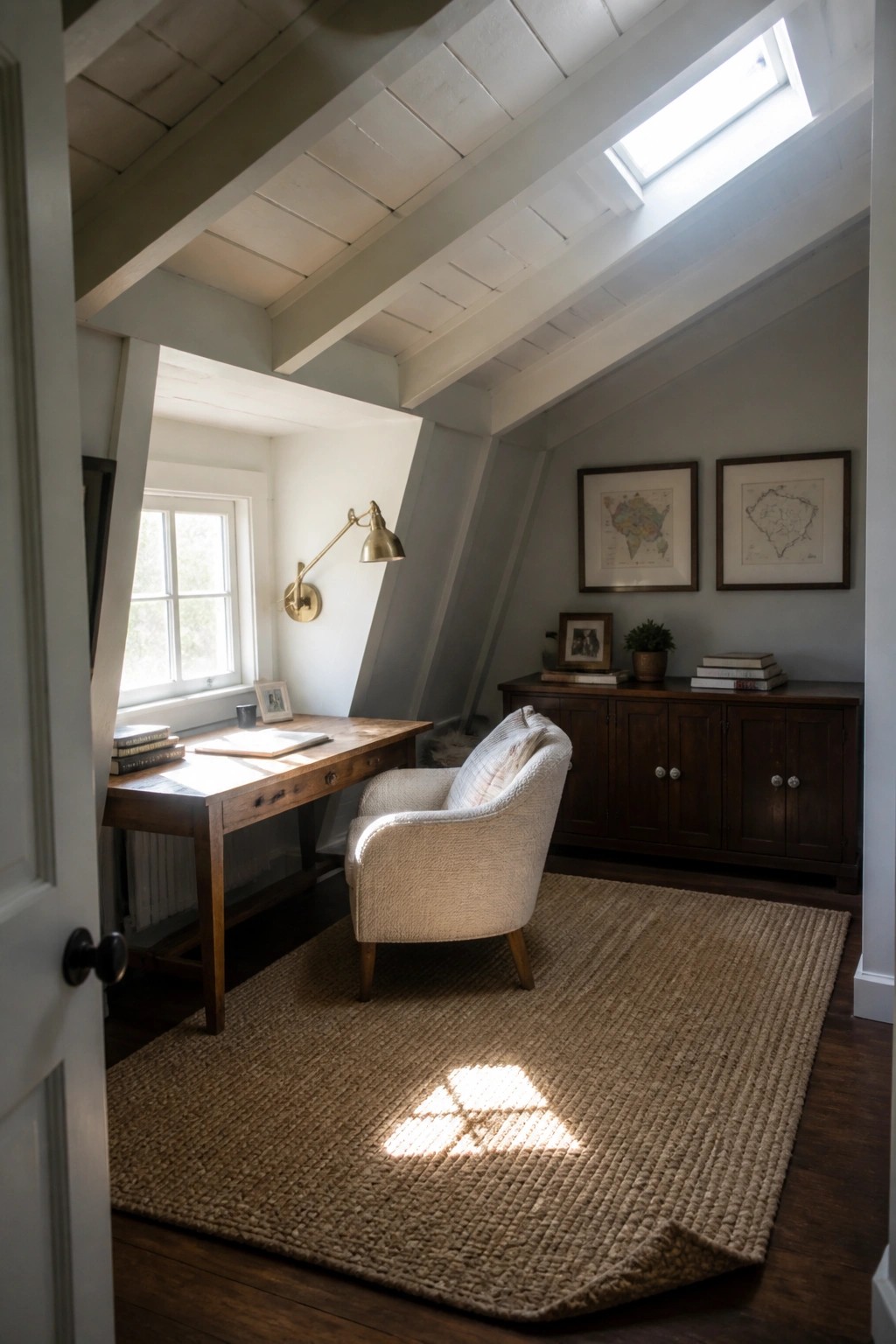
Skylights work especially well in attic offices because they bring light from above where windows alone often fall short. The open feel comes from letting that overhead light reach the whole workspace without needing extra lamps during the day.
This setup suits homes with unused attic space that can be turned into a quiet office. Place the desk where the light lands most evenly and keep the rest of the room simple so the brightness stays the main feature.
A Gallery Wall Adds Quiet Character to an Office

Many offices start out looking plain once the desk and chair are in place. A row of framed photos above a low cabinet gives the room something to rest your eyes on without making it feel busy.
Hang black and white prints in simple frames and keep the arrangement fairly even. This approach suits rooms that already have wood tones and soft lighting because it adds interest while the overall space stays calm and easy to work in.
Letting Natural Light Reach Your Desk

Natural light makes a workspace feel calmer and easier to use for longer stretches. Placing the desk right by the window brings in daylight that softens the whole room and cuts down on the need for bright lamps during the day.
This setup works best in smaller rooms or homes with limited wall space. Keep the window area clear and add one soft lamp for evenings so the light stays even without feeling harsh.
Turning Closets Into Compact Home Offices

Many homes have a closet that rarely gets used. Building a desk and shelves inside turns that empty space into a quiet place to work without giving up an entire room.
This setup works best in smaller homes or apartments where every bit of space counts. A pegboard keeps supplies within reach, while baskets below the desk hold papers and other items so the area stays tidy when the door closes.
Acoustic Panels For A Quieter Workspace
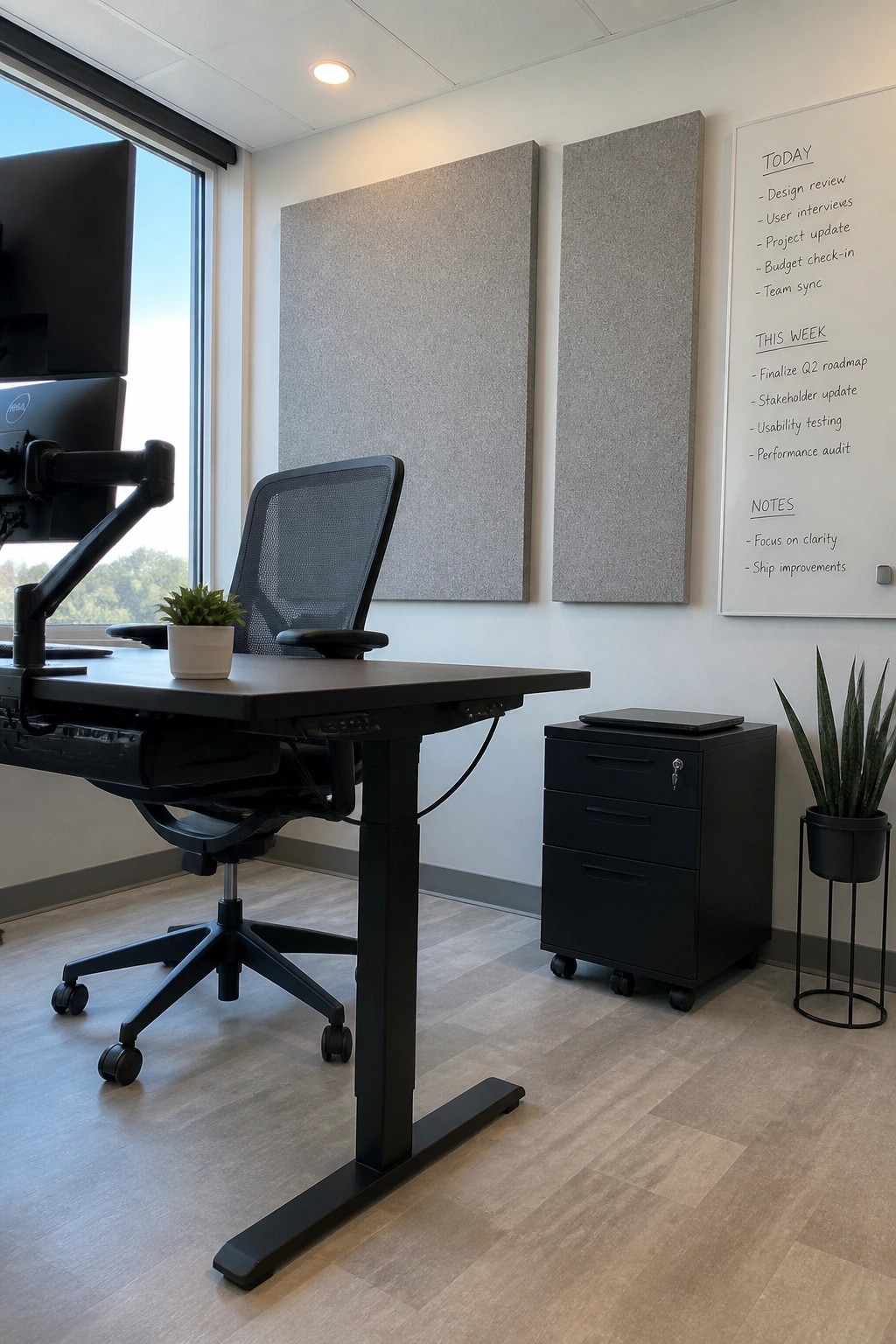
Acoustic panels mounted on the wall can make a noticeable difference in how calm an office feels during long work hours. They absorb sound instead of letting it bounce around, which helps reduce distractions from outside noise or even just the echo of a small room.
These panels work well in home offices that double as guest rooms or sit near busy areas of the house. Keep them in a neutral tone so they blend with the rest of the space without drawing attention.
Adding A Fireplace To Your Home Office
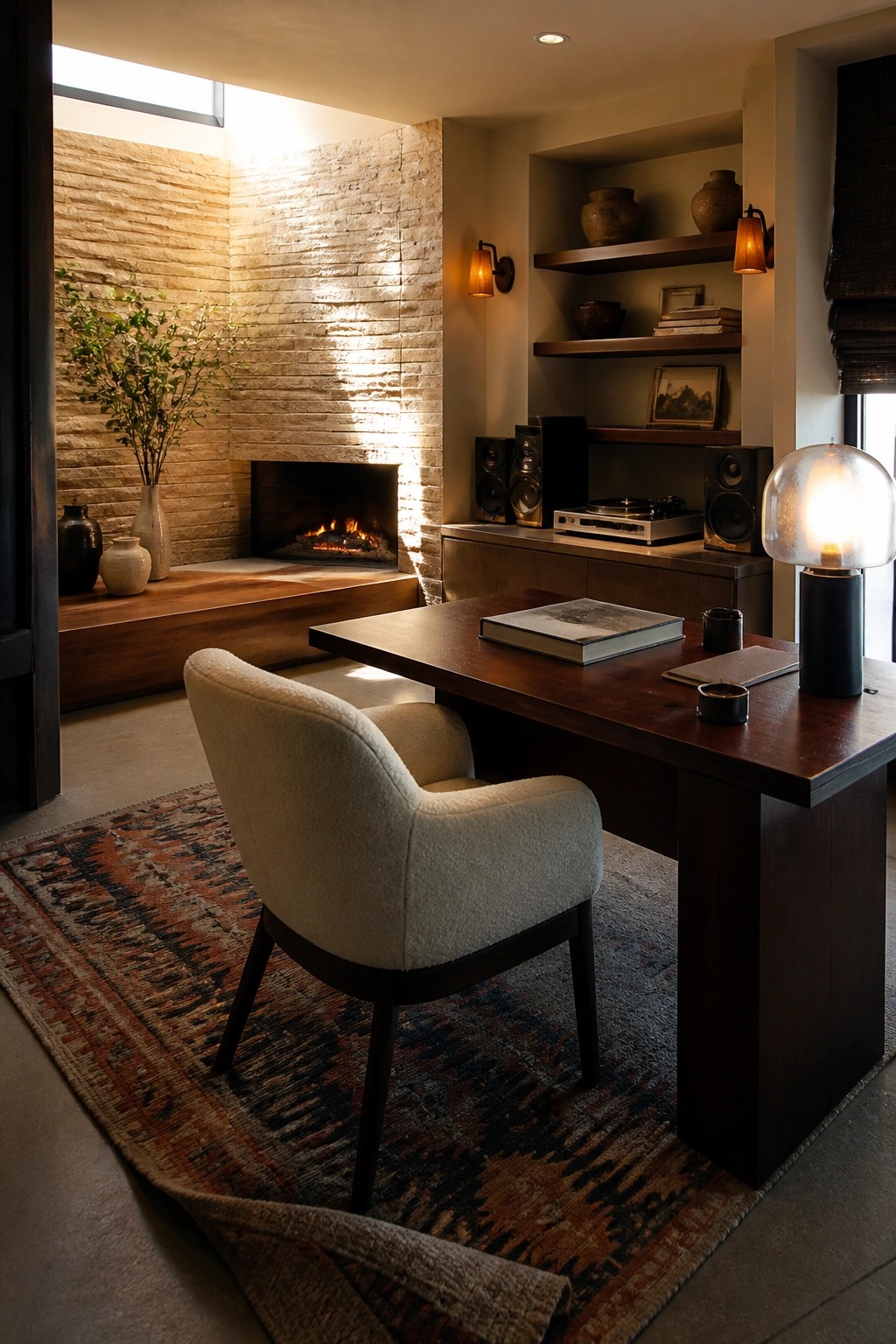
Many home offices stay a little too stark even when the furniture is comfortable. Placing a fireplace along one wall changes the feel right away because the fire gives off both light and a steady sense of warmth that helps the room feel less like a workspace and more like a place you actually want to stay in for hours.
This setup works best in rooms that already have decent ventilation or a proper insert so the fire stays contained. Keep the desk a few feet away rather than right against the hearth, and use simple seating so the fire stays the main point of interest instead of competing with extra pieces.
A Drafting Table For Clearer Focus
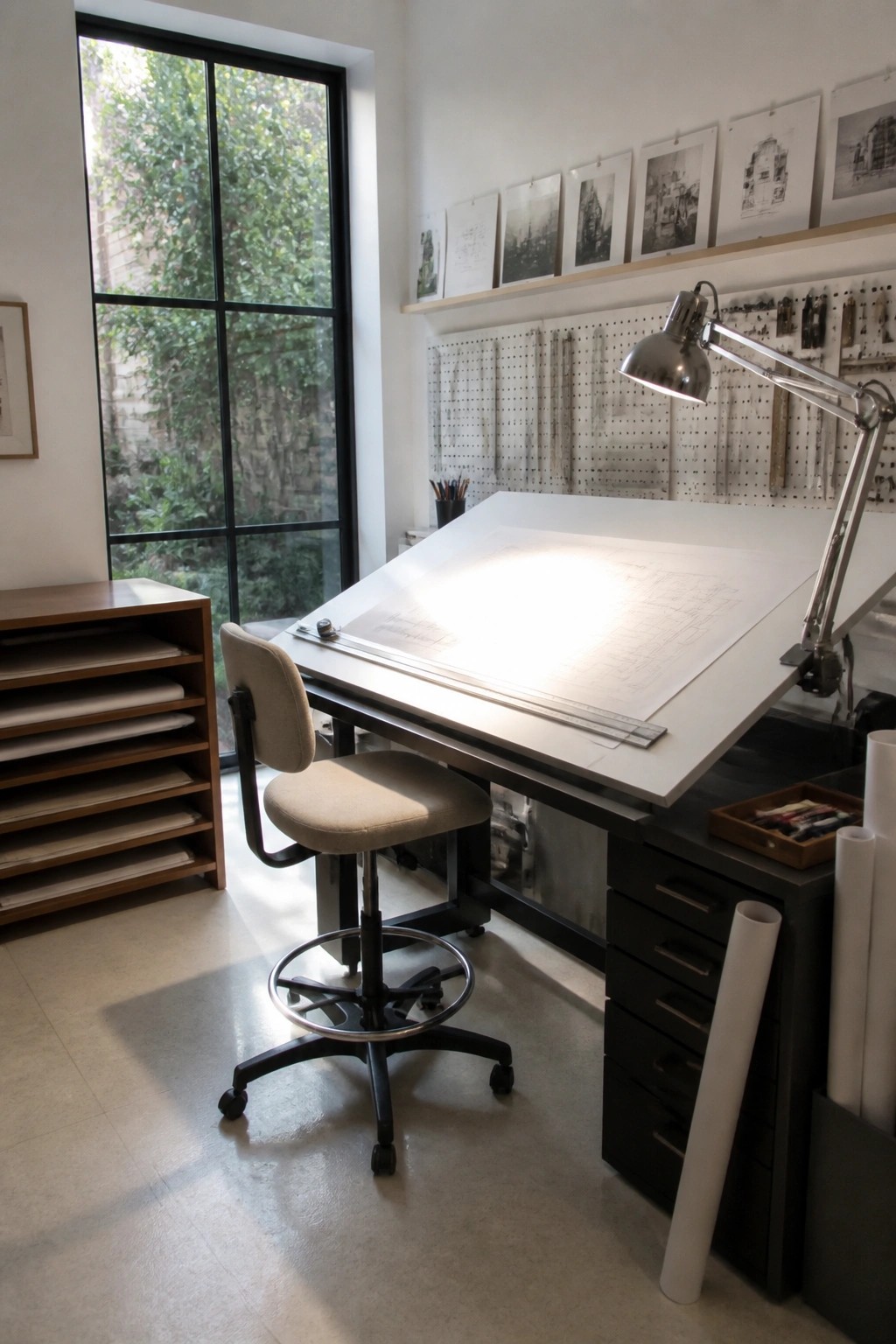
An angled drafting table gives you a proper surface for larger sheets without the constant sliding or hunching that comes with a flat desk. The tilt keeps your work at eye level and makes it easier to move around the page, which helps the whole space feel more like a real workspace than a catch-all table.
This setup works best in a room that already gets steady daylight from one side. Keep the table clear except for what you are using right now, and add a low rolling chair so you can shift position without standing up every time.
A Solid Wood Desk For A Calmer Workspace
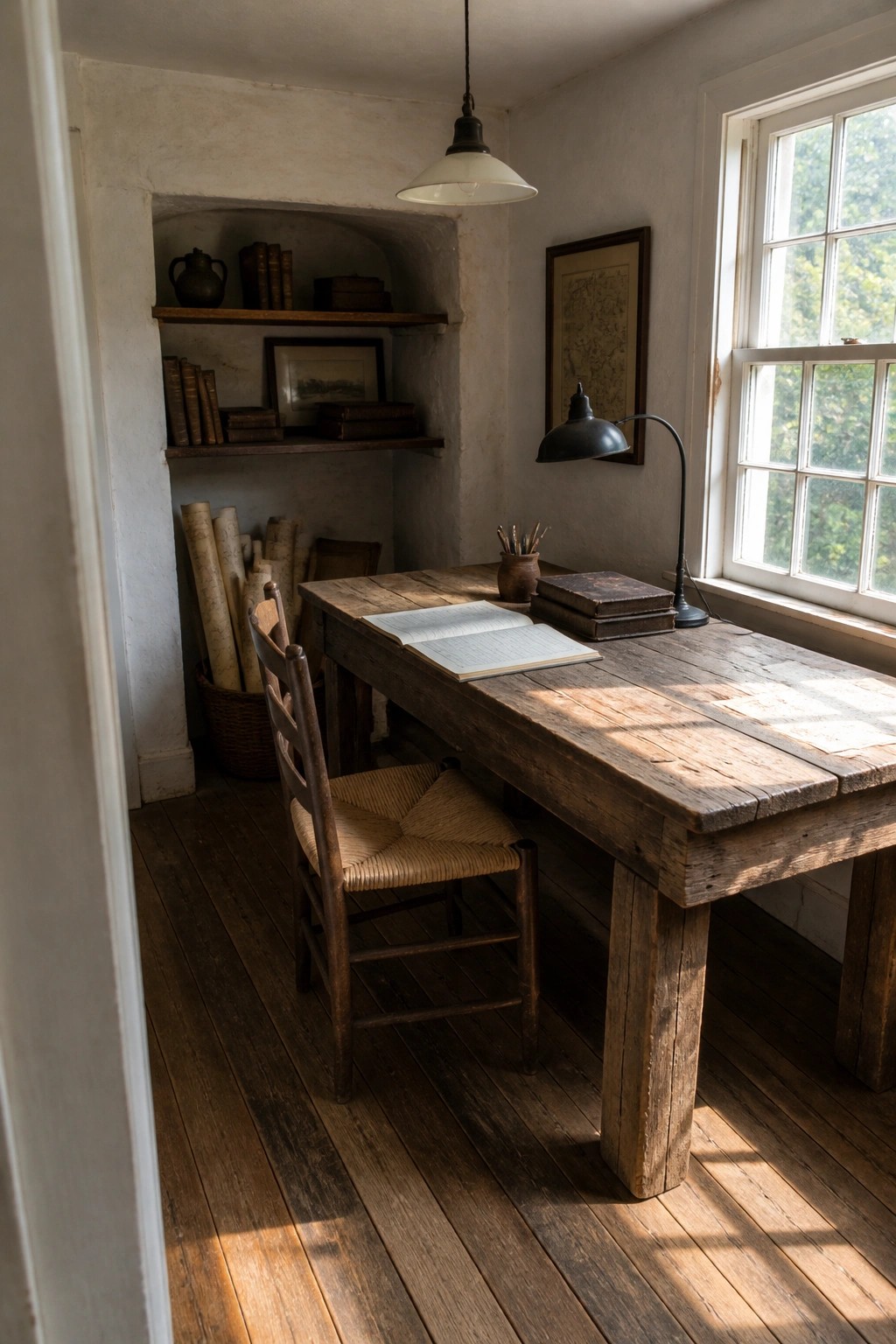
A heavy wooden desk like this one gives an office a grounded feeling that helps the whole room feel quieter. The natural grain and simple lines keep things practical without adding visual noise, which makes it easier to focus during long work hours.
This approach works well in older homes or smaller rooms where you want the furniture to feel like it belongs rather than competing with the space. Keep other pieces minimal so the desk can do the main job of holding your work without crowding the floor.
Built-In Cubbies With Baskets
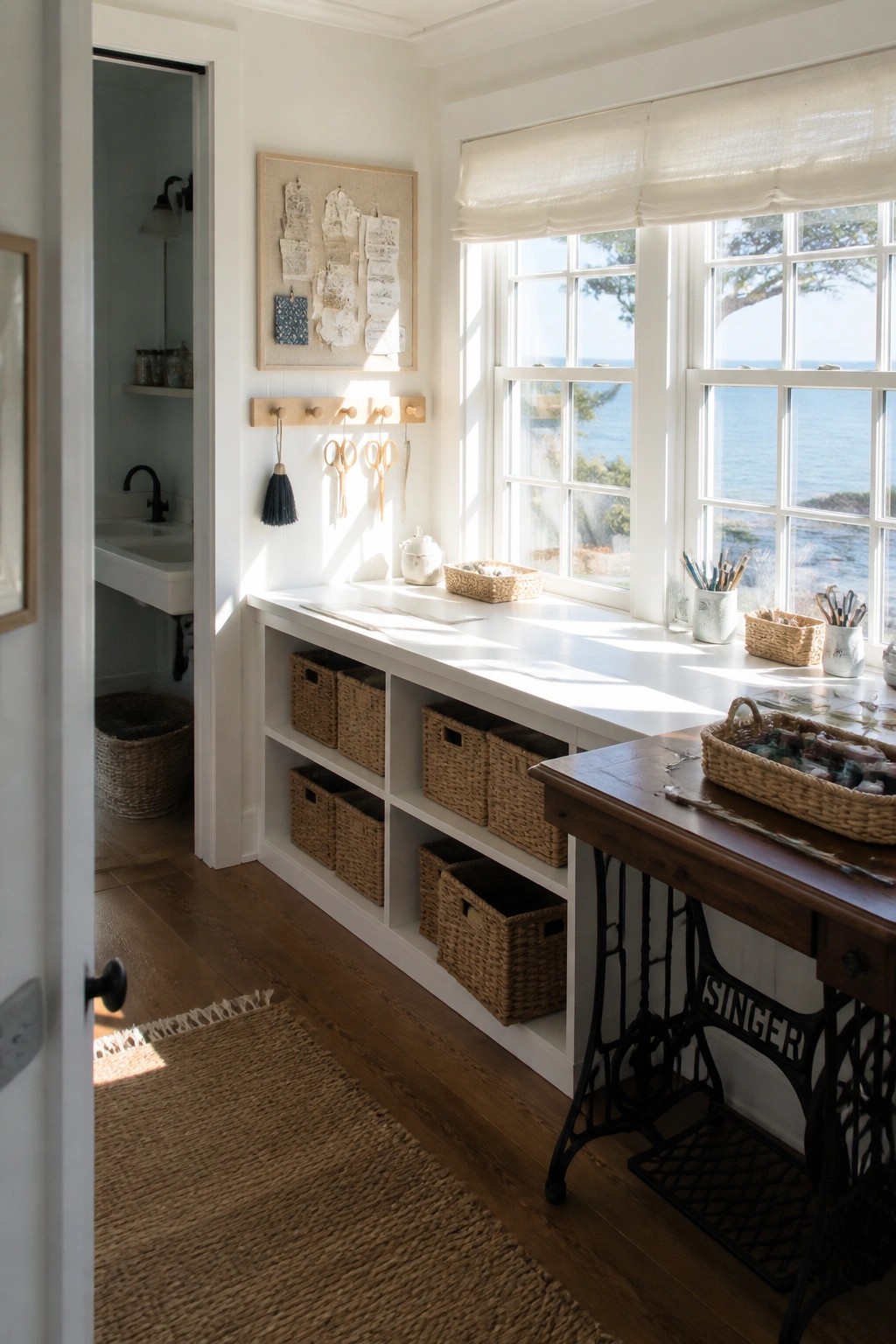
Built-in cubbies under a long work surface give you a place to tuck away supplies without adding extra furniture. Baskets make it easy to pull out what you need and put it back when you are done, so the top stays clear.
This kind of storage works best in smaller rooms or spaces that double as offices and craft areas. It keeps things organized while still letting the room feel open and simple.
Built-In Bookshelves With A Rolling Ladder

Built-in bookshelves give a home office real storage without crowding the floor. The ladder makes every shelf easy to reach and turns the whole wall into a working part of the room.
This approach works best in rooms with decent height and a bit of extra wall space. It suits people who keep a lot of books or files and want the office to feel settled rather than bare. Keep the wood tone simple so the shelves blend with the desk and trim.
Built-In Storage That Keeps A Workspace Calm
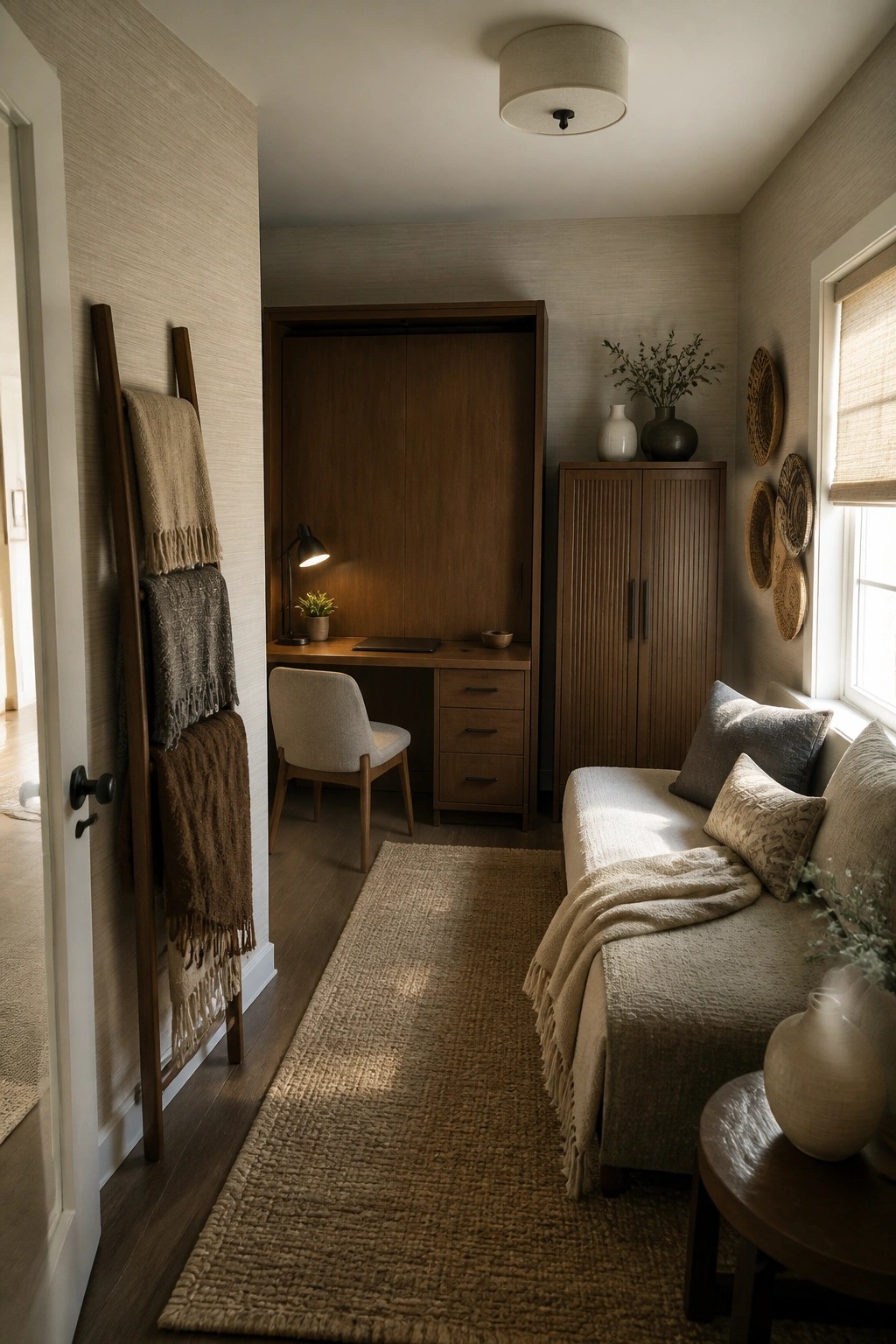
A built-in desk paired with tall cabinetry lets a room handle work without taking over the whole space. The storage doors close off papers and equipment so the area still feels like a place to relax once the day ends.
This setup suits smaller homes or rooms that need to serve more than one purpose. Keep the cabinet fronts simple and match the wood tone to the rest of the room so the desk blends in rather than stands out.
Add Under-Shelf Lighting To A Floating Desk
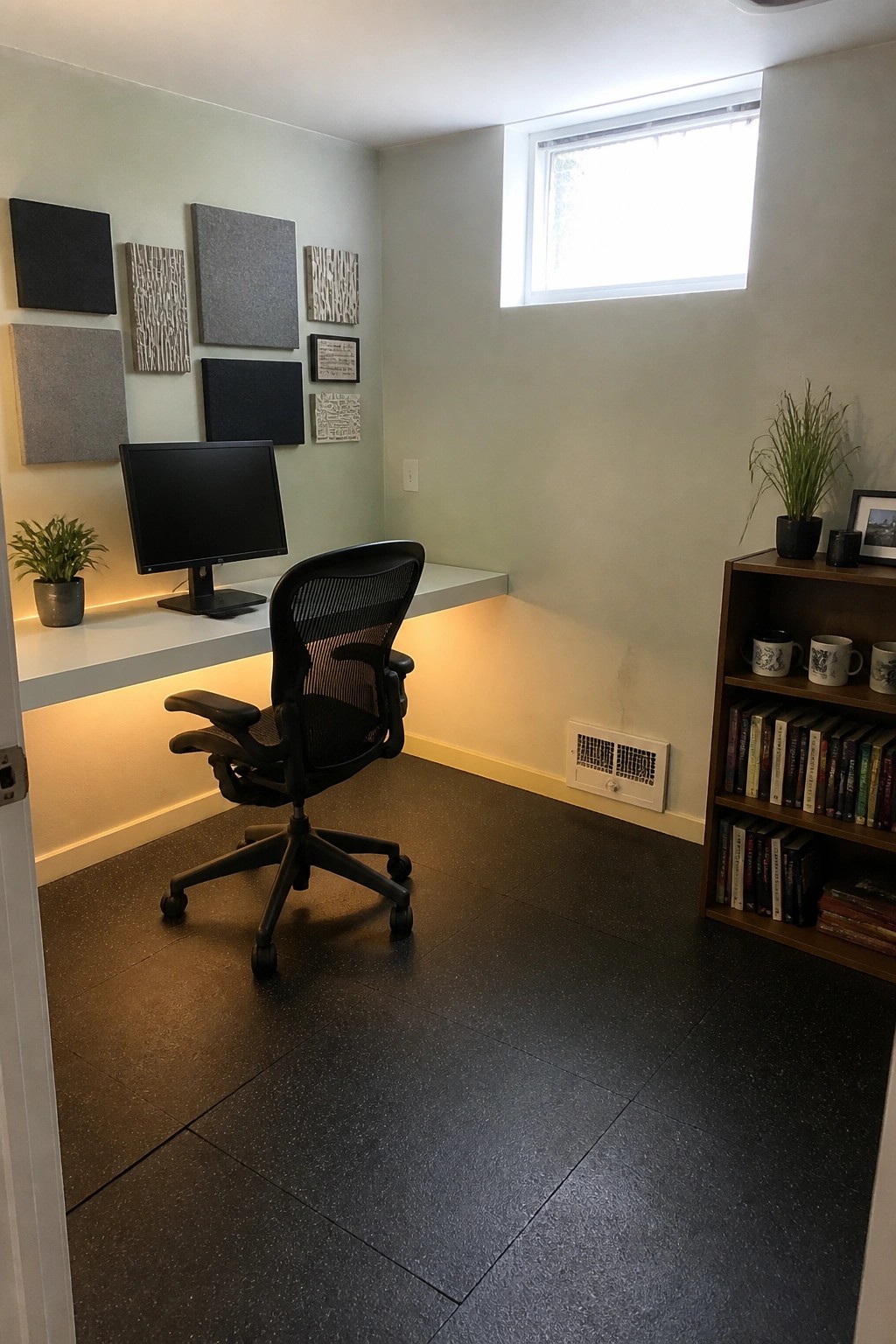
The under-shelf lighting on this floating desk gives off a soft warm glow that fills the lower part of the room. It cuts down on the need for bright overhead lights and helps the space feel quieter during the workday.
This setup works best in smaller home offices where you want steady background light without extra lamps cluttering the floor. It pairs well with plain walls and simple furniture so the light itself becomes the main feature.
A Work Table With Storage Shelves Below
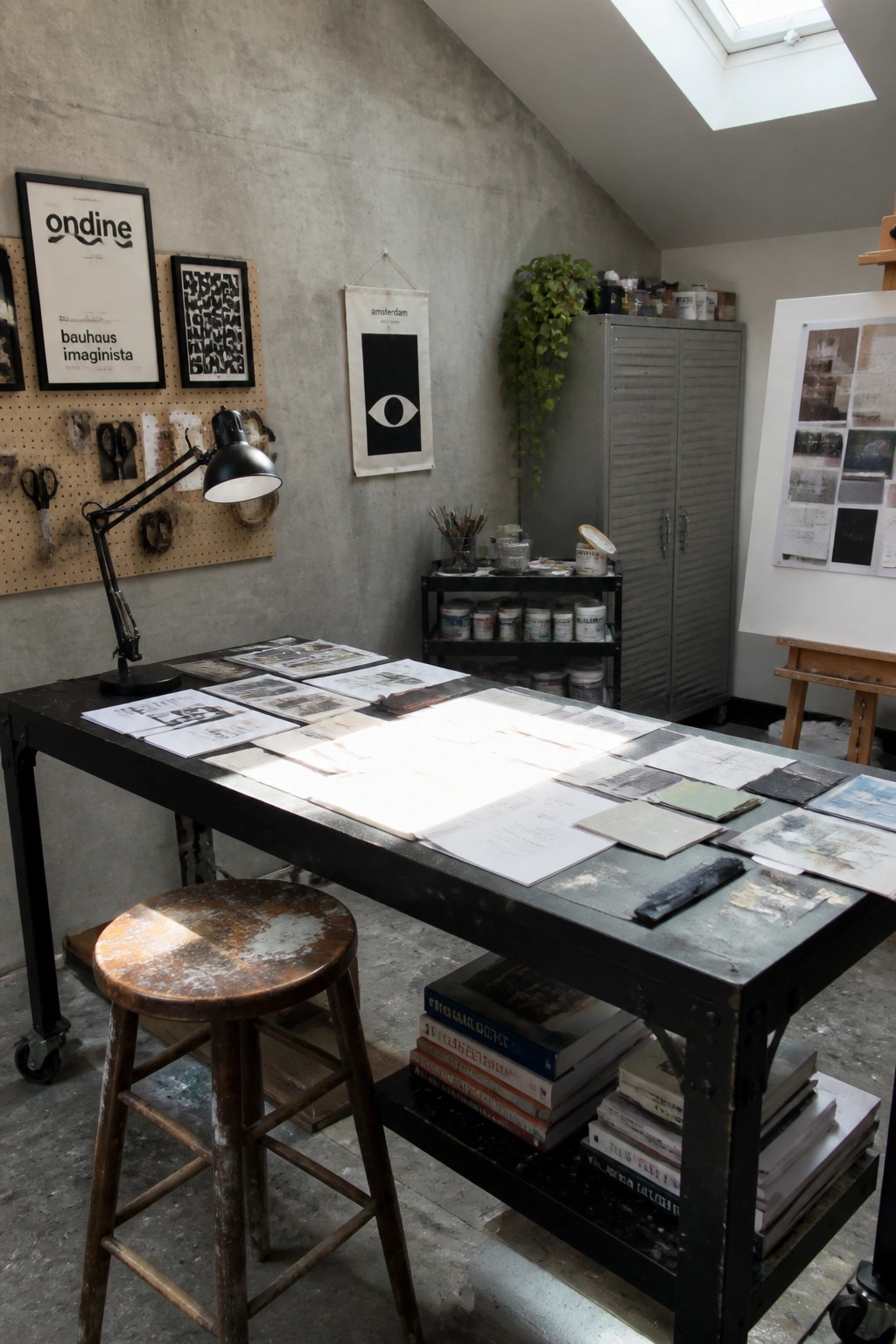
A large, solid table gives you room to spread out papers and projects without feeling cramped. The open lower shelf keeps books and supplies close by, so you can grab what you need without leaving your seat.
This setup works best in a home studio or office where space is limited and you want both workspace and storage in one piece. It keeps the floor clear and makes the room feel more organized overall.
Frequently Asked Questions
Q: Can these ideas work if I rent my office space? A: Focus on movable pieces like rugs and lamps first. Swap out your desk accessories for softer textures and calmer colors. This keeps things reversible while still shifting the mood.
Q: How can I reduce screen glare without buying special blinds? A: Position your desk so light comes from the side instead of straight on. Add a tall plant or bookshelf to block direct rays. Test it during your usual work hours to see what feels best.
Q: What if I forget about maintenance like watering plants or dusting shelves? A: Start with low care options such as succulents or artificial greenery in key spots. Choose furniture with simple lines that do not collect dust easily. You will stick with the setup longer if it does not demand daily attention.
