


When setting up a workspace in a compact area the first thing I notice is how the furniture arrangement affects movement and whether the room still feels open enough for other activities.
In my own place shifting a small table into an underused alcove worked better than expected once I added a narrow shelf above it instead of a bulky cabinet that would have blocked the light.
People often find that these tucked-away spots only succeed when the setup matches the actual scale of the room and leaves breathing room around the main pieces.
Not every idea translates directly.
Over time I have seen how testing a couple of these approaches in person reveals which ones fit the quirks of a particular home better than they appear in any plan.
Turn A Narrow Unused Space Into A Quiet Workspace

A narrow hallway or leftover corner often gets ignored, but it can work as a simple home office when you keep the setup low and minimal. A low desk with a tatami mat surface fits the space without making it feel cramped and leaves room to walk past.
This idea works best in homes with long passages or tight rooms that lack a full spare room. Stick to a few items on the desk and use a nearby wall hook or small shelf for the rest so the area stays open and easy to use.
Pegboard Storage for Small Offices

A pegboard gives you a simple way to add storage without taking up floor space. In a compact office it keeps tools, cords, and supplies off the desk while still within easy reach.
Hang one above the desk in a corner or narrow spot and use hooks or small baskets for the items you reach for most often. This setup works especially well in older homes or apartments where wall space is the only extra room available.
Turn An Unused Corner Into A Workspace

A built-in desk with open shelves above it turns a narrow spot into a working area without taking up much floor space. The white finish helps the whole setup blend into the walls so the room still feels open instead of crowded.
This setup works well in homes that have leftover corners near a window or along a hallway wall. Keep the desk surface clear and use the shelves for books and a few small items so the space stays practical instead of cluttered.
Mount A Desk To The Wall In Small Corners

A wall mounted desk is one of the simplest ways to fit a workspace into a tight corner without losing floor space. It keeps the room from feeling crowded and lets you use areas that would otherwise sit empty.
This works best in apartments or small homes where you need the desk to stay out of the way during the day. Pair it with a narrow shelf above for records or supplies so the setup stays useful without adding more furniture.
Turn An Empty Corner Into A Small Office

Many homes have narrow spots that never seem to fit anything useful. Adding a simple desk and floating shelves overhead makes the most of that space without blocking the floor or making the room feel smaller.
This setup works best in apartments or houses where every room already has a job. Keep the desk shallow and mount storage on the wall so the area stays open and easy to move around in.
Fit a Desk Into a Small Unused Corner

Many homes have odd corners or small alcoves that sit empty. Putting a simple desk in one of these spots turns the space into a working area without taking over a larger room.
This works well in older homes or any place with leftover nooks. Choose a narrow desk and chair that fit the size of the corner, and keep extra items to a minimum so the area stays practical.
Use A Narrow Desk In Tight Corners

A narrow desk works well when space is limited because it fits against a wall or into a small alcove without blocking the room. It gives you a place to work while leaving the rest of the floor open for movement.
This approach suits bedrooms, hallways, or any leftover spot that feels too small for a full desk. Add a few shelves above or beside it to hold supplies so the surface stays clear and the area feels organized rather than cramped.
Built-Ins That Add Storage To A Small Desk

Built-ins work well in small rooms because they use the walls and corners without taking up extra floor space. A desk tucked under open shelves and next to a window seat gives room for supplies, papers, and seating all in one area.
This setup suits a spare bedroom or an unused corner where you need both work space and storage. Keep the colors simple so the unit blends in and does not feel heavy.
Ladder Desks Fit Small Corners Well

A ladder desk leans against the wall on a simple frame that holds both the work surface and one or two shelves above it. This setup keeps the floor clear and avoids the bulk of a standard desk with legs on all sides.
It works best in narrow spots or leftover corners where a full desk would crowd the room. Pair it with a chair that rolls away easily and you have a functional office without taking over the space.
Add Vertical Storage with a Pegboard

A pegboard above a small desk gives you a simple way to keep everything in reach without crowding the surface. It works especially well in tight corners where floor space is limited and you need to stay organized.
Hang it on the wall behind the desk and use hooks or small pouches for headphones, cables, and chargers. This setup suits apartments or spare rooms where a full office just will not fit.
Desk Placement by the Windows

Placing a desk right along a row of windows turns a narrow corner or small unused room into a workable office. The light coming in keeps the space from feeling closed in, and it gives you a view that makes long hours easier to manage.
This setup works best in homes with decent natural light and a bit of wall space under the windows. Keep the desk simple, add a comfortable chair that rolls easily, and use a rug to define the area without crowding the room.
Turn A Narrow Corner Into A Workspace
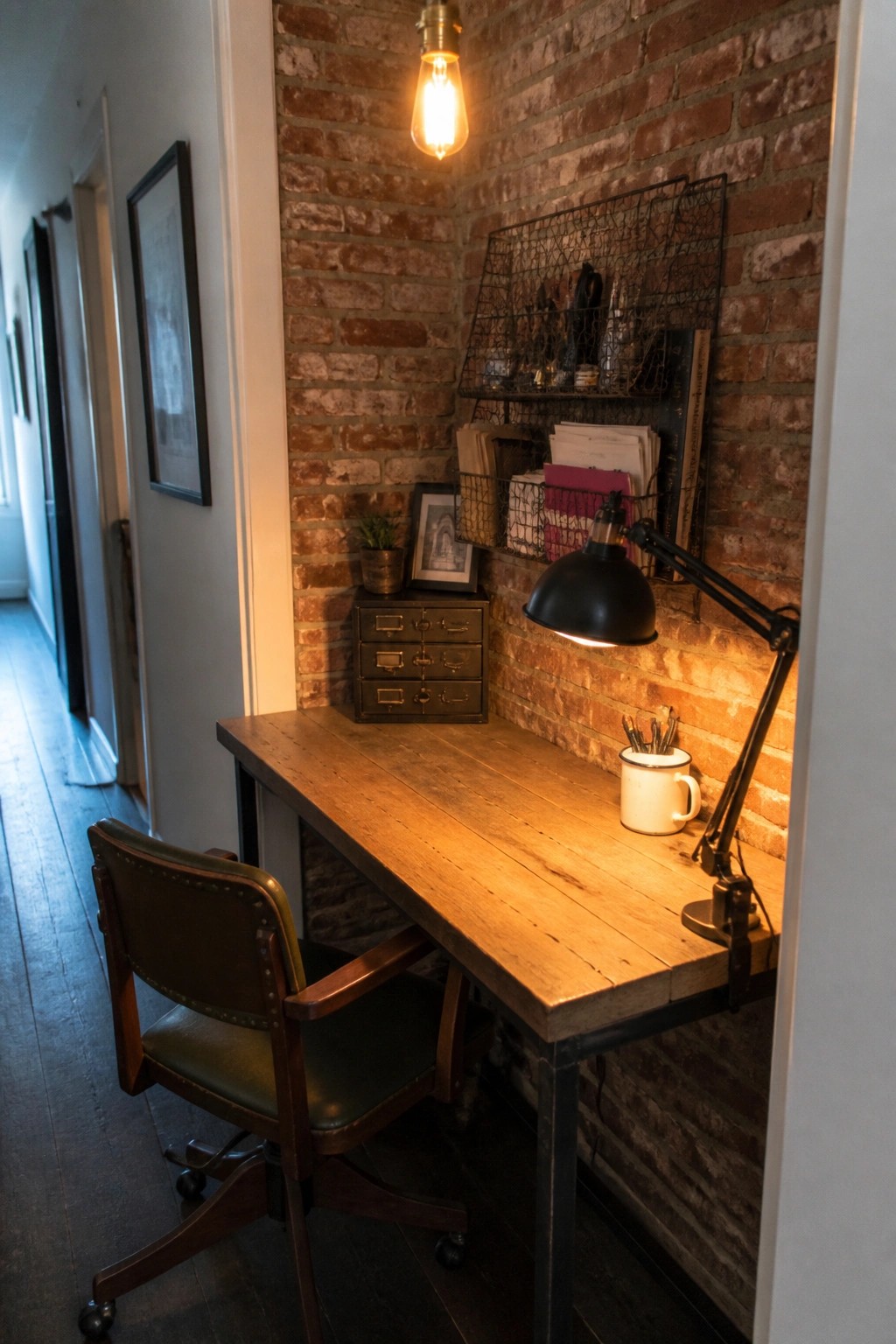
Many homes have narrow corners or short hallway sections that feel too tight for normal furniture. Fitting a slim desk into one of these spots turns that leftover space into a usable office without crowding the rest of the room.
Wall mounted lighting and hanging baskets keep everything off the floor and the desk surface clear. This approach works best in older homes or apartments where rooms run small and every bit of wall space matters.
Turn an Unused Corner Into a Home Office

Many small homes have narrow spots or leftover corners that never seem to serve a purpose. Adding a simple wall-mounted desk with open cubbies above it turns that space into a practical spot for getting work done without needing a full room.
This setup works best in hallways, under stairs, or beside a window where natural light already comes in. Keep the desk depth shallow and add a curtain if you want the area to feel more separate from the rest of the room.
Built-In Shelves Turn A Corner Into A Workspace
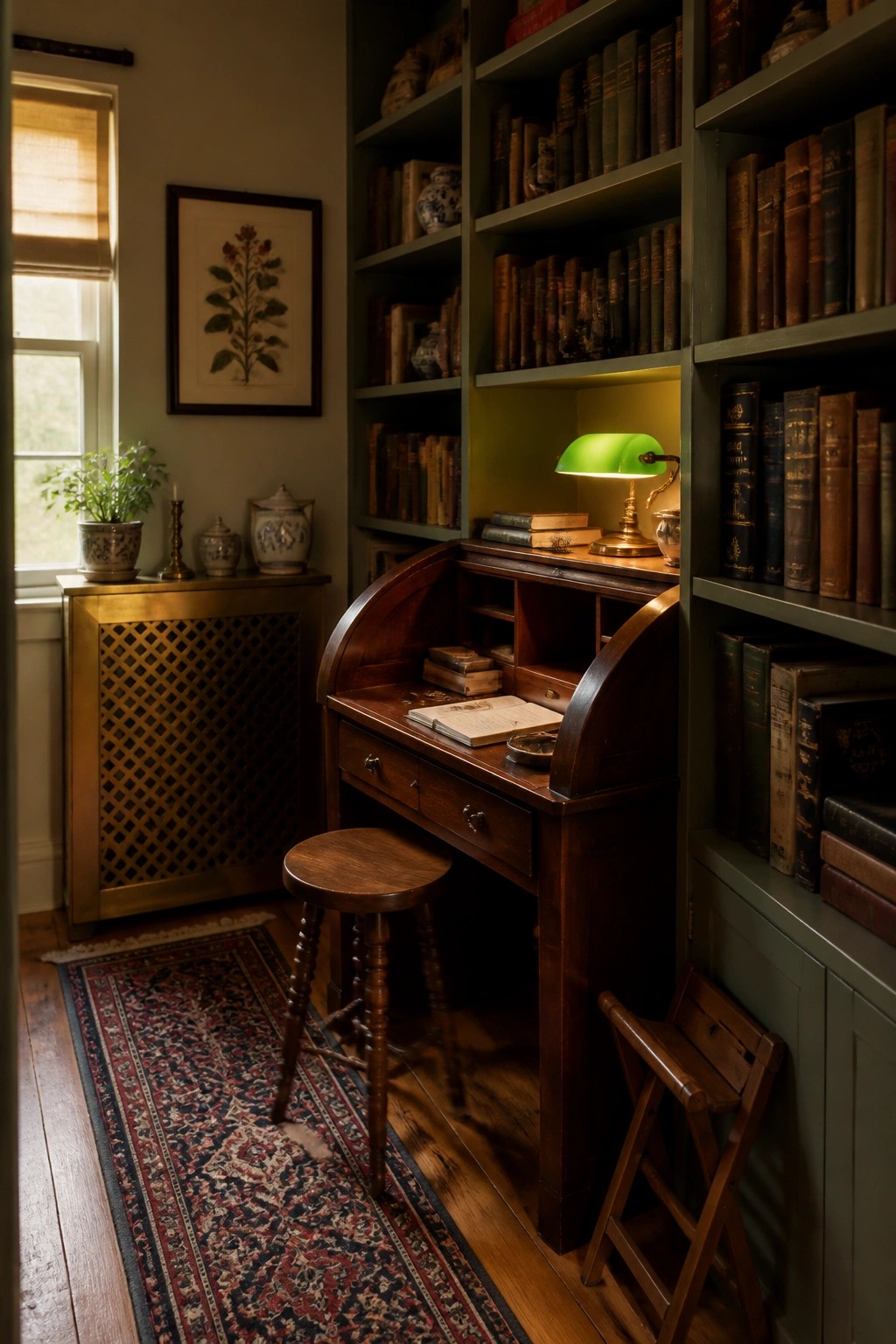
A roll top desk set between built-in shelves makes good use of a narrow space that might otherwise sit empty. The shelves give you room for books and supplies without adding extra furniture that would crowd the floor.
This works best in older homes or small rooms where you need storage but do not have much width. Keep the desk surface clear for daily work and let the shelves handle the rest.
Mount A Desk Along A Narrow Wall

A wall mounted desk lets you add a workspace in spots that would otherwise sit empty, like a hallway or tight corner. It takes up almost no floor space and keeps the room from feeling blocked.
This works best in smaller homes where every inch counts. Mount the desk at a comfortable height, add a slim shelf above it for a tablet or speaker, and keep the chair simple so it can tuck away when not in use.
Turn A Closet Into A Compact Desk

Many homes have a closet or narrow alcove that never gets used well. Building a desk into that space turns it into a real workspace without eating into the rest of the room.
This approach works best in apartments or older houses where rooms are tight. A simple countertop across the opening plus a few drawers below gives you storage and a clean surface, while shelves above keep supplies close without adding clutter.
Frequently Asked Questions
Q: My corner has a sharp angle so a normal desk feels off. Can I still make it work?
A: Angle a compact desk to follow the two walls instead of forcing it straight. Add a narrow rolling cart beside it for extra supplies that slide out when needed.
Q: How do I keep cables from turning my small setup into a tangle?
A: Run them along the back edge with simple clips or a cord cover that matches the wall. Tuck a power strip into a wall mounted basket so everything stays off the floor.
Q: What if the spot gets almost no natural light during the day?
A: Place a slim LED panel on the wall above the desk and angle it downward. This brightens the surface without eating into your limited space.
