


When I tried squeezing a desk into a leftover corner of my living room last year, I realized that the space only started to work once I stopped forcing in pieces that were just a bit too big.
People usually notice first whether they can pull out a chair without hitting a wall or if the surface actually leaves room for a notebook beside the screen.
Layout choices end up deciding whether the area feels like a real workspace or just a spot where things get stacked.
Some setups I have tested make better use of the walls and keep the floor open, which changes how the whole room moves during the day.
I would try adapting a few of these before committing to any one plan in my own home.
Turn A Corner Into A Tiny Workspace

A corner desk with floating shelves overhead makes good use of space that often goes to waste. The setup keeps the work surface clear while giving you room for books, supplies, and a few plants without crowding the floor.
This approach works best in small apartments or homes where every room has to serve more than one purpose. Keep the shelves at a reachable height and choose a simple chair that tucks in neatly when not in use.
Mount A Floating Desk With Pegboard Storage

A floating desk paired with a pegboard above it turns a narrow wall into a full workspace without eating up floor space. The setup stays light and leaves room to move around, which matters when the office has to share a bedroom or hallway.
This works best in homes where every inch counts and you need quick access to supplies. Keep the pegboard low enough to reach and use it for the items you grab daily so the surface stays clear.
Turn A Closet Into A Small Home Office

Many homes have a spare closet that does not get much use. Fitting a simple desk and a few shelves inside turns that wasted space into a quiet place to work.
This setup works best in bedrooms or hallways where you want to keep the rest of the house open. Baskets and file boxes help hold supplies so the surface stays clear for daily use.
Build A Desk Under The Window
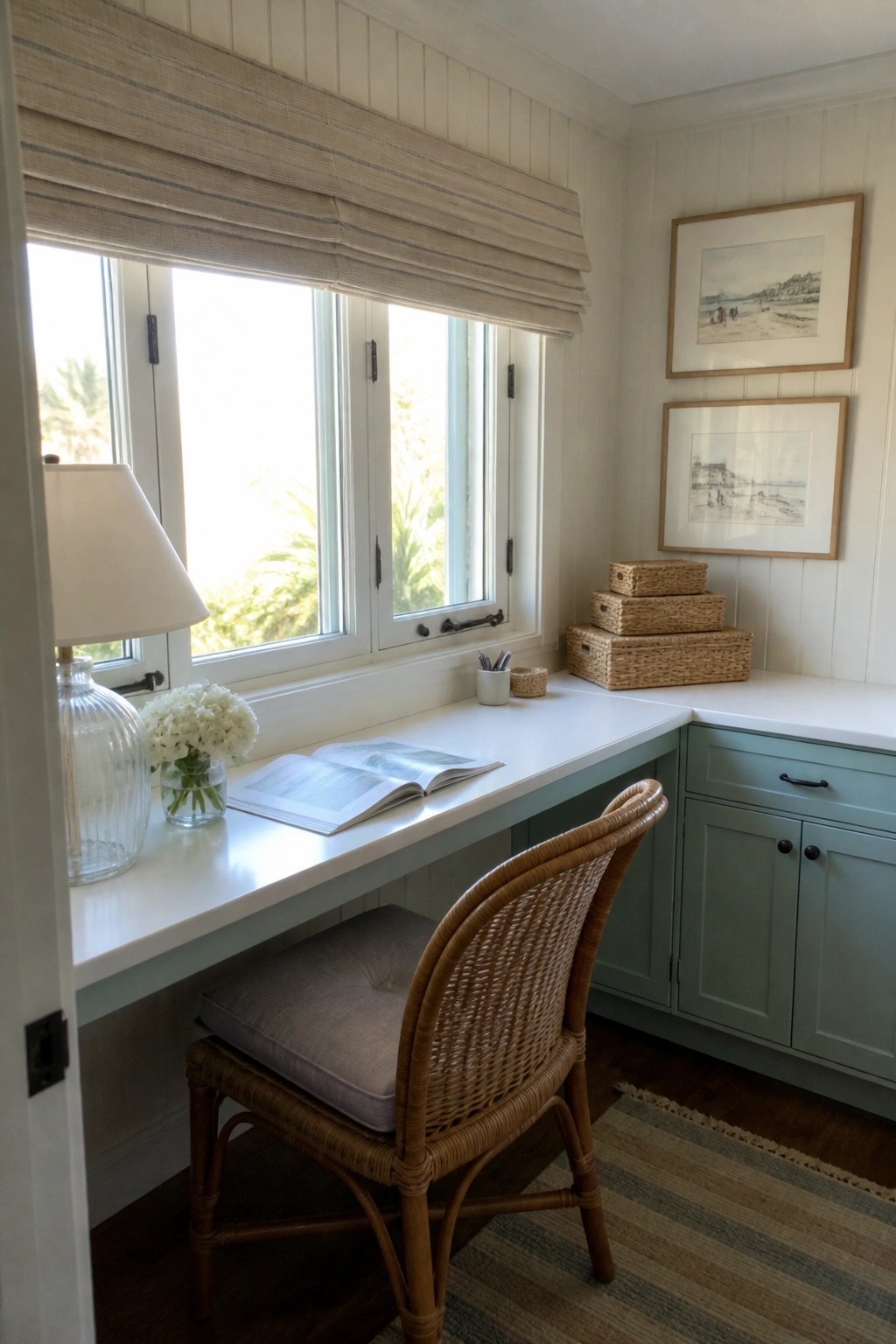
Placing a desk directly under a window is a simple way to turn an underused wall into a workable spot. The light helps the area feel open even when the room is small, and the desk itself takes up very little extra floor space.
This idea suits bedrooms or living areas where you need a place to work but cannot give up a whole room. Keep the desk surface clear and add storage below if the space allows, so the setup stays practical without crowding the rest of the room.
Build A Desk Under The Stairs
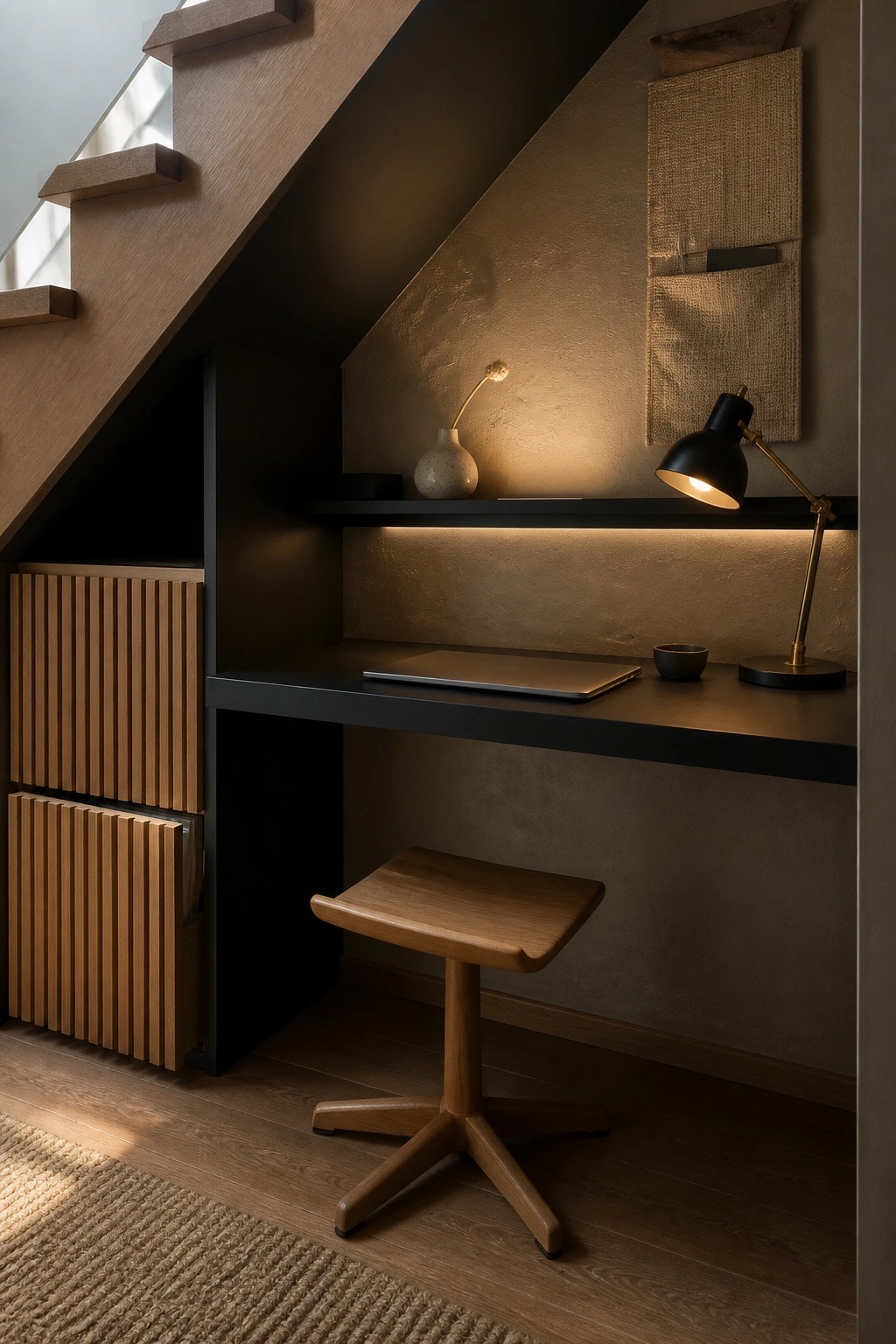
Many homes have a bit of dead space right under the stairs that goes to waste. Fitting a simple desk into that spot turns it into a working area without needing a whole separate room.
This setup works best in smaller homes or apartments where floor space is tight. Add a couple of closed cabinets on one side for papers and supplies so the desk stays clear and the area feels organized rather than cramped.
Build A Desk Into A Small Closet
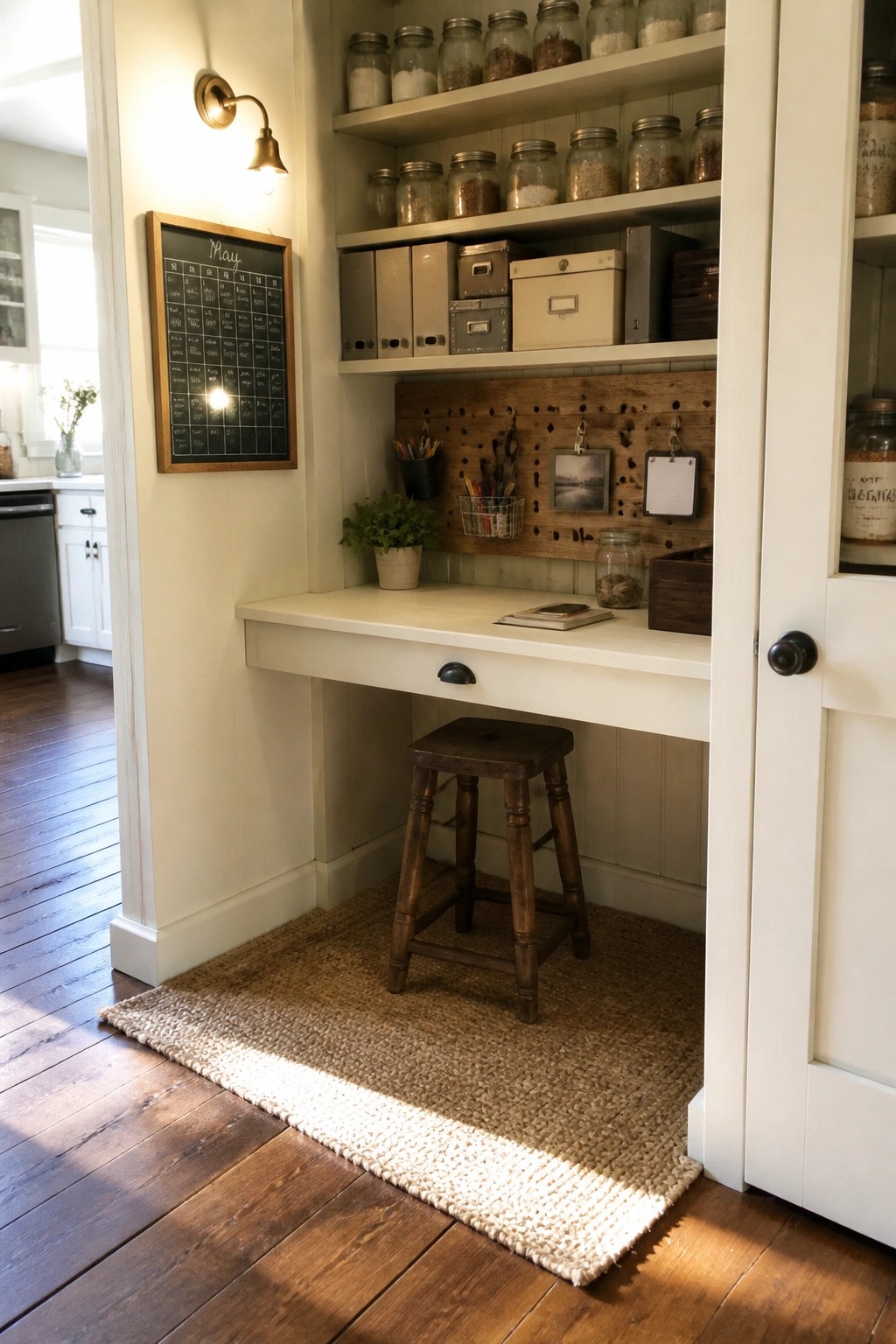
A closet can make a surprisingly good home for a tiny office. The enclosed space already defines the work area, so you do not need walls or partitions to create separation from the rest of the room.
This setup works best in homes with limited square footage where a full room is not an option. Keep the desk surface clear by using the wall above for shelves and a pegboard, which holds supplies without crowding the floor.
Pair A Desk With Storage In A Tight Corner

One simple way to add a workspace without losing much room is to slide a small desk right up against a low storage cabinet. The cabinet gives you drawers and open shelves for supplies while the desk stays narrow enough to fit along a wall or half wall.
This approach works best in apartments or open living areas where the office needs to blend in rather than take over. Keep the pieces in similar wood tones so they read as one unit instead of separate furniture.
Divide A Small Room To Create Two Workstations

A frosted divider lets you fit two separate desks into a narrow space without the whole room feeling cramped. It gives each side a bit of privacy while still keeping the area open and usable for one or two people.
This setup works well in a spare bedroom or hallway alcove where you need to squeeze in an office. Keep storage on open upper shelves so the desks stay clear and the room does not feel overloaded.
Drop-Front Desks Work Well in Small Corners

A drop-front desk gives you a real work surface without eating up much floor space. The front panel folds down when you need it and closes up again to keep papers and supplies out of sight, which helps a tiny room stay calm and open.
This setup suits older homes or apartments where a full desk would feel too big. Place it near a window for light, then add a couple of low baskets beside it for files so the whole area stays tidy without extra shelves or cabinets.
Mount a Pegboard for Vertical Storage

A pegboard above a slim desk turns an empty wall into useful storage without eating into floor space. It keeps pens, cables, and small tools visible and easy to reach while leaving the work surface clear in a tight room.
This setup suits bedrooms or studio apartments where every inch counts. Place it in any narrow spot and move the hooks around as projects change.
Hide Your Desk Inside A Bedroom Vanity

A fold down desk built into a storage cabinet gives you a real workspace without taking up floor space all the time. When the top is closed the unit looks like a regular vanity or sideboard, so the room keeps its main purpose.
This setup works best in small bedrooms or guest rooms where one piece needs to handle dressing, storage, and occasional work. Fit the inside with hooks and shallow shelves so daily items stay off the surface and the desk stays usable when you need it.
Built-In Desks With Drawer Storage
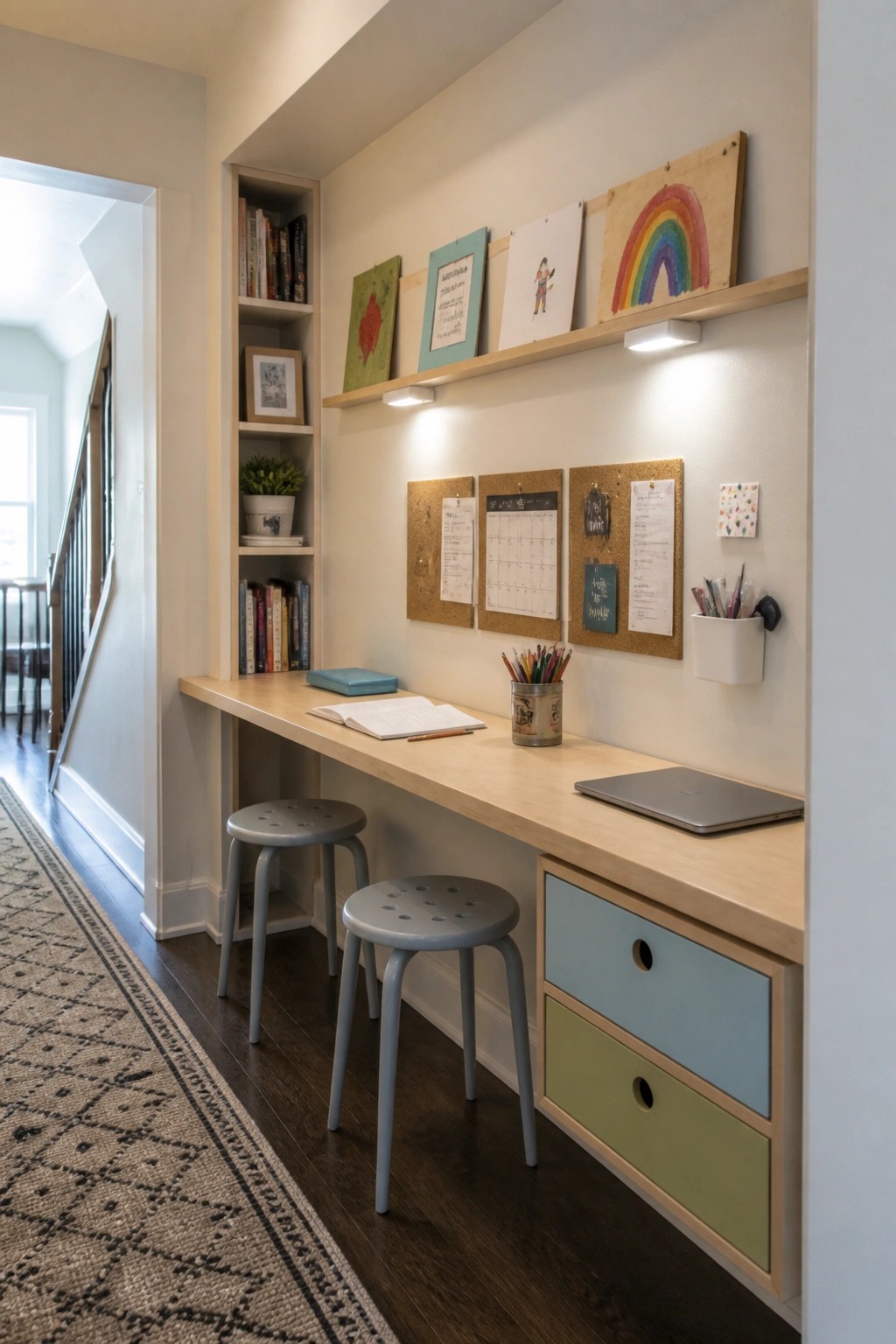
A long built-in desk works well in narrow spots where a regular desk would feel too bulky. The drawers tucked underneath keep supplies close without adding extra furniture that would crowd the walkway.
This setup suits homes with limited square footage, especially hallways or open landings that already have wall space to spare. Keep the surface clear for daily use and let the drawers handle the rest so the area stays functional instead of cluttered.
Try a Low Desk With Floor Seating

A low desk with a floor cushion creates a compact workspace that leaves more room to move around. This setup avoids tall chairs and bulky furniture so the area feels open even when space is tight.
It suits small apartments or homes where every inch counts. Many people place it near a window for light and keep supplies minimal so the surface stays clear for daily use.
Use a Counter Extension for a Tiny Desk Spot

One simple way to add a workspace without giving up floor space is to extend an existing counter just far enough for a laptop and a few supplies. The narrow surface keeps the area from feeling crowded while still giving you a place to sit and work.
This setup works best in kitchens or open living areas where you can slide a stool underneath when it is not in use. It suits homes that need flexible spots rather than a full separate room, and it helps if you already have a wall nearby for hanging tools or notes.
Hide a Tiny Desk Behind Sliding Barn Doors
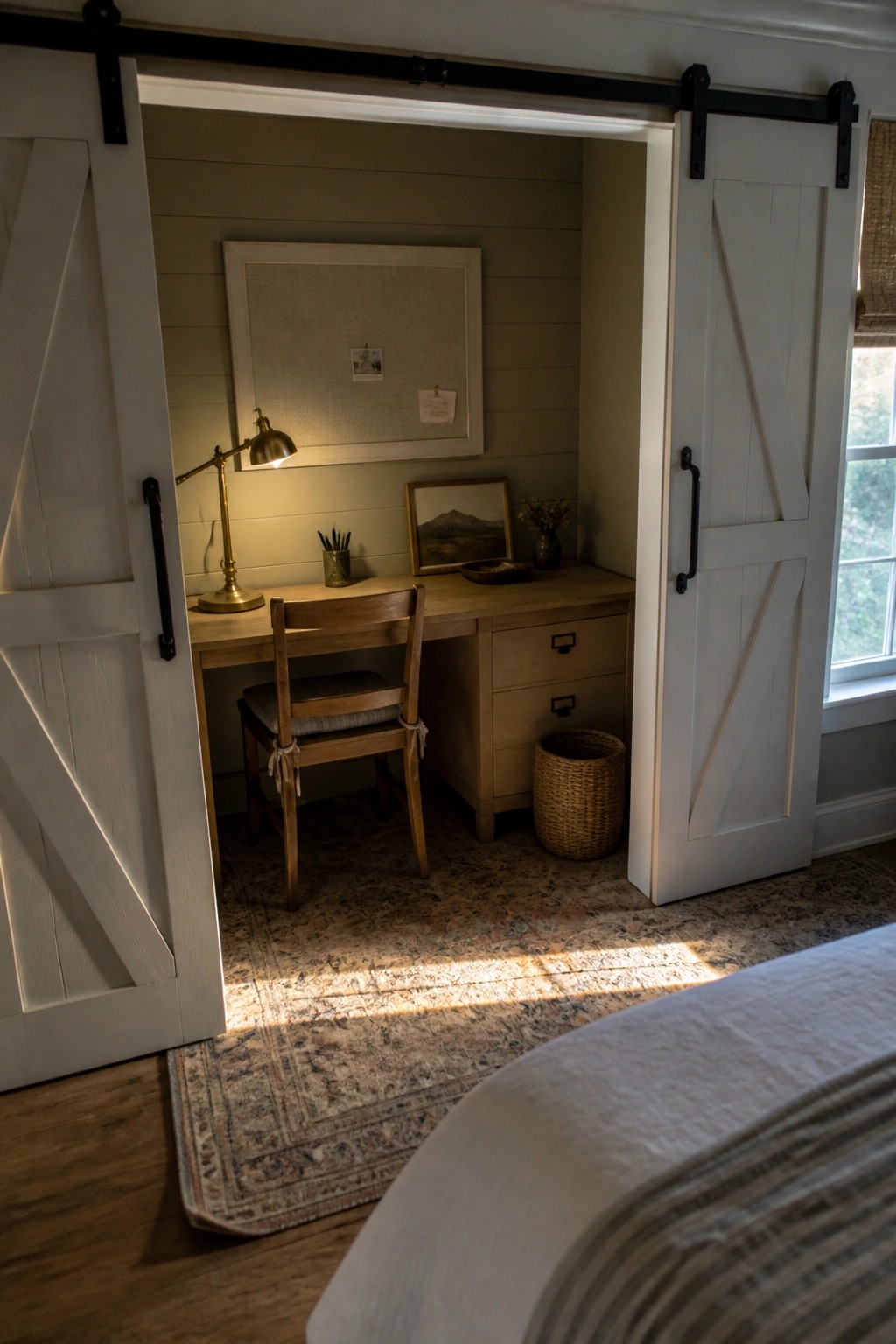
A small workspace can feel less intrusive when you give it doors that close. Sliding barn doors let you tuck the desk away at the end of the day so the rest of the room stays open and calm.
This setup works best in bedrooms or living areas where one room has to do several jobs. Keep the doors on a simple track and make sure the desk depth leaves enough room to walk by when the doors are open.
Fit a Desk Into a Narrow Corner

A small workspace can fit into spots that usually get ignored, like the area right beside a door or in a short hallway. A slim desk keeps the floor clear while still giving enough room for a lamp, a few supplies, and a chair that tucks in when not in use.
Storage boxes stacked underneath hold papers and tools without needing extra furniture. The wall above can hold prints or notes so the space feels finished rather than cramped. This setup works best in homes with leftover wall space near entries or under stairs.
Loft the Bed to Free Up Desk Space
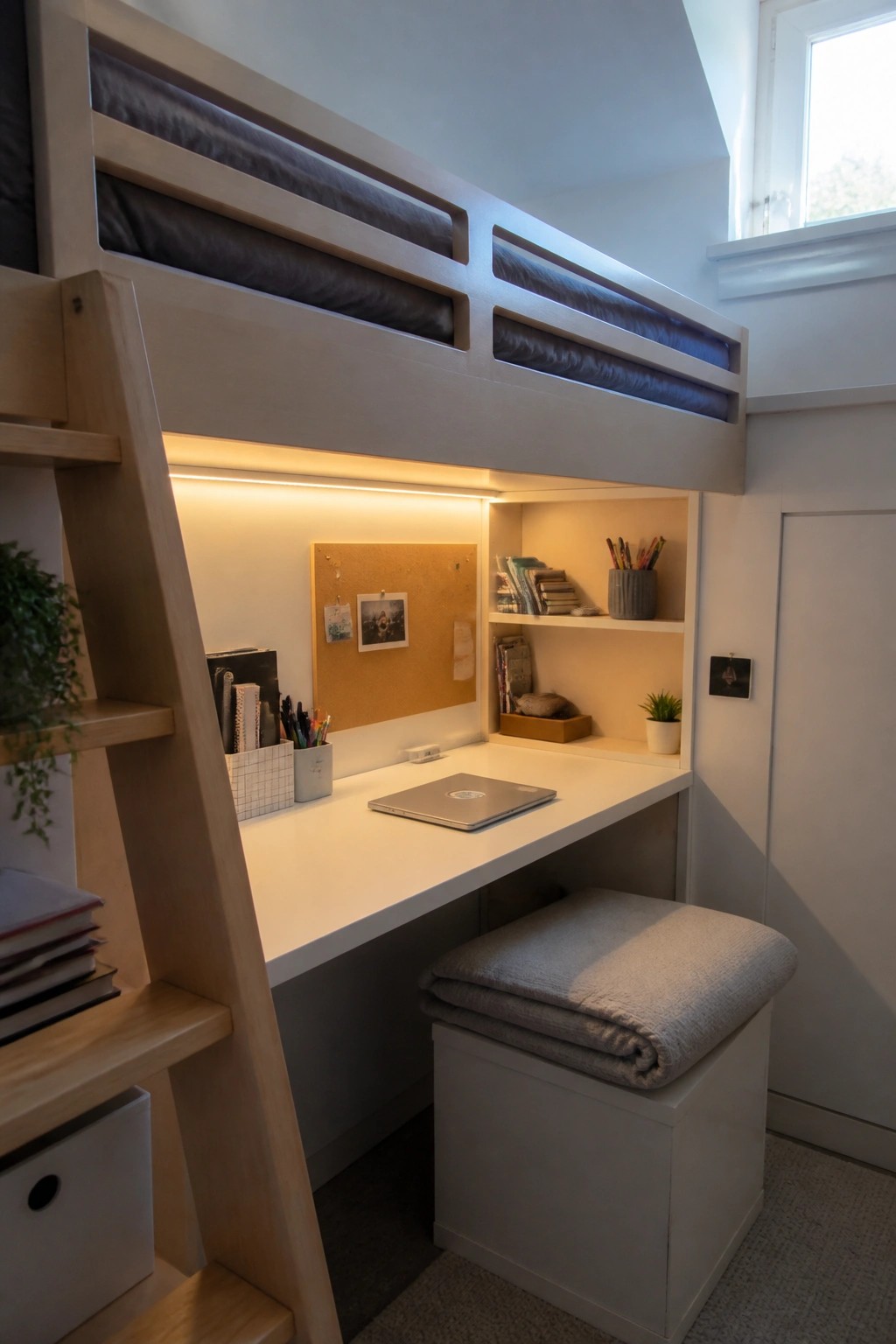
Raising the bed on a simple loft frame turns the area underneath into a full workspace. This keeps the floor clear for a desk and chair while still fitting both sleeping and working needs into one small room.
The setup works best in studios or guest rooms that double as offices. Build in a few side shelves for books and supplies so the desk stays usable without extra furniture taking up floor space.
Drop Down Desks For Small Nooks
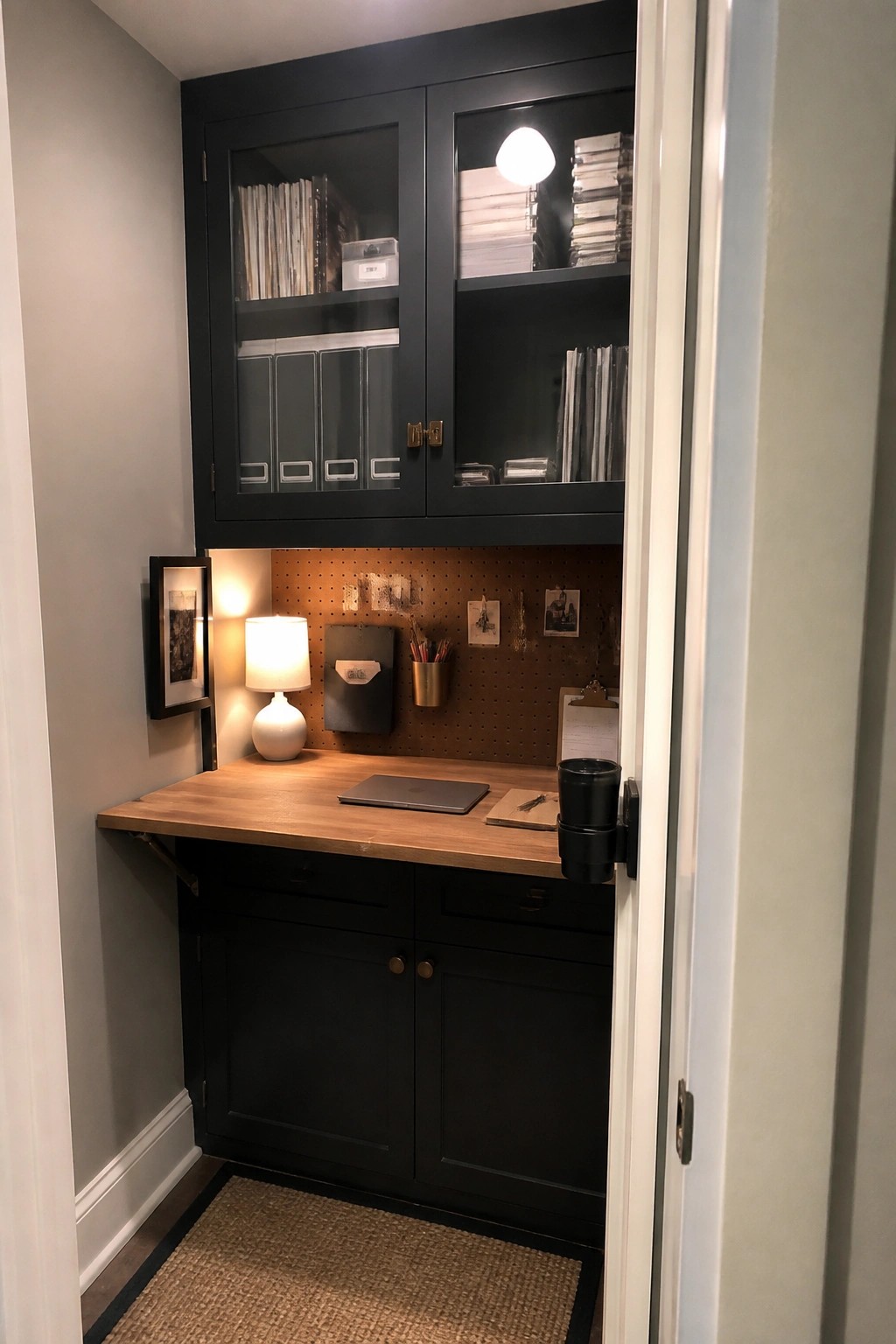
A drop down desk gives you a workspace exactly when you need it and disappears the rest of the time. In tight spots like a narrow hallway or unused closet, this setup keeps the floor clear and the room feeling open instead of cramped.
It suits small homes or apartments where every inch counts. Mount it at a comfortable height, add simple wall storage above for papers and supplies, and keep the finish simple so it blends with the surrounding walls and trim.
Slide a Desk Into a Narrow Window Spot

A tight area beside a window often works better than people expect for a small workspace. A slim desk fits flush against the wall, and a low stool tucks completely underneath so the floor stays open when the desk is not in use.
This setup suits apartments or any room where every inch counts. Place a rolling cart or narrow shelf next to it for supplies, and keep the top mostly clear so the space still feels open during the day.
Desk Placement in a Narrow Space
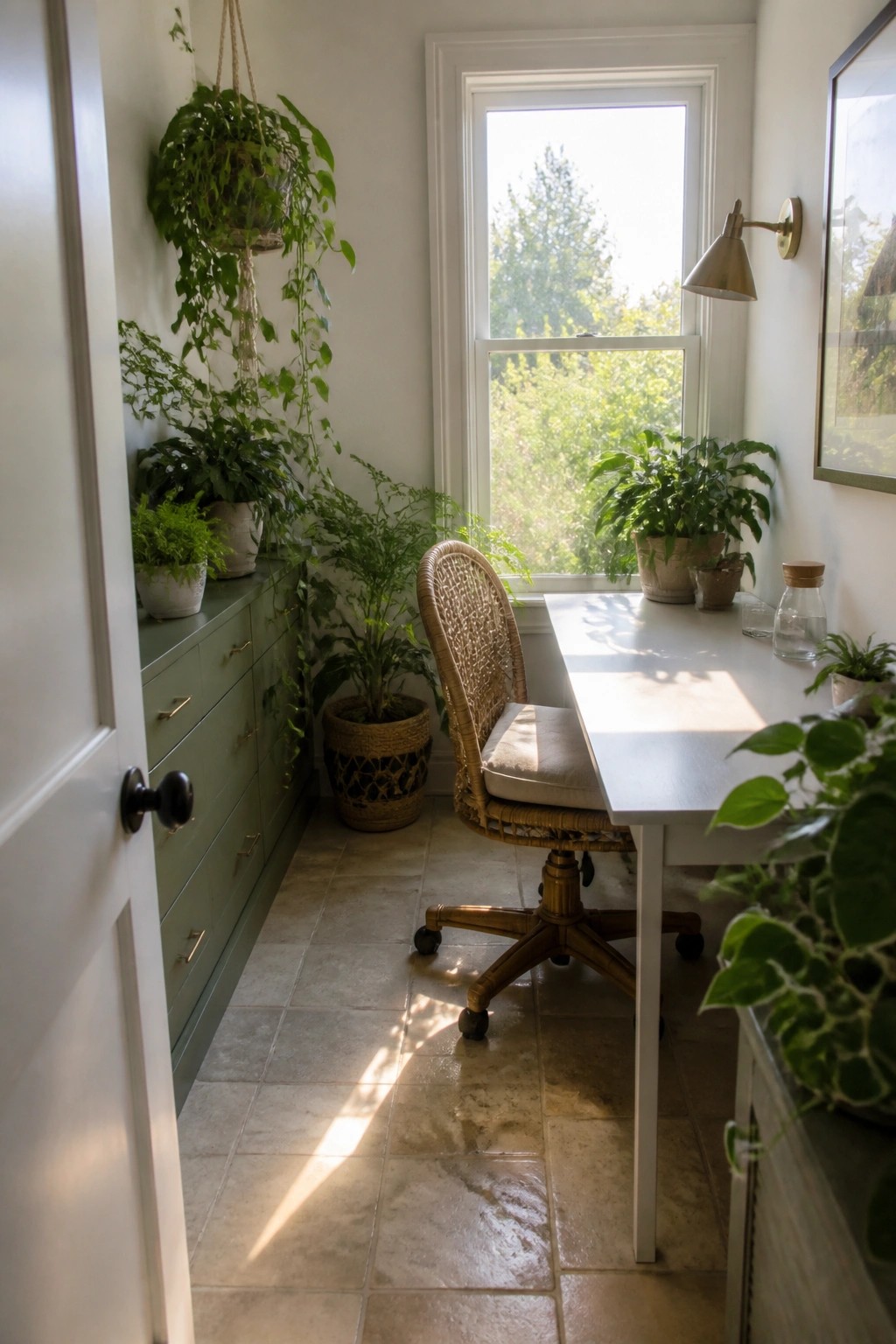
A narrow room can still work well as an office if the desk sits right under the window. This setup pulls in natural light across the work surface and keeps the rest of the floor open for movement. The chair tucks in neatly, and low storage along one wall holds supplies without crowding the walkway.
This works best in older homes or small additions where the space is long and tight. Keep the desk shallow, add a few plants on top of the cabinet for some softness, and avoid extra furniture that blocks the path. It suits anyone who needs a simple spot to work without dedicating a whole room.
Install Shelves Above the Desk

Small offices often run out of surface space fast. Adding shelves directly over the desk puts books, bins, and supplies within reach while leaving the floor clear for chairs and movement.
This works best in narrow rooms or corners where you need every bit of wall. Place the lowest shelf high enough to clear a monitor or lamp, and add a pegboard underneath for items you grab often.
Fit a Desk Into a Narrow Hallway

A narrow hallway or unused corner can easily become a small workspace when you add a simple desk and chair. This keeps the main living areas clear while giving you a spot that feels separate from the rest of the house.
It works best in homes with long hallways or extra wall space near doorways. Stick to a slim desk, add a few wall hooks above it for papers, and keep the floor clear so the area does not feel crowded.
Built-Ins Turn Small Nooks Into Functional Offices

Built-in cabinets above a desk can turn an awkward corner or narrow alcove into a real workspace. The overhead storage keeps supplies off the desk surface while the dark finish helps the whole setup blend into the room instead of standing out.
This approach works best in homes where every square foot counts. It suits older houses with odd layouts or newer builds with leftover spaces that never quite fit standard furniture. Just make sure the desk height stays comfortable for long hours.
Frequently Asked Questions
Q: How can I fit a full desk setup in a really narrow corner? A: Mount a narrow shelf at desk height and pair it with a stool that slides underneath. Keep only your laptop and one notebook on top. Everything else goes on wall hooks right above.
Q: What about privacy when the office shares space with the living room? A: Hang a tall plant or a folding screen on one side of the desk. It blocks the view without eating up floor space. Move it aside when you want the room open again.
Q: My office gets messy fast with papers everywhere. How do I stay on top of that? A: Sort mail and notes into a wall pocket organizer as soon as they come in. Clear the desk at the end of each day so it feels fresh. But leave one small tray for current projects.
