

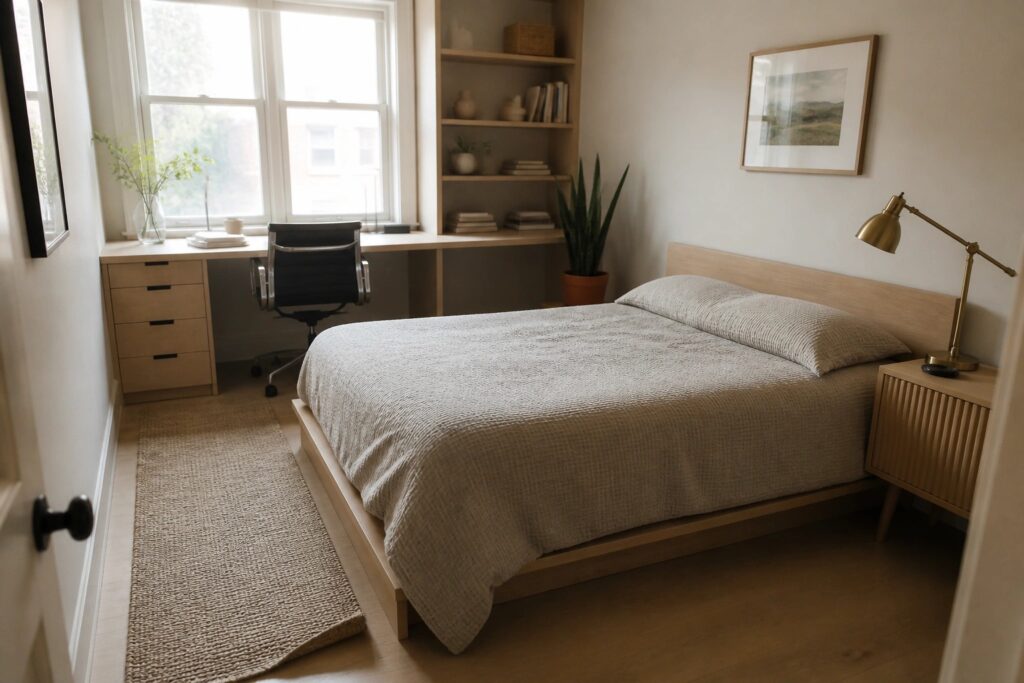
When I first tried turning part of my bedroom into a workspace, I quickly learned that the furniture arrangement determines whether the room stays restful or starts feeling like an office all the time.
The way light hits the desk and bed can shift the whole mood, especially in tighter rooms where every corner gets used.
Some setups I tested made it hard to unwind at night because work items stayed visible.
Furniture scale changes everything.
I tend to start with simple dividers or storage that hides the laptop when the day ends, since those tweaks often make the biggest difference in how the space actually functions day to day.
Place The Desk By The Window In A Small Bedroom
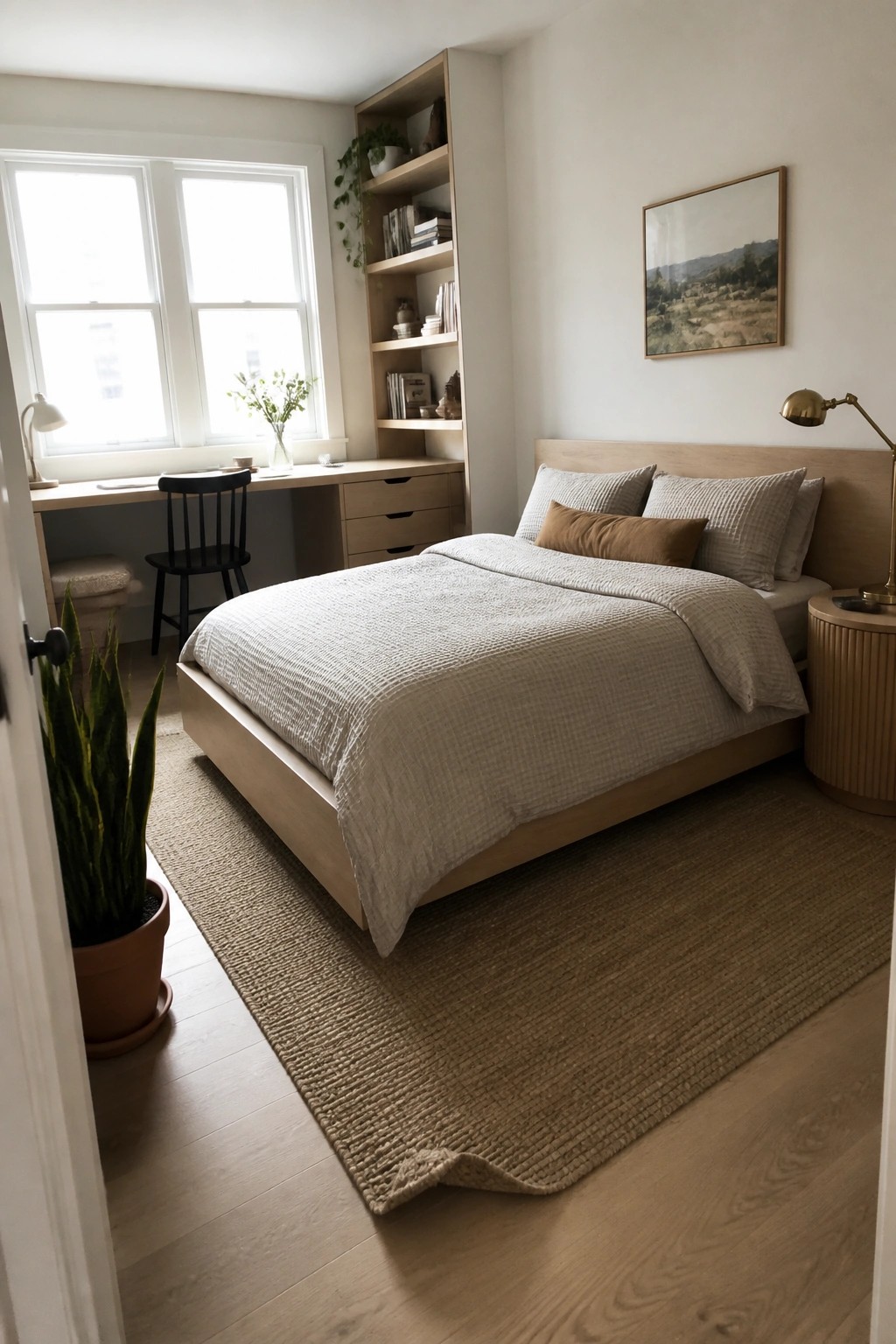
Putting a desk right under the window gives the room a clear work spot without crowding the rest of the space. The natural light helps during the day, and it keeps the work area feeling separate from the bed so the room does not start to feel like an office first.
This setup works well in apartments or small homes where one room has to handle both sleeping and working. Keep the desk narrow and use built-in shelves above it for storage so the floor stays open and the room still feels calm at night.
Add A Desk Right Next To The Bed
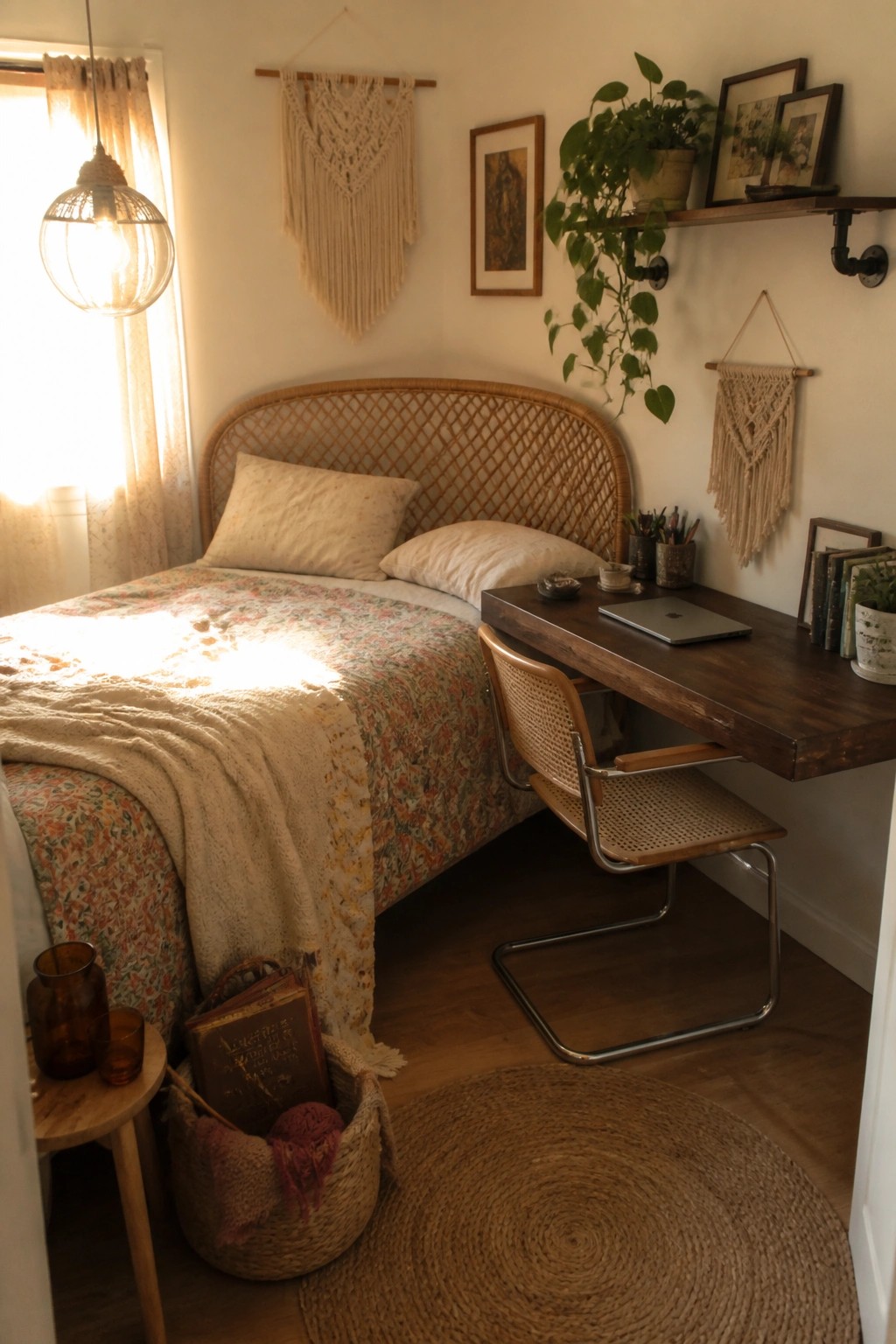
In a small bedroom, sliding a desk right beside the bed makes the most of the floor space you already have. It gives you a place to work without carving out a whole separate zone or blocking the walking path.
This setup suits studio apartments or rooms that double as guest space. Keep the desk narrow and pair it with a lightweight chair so the bed area still feels restful when the workday ends.
Low Furniture Opens Up Small Bedroom Offices
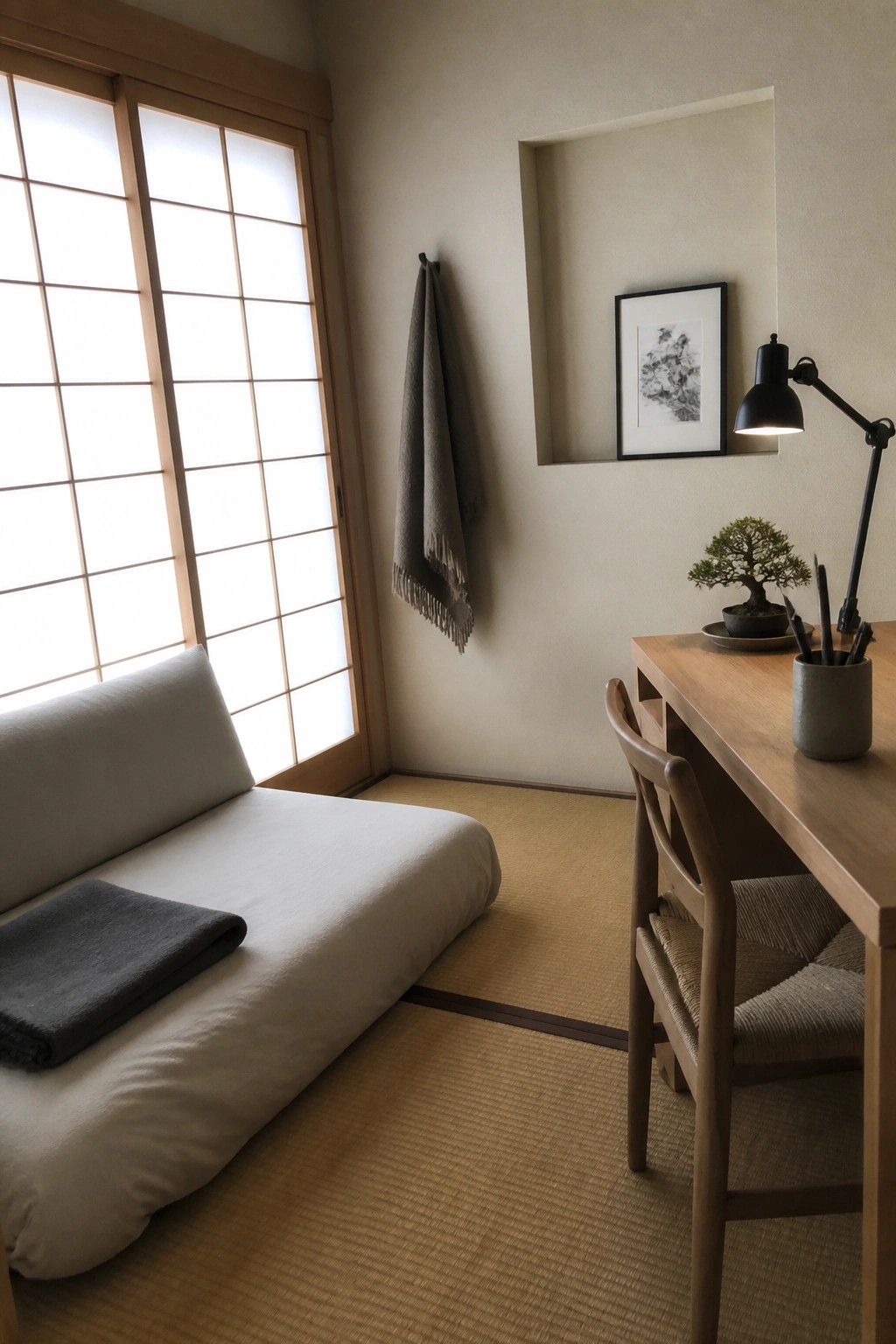
A low daybed next to a simple desk lets a small room handle both sleeping and working without crowding the space. The low profile keeps sight lines open and makes the room feel bigger even when both pieces are in use.
This approach works best in compact homes where every inch counts. Stick to light colors and natural textures so the furniture does not dominate the room, and leave enough floor space to move between the two areas easily.
Add Tall Storage To Free Up Floor Space

A tall wardrobe gives you real storage without eating into the limited floor area of a small bedroom office. It keeps clothes, files, and supplies out of sight so the desk area stays clear for work and the rest of the room can still feel restful.
This approach works best in compact rooms where every inch counts. Line the wardrobe along one wall, place the desk near the window for natural light, and keep the color of the wood or paint consistent so the storage blends in rather than dominates.
Use A Daybed With Storage In Small Rooms
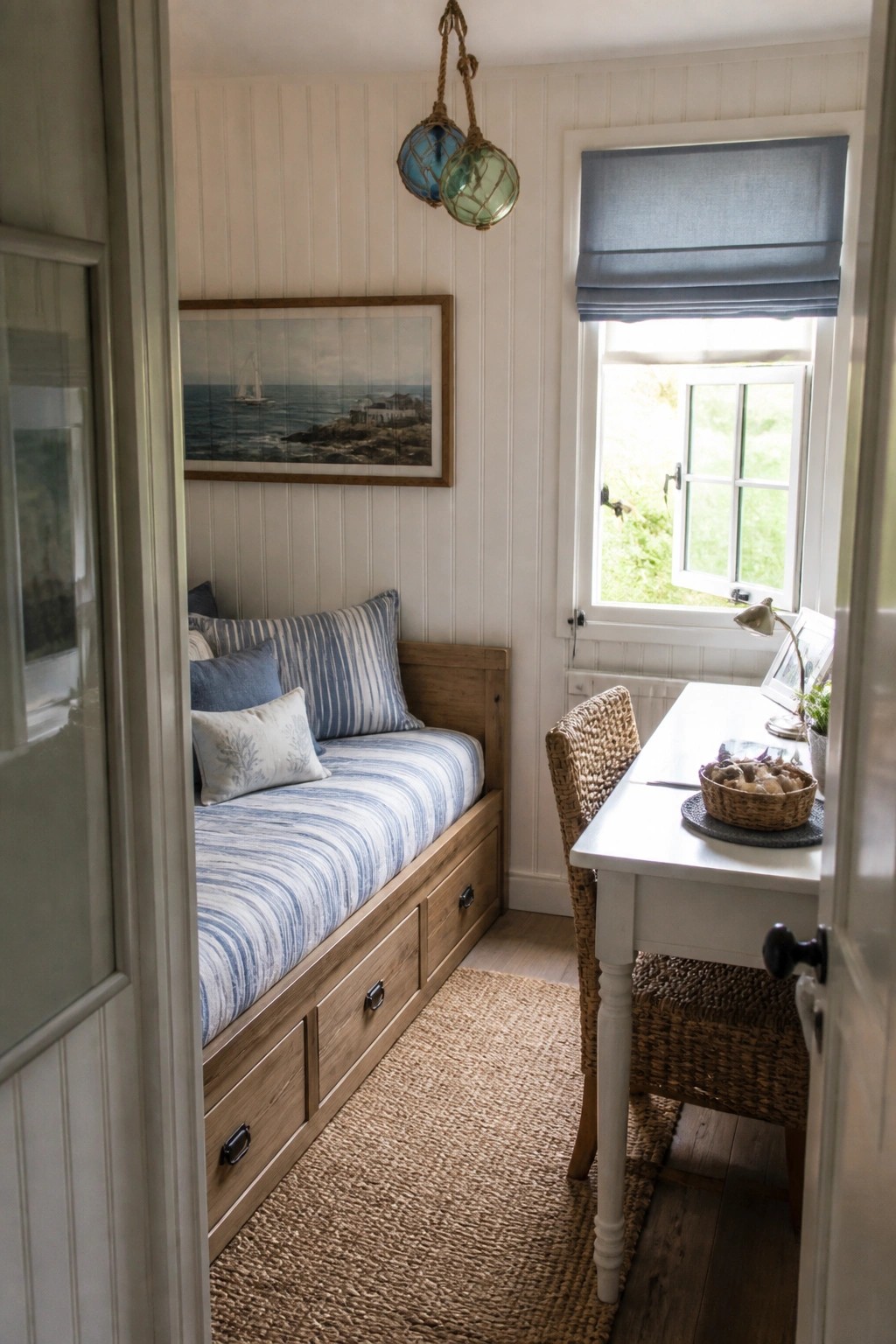
A daybed lets you keep both a bed and a workspace in one narrow room without the space feeling crowded. The drawers underneath hold extra bedding or files, so the floor stays clear and the room stays calm for both work and rest.
This layout works best in older homes or small cottages where every inch counts. Place the desk near the window for light and keep the daybed along the opposite wall so the two areas stay separate but connected.
Wall Mounted Desk With Pegboard Storage

A wall mounted desk keeps the floor clear in a small bedroom and leaves more room to move around. Pairing it with a pegboard above gives you a place to pin notes and hang small tools without adding extra furniture that can crowd the space.
This setup works best when the desk sits near a window for natural light and stays narrow enough that it does not compete with the bed. It suits older homes or compact rooms where you want the office area to feel like part of the bedroom rather than a separate zone.
Loft Bed Over Desk

Raising the bed on a loft frame frees up the entire floor for a real workspace. This layout keeps the room from feeling split between two uses and gives the desk area room to breathe.
It suits narrow bedrooms or any small space where floor area is tight. Keep the ladder simple and make sure there is enough headroom above the bed for comfort at night.
Use a Glass Desk in a Small Bedroom Office

A glass desk keeps the workspace from feeling heavy in a room that has to handle both sleeping and working. It lets the eye move through the space instead of stopping at a big block of furniture, which helps the whole room stay calm and open even when a laptop and papers are out.
This setup works best in bedrooms that already have enough floor space for a chair to pull up close. Pick a slim frame and a rolling seat so you can tuck everything away at the end of the day. Watch the scale though, since too many shiny surfaces can start to feel cold if the rest of the room leans soft and textured.
Fit a Daybed Beside the Desk

One simple way to handle a small bedroom that also needs to function as an office is to line a daybed along one wall and set a narrow desk right next to it. The shared color on the upholstery and bedding keeps the two pieces from feeling like they are fighting for space.
This layout works best in rooms that measure under 150 square feet. Choose a slim desk so you still have walking room, and limit extra furniture to just one small side table.
Use a Wall-Mounted Desk

A wall-mounted desk works well in small bedrooms because it frees up floor space and keeps the room from feeling crowded. You still get a dedicated spot for work without needing a full piece of furniture that takes over the room.
This setup suits older homes or apartments where every inch counts. Keep the desk surface simple and choose a chair that can tuck in neatly when not in use.
Built-Ins Help Small Bedrooms Hold Both A Bed And Desk
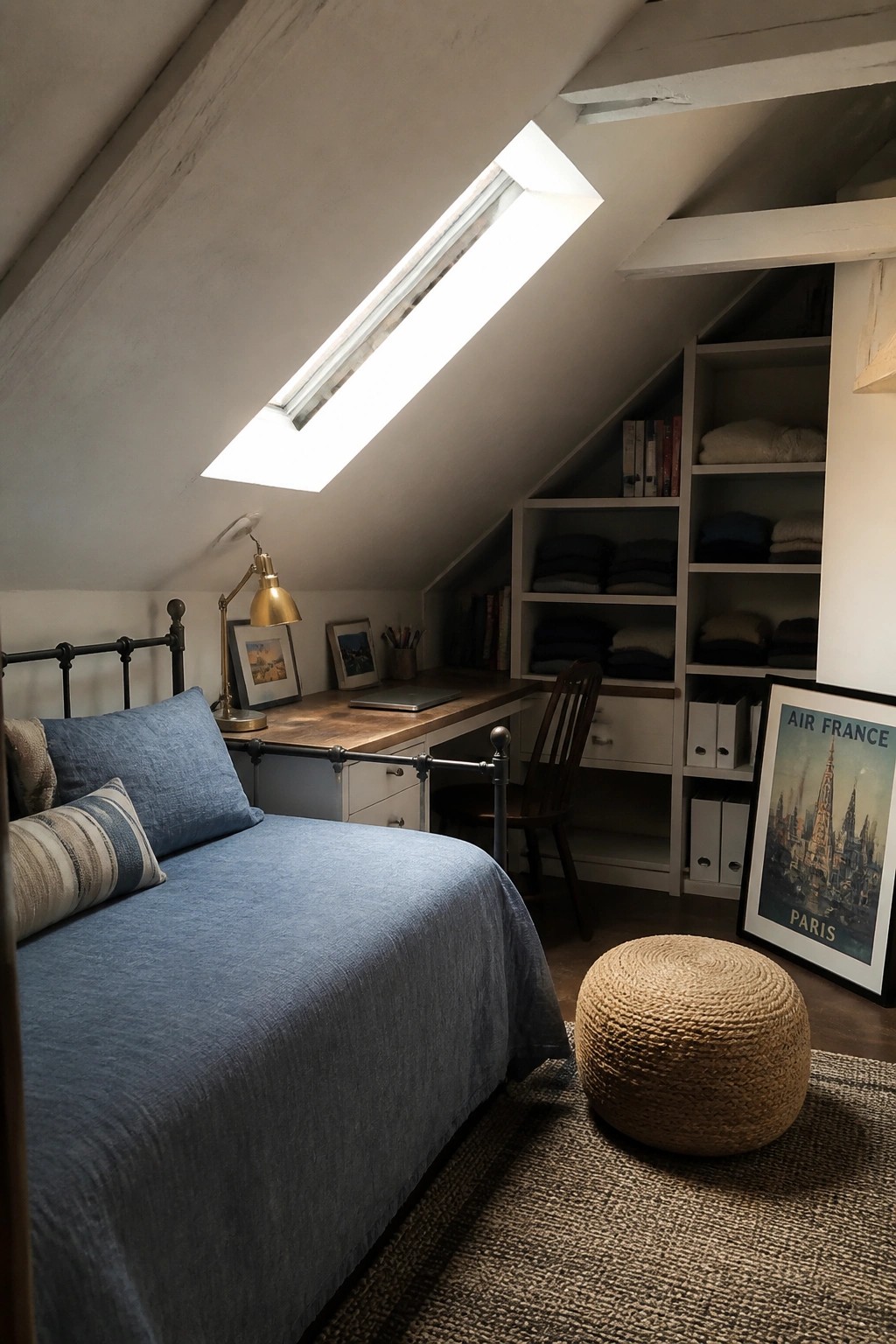
Many small bedrooms struggle when you try to add a workspace, but built-in shelves and a desk along one wall solve that without crowding the room. The setup tucks the desk right under the slope so the bed still has plenty of space, and the open shelves keep books and supplies within reach while staying out of the way.
This works best in attic rooms or any bedroom with low or angled ceilings where freestanding furniture would feel bulky. Keep the colors light and the surface clear so the area feels open during the day and calm at night.
Zone the Desk With a Rug
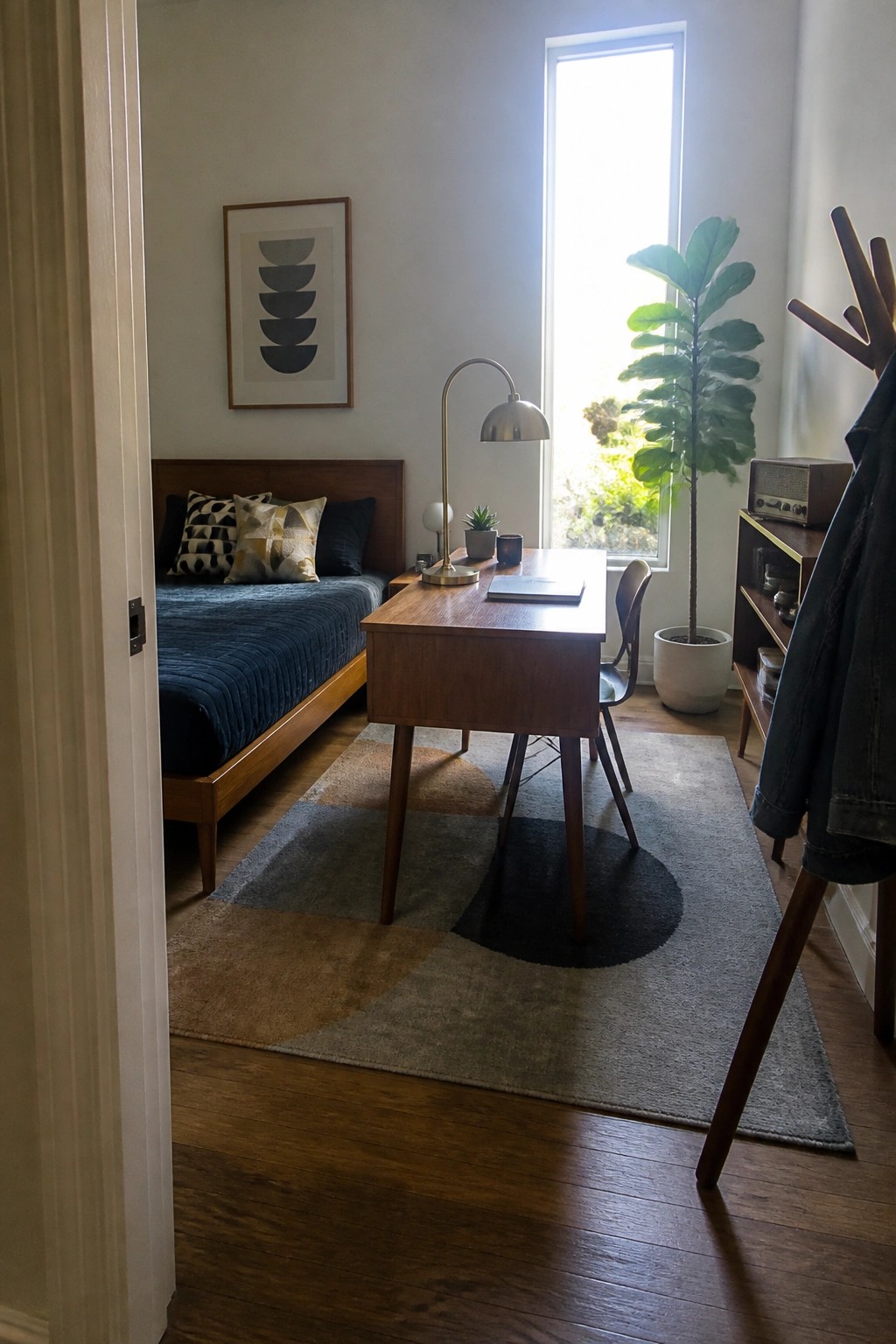
Placing a desk in a small bedroom often makes the space feel crowded, but a simple rug underneath helps set it apart. The rug marks the work area clearly while leaving the rest of the floor open for the bed and daily movement.
This approach works best in rooms where the desk needs to sit near a window for light. Keep the rug large enough to hold the chair and desk legs but let it end before reaching the bed. That small separation keeps the sleeping side calmer without any extra construction.
Add A Sofa For Easy Breaks
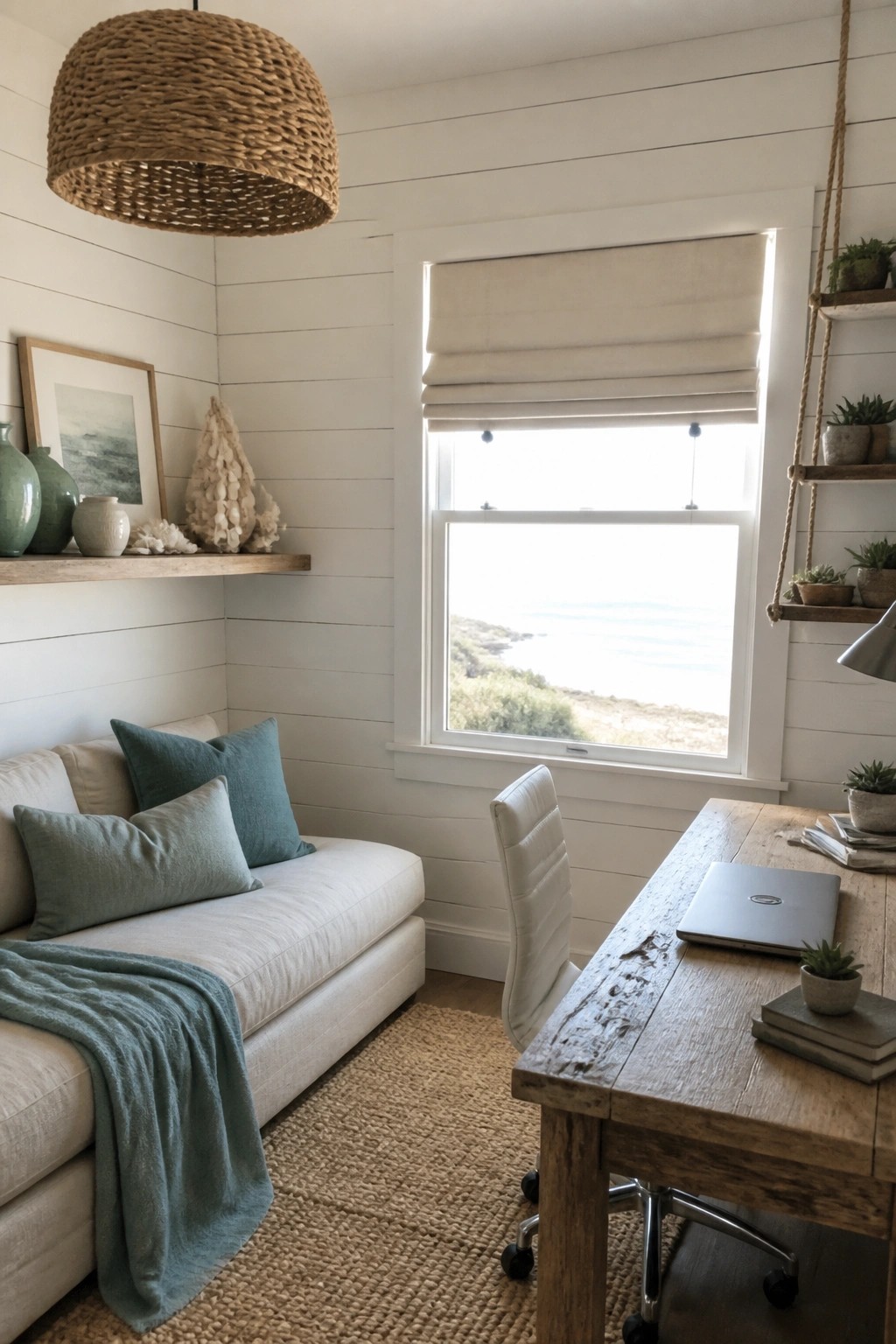
A sofa in a small office gives you a spot to step away from the desk without leaving the room. It turns the space into something more than just a work area and helps the room feel balanced instead of cramped or one-note.
This setup works best in a spare room or bedroom that doubles as an office. Keep the sofa simple with a few pillows and a throw so it invites rest without adding clutter. Make sure the desk and seating face different directions if the room is tight.
Overhead Cabinets Free Up Floor Space

Putting cabinets above the bed gives you storage without taking away room for a desk and chair. In a small space that needs to handle both sleeping and working, this keeps the floor open and the room from feeling boxed in.
It works best in apartments or guest rooms that double as offices. Keep the cabinets shallow so they do not loom over the bed, and stick to a light color so the whole area stays calm.
Use a Tall Wardrobe for Hidden Storage
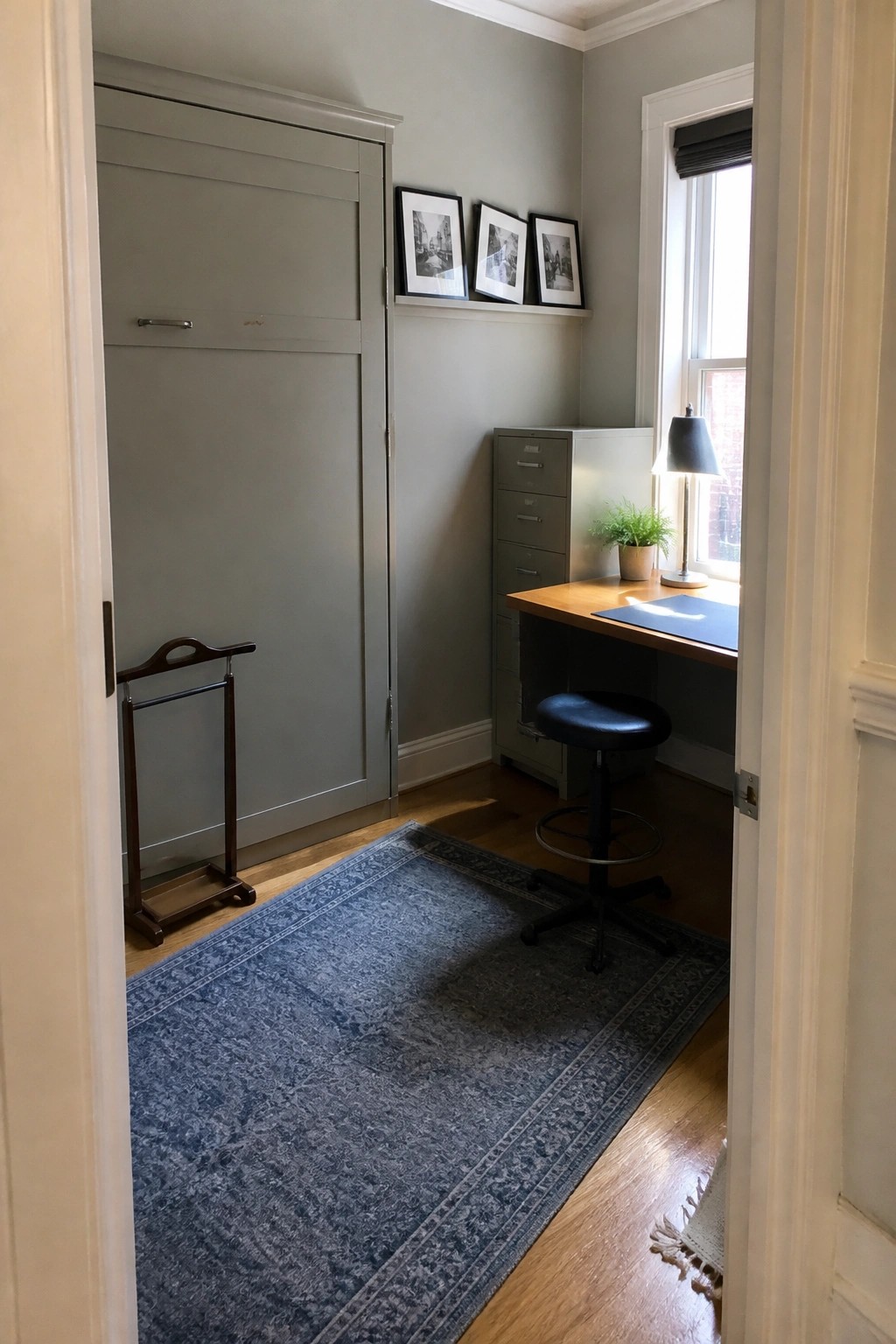
A tall wardrobe works well in a small bedroom office because it gives you vertical storage without eating up floor space. You can keep papers, extra supplies, and even some clothes behind closed doors so the room stays calm and usable for both work and rest.
This setup suits older homes or rooms with high ceilings where floor area is tight. Keep the wardrobe near the desk so you can reach what you need, but the rest of the room stays open and less cluttered.
Built-In Bed With Desk In Small Bedrooms

A built-in bed along one wall leaves the rest of the floor open for a simple desk setup. This layout works well when space is tight and you need both a place to sleep and a spot to work without the room feeling crowded.
It suits small apartments or guest rooms where every inch counts. Keep the desk surface clear except for a few daily items and use the bed base for storage so the room stays calm and easy to move around in.
Tuck the Desk Beside the Bed

Placing a desk right next to the bed is a simple way to fit a workspace into a small bedroom without crowding the room. It keeps the setup compact and lets you move easily between rest and work in the same area.
This layout suits studio apartments or any bedroom where floor space is limited. A sturdy desk with a few drawers helps keep papers and supplies organized, and a warm lamp makes the spot feel comfortable after dark.
Daybeds Add Flexibility To Small Bedroom Offices

A daybed gives you a place to sleep while also serving as seating for a nearby desk. The drawers underneath hold extra bedding or supplies, which helps the room stay tidy even when both functions share the same small space.
This works well in guest rooms or homes where one room needs to shift between work and rest. Keep the desk close enough to use the daybed for overflow seating during the day.
Using A Daybed In Small Bedroom Offices
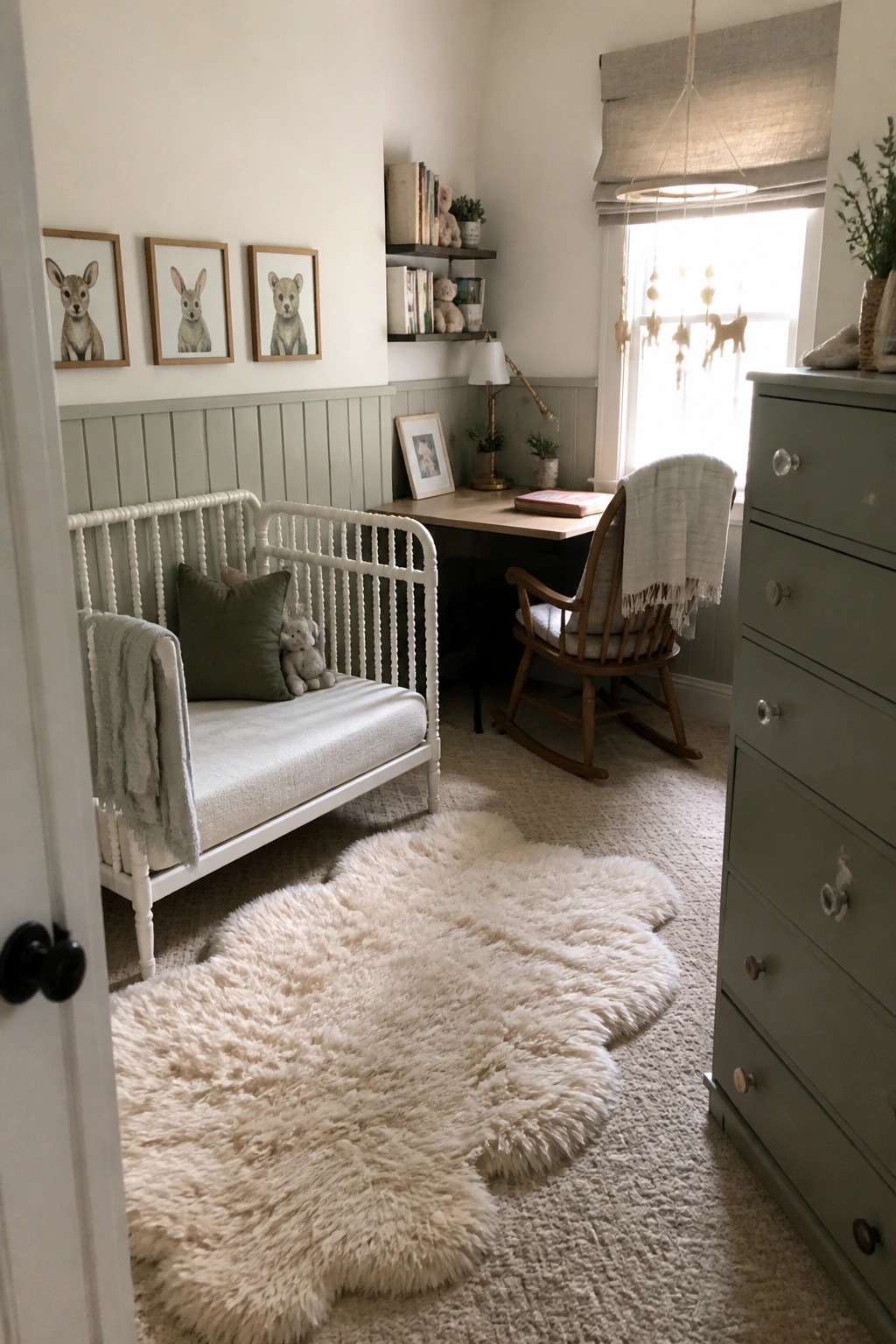
A daybed gives you a clear spot to rest without taking over the whole room. It keeps the work area focused around the desk while still leaving room to stretch out or nap later in the day.
This setup works best in a small bedroom where you need both functions but do not want the desk to feel like the main feature. Keep the daybed simple with just a few pillows and a throw so it stays comfortable without adding clutter.
Built-In Desk Nooks For Small Rooms

A built-in desk set into a painted alcove gives you a clear spot for work without eating up floor space in a small room. The enclosed feel helps separate the desk from the rest of the space so it does not compete with seating or beds nearby.
This works best in bedrooms or studio layouts where one area needs to handle both focus time and rest. Keep the alcove color deeper than the walls around it and use a simple chair that can tuck in when not in use.
Tucking A Desk Next To The Bed

Many small bedrooms benefit from placing a compact desk right beside the bed. This keeps the work area contained in one corner so the rest of the room still feels like a place to rest.
The setup works best in rooms that already have some built in storage above the desk. A narrow stool that slides underneath helps keep the floor clear when the day is done.
Add a Desk Next to a Daybed
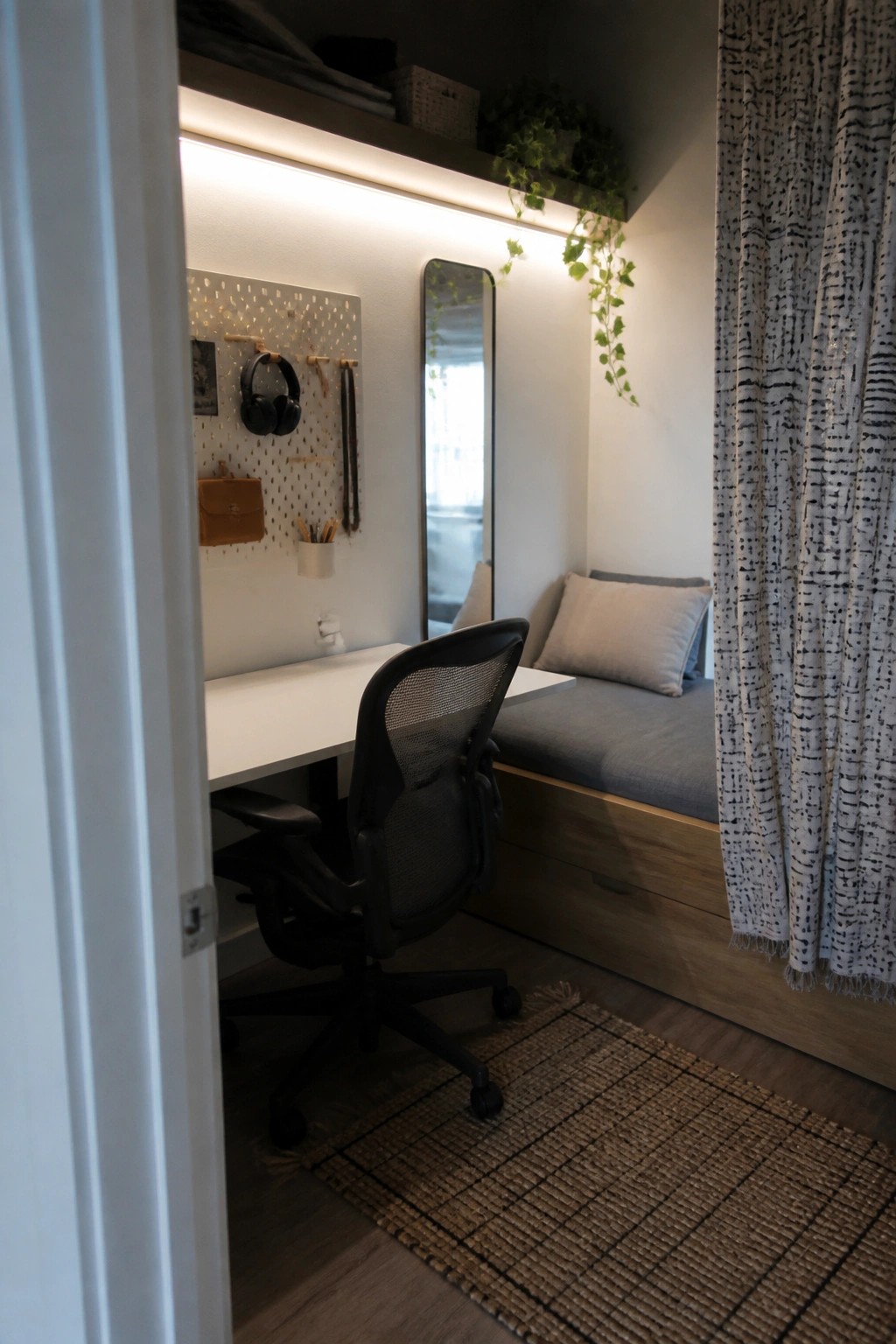
A small room can handle both work and rest when the layout stays simple. Putting a desk right beside a daybed keeps the space from feeling split in two and lets the room shift easily from office hours to downtime.
This works well in apartments or guest rooms that need to serve more than one purpose. Use a pegboard above the desk for supplies so the surface stays clear and the whole area stays usable without extra furniture.
Frequently Asked Questions
Q: How do I keep work from creeping into my sleep space at night? A: Clear the desk surface completely before bed. Store everything in a nearby bin or closet. You will wake up feeling more rested if the room looks like a bedroom again.
Q: What if my only window spot gets too much glare on the screen? A: Hang light curtains that you can close during work hours. Angle your desk slightly away from the direct light. This simple shift cuts the glare without darkening the whole room.
Q: How can I add storage without buying new furniture? A: Use under-bed bins for files and extra supplies. Stack decorative boxes on a shelf for smaller items. These spots keep things handy but out of the way.
Q: Is a standing desk possible in a tiny bedroom? A: Try a compact adjustable one that fits against the wall. Fold it down when not in use if it has that option. Many people find it worth the space for better posture during the day.
